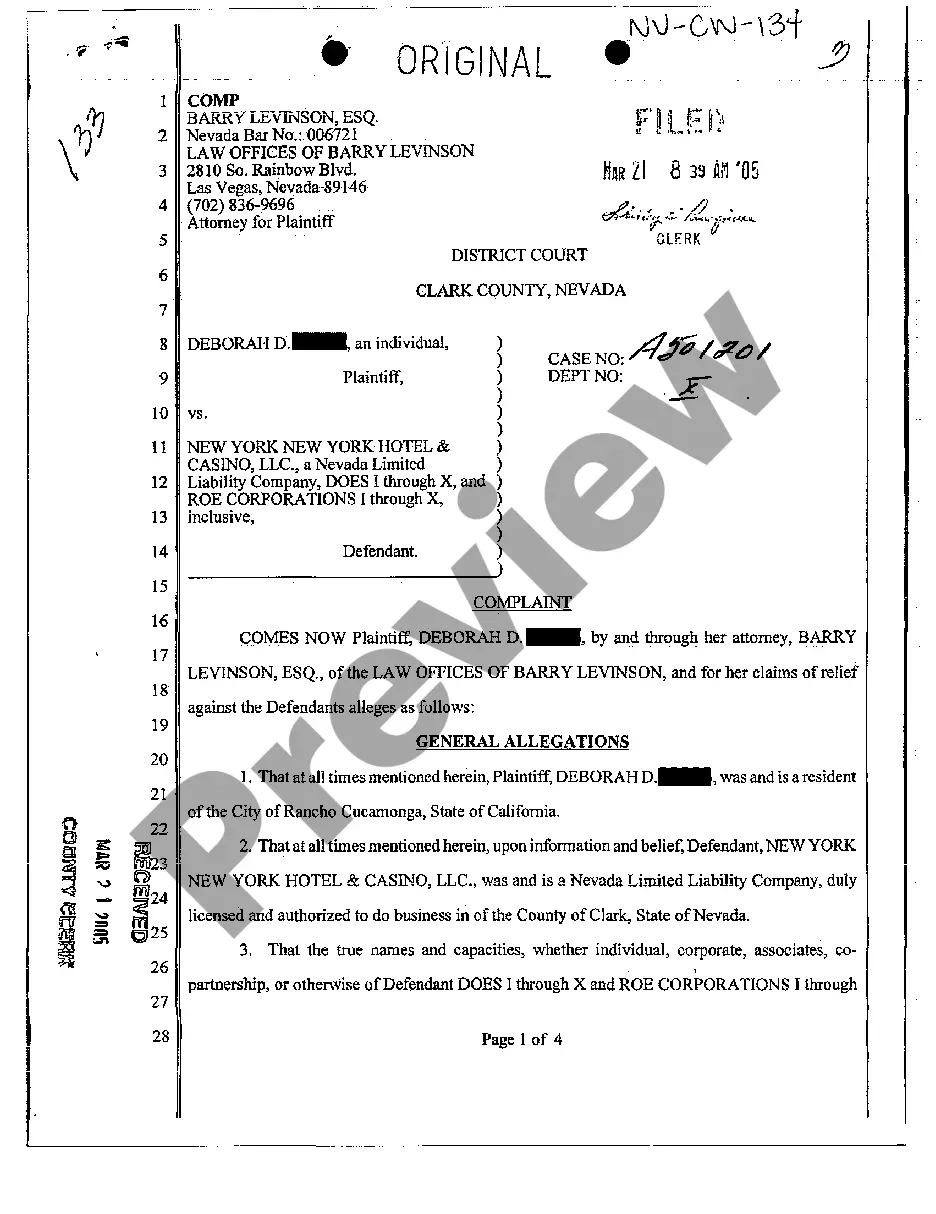
CAUSING AN ACT
What is this form?
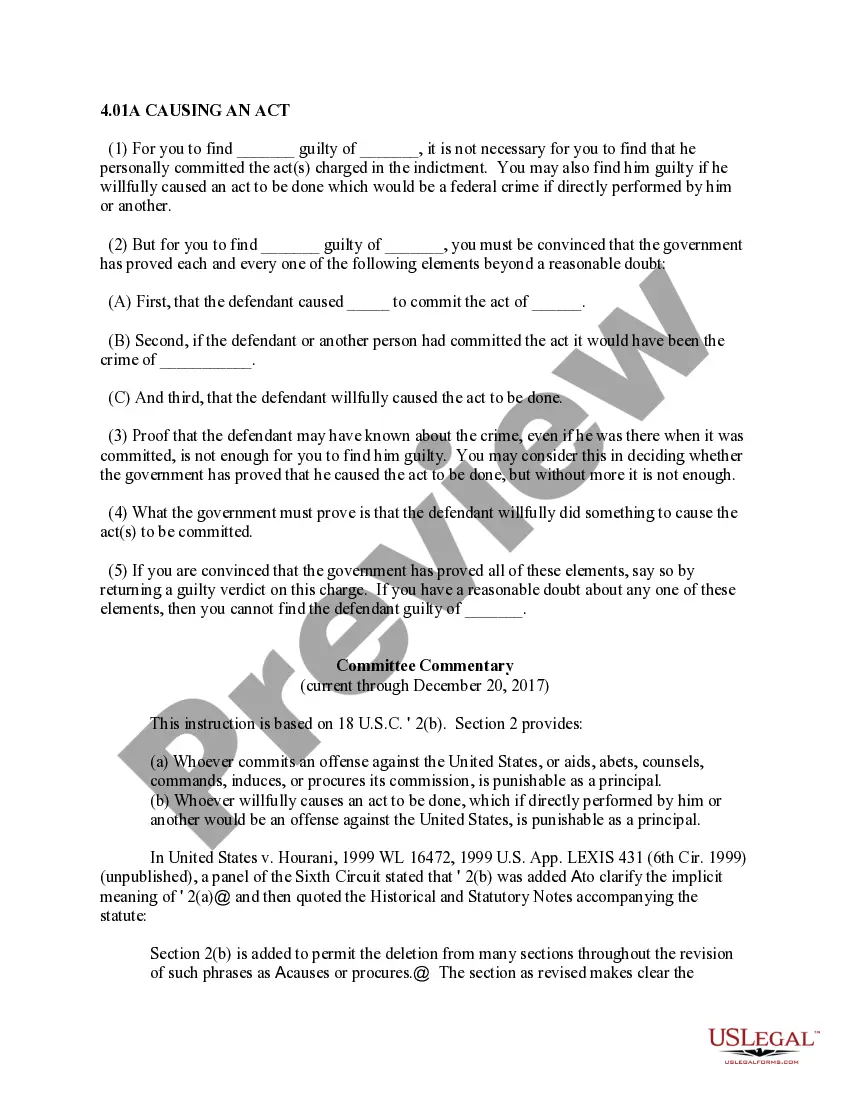
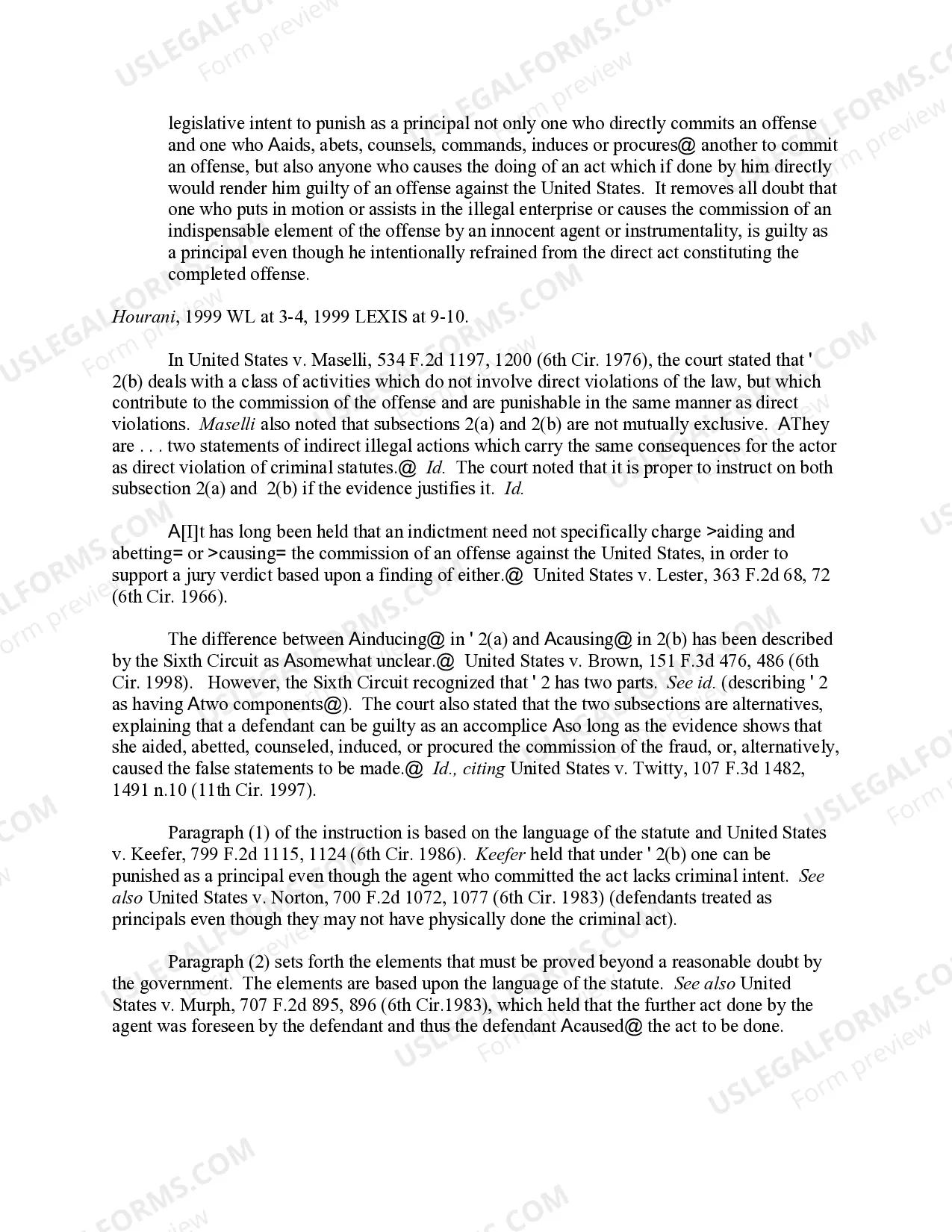
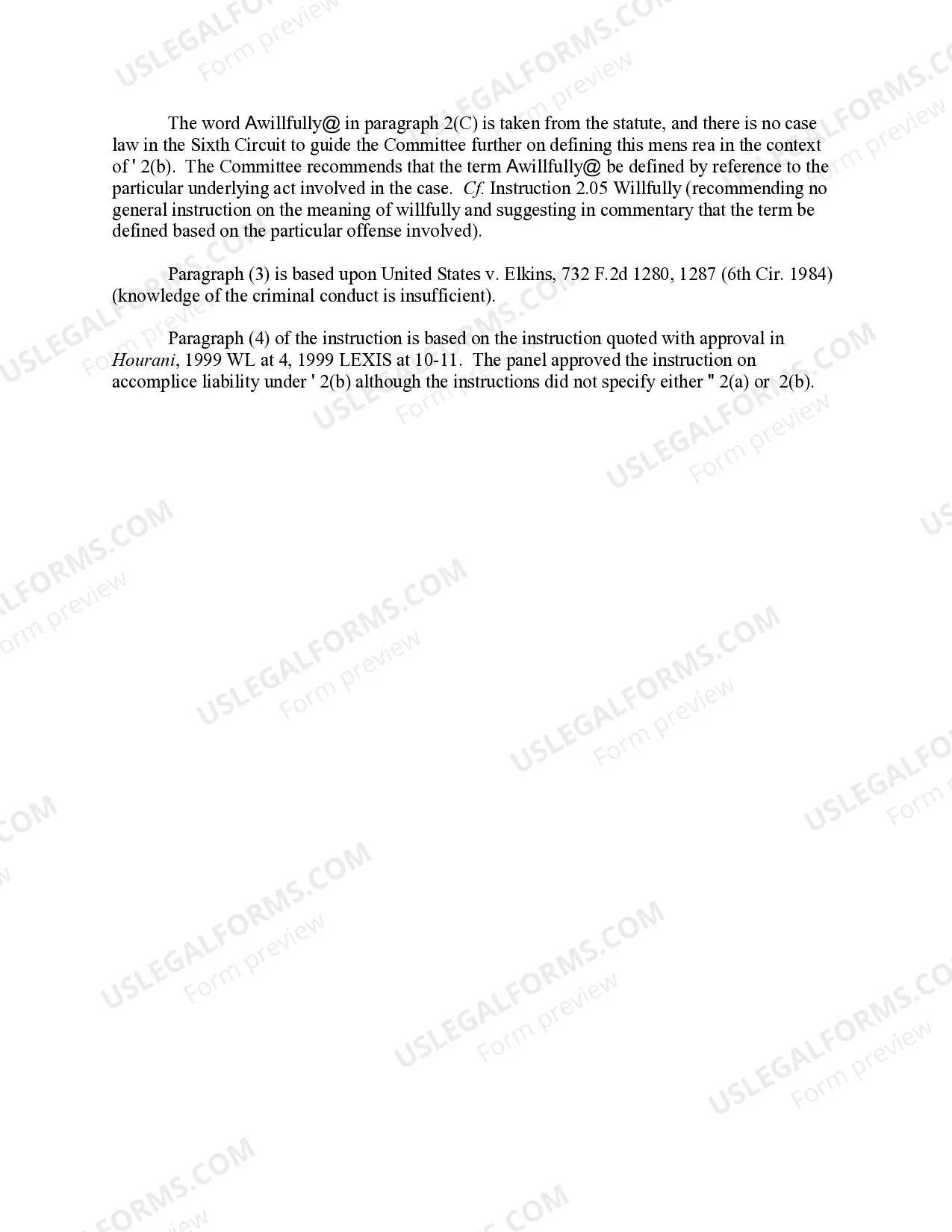
The "Causing an Act" form relates to legal instructions concerning accountability for acts that lead to federal crimes. This form is crucial for understanding the legal implications when a person does not directly commit a crime but causes it to happen. Unlike other criminal liability forms, this one specifically addresses indirect actions that can result in legal culpability.
Key parts of this document
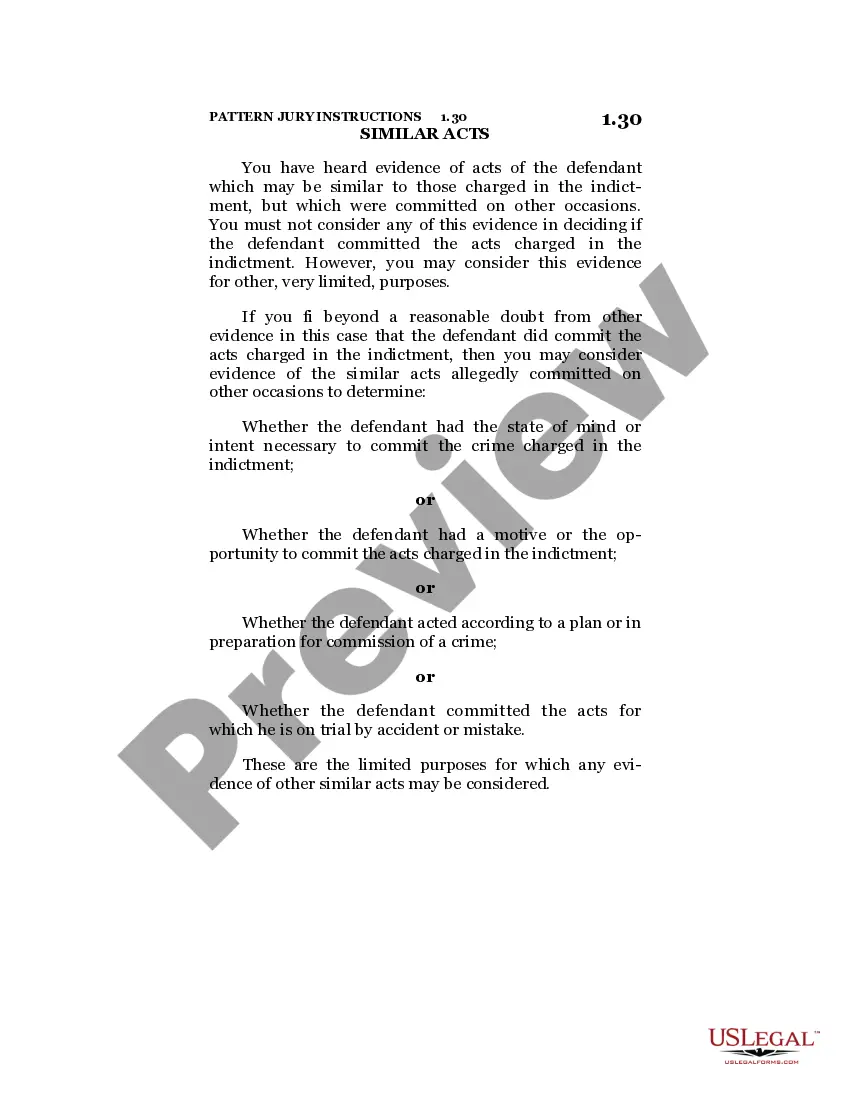
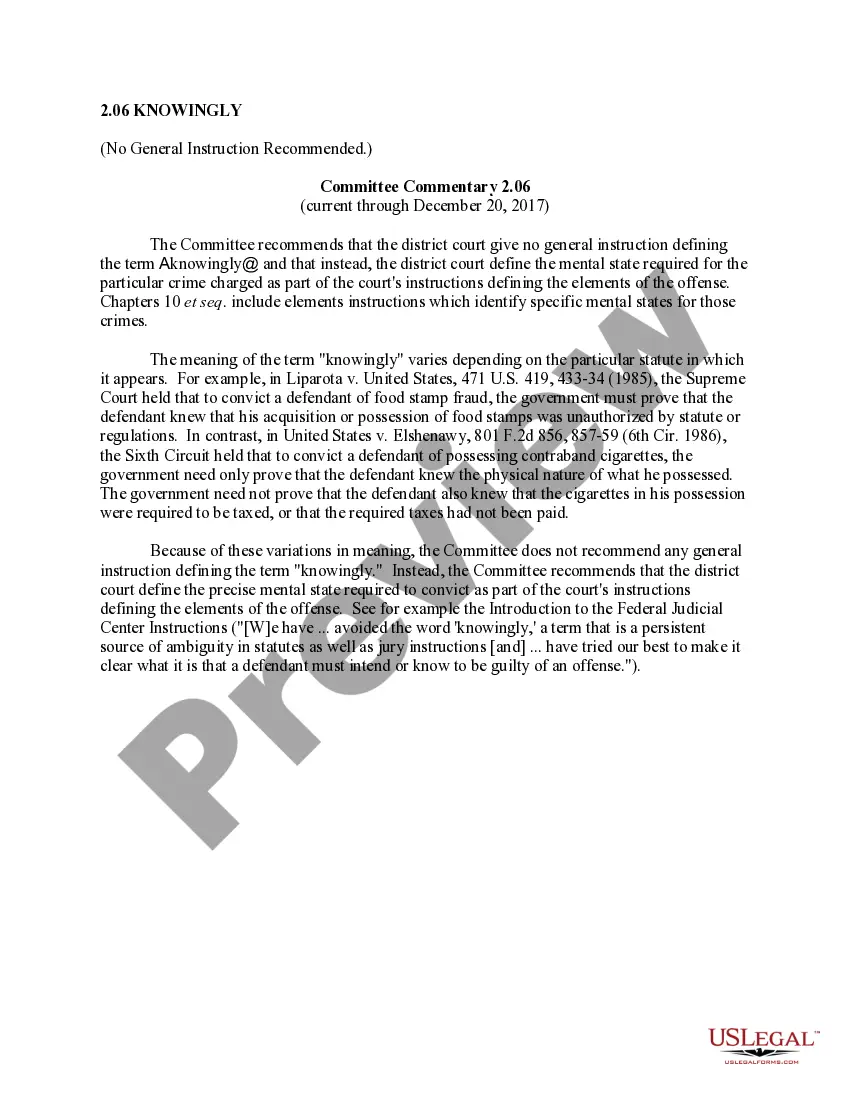
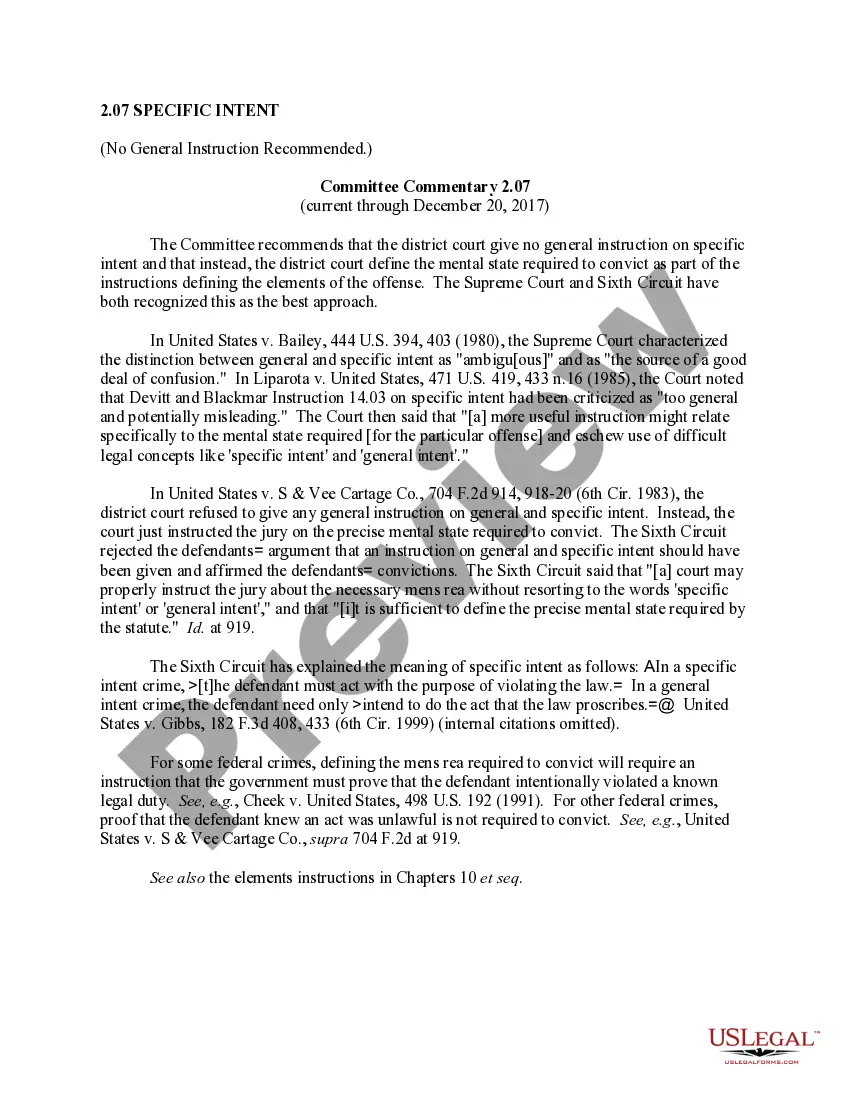
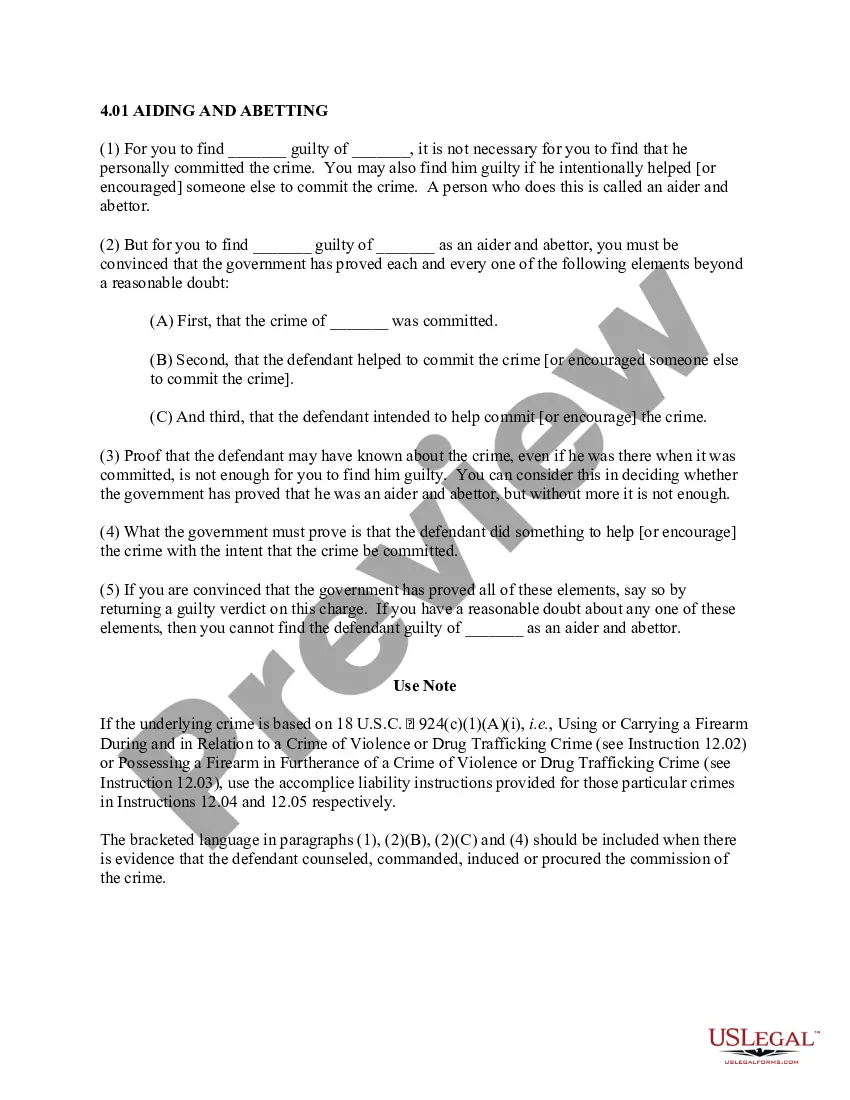
- Definition of guilt related to causing an act rather than direct commission of an act.
- Elements the government must prove for a guilty verdict, including the causative action and willfulness.
- Clarification that mere knowledge of a crime is insufficient for guilt.
- Standard of proof required: beyond a reasonable doubt.
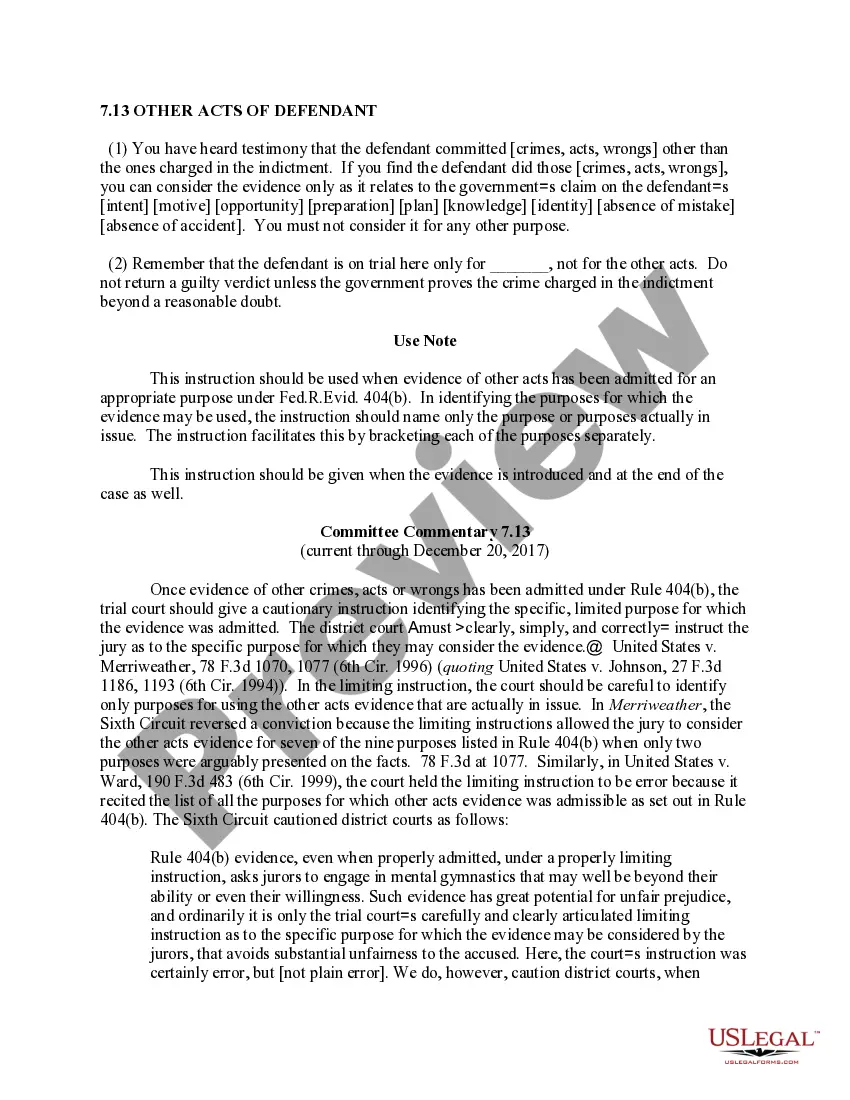
Common use cases
This form is necessary in legal cases where an individual is being prosecuted not for directly committing a crime, but for having caused or facilitated another person to commit it. It applies particularly in scenarios involving complex criminal activities, conspiracies, or situations where indirect involvement is established.
Who this form is for
- Prosecutors aiming to charge individuals based on indirect involvement in crimes.
- Defense attorneys representing clients accused of causing criminal acts.
- Individuals seeking to understand their potential liability in complicity cases.
Completing this form step by step
- Identify the defendant by filling in their name in the appropriate space.
- Specify the act in question and indicate whether it constitutes a federal crime.
- Provide details on how the defendant caused the act to be committed.
- Ensure all required elements that the government needs to prove are included.
- Verify that the information is accurate before finalizing the form.
Notarization requirements for this form
Notarization is not commonly needed for this form. However, certain documents or local rules may make it necessary. Our notarization service, powered by Notarize, allows you to finalize it securely online anytime, day or night.
Get your form ready online
Our built-in tools help you complete, sign, share, and store your documents in one place.
Make edits, fill in missing information, and update formatting in US Legal Forms—just like you would in MS Word.
Download a copy, print it, send it by email, or mail it via USPS—whatever works best for your next step.
Sign and collect signatures with our SignNow integration. Send to multiple recipients, set reminders, and more. Go Premium to unlock E-Sign.
If this form requires notarization, complete it online through a secure video call—no need to meet a notary in person or wait for an appointment.
We protect your documents and personal data by following strict security and privacy standards.

Make edits, fill in missing information, and update formatting in US Legal Forms—just like you would in MS Word.

Download a copy, print it, send it by email, or mail it via USPS—whatever works best for your next step.

Sign and collect signatures with our SignNow integration. Send to multiple recipients, set reminders, and more. Go Premium to unlock E-Sign.

If this form requires notarization, complete it online through a secure video call—no need to meet a notary in person or wait for an appointment.

We protect your documents and personal data by following strict security and privacy standards.
Common mistakes
- Assuming that knowledge of a crime is sufficient for liability.
- Failing to clearly outline how the defendant caused the act.
- Not providing specific details on the act committed by another person.
Benefits of using this form online
- Convenience of immediate access and downloadable format.
- Editability allows for customization based on individual cases.
- Reliability from professionally drafted templates by licensed attorneys.
Looking for another form?


Form popularity
FAQ
A claim is a set of operative facts creating a right enforceable in court. The term claim is generally synonymous with the phrase cause of action, though some contexts prefer to use one of the terms over the other.
There are a number of specific causes of action, including: contract-based actions; statutory causes of action; torts such as assault, battery, invasion of privacy, fraud, slander, negligence, intentional infliction of emotional distress; and suits in equity such as unjust enrichment and quantum meruit.
There are two types of causation in the law: cause-in-fact, and proximate (or legal) cause.
1. Cause is an action or event that brings about or contributes to a specific outcome. In legal actions, there are a variety of different variations of cause, for example, ?but-for cause,? ?proximate cause,? ?cause in fact? and ?intervening cause.? Cause is a necessary element in most legal actions.
Difference Between a Claim & Cause of Action In some cases, there can be many causes of action. These will all factor into your case. If there is no cause of action, this means the facts presented won't support a lawsuit. Your claim is the section of your lawsuit where you state the damages you wish to recover.
Actus reus includes only a voluntary affirmative act, or an omission (failure to act), causing a criminally proscribed result. For example, if a thief shoves a gun into the side of a victim and says: ?Your money or your life? - the shoving of the gun is the actus reus.
A cause of action is the technical legal name for the set of facts which give rise to a claim enforceable in court. It is a legally recognised wrong that creates the right to sue. Each cause of action consists of points the plaintiff must prove and all of these elements must be satisfied in order to take court action.
What is cause of action? Cause of action is the legal claim a claim that sometimes goes unstated that allows a party to seek judicial relief. This gives the legal right to seek a remedy because of the act or omission, failure to perform duty, or breach of obligation of the defendant towards the plaintiff.