SPECIFIC INTENT
What this document covers
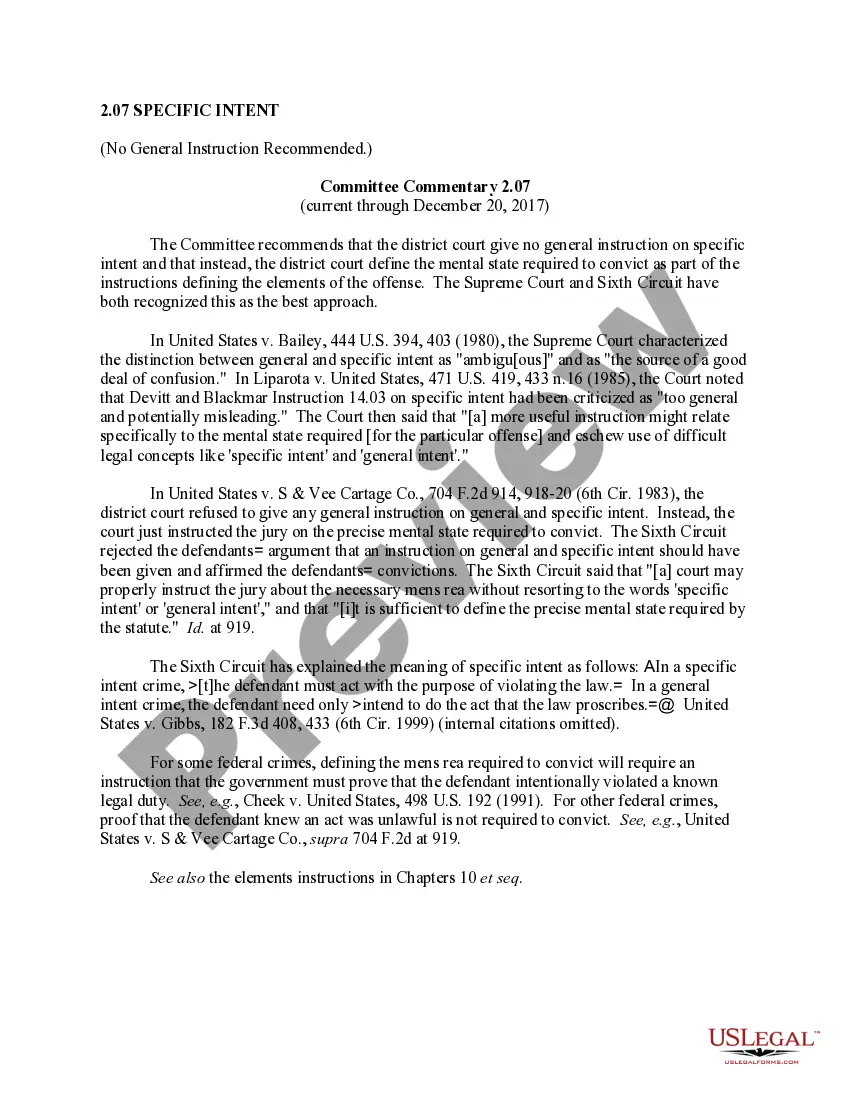
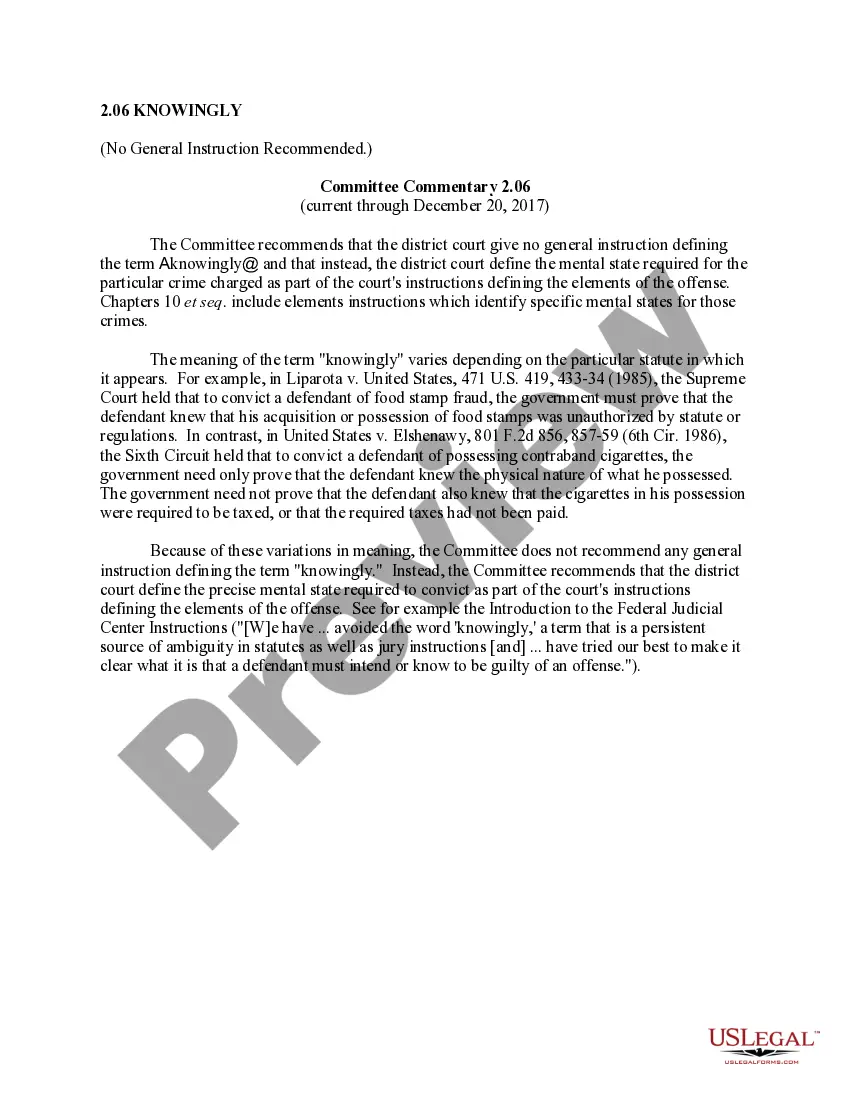
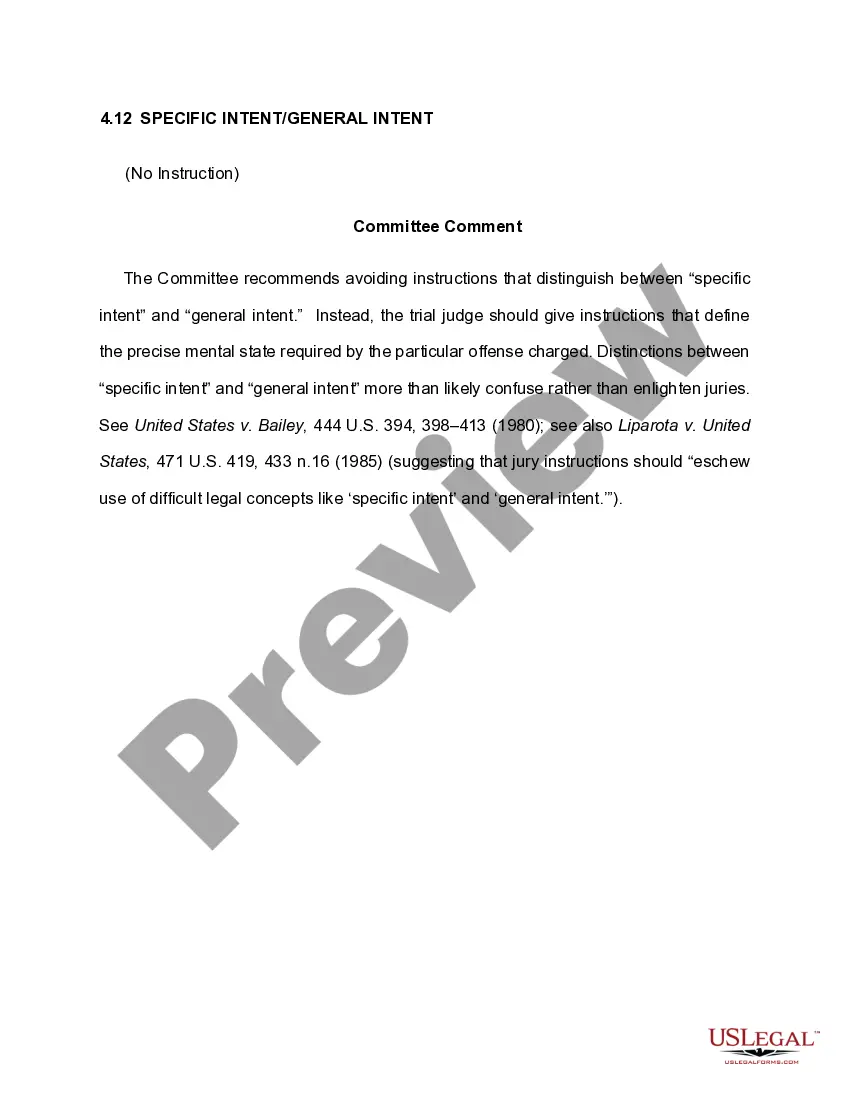
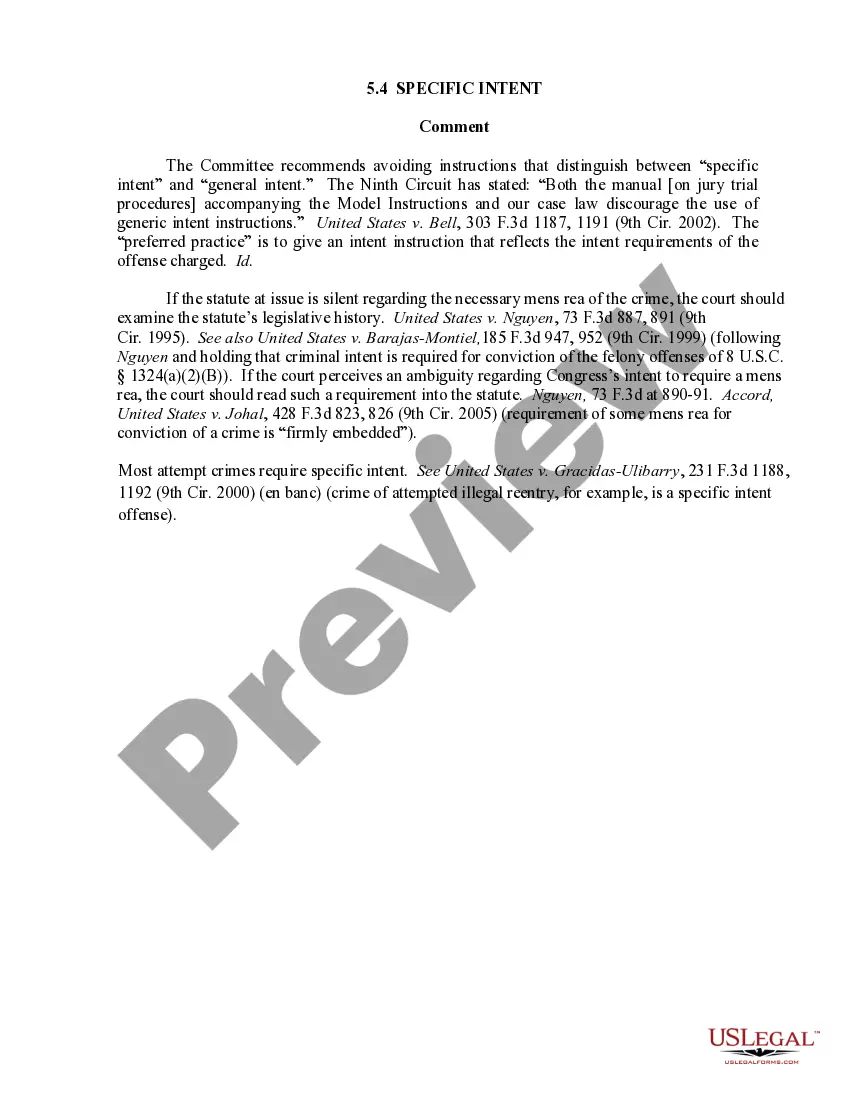
The Specific Intent form provides a clear understanding of the mental state required for certain criminal offenses. Unlike general intent, specific intent crimes necessitate that the defendant acted with a purpose to violate the law. This form is essential in cases where the mental state of the defendant is a critical component of the offense being charged, ensuring juries are informed about the necessary mental framework for conviction.
Key components of this form
- Definition of specific intent and its importance in legal proceedings.
- Comparison between specific intent and general intent crimes.
- Guidance for juries on the mental state required for conviction.
- Case law references to illustrate judicial perspectives on specific intent.
- Elements required for federal crimes that apply to specific intent.
When this form is needed
This form should be utilized in legal contexts where the prosecution needs to establish the defendant's specific intent to commit a crime. It is applicable in criminal cases that hinge on whether the defendant had a purposeful mindset regarding their actions. This is particularly relevant in situations involving theft, assault, or other offenses that require proof of an intention to violate the law.
Who needs this form
- Attorneys preparing for criminal defense cases.
- Prosecutors needing to clarify the mental state for a specific offense.
- Judges providing jury instructions related to specific intent.
- Legal students studying the nuances of criminal law.
Steps to complete this form
- Review the elements of the offense for which specific intent needs to be established.
- Identify any relevant case law that illustrates specific intent in the jurisdiction.
- Draft clear jury instructions that define the necessary mental state in layman's terms.
- Incorporate specific examples to elucidate what constitutes specific intent for the jury.
- Ensure that all instructions comply with local standards and judicial preferences.
Is notarization required?
This form does not typically require notarization unless specified by local law. It is designed to be straightforward, focusing on the content pertaining to specific intent, thereby keeping the process efficient for users.
Get your form ready online
Our built-in tools help you complete, sign, share, and store your documents in one place.
Make edits, fill in missing information, and update formatting in US Legal Forms—just like you would in MS Word.
Download a copy, print it, send it by email, or mail it via USPS—whatever works best for your next step.
Sign and collect signatures with our SignNow integration. Send to multiple recipients, set reminders, and more. Go Premium to unlock E-Sign.
If this form requires notarization, complete it online through a secure video call—no need to meet a notary in person or wait for an appointment.
We protect your documents and personal data by following strict security and privacy standards.

Make edits, fill in missing information, and update formatting in US Legal Forms—just like you would in MS Word.

Download a copy, print it, send it by email, or mail it via USPS—whatever works best for your next step.

Sign and collect signatures with our SignNow integration. Send to multiple recipients, set reminders, and more. Go Premium to unlock E-Sign.

If this form requires notarization, complete it online through a secure video call—no need to meet a notary in person or wait for an appointment.

We protect your documents and personal data by following strict security and privacy standards.
Common mistakes to avoid
- Failing to clearly distinguish between specific and general intent.
- Overcomplicating the jury instructions with legal jargon.
- Neglecting to reference pertinent case law that supports specific intent.
- Using examples that do not align with the offense being charged.
Benefits of completing this form online
- Accessibility to templates drafted by licensed attorneys ensures accuracy.
- Downloadable formats allow for easy editing and customization.
- Convenience of completing forms from any location without the need for physical appointments.
- Guidance provided helps users avoid legal pitfalls when drafting instructions.
- The Specific Intent form is part of the legal framework that helps ensure fair trials in criminal cases.
- Proper application of this form can help avoid wrongful convictions based on misunderstandings of intent.
- Judicial precedent supports the necessity for clarity in jury instructions related to intent.
Looking for another form?

Form popularity
FAQ
Specific intent crimes require that the perpetrator was in a state of mind to commit a specific harm, known under the law as mens rea. Mens rea means ?guilty mind? in Latin. General intent crimes, on the other hand, do not need to prove a specific state of mind for a conviction.
Actual intent to perform some act, along with a wish for the consequences that result from that act.
Specific intent, however, can seldom be proven by direct evidence: Intent must be proved by the reasonable inferences shown by the evidence and the surrounding circumstances. If there are reasonable inferences and sufficient circumstances then the issue of intent becomes a question of fact for the jury." See State v.
A common example of a specific intent crime is first degree murder. A defendant is only guilty of this offense if he actually intended to cause someone's death. It is not enough for a district attorney to show that an accused shot, stabbed or poisoned someone.
Crimes with general intent involve knowingly committing a criminal act. Specific intent crimes involve knowingly committing the criminal act as well as an intent to cause a particular result by committing the act.
A common example of a specific intent crime is first degree murder. A defendant is only guilty of this offense if he actually intended to cause someone's death. It is not enough for a district attorney to show that an accused shot, stabbed or poisoned someone.
It wasn't my intent to hide anything from you. She glanced up and met his intent gaze. They put her through college and it was her intent to stay with them as long as they needed her. Finally, his intent gaze left the glass and found hers.
Specific intent means a defendant intended to commit an act and wished for the consequences of what happened to occur. For instance, a defendant may have intended to punch someone in the face and wanted the result to be a broken nose.