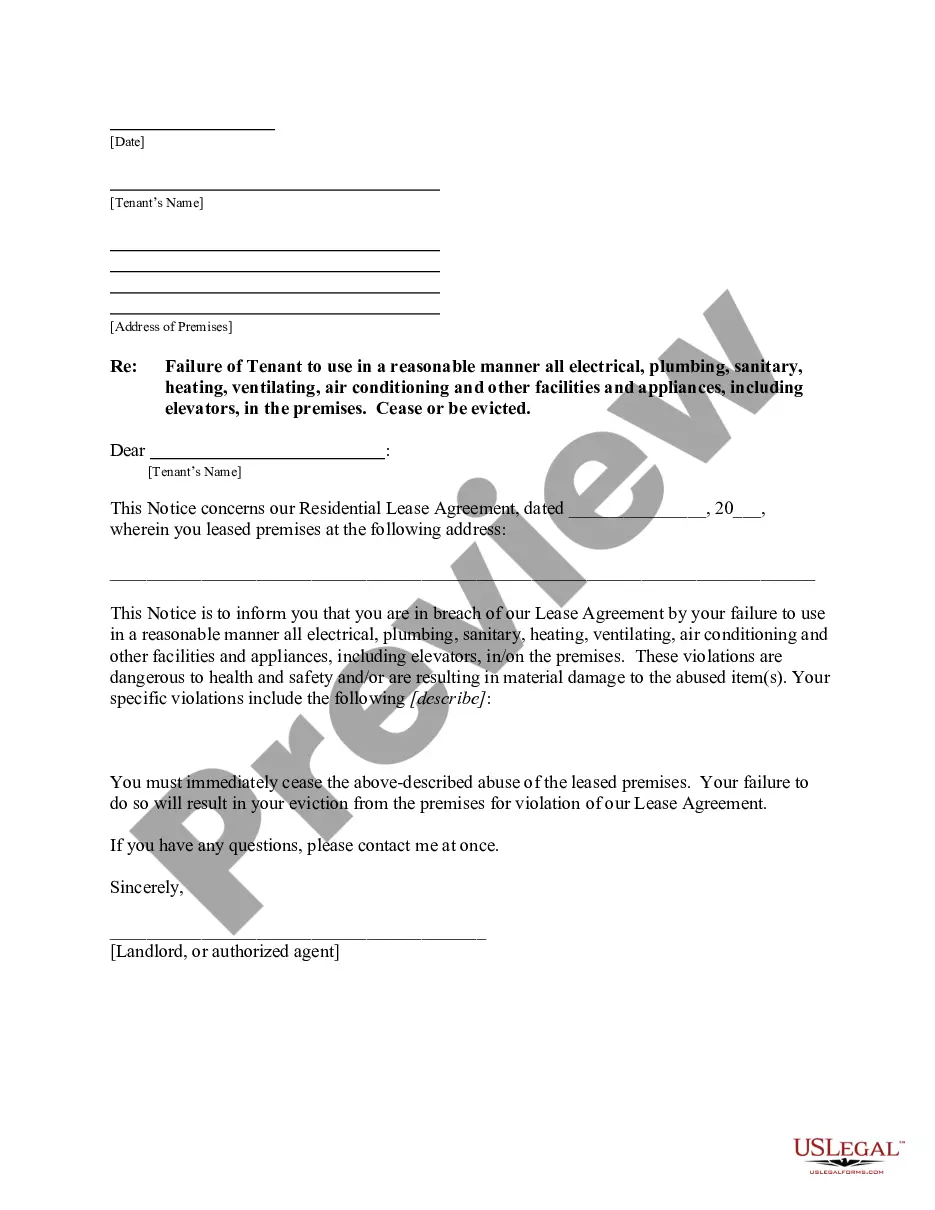
4.12 SPECIFIC INTENT/GENERAL INTENT
What is this form?
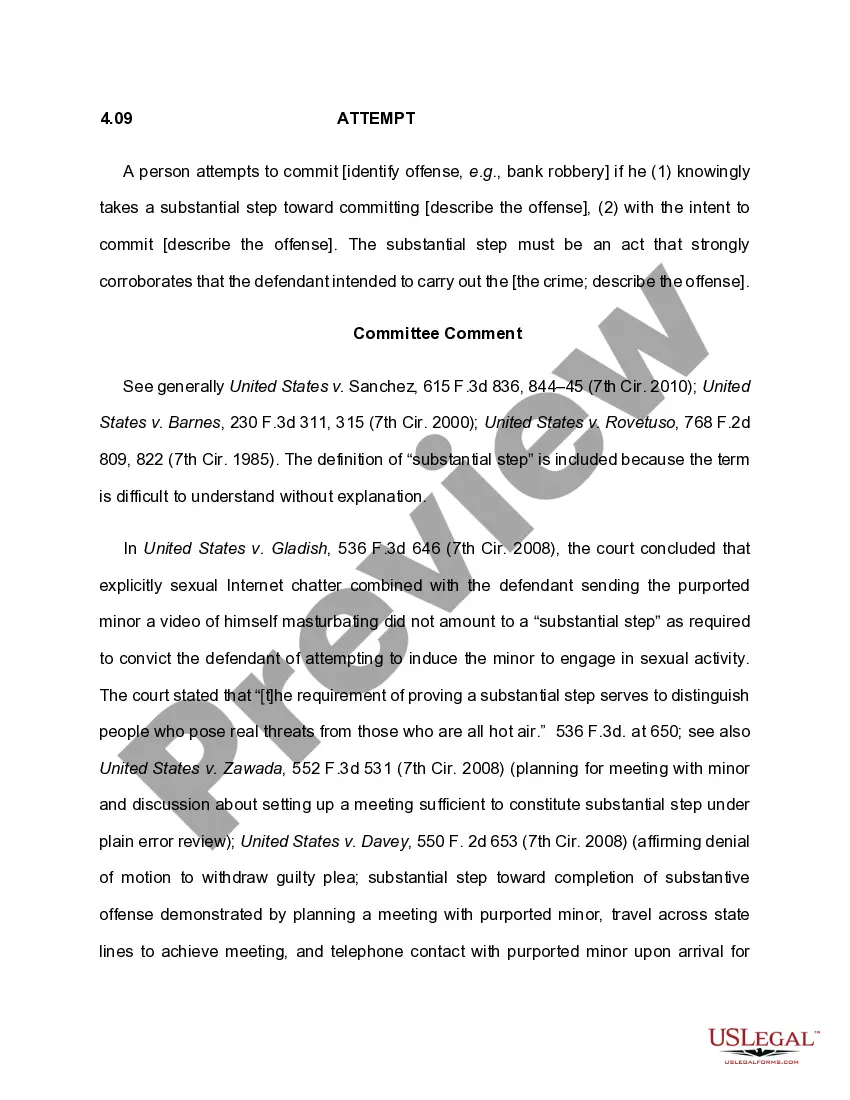
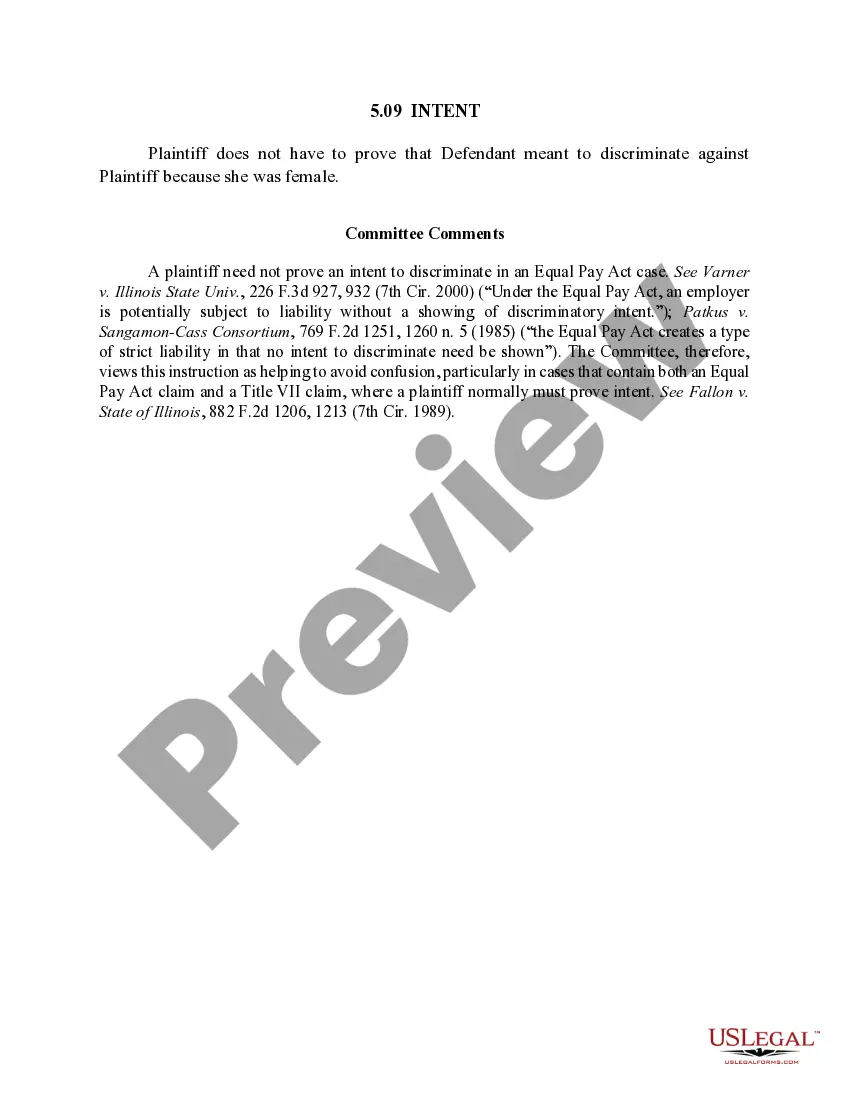
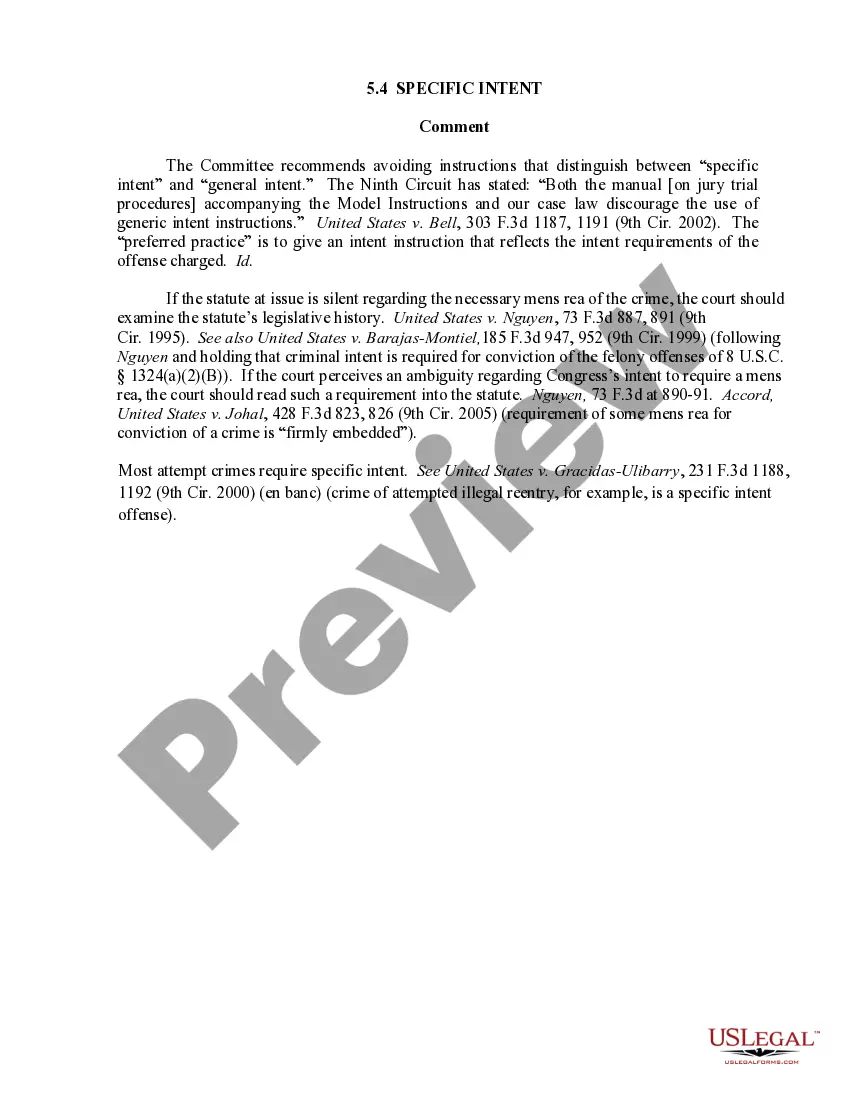
The 4.12 Specific Intent/General Intent form provides pattern jury instructions mainly utilized in federal courts, specifically by the Federal 7th Circuit Court. This form serves to clarify the mental state required for a particular offense, advising against the confusion that stems from differentiating between specific intent and general intent. By focusing on defining the precise mental state needed for a crime, the instructions aim to better inform juries while reducing ambiguity in legal scenarios.
Key parts of this document
- No specific instruction included
- Committee comment on avoiding distinction between specific and general intent
- Recommendations for clarity in juror instructions
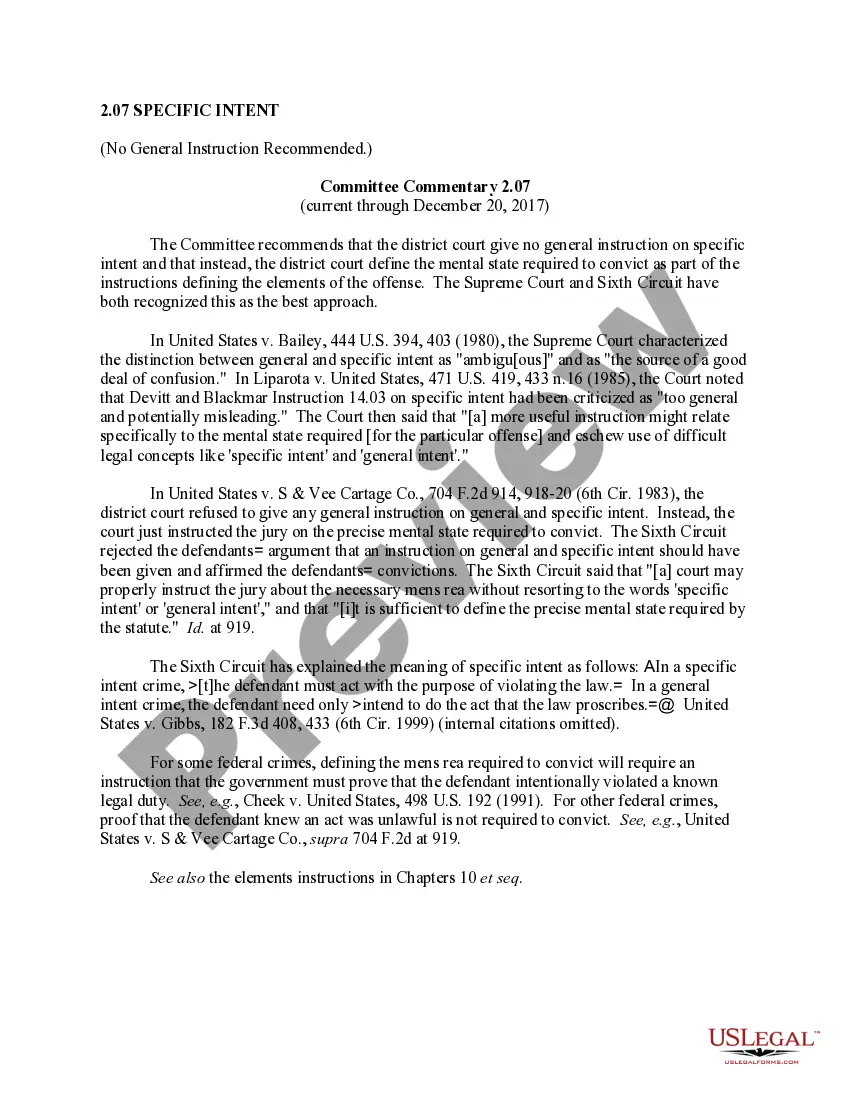
- References to relevant legal cases

Common use cases
This form is applicable in court cases where a defendant's mental state is in question. It is particularly useful in criminal cases involving charges that may require a specific mental mindset. Legal professionals should use this form to ensure jurors receive clear guidance on the mental criteria necessary for their deliberations.
Intended users of this form
- Judges seeking to provide jury instructions in criminal cases
- Attorneys representing clients in federal criminal proceedings
- Legal scholars studying court instructions and their implications
How to prepare this document
- Review the charges and determine the requisite mental state for the specific offense.
- Use the committee comment as guidance to formulate the instruction.
- Ensure clarity by avoiding unnecessary legal jargon and complicated distinctions.
- Include references to relevant legal cases to support your instructions.
Notarization requirements for this form
In most cases, this form does not require notarization. However, some jurisdictions or signing circumstances might. US Legal Forms offers online notarization powered by Notarize, accessible 24/7 for a quick, remote process.
Get your form ready online
Our built-in tools help you complete, sign, share, and store your documents in one place.
Make edits, fill in missing information, and update formatting in US Legal Forms—just like you would in MS Word.
Download a copy, print it, send it by email, or mail it via USPS—whatever works best for your next step.
Sign and collect signatures with our SignNow integration. Send to multiple recipients, set reminders, and more. Go Premium to unlock E-Sign.
If this form requires notarization, complete it online through a secure video call—no need to meet a notary in person or wait for an appointment.
We protect your documents and personal data by following strict security and privacy standards.

Make edits, fill in missing information, and update formatting in US Legal Forms—just like you would in MS Word.

Download a copy, print it, send it by email, or mail it via USPS—whatever works best for your next step.

Sign and collect signatures with our SignNow integration. Send to multiple recipients, set reminders, and more. Go Premium to unlock E-Sign.

If this form requires notarization, complete it online through a secure video call—no need to meet a notary in person or wait for an appointment.

We protect your documents and personal data by following strict security and privacy standards.
Avoid these common issues
- Failing to clarify the necessary mental state for the specific offense.
- Overcomplicating jury instructions with legal jargon.
- Neglecting to reference relevant case law that could aid understanding.
Why complete this form online
- Easy access to professionally drafted legal forms at any time.
- Ability to edit the document as needed to fit specific cases.
- Reliable and accurate format consistent with legal standards.
Legal use & context
- The form is designed for use in federal court proceedings.
- Utilization of the form aims to ensure clarity and reduce confusion in jury deliberation.
- Precise instructions can help uphold the integrity of verdicts based on the required mental state.
Summary of main points
- The 4.12 Specific Intent/General Intent form includes essential jury instruction guidelines.
- Emphasis is placed on defining the mental state necessary for specific crimes.
- Clear instructions assist juries, reduce legal misunderstandings, and promote justice.
Looking for another form?

Form popularity
FAQ
Three types of criminal intent exist: (1) general intent, which is presumed from the act of commission (such as speeding); (2) specific intent, which requires preplanning and presdisposition (such as burglary); and (3) constructive intent, the unintentional results of an act (such as a pedestrian death resulting from
General intent is an actual intent to perform some act, but without a wish for the consequences that result from that act. Depending on the offense alleged, both tort plaintiffs and criminal prosecutors may need to prove that the defendant acted with general intent.
Model Penal Code Criminal Intent The Model Penal Code divides criminal intent into four states of mind listed in order of culpability: purposely, knowingly, recklessly, and negligently.
Specific intent crimes require that the perpetrator was in a state of mind to commit a specific harm, known under the law as mens rea. Mens rea means ?guilty mind? in Latin. General intent crimes, on the other hand, do not need to prove a specific state of mind for a conviction.
Crimes with general intent involve knowingly committing a criminal act. Specific intent crimes involve knowingly committing the criminal act as well as an intent to cause a particular result by committing the act.
There are four kinds of criminal intent: purposeful, knowing, reckless, and negligent.
Actual intent to perform some act, along with a wish for the consequences that result from that act.
A common example of a specific intent crime is first degree murder. A defendant is only guilty of this offense if he actually intended to cause someone's death. It is not enough for a district attorney to show that an accused shot, stabbed or poisoned someone.