Nevada Transfer on Death Deed or TOD - Beneficiary Deed from Husband and Wife / Two Individuals to Husband and Wife / Two Individuals
Understanding this form
The Transfer on Death Deed, also known as a Beneficiary Deed, allows property to transfer automatically to designated beneficiaries upon the death of the owners, known as Grantors. This form is specific to Nevada and is particularly useful for couples (husband and wife) or two individuals who want their property to bypass probate administration. Unlike a traditional deed, it does not convey ownership until the Grantors pass away, making it a revocable tool for estate planning.
Key components of this form
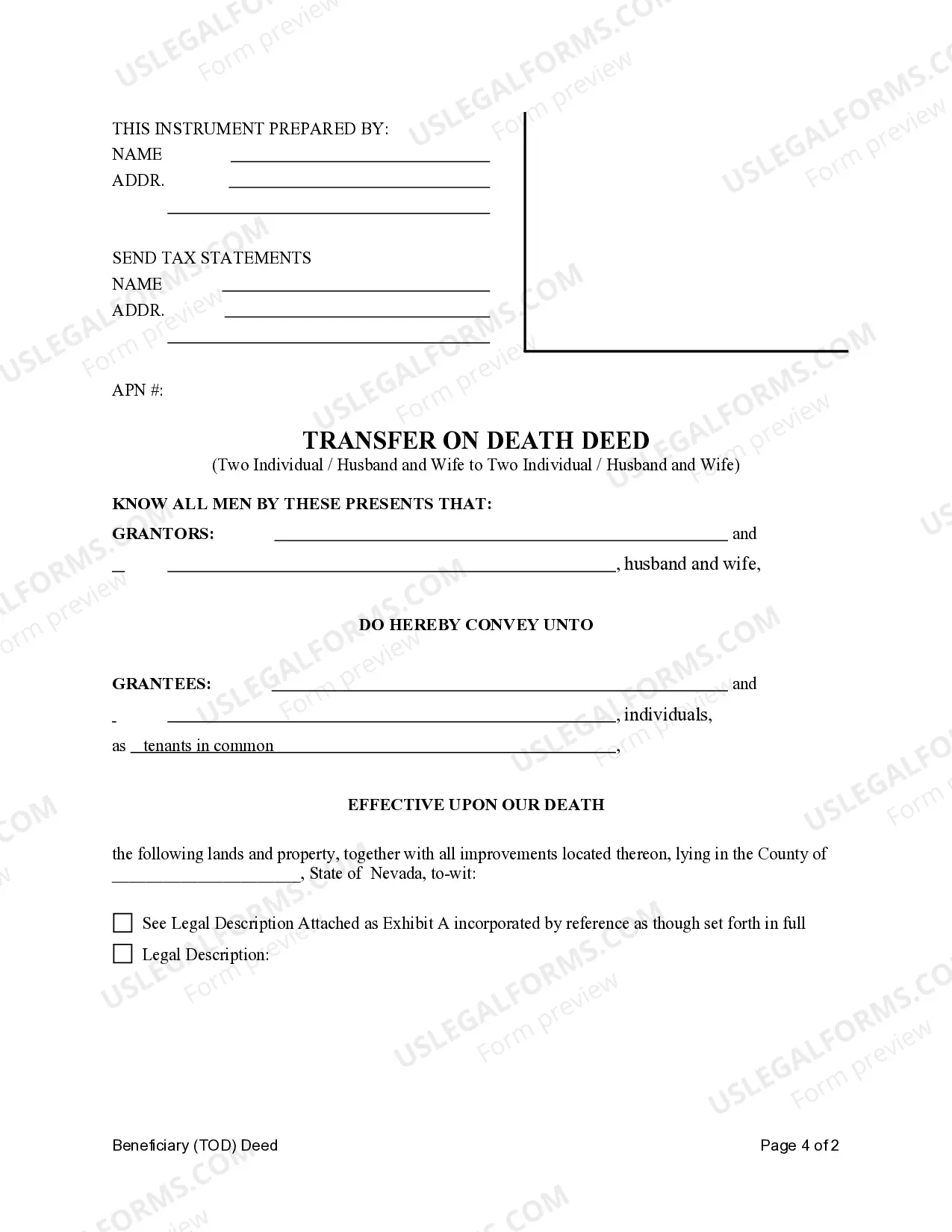
- Identifying information for the Grantors and Grantees.
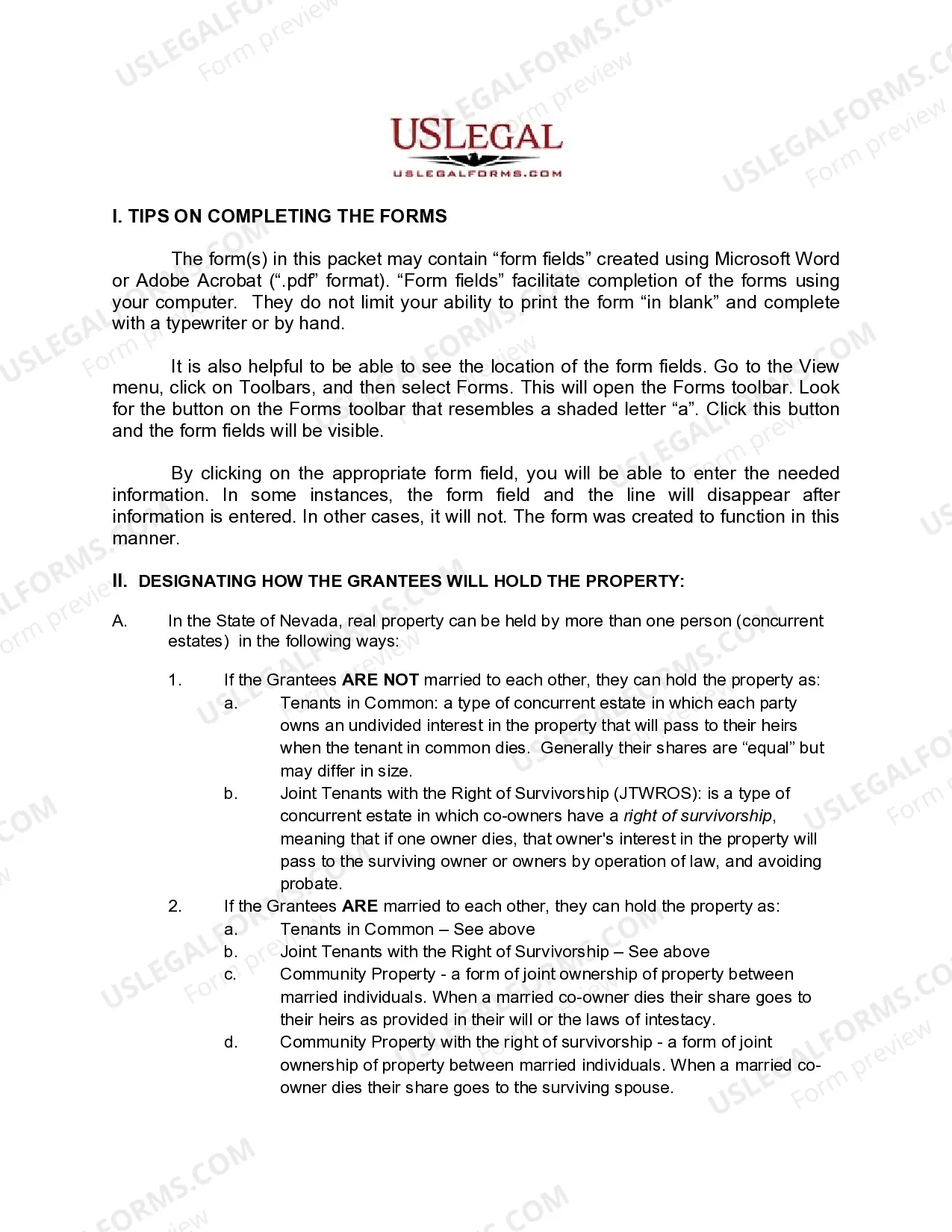
- Designation of how Grantees will hold the property (e.g., Tenants in Common, Joint Tenants with Right of Survivorship).
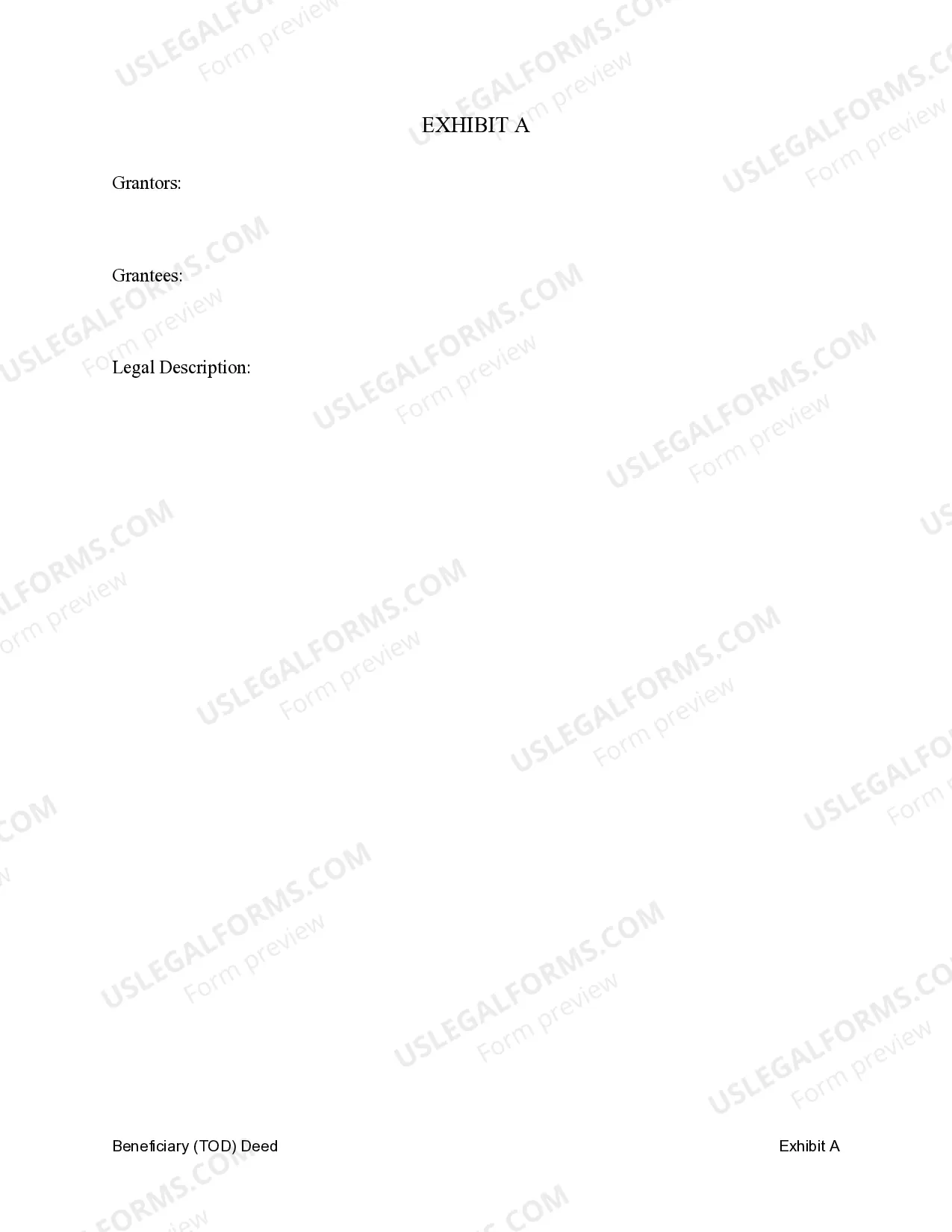
- Legal description of the property being transferred.
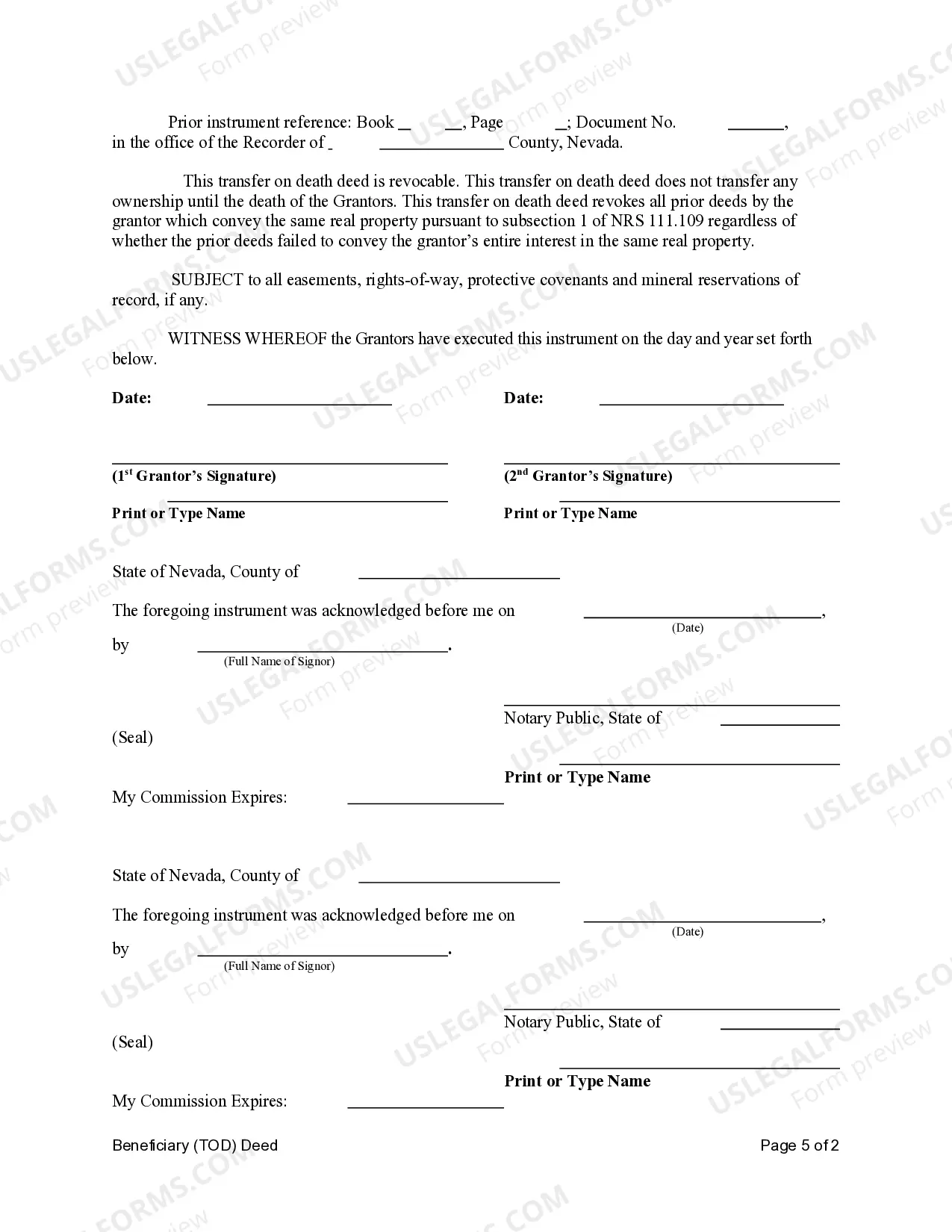
- Notary acknowledgement section to validate the deed.
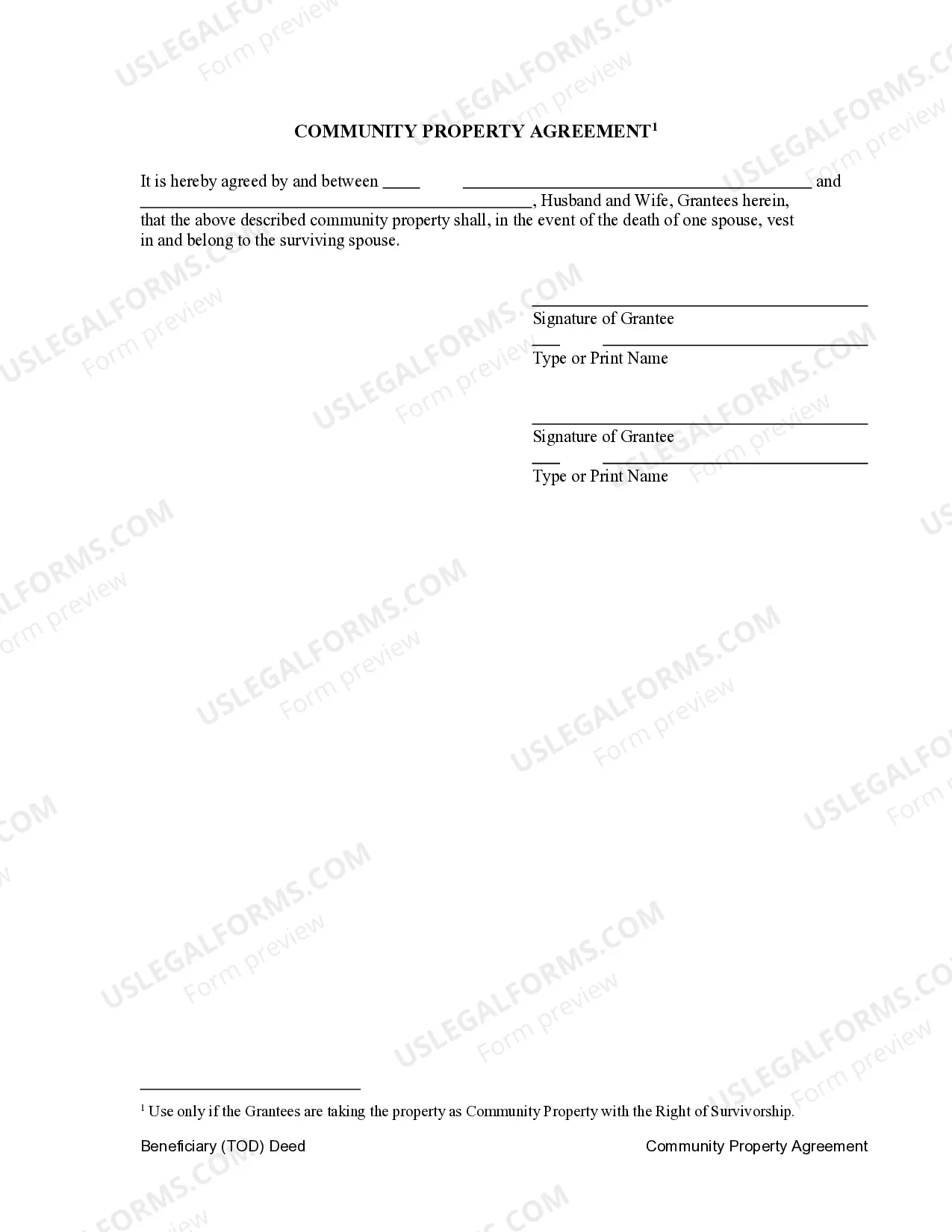
- Community Property Agreement section, if applicable.



Common use cases
This Transfer on Death Deed should be used when a property owner wants to ensure their real estate automatically transfers to specified individuals without going through probate. It is ideal for married couples or individuals who co-own property and want a straightforward way to pass on ownership after death.
Intended users of this form
- Married couples looking to transfer property to each other upon death.
- Two individuals who are co-owners of a property and wish to designate beneficiaries.
- Property owners in Nevada seeking a convenient method to avoid probate.
Completing this form step by step
- Enter the names of the Grantors (current owners) and Grantees (beneficiaries).
- Specify how the Grantees will hold the property (e.g., as Tenants in Common or Joint Tenants with Right of Survivorship).
- Include a detailed legal description of the property.
- Obtain signatures from both Grantors and have the form notarized.
- If applicable, include a Community Property Agreement section and have it signed by the Grantees.
Is notarization required?
Yes, this form must be notarized to be legally valid. This ensures that the identities of the Grantors are verified and the document is officially recognized. US Legal Forms offers integrated online notarization services for added convenience.
Get your form ready online
Our built-in tools help you complete, sign, share, and store your documents in one place.
Make edits, fill in missing information, and update formatting in US Legal Forms—just like you would in MS Word.
Download a copy, print it, send it by email, or mail it via USPS—whatever works best for your next step.
Sign and collect signatures with our SignNow integration. Send to multiple recipients, set reminders, and more. Go Premium to unlock E-Sign.
If this form requires notarization, complete it online through a secure video call—no need to meet a notary in person or wait for an appointment.
We protect your documents and personal data by following strict security and privacy standards.

Make edits, fill in missing information, and update formatting in US Legal Forms—just like you would in MS Word.

Download a copy, print it, send it by email, or mail it via USPS—whatever works best for your next step.

Sign and collect signatures with our SignNow integration. Send to multiple recipients, set reminders, and more. Go Premium to unlock E-Sign.

If this form requires notarization, complete it online through a secure video call—no need to meet a notary in person or wait for an appointment.

We protect your documents and personal data by following strict security and privacy standards.
Typical mistakes to avoid
- Failing to include a complete legal description of the property.
- Not properly designating how Grantees will hold the property.
- Omitting signatures or failing to have the document notarized.
- Using the form for property located outside of Nevada.
Benefits of completing this form online
- Immediate access to a legally formatted document that can be customized.
- Convenient electronic completion via computer or digital device.
- Ability to save and edit the form as needed before finalization.
Looking for another form?
Form popularity
FAQ
TOD/POD disadvantages: these accounts pass directly to the beneficiary and do not go through probate, if the executor does not have enough probate assets to pay the debts of the estate, creditors are entitled to claim some non- probate assets, including TOD accounts.
Some potential problems include: Paying estate debt.Accidentally disinheriting someone.Jeopardizing your beneficiary's government benefits.Conflict with your will.No plan for incapacity.
The primary advantage of a transfer on death deed is to avoid the probate process. If a property owner has executed a transfer on death deed, then as soon as the property owner dies, that property passes to the person named. The beneficiary does not have to go to court.
A deed upon death (also called a "transfer on death (TOD) deed" or "beneficiary deed") is like a regular deed you might use to transfer your Nevada real estate, but with a crucial difference: It doesn't take effect until your death.
There are various components to titling; one is using a transfer on death (TOD), generally used for investment accounts, or payable on death (POD) designation, used for bank accounts, which acts as a beneficiary designation to whom the account assets are to pass when the owner dies.
This transfer technically happens "as a function of law" when one owner dies. Even so, surviving spouses must initiate the process by recording an affidavit of death, accompanied by a certified copy of the death certificate, to terminate all title to or interest in real property of the deceased spouse.
TOD Accounts and Debt Creditors can still go after assets in a TOD account. TOD accounts are also subject to inheritance tax and capital gains tax, as well as taxes on withdrawals from pre-tax investments including IRAs and 401(k) plans.
What Is the Difference Between TOD and Beneficiary? A transfer on death is an instrument that transfers ownership of specific accounts and assets to someone. A beneficiary is someone that is named to receive something of value.