Texas Motion for Additional Time to Respond to Petition
About this form
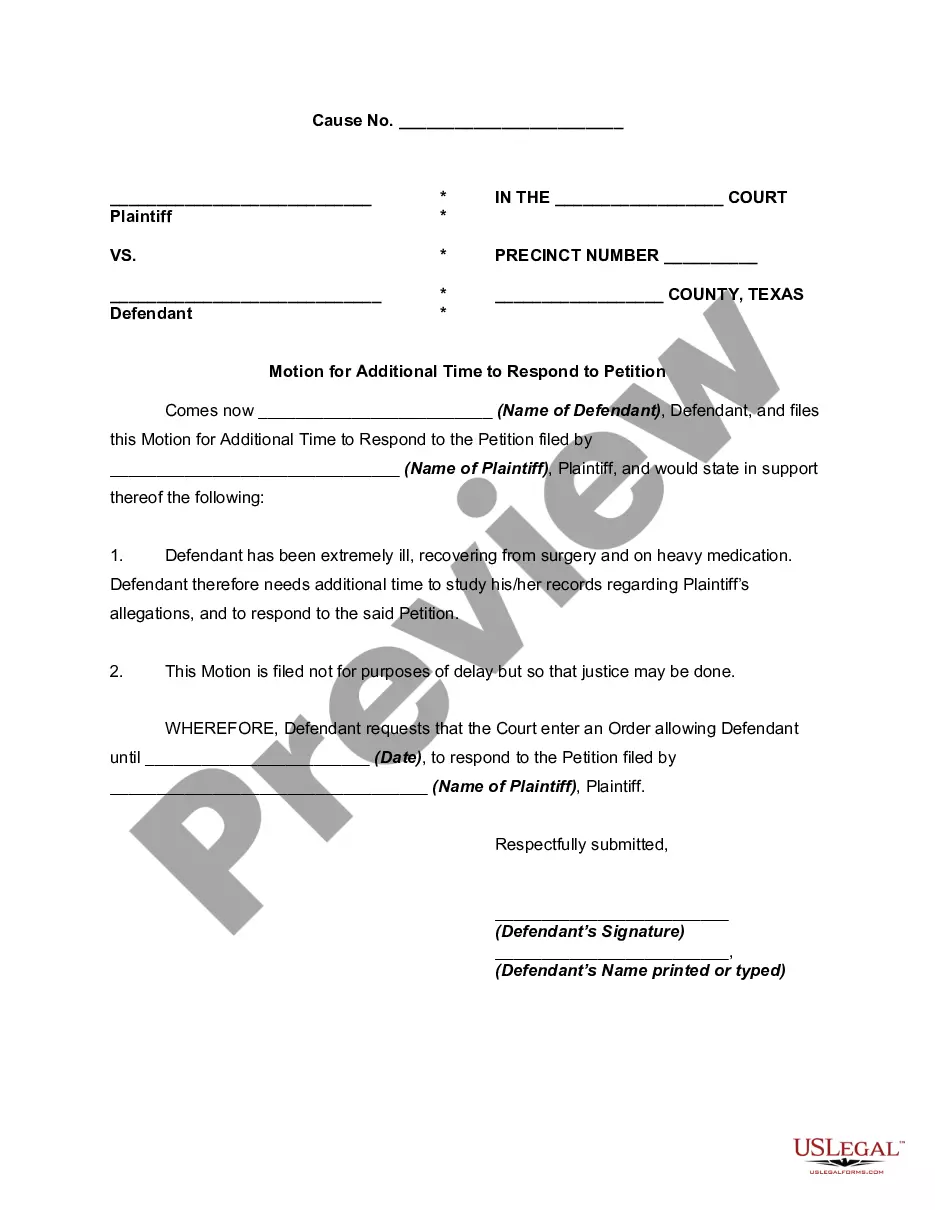
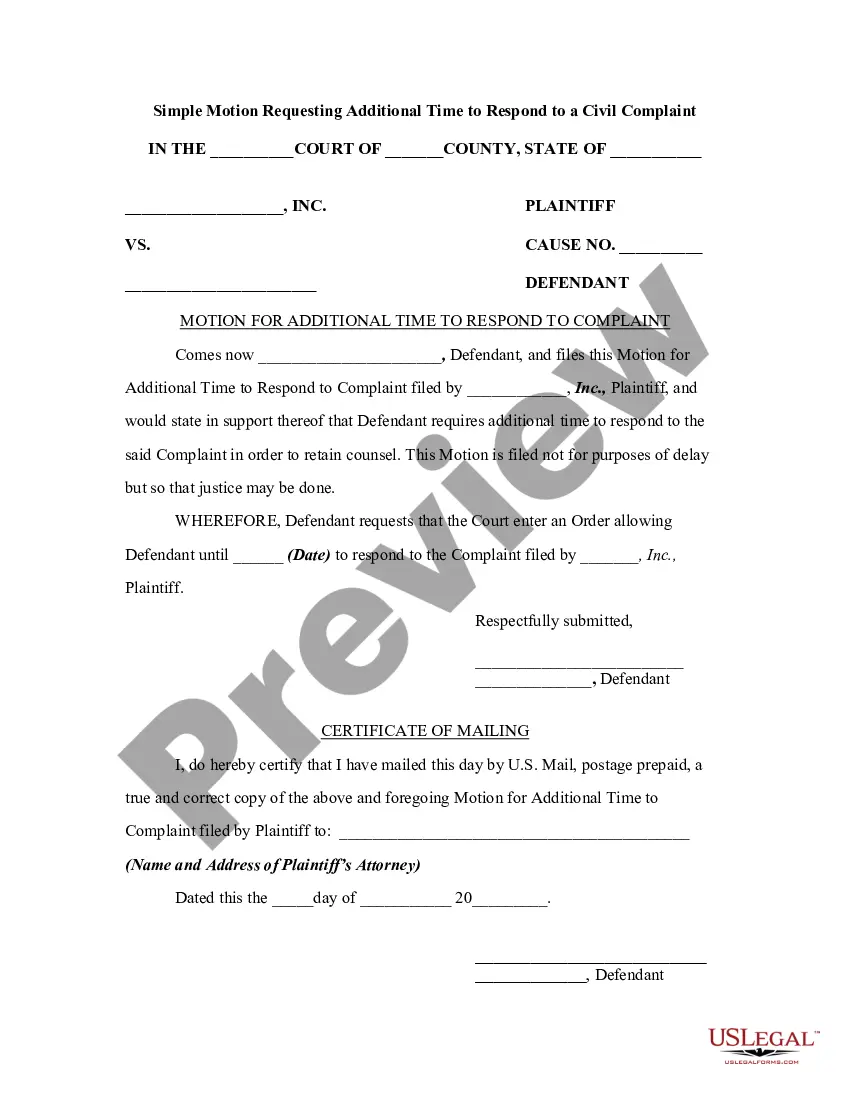
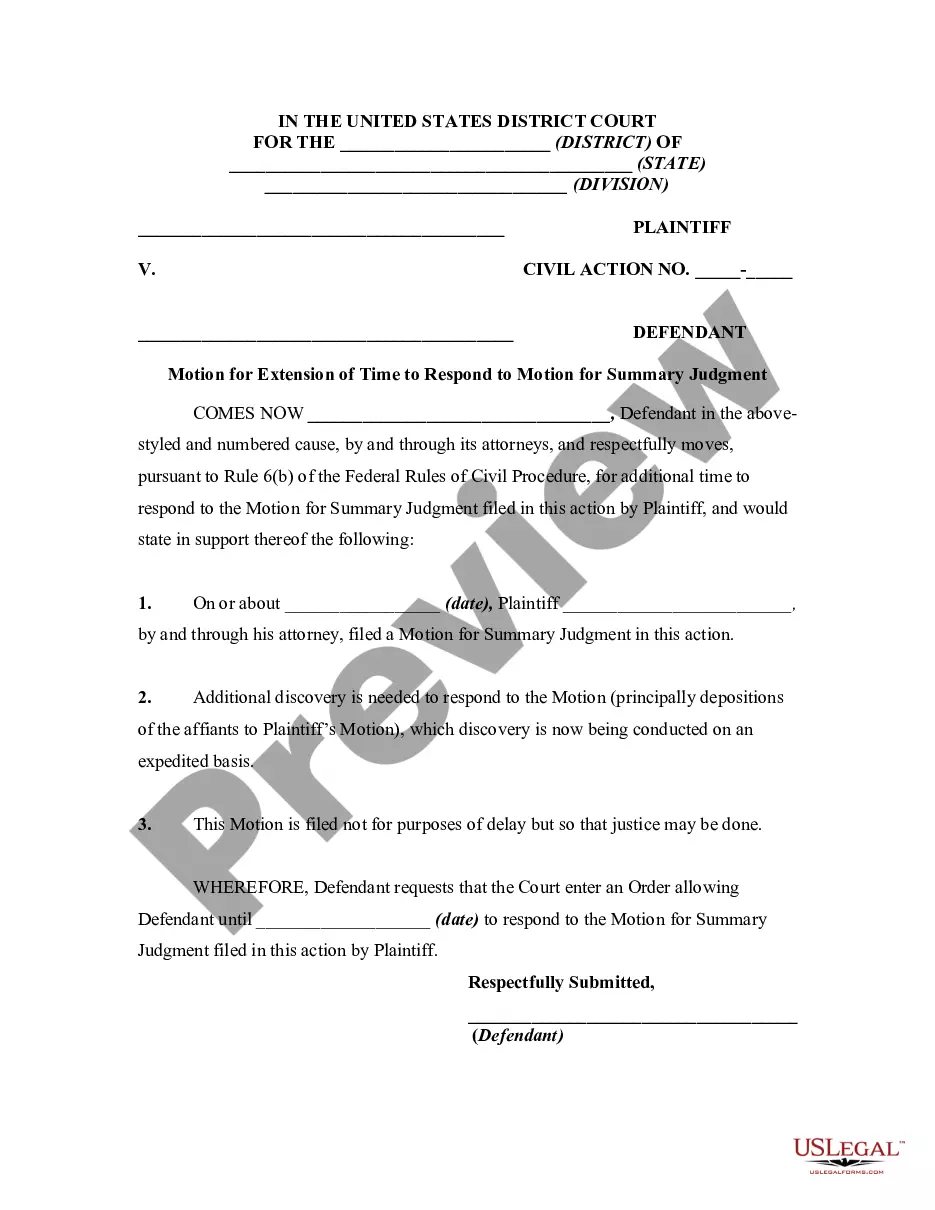
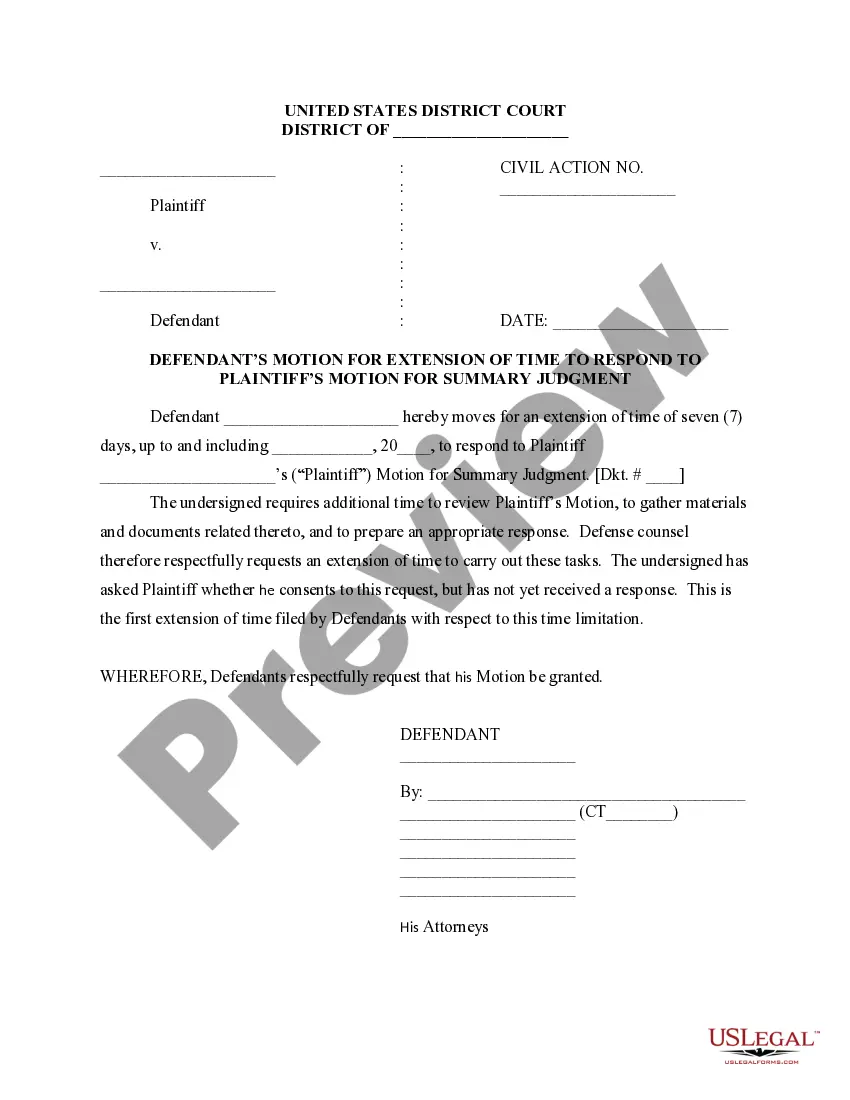
The Motion for Additional Time to Respond to Petition is a legal document used by a defendant in court to request an extension to file a response to a petition. This form is important for ensuring that defendants have sufficient time to prepare their response, particularly in situations where they may be facing health issues or other challenges. Unlike more general petitions, this motion specifically addresses a request for more time, which is often critical for a fair legal process.
Key parts of this document
- Caption: Identifies the court, parties involved, and case number.
- Introduction: States the defendant's name and their request for additional time.
- Reasons for Request: Details the rationale for needing more time, such as health issues.
- Requested Extension: Specifies the new deadline for the response.
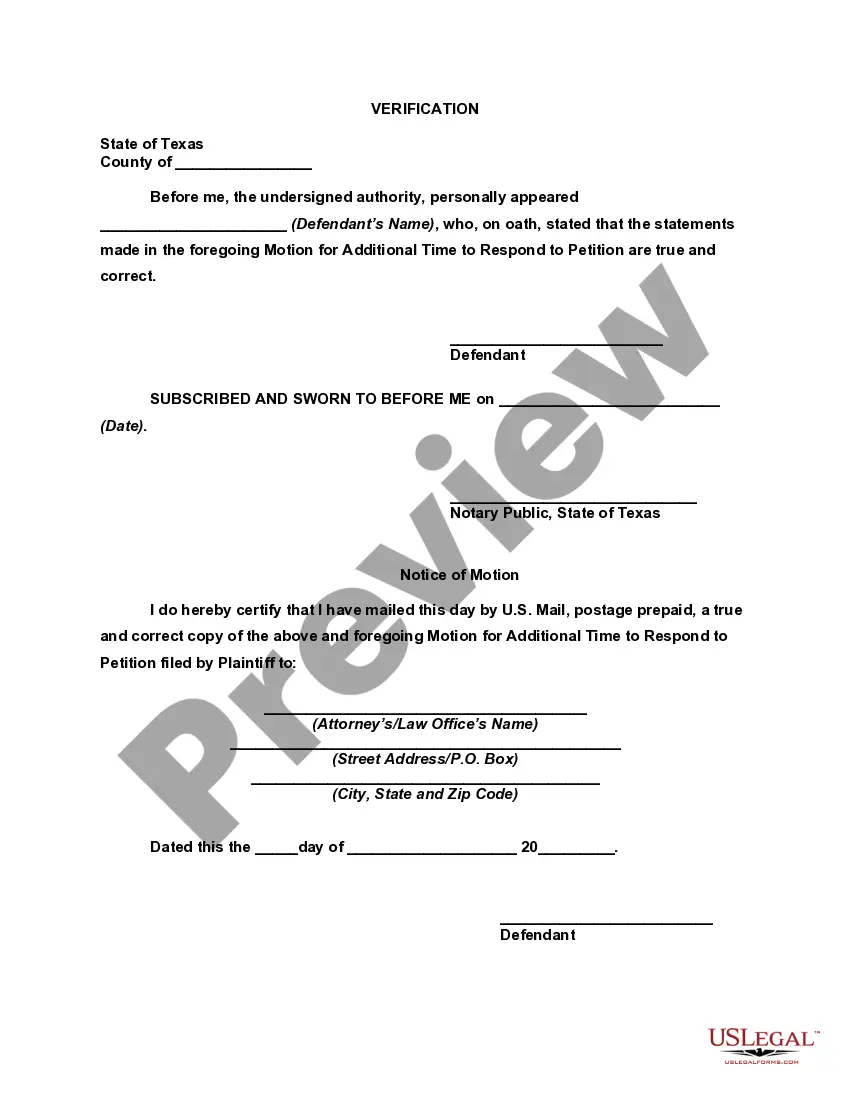
- Verification: Includes a statement of truth and signature by the defendant.
When to use this document
This form is applicable in situations where a defendant needs more time to respond to a legal petition. Common scenarios include recovering from an illness, mental health challenges, or needing additional time to gather necessary documents and information. If a defendant feels that the standard time frame will not allow them to adequately prepare their response, this motion is the proper avenue to request an extension.
Who should use this form
- Defendants in civil court who have received a petition and require more time to respond.
- Individuals facing health challenges or extenuating circumstances that impede timely response.
- Those who are not represented by an attorney and seek a fair chance to present their case.
How to complete this form
- Identify the parties by entering their names in the caption section.
- Clearly state the reasons for requesting more time, detailing any challenges you're facing.
- Specify the new deadline you are requesting to submit your response.
- Sign the document to verify the truthfulness of your statements.
- Submit the completed form to the court and provide a copy to the plaintiff's attorney.
Notarization requirements for this form
To make this form legally binding, it must be notarized. Our online notarization service, powered by Notarize, lets you verify and sign documents remotely through an encrypted video session.
Get your form ready online
Our built-in tools help you complete, sign, share, and store your documents in one place.
Make edits, fill in missing information, and update formatting in US Legal Forms—just like you would in MS Word.
Download a copy, print it, send it by email, or mail it via USPS—whatever works best for your next step.
Sign and collect signatures with our SignNow integration. Send to multiple recipients, set reminders, and more. Go Premium to unlock E-Sign.
If this form requires notarization, complete it online through a secure video call—no need to meet a notary in person or wait for an appointment.
We protect your documents and personal data by following strict security and privacy standards.

Make edits, fill in missing information, and update formatting in US Legal Forms—just like you would in MS Word.

Download a copy, print it, send it by email, or mail it via USPS—whatever works best for your next step.

Sign and collect signatures with our SignNow integration. Send to multiple recipients, set reminders, and more. Go Premium to unlock E-Sign.

If this form requires notarization, complete it online through a secure video call—no need to meet a notary in person or wait for an appointment.

We protect your documents and personal data by following strict security and privacy standards.
Mistakes to watch out for
- Failing to provide a clear explanation for the request for additional time.
- Not specifying a new deadline for the response.
- Missing signatures or failing to properly verify the motion.
- Not notifying the other parties involved in the case about the filed motion.
Why use this form online
- Convenience: Access and complete the form from your own home at any time.
- Editability: Easily make changes to ensure your reasons and details are accurate.
- Reliability: Forms are drafted by licensed attorneys, ensuring compliance with legal standards.
Legal use & context
- Effective in providing necessary time for defendants to prepare a substantive response.
- Supports due process by allowing defendants a fair opportunity to address allegations against them.
- Subject to local court rules regarding timelines and filing procedures.
What to keep in mind
- The Motion for Additional Time to Respond to Petition is essential for defendants needing extra time due to valid reasons.
- Clear communication and proper documentation are critical when submitting this motion.
- Consult local rules to ensure compliance with any specific requirements.
Looking for another form?

Form popularity
FAQ
2610 Step 1: Fill out these forms. 2610 Step 2: Ask the other side to sign both forms. 2610 Step 3: Turn in your motion form. 2610 Step 4: Ask the judge to sign your order form. 2610 Step 5: Send a file-stamped copy of the order to the other side.
Read the summons and make sure you know the date you must answer by. Read the complaint carefully. Write your answer. Sign and date the answer. Make copies for the plaintiff and yourself. Mail a copy to the plaintiff. File your answer with the court by the date on the summons.
Take your completed Form SC-150 or letter to the clerk's office. Ask the clerk to attach it to your file. Or go to your trial and ask the judge for a postponement (or continuance). In your Form SC-150 or letter, give the judge a good reason why you are filing your request late.
Summary judgment motions do have a timeline for filing and response. First, a summary judgment motion must be on file at least 21 days before it can be heard. (TRCP 166a) Second, any opposing affidavits or written response should be on file no later than 7 days before the hearing.
Continuances Based on Inadequate Time. Perhaps the most common reason for a continuance is when one side did not have enough time to investigate the case and analyze the evidence. Continuances Based on Changing the Indictment or Attorney. Continuances Based on Surprises.
What is a continuance? A continuance changes the date of a court hearing or trial to a later date. You can ask a judge for a continuance by filing a motion for continuance.
The paperwork that is served on the respondent will typically indicate the amount of time that the respondent has to file their answer. Typically, they will have at least 20 days to respond. States have different laws and requirements regarding what can and/or should be filed.
You must fill out and sign a "reset form" at the Court Clerk's office. If you wish to reschedule your court date more than once for any reason, you must file a written "Motion for Continuance" at the Court Clerk's office on or before the scheduled court date.
The response to the Motion must be filed at least 7 days prior to any hearing. The Response should contain an affidavit specifically creating a fact issue in the case.