New Mexico Warranty Deed from Husband to Himself and Wife
Understanding this form
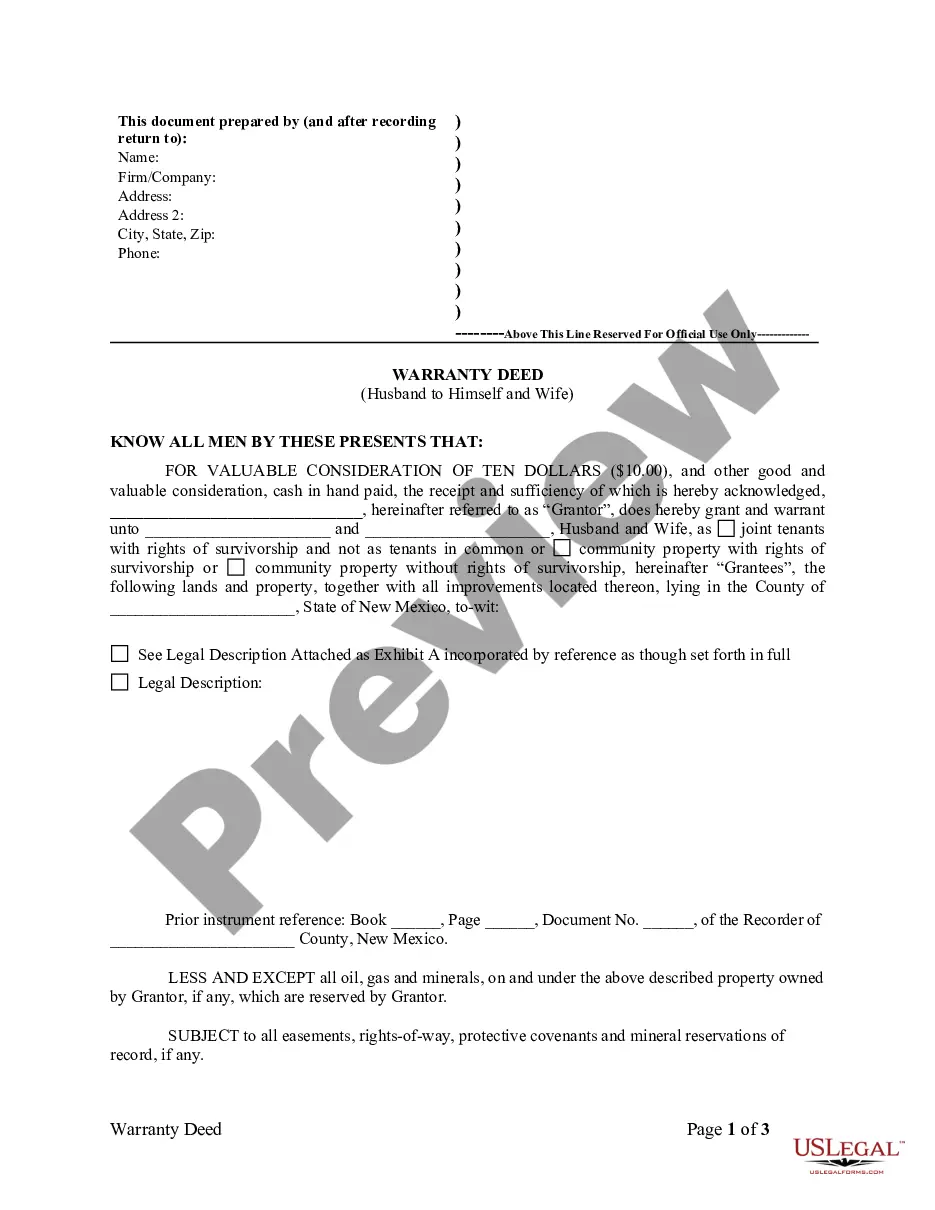
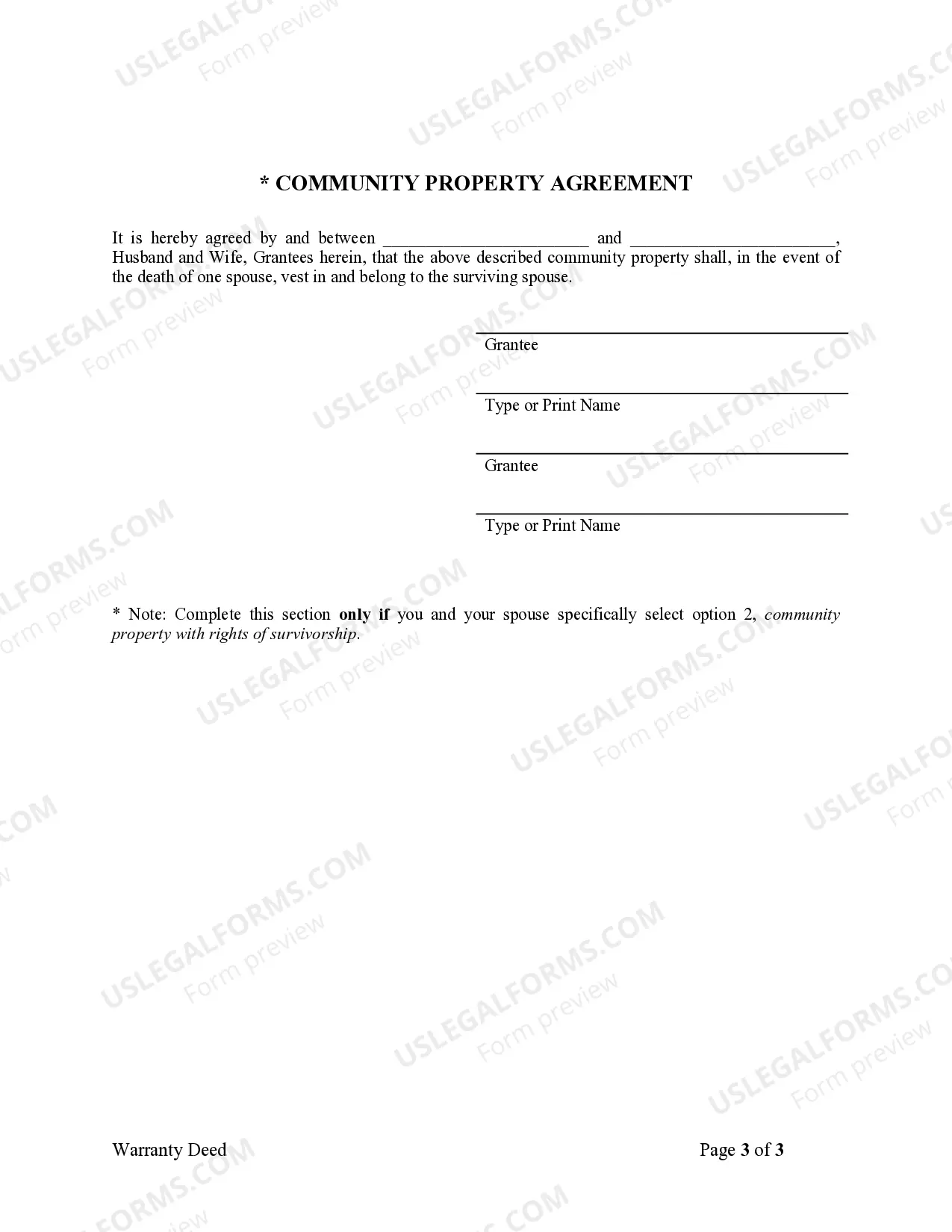
A Warranty Deed from Husband to Himself and Wife is a legal document used to transfer property ownership from a husband to himself and his wife. This form ensures that both spouses hold the property as joint tenants with rights of survivorship, meaning that if one spouse passes away, the other automatically inherits the property. This deed is specifically different from other types of deeds, as it emphasizes the joint ownership and survivorship aspect while complying with state statutory laws.
Key components of this form
- Identification of the grantor (husband) and grantees (husband and wife)
- Legal description of the property being transferred
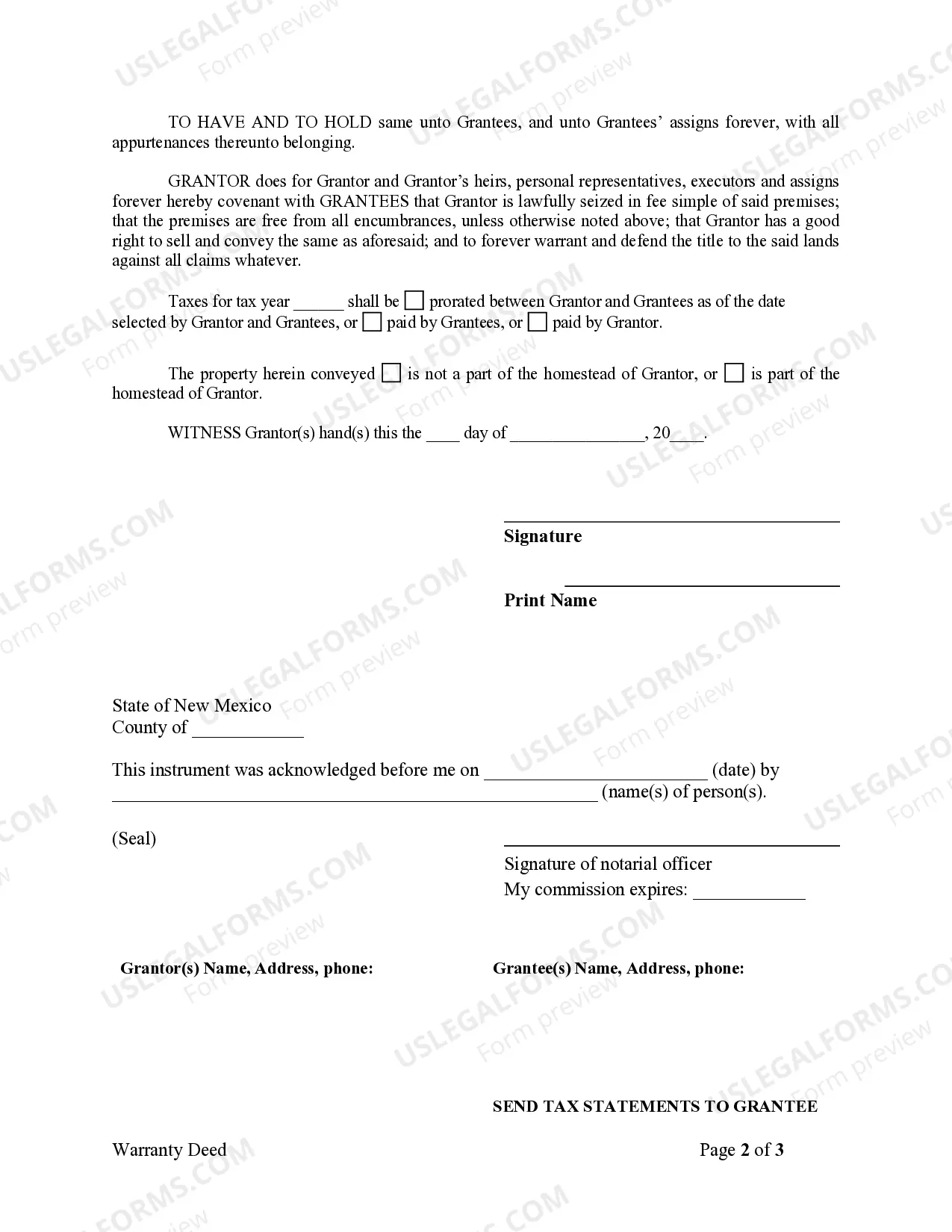
- Statement of ownership and warranty of clear title
- Provisions for easements, rights-of-way, and mineral reservations
- Tax prorations and whether the property is part of the homestead
- Signatures of the grantor and grantees




When to use this form
This form is suitable to use when a husband wishes to transfer property he owns to himself and his wife. Common scenarios include marriage, adding a spouse to property ownership, or estate planning activities. It is particularly useful for couples who want to ensure that both parties have equal rights to the property and want to avoid complications in the event of one spouse's death.
Intended users of this form
This form is intended for:
- Married couples wanting to establish joint ownership of property
- Property owners looking to add their spouse to the title
- Individuals engaged in estate planning or property transfer within a family
Completing this form step by step
- Identify the parties involved: the husband as the grantor and both the husband and wife as grantees.
- Clearly specify the legal description of the property involved in the deed.
- Indicate any reservations, including easements or mineral rights, that apply to the property.
- Fill in the date of transfer and ensure accurate tax prorations are addressed.
- Both grantor and grantees must sign the document in accordance with legal requirements.
Is notarization required?
To make this form legally binding, it must be notarized. Our online notarization service, powered by Notarize, lets you verify and sign documents remotely through an encrypted video session.
Get your form ready online
Our built-in tools help you complete, sign, share, and store your documents in one place.
Make edits, fill in missing information, and update formatting in US Legal Forms—just like you would in MS Word.
Download a copy, print it, send it by email, or mail it via USPS—whatever works best for your next step.
Sign and collect signatures with our SignNow integration. Send to multiple recipients, set reminders, and more. Go Premium to unlock E-Sign.
If this form requires notarization, complete it online through a secure video call—no need to meet a notary in person or wait for an appointment.
We protect your documents and personal data by following strict security and privacy standards.

Make edits, fill in missing information, and update formatting in US Legal Forms—just like you would in MS Word.

Download a copy, print it, send it by email, or mail it via USPS—whatever works best for your next step.

Sign and collect signatures with our SignNow integration. Send to multiple recipients, set reminders, and more. Go Premium to unlock E-Sign.

If this form requires notarization, complete it online through a secure video call—no need to meet a notary in person or wait for an appointment.

We protect your documents and personal data by following strict security and privacy standards.
Mistakes to watch out for
- Failing to include a detailed legal description of the property.
- Not addressing tax responsibilities, leading to potential disputes.
- Omitting required signatures or dates, which may invalidate the deed.
- Not understanding the implications of joint tenancy with rights of survivorship.
Benefits of completing this form online
- Convenient access to legal forms at any time and from any location.
- Editable templates that allow for customization based on individual needs.
- Reliable documents drafted by licensed attorneys for peace of mind.
Legal use & context
- This form provides a clear title to the property, reducing the risk of legal challenges.
- It ensures that both spouses have equal rights to the property during their marriage and after one spouse's passing.
- Properly completed and executed, this form can aid in avoiding probate issues related to property transfer.
Key takeaways
- The Warranty Deed from Husband to Himself and Wife allows for joint property ownership between spouses.
- Completing this deed ensures that property can pass directly to the surviving spouse.
- Using a legally compliant template simplifies the process of property transfer.
Looking for another form?
Form popularity
FAQ
Failure to record a deed effectively makes it impossible for the public to know about the transfer of a property. That means the legal owner of the property appears to be someone other than the buyer, a situation that can generate serious ramifications.
Step 1 Write in the name of the grantor or seller. Step 2 Fill in the name and address of the grantee or buyer. Step 3 Specify the property information including county, lot, block and recording information. Step 4 Sign and date in the presence of a notary public.
A warranty deed guarantees that: The grantor is the rightful owner of the property and has the legal right to transfer the title.The title would withstand third-party claims to ownership of the property. The grantor will do anything to ensure the grantee's title to the property.
The New Mexico special warranty deed is a legal document used to convey real estate.A special warranty includes a guarantee from the grantor that there are no hidden interests or encumbrances on the property that arose while he or she owned the property.
Retrieve your original deed. Get the appropriate deed form. Draft the deed. Sign the deed before a notary. Record the deed with the county recorder. Obtain the new original deed.
Contrary to normal expectations, the Deed DOES NOT have to be recorded to be effective or to show delivery, and because of that, the Deed DOES NOT have to be signed in front of a Notary Public. However, if you plan to record it, then it does have to be notarized as that is a County Recorder requirement.
Fill out the "grantor" section of the warranty deed. The grantors are the givers, or current owners, of the property. Use the legal name of each grantor and insert current addresses after each grantor's name.