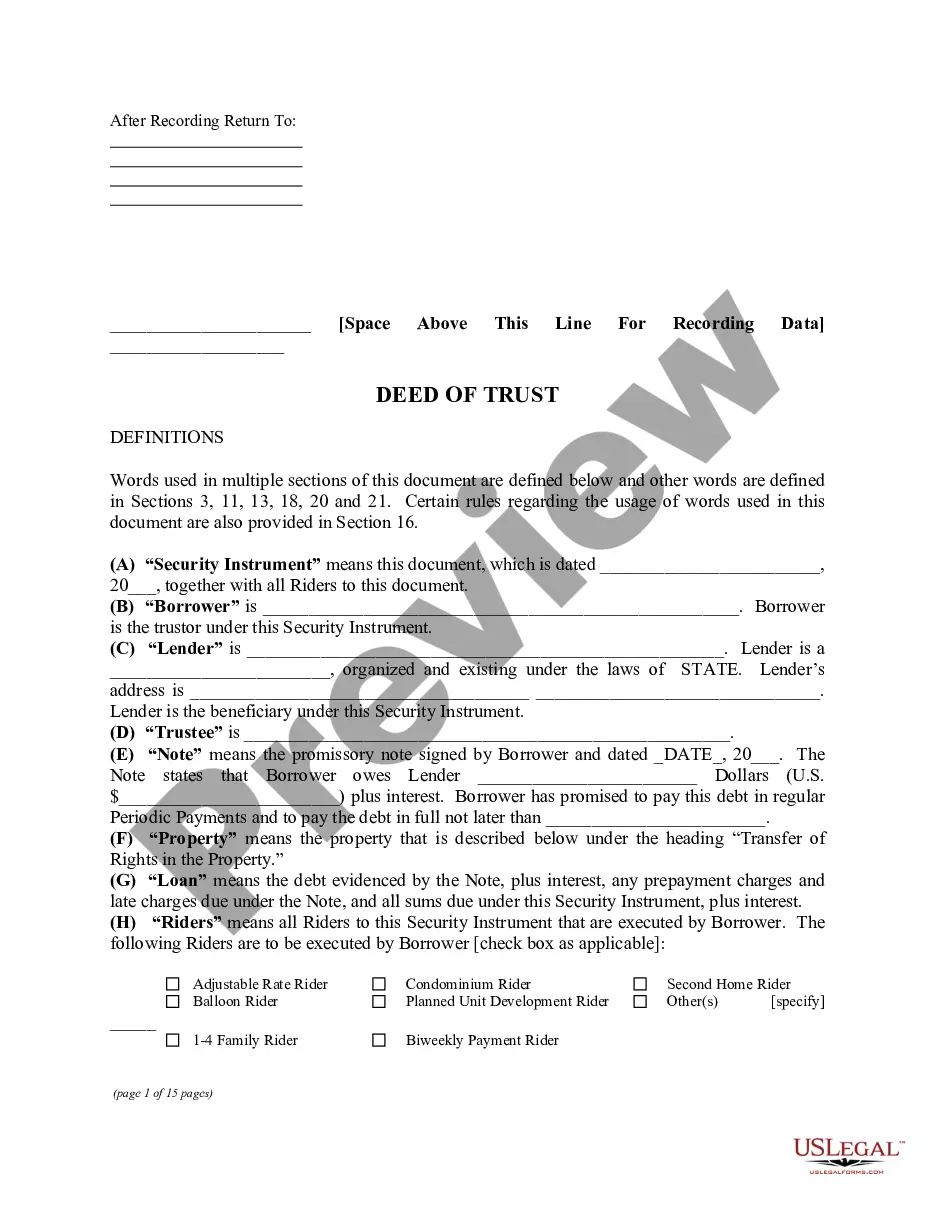
South Carolina Foreclosure Master in Equity Deed
About this form
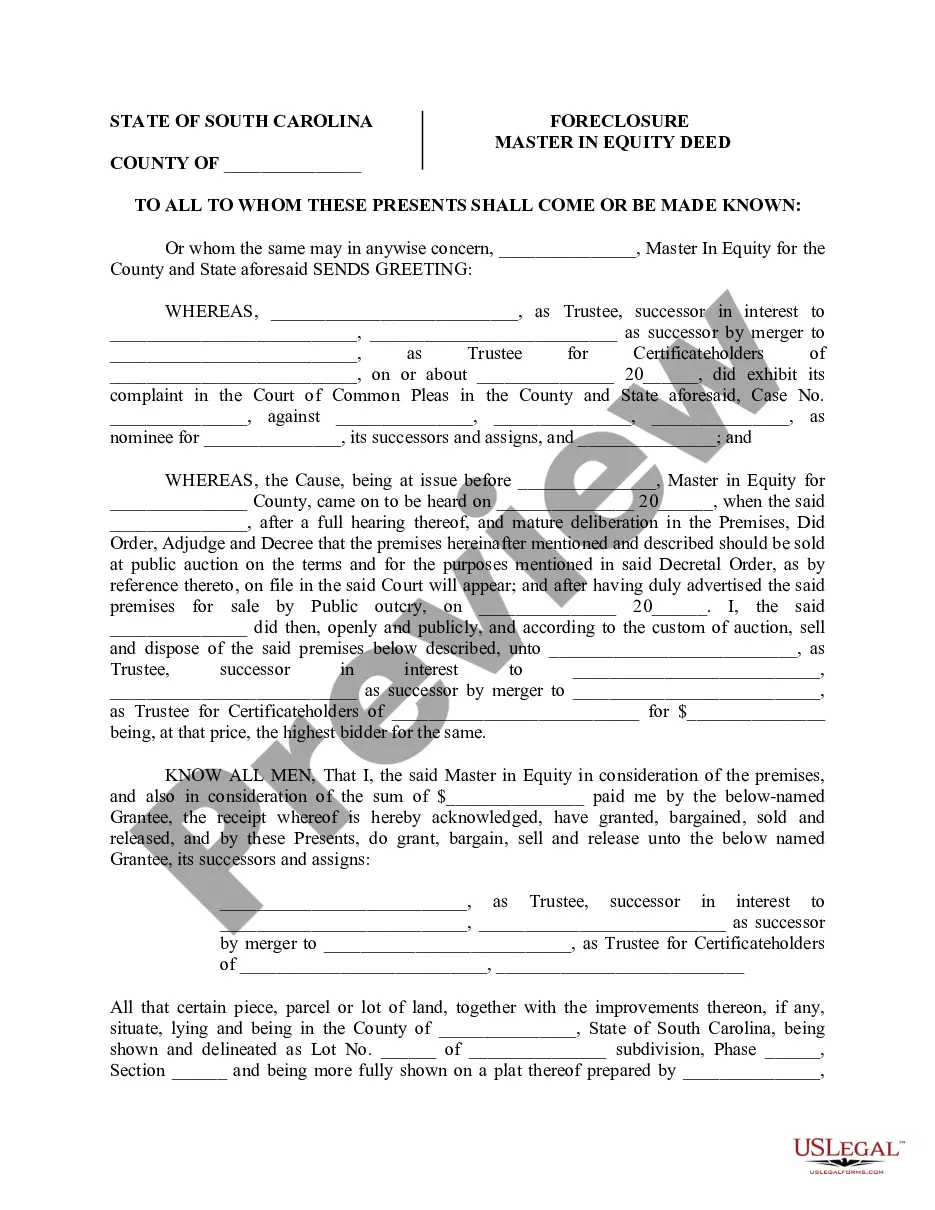
The Foreclosure Master in Equity Deed is a legal document used in South Carolina to finalize the sale of a property that has been foreclosed by a lender. This form is signed by a Master-in-Equity, a judge tasked with overseeing foreclosure proceedings without a jury, and it serves as official proof of the transfer of property ownership to the highest bidder at a public sale. Unlike other real estate deeds, this form is specifically related to foreclosure actions and carries specific legal implications tied to the sale of the property to satisfy a debt.
What’s included in this form
- Identification of the parties involved in the foreclosure and sale.
- Details of the court case, including case number and hearing dates.
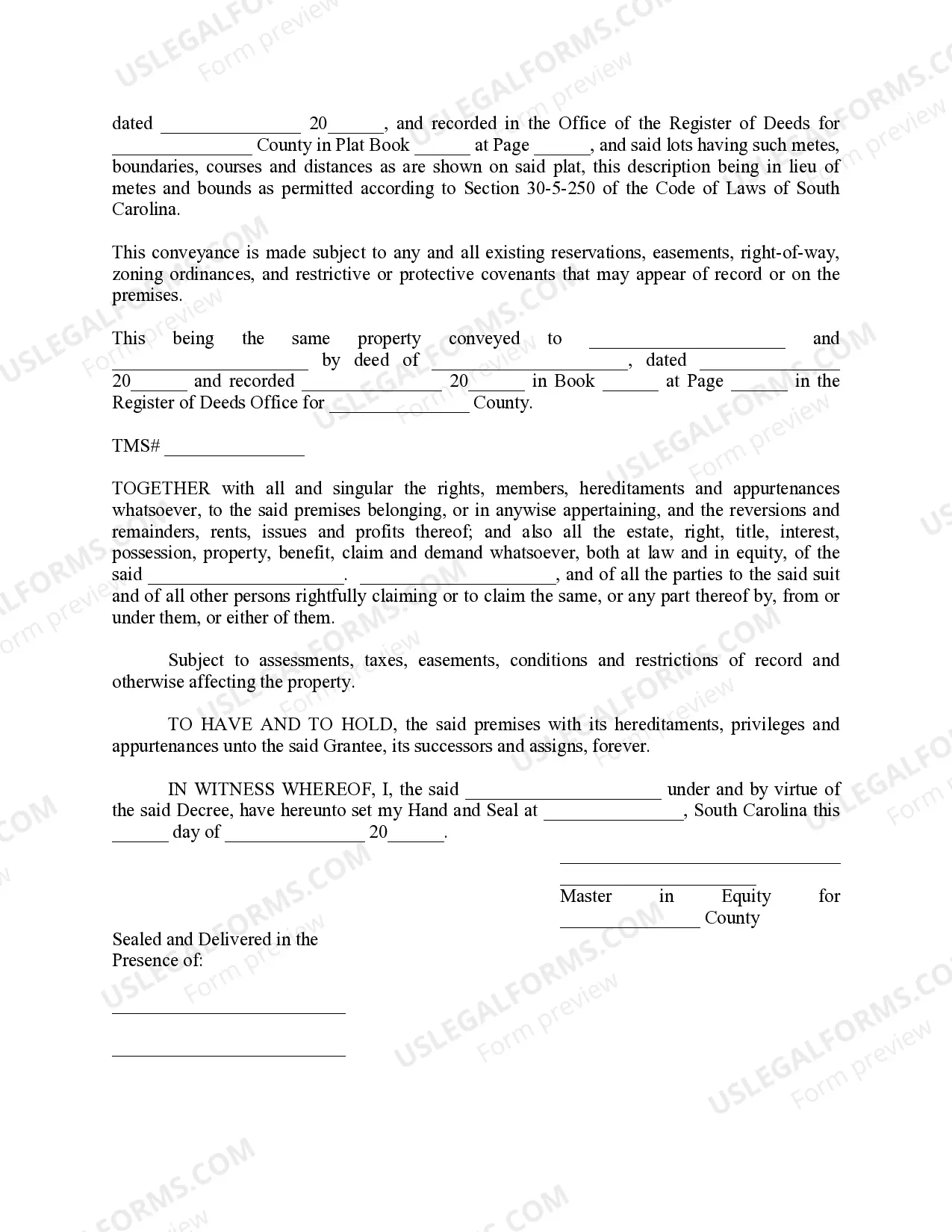
- Description of the property being sold, including lot number and subdivision information.
- Declaration of the sale price and acknowledgment of receipt by the Master in Equity.
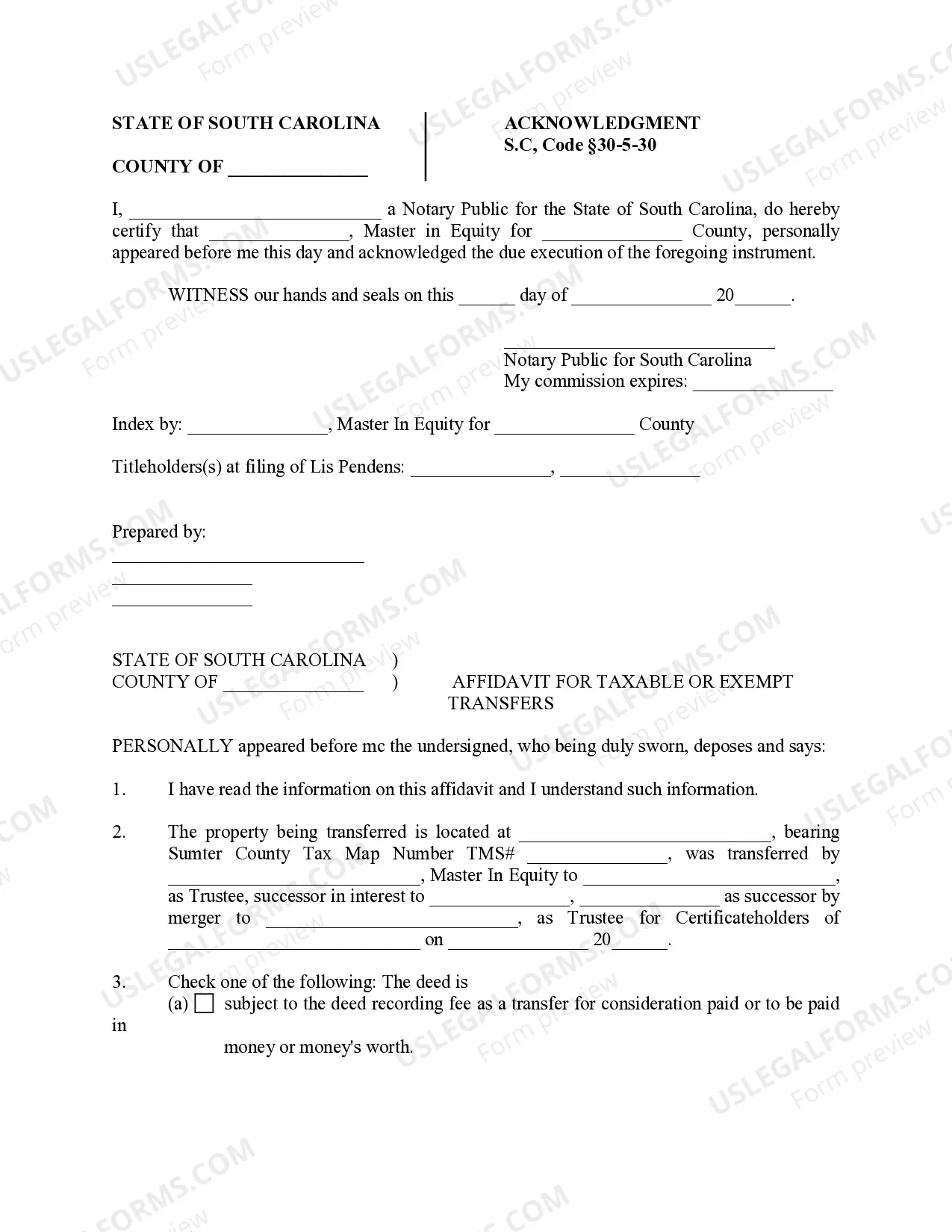
- Signatures of the Master in Equity and a notary public for authentication.
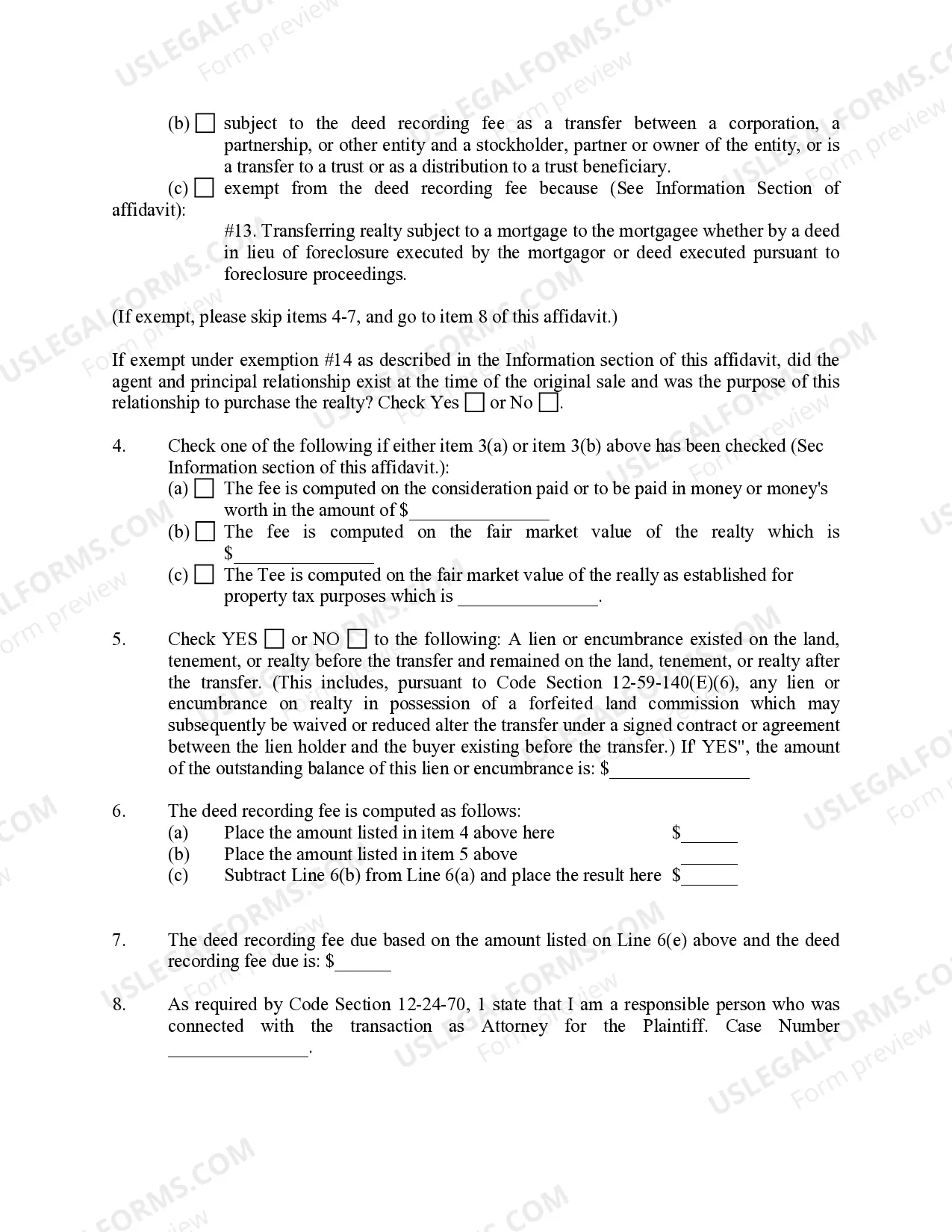
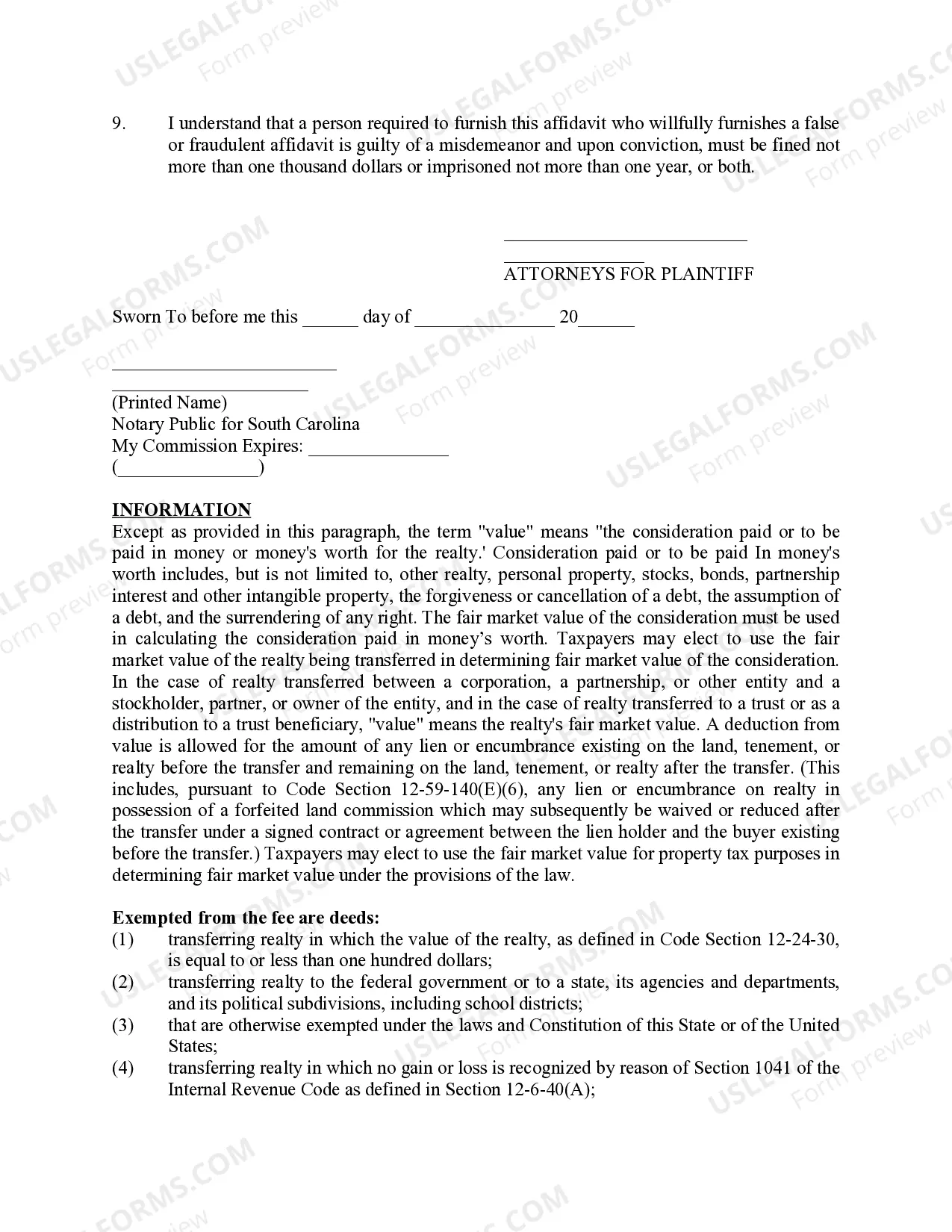
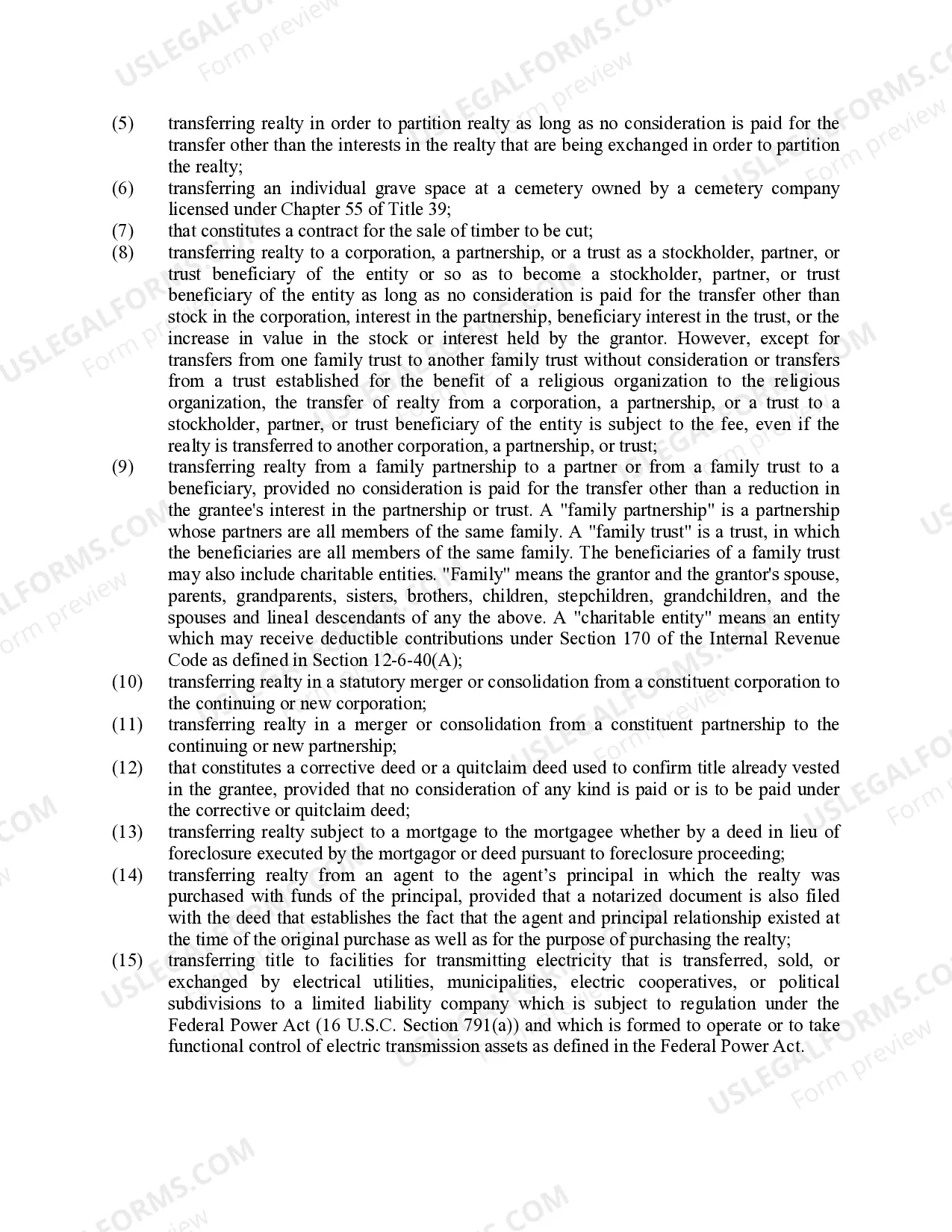
- Affidavit for taxable or exempt transfers related to the property.

Situations where this form applies
This form should be used in situations involving a foreclosure sale where the property is sold at public auction to satisfy outstanding debts. It is necessary when a lender has obtained a court order from a Master-in-Equity to conduct the sale, ensuring that the sale is legally binding and recognized by the court system.
Who this form is for
This form is primarily intended for:
- Lenders or mortgage holders initiating foreclosure proceedings.
- Buyers participating in a foreclosure auction.
- Trustees acting on behalf of certificateholders in a foreclosure situation.
- Legal professionals involved in real estate and foreclosure law.
Completing this form step by step
- Identify and enter the names of all parties involved in the foreclosure.
- Fill in the case number and details of the court proceedings.
- Provide a detailed description of the property, including its location and lot number.
- State the sale price received from the auction, and confirm receipt of the payment.
- Ensure the form is signed by the Master in Equity and notarized.
- Complete the affidavit regarding taxable or exempt transfers, if applicable.
Notarization guidance
Yes, this form must be notarized to be legally valid. Notarization verifies the authenticity of the signatures on the document, which is crucial in a foreclosure proceeding. US Legal Forms offers integrated online notarization services that are available 24/7 through secure video calls, ensuring a seamless and legal experience without the need for physical travel.
Get your form ready online
Our built-in tools help you complete, sign, share, and store your documents in one place.
Make edits, fill in missing information, and update formatting in US Legal Forms—just like you would in MS Word.
Download a copy, print it, send it by email, or mail it via USPS—whatever works best for your next step.
Sign and collect signatures with our SignNow integration. Send to multiple recipients, set reminders, and more. Go Premium to unlock E-Sign.
If this form requires notarization, complete it online through a secure video call—no need to meet a notary in person or wait for an appointment.
We protect your documents and personal data by following strict security and privacy standards.

Make edits, fill in missing information, and update formatting in US Legal Forms—just like you would in MS Word.

Download a copy, print it, send it by email, or mail it via USPS—whatever works best for your next step.

Sign and collect signatures with our SignNow integration. Send to multiple recipients, set reminders, and more. Go Premium to unlock E-Sign.

If this form requires notarization, complete it online through a secure video call—no need to meet a notary in person or wait for an appointment.

We protect your documents and personal data by following strict security and privacy standards.
Common mistakes to avoid
- Failing to provide accurate information regarding the property description.
- Missing signatures or not notarizing the document as required.
- Omitting essential details about the court proceedings or parties involved.
- Not following local regulations or guidelines specific to the state of South Carolina.
Why use this form online
- Instant access to professionally drafted legal forms, ensuring accuracy and compliance.
- Ability to download and edit forms conveniently to suit specific needs.
- Reliable support and guidance throughout the completion process, minimizing errors.
- Secure storage of completed forms for future reference or legal needs.
Looking for another form?
Form popularity
FAQ
State Statutory Redemption Laws Many states reduce the redemption period if the property has been abandoned, while borrowers may waive their redemption rights in many states. States that allow for statutory redemption include California, Illinois, Florida, and Texas.
In South Carolina, the lender must sue the borrower and prove the lender is entitled to foreclose. The homeowner (defendant) has the right to defend the foreclosure by conducting discovery, raising defenses, and filing counterclaims (that is, suing the lender under various causes of action).
In foreclosure cases, some states give borrowers a 'right to redemption'. Essentially, redemption is the ability of a borrower to buy back a property that has been foreclosed upon even after the foreclosure sale has already been completed.However, there is no right to redemption in South Carolina.
Foreclosures in South Carolina are judicial, which means a court handles the process. The lender must file a lawsuit to foreclose the home. In some other states, though, foreclosures are nonjudicial, which means they're usually carried out with little, if any, court involvement.
If you think that your next mortgage payment may be late, or if you are already behind with your payments, the most important thing you can do to help prevent foreclosure is contact SC Housing immediately. If you make an arrangement to pay your SC Housing mortgage, please call us toll-free at 800.476.
More specifically, it's a legal process by which the owner forfeits all rights to the property. If the owner can't pay off the outstanding debt, or sell the property via short sale, the property then goes to a foreclosure auction. If the property doesn't sell there, the lending institution takes possession of it.
The Master-in-Equity is a judge who has the power to decide certain cases without a jury. A Master-in-Equity typically handles cases involving real estate, such as foreclosures, partitions, and contracts. However, a Master- in-Equity may hear any matter referred to him or her by the Circuit Court. See S.C. Code Ann.