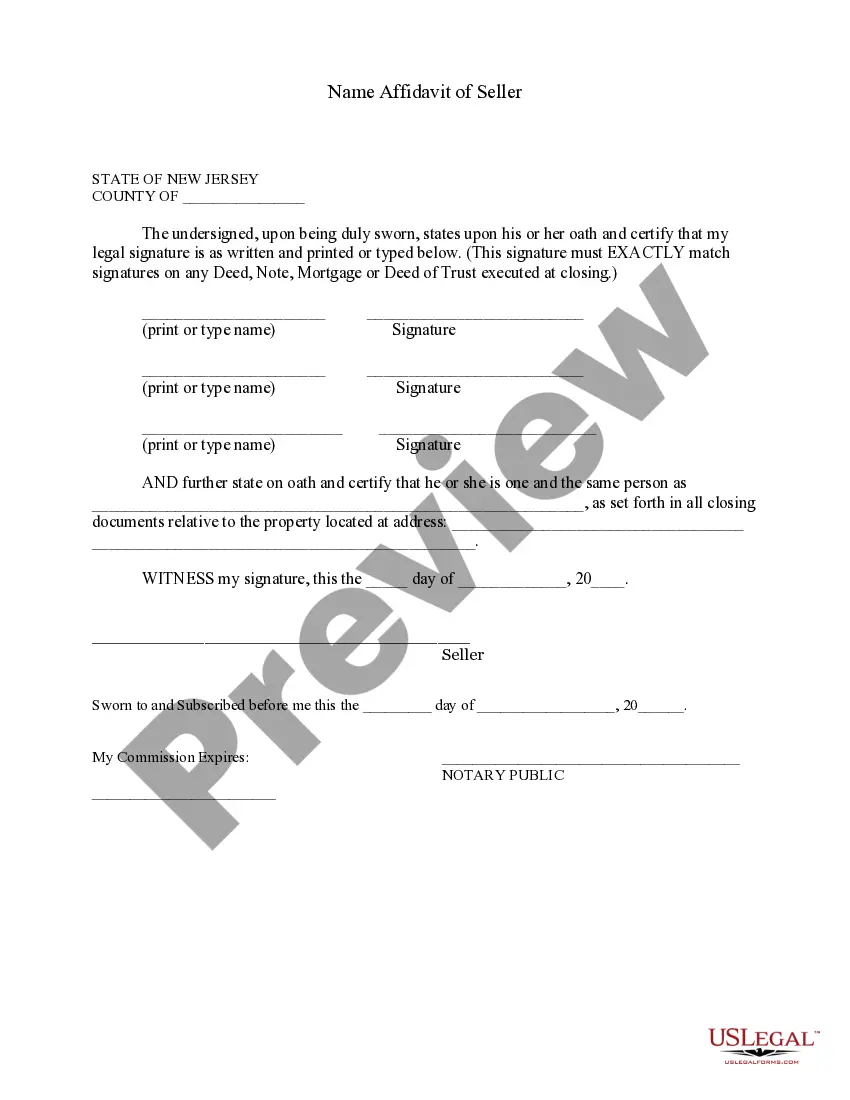
South Carolina Deed - Public Sale
Overview of this form
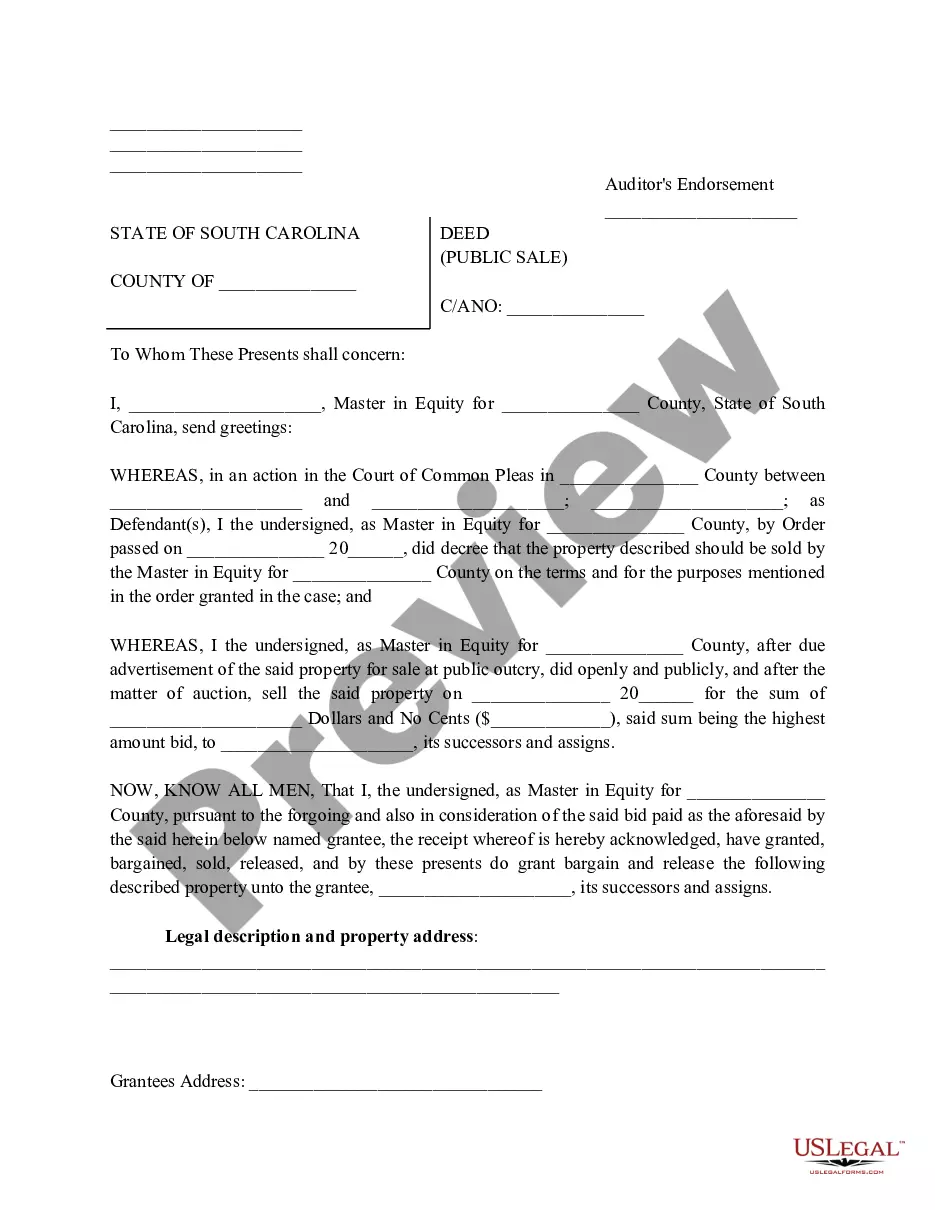
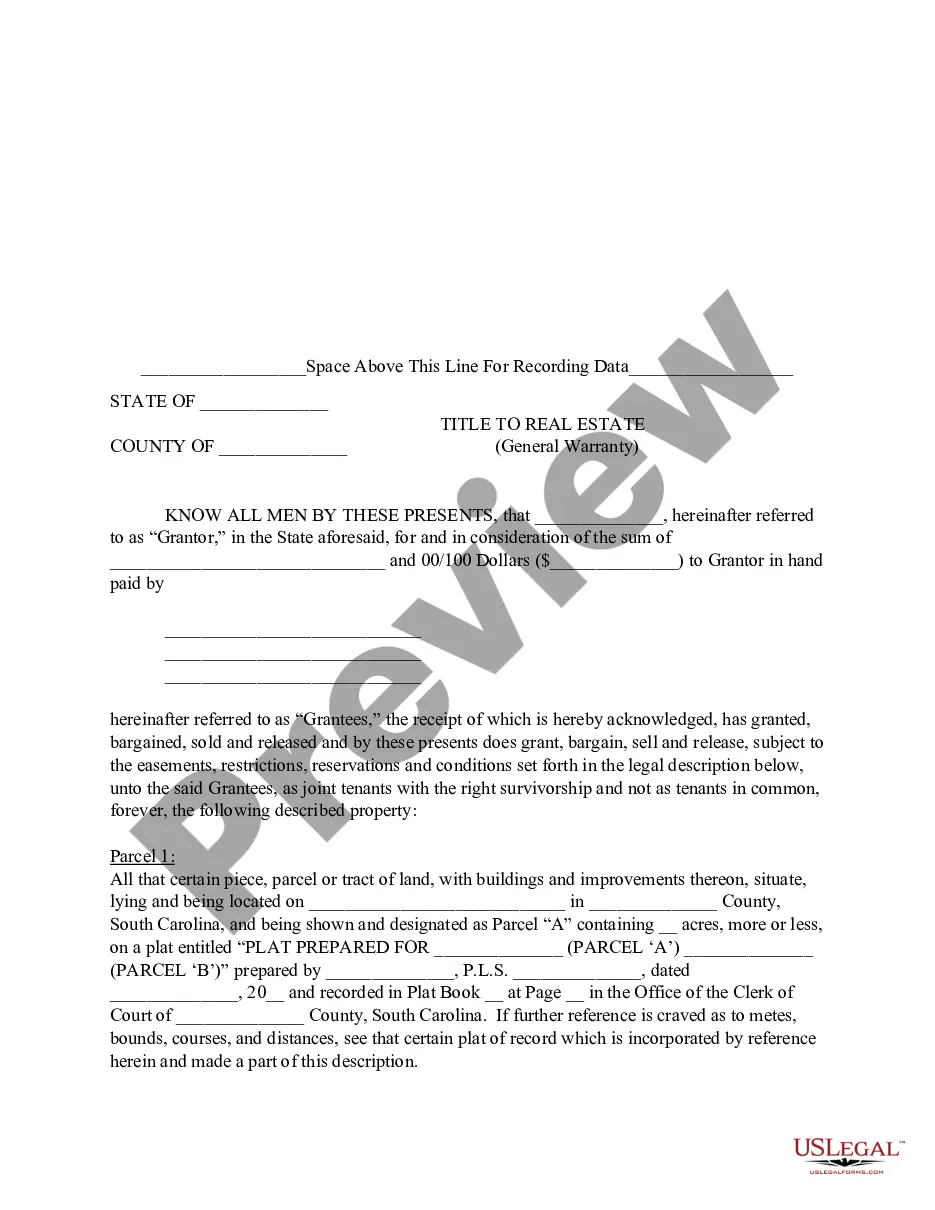
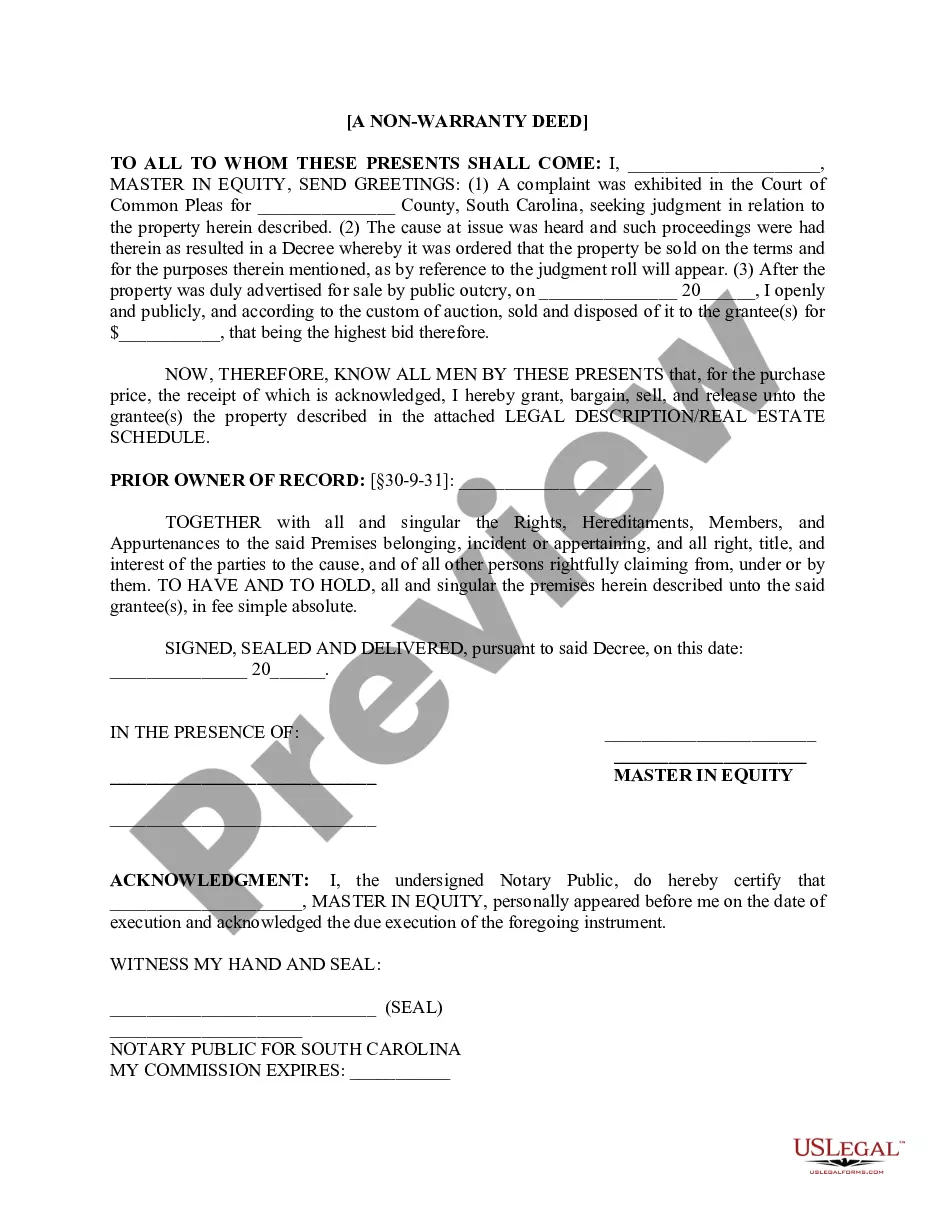
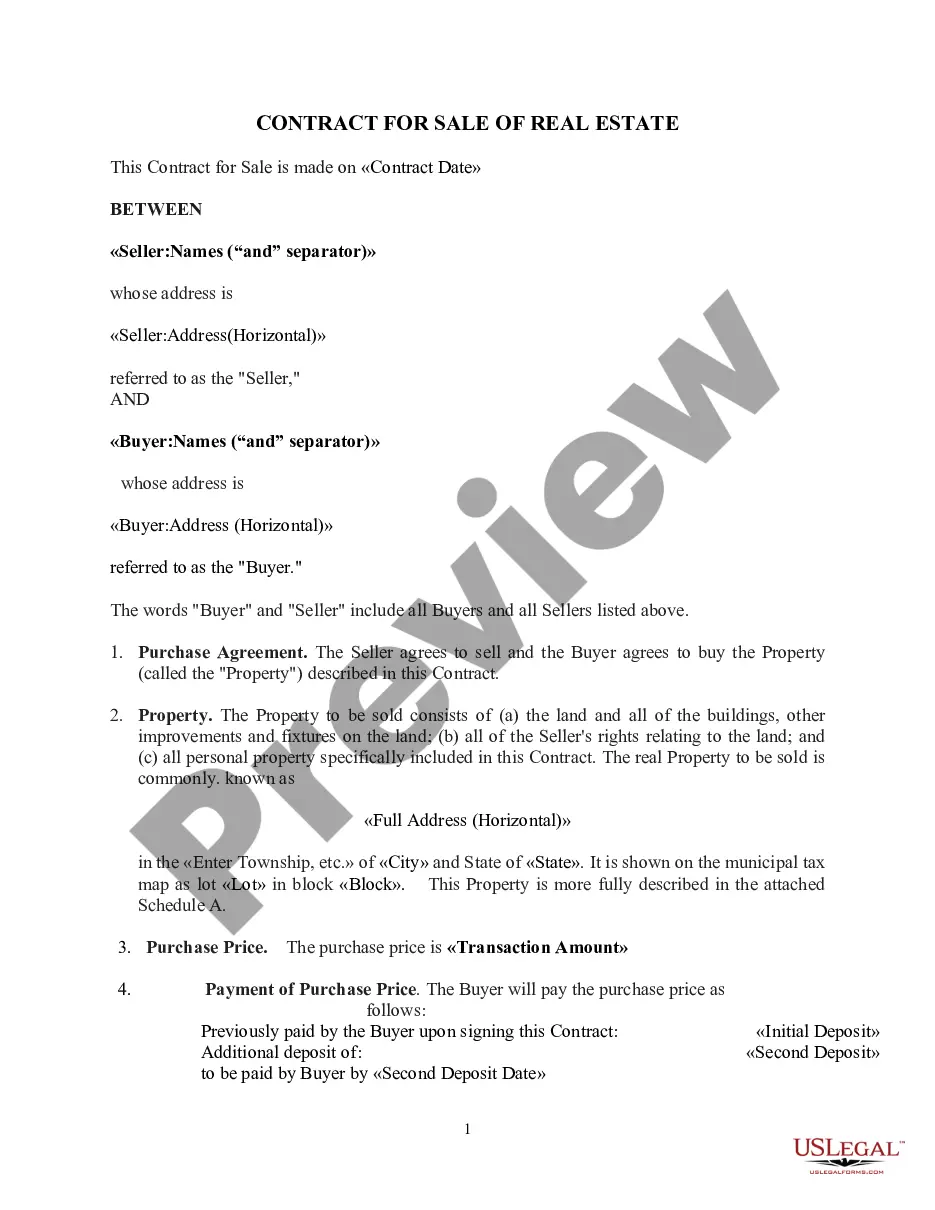
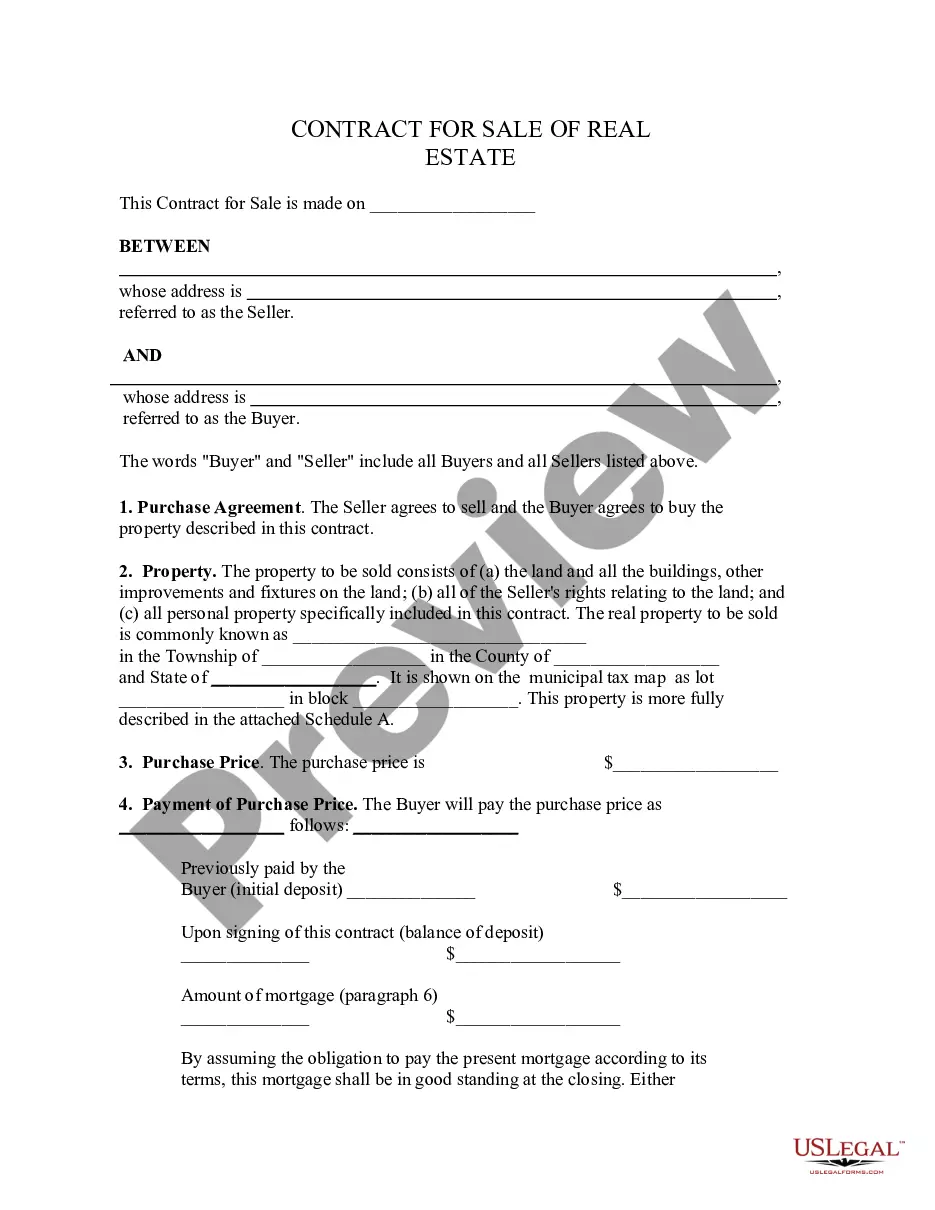
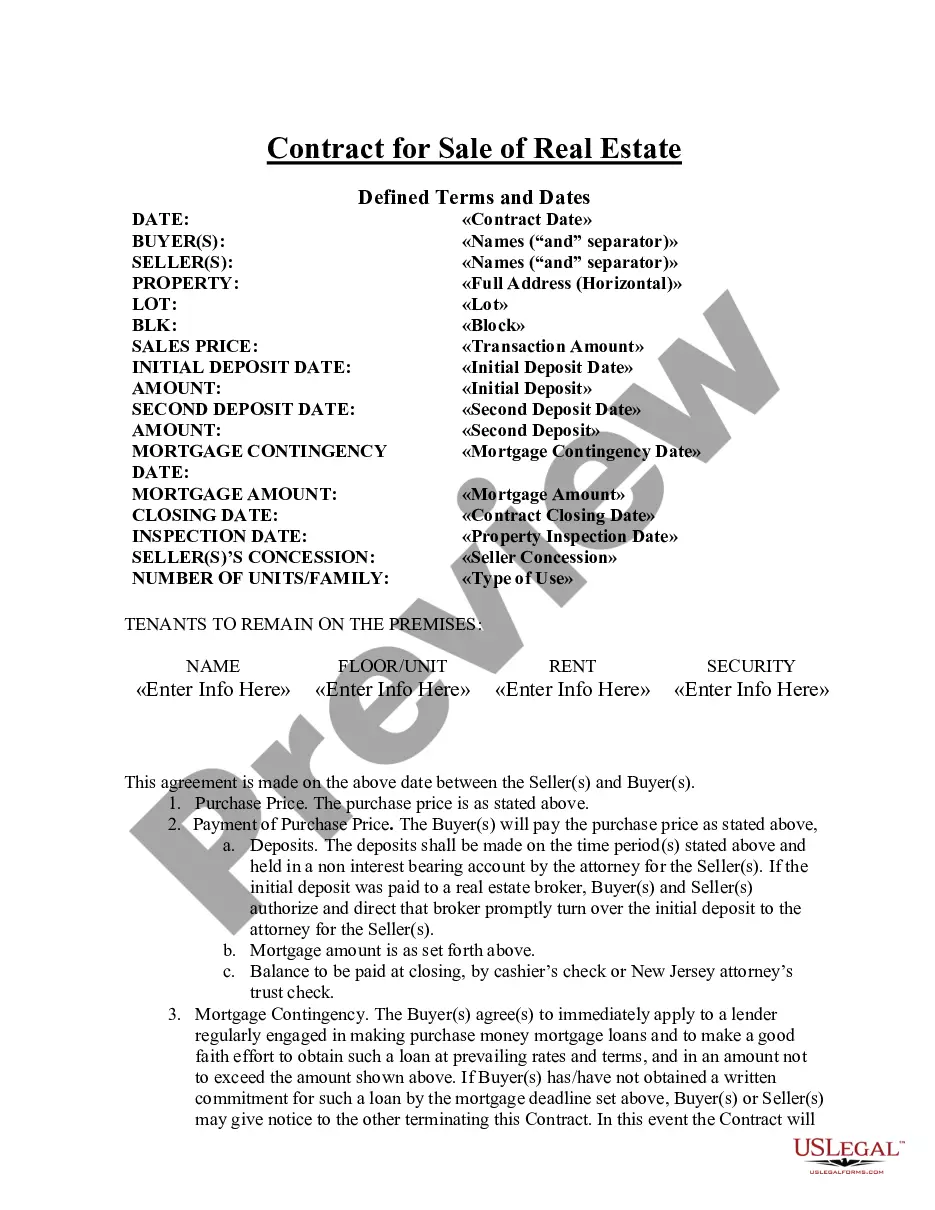
The deed for a public sale is a legal document used to transfer ownership of real property that has been sold at a public auction due to nonpayment of taxes. This form is crucial in ensuring that the buyer of the property receives clear title from the local governmental authority. Unlike typical sales deeds, this deed specifically pertains to properties sold under court orders or municipal regulations, making it essential for buyers in tax sale scenarios.
Key components of this form
- Transferor information (Master in Equity details)
- Date of sale and auction specifics
- Property description and address
- Grantee details (buyerâs information)
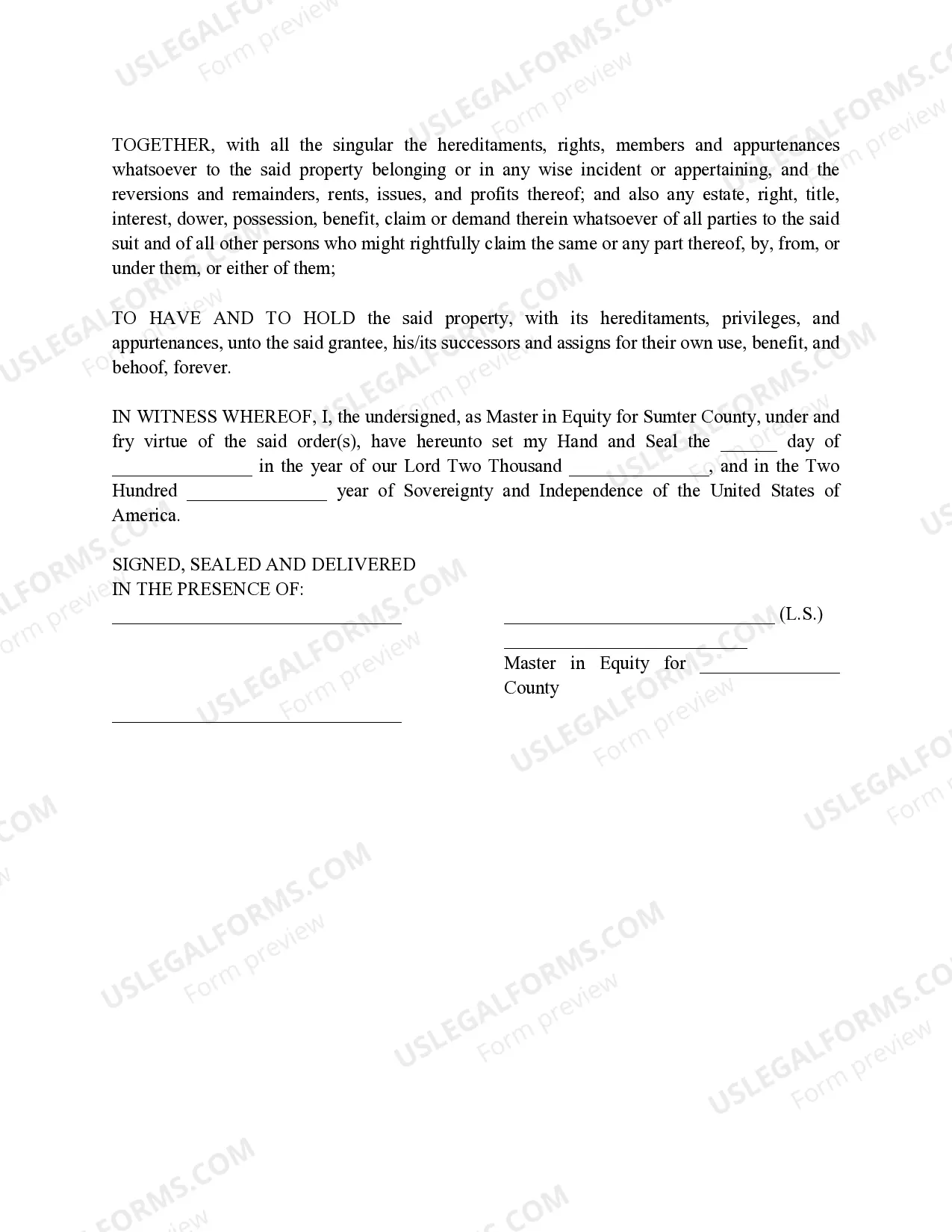
- Legal language for conveying title
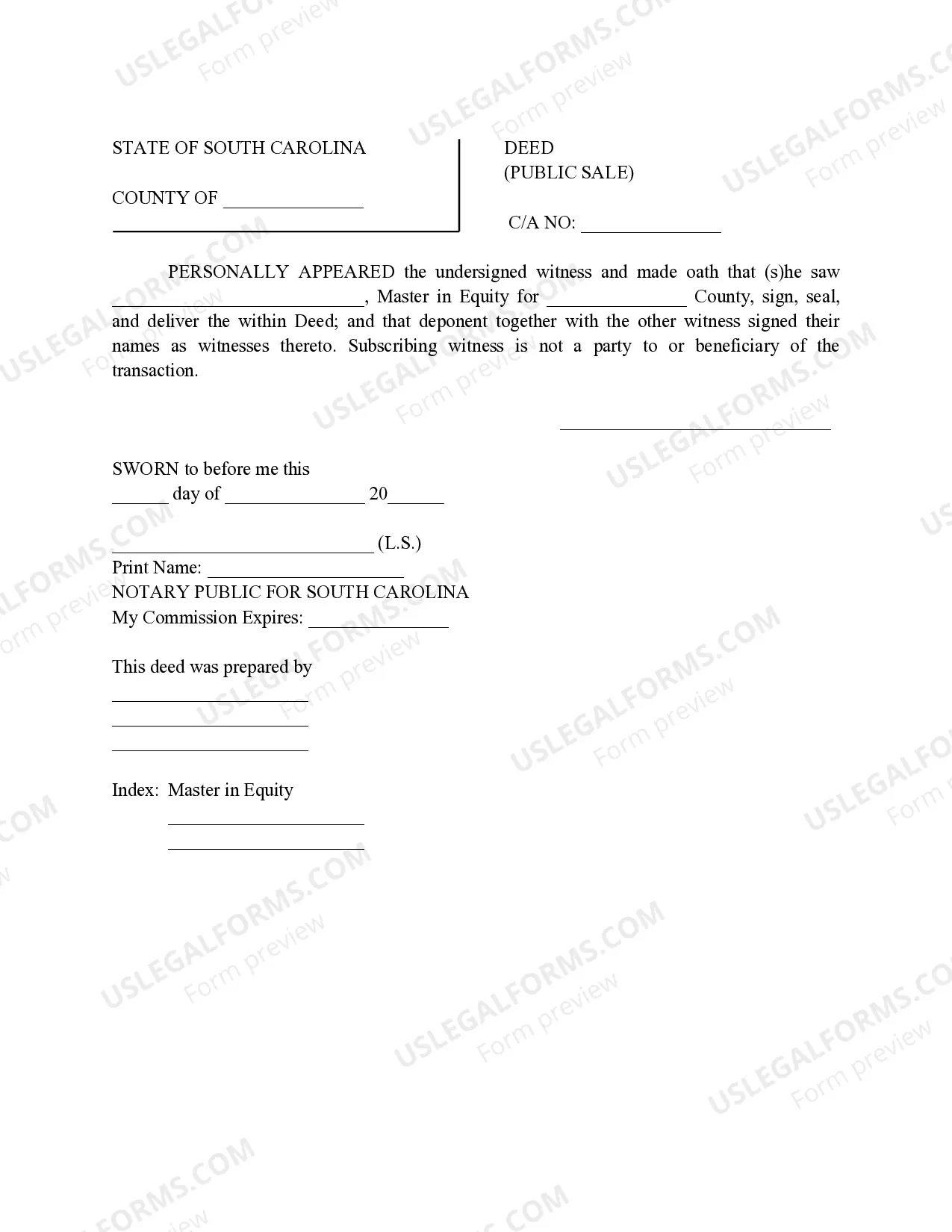
- Signature sections for the Master in Equity and witnesses
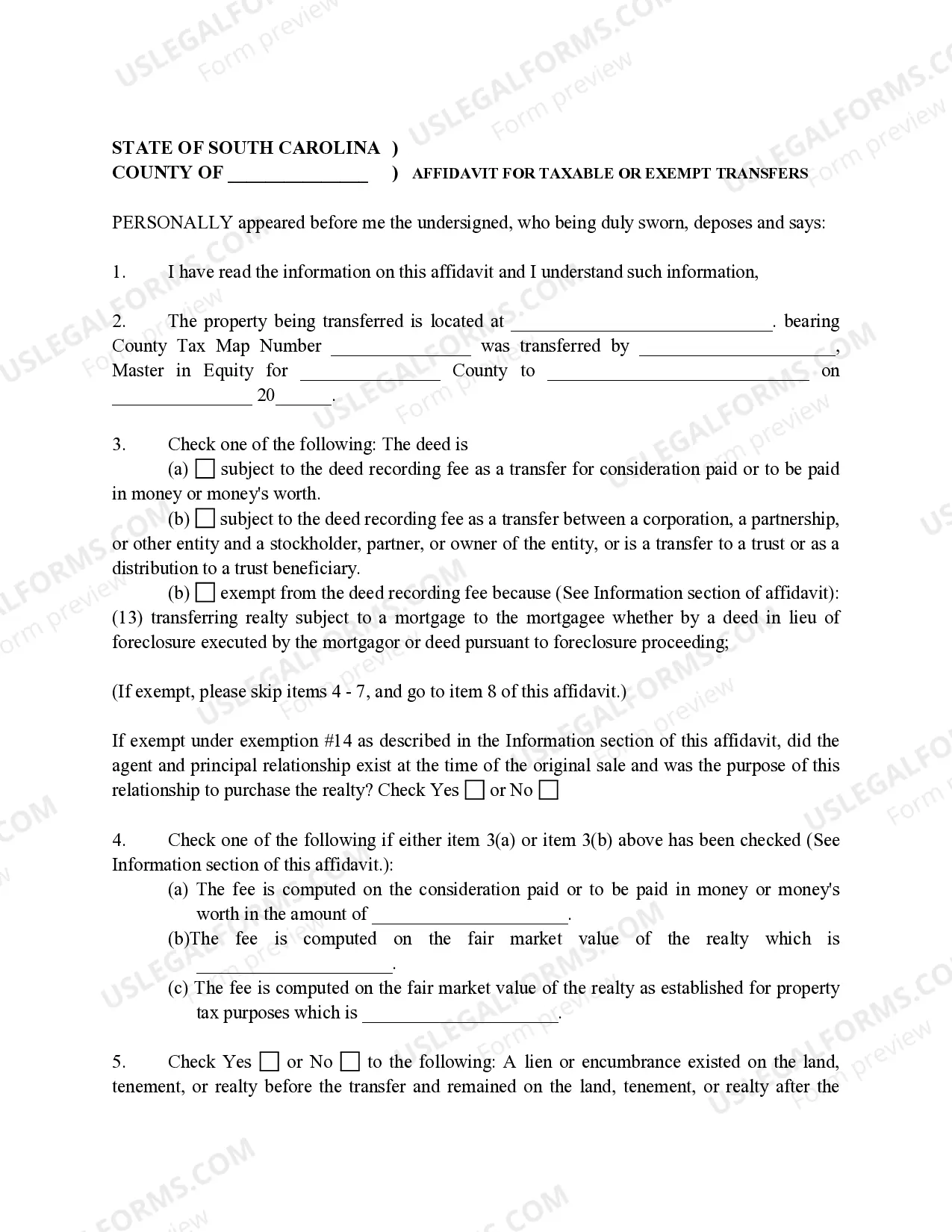
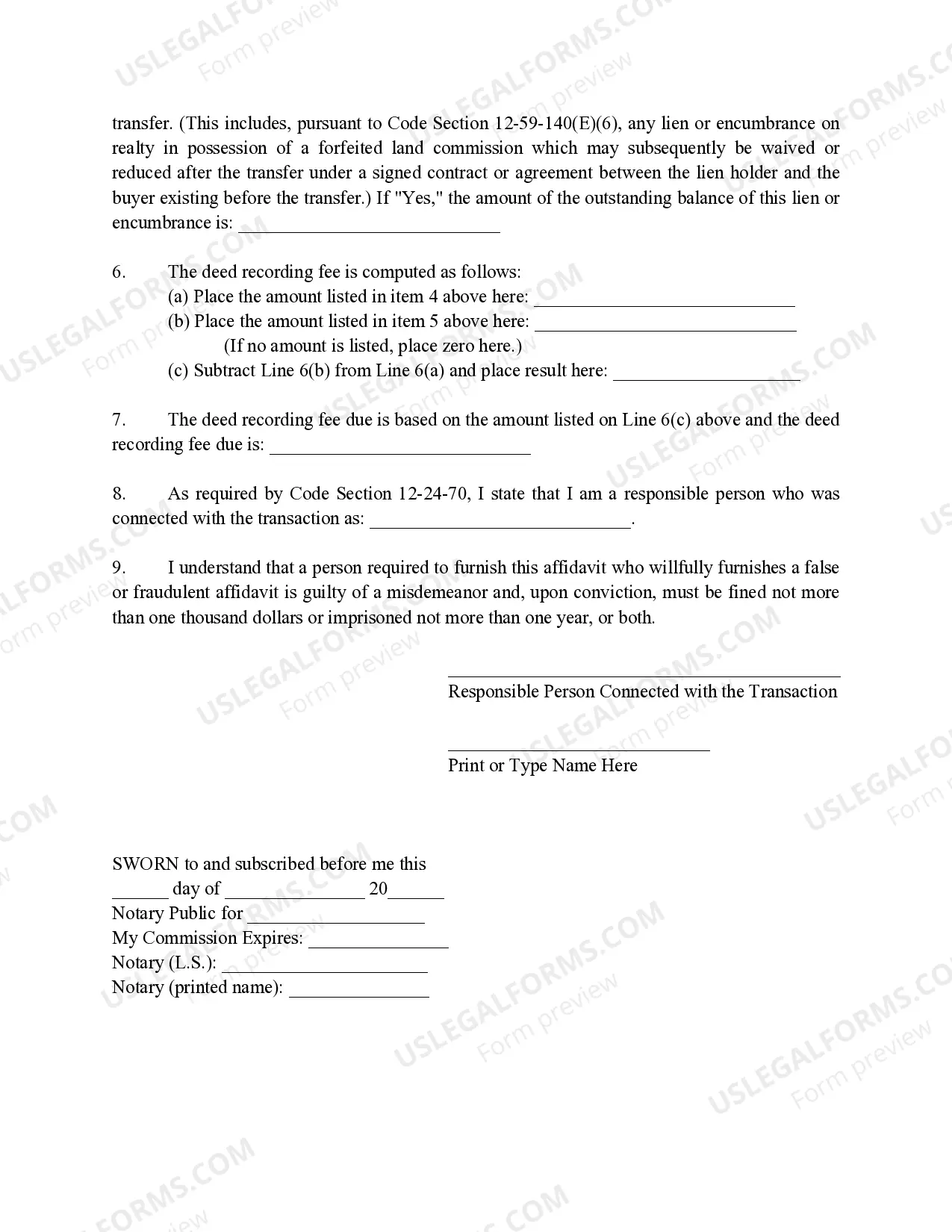
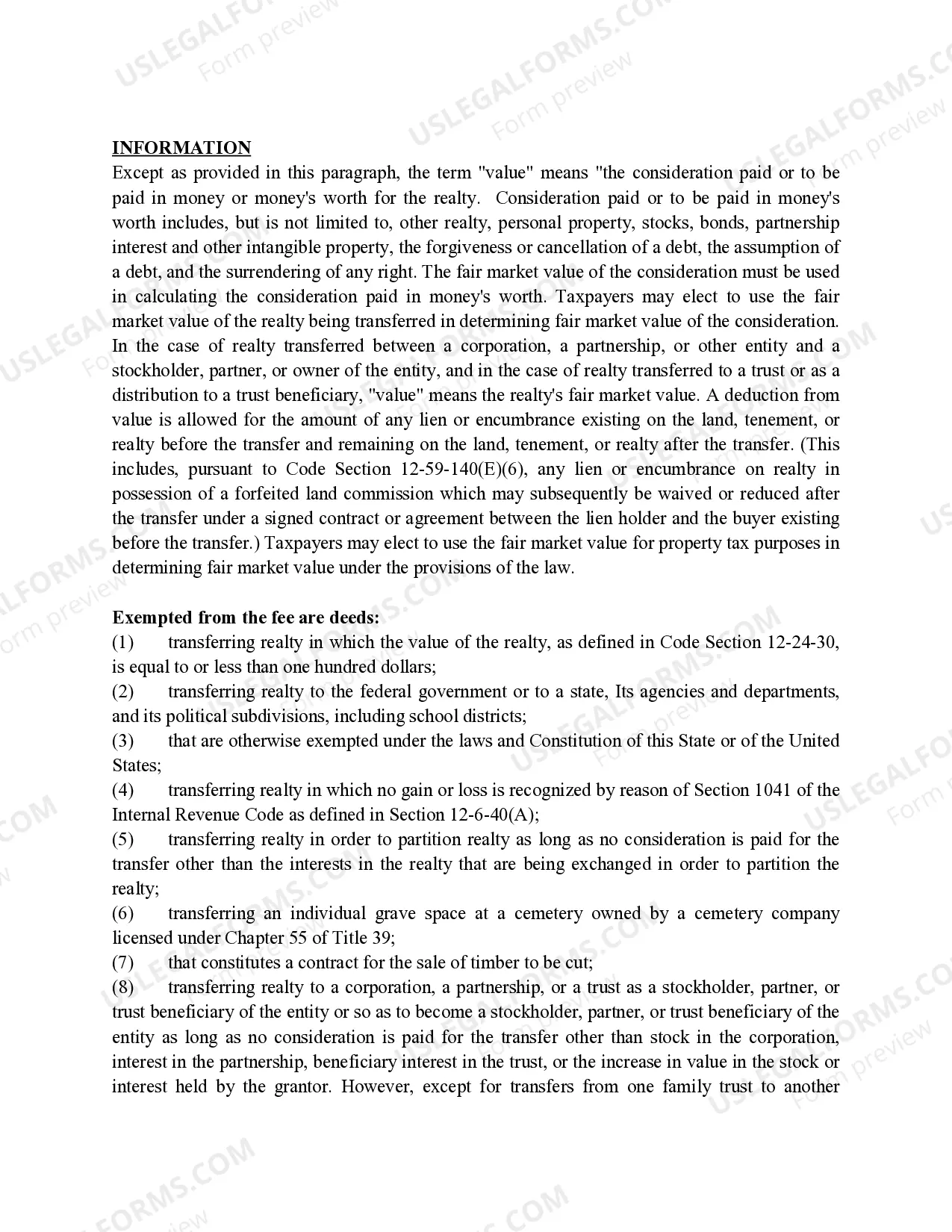
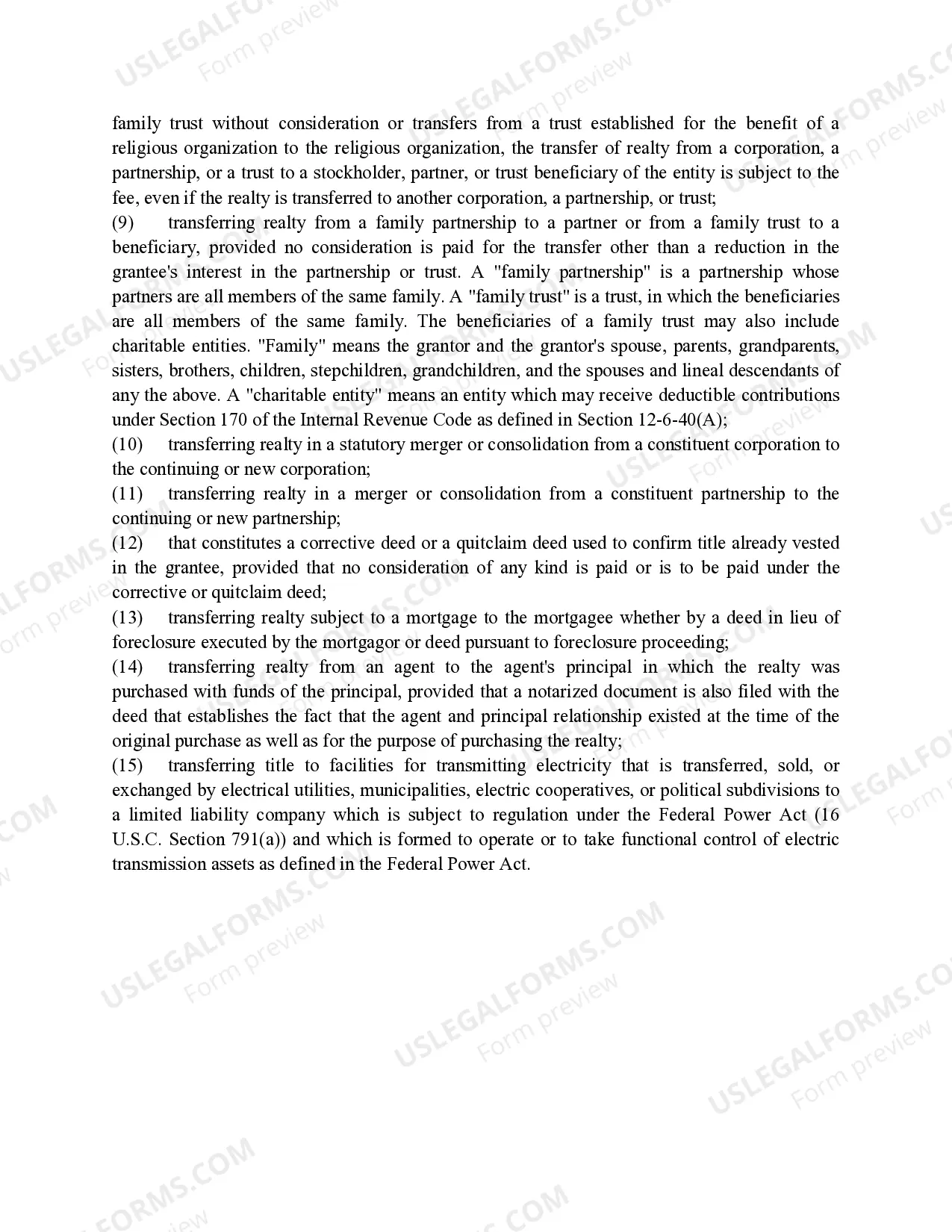
- Affidavit section regarding taxable or exempt transfers
Common use cases
This form should be used when a property has been sold at a public auction due to the previous owner's nonpayment of taxes. It helps formalize the transfer of title from the local governmental authority to the new owner, ensuring that the buyer can legally claim ownership and prepare for future use of the property.
Who this form is for
- Individuals or entities purchasing property at a tax sale auction
- Local governmental authorities conducting the auction
- Attorneys involved in real estate transactions relating to tax sales
Instructions for completing this form
- Identify the Master in Equity and input the county and date of the sale.
- Provide the full legal description of the property being transferred.
- Enter the buyer's (grantee's) name and address.
- Fill in the total amount for which the property was sold.
- Have the Master in Equity sign and date the document, along with witness signatures.
- If applicable, complete the affidavit regarding taxable or exempt transfers.
Does this document require notarization?
Yes, this form must be notarized to be legally valid. It is important to have a notary public witness the signatures to ensure enforceability. US Legal Forms offers integrated online notarization services, providing a secure way to complete this step without the need for in-person visits.
Get your form ready online
Our built-in tools help you complete, sign, share, and store your documents in one place.
Make edits, fill in missing information, and update formatting in US Legal Forms—just like you would in MS Word.
Download a copy, print it, send it by email, or mail it via USPS—whatever works best for your next step.
Sign and collect signatures with our SignNow integration. Send to multiple recipients, set reminders, and more. Go Premium to unlock E-Sign.
If this form requires notarization, complete it online through a secure video call—no need to meet a notary in person or wait for an appointment.
We protect your documents and personal data by following strict security and privacy standards.

Make edits, fill in missing information, and update formatting in US Legal Forms—just like you would in MS Word.

Download a copy, print it, send it by email, or mail it via USPS—whatever works best for your next step.

Sign and collect signatures with our SignNow integration. Send to multiple recipients, set reminders, and more. Go Premium to unlock E-Sign.

If this form requires notarization, complete it online through a secure video call—no need to meet a notary in person or wait for an appointment.

We protect your documents and personal data by following strict security and privacy standards.
Typical mistakes to avoid
- Failing to accurately describe the property, leading to disputes in ownership.
- Not obtaining necessary signatures from witnesses or the Master in Equity.
- Omitting critical details like the sale date or bid amount.
- Filling out the affidavit incorrectly, which may result in tax issues.
Benefits of using this form online
- Convenient access to legally compliant templates that can be completed from home.
- Editability ensures users can customize the form to their specific circumstances.
- Reliability, as forms are drafted and reviewed by licensed attorneys to ensure legal validity.
Looking for another form?

Form popularity
FAQ
In South Carolina, if you become delinquent in paying your property taxes, the late amounts become a lien on your home. The tax collector can then sell your home a tax sale to satisfy the lien.
Collect all information about your property first. Go through your house records. Research title insurance companies. Compare the fees presented by each company in the state. Choose a title insurance company. Wait for the completed report.
The South Carolina deed recording fee is imposed for the privilege of recording a deed, and is based on the transfer of real property from one person or business entity to another. The fee is generally imposed on the grantor of the real property, although the grantee may be secondarily liable for the fee.
As South Carolina is not a tax lien state, buyers purchase an interest in land, rather than a lien. Investors usually receive anywhere from 3% - 12% back in interest or receive the deed outright on the property. For those looking for ROI in a short time period, tax sales are certainly something to consider.
In a tax deed sale, the property itself is sold. The sale takes place through an auction, with a minimum bid of the amount of back taxes owed plus interest, as well as costs associated with selling the property. The highest bidder wins the property.
An original, wet signed document. Signature of the Party of the First Part. Two witnesses to the signature. A South Carolina Probate or Acknowledgement. A property description to include a recorded plat reference or metes and bounds description.
Alaska. Arkansas. California. Connecticut. Delaware. Florida. Georgia. Hawaii.
South Carolina is a redeemable tax deed state. In a redeemable tax deed state the actual property is sold after tax foreclosure and then the former owner has one last opportunity to redeem the property (pay the delinquent taxes). If the taxes aren't paid the investor becomes the owner.
But you won't lose your property without getting fair warning; you'll get the chance to reclaim your home after the sale because, under South Carolina law, you can "redeem" your propertyeven after someone else buys it at a tax sale.