New Hampshire Mutual Wills containing Last Will and Testaments for Man and Woman living together not Married with No Children
About this form
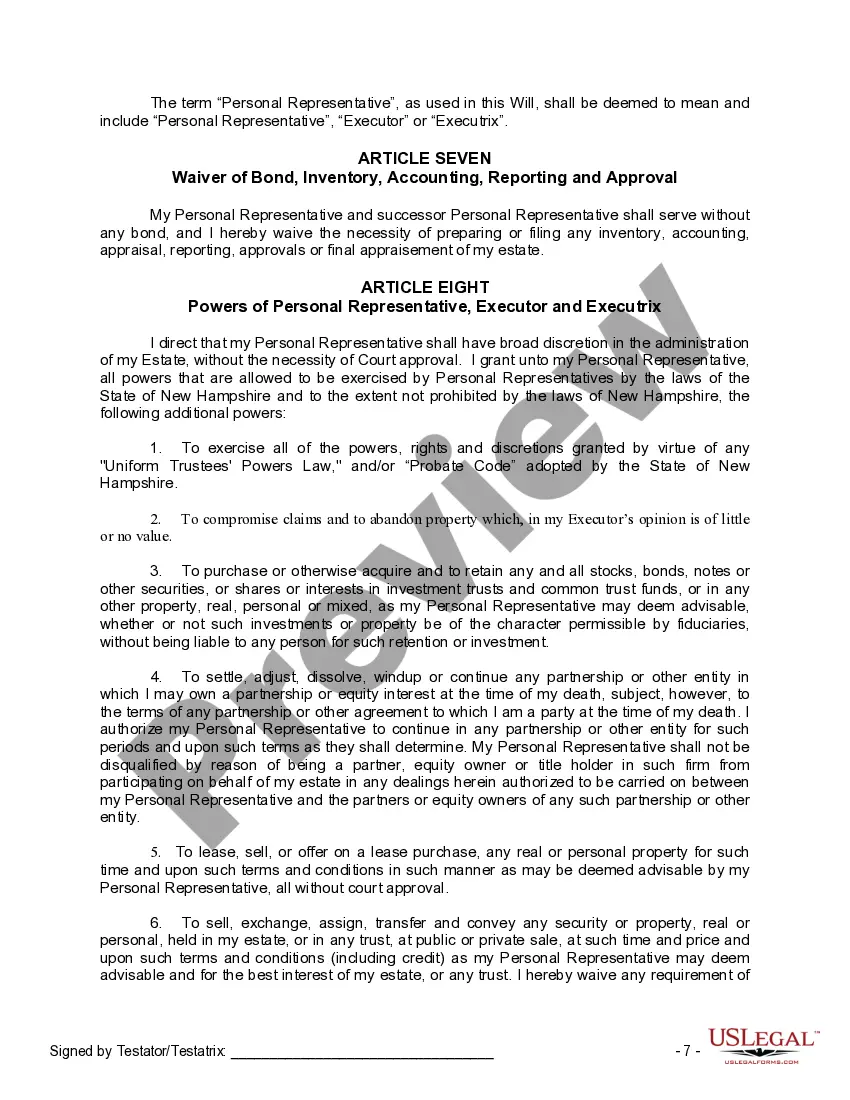
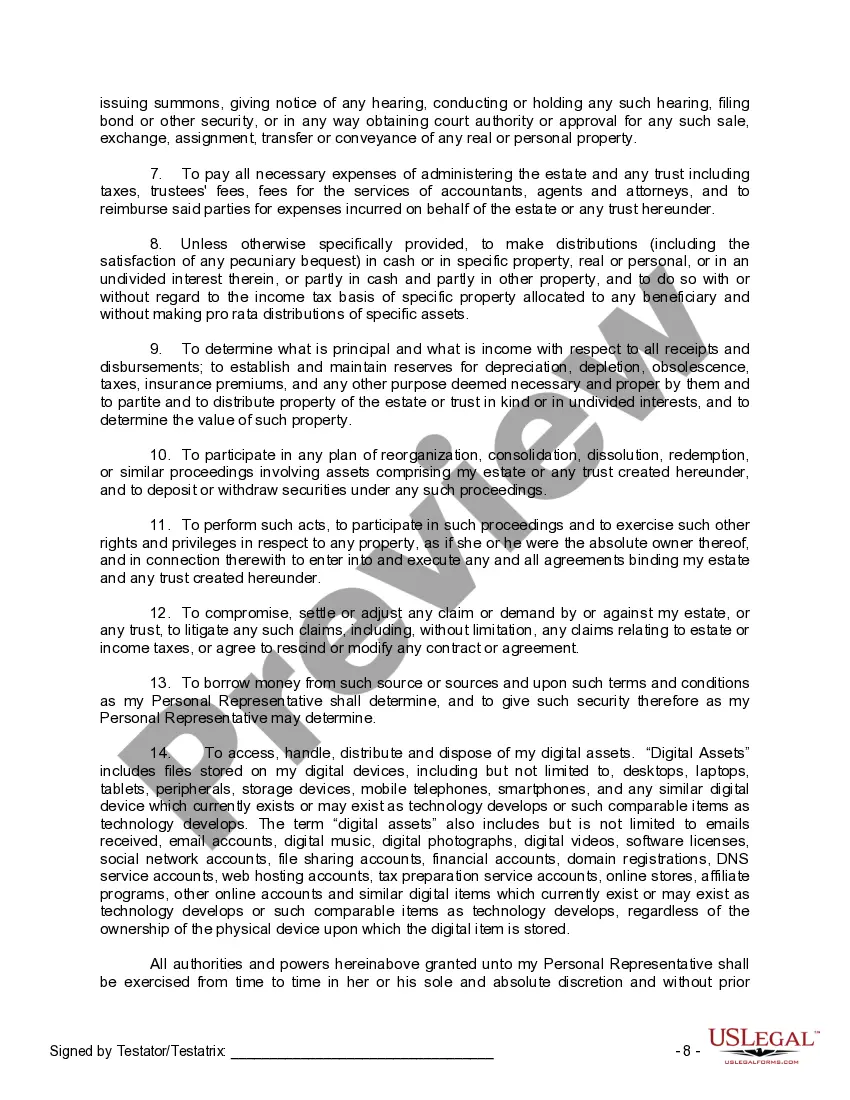
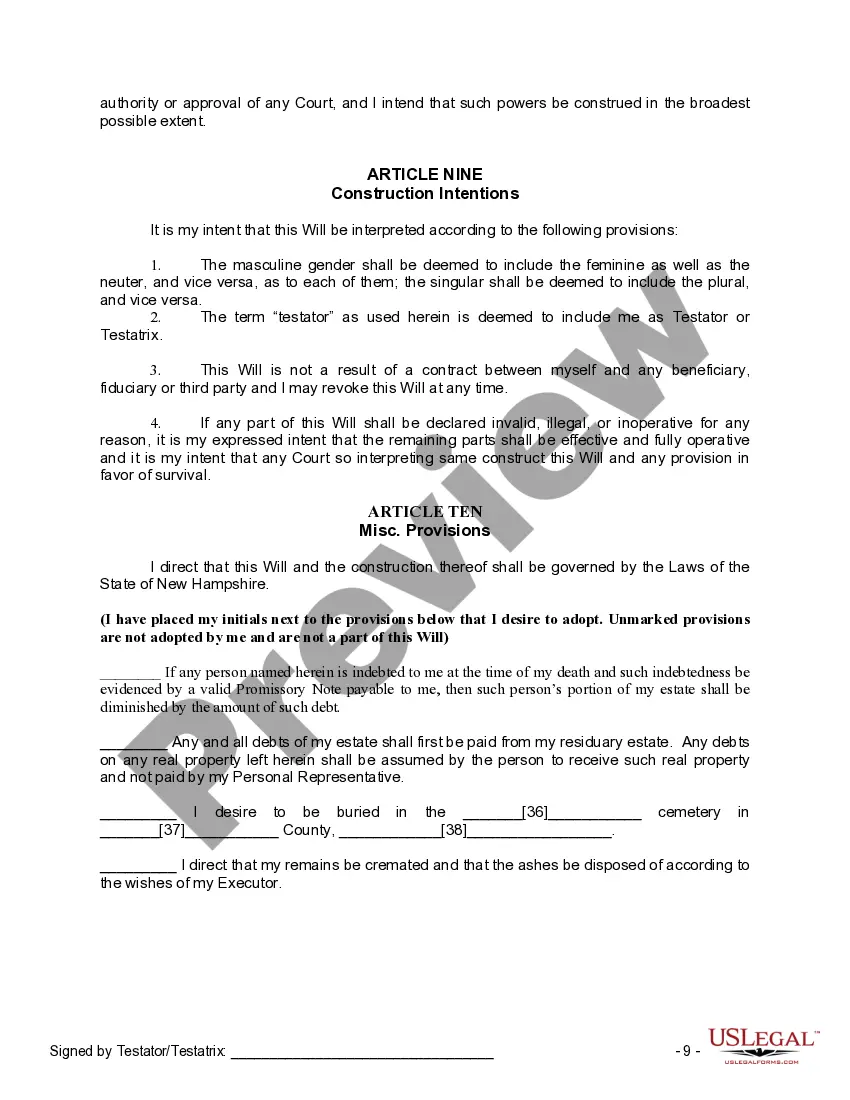
This form package includes Mutual Wills containing Last Will and Testaments for a man and woman living together who are not married and have no children. This is specifically designed for couples who wish to leave their property to one another in a legally binding manner, establishing mutual agreements regarding the distribution of their assets after death. Unlike standard wills, these Mutual Wills reinforce the commitment between the partners, ensuring that each can protect the other's interests in the absence of legal marriage.
What’s included in this form
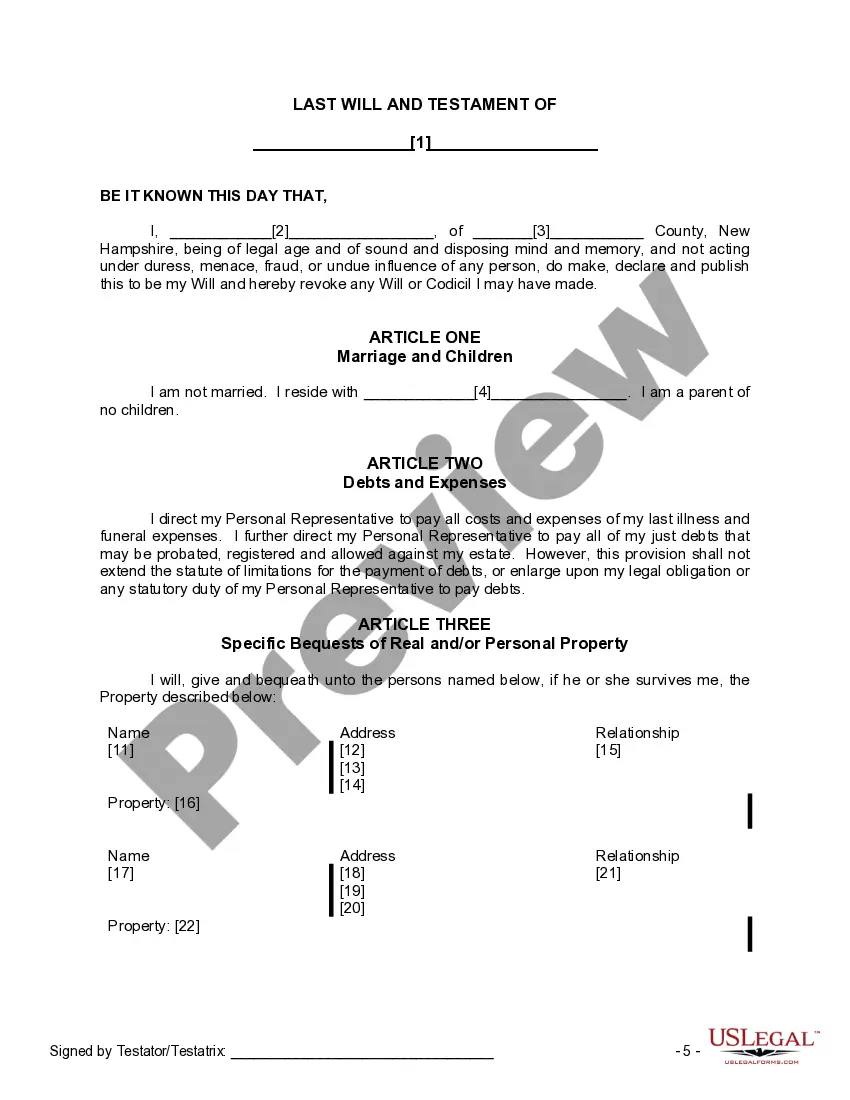
- Article One: States that both parties are not married and have no children.
- Debts and Expenses: Directs the personal representative to pay all debts and funeral expenses.
- Specific Bequests: Allows specifying how particular properties will be distributed.
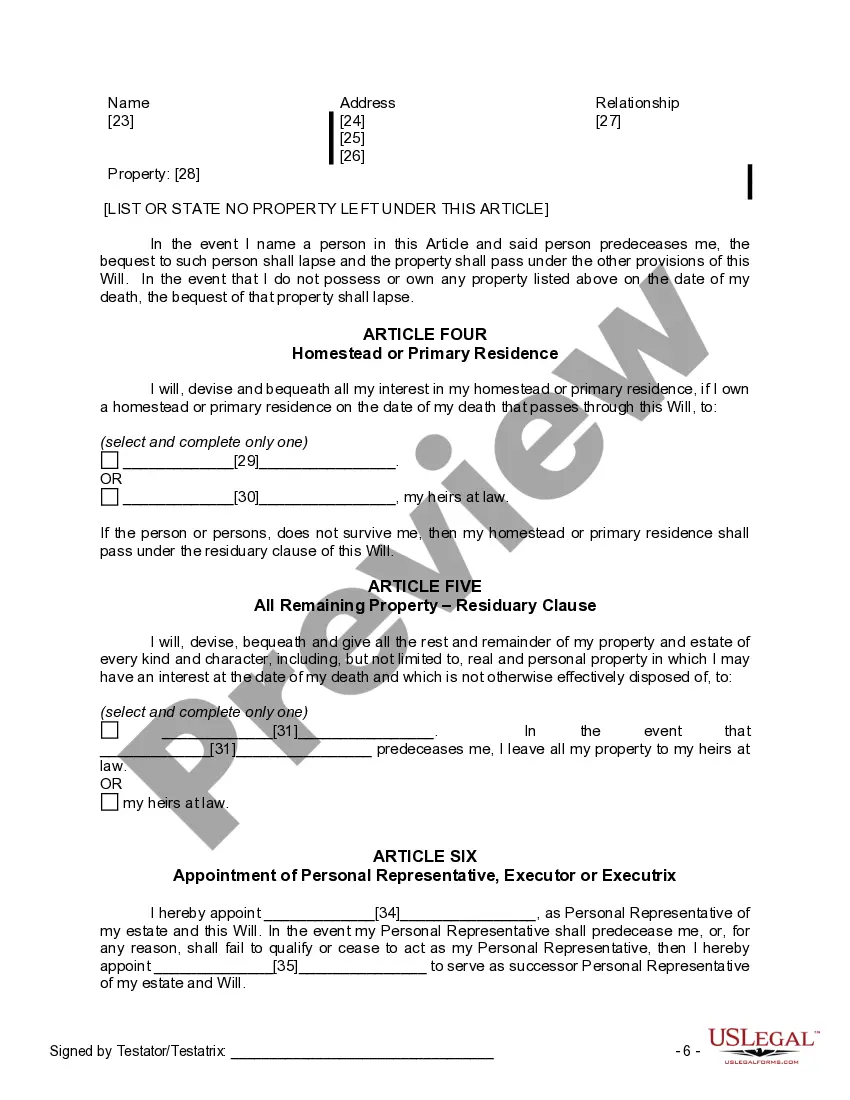
- Homestead Clause: Enables designation of primary residence distribution.
- Residuary Clause: Details the distribution of all remaining property not specified elsewhere.
- Personal Representative: Appoints an adult, potentially the partner, to manage the estate's affairs.



Situations where this form applies
This form should be used when two parties who live together, and are not legally married, wish to create a mutual understanding on property distribution after one of them passes away. It provides a legal framework for ensuring that each partner's wishes are honored in regard to asset distribution, rather than relying on state intestacy laws.
Who needs this form
This form is ideal for:
- Couples who are not married but wish to ensure their partner is provided for after their death.
- Those without children who want clear instructions on how their assets should be distributed.
- Individuals looking to avoid complications or disputes regarding asset distribution after death.
How to complete this form
To complete this Mutual Wills form, follow these steps:
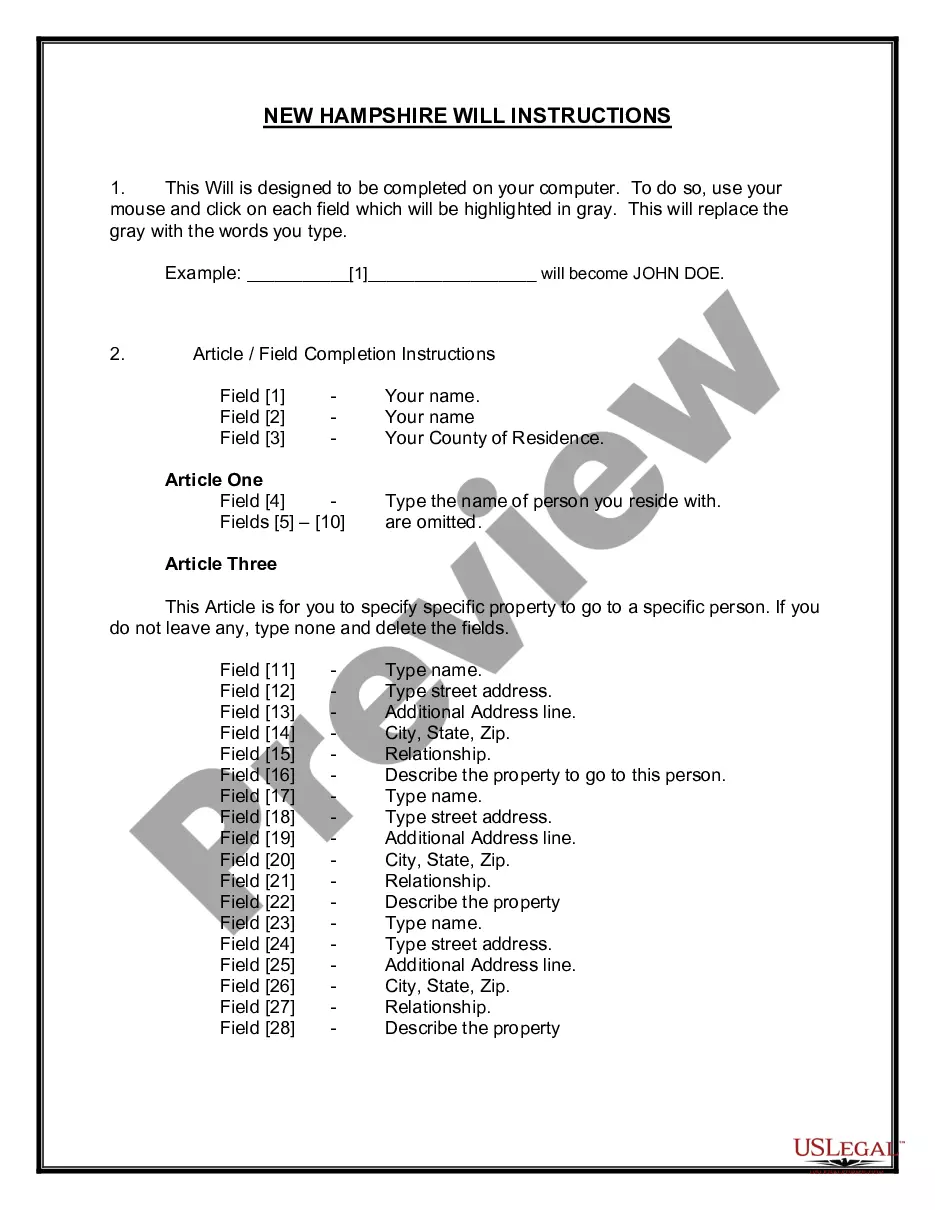
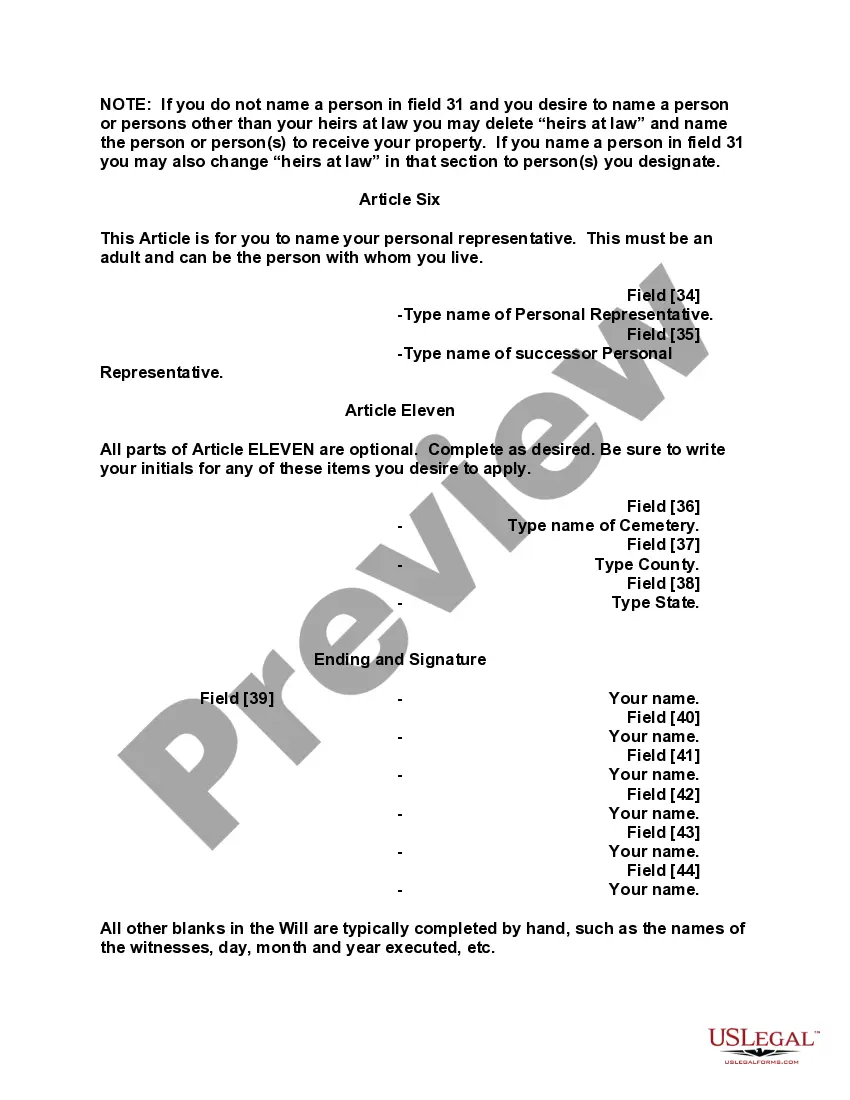
- Identify the parties involved by entering their names in the designated fields.
- Specify any debts or expenses that should be managed by the personal representative.
- Detail any specific properties you wish to bequeath to particular individuals.
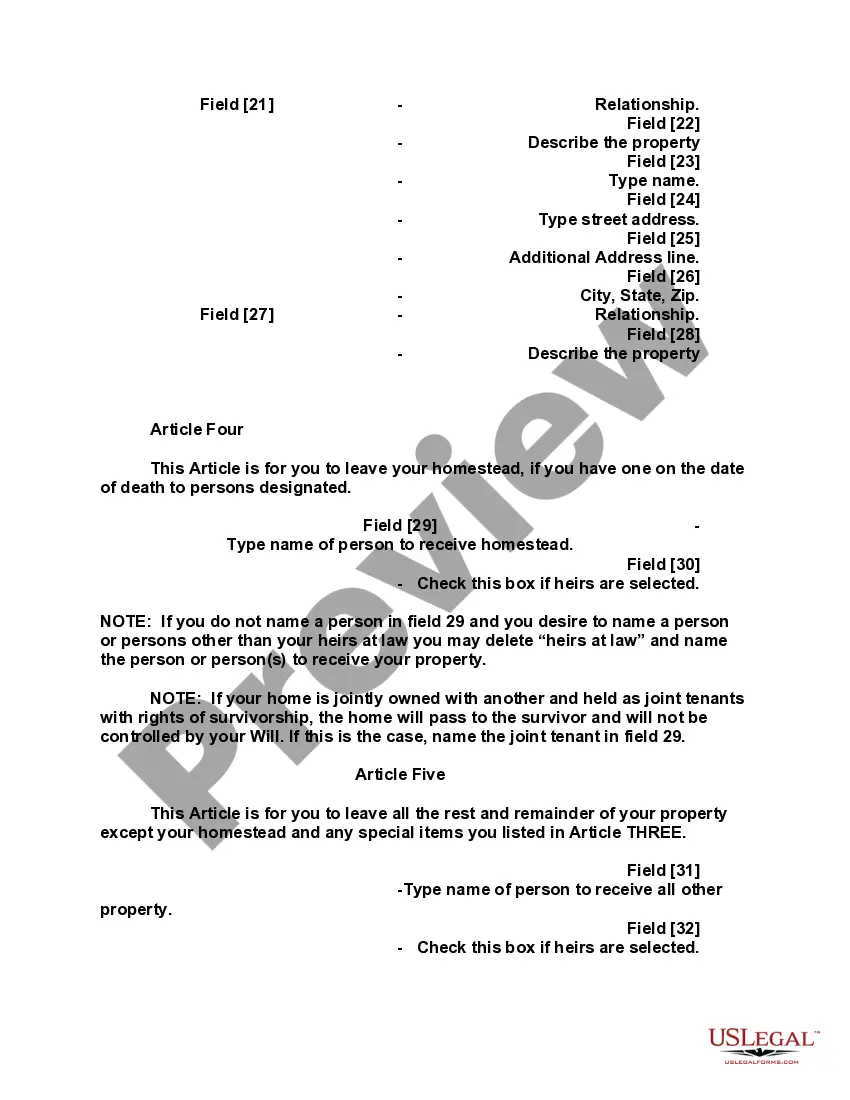
- Fill out the homestead clause if applicable, designating your primary residence.
- Appoint a personal representative to manage your estate and finalize any decisions.
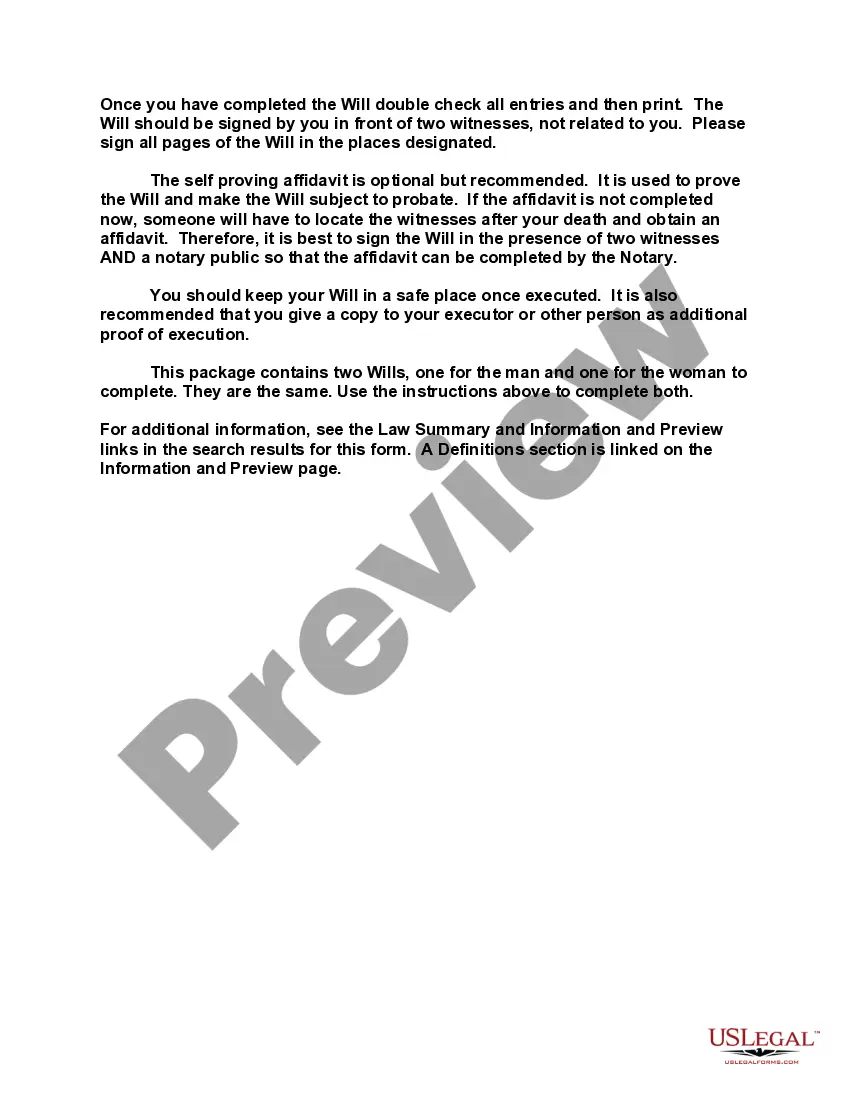
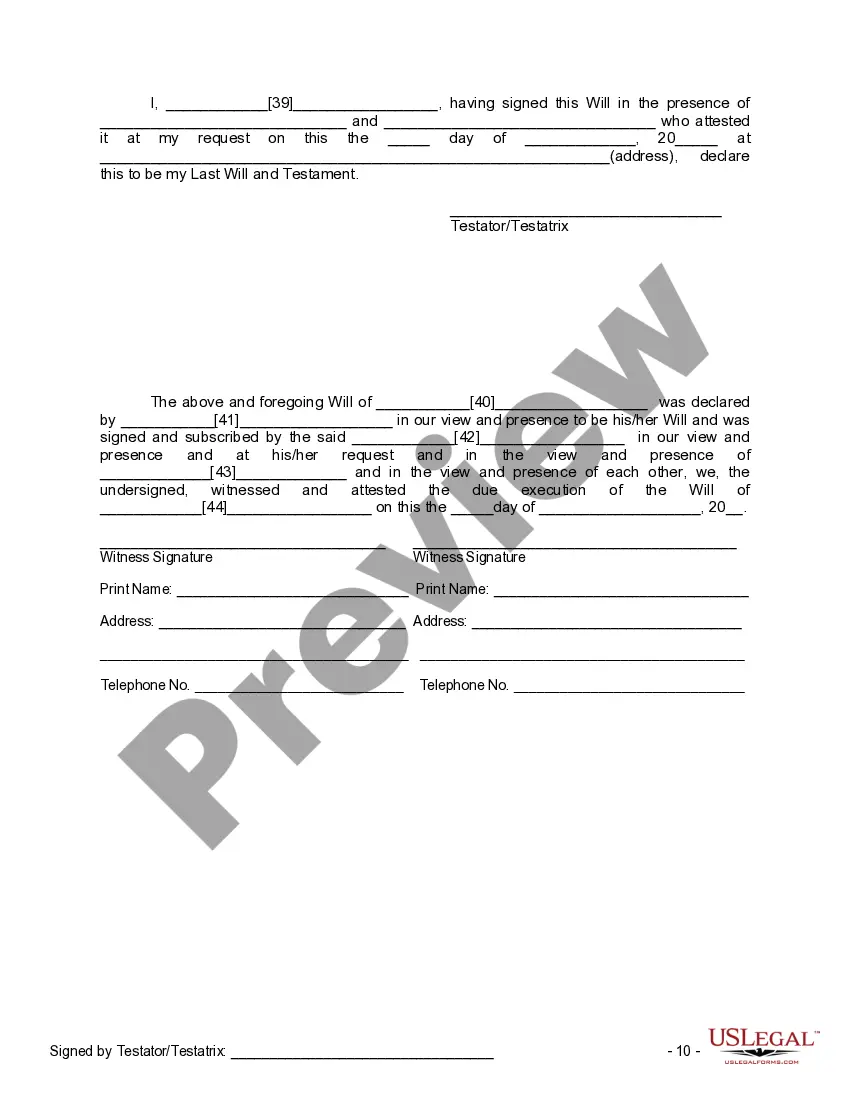
- Ensure the document is signed in front of two witnesses and optionally notarized to enhance its validity.
Does this document require notarization?
Yes, this form must be notarized to be legally valid. The presence of a notary public during the signing process ensures that the wills are executed properly, making it easier to probate later. US Legal Forms offers integrated online notarization services, available twenty-four hours a day, which allows you to complete this process securely without leaving your home.
Get your form ready online
Our built-in tools help you complete, sign, share, and store your documents in one place.
Make edits, fill in missing information, and update formatting in US Legal Forms—just like you would in MS Word.
Download a copy, print it, send it by email, or mail it via USPS—whatever works best for your next step.
Sign and collect signatures with our SignNow integration. Send to multiple recipients, set reminders, and more. Go Premium to unlock E-Sign.
If this form requires notarization, complete it online through a secure video call—no need to meet a notary in person or wait for an appointment.
We protect your documents and personal data by following strict security and privacy standards.

Make edits, fill in missing information, and update formatting in US Legal Forms—just like you would in MS Word.

Download a copy, print it, send it by email, or mail it via USPS—whatever works best for your next step.

Sign and collect signatures with our SignNow integration. Send to multiple recipients, set reminders, and more. Go Premium to unlock E-Sign.

If this form requires notarization, complete it online through a secure video call—no need to meet a notary in person or wait for an appointment.

We protect your documents and personal data by following strict security and privacy standards.
Common mistakes to avoid
- Failing to have the will signed in the presence of two witnesses as required.
- Neglecting to include a personal representative, which could lead to administration issues.
- Providing vague descriptions of property, making it difficult to determine intent.
- Not updating the wills after significant life changes, like acquiring new assets or changes in circumstances.
Why use this form online
- Convenient to fill out and customize according to personal needs.
- Drafted by attorneys to ensure legal soundness and compliance.
- Downloadable for immediate use, allowing for quick adjustments as needed.
- Facilitates clear communication of intentions between partners.
Quick recap
- Mutual wills are a secure way for unmarried couples to protect each otherâs interests after death.
- Proper execution requires witnesses and, preferably, notarization.
- Specific bequests and residuary clauses help in clear asset distribution and minimize confusion.
- This form complies with New Hampshire's legal requirements by including state-specific provisions.
Looking for another form?
Form popularity
FAQ
The Will must be filed in the county where the decedent lived. The Will must be filed within 30 days of the death.
If you are named in someone's will as an executor, you may have to apply for probate. This is a legal document which gives you the authority to share out the estate of the person who has died according to the instructions in the will. You do not always need probate to be able to deal with the estate.
If you are unmarried and die without a valid will and last testament in New Hampshire, then your estate passes on to your children in equal shares. If you die intestate unmarried and with no children, then by law, your parents inherit your entire estate.
Probate is the process through which a deceased person's property, known as the estate, is passed to his or her heirs and legatees (people named in the will). The entire process, supervised by the probate court, can take up to a year to fifteen months. The death of a close family member is an emotional time.
In California, estates valued over $150,000, and that don't qualify for any exemptions, must go to probate.If a person dies and owns real estate, regardless of value, either in his/her name alone or as a "tenant in common" with another, a probate proceeding is typically required to transfer the property.
A simple will costs between $200-$400 and a trust from $2,000 upwards, depending on how complex it is. High-profile family feuds over money are notorious and New Hampshire has been at the center of at least two of them.
In New Hampshire, you can make a living trust to avoid probate for virtually any asset you ownreal estate, bank accounts, vehicles, and so on. You need to create a trust document (it's similar to a will), naming someone to take over as trustee after your death (called a successor trustee).