Sample Letter for Maternity Leave
Overview of this form
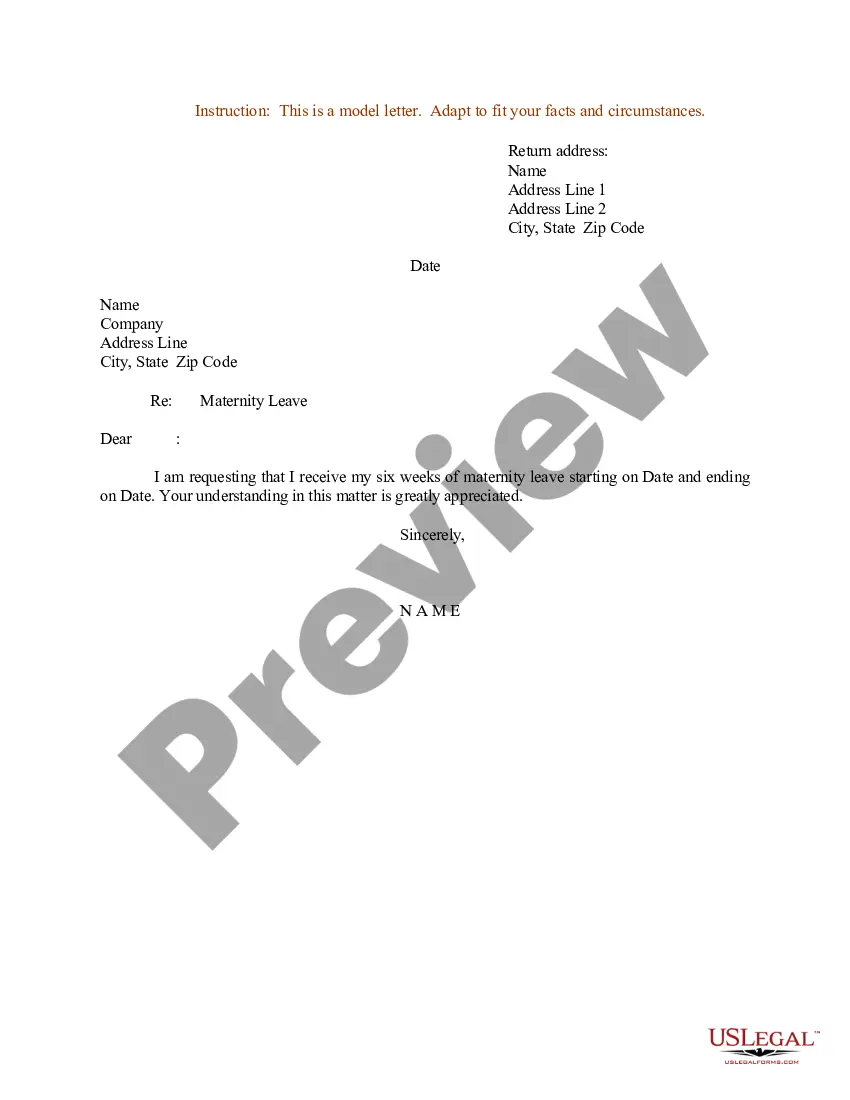
The Sample Letter for Maternity Leave is a template designed to help employees formally request maternity leave from their employers. This letter provides a structured format to communicate the intent to take time off for childbirth and to ensure compliance with company policies. Unlike other leave requests, this letter specifically addresses maternity leave and is tailored for that purpose.
Form components explained
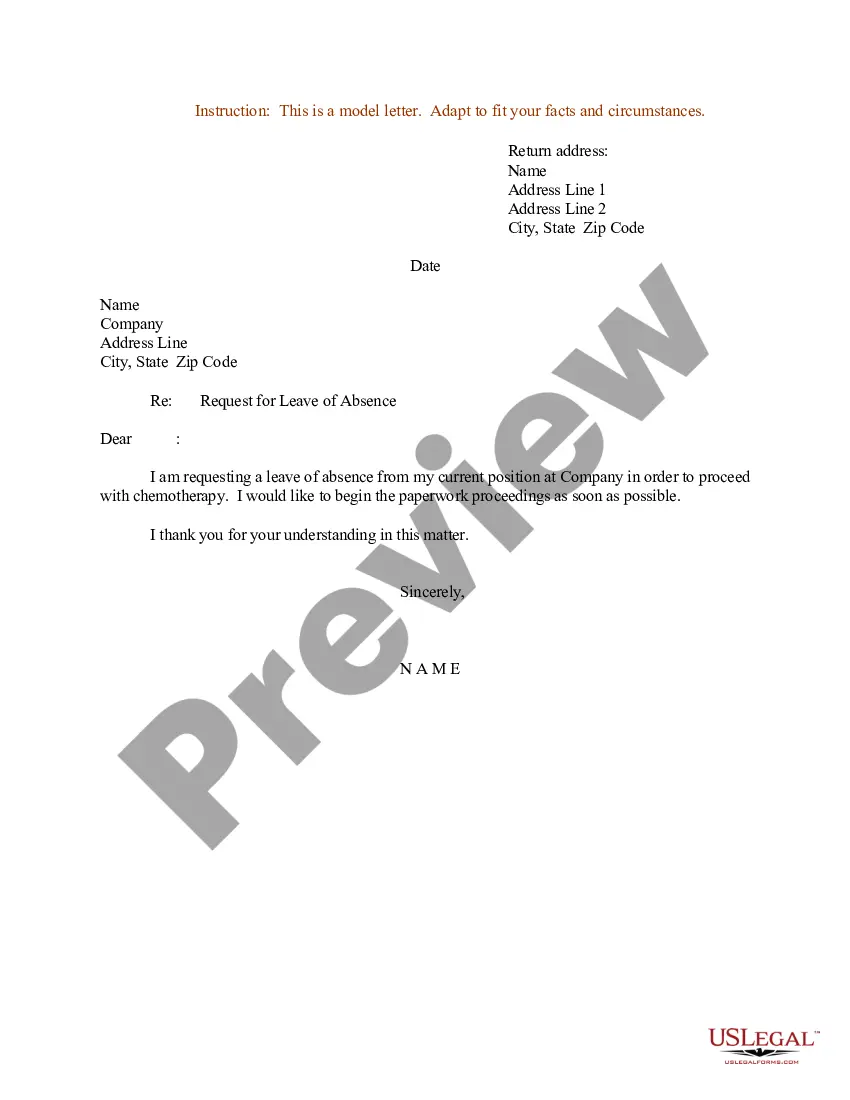
- Return address with the sender's details
- Date of the letter
- Recipient's name and company details
- Subject line specifically mentioning maternity leave
- Body text outlining the request for maternity leave
Common use cases
This form is needed when an employee wishes to formally inform their employer of their upcoming maternity leave. It is typically used when the employee has completed necessary discussions with their supervisor or HR department, and it serves as a formal written notice of their intent to take leave, thereby ensuring clarity in communication.
Who needs this form
This form is intended for:
- Employees expecting a child who need to take maternity leave
- Individuals in need of a structured way to communicate their leave plans to their employer
- Those who want a template that can easily be customized to fit their specific situation
Steps to complete this form
- Identify your return address and include it at the top.
- Enter the date of writing the letter.
- Fill in the recipient's name and the company information.
- Specify the subject line, mentioning "Maternity Leave."
- In the body of the letter, clearly state your request for maternity leave and relevant dates.
Does this form need to be notarized?
This form does not typically require notarization unless specified by local law. It is advisable to check with your employer if they have any specific requirements regarding maternity leave letters.
Get your form ready online
Our built-in tools help you complete, sign, share, and store your documents in one place.
Make edits, fill in missing information, and update formatting in US Legal Forms—just like you would in MS Word.
Download a copy, print it, send it by email, or mail it via USPS—whatever works best for your next step.
Sign and collect signatures with our SignNow integration. Send to multiple recipients, set reminders, and more. Go Premium to unlock E-Sign.
If this form requires notarization, complete it online through a secure video call—no need to meet a notary in person or wait for an appointment.
We protect your documents and personal data by following strict security and privacy standards.

Make edits, fill in missing information, and update formatting in US Legal Forms—just like you would in MS Word.

Download a copy, print it, send it by email, or mail it via USPS—whatever works best for your next step.

Sign and collect signatures with our SignNow integration. Send to multiple recipients, set reminders, and more. Go Premium to unlock E-Sign.

If this form requires notarization, complete it online through a secure video call—no need to meet a notary in person or wait for an appointment.

We protect your documents and personal data by following strict security and privacy standards.
Common mistakes to avoid
- Failing to include essential details such as dates of leave
- Not addressing the letter to the correct person or department
- Using informal language instead of a professional tone
Why use this form online
- Convenience of editing the template at your own pace
- Access to a reliable format drafted by legal professionals
- Fast download option to get your letter prepared immediately
What to keep in mind
- The Sample Letter for Maternity Leave is essential for formalizing your request for leave.
- It's crucial to include all necessary information to avoid misunderstandings.
- The form can be customized to fit your unique situation, providing flexibility.
Looking for another form?


Form popularity
FAQ
If you desire more maternity leave than what is outlined by your human resources department or in your company handbook, explain your reasons. For example, if your company doesn't offer paid leave and you can afford to take 10 weeks unpaid, tell your superiors exactly why you need this time off from work.
Use proper formatting. Include the date and address. Include the recipient's address. Use the proper greeting or salutation. Explain why you're writing. Provide a workload proposal. Set expectations for communication. Include a plan for your transition back.
Do you pay for maternity leave? Do I have to use PTO for doctors visits? Can I take off additional time if I need it? What are my pregnancy and family-related benefits?
Dear name, This letter is to inform you that I am pregnant and plan to take maternity leave. My due date is date and I plan to continue working until date or suggest working from home until your due date or delivery. I plan to take number weeks of maternity leave.
Do you pay for maternity leave? Do I have to use PTO for doctors visits? Can I take off additional time if I need it? What are my pregnancy and family-related benefits?
To create the initial part of your maternity leave plan, plan on working backwards for roughly 2 months prior. Set a schedule of what projects and tasks you plan on accomplishing before you leave. Don't be shy about bragging about the achievements you plan on making during the period before you leave.
Respected Madam/Sir, With due respect, I want to state that I Ahana Paul (Your Name) working as an English Teacher ( Your Designation) at your respected school want to request you to grant me some leave as my maternity days are near. The doctor I visiting has suggested me to take complete bed rest.
If you desire more maternity leave than what is outlined by your human resources department or in your company handbook, explain your reasons. For example, if your company doesn't offer paid leave and you can afford to take 10 weeks unpaid, tell your superiors exactly why you need this time off from work.
Know your federal rights. Know your state and local rights. Make a plan. Decide how to approach your employer. Ask for 12 paid weeks minimum. Inform your employer why paid leave benefits business. Take notes when you negotiate.