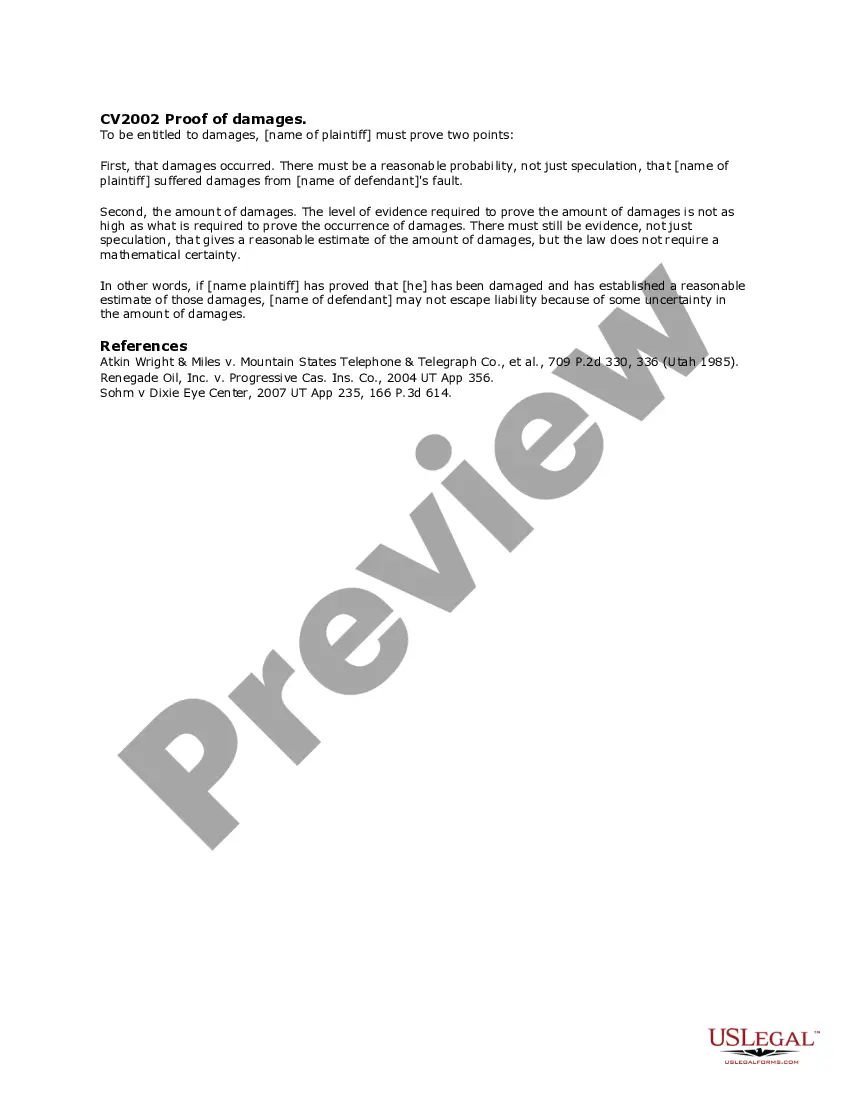
Leave of Absence for Child Care
What is this form?
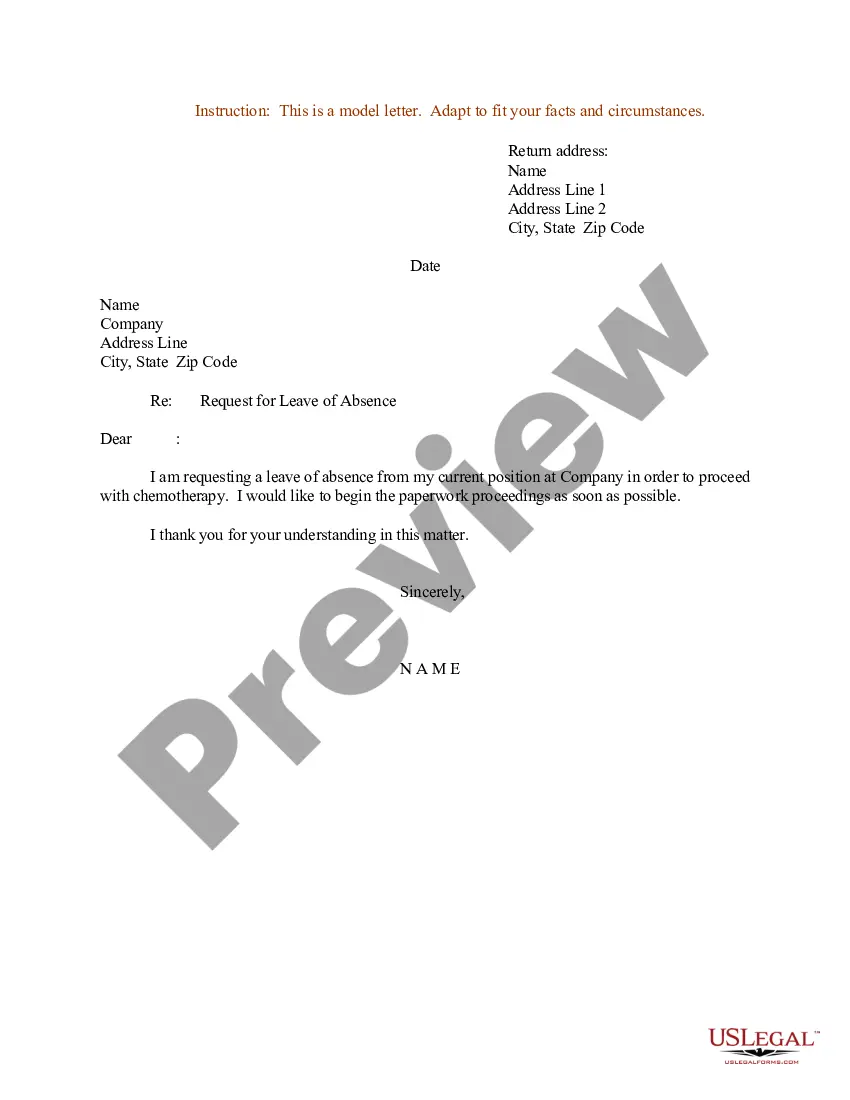
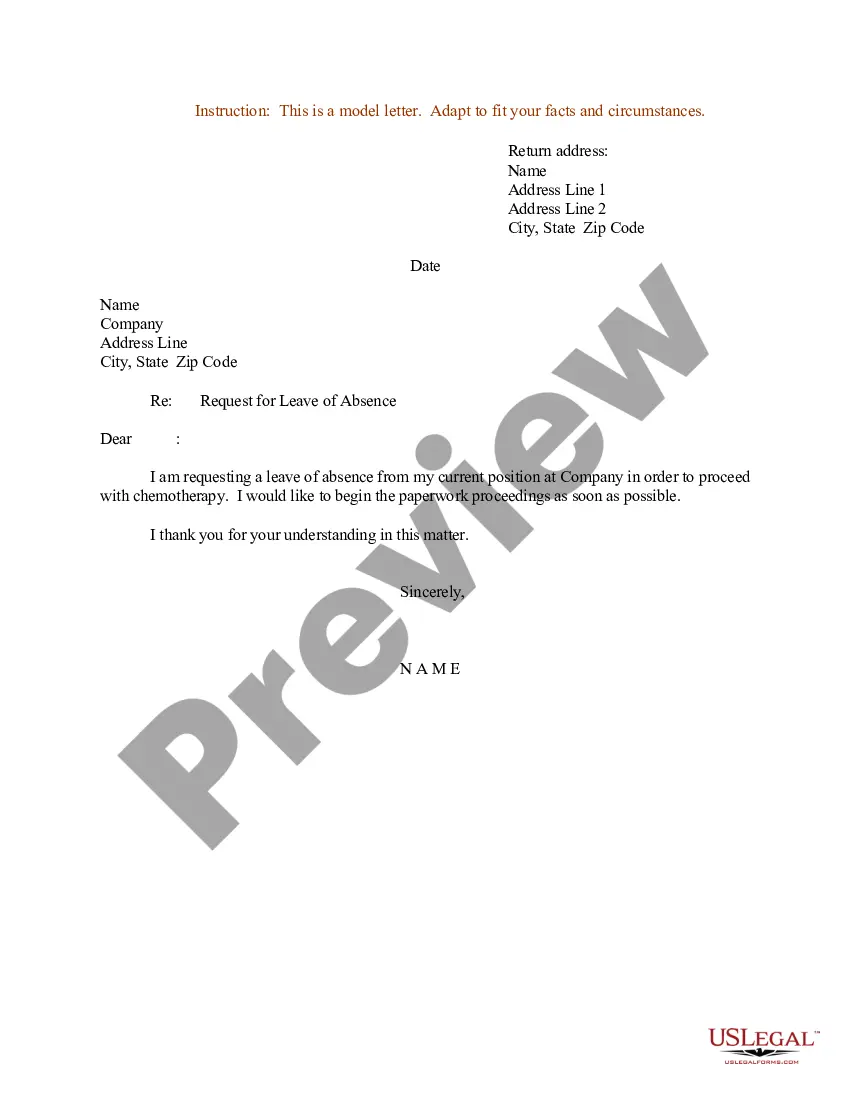
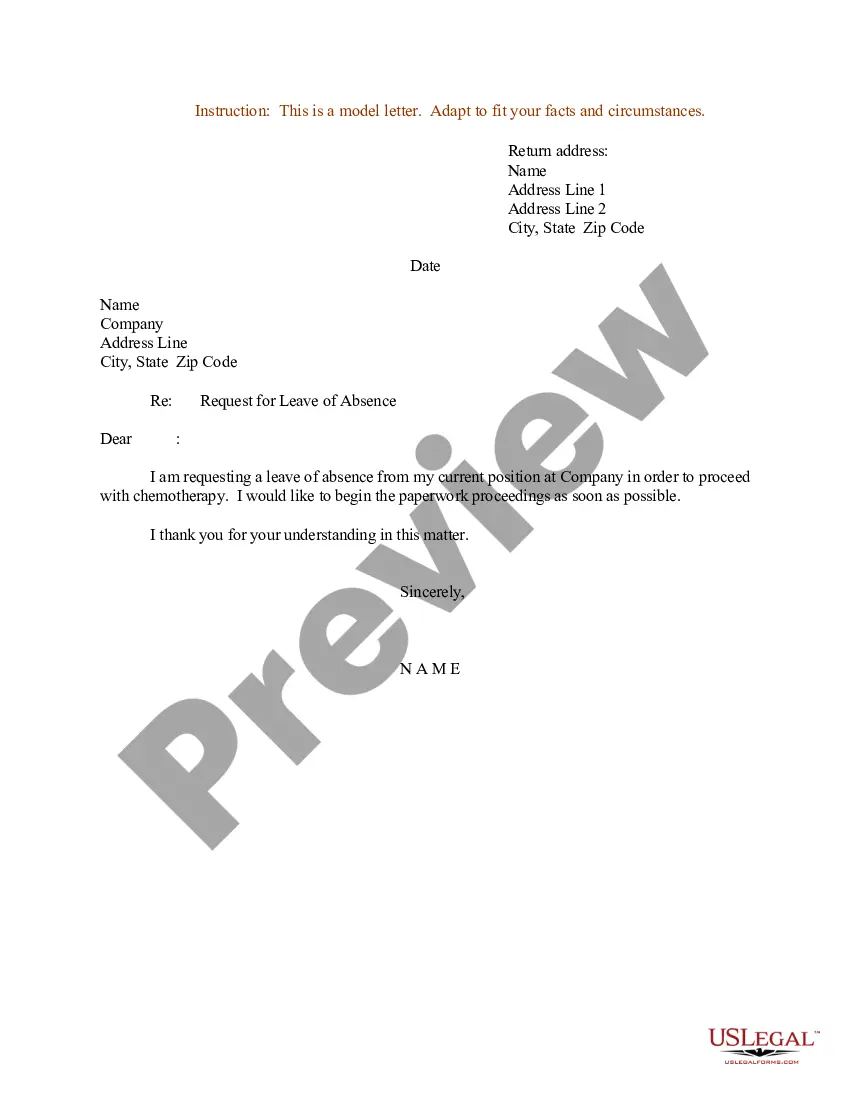
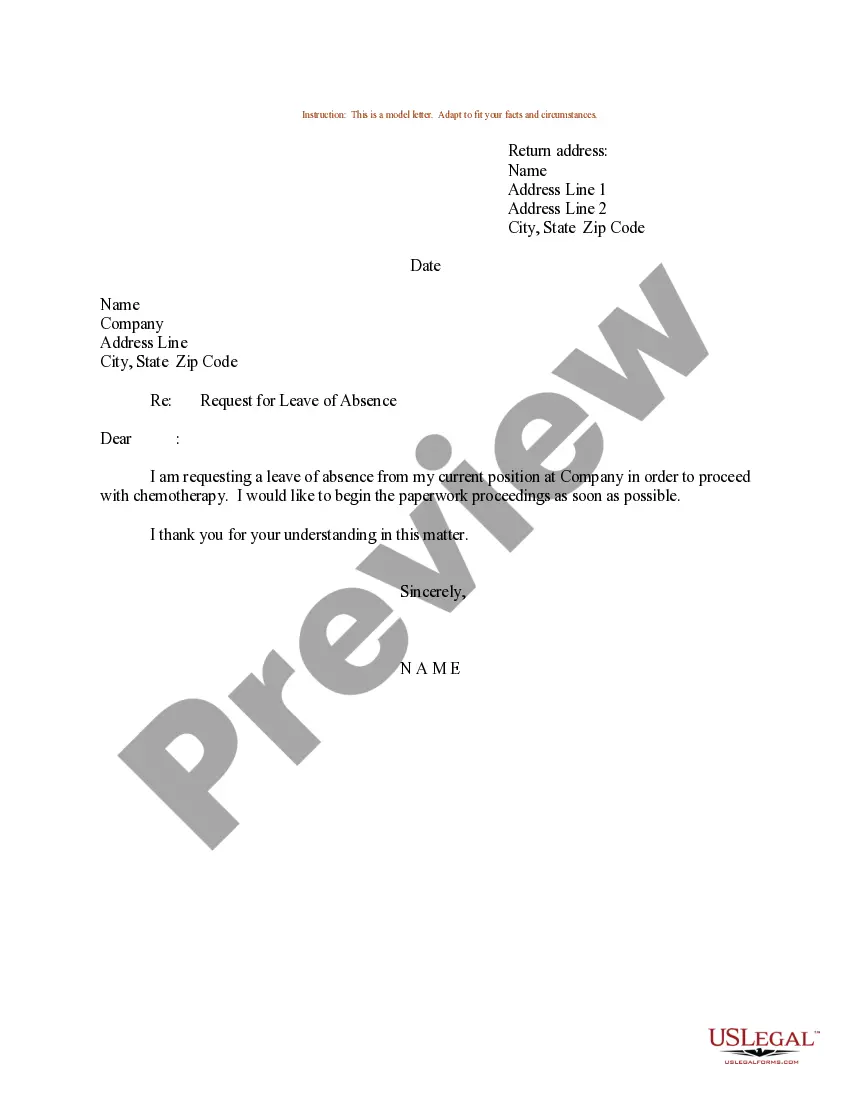
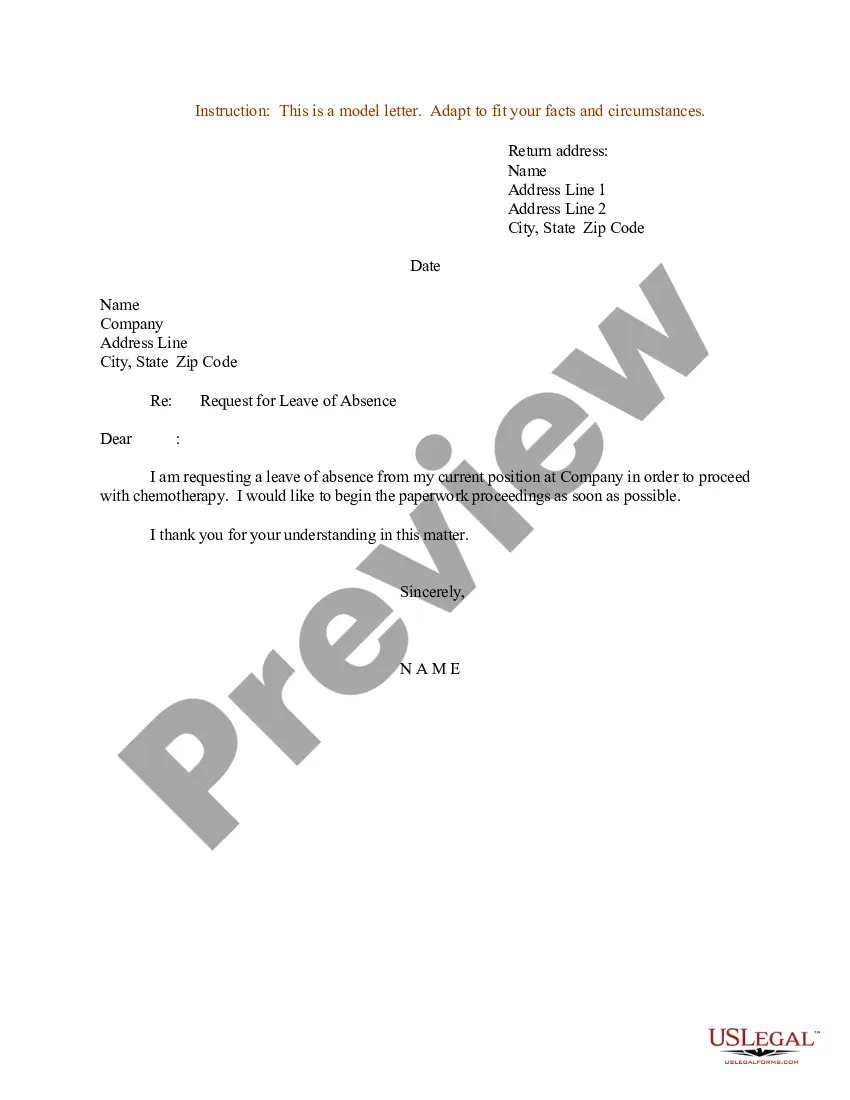
The Leave of Absence for Child Care form is a sample letter that an employee can use to request time off work to care for a child. This form is essential for formalizing the request and ensuring clear communication with the employer. Unlike generic leave requests, this specific form caters to childcare needs and outlines the reason for absence explicitly.
Key components of this form
- Return Address: Your contact information, including name and address.
- Date: The date on which the letter is written.
- Employer's Address: The address of your employer or HR department.
- Subject Line: Clearly states the purpose as a request for leave of absence.
- Content of the letter: A respectful request for leave along with specified dates or duration.
- Signature: Your name to formally conclude the request.
When to use this form
This form is used when an employee needs to take time off work to care for a child, whether due to parental leave requirements, a childâs illness, or another childcare matter. It formalizes the request and provides your employer with necessary details about your absence.
Intended users of this form
- Employees needing time off for childcare reasons.
- Parents or guardians who are employed and want to ensure their absence is acknowledged formally.
- Anyone seeking to understand employer policies regarding leave for childcare.
Instructions for completing this form
- Identify the parties: Enter your name and address at the top of the letter.
- Include the date: Write the date you are submitting the letter.
- Specify the recipient: Add your employerâs name and address.
- State your request: Clearly explain your request for leave and the reason for it.
- Enter the duration: Mention the exact dates or duration for which you are requesting the leave.
- Sign the letter: Add your signature or printed name at the end of the letter.
Is notarization required?
This form does not typically require notarization unless specified by local law. Always check local regulations to confirm if notarization is needed for your leave request.
Get your form ready online
Our built-in tools help you complete, sign, share, and store your documents in one place.
Make edits, fill in missing information, and update formatting in US Legal Forms—just like you would in MS Word.
Download a copy, print it, send it by email, or mail it via USPS—whatever works best for your next step.
Sign and collect signatures with our SignNow integration. Send to multiple recipients, set reminders, and more. Go Premium to unlock E-Sign.
If this form requires notarization, complete it online through a secure video call—no need to meet a notary in person or wait for an appointment.
We protect your documents and personal data by following strict security and privacy standards.

Make edits, fill in missing information, and update formatting in US Legal Forms—just like you would in MS Word.

Download a copy, print it, send it by email, or mail it via USPS—whatever works best for your next step.

Sign and collect signatures with our SignNow integration. Send to multiple recipients, set reminders, and more. Go Premium to unlock E-Sign.

If this form requires notarization, complete it online through a secure video call—no need to meet a notary in person or wait for an appointment.

We protect your documents and personal data by following strict security and privacy standards.
Common mistakes
- Failing to specify the exact dates for the requested leave.
- Not addressing the letter properly to the employer.
- Using vague language that does not clearly communicate the intention.
- Forgetting to include personal contact information.
- Neglecting to proofread for spelling or grammatical errors.
Why use this form online
- Convenient access: Download and fill out the form at your convenience.
- Editability: Easily customize the document to fit your specific situation.
- Reliability: Forms created by licensed attorneys ensure accuracy and compliance.
What to keep in mind
- The Leave of Absence for Child Care form is an essential tool for formal requests for childcare leave.
- It is important to provide clear and specific details in the request to avoid misunderstandings.
- State regulations may impact the requirements for leave requests, so be aware of your local laws.
Looking for another form?
Form popularity
FAQ
All employers in California must abide by all FMLA and CFRA regulations without exception. However, an employer has every right to deny an employee's request to use accrued vacation time or paid time off, but the employer must usually provide some kind of reasonable explanation.
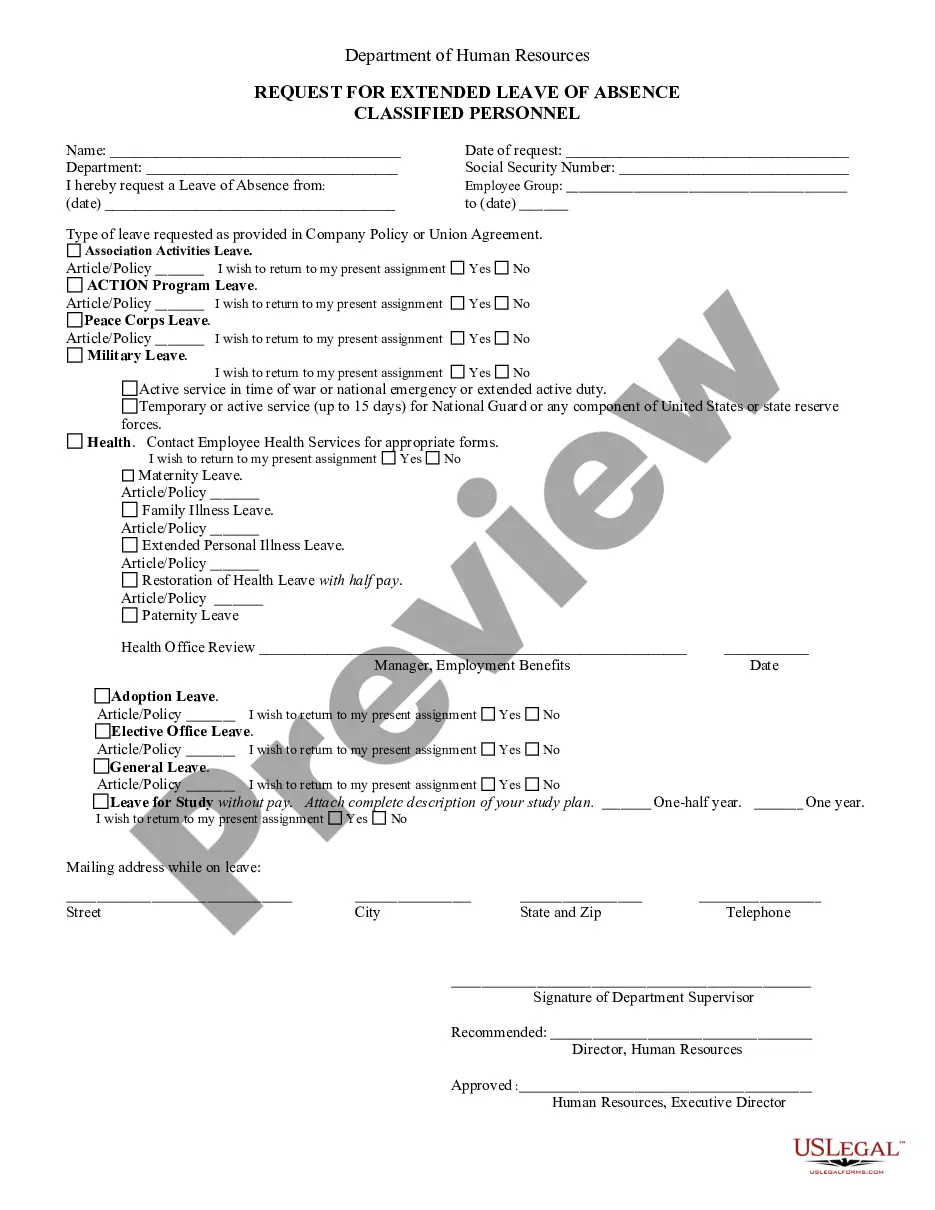
At some point, you may need to request a leave of absence from work. It could be for one of a variety of reasons: personal or family health problems, the birth or adoption of a child, relief from excessive job stress, the loss of a loved one, or the desire to travel or pursue a hobby.
The FMLA covers leave to arrange for alternative child care, to provide child care on an urgent, immediate-need basis, to enroll in or transfer schools or day care for the child of a military member, and to attend meetings with school staff or daycare facility.
Employees are eligible if they have worked for a covered employer for at least one year, and for at least 1,250 hours over the previous 12 months, and if the employer has at least 50 employees within 75 miles. Visit Time Off & Leaves of Absence for additional information.
How long can you take a leave of absence? Under the EFMLA, employees may take leave in order to recover from COVID-19 or take care of a family member who has the virus. According to the FMLA, your employees can take up to 12 weeks off in a 12-month period if they have already worked for 1,250 hours.
An FMLA leave allows employees to take up to 12 weeks off in a 12-month period. If their absence is not protected by the Family and Medical Leave Act (FMLA), then it's considered a non-FMLA medical leave.
Unpaid leave allows eligible parents time off to look after their child's welfare for example, to spend more time with their children and the family, to look for new schools, or to settle children into new childcare arrangements.
Eligible Reasons to Take Time Off Under the FMLA Birth and care of baby. Adoption of a child. Care for a sick immediate family member (spouse, child or parent). The employee is sick with a serious health condition.
Forced unpaid leave There's no limit to how long you can lay-off an employee, but if they've been away from work for four weeks in a row, or six weeks within a 13-week period where no more than six weeks are consecutive, then they can apply for redundancy pay and resign from their position.