New Hampshire Warranty Deed from Husband and Wife to Husband and Wife
Understanding this form
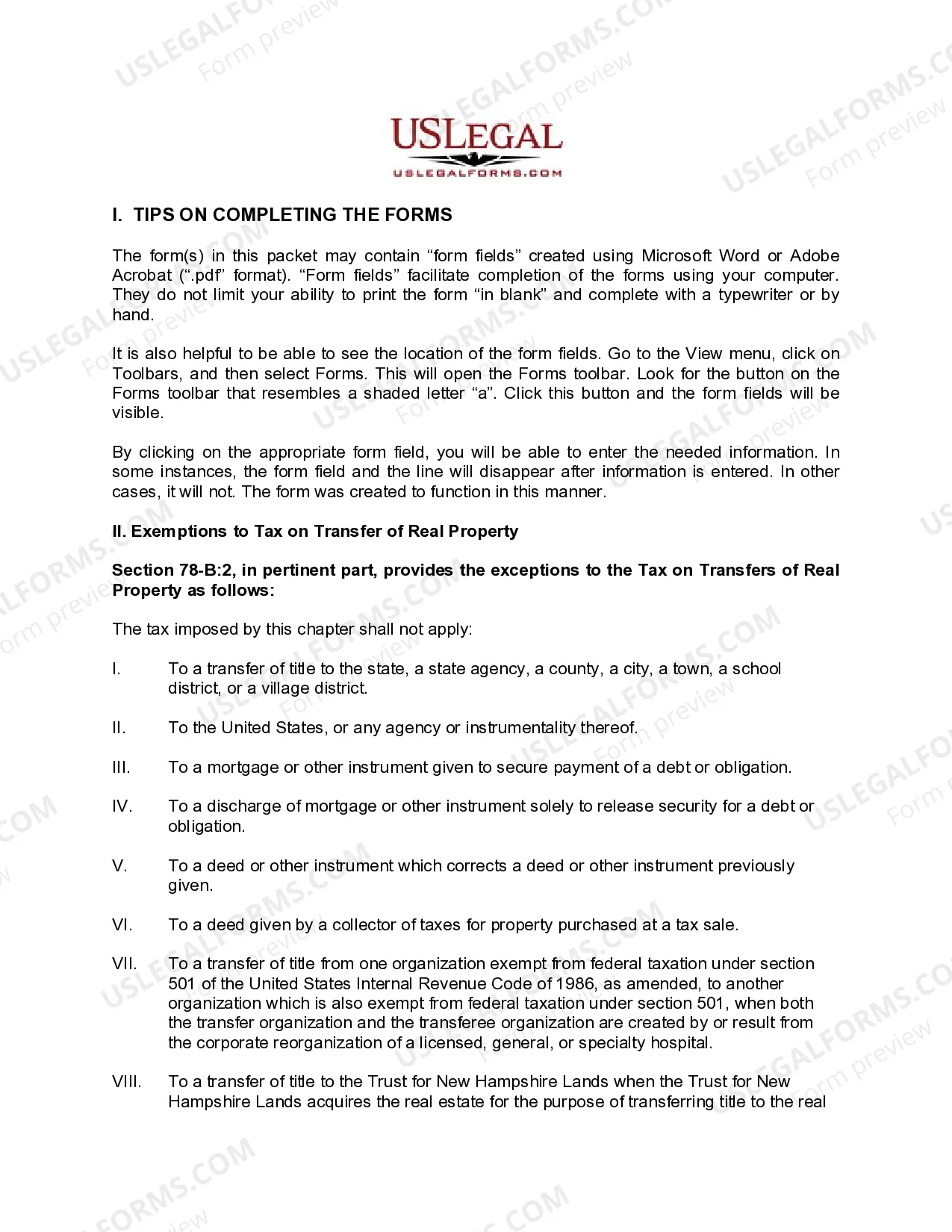
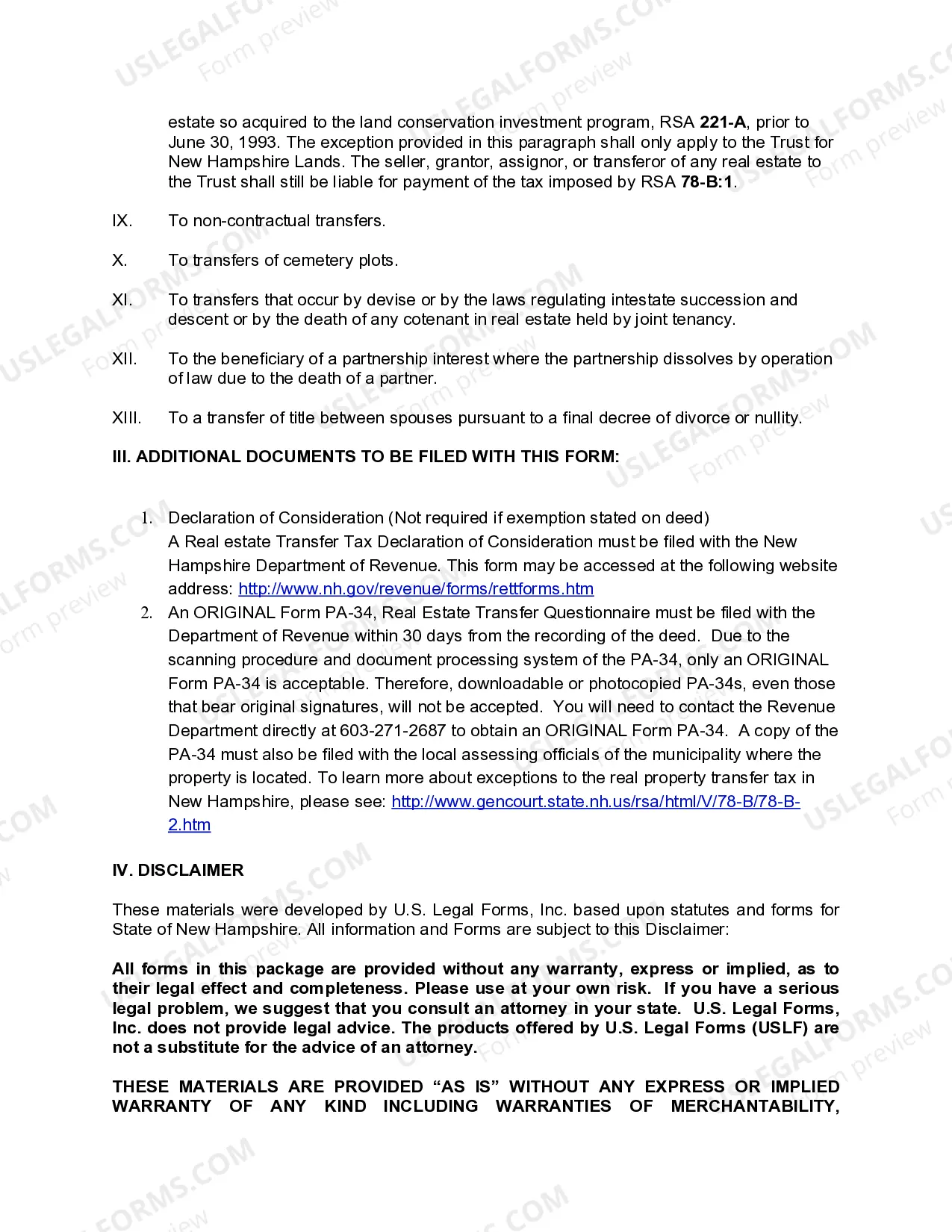
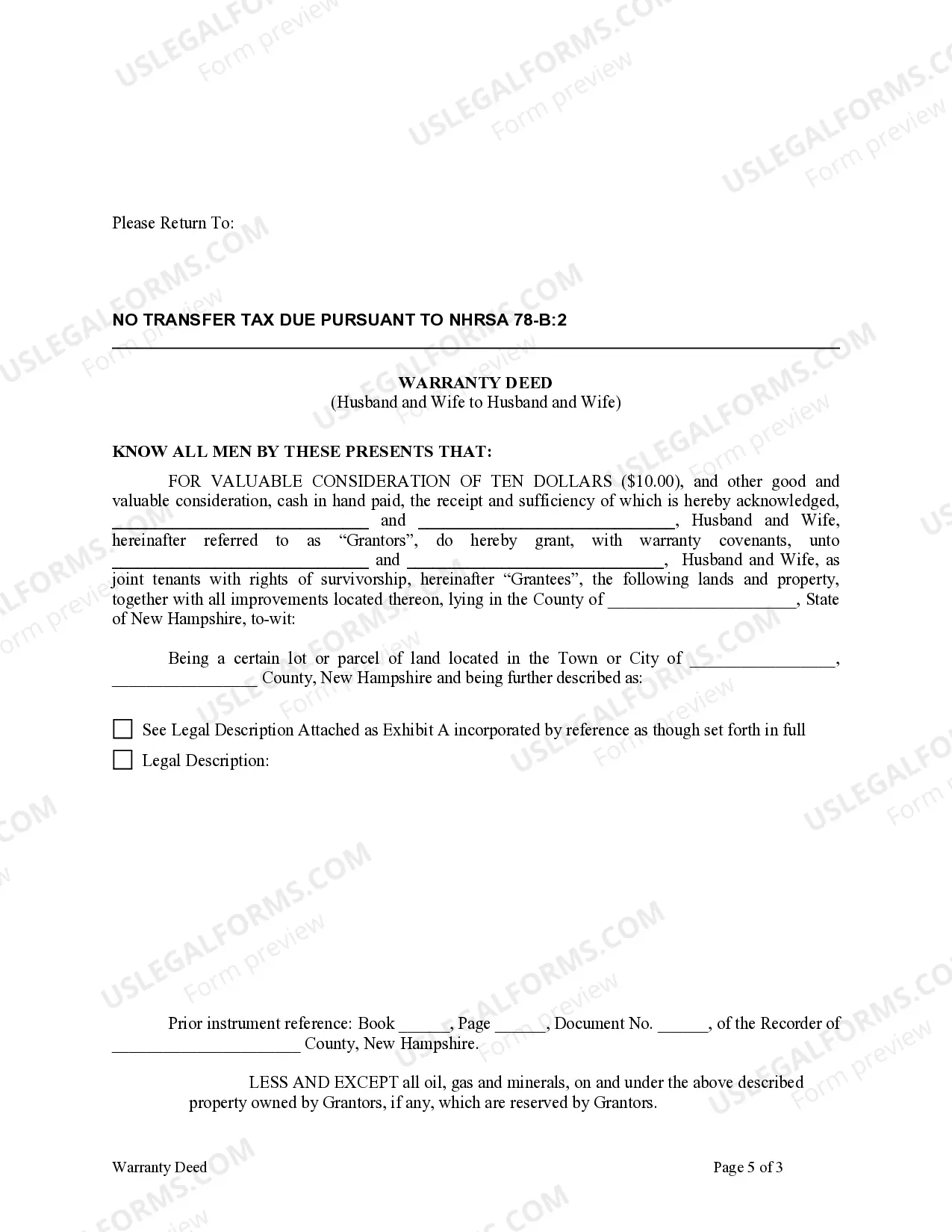
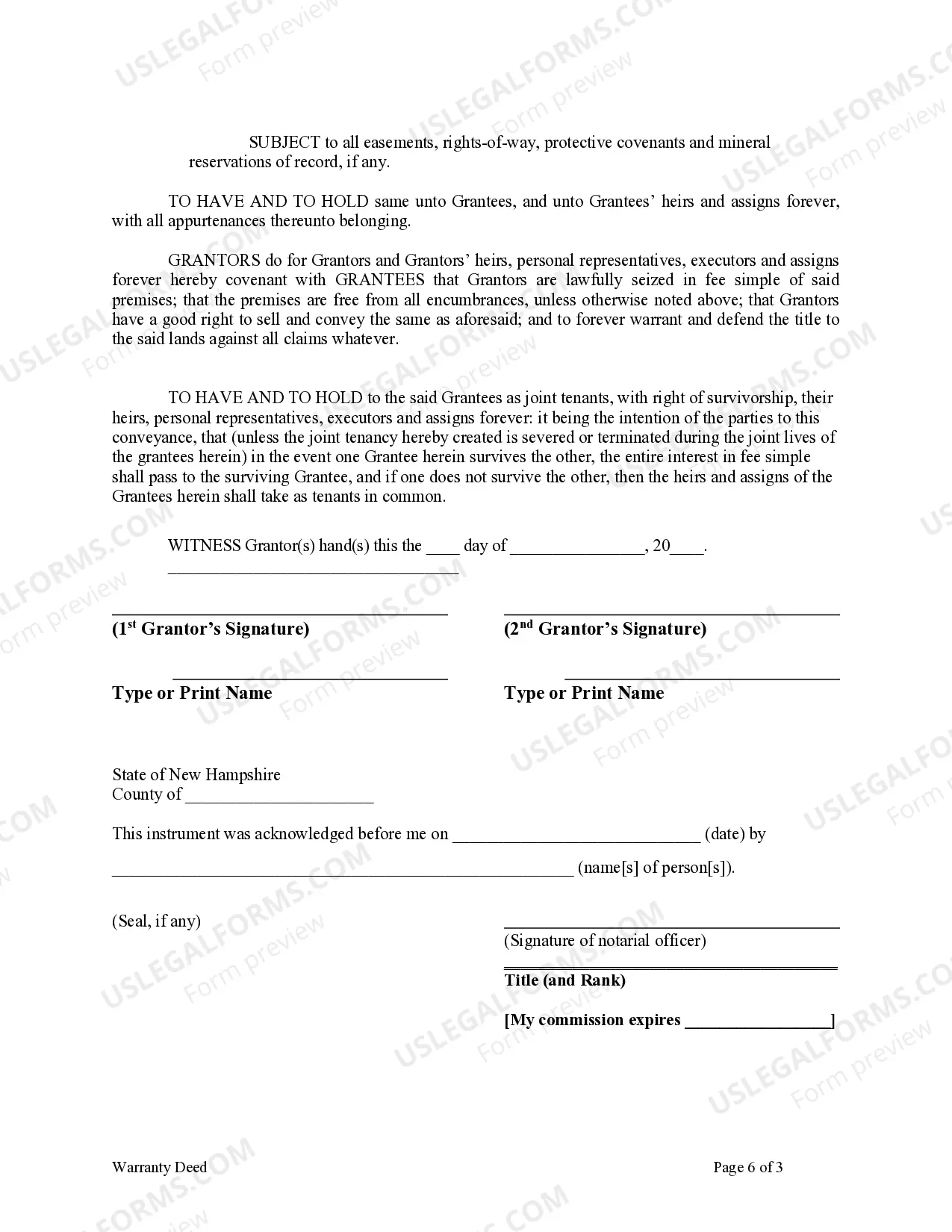
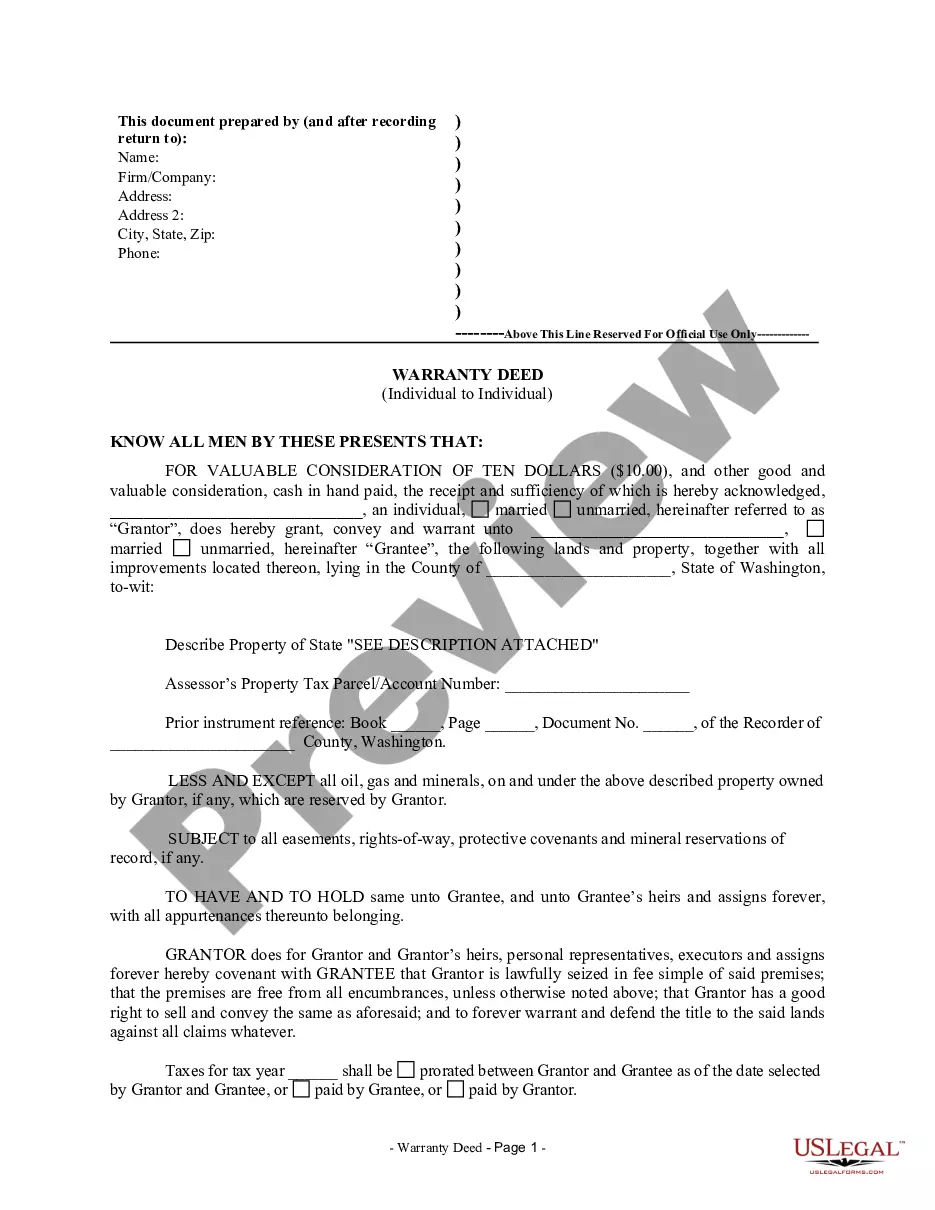
A Warranty Deed from Husband and Wife to Husband and Wife is a legal document that facilitates the transfer of property ownership between spouses. This deed ensures that both spouses convey and warrant their interest in the property to each other, while also reserving any oil, gas, and mineral rights. Unlike other types of deeds, a warranty deed provides assurances about the title and that the property is free from encumbrances, making it a trusted choice for property transfers between married couples.
Main sections of this form
- Identification of grantors (the transferring parties) as husband and wife.
- Identification of grantees (the receiving parties) as husband and wife.
- Legal description of the property being transferred.
- Reservation of rights to oil, gas, and minerals, if applicable.
- Warranties of clear title and absence of encumbrances.
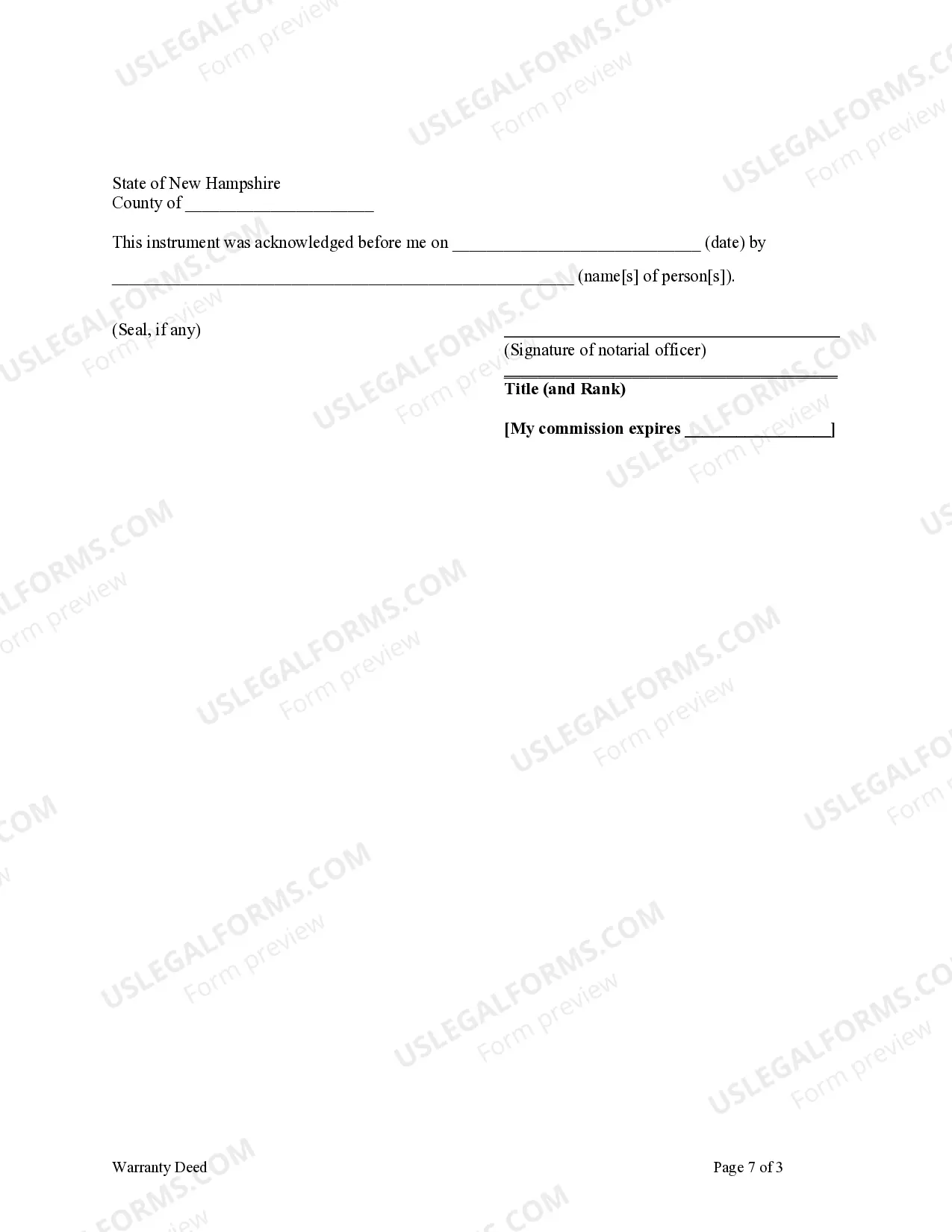
- Signature lines for grantors and notary acknowledgment.






When to use this document
This form is typically used in scenarios where husband and wife wish to transfer property between themselves for personal or estate planning reasons. It can be employed in situations such as consolidations of property ownership, estate planning, or when one spouse wishes to gift their interest to the other spouse.
Who this form is for
- Married couples looking to transfer property ownership between themselves.
- Individuals involved in estate planning who want to secure joint ownership of property.
- Spouses intending to clarify or reaffirm property titles in their names.
How to complete this form
- Identify the full names of the grantors, both husband and wife.
- Identify the full names of the grantees, ensuring they are the same as the grantors.
- Provide a detailed legal description of the property in the designated area.
- Sign the form where indicated, ensuring both parties sign as grantors.
- Have the document notarized by a recognized notary public to validate the signatures.
Does this document require notarization?
Yes, this form must be notarized to be legally valid. You can utilize US Legal Forms' integrated online notarization services for convenience, secure video calls, and to ensure compliance with legal standards without the need for travel.
Get your form ready online
Our built-in tools help you complete, sign, share, and store your documents in one place.
Make edits, fill in missing information, and update formatting in US Legal Forms—just like you would in MS Word.
Download a copy, print it, send it by email, or mail it via USPS—whatever works best for your next step.
Sign and collect signatures with our SignNow integration. Send to multiple recipients, set reminders, and more. Go Premium to unlock E-Sign.
If this form requires notarization, complete it online through a secure video call—no need to meet a notary in person or wait for an appointment.
We protect your documents and personal data by following strict security and privacy standards.

Make edits, fill in missing information, and update formatting in US Legal Forms—just like you would in MS Word.

Download a copy, print it, send it by email, or mail it via USPS—whatever works best for your next step.

Sign and collect signatures with our SignNow integration. Send to multiple recipients, set reminders, and more. Go Premium to unlock E-Sign.

If this form requires notarization, complete it online through a secure video call—no need to meet a notary in person or wait for an appointment.

We protect your documents and personal data by following strict security and privacy standards.
Mistakes to watch out for
- Failing to include a complete legal description of the property.
- Not executing the deed with both spousesâ signatures.
- Neglecting to obtain notarization, which may invalidate the deed.
- Incorrectly assuming that property taxes are automatically exempt during the transfer.
Why complete this form online
- Convenient access to the form allows for easy completion at any time.
- Editability enables users to fill in necessary details quickly and accurately.
- Reliable legal templates ensure compliance with state laws and regulations.
Looking for another form?
Form popularity
FAQ
You can buy a house under one name, and most of the time couples do this because one partner's credit is bad. However, there are advantages to joint mortgages. You should carefully consider the pros and cons of buying a house under only one partner's name.
If you are married and your name is not on the title deed, you may have relinquished your ownership right.
Wives : A wife is entitled to an equal share of her husband's property like other entitled heirs. If there are no sharers, she has full right to the entire property.She is also entitled to maintenance, support and shelter from husband, and if staying in a joint family, from the family.
For most couples, this isn't an issue, but it is important to note that by putting your spouse on the deed you are giving up partial control of the property. This is part of vesting of the property, and your spouse now has a vested interest.
Community Property in California Inheritance LawsCalifornia is a community property state, which is a policy that only applies to spouses and domestic partners.The only property that doesn't become community property automatically are gifts and inheritances that one spouse receives.
When it comes to reasons why you shouldn't add your new spouse to the Deed, the answer is simple divorce and equitable distribution. If you choose not to put your spouse on the Deed and the two of you divorce, the entire value of the home is not subject to equitable distribution.
An interspousal transfer deed can be useful when one spouse has poor credit, and the couple wants to refinance their home. To receive a better mortgage interest rate, the couple may decide to use an interspousal transfer deed to transfer title to their home to the spouse with better credit.
In cases where a couple shares a home but only one spouse's name is on it, the home will not automatically pass to the surviving pass, if his or her name is not on the title.
With a Survivorship Deed in place, when one of the parties in a joint tenancy dies, the other party (or parties) takes over the deceased party's interest in the property instead of it passing to the deceased's heirs or beneficiaries.