Minnesota Demand Letter - Repayment of Promissory Note
Overview of this form
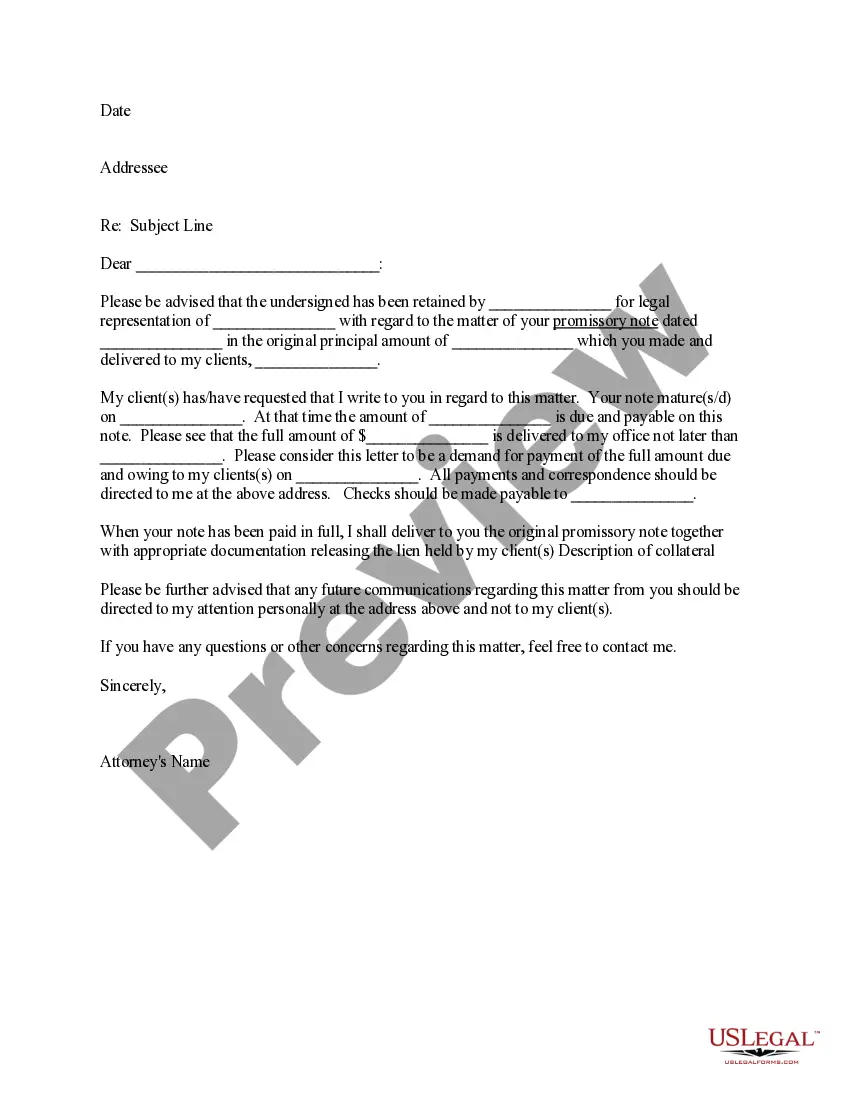
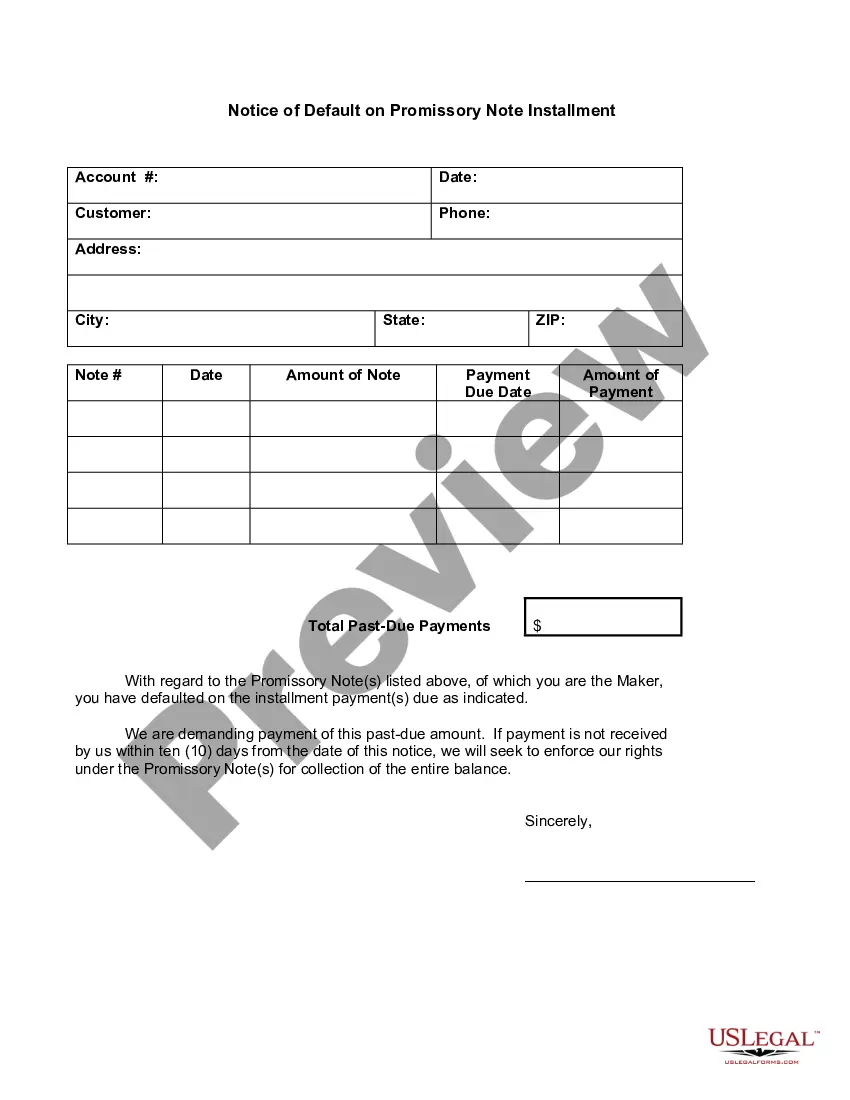
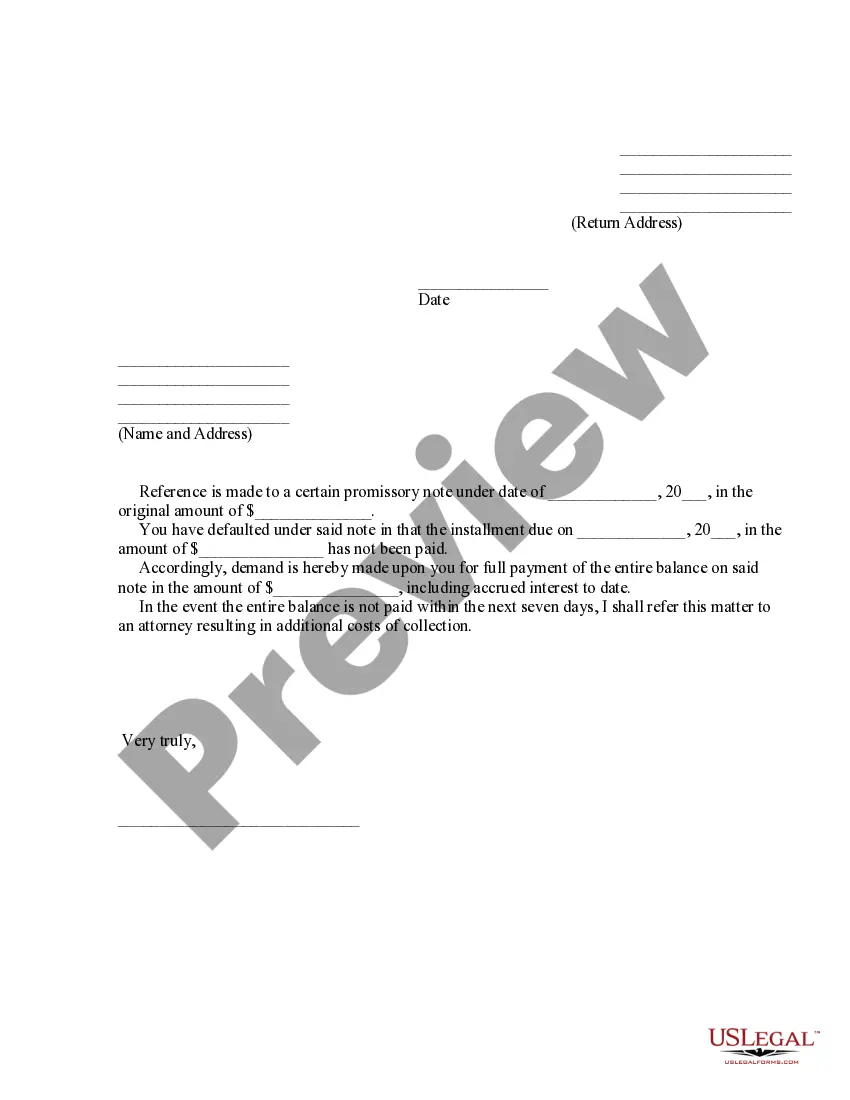
The Demand Letter for Repayment of Promissory Note is a legal document used by creditors to formally request payment from borrowers who have not met their repayment obligations. This letter serves as a clear demand for the full repayment amount owed as specified in the promissory note. It is crucial for initiating the collection process and demonstrates that the creditor is serious about recovering the funds.
Form components explained
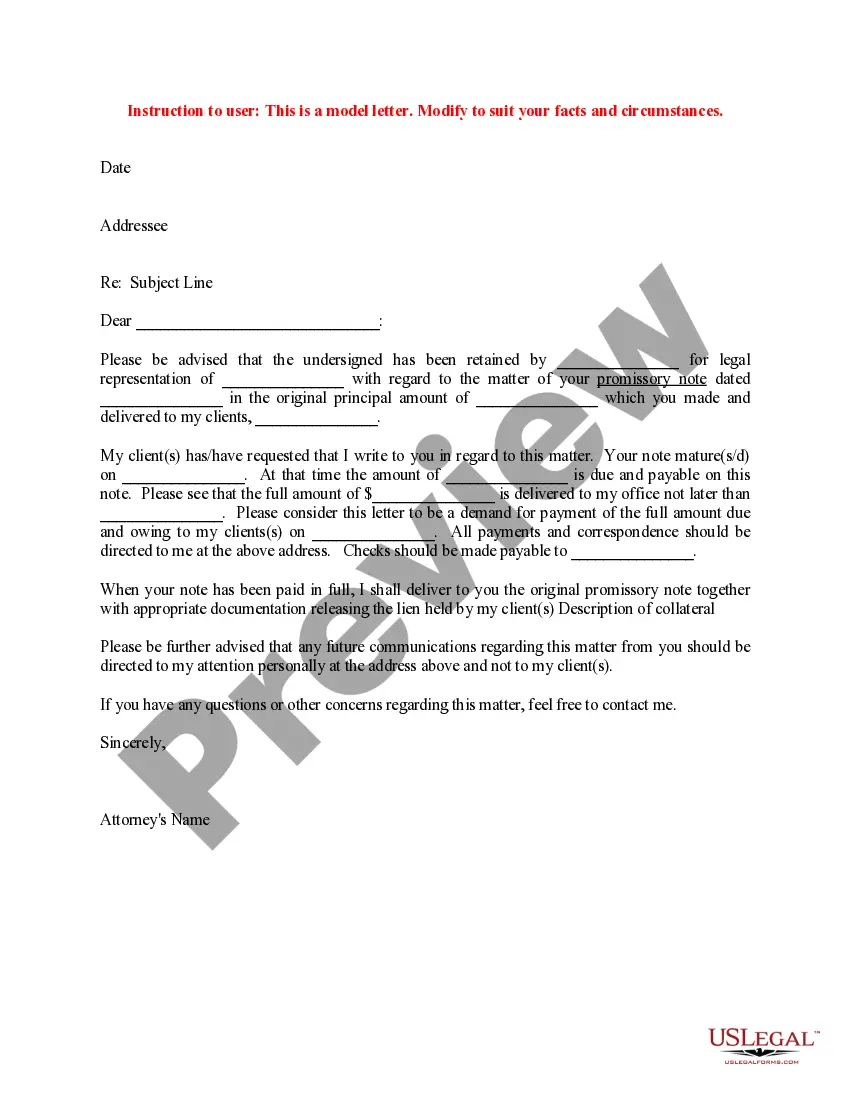
- Addressee information for clear communication.
- Subject line indicating the nature of the correspondence.
- A statement of legal representation by the creditor's attorney.
- Details of the promissory note, including the date and principal amount.
- A demand for payment with a specified deadline.
- Instructions regarding future correspondence and payment directions.
When to use this form
This demand letter should be used when a debtor has failed to repay a loan as outlined in a promissory note. It is suitable in situations where the creditor seeks to remind the debtor of their obligations and formally request repayment before escalating to legal action. This document is an essential step in the debt collection process and can help resolve disputes without court intervention.
Who can use this document
- Creditors seeking repayment for loans specified in promissory notes.
- Attorneys representing creditors in debt collection matters.
- Individuals or businesses experiencing difficulties in receiving payments from borrowers.
Instructions for completing this form
- Identify and enter the addressee's information at the top of the letter.
- Clearly state the subject of the letter to indicate it is a demand for payment.
- Include the details of the promissory note, such as the date, original principal amount, and debtor's name.
- Specify the amount due and the deadline for payment.
- Direct future communications to be sent to your office and provide payment instructions.
- Sign the letter with your name and title as the creditor's attorney.
Is notarization required?
This form does not typically require notarization to be legally valid. However, some jurisdictions or document types may still require it. US Legal Forms provides secure online notarization powered by Notarize, available 24/7 for added convenience.
Get your form ready online
Our built-in tools help you complete, sign, share, and store your documents in one place.
Make edits, fill in missing information, and update formatting in US Legal Forms—just like you would in MS Word.
Download a copy, print it, send it by email, or mail it via USPS—whatever works best for your next step.
Sign and collect signatures with our SignNow integration. Send to multiple recipients, set reminders, and more. Go Premium to unlock E-Sign.
If this form requires notarization, complete it online through a secure video call—no need to meet a notary in person or wait for an appointment.
We protect your documents and personal data by following strict security and privacy standards.

Make edits, fill in missing information, and update formatting in US Legal Forms—just like you would in MS Word.

Download a copy, print it, send it by email, or mail it via USPS—whatever works best for your next step.

Sign and collect signatures with our SignNow integration. Send to multiple recipients, set reminders, and more. Go Premium to unlock E-Sign.

If this form requires notarization, complete it online through a secure video call—no need to meet a notary in person or wait for an appointment.

We protect your documents and personal data by following strict security and privacy standards.
Common mistakes to avoid
- Failing to include the exact due date for payment.
- Not specifying the total amount due clearly.
- Neglecting to provide the proper contact information for correspondence.
- Inaccurate details regarding the promissory note.
- Sending the letter to the debtor instead of their attorney, if they are represented.
Why complete this form online
- Convenient access to a legally sound template that is easy to fill out and customize.
- Editability allows for adjustments to suit specific situations and needs.
- Reliable format drafted by licensed attorneys to ensure compliance with legal standards.
- Quick and efficient way to initiate the repayment process.
Legal use & context
- This letter serves as official notification for the demand of payment.
- Helps establish a clear record of the debt for potential legal proceedings.
- Can act as a basis for further collection actions or legal suit if payment is not received.
Key takeaways
- A demand letter for repayment is essential for formal debt collection.
- Complete all sections thoughtfully to avoid misunderstandings.
- Using a professionally drafted template makes the process easier and ensures clarity.
Looking for another form?
Form popularity
FAQ
Common mistakes in a Minnesota Demand Letter - Repayment of Promissory Note include vague language and lack of details. Many people forget to specify the exact amount owed or the terms of repayment, which can lead to confusion. Additionally, failing to state a clear deadline for repayment can weaken your position. To avoid these pitfalls, use precise language and ensure all necessary information is included, or consider using uslegalforms to create a professional letter.
A demand for payment on a promissory note is a formal request made by the lender to the borrower to repay the amount owed. This request can be made verbally or in writing, but a written demand is often more effective. Utilizing a Minnesota Demand Letter - Repayment of Promissory Note provides a clear, legal framework for this request, ensuring both parties understand their obligations.
The lender or holder of the promissory note has the right to demand payment. This can include individuals, businesses, or financial institutions. If you find yourself in a situation requiring payment, a Minnesota Demand Letter - Repayment of Promissory Note serves as a formal notification that can prompt timely repayment.
Yes, a promissory note can indeed be structured to be on demand. This means that the lender has the right to request full repayment whenever they choose. Using a Minnesota Demand Letter - Repayment of Promissory Note is an effective way to exercise this right, ensuring that the request is documented and legally recognized.
To legally forgive a promissory note, both the borrower and lender must agree to the terms of forgiveness. This often involves drafting a formal document that outlines the forgiveness and any conditions. If you need assistance with this process, a Minnesota Demand Letter - Repayment of Promissory Note can clarify your intentions and protect your legal rights.
A standard promissory note specifies a set repayment schedule, while a demand promissory note allows the lender to request payment at any time. This flexibility can be beneficial in urgent financial situations. When utilizing a Minnesota Demand Letter - Repayment of Promissory Note, understanding these differences helps you choose the right approach for your needs.
Yes, a promissory note can be made payable on demand. This means the lender can request repayment at any time. In the context of a Minnesota Demand Letter - Repayment of Promissory Note, the lender can use this letter to formally demand payment, ensuring clarity and legal backing.
In Minnesota, the statute of limitations for a promissory note is typically six years. This timeframe begins from the date the payment is due, which is crucial to consider when drafting your Minnesota Demand Letter - Repayment of Promissory Note. If the debt remains unpaid beyond this period, you may lose the right to take legal action. Always check current laws or consult with a legal expert to ensure compliance.
To write a strong demand letter for payment, start by clearly stating the amount owed and the reason for the debt. Include details about the promissory note and any relevant dates to establish context. The Minnesota Demand Letter - Repayment of Promissory Note should be direct yet polite, outlining what you expect and the timeframe for payment. Using a professional template from US Legal Forms can streamline this process and enhance your letter's effectiveness.
You don't necessarily need a lawyer to write a demand letter; however, consulting one can be beneficial. A well-crafted Minnesota Demand Letter - Repayment of Promissory Note can effectively communicate your intentions and legal standing. If you are unsure about the legal language or structure, a lawyer can ensure your letter is persuasive and accurate. Utilizing platforms like US Legal Forms can also provide templates to guide you.