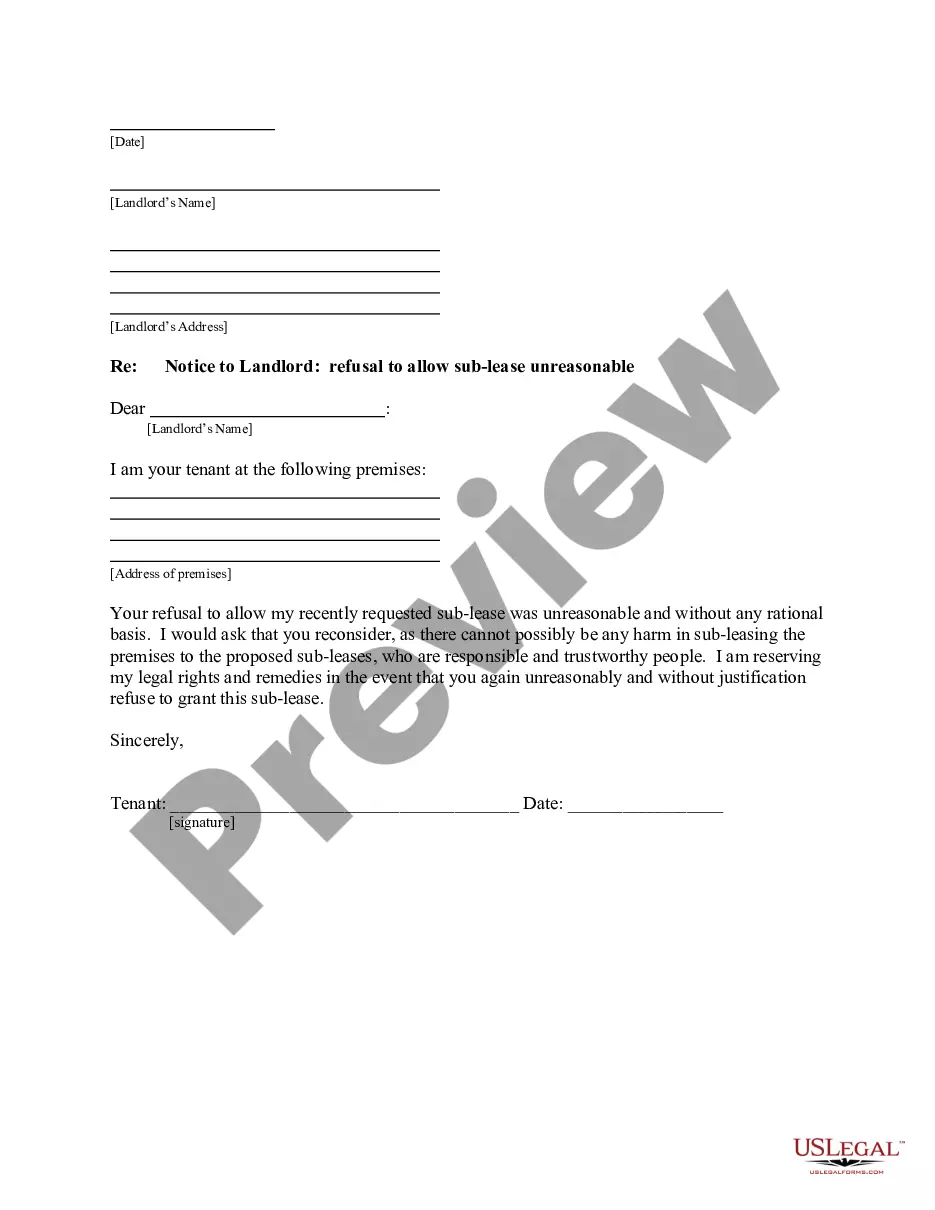
North Carolina Letter from Tenant to Landlord about Landlord's refusal to allow sublease is unreasonable
What this document covers
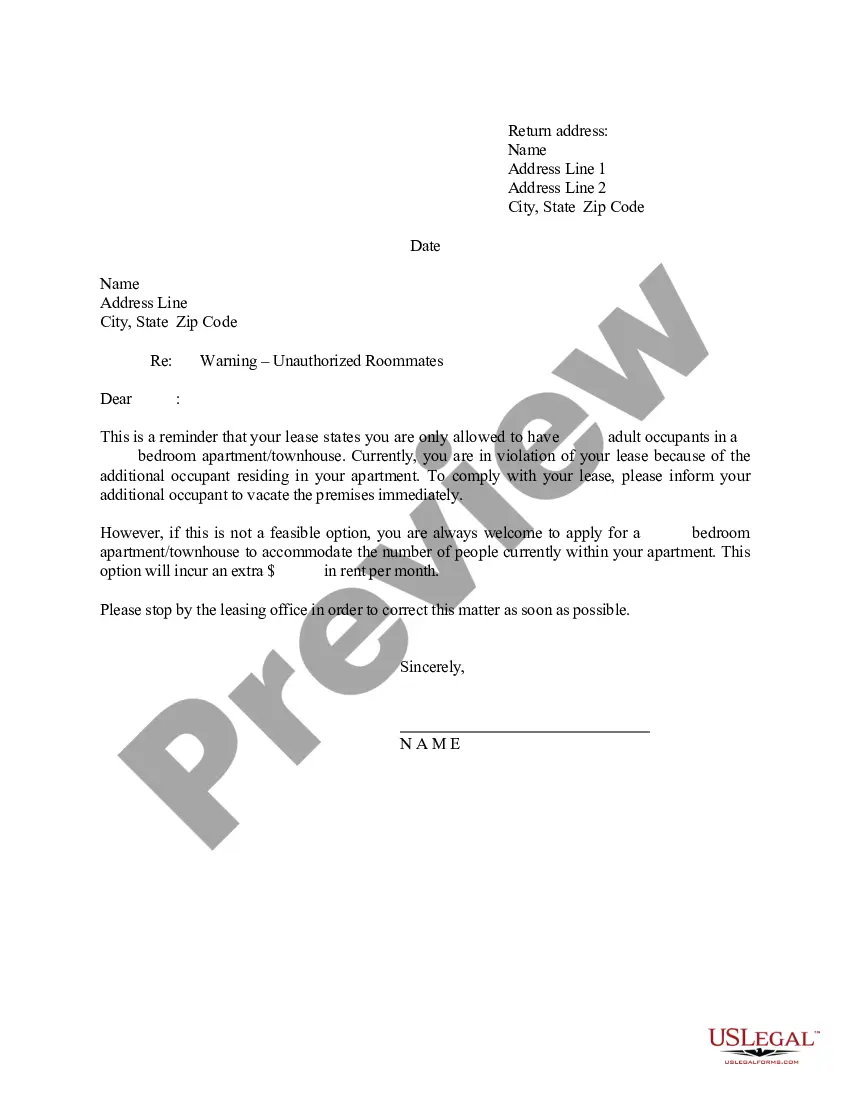
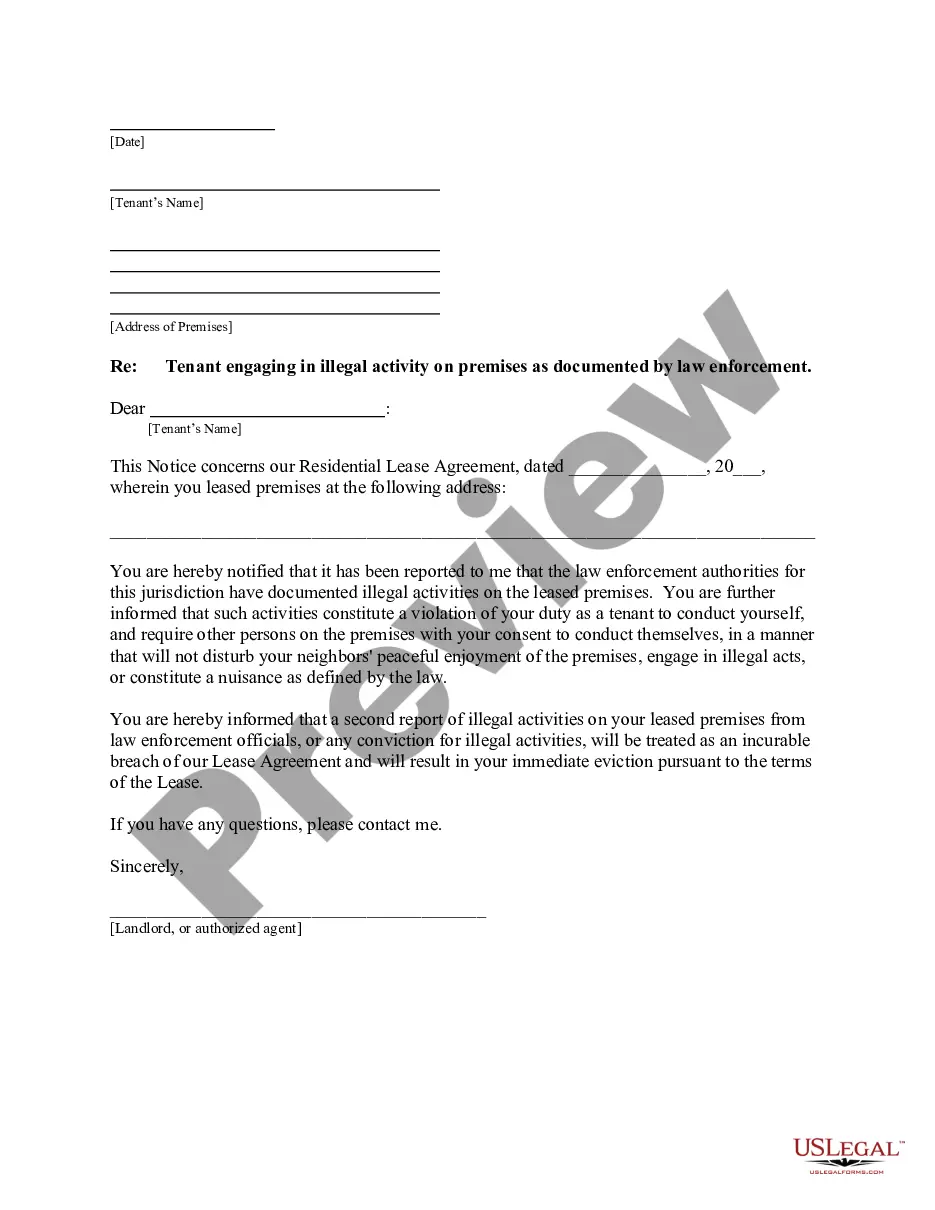
This form is a letter from a tenant to a landlord addressing the landlord's unreasonable refusal to allow a sublease. It communicates the tenant's intent to preserve legal rights and remedies if the landlord continues to deny permission. Unlike standard communication between tenants and landlords, this letter specifically focuses on subleasing rights and lays groundwork for potential legal actions if necessary.
Main sections of this form
- Identification of the tenant and landlord.
- Reference to the specific sublease request.
- Statement on the reason for the landlord's refusal.
- Reservation of rights and remedies concerning the refusal.
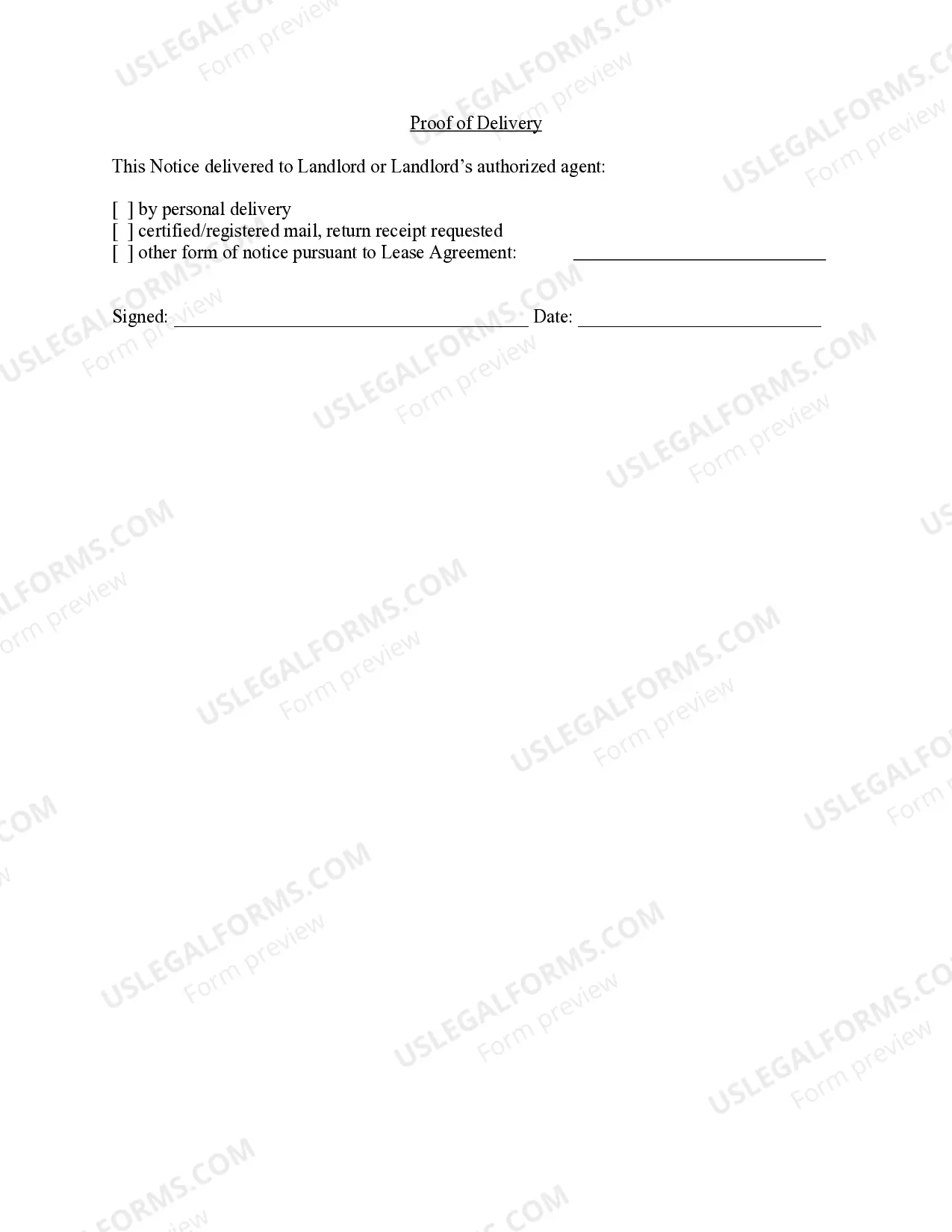
- Signature of the tenant and proof of delivery section.

When this form is needed
This form is often needed when a tenant has submitted a request to sublease their rental property, and the landlord has denied this request without a valid reason. It is particularly useful in situations where the tenant believes the refusal violates their lease agreement or local regulations governing subleases.
Who needs this form
- Tenants seeking to sublease their rental property.
- Individuals facing unreasonable refusals from landlords regarding subleases.
- Tenants wanting to formally document their position and preserve legal rights.
Instructions for completing this form
- Identify and write the names of the tenant and landlord at the top of the letter.
- Clearly state the request for subleasing the unit and the landlord's response.
- Include any relevant facts or justifications for the request.
- Express the intent to reserve legal rights in case of continued refusal.
- Sign and date the document, and ensure proof of delivery is completed.
Notarization requirements for this form
Notarization is generally not required for this form. However, certain states or situations might demand it. You can complete notarization online through US Legal Forms, powered by Notarize, using a verified video call available anytime.
Get your form ready online
Our built-in tools help you complete, sign, share, and store your documents in one place.
Make edits, fill in missing information, and update formatting in US Legal Forms—just like you would in MS Word.
Download a copy, print it, send it by email, or mail it via USPS—whatever works best for your next step.
Sign and collect signatures with our SignNow integration. Send to multiple recipients, set reminders, and more. Go Premium to unlock E-Sign.
If this form requires notarization, complete it online through a secure video call—no need to meet a notary in person or wait for an appointment.
We protect your documents and personal data by following strict security and privacy standards.

Make edits, fill in missing information, and update formatting in US Legal Forms—just like you would in MS Word.

Download a copy, print it, send it by email, or mail it via USPS—whatever works best for your next step.

Sign and collect signatures with our SignNow integration. Send to multiple recipients, set reminders, and more. Go Premium to unlock E-Sign.

If this form requires notarization, complete it online through a secure video call—no need to meet a notary in person or wait for an appointment.

We protect your documents and personal data by following strict security and privacy standards.
Typical mistakes to avoid
- Failing to include specific details of the sublease request.
- Omitting a statement about the landlord's refusal.
- Not reserving legal rights adequately, which may weaken the position.
- Neglecting to sign the letter before sending it.
Benefits of completing this form online
- Convenient access to templates that save time and effort.
- Editable forms that allow customization to suit specific needs.
- Reliable legal language drafted by licensed attorneys.
- Instant downloads, enabling rapid correspondence with landlords.
Legal use & context
- This letter serves as a formal record of the tenant's request and the landlord's response.
- It can be used to support legal claims if disputes arise over subleasing rights.
- Compliance with local landlord-tenant laws is essential for enforceability.
Summary of main points
- The form enables tenants to formally address subleasing refusals from their landlords.
- Clear documentation can help protect a tenant's rights in future disputes.
- Customize the letter to reflect your specific circumstances and legal rights.
Looking for another form?
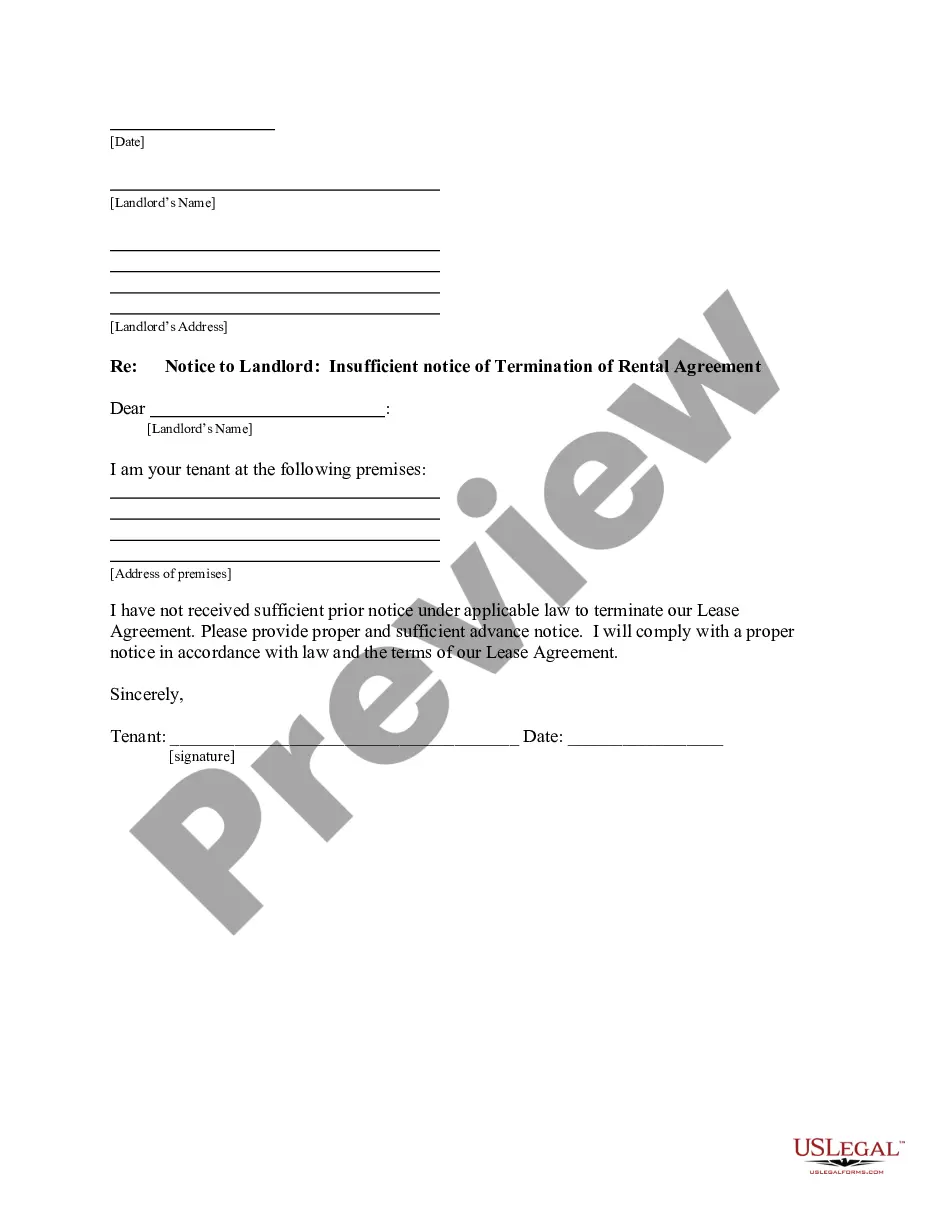



Form popularity
FAQ
An assignment is the transfer of the a party's entire interest in a lease. When a tenant assigns its lease, the assignee takes over the tenant's obligations under the lease and deals directly with the landlord.A sublease is the transfer of all or a portion of the premises for less than the entire term of the lease.
An assignment is the transfer of one party's entire interest in and obligations under a lease to another party. The new tenant takes on the lease responsibilities, including rent and property maintenance, and the original tenant is released from most (if not all) of its duties.
There is an agreement about who is liable for the costs of the deed of assignment. The landlord's lawyer usually prepares the agreement. However, the outgoing tenant or the incoming tenant pays these costs, not the landlord.
Unless the lease prohibits subleasing, a landlord may not unreasonably withhold permission to sublet. In North Carolina, subleasing is only allowed if the landlord consents.
An assignment is when the tenant transfers their lease interest to a new tenant using a Lease Assignment. The assignee takes the assignor's place in the landlord-tenant relationship, although the assignor may remain liable for damages, missed rent payments, and other lease violations.
The difference between assignment and transfer is that assign means it's legal to transfer property or a legal right from one person to another, while transfer means it's legal to arrange for something to be controlled by or officially belong to another person.
If the lessee transfers his or her entire remaining interest in the tenancy, then the transfer is known as an assignment. If the lessee transfers only part of his or her interest, then the transfer is known as a sublease.
Most lease contracts allow you to transfer the remainder of the lease period to another person, says Scot Hall, executive vice president of Swapalease, a lease-trading site. Swapalease and its competitor, LeaseTrader, help you find someone who needs a car and can assume the remaining payments.