Minnesota Attorney - Client Fee Contract Letter
About this form
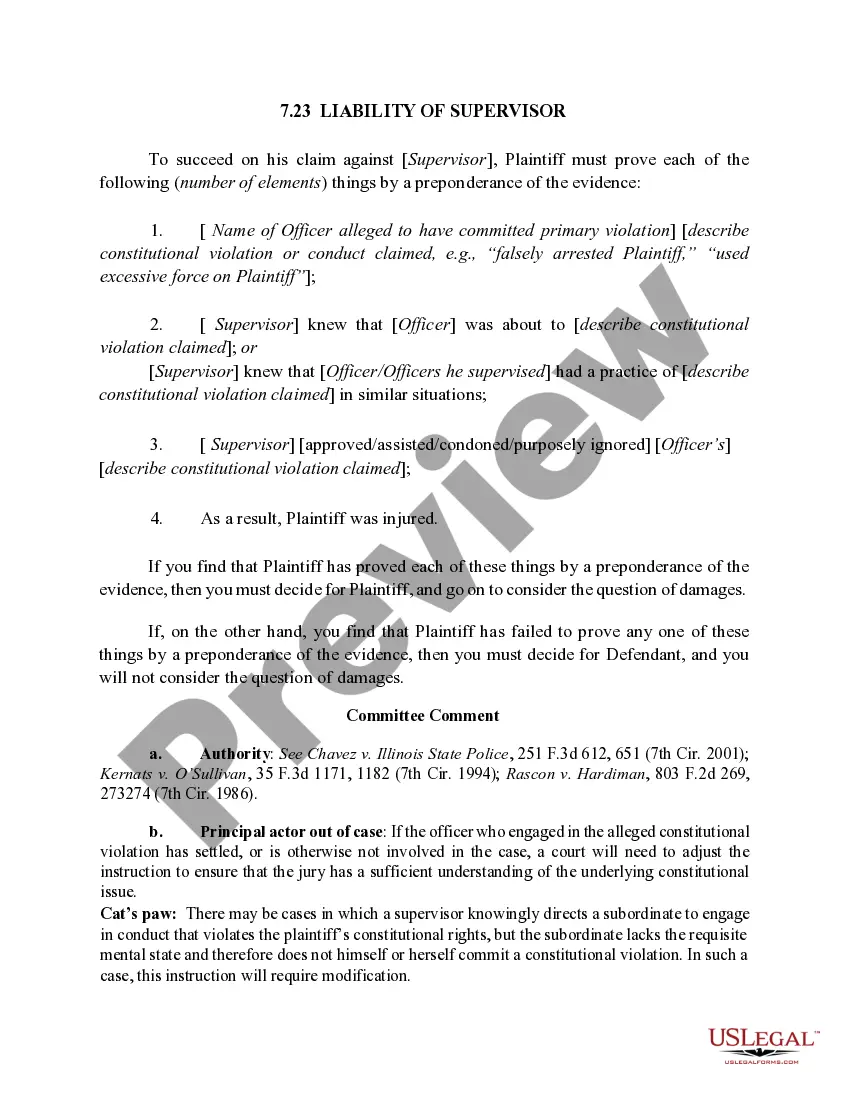
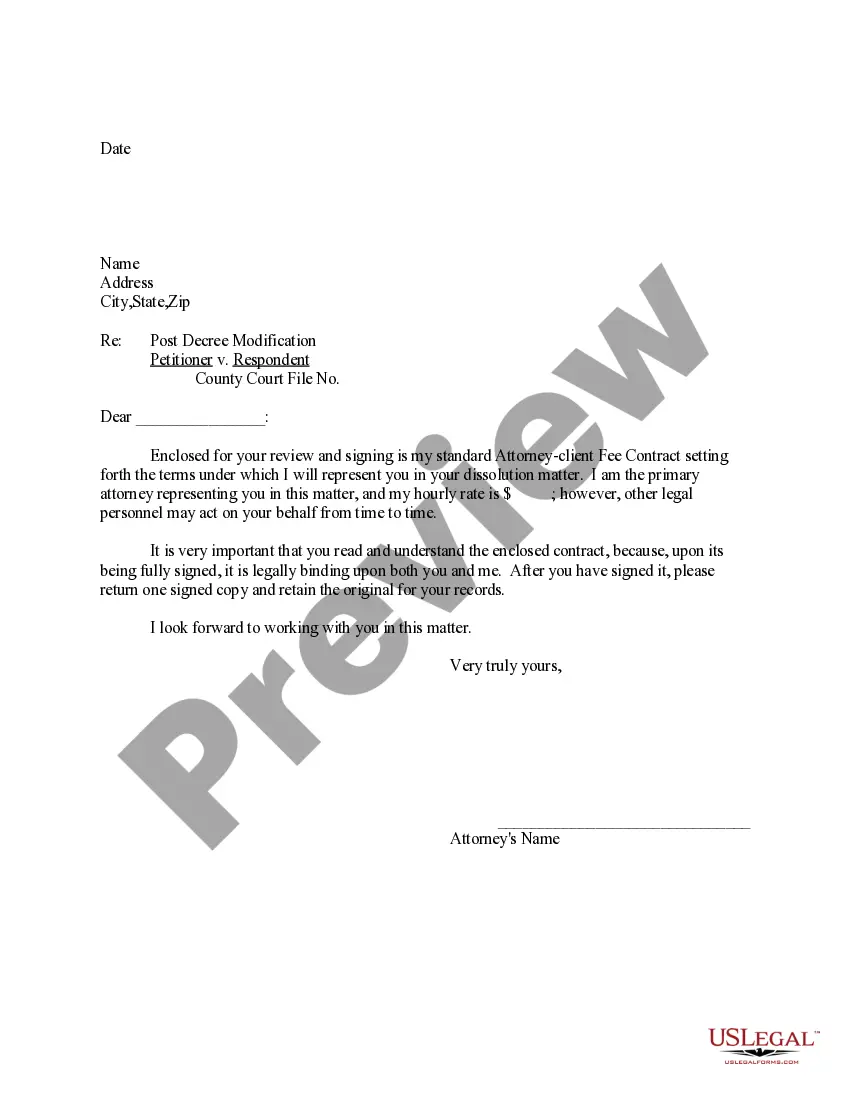
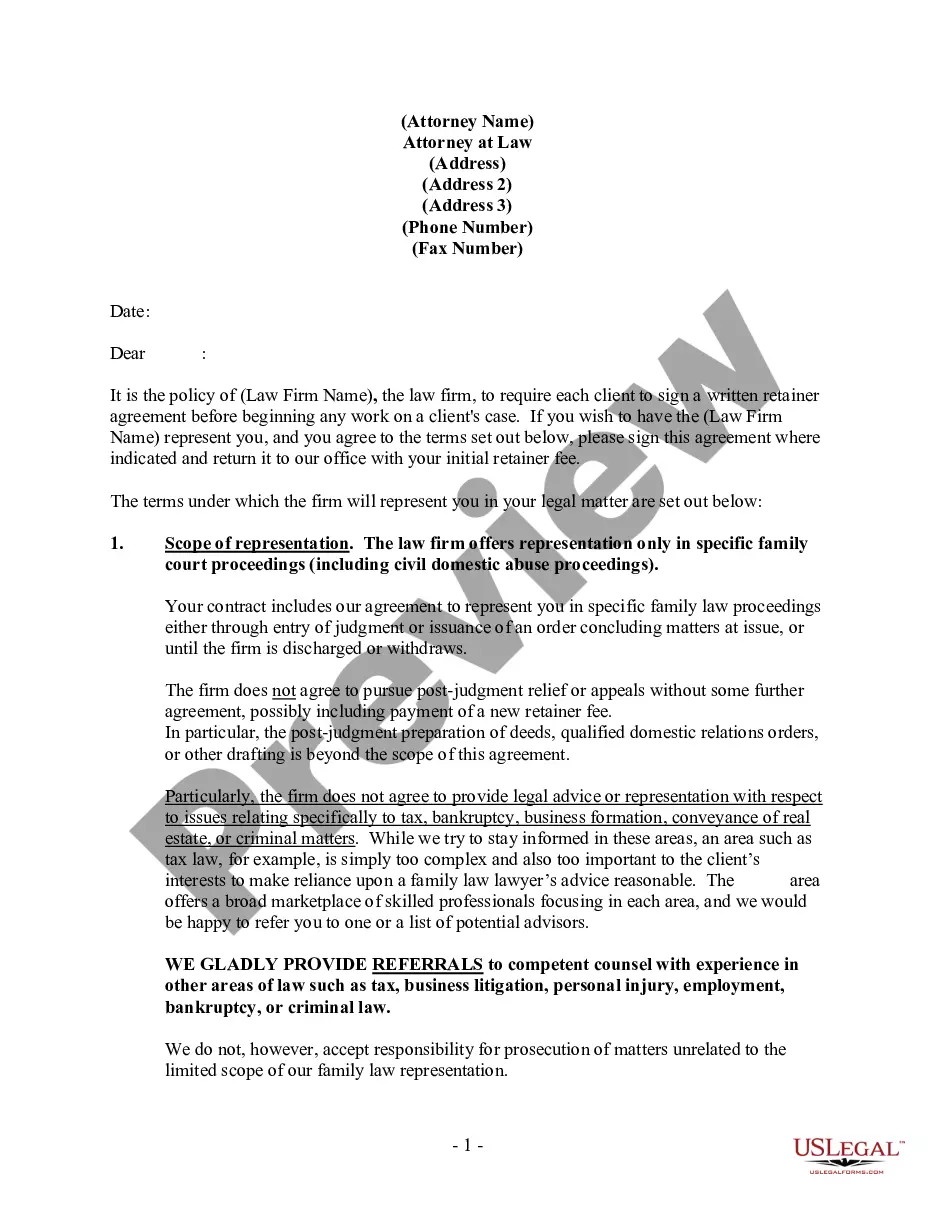
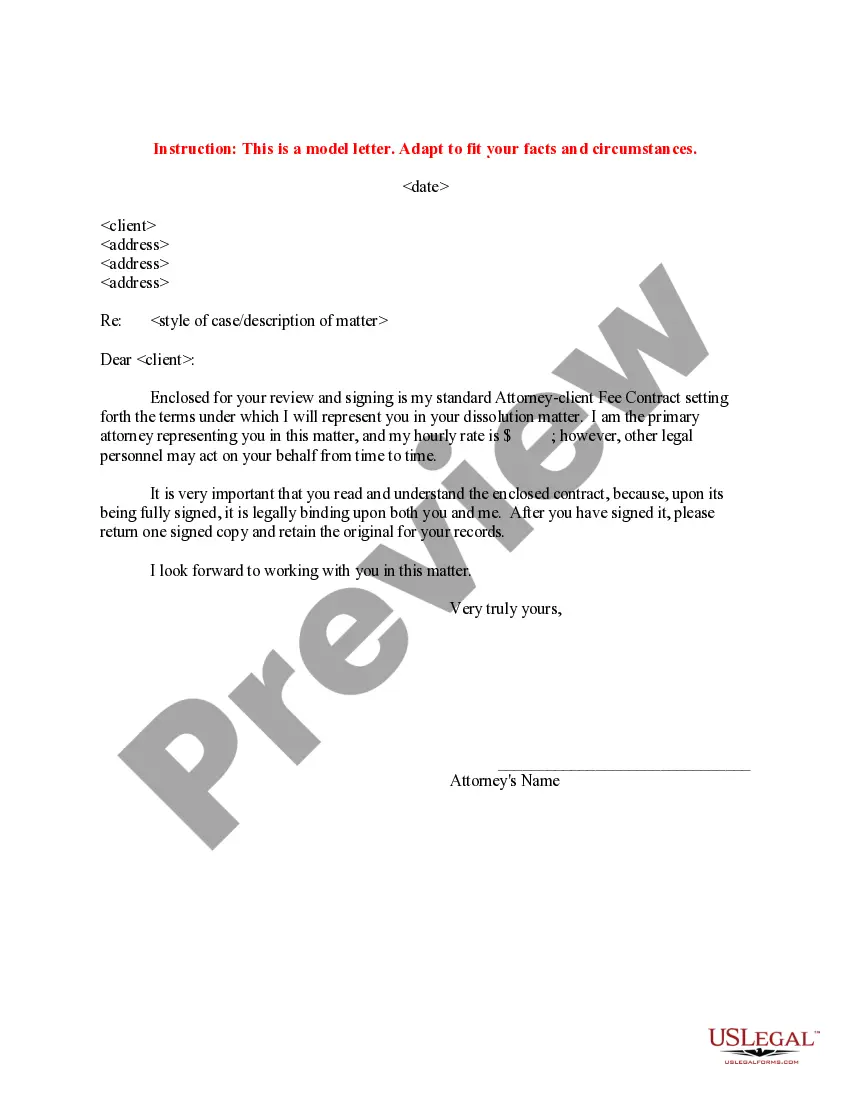
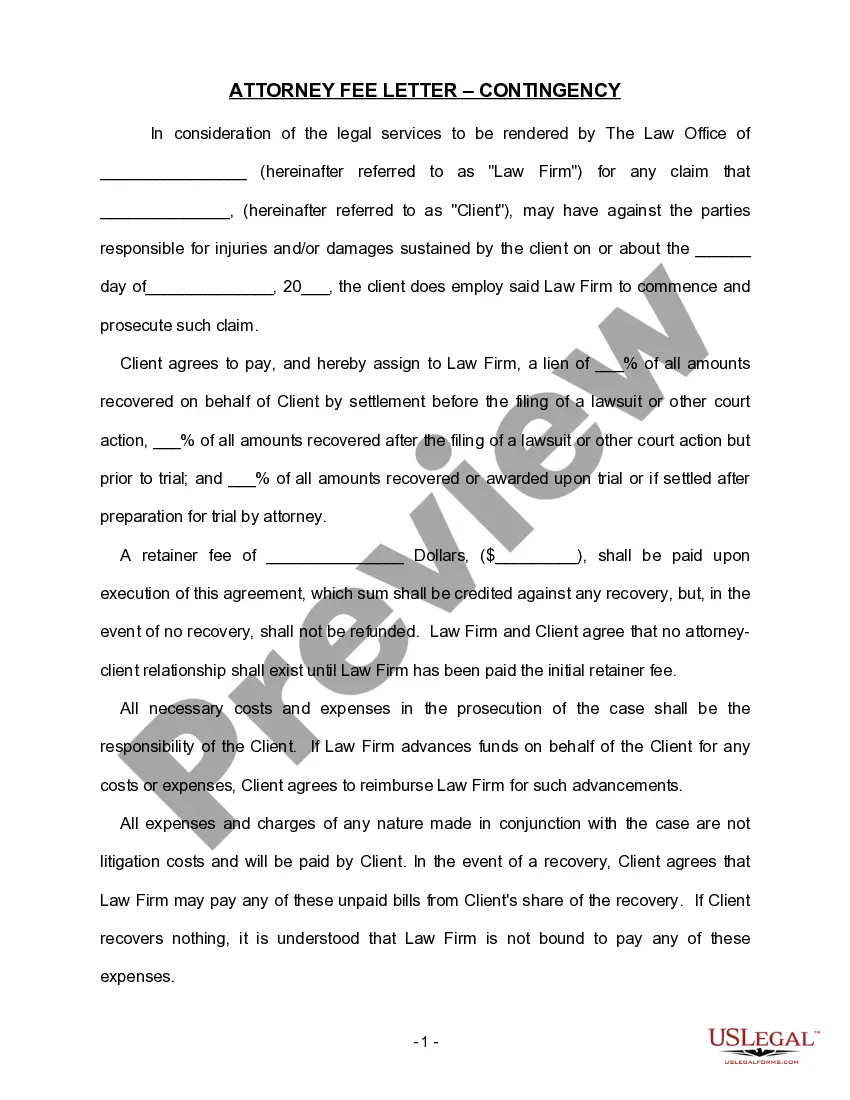
The Attorney - Client Fee Contract Letter serves as a cover letter from an attorney to their client. This form notifies the client that the employment contract is enclosed and requests the client to sign and return it while keeping one copy for their records. It helps establish clear communication regarding the attorney's fees and services provided, distinguishing it from other legal forms that may include the contract itself.
Form components explained
- Introduction expressing eagerness to work with the client.
- Request for the client to sign the enclosed employment contract.
- Instruction for the client to retain one copy for their records.
- Signature line for the attorney's name.


When to use this document
This form is used when an attorney wishes to formally communicate the terms of their engagement to a client. It is appropriate in initial client meetings or during the process of drafting legal agreements, ensuring clarity and mutual understanding of fees and services. This letter sets the stage for a professional relationship and provides a clear framework for the upcoming legal services.
Who this form is for
- Attorneys preparing to engage with a new client.
- Legal professionals requiring a standard communication template for fee agreements.
- Clients who need to sign a fee agreement before legal representation begins.
Instructions for completing this form
- Begin by entering your name as the attorney.
- Draft a message to the client expressing your anticipation to work with them.
- Indicate that the employment contract is enclosed and provide signing instructions.
- Include a signature line for your name and any required details.
- Make copies of the letter and the enclosed contract for both you and the client.
Does this form need to be notarized?
This form usually doesn’t need to be notarized. However, local laws or specific transactions may require it. Our online notarization service, powered by Notarize, lets you complete it remotely through a secure video session, available 24/7.
Get your form ready online
Our built-in tools help you complete, sign, share, and store your documents in one place.
Make edits, fill in missing information, and update formatting in US Legal Forms—just like you would in MS Word.
Download a copy, print it, send it by email, or mail it via USPS—whatever works best for your next step.
Sign and collect signatures with our SignNow integration. Send to multiple recipients, set reminders, and more. Go Premium to unlock E-Sign.
If this form requires notarization, complete it online through a secure video call—no need to meet a notary in person or wait for an appointment.
We protect your documents and personal data by following strict security and privacy standards.

Make edits, fill in missing information, and update formatting in US Legal Forms—just like you would in MS Word.

Download a copy, print it, send it by email, or mail it via USPS—whatever works best for your next step.

Sign and collect signatures with our SignNow integration. Send to multiple recipients, set reminders, and more. Go Premium to unlock E-Sign.

If this form requires notarization, complete it online through a secure video call—no need to meet a notary in person or wait for an appointment.

We protect your documents and personal data by following strict security and privacy standards.
Typical mistakes to avoid
- Not providing clear instructions for the client on how to return the signed contract.
- Failing to keep a copy for personal records.
- Using vague language that does not clearly explain the terms of engagement.
Why use this form online
- Conveniently download and complete the form at your own pace.
- Edit the document to suit specific client needs and circumstances.
- Access a reliable legal template created by licensed attorneys, ensuring professional standards.
Quick recap
- The Attorney - Client Fee Contract Letter facilitates clear communication about legal fees.
- Essential for establishing a professional relationship before legal work begins.
- Can be adapted for use in various jurisdictions, subject to local requirements.
Looking for another form?
Form popularity
FAQ
Rule 119.05 in Minnesota governs the attorney-client fee agreements. This rule mandates that attorneys provide clients with a written fee contract that outlines the terms of their fees and services. A Minnesota Attorney - Client Fee Contract Letter must clearly specify the scope of representation, the basis for fees, and any additional costs that may arise during the legal process. Understanding this rule helps ensure transparency and protects both the client and the attorney.
Rule 68 of the Minnesota Rules of Civil Procedure deals with offers of judgment. It allows a party to make a formal settlement offer to the opposing party, which can influence the award of costs and attorney fees if the case goes to trial. Clients should be aware of this rule when negotiating their Minnesota Attorney - Client Fee Contract Letter, as it may impact their financial obligations and strategy during litigation.
Yes, it is advisable for the fee agreement between a client and an attorney to be in writing. A written Minnesota Attorney - Client Fee Contract Letter provides clarity on the terms and conditions of the representation, including fees and services. This documentation helps protect both parties and reduces the potential for misunderstandings or disputes in the future.
Rule 37 of the Minnesota Rules of Civil Procedure addresses the failure to make disclosures or cooperate in discovery. It allows the court to impose sanctions on parties who do not comply with discovery obligations. Understanding this rule is essential, as it may influence how clients and attorneys draft their Minnesota Attorney - Client Fee Contract Letter, particularly regarding the expectations for cooperation and compliance during the legal process.
Rule 1.5 of the Minnesota Rules of Professional Conduct pertains to the reasonableness of attorney fees. It emphasizes that the fee should be reasonable based on several factors, including the complexity of the case, the attorney's experience, and the results obtained. This rule is crucial for clients to understand when reviewing their Minnesota Attorney - Client Fee Contract Letter, as it ensures transparency and fairness in legal billing.
For example: "Dear Mr. Jones" or "Dear Ms. Fisher" Position the greeting on the left side of the page. Follow the greeting with a colon, i.e. "Dear Ms. Fisher:"
The opening paragraph states the legal issue the letter is addressing followed by the facts, a discussion of the law as it applies to the facts and a conclusion which is essentially the advice to the client. Often attorneys include headings to lead the client through this process to arrive at the same conclusion.
Type your letter. Concisely review the main facts. Be polite. Write with your goal in mind. Ask for exactly what you want. Set a deadline. End the letter by stating you will promptly pursue legal remedies if the other party does not meet your demand. Make and keep copies.
Maintain focus throughout the process. Both intended and unintended audiences can read legal letters. Come up with coherent and consistent arguments. Use short sentences and paragraphs in your letter. Make sure your language has precision.
Subject: The subject of the letter should inform the client about the purpose of the letter in a few words. The body: Use several paragraphs to discuss the purpose of the letter. The reader should understand why you wrote the letter from the first line of the letter. Letter close: End the letter with polite words.