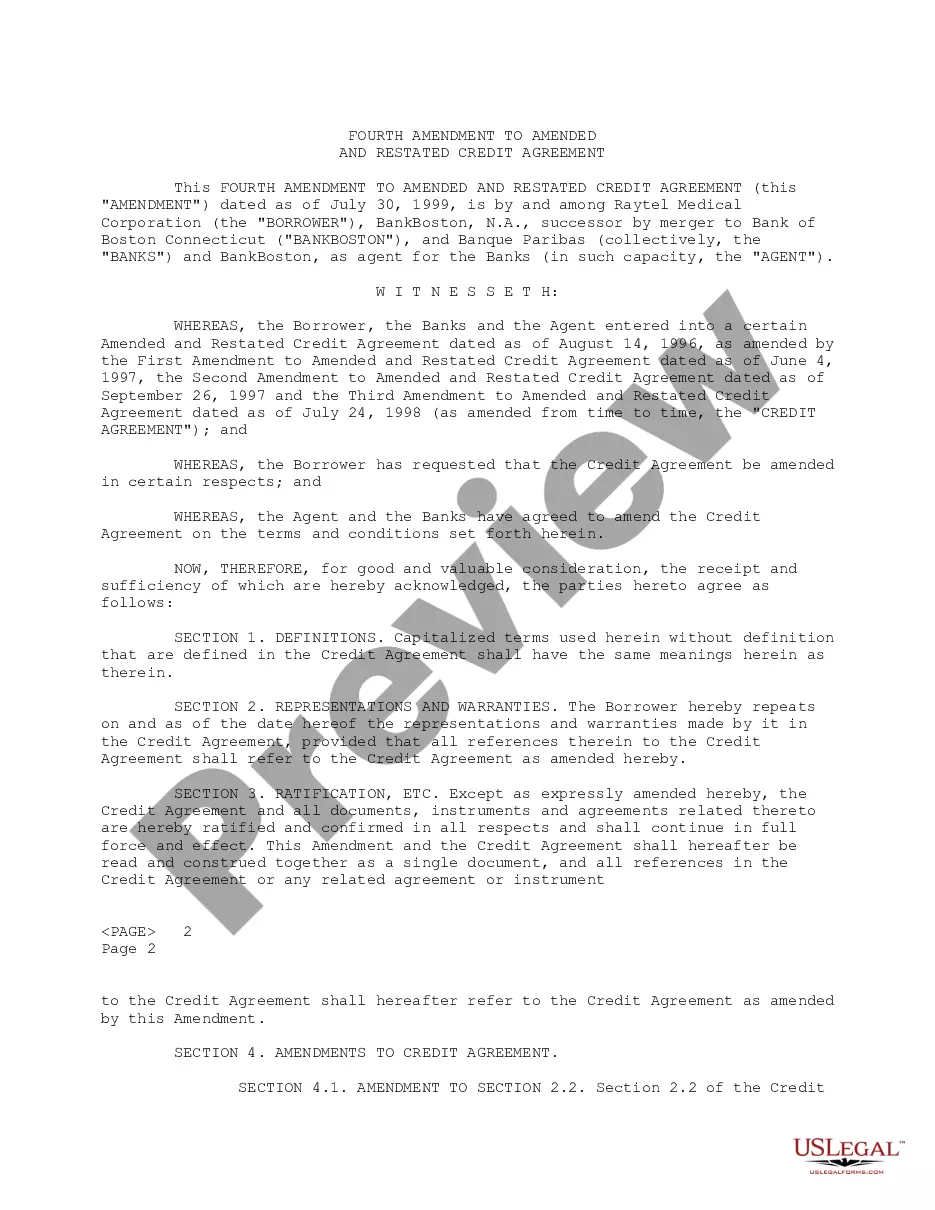
Minnesota Fee Agreement
Overview of this form
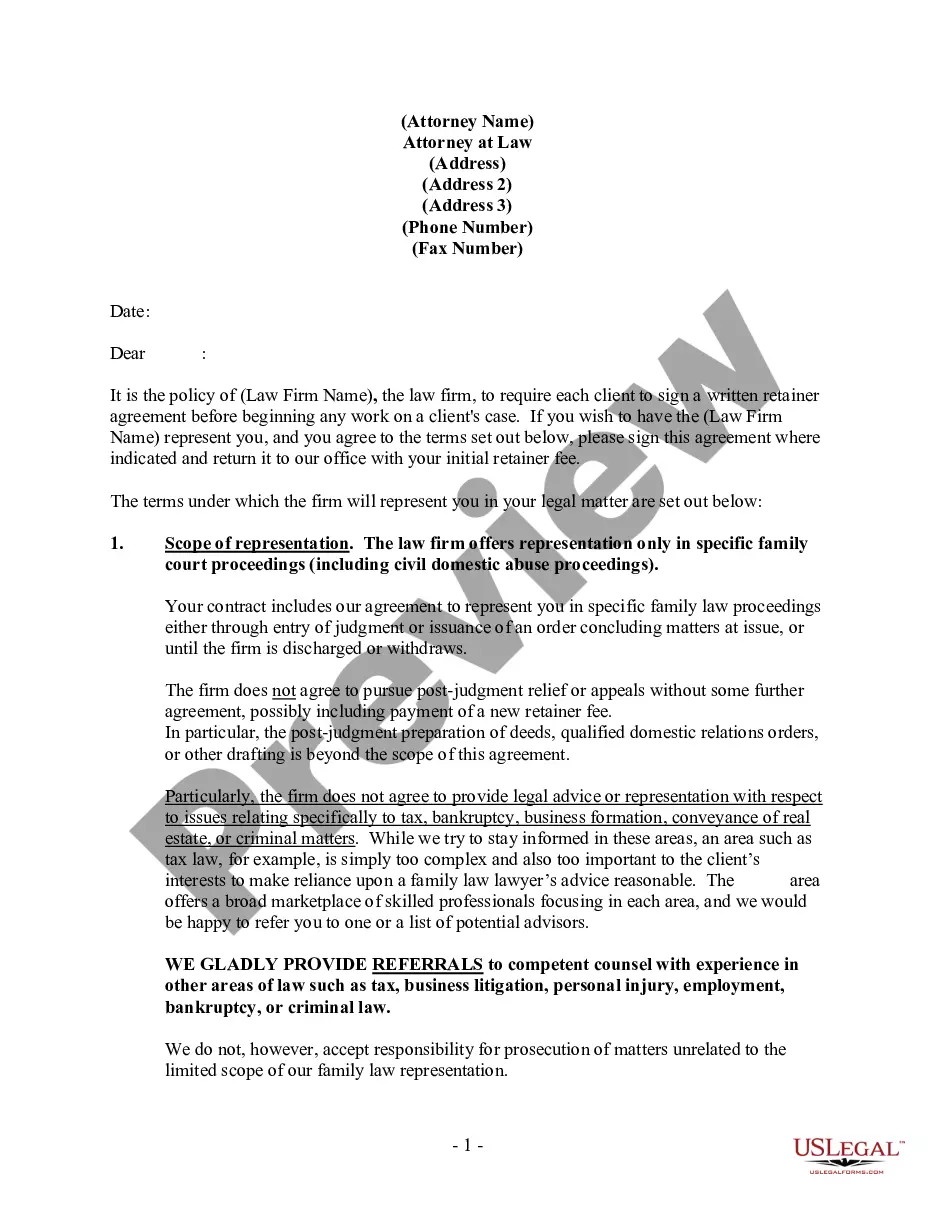
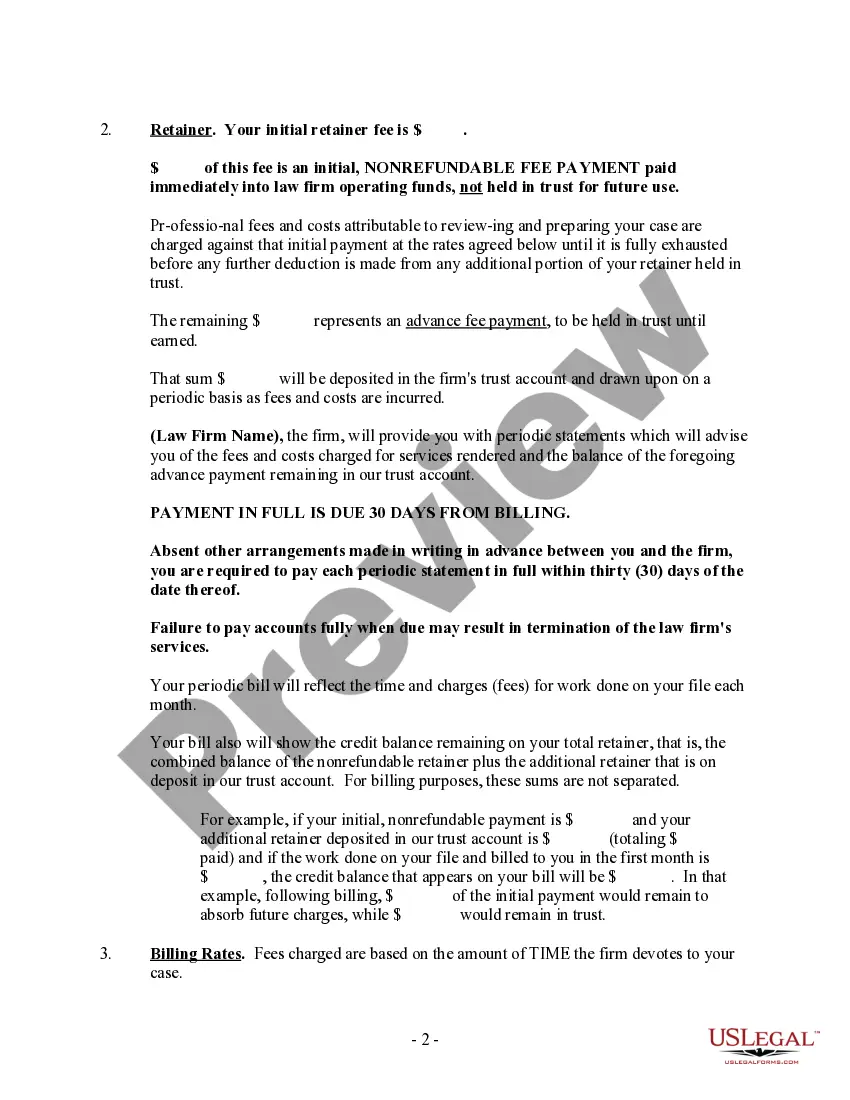
The Fee Agreement is a legal document that outlines the terms and conditions under which an attorney will provide services to a client. This form details important aspects such as retainer fees, the scope of legal representation, and billing procedures. It is essential because it clarifies the expectations for both the client and the attorney, setting out how fees will be accrued and billed throughout the legal representation process.
Main sections of this form
- Details about retainer agreements and advance fee payments.
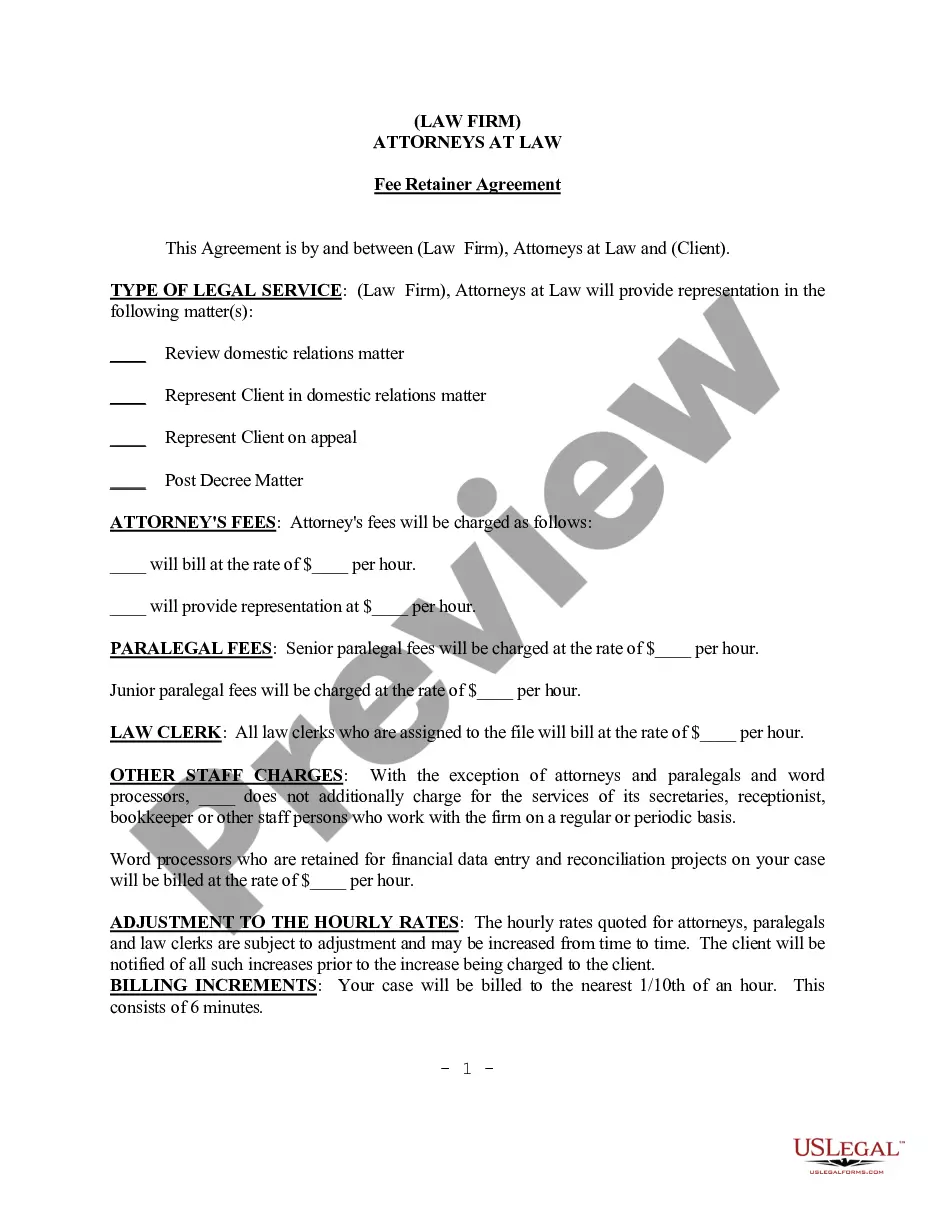
- Definition of the scope of legal representation offered.
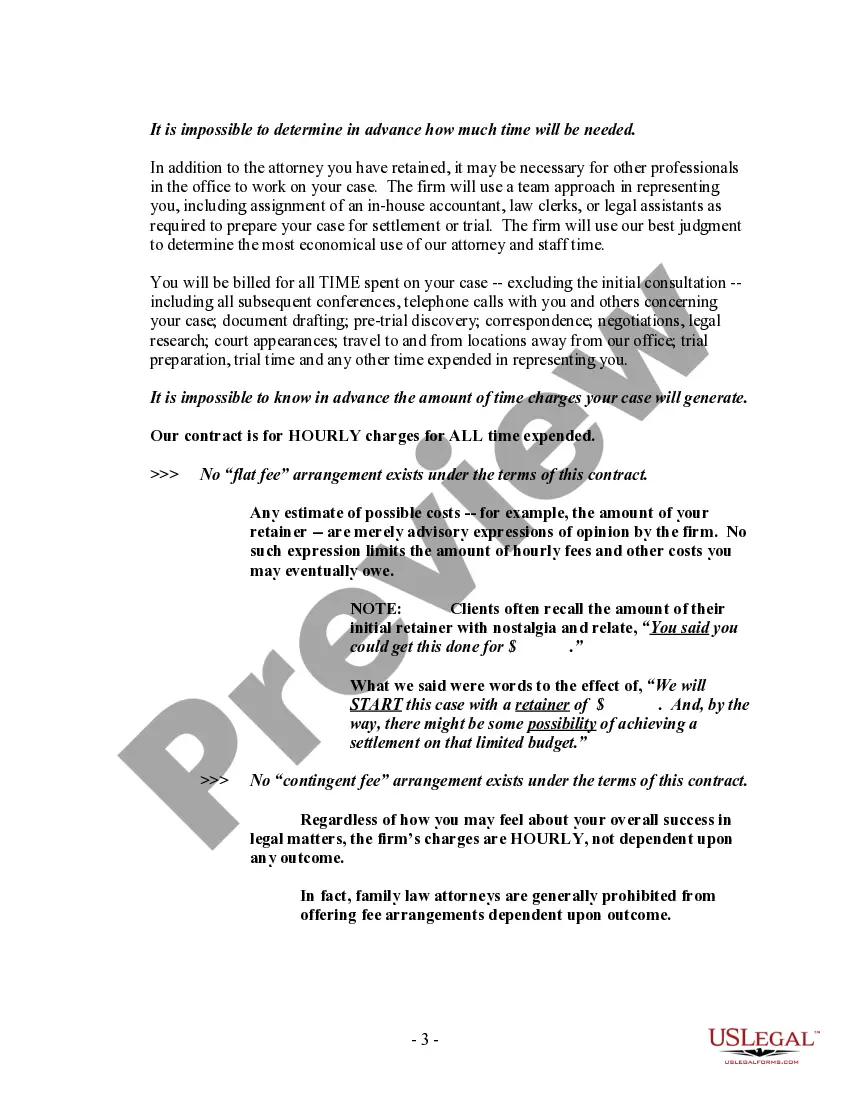
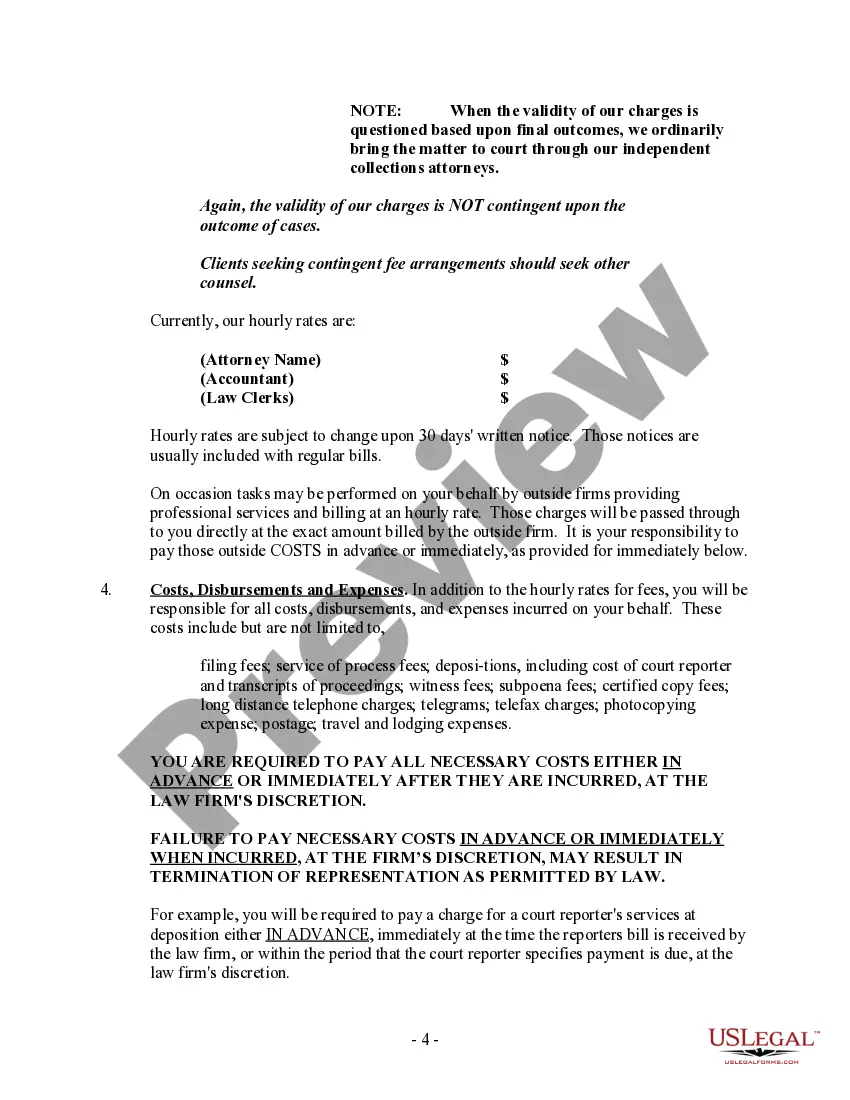
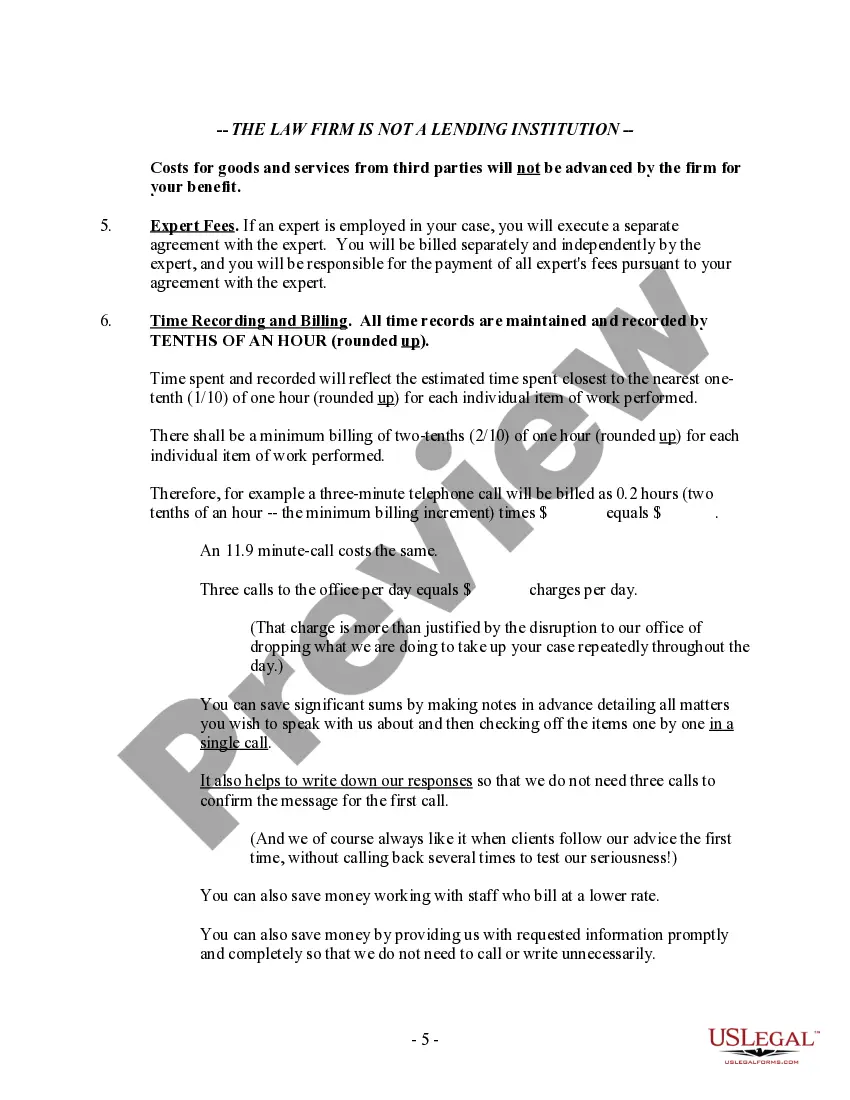
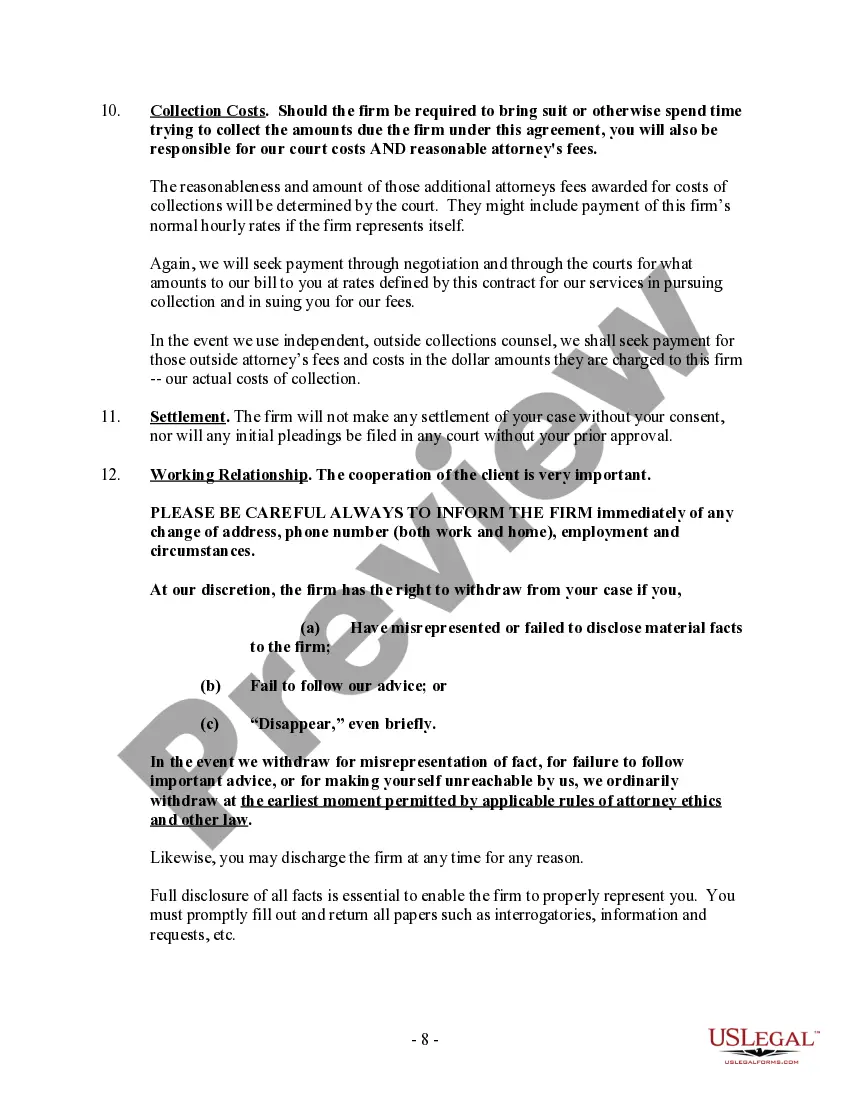
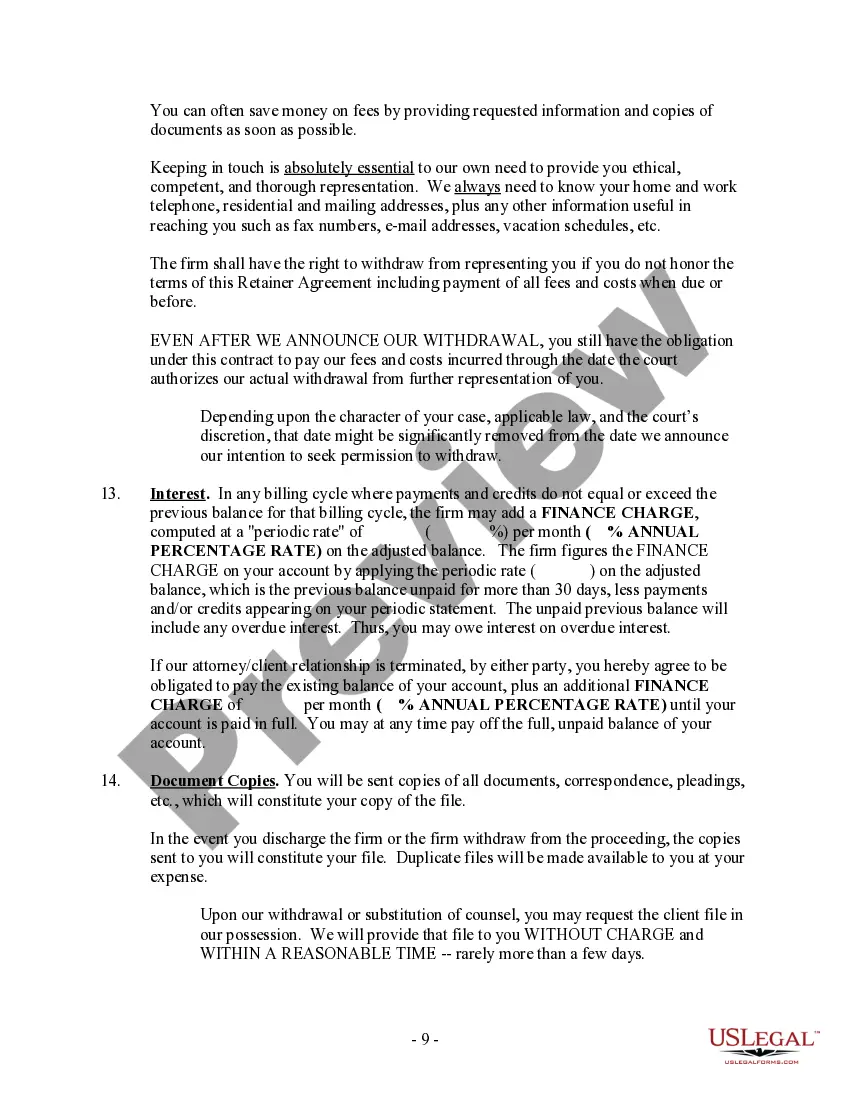
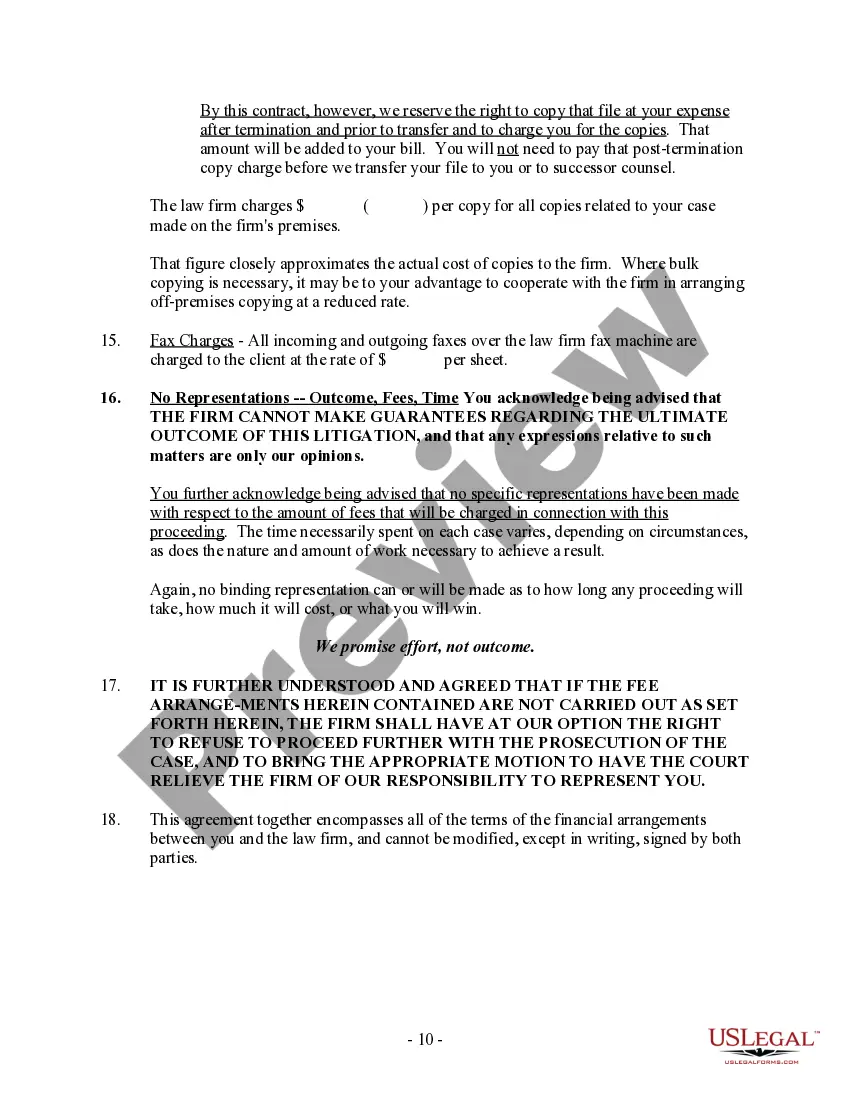
- Billing rates and how the firm tracks time spent on a case.
- Responsibility for costs and disbursements related to the case.
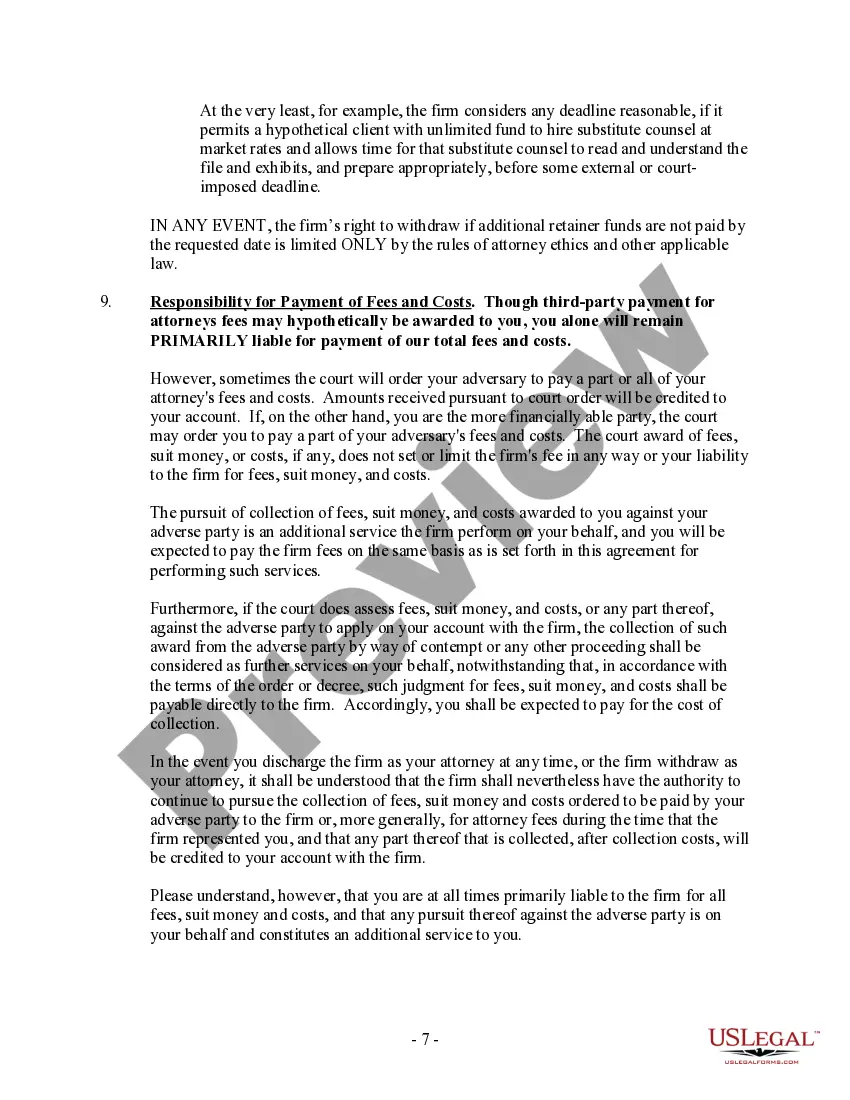
- Conditions under which additional retainer payments may be required.
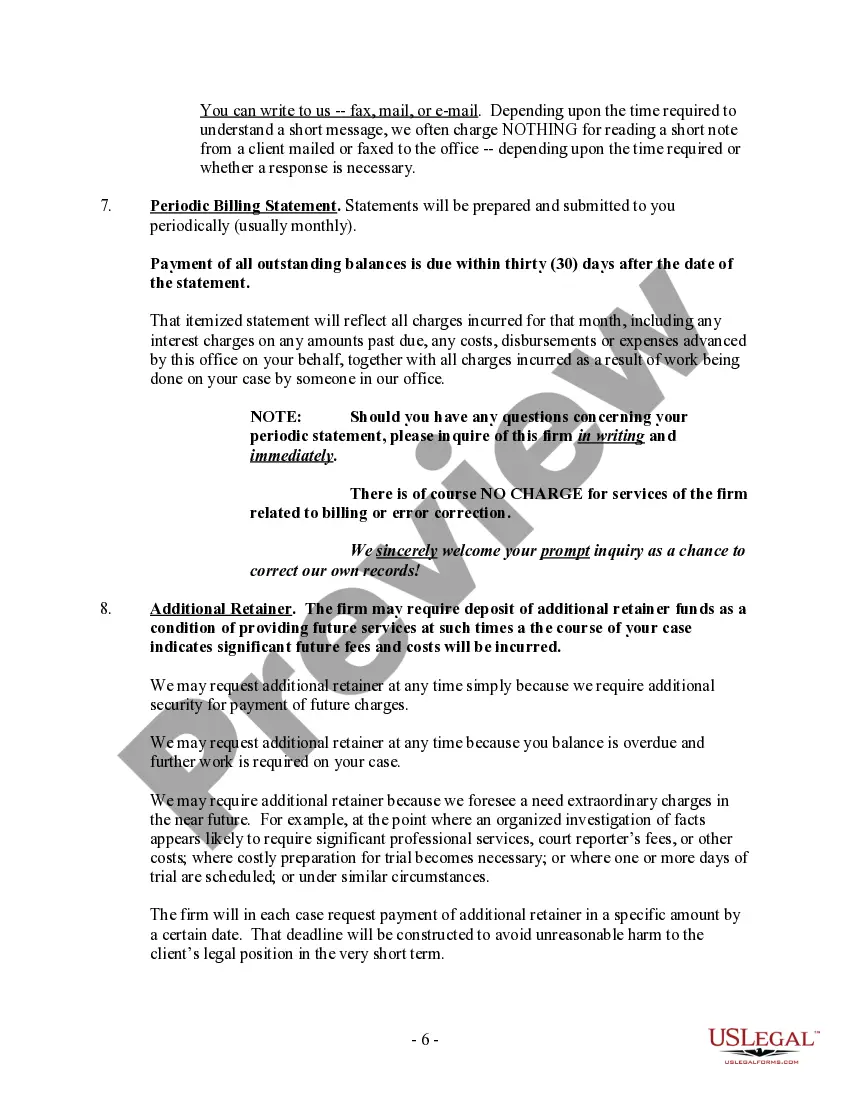
- Procedures for periodic billing and payment deadlines.




Common use cases
This Fee Agreement should be used when engaging an attorney for legal representation in matters such as family law cases or other specific legal issues. It is applicable at the outset of the attorney-client relationship, serving as the groundwork for how legal services will be provided and compensated.
Who this form is for
- Individuals seeking legal representation from an attorney.
- Clients who need to understand the terms of their financial obligations to the law firm.
- Anyone requiring clarity on the scope of the services to be provided by their attorney.
Completing this form step by step
- Identify the parties involved, including the attorney and the client.
- Specify the scope of representation and any particular legal matters to be addressed.
- Enter the initial retainer amount and outline the payment terms.
- Review the billing rates and agree to the fee structure.
- Sign and date the agreement to confirm acceptance of the terms.
Notarization guidance
This form usually doesn’t need to be notarized. However, local laws or specific transactions may require it. Our online notarization service, powered by Notarize, lets you complete it remotely through a secure video session, available 24/7.
Get your form ready online
Our built-in tools help you complete, sign, share, and store your documents in one place.
Make edits, fill in missing information, and update formatting in US Legal Forms—just like you would in MS Word.
Download a copy, print it, send it by email, or mail it via USPS—whatever works best for your next step.
Sign and collect signatures with our SignNow integration. Send to multiple recipients, set reminders, and more. Go Premium to unlock E-Sign.
If this form requires notarization, complete it online through a secure video call—no need to meet a notary in person or wait for an appointment.
We protect your documents and personal data by following strict security and privacy standards.

Make edits, fill in missing information, and update formatting in US Legal Forms—just like you would in MS Word.

Download a copy, print it, send it by email, or mail it via USPS—whatever works best for your next step.

Sign and collect signatures with our SignNow integration. Send to multiple recipients, set reminders, and more. Go Premium to unlock E-Sign.

If this form requires notarization, complete it online through a secure video call—no need to meet a notary in person or wait for an appointment.

We protect your documents and personal data by following strict security and privacy standards.
Common mistakes
- Failing to read the entire agreement before signing it.
- Not clarifying the scope of legal services included in the retainer.
- Ignoring clauses about additional retainer requirements.
- Overlooking the payment deadlines and billing procedures.
Benefits of using this form online
- Convenience of completing and downloading the form from home.
- Editable fields allow for customization based on unique legal needs.
- Immediate access to legal documentation without delays.
- Reliability of forms prepared by licensed attorneys.
Looking for another form?

Form popularity
FAQ
In Minnesota, an operating agreement is not legally required for limited liability companies (LLCs), but it is highly recommended. An effective operating agreement can complement your Minnesota Fee Agreement by outlining the roles and responsibilities of members. This document serves to clarify expectations and prevent disputes within the LLC. You can find templates and guidance for creating these agreements on platforms like uslegalforms.
An attorney fee agreement is a contract between a client and an attorney that specifies the fees for legal services. This Minnesota Fee Agreement details the scope of work, payment schedule, and any additional costs that may arise. Having a written agreement helps avoid misunderstandings and allows clients to know exactly what to expect. It is essential for maintaining a good attorney-client relationship.
In Minnesota, it is highly recommended that a fee agreement be in writing to avoid any misunderstandings. While some verbal agreements may be legally binding, having a written document provides clarity on the terms of service and fees. A well-drafted Minnesota Fee Agreement can serve as a clear reference point for both parties. Utilizing tools from USLegalForms can help you create a compliant agreement easily.
The hidden fee law in Minnesota requires that all fees associated with a legal service be disclosed upfront. This law aims to protect clients from unexpected charges that may arise during the legal process. By understanding this law, you can ensure that your Minnesota Fee Agreement clearly outlines all potential costs involved. This transparency fosters trust between you and your legal representative.
Rule 68 in Minnesota relates to the offer of judgment in civil cases. It allows a party to make a formal settlement offer to the opposing party before the trial begins. If the opposing party rejects the offer and fails to obtain a better result at trial, they may be responsible for the costs incurred after the offer was made. Understanding how Rule 68 interacts with your Minnesota Fee Agreement can help you make informed decisions about your case.
A Minnesota Fee Agreement should clearly outline the scope of the legal services being provided, including the specific tasks and responsibilities of the attorney. Additionally, it should detail the fee structure, whether it is hourly, flat-rate, or contingent, along with any additional costs that may arise. Defining payment terms, such as due dates and accepted payment methods, is also essential. This clarity not only helps avoid misunderstandings but also builds trust between you and your attorney.
Minnesota Sales Tax on Car Purchases:Minnesota collects a 6.5% state sales tax rate on the purchase of all vehicles. In addition to taxes, car purchases in Minnesota may be subject to other fees like registration, title, and plate fees. You can find these fees further down on the page.
At some dealerships, the out-the-door costs are abbreviated as "TTL fees" or tax, title and license. This means that, in addition to the price of the car, you typically have to pay the following costs: State and local sales tax. Department of Motor Vehicles title and registration fees.
Required Driver's License Renewal Fees To obtain or renew a Class D Minnesota driver's license, you'll have to pay a fee of $25.25. This fee is the same whether you're over or under 21. If you want to get a duplicate driver's license in case you lose yours, it will cost you $14.75.
See your vehicle registration renewal form issued by the Minnesota Department of Public Safety, Driver and Vehicle Services (DVS). Visit the DVS website's Motor Vehicle Registration Tax Paid page.