Vendor Oriented Software Development and License Agreement
Overview of this form
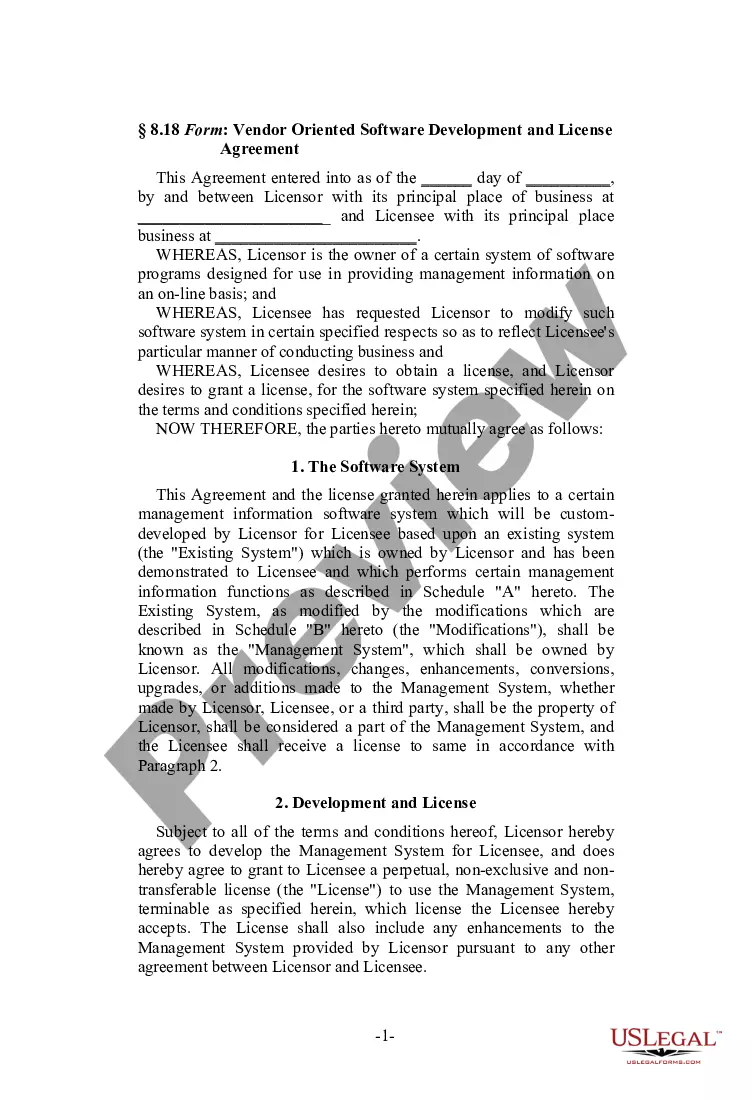
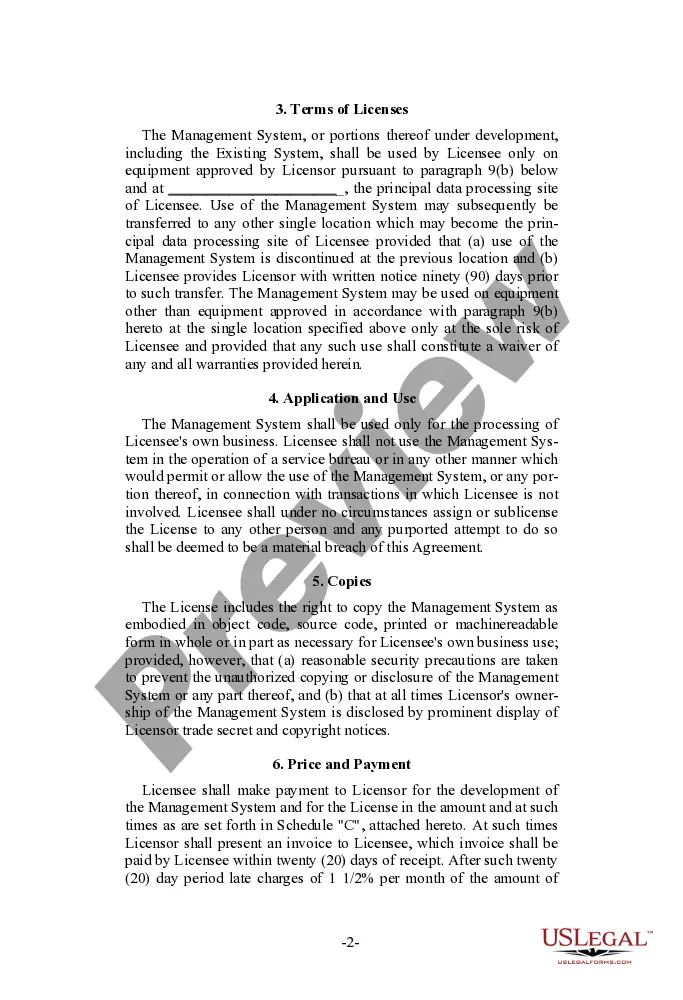
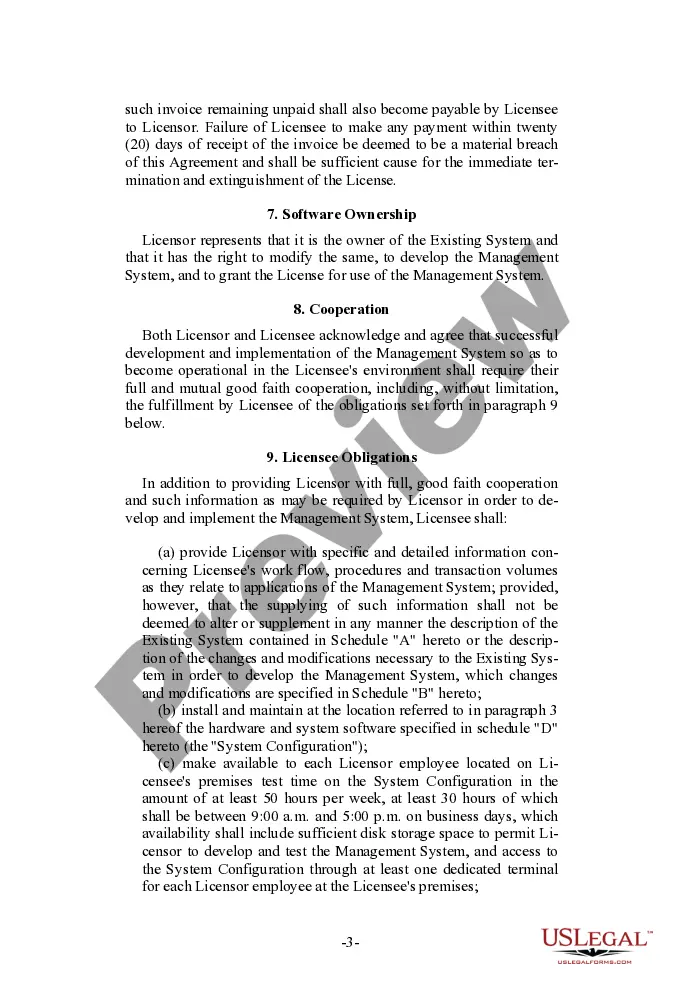
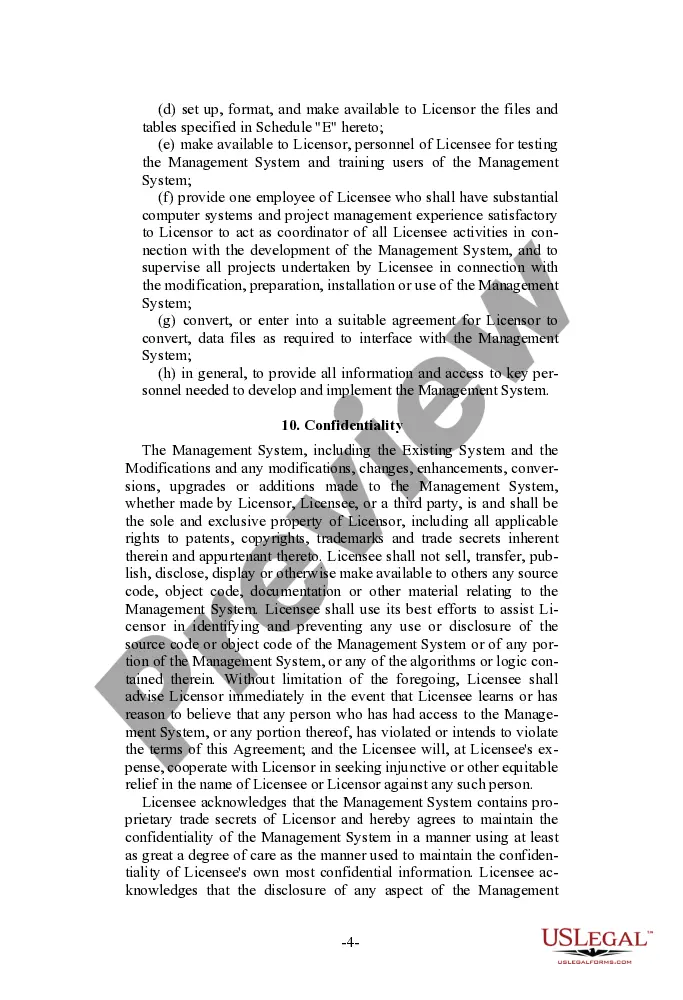
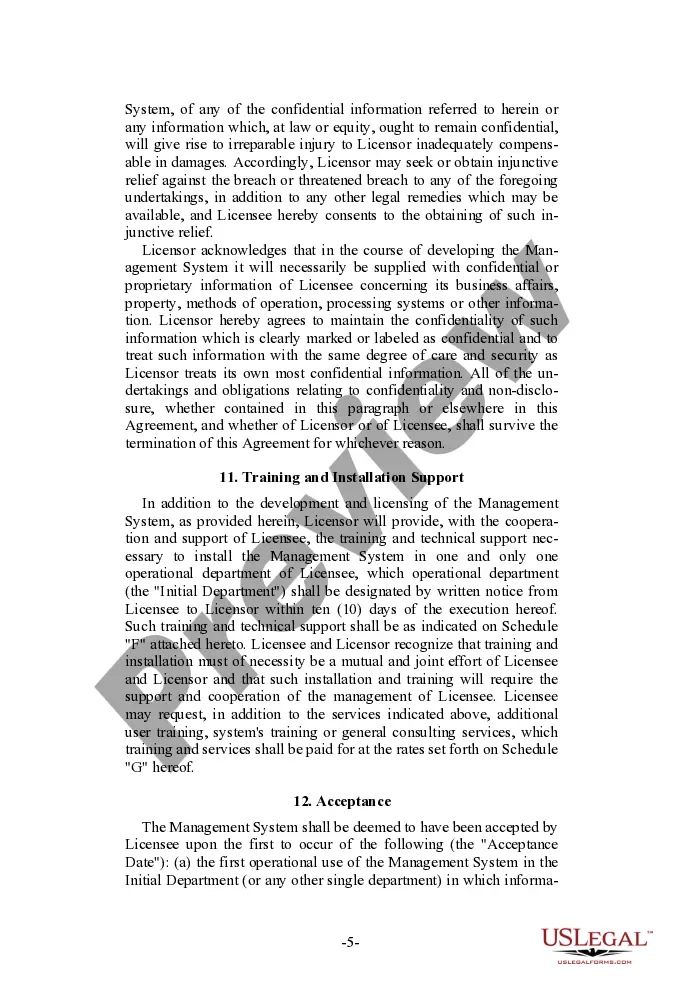
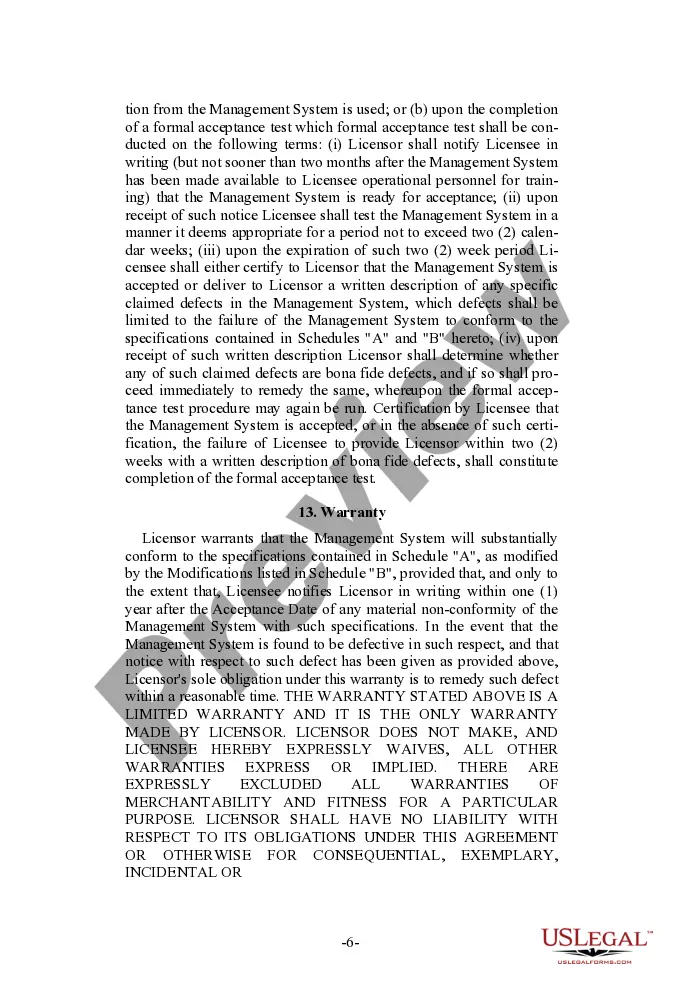
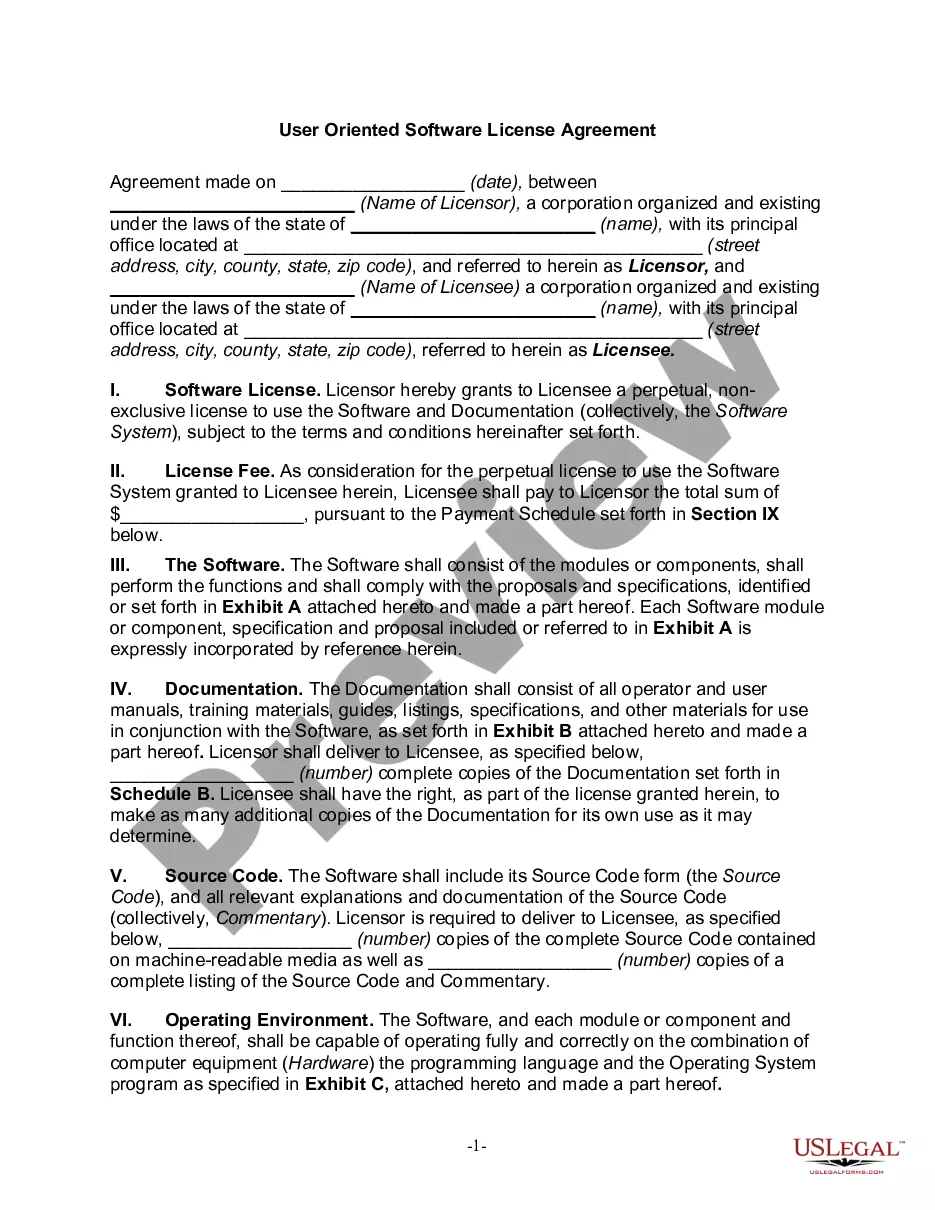
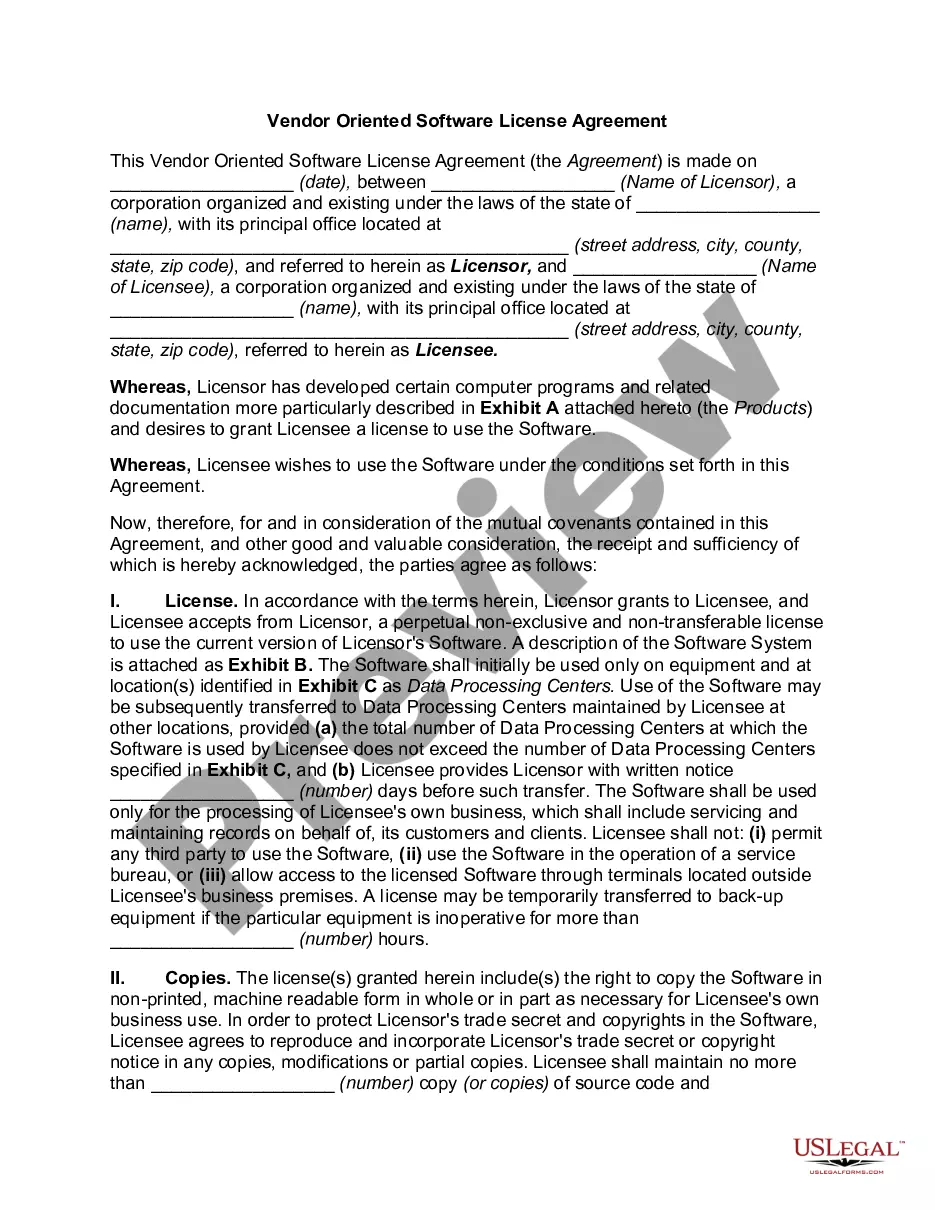
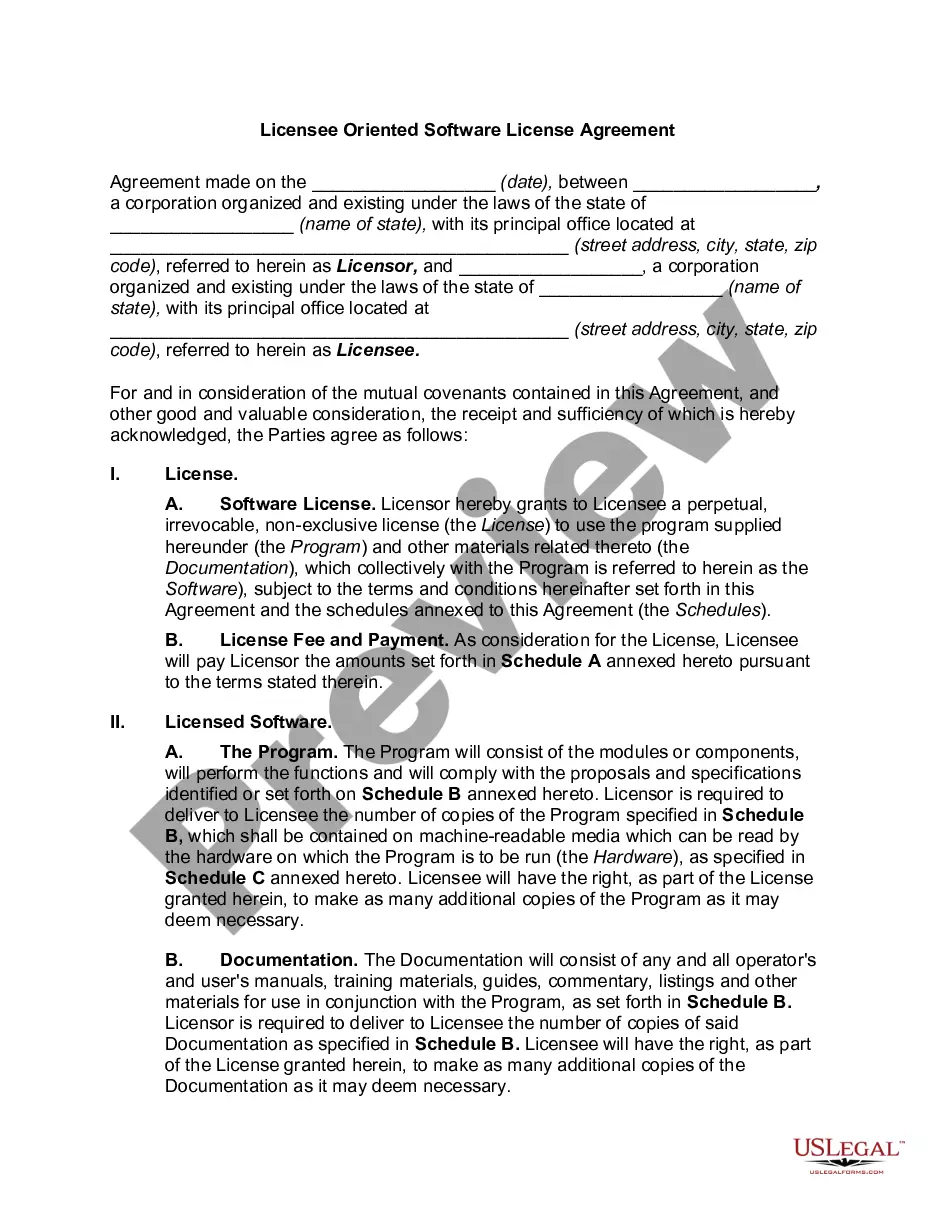
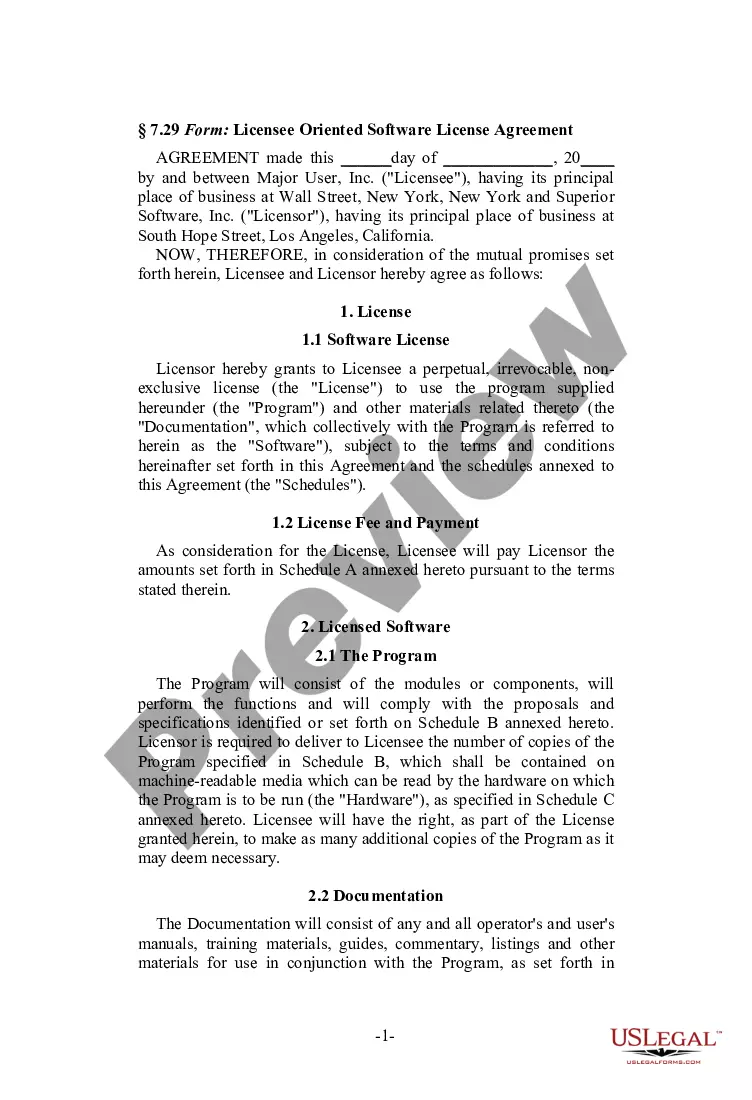
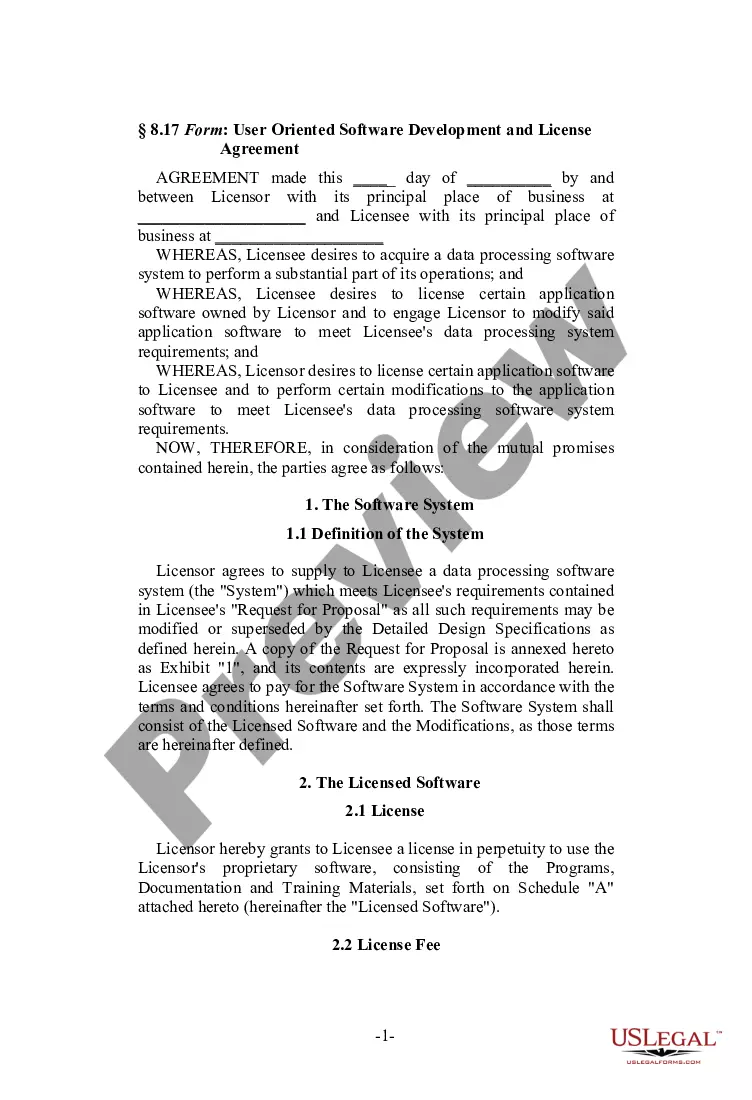
The Vendor Oriented Software Development and License Agreement is a legal document that outlines the terms under which a software developer (Licensor) provides software development and licensing services to a client (Licensee). This form is designed for businesses or individual contractors who seek to formalize the relationship regarding the creation and use of customized software solutions. It distinctly covers critical aspects such as ownership, usage rights, and confidentiality, ensuring both parties are protected throughout the software development process.
Key parts of this document
- Identification of the Licensor and Licensee, including their business addresses.
- Description of the software system being developed and its specific modifications.
- License terms, including usage restrictions and ownership rights of the software.
- Payment and invoicing details for the software development services.
- Confidentiality clauses to protect proprietary information exchanged between parties.
- Provisions for training and support during the installation of the software system.
When this form is needed
This form should be used when a business or individual contractor wishes to engage a software developer for the creation of a customized software solution. Situations may include businesses requiring specific software modifications to enhance operational efficiency, or contractors developing software that needs to comply with a client's unique business practices. It ensures clarity regarding ownership and usage rights of the developed software.
Who needs this form
- Businesses seeking custom software development tailored to their processes.
- Independent contractors specializing in software creation or modification.
- Organizations looking to establish formal terms for software licensing and usage.
- Companies requiring protection of proprietary technology and trade secrets.
How to prepare this document
- Identify and enter the full names and addresses of both the Licensor and Licensee in the provided sections.
- Detail the specific software being developed and any modifications required, referencing the applicable schedules.
- Outline the payment structure for the software development and specify the invoicing intervals.
- Add necessary confidentiality clauses and ensure both parties understand their obligations regarding proprietary information.
- Specify any required training and technical support to be provided during the installation phase.
Notarization guidance
This form usually doesn’t need to be notarized. However, local laws or specific transactions may require it. Our online notarization service, powered by Notarize, lets you complete it remotely through a secure video session, available 24/7.
Get your form ready online
Our built-in tools help you complete, sign, share, and store your documents in one place.
Make edits, fill in missing information, and update formatting in US Legal Forms—just like you would in MS Word.
Download a copy, print it, send it by email, or mail it via USPS—whatever works best for your next step.
Sign and collect signatures with our SignNow integration. Send to multiple recipients, set reminders, and more. Go Premium to unlock E-Sign.
If this form requires notarization, complete it online through a secure video call—no need to meet a notary in person or wait for an appointment.
We protect your documents and personal data by following strict security and privacy standards.

Make edits, fill in missing information, and update formatting in US Legal Forms—just like you would in MS Word.

Download a copy, print it, send it by email, or mail it via USPS—whatever works best for your next step.

Sign and collect signatures with our SignNow integration. Send to multiple recipients, set reminders, and more. Go Premium to unlock E-Sign.

If this form requires notarization, complete it online through a secure video call—no need to meet a notary in person or wait for an appointment.

We protect your documents and personal data by following strict security and privacy standards.
Common mistakes
- Failing to clearly define the scope of software modifications and expected outcomes.
- Not including specific payment terms or timelines for deliverables.
- Omitting details on confidentiality measures for shared information.
- Neglecting to verify the ownership of the software once developed.
- Overlooking necessary provisions for training and support after software deployment.
Why complete this form online
- Convenient access to legally vetted templates designed by licensed attorneys.
- Immediate downloads allow for quick customization and implementation.
- Editable forms ensure that users can tailor agreements to meet specific needs.
- Reliable legal frameworks help streamline the software development process.
Legal use & context
- Establishes clear rights and responsibilities between the Licensor and Licensee.
- Provides legal recourse if terms of the agreement are violated.
- Clarifies ownership of developed software and any associated intellectual property.
Main things to remember
- The form is crucial for formalizing software development agreements.
- Properly completing the form helps protect both parties' interests.
- Understanding the agreement's provisions ensures compliance and cooperation.
Looking for another form?



Form popularity
FAQ
An end-user license agreement (EULA, /02c8ju02d0l0259/) is a legal contract entered into between a software developer or vendor and the user of the software, often where the software has been purchased by the user from an intermediary such as a retailer.
Perhaps the key difference between a EULA and a software license agreement is that a EULA is often meant for scenarios where many users could be using the software on a continuous basis and a software license agreement is more often used for business-to-business, often times for finite engagements.
As a general rule, companies do not own the software that they license. The corollary is that they then do not, unless expressly agreed, possess the right to transfer or assign the licensed software they use to a new entity when later involved in a merger, acquisition or internal corporate restructuring.
A software license is a contract between the entity that created and supplied an application, underlying source code, or related product and its end user.
Software licenses can generally be fit into the following categories: proprietary licenses, free software license, open source licenses. The features that distinguish them are significant in terms of the effect they have on the end-user's rights.
User agreements like EULAs are legally binding contracts between the software author and the end-user. End User License Agreements are enforceable as long as it is clear that it is a contract and both parties can understand the terms.
A software license agreement typically has broad-form confidentiality provisions that also provide that certain items fall into the bucket of one or the other party (e.g., the software for a licensor, certain data for a licensee, etc.).
A software license agreement gives a licensee a non-exclusive, non-transferable right to use software. A software license agreement defines how that software can be used and what happens in the event of breach.
In general, it is the most restrictive type of licensing agreement wherein the original code was written by the programmers are not available to the users. Thus they can use the software but they cannot modify it or redistribute it.