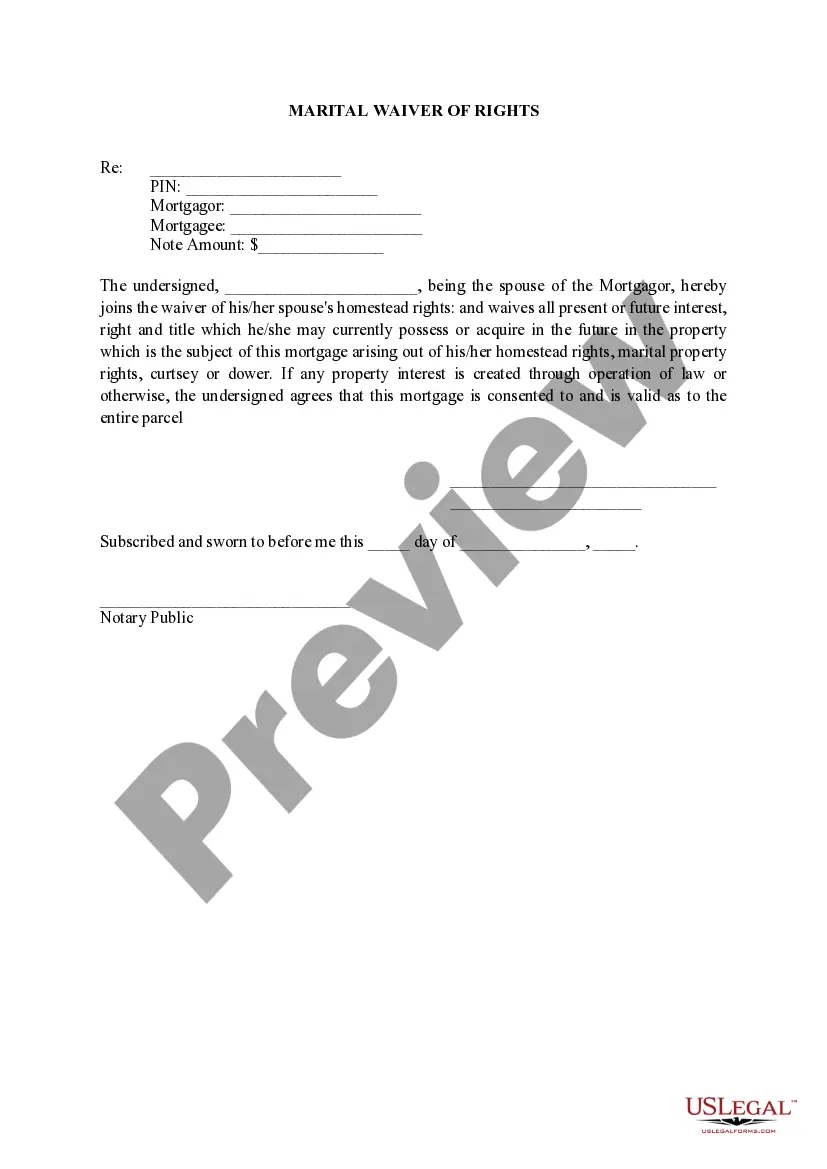
Contractor's Performance Bond with Limitation of Right of Action
About this form
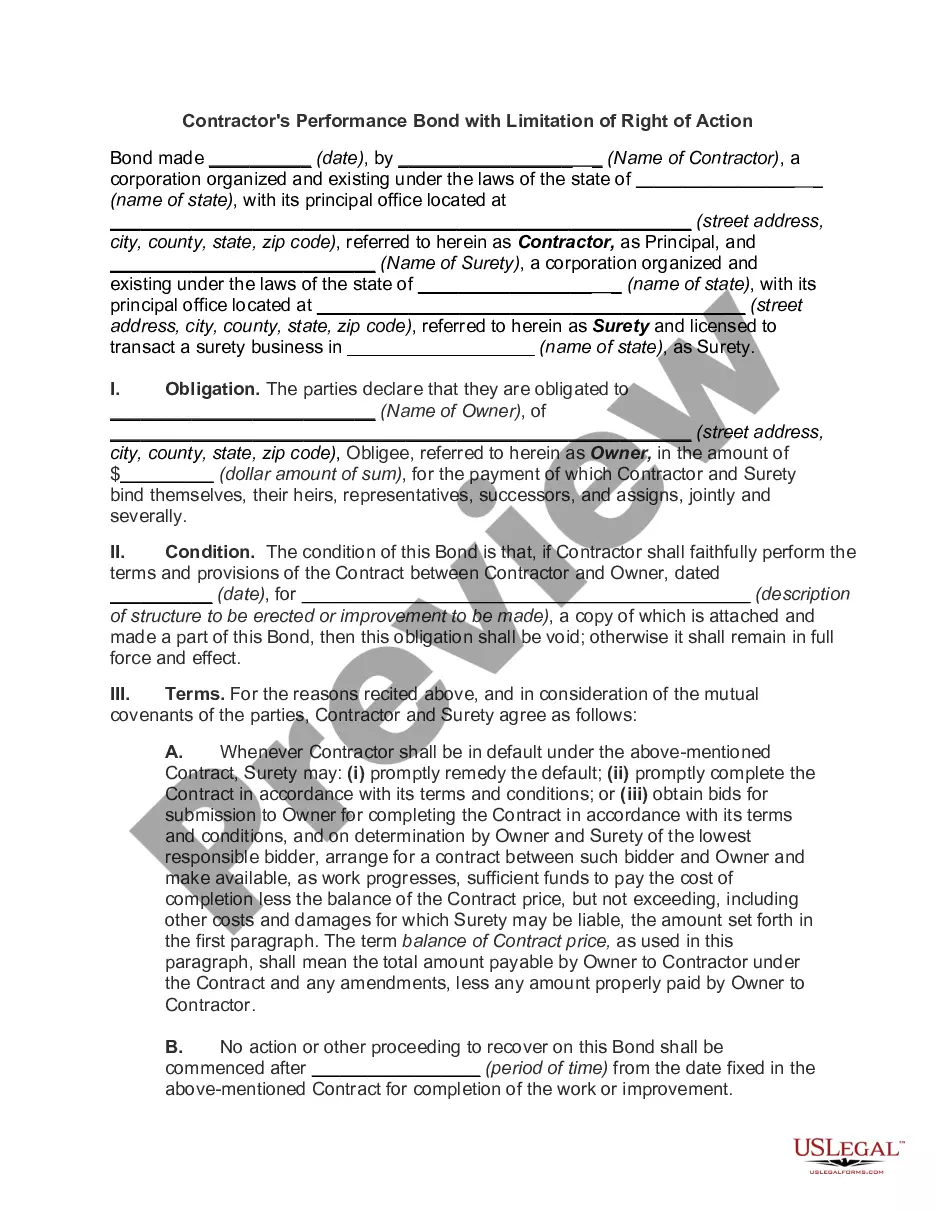
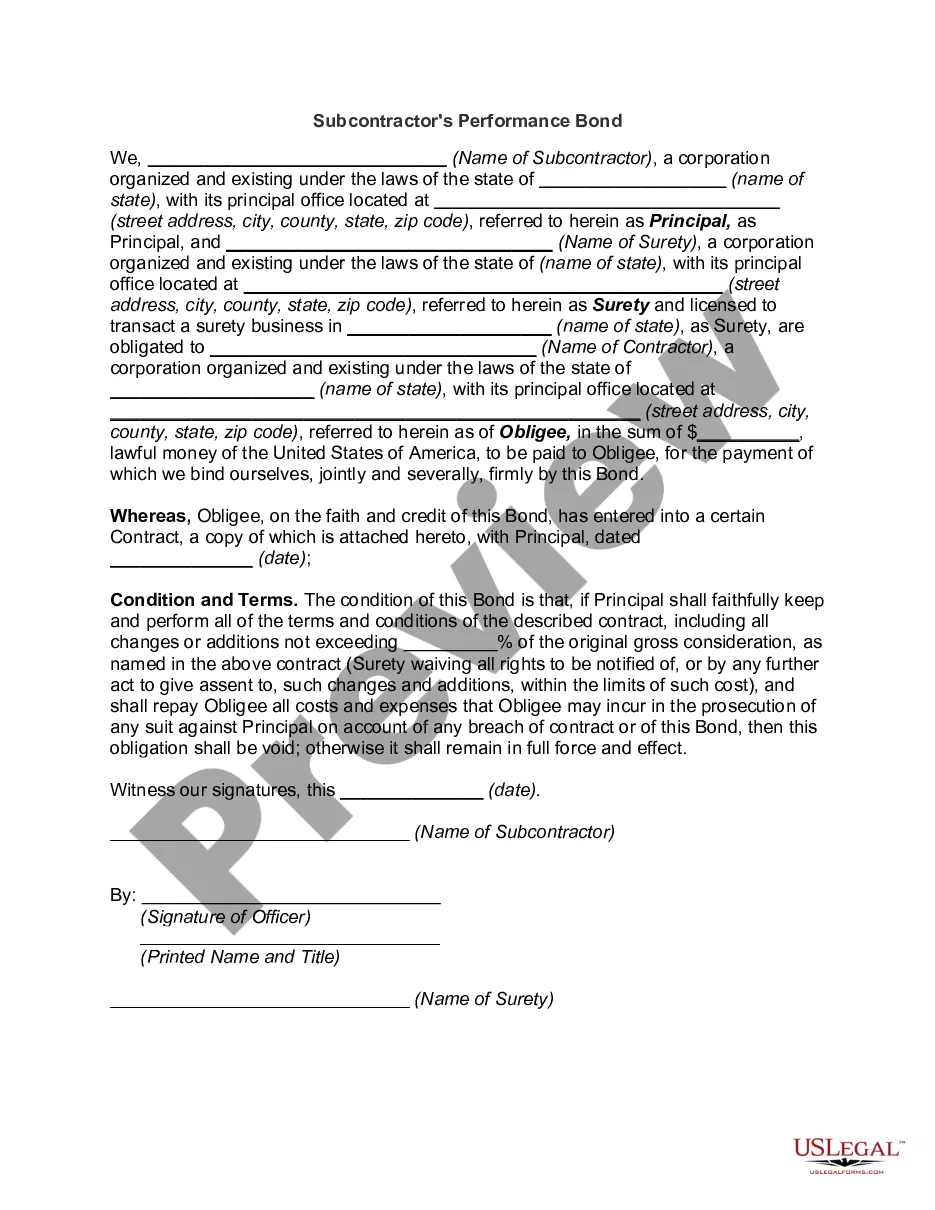
The Contractor's Performance Bond with Limitation of Right of Action is a legally binding agreement that ensures a contractor completes a project satisfactorily. This type of performance bond, also known as a contract bond, protects the project owner by guaranteeing that any defaults by the contractor will be remedied, often through the suretyâs involvement. Unlike other bonds, this specific bond includes limitations on who can assert a claim, making it crucial for the intended parties to understand and adhere to its terms.
Main sections of this form
- Details of the bond, including dates and parties involved (contractor, surety, and owner).
- Obligation section specifying the amount guaranteed and the responsibilities of the contractor and surety.
- Conditions under which the bond becomes void and what happens in the event of a default.
- Terms outlining actions the surety can take if the contractor defaults.
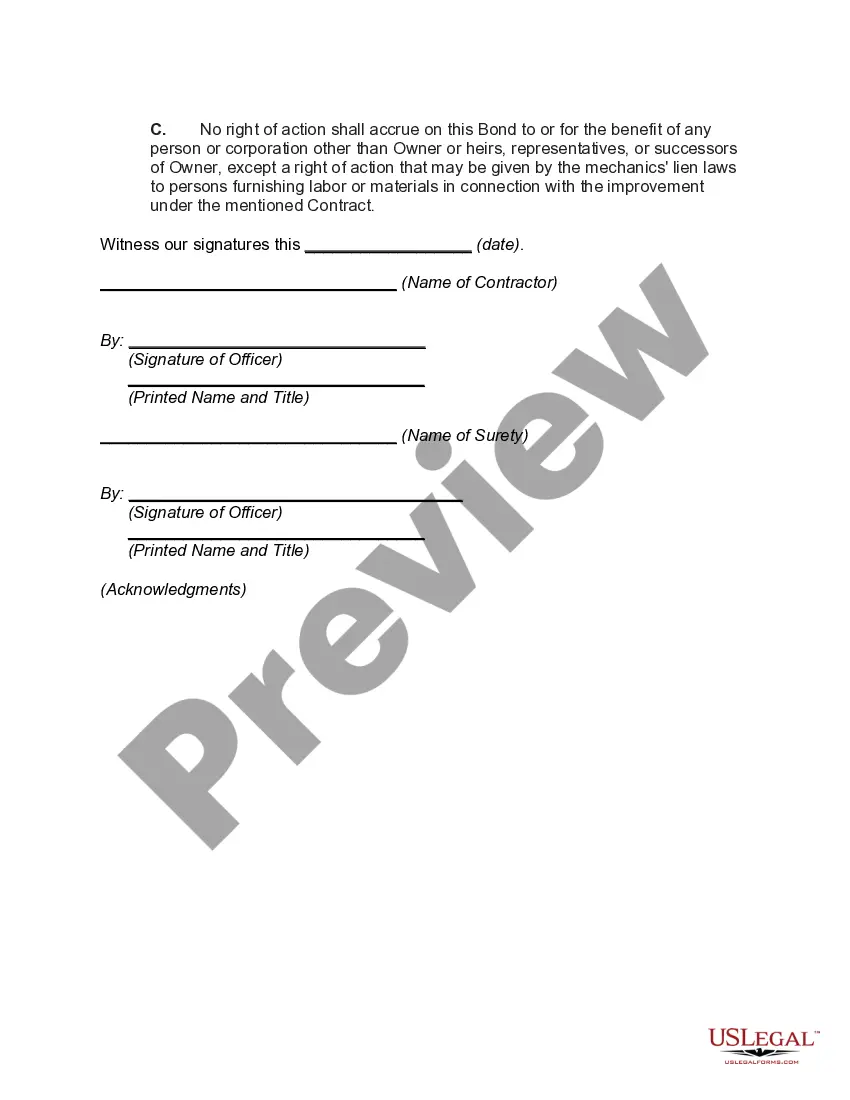
- Limitation of action clause that restricts claims to certain parties under specified conditions.

When this form is needed
This form is utilized when a contractor is engaged in a project that requires a performance bond to assure the completion of the work. It is particularly important in construction and renovation projects where the project owner seeks financial security against potential contractor defaults. Use this bond when entering into a contract with a project owner, ensuring that both parties understand their rights and obligations under the bond.
Who this form is for
- Contractors looking to assure project owners of their commitment to complete the contracted work.
- Surety companies willing to guarantee the contractor's performance for a specific project.
- Project owners who want legal protection and assurance that the project will be completed as specified.
How to complete this form
- Identify and enter the date of the bond and details of the contractor, including the name and address.
- Specify the project ownerâs name and address, as well as the amount of the bond.
- Attach and reference the contract that outlines the scope of work and terms.
- Complete the signature section, ensuring that authorized officers of both the contractor and surety sign the document.
- Review the agreement to confirm the limitations and conditions are clearly understood by all parties.
Does this document require notarization?
This form does not typically require notarization unless specified by local law. However, it is recommended to check with legal counsel in your jurisdiction to ensure compliance with any specific legal requirements.
Get your form ready online
Our built-in tools help you complete, sign, share, and store your documents in one place.
Make edits, fill in missing information, and update formatting in US Legal Forms—just like you would in MS Word.
Download a copy, print it, send it by email, or mail it via USPS—whatever works best for your next step.
Sign and collect signatures with our SignNow integration. Send to multiple recipients, set reminders, and more. Go Premium to unlock E-Sign.
If this form requires notarization, complete it online through a secure video call—no need to meet a notary in person or wait for an appointment.
We protect your documents and personal data by following strict security and privacy standards.

Make edits, fill in missing information, and update formatting in US Legal Forms—just like you would in MS Word.

Download a copy, print it, send it by email, or mail it via USPS—whatever works best for your next step.

Sign and collect signatures with our SignNow integration. Send to multiple recipients, set reminders, and more. Go Premium to unlock E-Sign.

If this form requires notarization, complete it online through a secure video call—no need to meet a notary in person or wait for an appointment.

We protect your documents and personal data by following strict security and privacy standards.
Typical mistakes to avoid
- Failing to include accurate and complete information about all parties involved.
- Omitting the attachment of the related contract to which the bond refers.
- Not understanding the limitation of right of action clause, which can restrict liability to specific parties.
- Neglecting to ensure that all necessary signatures are obtained before the form is executed.
Why use this form online
- Convenient access to editable templates that can be customized for your project's specific requirements.
- Reliable forms drafted by licensed attorneys, helping ensure legal compliance.
- Quick download options that save time and effort compared to traditional methods of obtaining legal forms.
Looking for another form?


Form popularity
FAQ
Duration of Surety Bonds Almost every surety bond has an expiration date. However, not all surety bonds are created equal and the duration of surety bonds can vary wildly from one to the next. You may have a performance bond that lasts a year, a payment bond that lasts two years, or a range of other expiration dates.
What is the limit of liability of a surety if the contractor defaults? The surety can recover the debt from the contractor, the surety can sue the owner for claims that the contractor could have easily made, or they can try to get the retainage held by the owner.
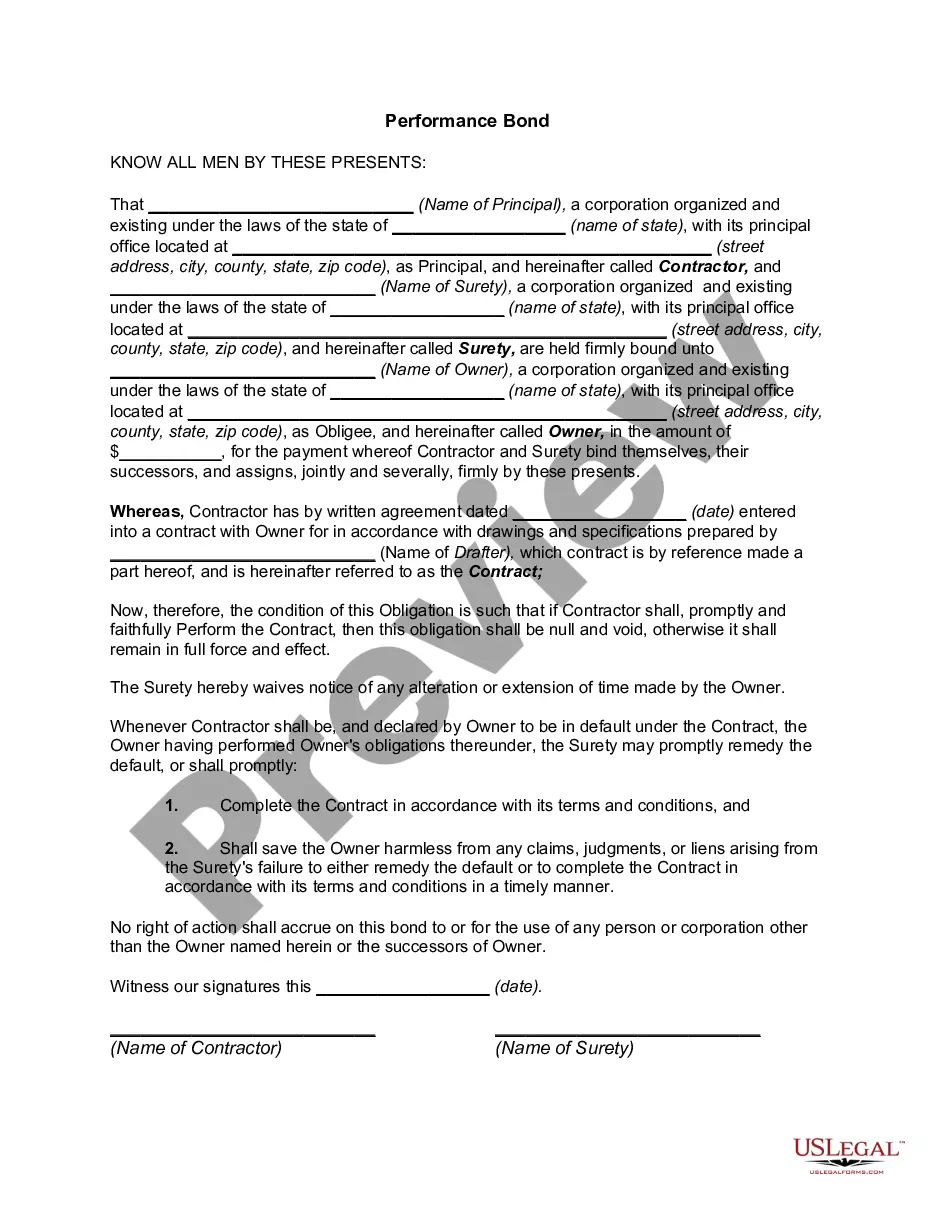
A performance bond is a bond that guarantees that the bonded contractor will perform its obligations under the contract in accordance with the contract's terms and conditions. Performance bonds are typically in the amount of 50% of the contract amount, but can also be issued for 100% of the contract amount.
A performance bond is issued to one party of a contract as a guarantee against the failure of the other party to meet obligations specified in the contract.A performance bond is usually provided by a bank or an insurance company to make sure a contractor completes designated projects.
Surety bond claims come with a price. If the claim is determined to be valid, the surety bond company will pay the claimant up to the full amount of the bond. The surety company will then come to you for repayment. You are responsible for repaying the surety company every penny they paid out on your bond claim.
A performance bond provides assurance that the obligee will be protected if the principal fails to perform the bonded contract. If the obligee declares the principal in default and terminates the contract, it can call on the surety to meet the surety's obligations under the bond.
A performance bond is issued to one party of a contract as a guarantee against the failure of the other party to meet obligations specified in the contract.A performance bond is usually provided by a bank or an insurance company to make sure a contractor completes designated projects.
If the Principal fails to perform his or her duties under the contract specifications, the Obligee may call upon the Surety to cure the problem or make payment(s) out of the Performance Bond. These payments are for damages up to the limit of the Performance Bond.
Collect the funds owed from the performance bond from the bank or brokerage house holding the bond. You may obtain a cashier's check or request a wire transfer into a designated account.