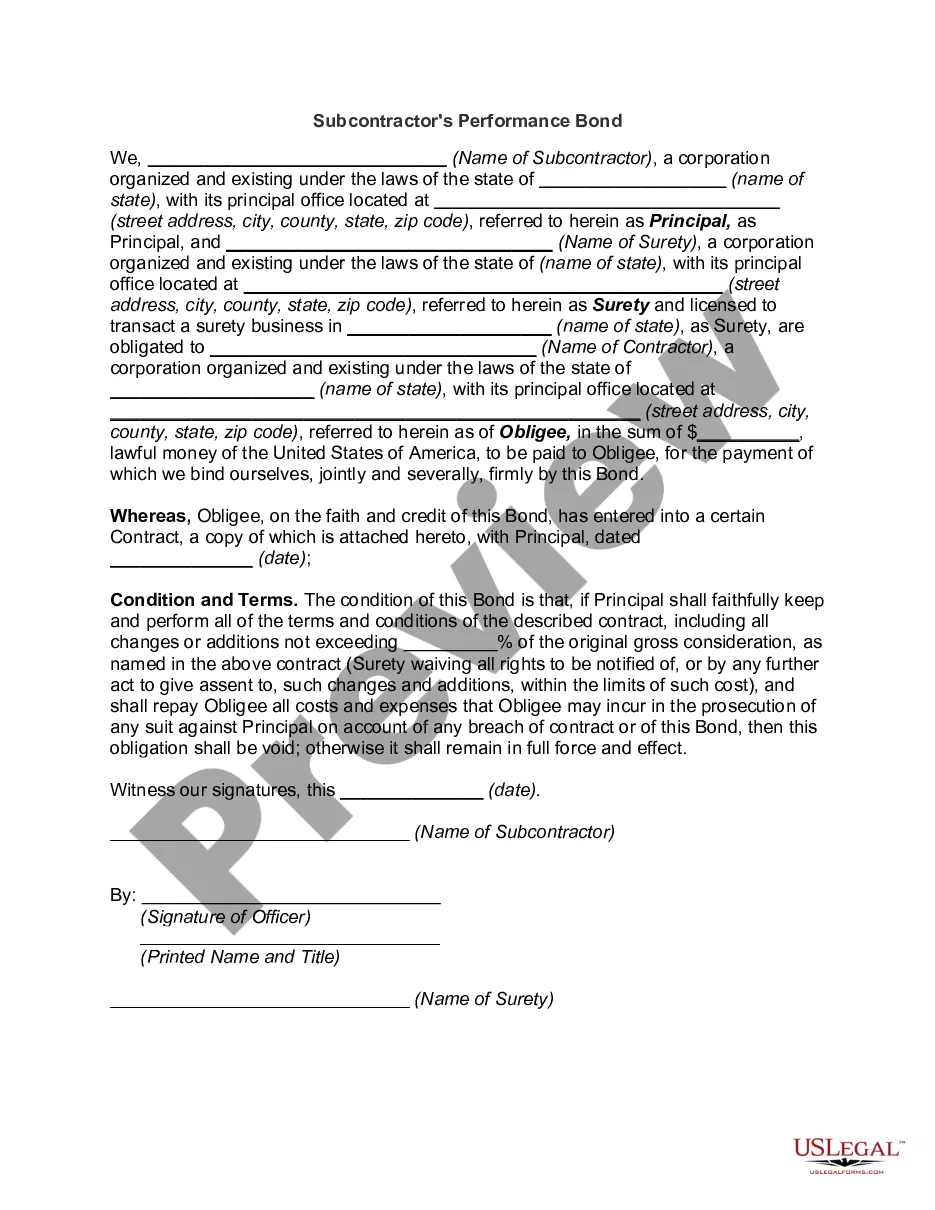
Subcontractor's Performance Bond
Overview of this form
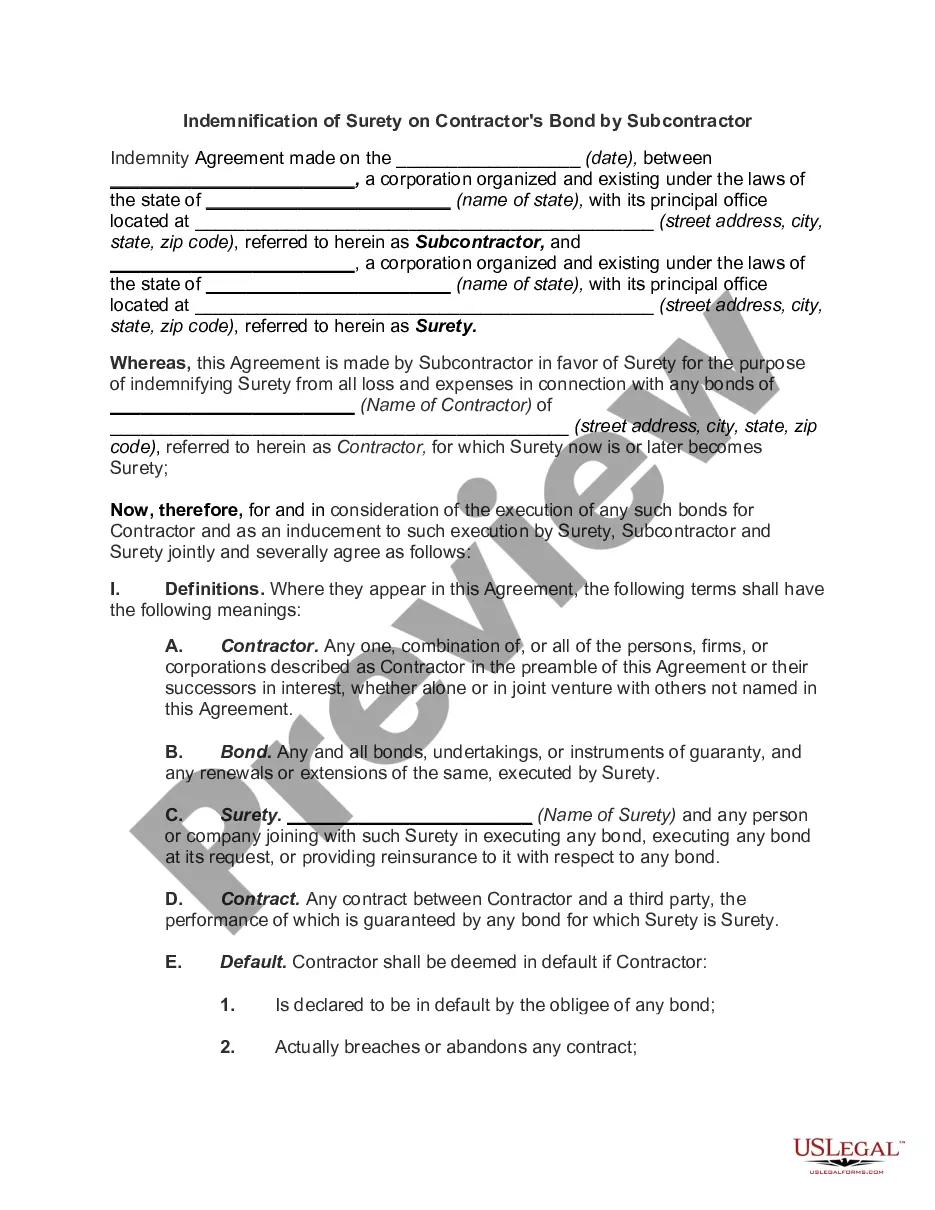
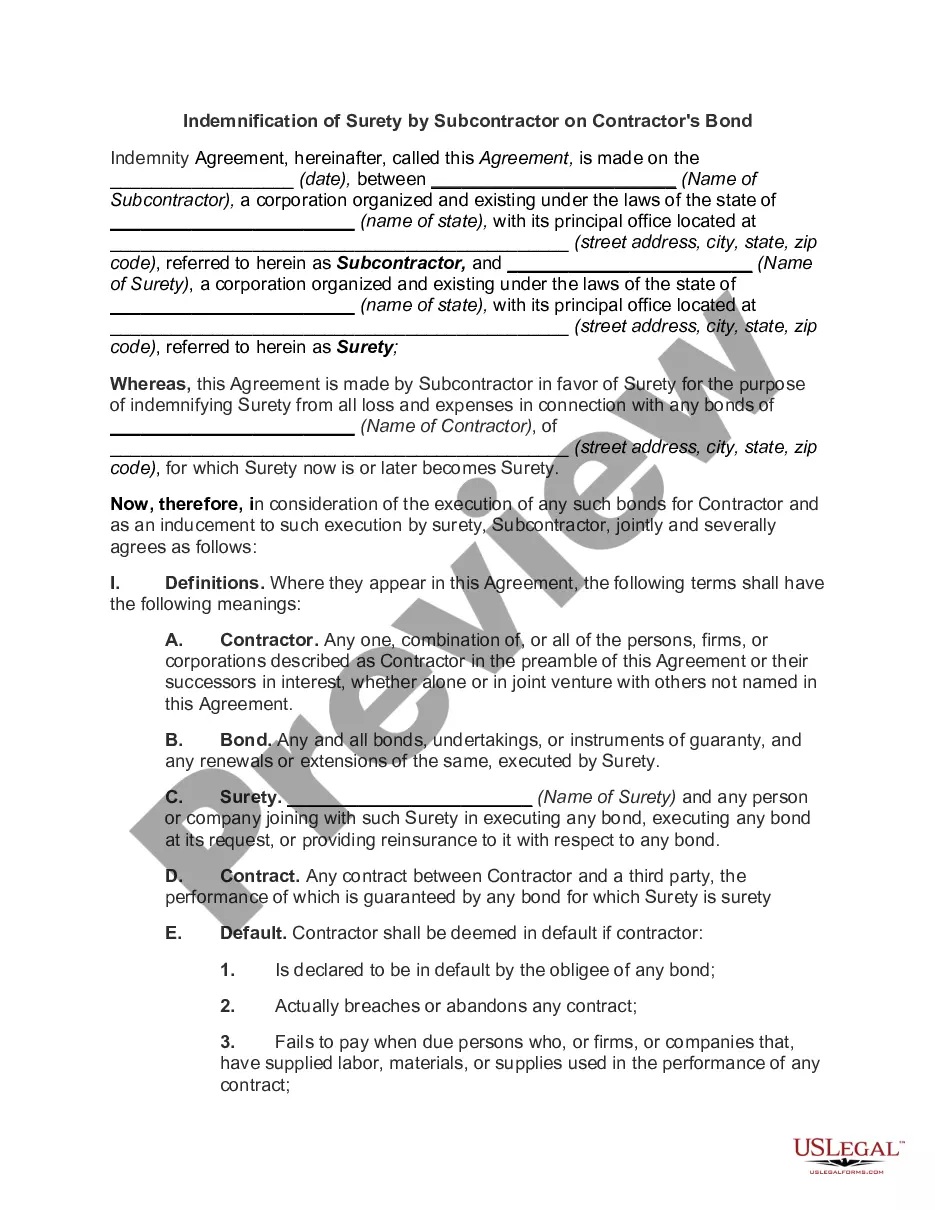
A subcontractor's performance bond is a surety bond that guarantees the satisfactory completion of a project by a subcontractor. Issued by an insurance company or bank, this bond ensures that the subcontractor will meet all terms of their contract with the principal contractor. This form serves to protect project owners from potential defaults by subcontractors, ensuring that projects are completed successfully and on time.
Key parts of this document
- Name and addresses of the subcontractor, surety, and contractor involved.
- The total amount of the bond, ensuring financial coverage for contract performance.
- Details of the contractual obligations of the subcontractor.
- Conditions that determine the bondâs validity based on the subcontractorâs performance.
- Signatures of authorized representatives from both the subcontractor and surety.


Situations where this form applies
This form should be used when a contractor requires a performance guarantee from their subcontractor. It is crucial in situations such as large construction projects, where subcontractors are hired to complete specific tasks and the contractor needs assurance that these tasks will be done satisfactorily. The performance bond protects the contractor against any financial losses due to non-completion or inadequate work by the subcontractor.
Who this form is for
- Contractors who employ subcontractors for their projects.
- Subcontractors looking to assure their clients of their commitment to project completion.
- Surety companies that provide bonding services and require a formal agreement for the bond.
Steps to complete this form
- Identify the parties involved: enter the names and addresses of the subcontractor, contractor, and surety.
- Specify the bond amount: fill in the dollar amount that is guaranteed by the bond.
- Attach the relevant contract: include a copy of the contract between the contractor and subcontractor.
- Enter the date of the agreement: provide the effective date when the bond comes into force.
- Secure signatures: have authorized representatives of both the subcontractor and surety sign the document.
Notarization guidance
This form does not typically require notarization unless specified by local law.
Get your form ready online
Our built-in tools help you complete, sign, share, and store your documents in one place.
Make edits, fill in missing information, and update formatting in US Legal Forms—just like you would in MS Word.
Download a copy, print it, send it by email, or mail it via USPS—whatever works best for your next step.
Sign and collect signatures with our SignNow integration. Send to multiple recipients, set reminders, and more. Go Premium to unlock E-Sign.
If this form requires notarization, complete it online through a secure video call—no need to meet a notary in person or wait for an appointment.
We protect your documents and personal data by following strict security and privacy standards.

Make edits, fill in missing information, and update formatting in US Legal Forms—just like you would in MS Word.

Download a copy, print it, send it by email, or mail it via USPS—whatever works best for your next step.

Sign and collect signatures with our SignNow integration. Send to multiple recipients, set reminders, and more. Go Premium to unlock E-Sign.

If this form requires notarization, complete it online through a secure video call—no need to meet a notary in person or wait for an appointment.

We protect your documents and personal data by following strict security and privacy standards.
Common mistakes
- Failing to provide complete and accurate names and addresses of all parties involved.
- Not specifying the correct bond amount or contract details.
- Omitting to secure necessary signatures from all required parties.
- Neglecting to attach the related contract documents.
Benefits of using this form online
- Convenience of accessing and downloading the form instantly from any location.
- Editability to customize the form as needed without any hassle.
- Reliability of utilizing templates that comply with legal standards and requirements.
Looking for another form?



Form popularity
FAQ
A subcontractor performance bond is a project-specific agreement between the GC, the subcontractor, and a surety company (similar to an insurance company). It will typically be required by the construction contract. The performance bond ensures that the sub's work will be completed on the project.
A subcontractor performance bond is a project specific contractual agreement between a subcontractor and a surety by which the surety guarantees to arrange for the completion of a subcontract if the subcontractor runs into trouble and fails to complete its scope of work on the project.
In order to get a performance bond, contractors must usually pay a premium on the bond amount as well as interest on the bond. Again, the price will depend on the cost of the bond and the risk (creditworthiness) the principal presents. In most cases, you will first need to obtain a bid bond before bidding on a project.
The Performance Bond secures the contractor's promise to perform the contract in accordance with its terms and conditions, at the agreed upon price, and within the time allowed. The Payment Bond protects certain laborers, material suppliers and subcontractors against nonpayment.
A performance bond is issued to one party of a contract as a guarantee against the failure of the other party to meet obligations specified in the contract.A performance bond is usually provided by a bank or an insurance company to make sure a contractor completes designated projects.
A performance bond is a bond that guarantees that the bonded contractor will perform its obligations under the contract in accordance with the contract's terms and conditions. Performance bonds are typically in the amount of 50% of the contract amount, but can also be issued for 100% of the contract amount.
This may mean that if the contractor is incapacitated to complete the job, the client suffers a financial loss and cannot be covered. It is also impossible for the investor to place a claim to any company for the loss incurred. Therefore, bonding indemnifies the owner of the project against such.
Unlike prime contracts, bonds typically are not required for subcontracts by law on public works. Instead, each general contractor decides whether to require their subcontractors to bond.
You will need to be bonded if your state or municipality requires it. In addition, if your business frequently performs services in customer's homes or on the premises of other businesses, you should strongly consider getting bonded to protect your customers and your business's financial health.