Mississippi Warning of Default on Residential Lease
What is this form?
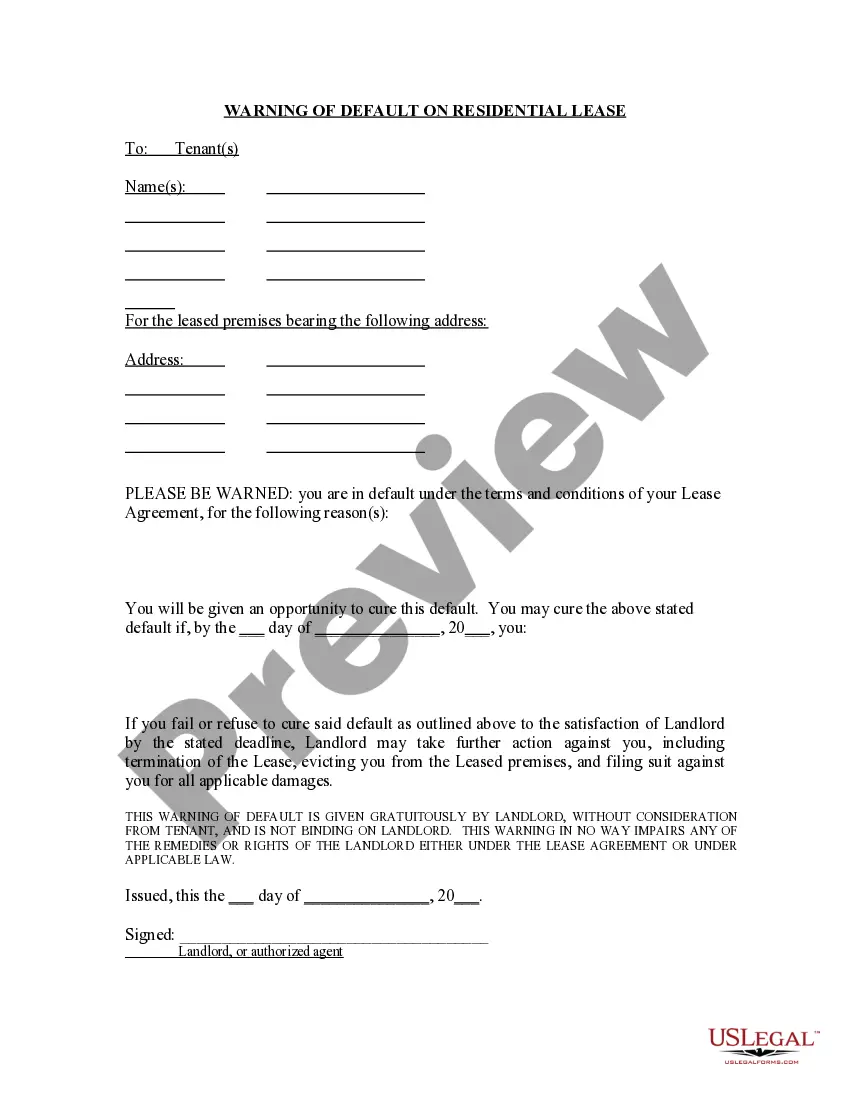
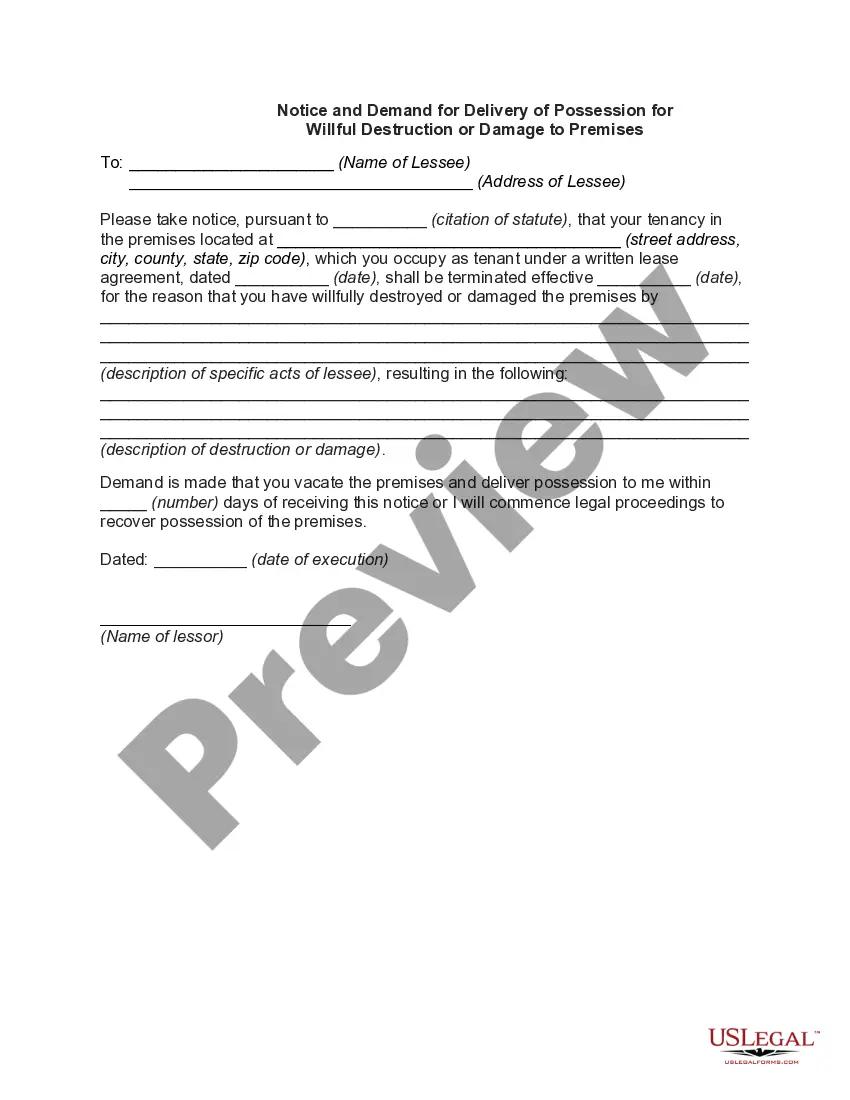
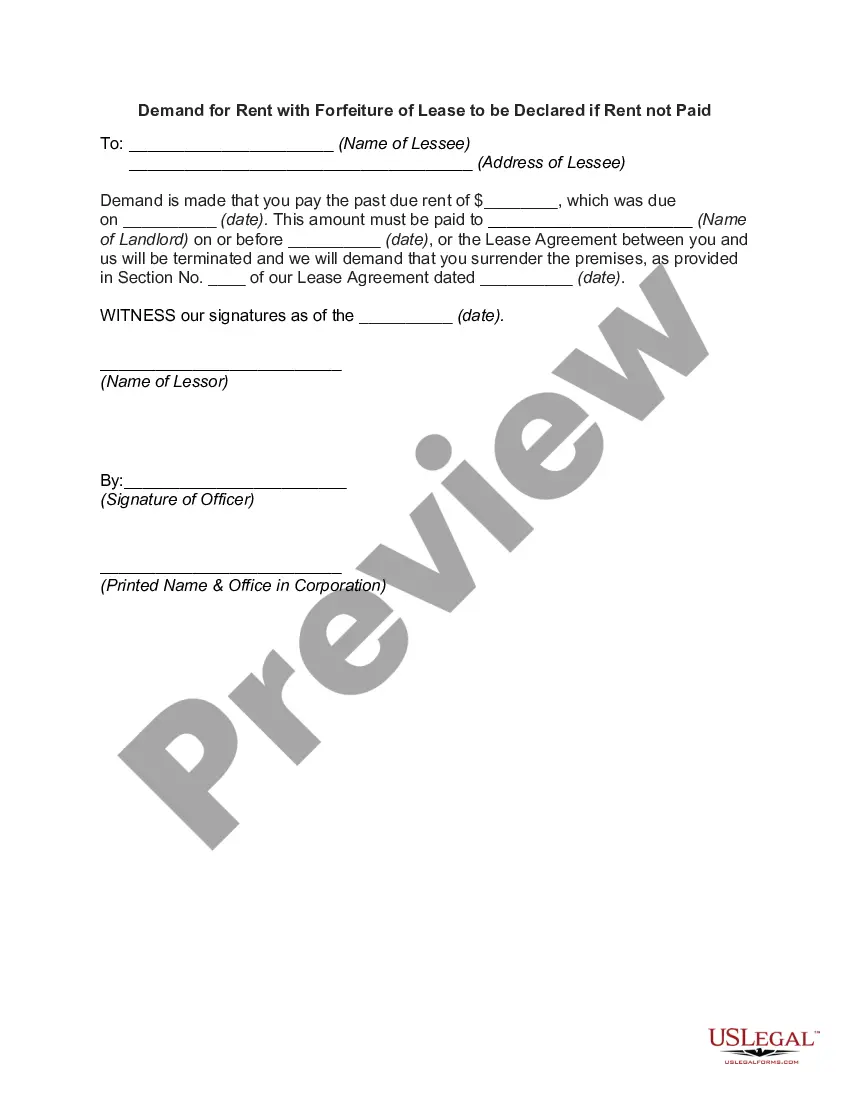
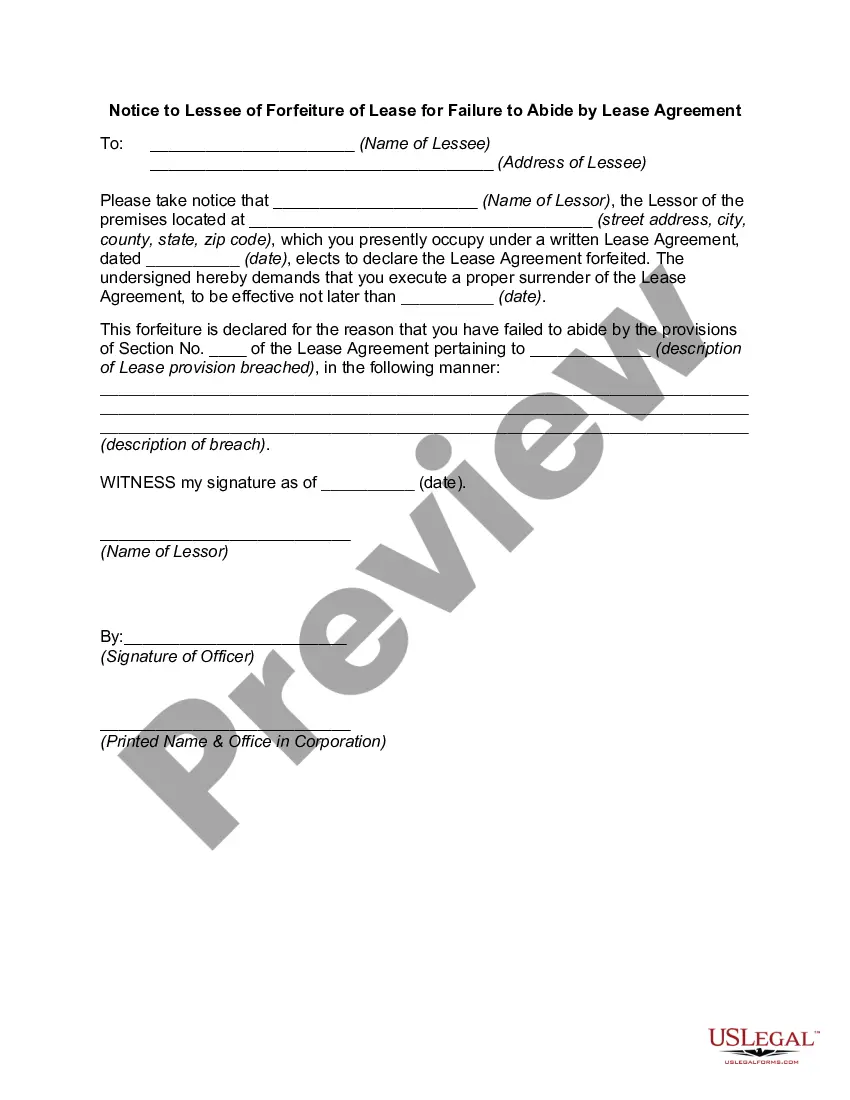
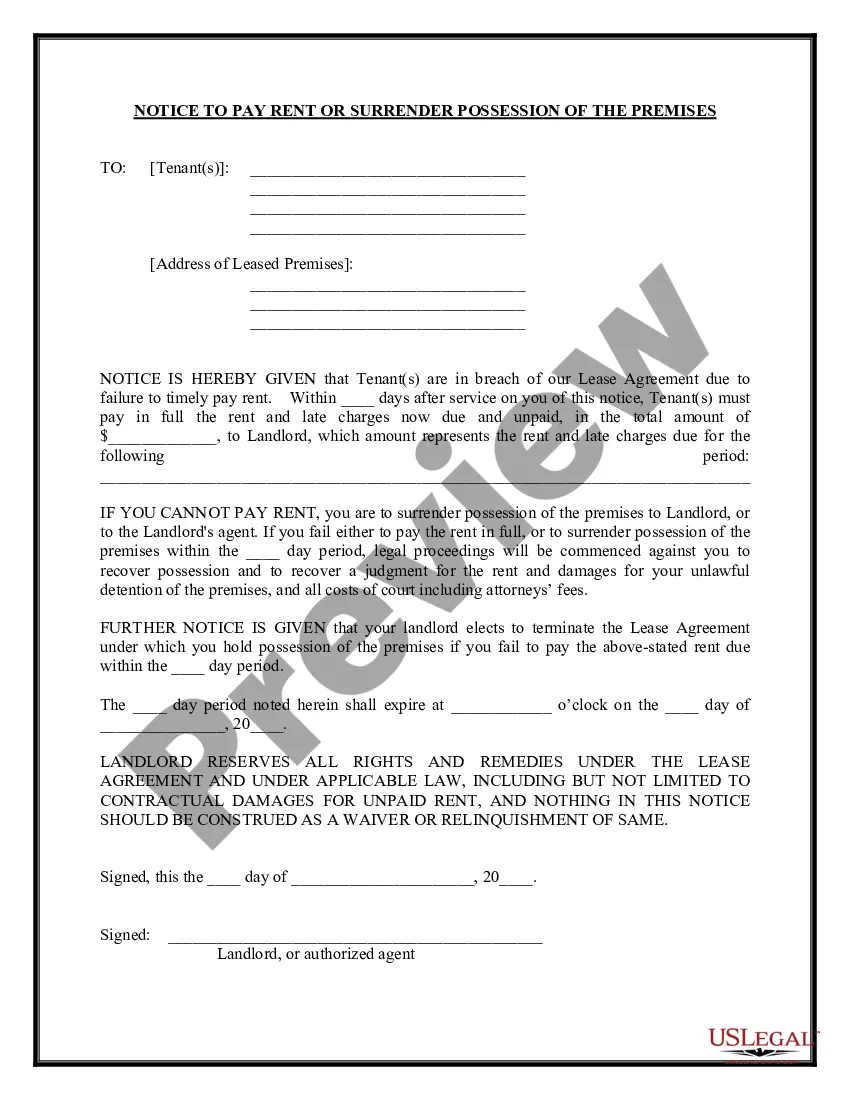
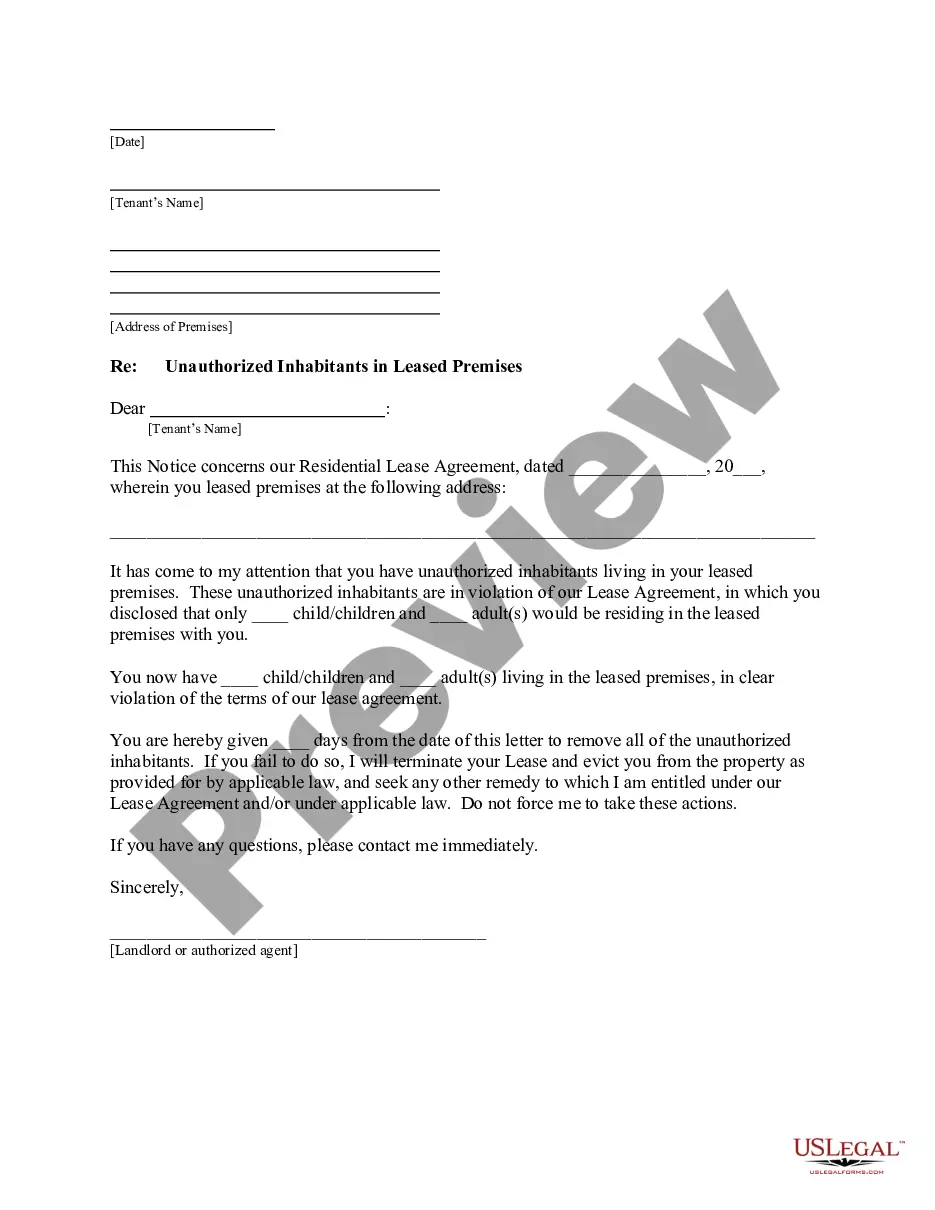
The Warning of Default on Residential Lease is a legal document issued by a landlord to a tenant. This warning letter serves to alert the tenant that they are at risk of being held in default under the lease agreement if specific issues are not addressed. Unlike other tenant notices, this form emphasizes the landlord's concerns and outlines the potential consequences of non-compliance.
Key parts of this document
- Identification of the landlord and tenant.
- Date of issuance.
- Statement indicating the nature of the default.
- A declaration that the warning is given gratuitously and is not binding.
- Landlord's signature or authorized agent's signature.

Common use cases
This form should be used when a landlord believes that the tenant is not complying with the lease terms, such as failing to pay rent or violating other lease conditions. It provides a formal notification to the tenant, indicating that they have a specified time to rectify the issue before further legal action may be taken.
Intended users of this form
- Landlords who lease residential properties.
- Property managers acting on behalf of landlords.
- Tenants who want to understand their rights if they receive such a notice.
Instructions for completing this form
- Identify the parties involved by filling in the names of the landlord and tenant.
- Enter the date when the warning is issued.
- Specify the nature of the default that the tenant must remedy.
- Ensure that the document is signed by the landlord or an authorized agent.
- Keep a copy for your records and distribute as necessary, following any legal requirements for notice delivery.
Does this form need to be notarized?
This form does not typically require notarization unless specified by local law. It's advisable for landlords to check their jurisdiction's requirements to ensure enforceability.
Get your form ready online
Our built-in tools help you complete, sign, share, and store your documents in one place.
Make edits, fill in missing information, and update formatting in US Legal Forms—just like you would in MS Word.
Download a copy, print it, send it by email, or mail it via USPS—whatever works best for your next step.
Sign and collect signatures with our SignNow integration. Send to multiple recipients, set reminders, and more. Go Premium to unlock E-Sign.
If this form requires notarization, complete it online through a secure video call—no need to meet a notary in person or wait for an appointment.
We protect your documents and personal data by following strict security and privacy standards.

Make edits, fill in missing information, and update formatting in US Legal Forms—just like you would in MS Word.

Download a copy, print it, send it by email, or mail it via USPS—whatever works best for your next step.

Sign and collect signatures with our SignNow integration. Send to multiple recipients, set reminders, and more. Go Premium to unlock E-Sign.

If this form requires notarization, complete it online through a secure video call—no need to meet a notary in person or wait for an appointment.

We protect your documents and personal data by following strict security and privacy standards.
Typical mistakes to avoid
- Failing to specify the exact nature of the default.
- Not including the date of issuance.
- Omitting the landlord's signature or that of the authorized agent.
- Not providing the tenant with clear information on how to remedy the default.
Benefits of completing this form online
- Convenience of access to the document anytime.
- Easy to fill out and customize as needed.
- Instant downloadable format for immediate use.
- Reliability of forms drafted by licensed attorneys.
- This warning letter serves to formally document the landlord's concerns.
- It does not serve as an eviction notice, which has different legal implications.
- The tenant may remedy the situation to avoid further legal action.
Quick recap
- The Warning of Default on Residential Lease is crucial for addressing lease violations.
- Proper use can prevent escalation to eviction proceedings.
- Each state may have different notice requirements to ensure compliance.
Looking for another form?



Form popularity
FAQ
Tenant default occurs when a Tenant breaches one of the tenant's covenants in its lease. Tenant default can arise in a number of different ways but will typically be for one of the following: Non-payment of rent or other sums reserved under the lease.
Notice to terminate a week-to-week lease. A one-week written notice is required. Notice to terminate a month-to-month lease. 30-day written notice is required. Notice to terminate a yearly lease with no end date.
Paying the rent - One way or another, if you walk away from your lease and no one else rents the apartment then you will owe the landlord this money.Your landlord will typically collect this rent at the expiration of your lease.
Protect your rental income. Even the most reliable tenants sometimes struggle to pay their rent.Tenant default insurance from Simply Business provides vital back-up for landlords it can cover your rental income if your tenant fails to pay rent.
Step 1: Speak to your tenant. Step 2: Provide notice of contract breach. Step 3: Decide between an interdict or cancellation. Step 4: Eviction process. Step 5: Eviction notice. Final advice.
If you find out that your tenant lied to you after the lease has been signed, it can be grounds for an eviction. The best way to determine whether or not your applicant is lying to you is to cross check the rental application with their background report.
In landlord-tenant law, default refers to the failure of a tenant to timely pay rent due.In general, the landlord is required to give the tenant notice of the default before bringing eviction proceedings or applying security deposit proceeds to the payment in default.
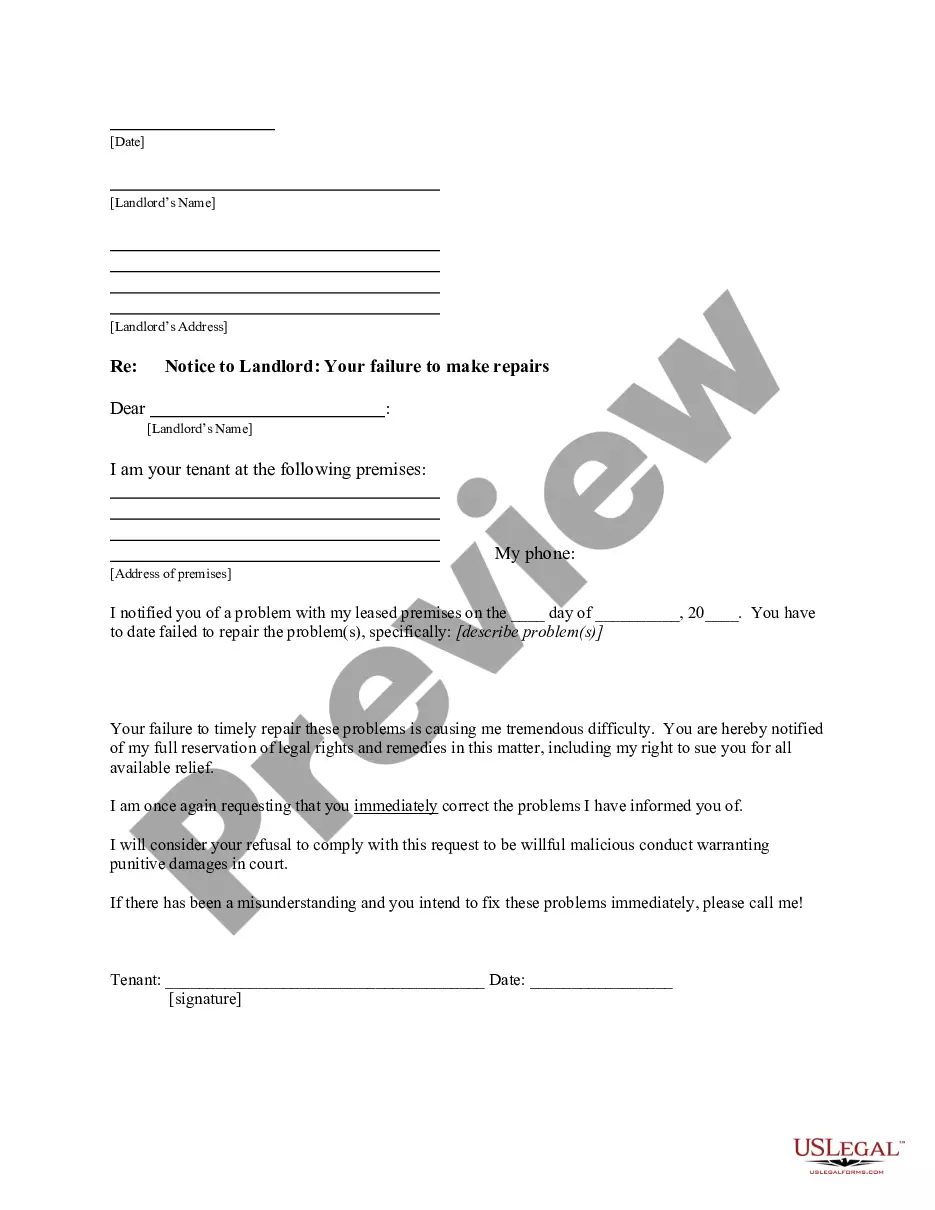
Default by landlord The most common form of landlord default is failure to provide services and maintain the property condition. When a landlord defaults on the terms of the lease, tenants may sue for damages.
If you leave your apartment without notice, you could be sued in small claims or housing court for the unpaid rent and any other damages. If you want to leave right away and don't want to pay a breakage fee, you can forfeit your security deposit and leave without notice. The legal term for this is abandonment.