Missouri Letter from Landlord to Tenant as Notice to remove Wild Animals in Premises
What this document covers
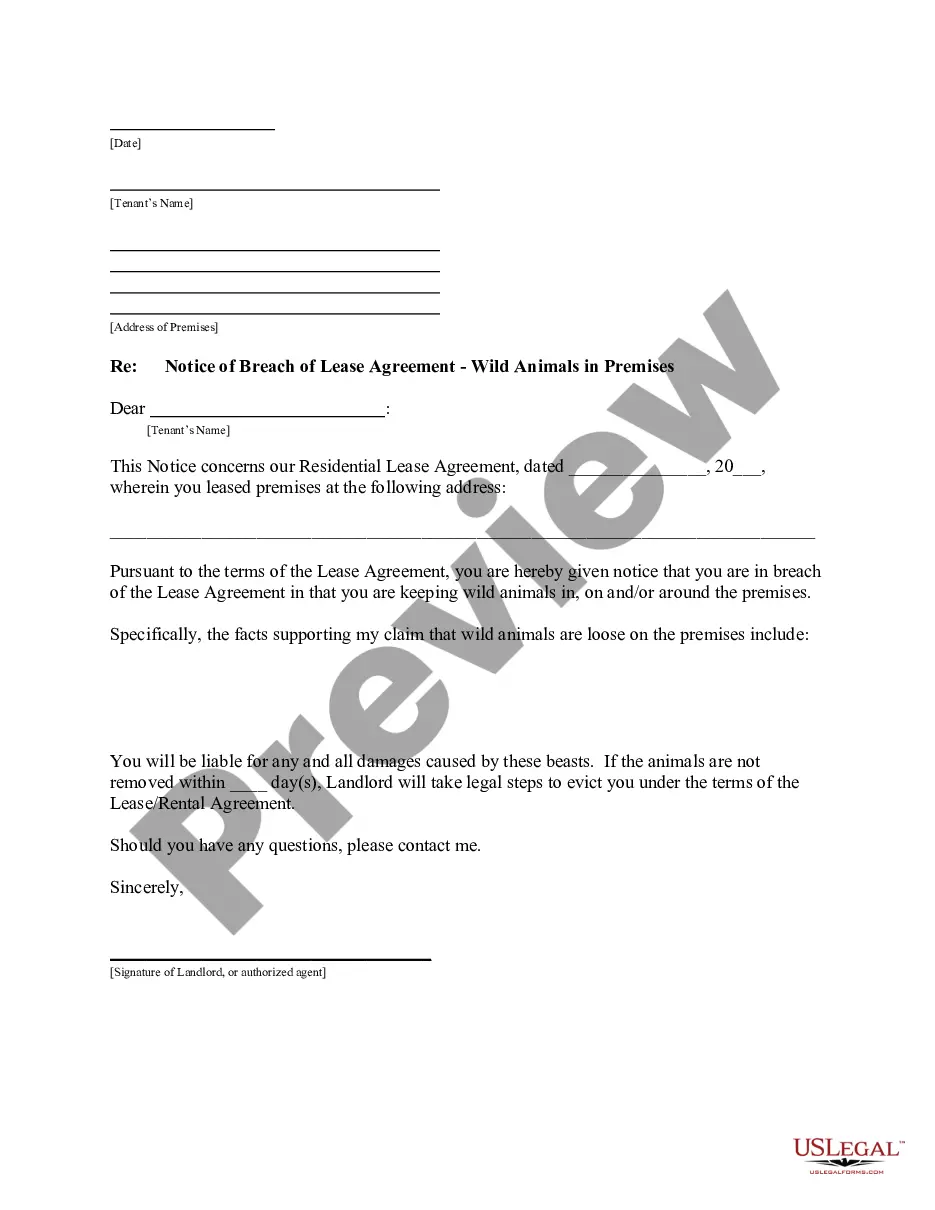
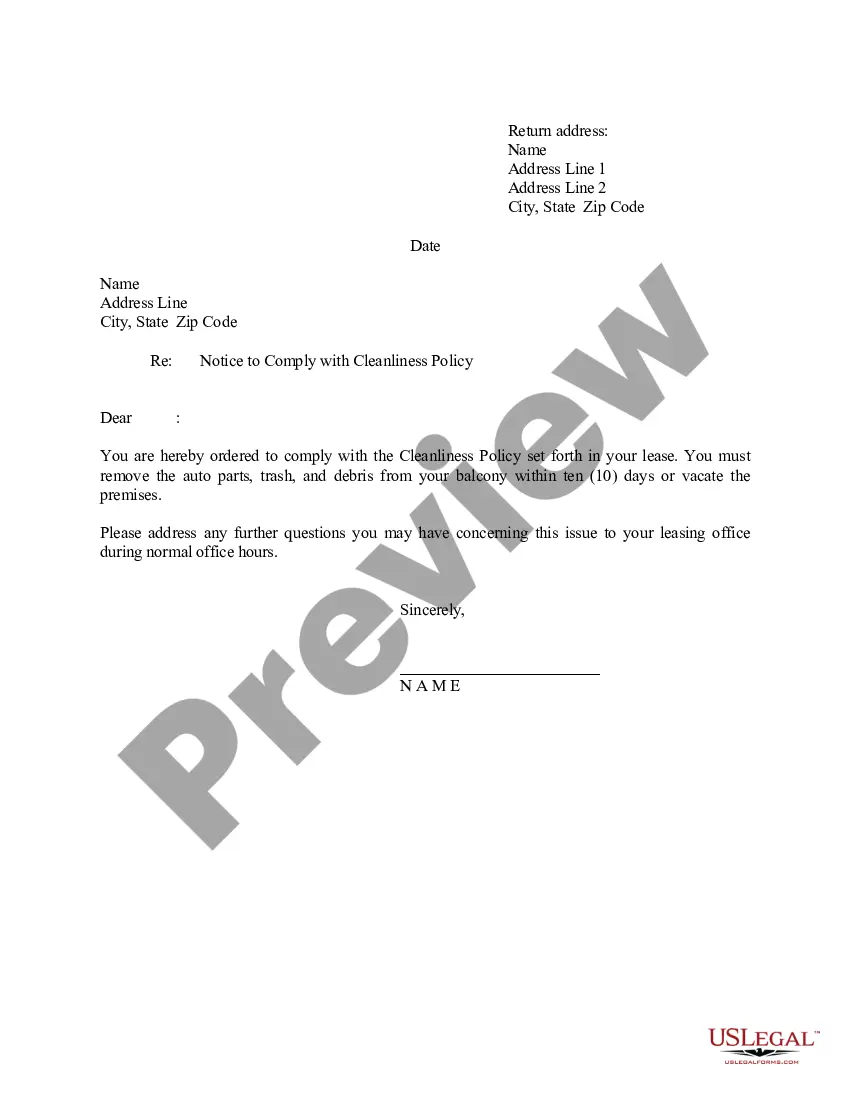
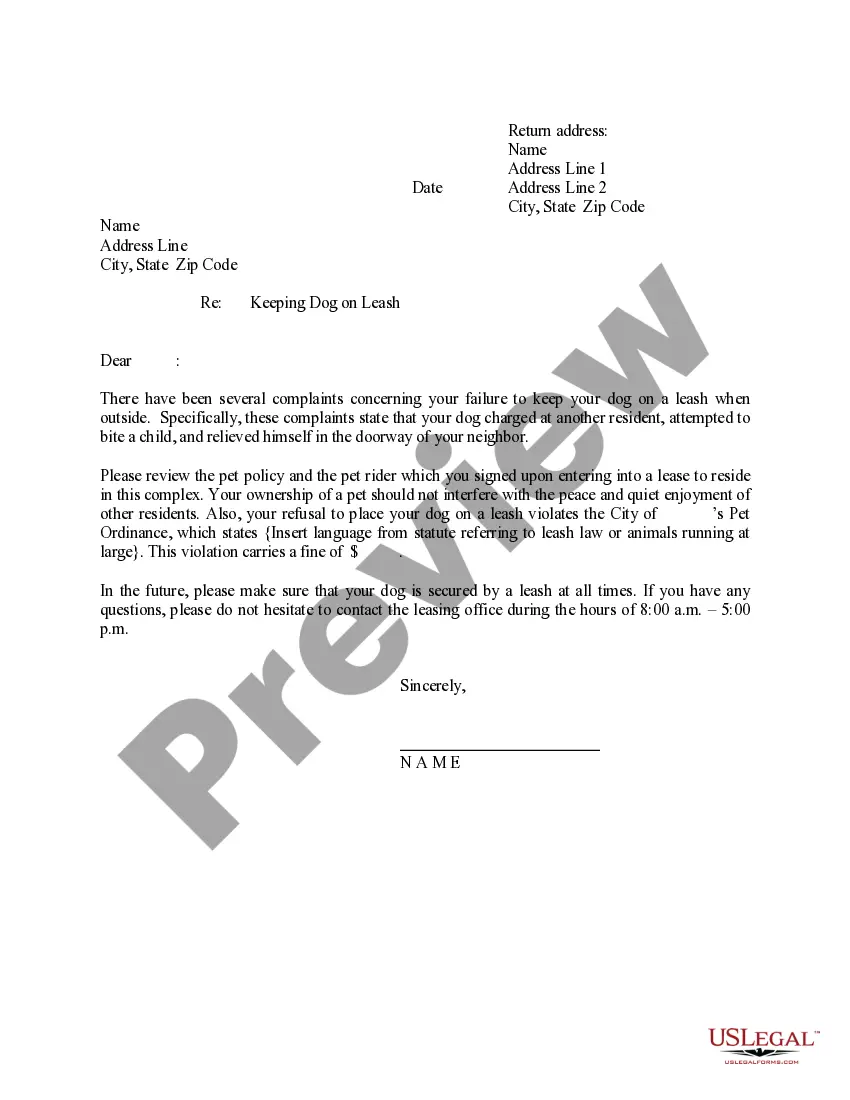
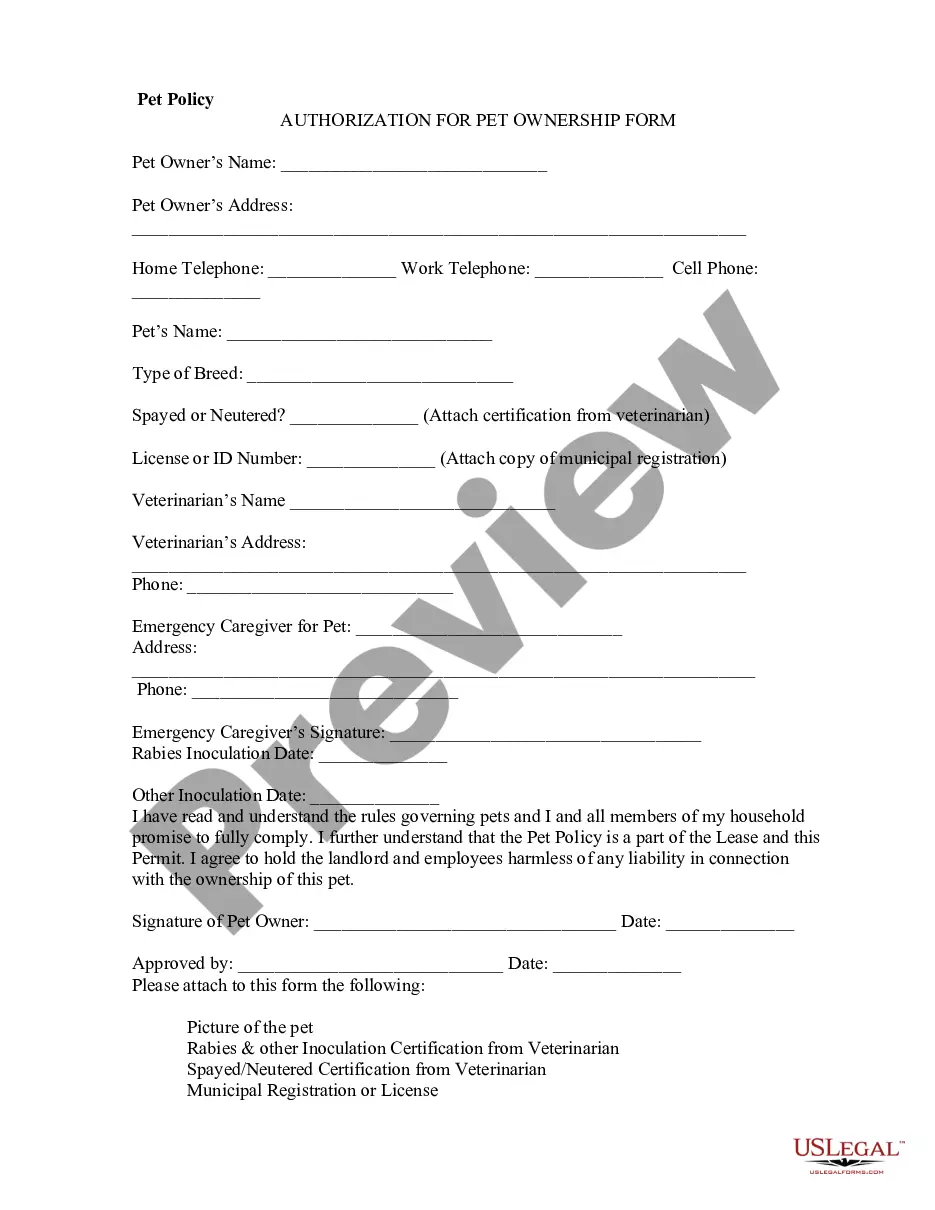
This form is a Letter from Landlord to Tenant as Notice to remove Wild Animals in Premises. It serves to inform the tenant that they have violated lease terms by keeping wild animals on the property. This notice explicitly addresses the breach of lease agreement, differentiating it from other types of landlord-tenant correspondence, such as eviction notices or general warnings.
Key components of this form
- Notice of breach: Clearly states the violation of keeping wild animals.
- Reference to lease agreement: Mentions the specific lease terms being violated.
- Signature section: Includes space for the landlord's signature or that of an authorized agent.
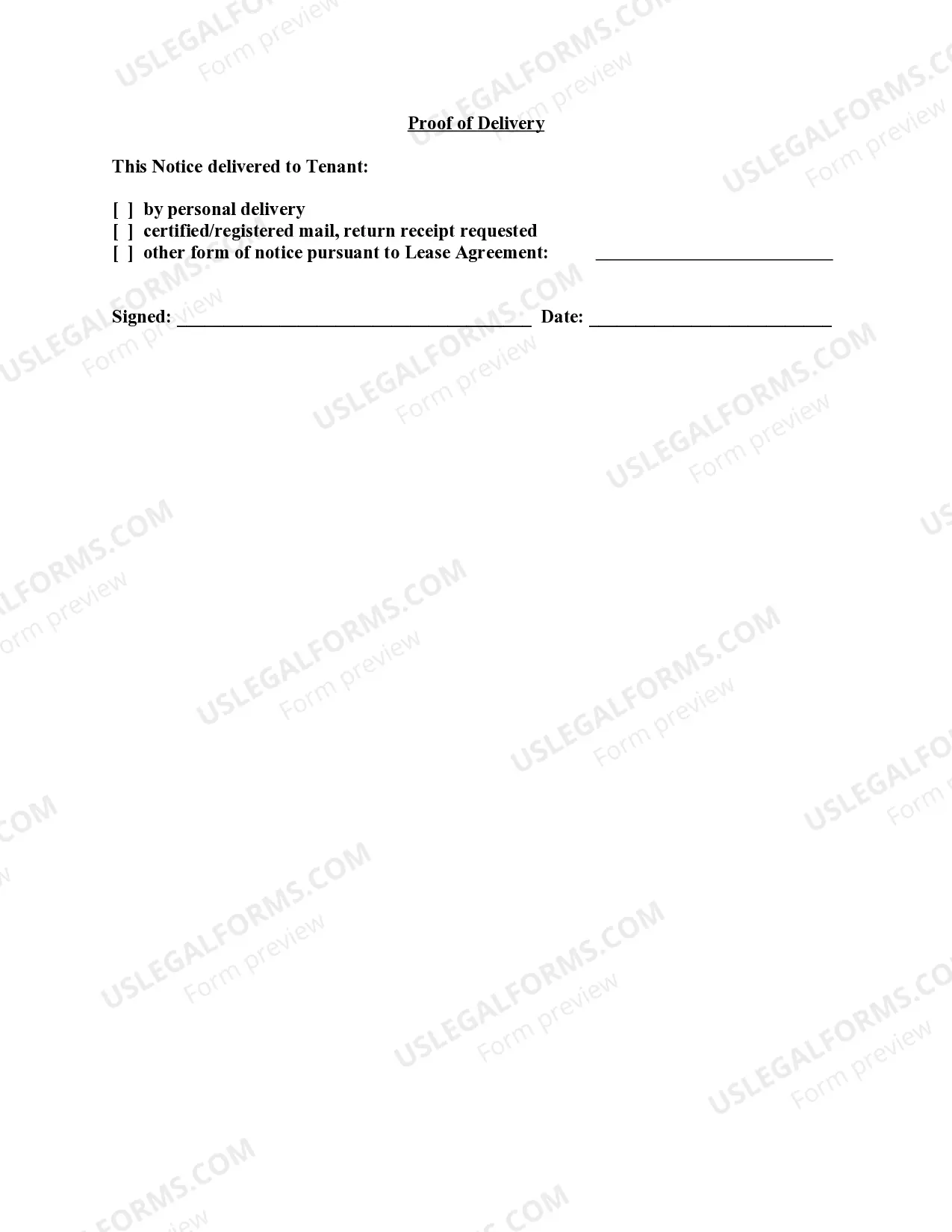
- Proof of delivery: Specifies how the notice was delivered to the tenant (personal delivery, certified mail).

Situations where this form applies
This form should be used when a landlord discovers that a tenant is keeping wild animals on the premises, which is typically against the terms of a lease. It is essential to provide formal notice to the tenant to ensure they take corrective action promptly, maintaining the safety and integrity of the property.
Who needs this form
- Landlords who suspect or have evidence of wild animals being kept by tenants.
- Property managers handling multiple rental units with lease agreements that prohibit such activities.
- Landlords who want to formally document the breach for legal purposes.
Steps to complete this form
- Identify the parties: Enter the name of the tenant and the landlord or authorized agent.
- Specify the property: Clearly describe the address of the rental property.
- Detail the breach: Note the specific terms from the lease agreement that are being violated.
- Sign the document: Have the landlord or authorized agent sign the notice.
- Deliver the notice: Choose a delivery method (personal or mail) and document the proof of delivery.
Notarization requirements for this form
This form does not typically require notarization unless specified by local law. However, it is recommended to check local regulations to ensure compliance.
Get your form ready online
Our built-in tools help you complete, sign, share, and store your documents in one place.
Make edits, fill in missing information, and update formatting in US Legal Forms—just like you would in MS Word.
Download a copy, print it, send it by email, or mail it via USPS—whatever works best for your next step.
Sign and collect signatures with our SignNow integration. Send to multiple recipients, set reminders, and more. Go Premium to unlock E-Sign.
If this form requires notarization, complete it online through a secure video call—no need to meet a notary in person or wait for an appointment.
We protect your documents and personal data by following strict security and privacy standards.

Make edits, fill in missing information, and update formatting in US Legal Forms—just like you would in MS Word.

Download a copy, print it, send it by email, or mail it via USPS—whatever works best for your next step.

Sign and collect signatures with our SignNow integration. Send to multiple recipients, set reminders, and more. Go Premium to unlock E-Sign.

If this form requires notarization, complete it online through a secure video call—no need to meet a notary in person or wait for an appointment.

We protect your documents and personal data by following strict security and privacy standards.
Mistakes to watch out for
- Failing to specify the lease terms violated.
- Not providing adequate proof of delivery.
- Using informal language that may not be legally binding.
Why use this form online
- Convenience: Download and customize the form directly from home.
- Editability: Easily fill in tenant details and specifics of the lease agreement.
- Reliability: Templates are created by licensed attorneys, ensuring compliance with legal standards.
Legal use & context
- This notice serves as formal documentation of the lease violation.
- Provides the tenant with an opportunity to remedy the situation before further legal action is taken.
- Helps landlords maintain clear communication and records regarding lease enforcement.
Quick recap
- Keep strict adherence to lease terms is vital for property management.
- Formally notifying tenants of breaches is a critical step in maintaining legal standing.
- Utilizing legal forms ensures compliance and reduces potential disputes.
Looking for another form?
Form popularity
FAQ
Statute 441.065 in Missouri addresses the responsibilities of landlords and tenants regarding wild animals on rental properties. This statute allows landlords to take action when wild animals pose a threat to health and safety. Consequently, landlords may use a Missouri Letter from Landlord to Tenant as Notice to remove Wild Animals in Premises to notify tenants of necessary removals. Understanding this statute can help tenants comply with their lease agreements while ensuring a safe living environment.
Yes, a landlord can remove a pet if it violates the lease agreement. If the lease specifies restrictions on pets, the landlord has the right to enforce these rules. In such cases, the landlord may issue a Missouri Letter from Landlord to Tenant as Notice to remove Wild Animals in Premises, outlining the necessary steps. It is essential for tenants to understand their lease to avoid potential disputes.
Communicating a no-pets policy to tenants requires clarity and respect. It's essential to include this policy in the lease agreement and reaffirm it with a Missouri Letter from Landlord to Tenant as Notice to remove Wild Animals in Premises if necessary. This approach not only establishes clear expectations but also helps prevent misunderstandings down the line. By using a formal letter, landlords can maintain professionalism while ensuring compliance with their property rules.
A 14/30 notice in Missouri refers to a legal document that a landlord delivers to a tenant, allowing them 14 days to address a lease violation or face a 30-day notice to vacate. This notice is crucial for landlords who need to ensure compliance with lease terms, especially in situations involving wild animals. By using a Missouri Letter from Landlord to Tenant as Notice to remove Wild Animals in Premises, landlords can communicate specific issues clearly and effectively. This process helps in maintaining a respectful landlord-tenant relationship while protecting the property.
One of the best ways to tell if an individual makes a good tenant is if they are respectful. Not only does a good tenant pay the rent and other bills on time, but they take care of maintenance issues that are their responsibility.Remember, a respectful tenant will shine through in the future as a good tenant.
One of the best ways to tell if an individual makes a good tenant is if they are respectful. Not only does a good tenant pay the rent and other bills on time, but they take care of maintenance issues that are their responsibility. If they respect you as a landlord, they will alert you if something needs your attention.
Introduce yourself properly. Start by introducing yourself and make sure to mention: Good things to mention if you have them. Stable income or a permanent job. Use a customized template. Keep it short. Timing is key. Put yourself in the landlords shoes. Show genuine interest. Be proactive.
Introduce yourself. Collect tenant contact information. Tell them how and to whom to pay their monthly rent. Share your contact information. Tell them how to submit maintenance requests.
Begin the letter with the date on which you mail or deliver the letter in person. Include your name, address and phone number, followed by the tenant's name and address. You can also insert a subject line that summarizes the reason for the letter to vacate. Start with a salutation, followed by your tenant's name.
Addresses. Date. Tenant names. Status and date of the lease. Why the eviction notice is served (clear and concise explanation) Date tenant must vacate the property. Proof of service or delivery of notice.