Minnesota Warranty Deed to Separate Property of One Spouse to Both Spouses as Joint Tenants
Understanding this form
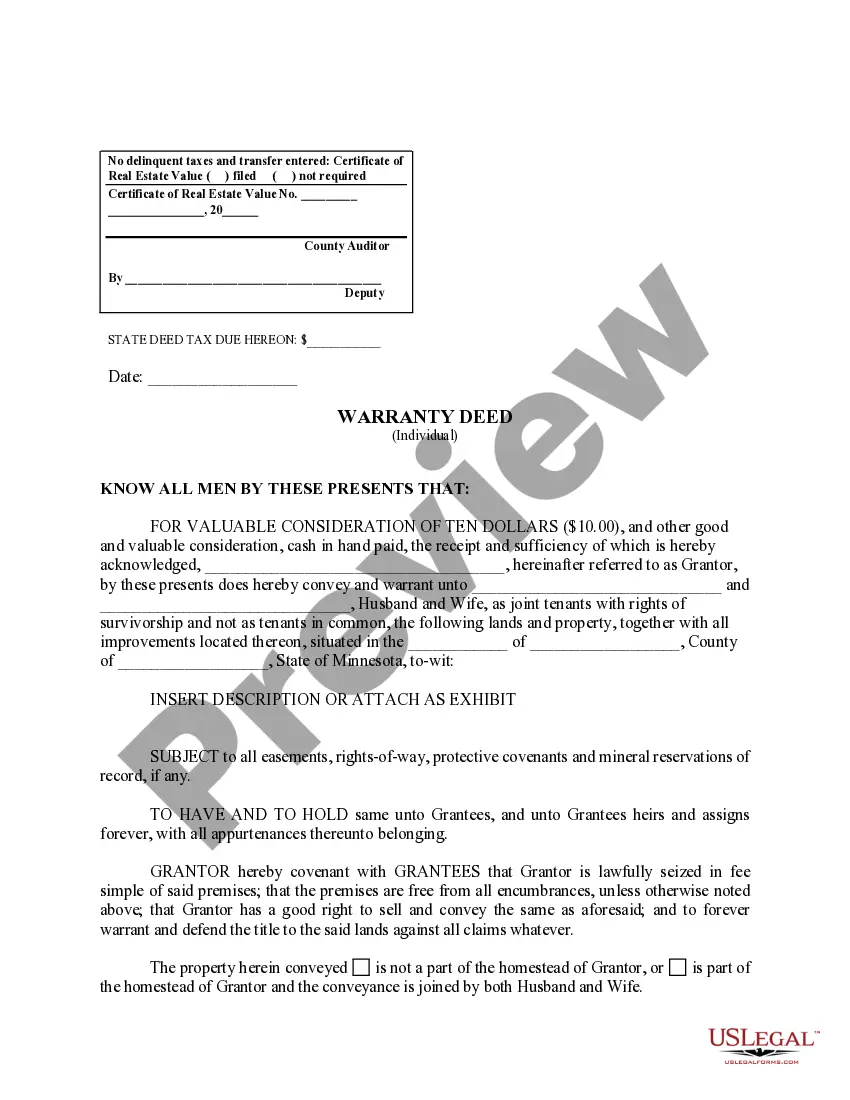
The Warranty Deed to Separate Property of One Spouse to Both Spouses as Joint Tenants is a legal document that allows a spouse to transfer ownership of their separate property to themselves and their partner as joint tenants. This form is particularly important for couples who wish to hold property jointly while ensuring that the right of survivorship is established, meaning that if one spouse passes away, the other automatically inherits the entire property without going through probate.
Key parts of this document
- Grantor Information: Details about the spouse transferring the property.
- Grantee Information: Names of both spouses receiving the property.
- Property Description: A description of the property being transferred, including its legal description.
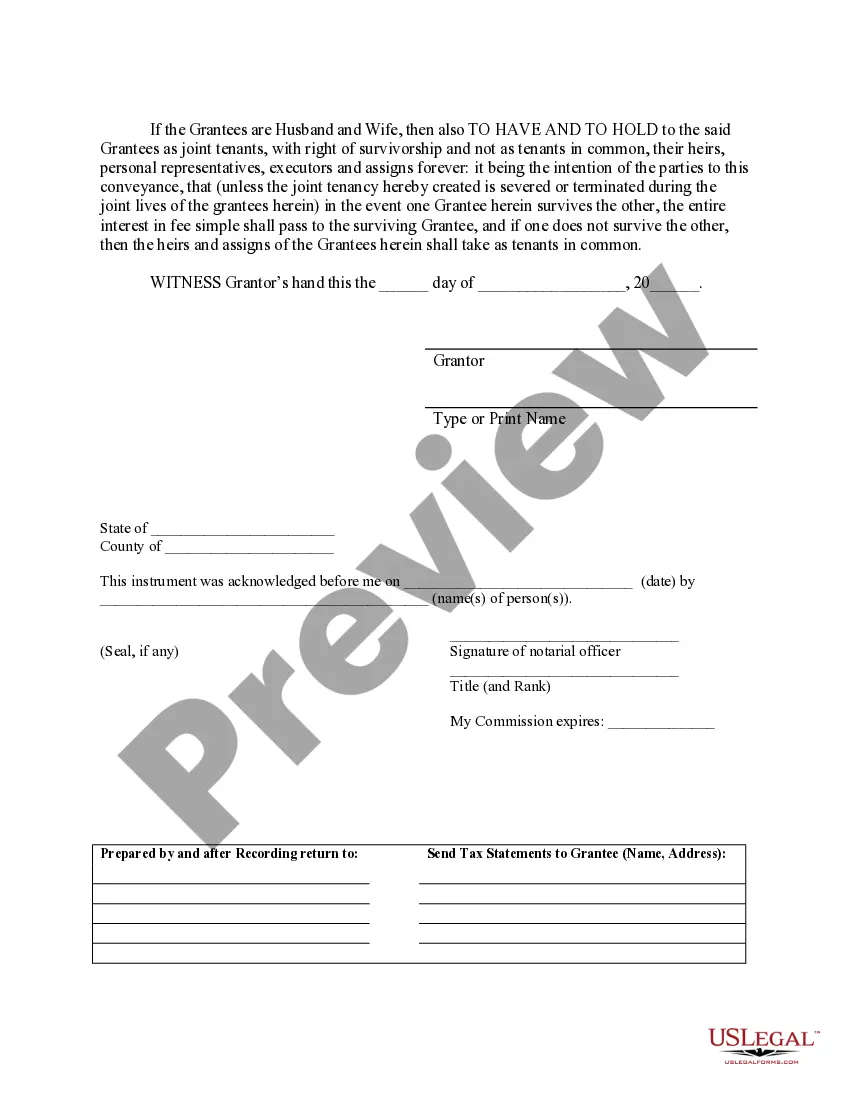
- Joint Tenancy Clause: Specifies that the property will be held as joint tenants with rights of survivorship.
- Date and Signatures: The date of the transfer and signatures of both spouses, including any necessary witnesses.


When to use this form
This form should be used when one spouse wants to transfer their separate property to both spouses as joint tenants. This is common in situations like marriage, where couples decide to combine ownership of assets. It may also be used for estate planning purposes to simplify the transfer of the property to the surviving spouse upon the death of one partner.
Intended users of this form
This form is intended for:
- Married couples looking to consolidate property ownership.
- Individuals transferring separate property to themselves and their spouse.
- Anyone involved in estate planning related to jointly owned property.
How to prepare this document
- Identify the parties involved: Enter the full names of both spouses.
- Specify the property: Include a detailed description of the property being transferred.
- Fill in the consideration: Typical amounts can be ten dollars or other valuable considerations.
- Sign the document: Both spouses must sign the form to validate the transfer.
- Complete any additional requirements: Check for county-specific requirements, such as notarization or filing with the county auditor.
Notarization requirements for this form
Notarization is required for this form to take effect. Our online notarization service, powered by Notarize, lets you verify and sign documents remotely through an encrypted video session, available 24/7.
Get your form ready online
Our built-in tools help you complete, sign, share, and store your documents in one place.
Make edits, fill in missing information, and update formatting in US Legal Forms—just like you would in MS Word.
Download a copy, print it, send it by email, or mail it via USPS—whatever works best for your next step.
Sign and collect signatures with our SignNow integration. Send to multiple recipients, set reminders, and more. Go Premium to unlock E-Sign.
If this form requires notarization, complete it online through a secure video call—no need to meet a notary in person or wait for an appointment.
We protect your documents and personal data by following strict security and privacy standards.

Make edits, fill in missing information, and update formatting in US Legal Forms—just like you would in MS Word.

Download a copy, print it, send it by email, or mail it via USPS—whatever works best for your next step.

Sign and collect signatures with our SignNow integration. Send to multiple recipients, set reminders, and more. Go Premium to unlock E-Sign.

If this form requires notarization, complete it online through a secure video call—no need to meet a notary in person or wait for an appointment.

We protect your documents and personal data by following strict security and privacy standards.
Mistakes to watch out for
- Failing to accurately describe the property being transferred.
- Not including both spouses' names or signatures.
- Incorrectly filling out the consideration amount.
- Neglecting to check local requirements for notarization or filing.
Advantages of online completion
- Convenient access to legal forms from anywhere, anytime.
- Editability allows for easy adjustments before final completion.
- Reliable templates prepared by licensed attorneys ensure legal compliance.
- Secure downloads make storing and sharing the form straightforward.
Looking for another form?

Form popularity
FAQ
To fill out a warranty deed form, first, gather the necessary information about the property and the parties involved. You will need to specify the current owner, the new owners, and the details of the property. Ensure you accurately indicate that the deed transfers the Minnesota Warranty Deed to Separate Property of One Spouse to Both Spouses as Joint Tenants. After completing the form, have it signed and notarized to make it legally binding.
To create a valid warranty deed in Minnesota, you must include the names of the grantor and grantee, a clear description of the property, and the grantor's signature, which must be notarized. Additionally, the deed should specify if the property is being transferred as a Minnesota Warranty Deed to Separate Property of One Spouse to Both Spouses as Joint Tenants. For a smooth process, consider utilizing USLegalForms to access templates and guidance tailored to your needs.
Yes, joint tenants in Minnesota do have a right of survivorship. This means that when one joint tenant passes away, their interest in the property automatically transfers to the surviving joint tenant(s). This feature is significant for those considering a Minnesota Warranty Deed to Separate Property of One Spouse to Both Spouses as Joint Tenants, as it provides clarity on ownership and reduces probate complications.
In Minnesota, if your name does not appear on the deed, you may still have rights to the property under marital property laws. As a spouse, you may claim a share of the property acquired during the marriage, even if you are not on the deed. It is essential to understand how the Minnesota Warranty Deed to Separate Property of One Spouse to Both Spouses as Joint Tenants impacts your rights. Legal assistance can help clarify your position and ensure your interests are protected.
A warranty deed can be deemed invalid due to several reasons, such as lack of proper signatures, failure to be notarized, or if the property description is unclear. Additionally, if the grantor does not have the legal authority to transfer the property, the deed may also be ineffective. If you are considering a Minnesota Warranty Deed to Separate Property of One Spouse to Both Spouses as Joint Tenants, ensure all requirements are met to avoid complications.
You can complete a Minnesota Warranty Deed to Separate Property of One Spouse to Both Spouses as Joint Tenants without an attorney, but it is important to understand the process. While the legal documentation might seem straightforward, the implications of transferring property ownership can be complex. Using a service like US Legal Forms can simplify the process, as they provide templates and guidance tailored to your needs. Ultimately, ensuring the deed is correctly executed protects both parties and upholds their rights.
In estate law, joint tenancy is a special form of ownership by two or more persons of the same property. The individuals, who are called joint tenants, share equal ownership of the property and have the equal, undivided right to keep or dispose of the property. Joint tenancy creates a Right of Survivorship.
In California, most married couples hold real property (such as land and buildings) as joint tenants with right of survivorship.For instance, many married couples share real property as joint tenants. This way, upon the death of a spouse, the surviving spouse will own 100% share of the property.
In that case, you simply divide your interest into equal parts. For example, if there are two of you, you would each agree to divide your shares 50/50. If you have a TIC, you have more options, because you don't have to divide your interests 50/50. Instead, you can divide the shares into fractional ownership.
One of the main differences between the two types of shared ownership is what happens to the property when one of the owners dies. When a property is owned by joint tenants with survivorship, the interest of a deceased owner automatically gets transferred to the remaining surviving owners.