Safe Occupancy Clause
What this document covers
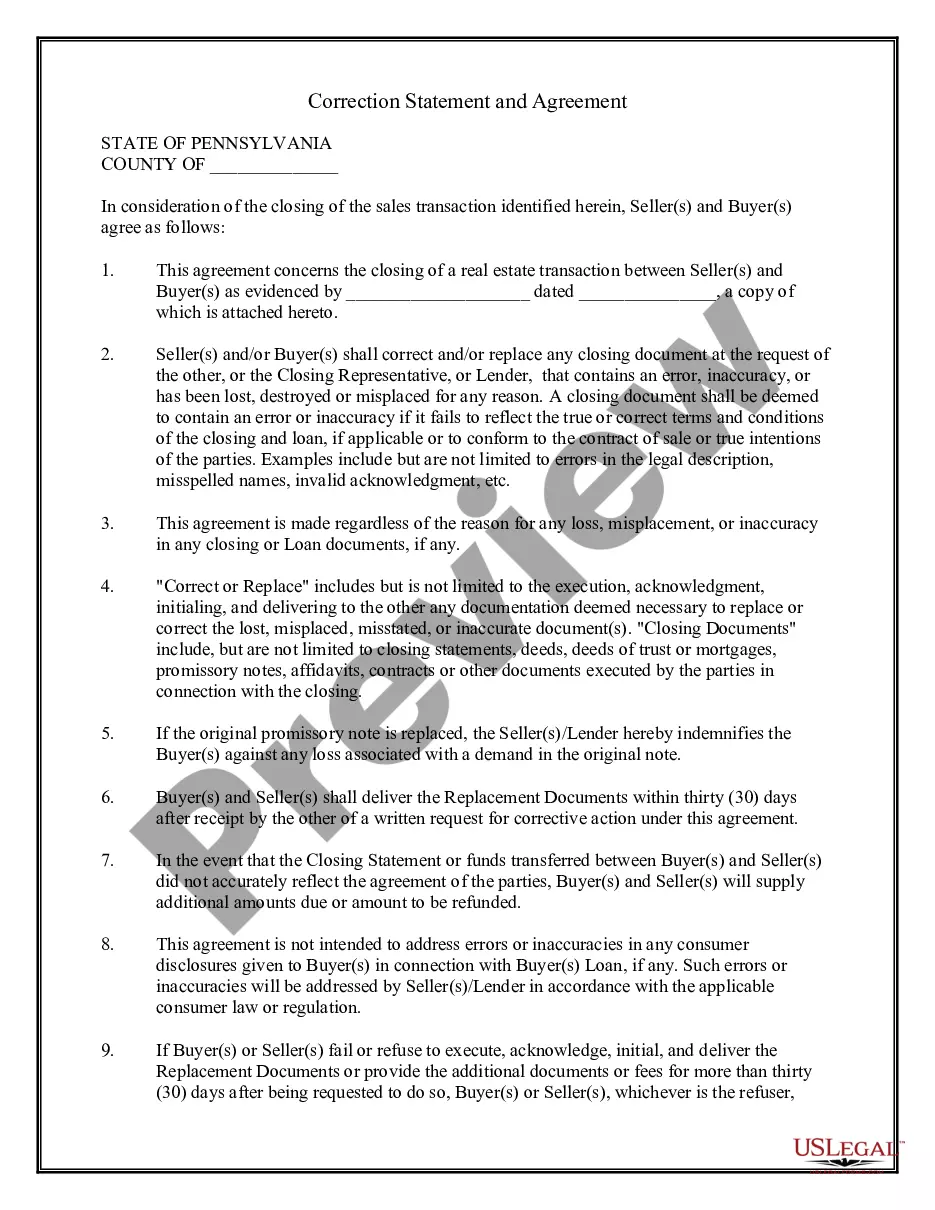
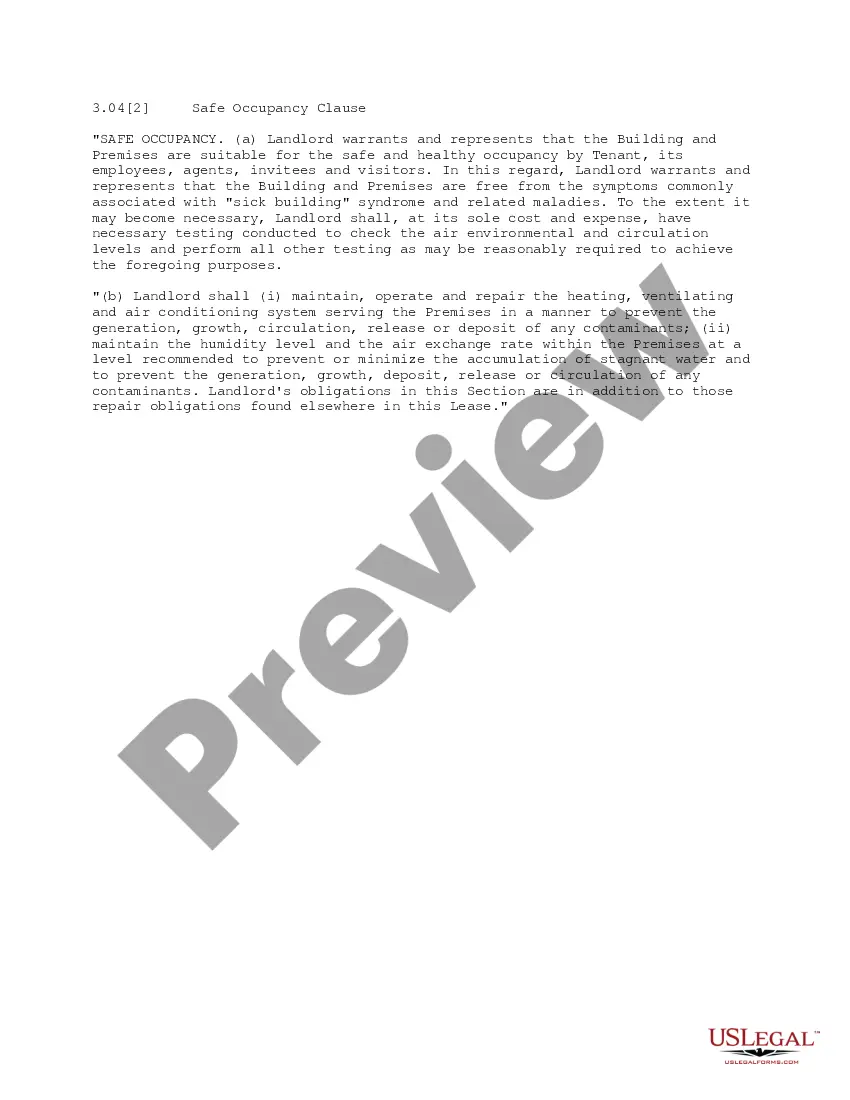
The Safe Occupancy Clause is a legal provision within an office lease agreement that ensures the premises are safe and suitable for occupancy. It mandates that the landlord is responsible for providing and maintaining a space that is conducive to the health of tenants and their visitors. This clause sets it apart from standard lease agreements by specifically addressing the safety and health conditions of the building and air quality, protecting tenants from issues related to sick building syndrome and other environmental concerns.
Key components of this form
- Landlord's warranty that the building is suitable for safe and healthy occupancy.
- Assurance that the building is free from contaminants commonly associated with sick building syndrome.
- Landlord's obligation to conduct environmental tests for air quality and circulation.
- Requirements for maintenance of heating, ventilating, and air conditioning systems.
- Provisions for humidity and air exchange to prevent stagnant conditions or contaminants.
When this form is needed
This form should be used when entering into an office lease agreement to ensure that the leased space complies with health and safety standards. It is particularly useful for tenants who want assurance that the landlord is committed to maintaining a safe environment free from harmful conditions. The clause is important in situations where a tenant is concerned about air quality or the overall safety of the premises.
Who this form is for
This form is intended for:
- Tenants negotiating lease agreements for office space.
- Landlords aiming to clarify their responsibilities concerning the safety of the premises.
- Commercial property managers who want to include safety assurances in leasing documents.
- Attorneys drafting lease agreements for clients in commercial real estate.
How to complete this form
- Identify the parties involved in the lease agreement (landlord and tenant).
- Specify the address and details of the premises being leased.
- Include the specific clauses related to safe occupancy and maintenance obligations.
- Determine the testing frequency and procedures for health-related checks as needed.
- Ensure all parties sign and date the form to validate the agreement.
Is notarization required?
This form does not typically require notarization unless specified by local law. It is advisable to consult state regulations to ensure compliance with any notarization requirements that may apply.
Get your form ready online
Our built-in tools help you complete, sign, share, and store your documents in one place.
Make edits, fill in missing information, and update formatting in US Legal Forms—just like you would in MS Word.
Download a copy, print it, send it by email, or mail it via USPS—whatever works best for your next step.
Sign and collect signatures with our SignNow integration. Send to multiple recipients, set reminders, and more. Go Premium to unlock E-Sign.
If this form requires notarization, complete it online through a secure video call—no need to meet a notary in person or wait for an appointment.
We protect your documents and personal data by following strict security and privacy standards.

Make edits, fill in missing information, and update formatting in US Legal Forms—just like you would in MS Word.

Download a copy, print it, send it by email, or mail it via USPS—whatever works best for your next step.

Sign and collect signatures with our SignNow integration. Send to multiple recipients, set reminders, and more. Go Premium to unlock E-Sign.

If this form requires notarization, complete it online through a secure video call—no need to meet a notary in person or wait for an appointment.

We protect your documents and personal data by following strict security and privacy standards.
Typical mistakes to avoid
- Failing to specify the types of contaminants or conditions that must be monitored.
- Neglecting to clearly define the landlord's maintenance responsibilities in the lease.
- Not conducting necessary environmental testing as stipulated.
- Inadequate signatures or dates that could render the document unenforceable.
Why complete this form online
- Convenient access to templates crafted by licensed attorneys.
- Easy customization to fit specific lease agreements and tenant needs.
- Fast downloads that allow prompt completion and submission.
- Reliable and up-to-date legal language that adheres to current laws.
Legal use & context
- This clause forms a legally binding part of the lease, ensuring the landlord's commitment to maintain a safe environment.
- The enforceability of the clause depends on clear definitions and agreement by both parties.
- Landlords may face liability if they fail to uphold the standards set within this clause.
What to keep in mind
- The Safe Occupancy Clause is crucial for tenant health and safety in leased office spaces.
- It places specific responsibilities on landlords regarding maintenance and environmental testing.
- Proper completion of this form can protect tenants and enhance the landlord's accountability.
Looking for another form?


Form popularity
FAQ
Uninhabitable conditions can include dangerous ones, such as holes in the floor, unsafe or exposed wiring, or non-working air conditioning in dangerously hot summer months. Gross infestations of roaches, fleas or other pests are also uninhabitable conditions.
What is a Long-Term Guest? Any person who stays at your property that is not listed on the lease agreement is considered a guest of your tenant. A temporary guest transitions into a long-term guest when they take up residence on your property without permission from a manager or owner.
Names of all tenants. Limits on occupancy. Term of the tenancy. Rent. Deposits and fees. Repairs and maintenance. Entry to rental property. Restrictions on tenant illegal activity.
Lease contract. Rental Agreement. Contract of Sale. Statutory declaration from the New Occupant and a utility bill (e.g. rates, power, water) Statutory declaration from the property owner and the rent receipt from the new occupant.
Yes, someone can live with the tenant without being on the lease. However, it is important to distinguish the difference between a guest and a long-term guest.
If the structure is unstable or there is a severe problem with damp in the property, it may be deemed uninhabitable.If the layout is unsafe, if there isn't enough natural light, or if there is not enough ventilation, the problem may be uninhabitable.
What is the Law? In California, there is no legal definition for unsafe living conditions. Generally, the rule of thumb is that if your living environment affects your health or safety, then it can be considered an unsafe living condition.
Any guest residing on the property for more than 14 days in a six-month period or spending more than 7 nights consecutively will be considered a tenant. Anyone living on the property must be listed and sign the lease agreement.
A guest who won't leave is technically a trespasser -- unless, that is, the police think he's a tenant. This situation can quickly become complicated. Houseguests who have overstayed their welcomes are technically trespassing, which is a crime.