Minnesota Notice of Default in Payment of Rent as Warning Prior to Demand to Pay or Terminate for Nonresidential or Commercial Property
Understanding this form
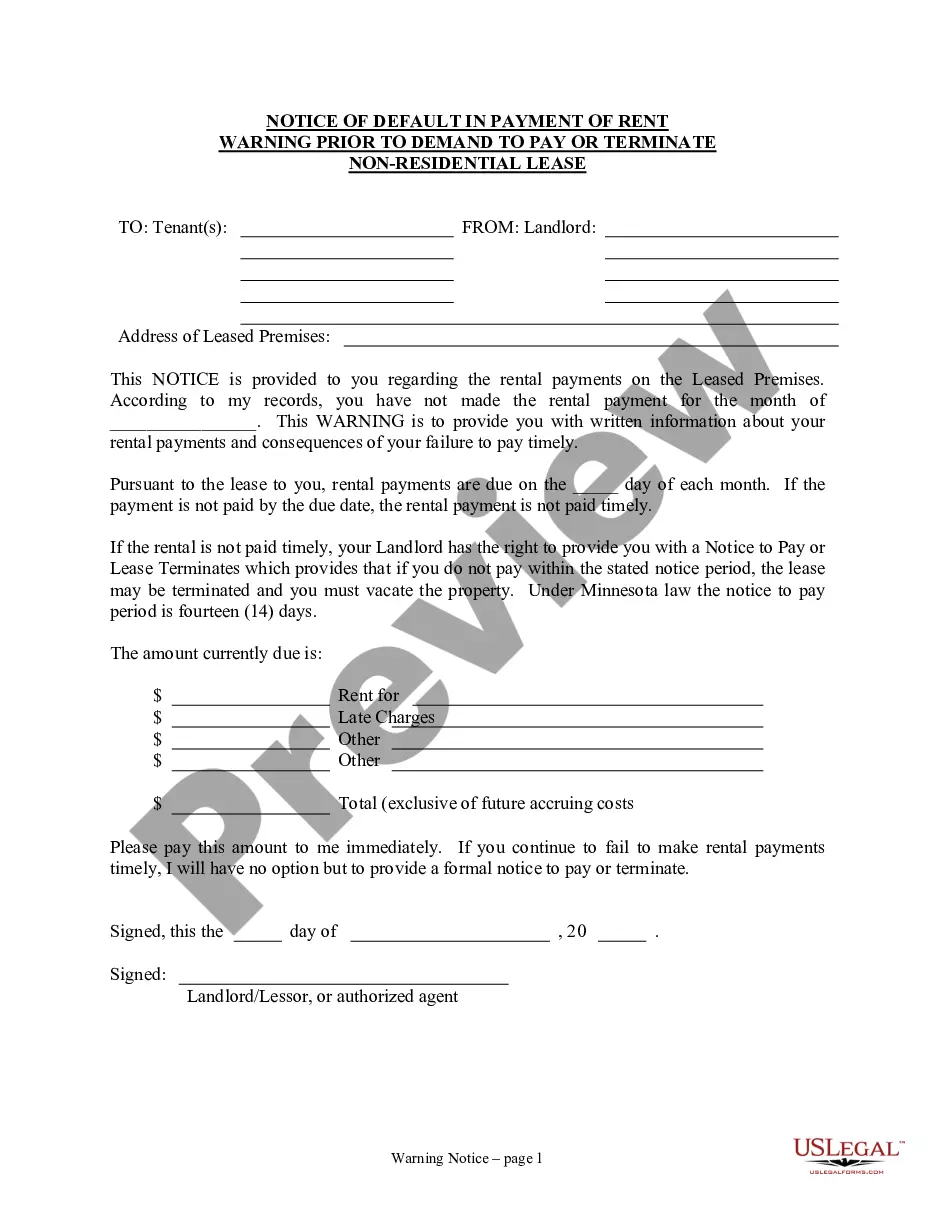
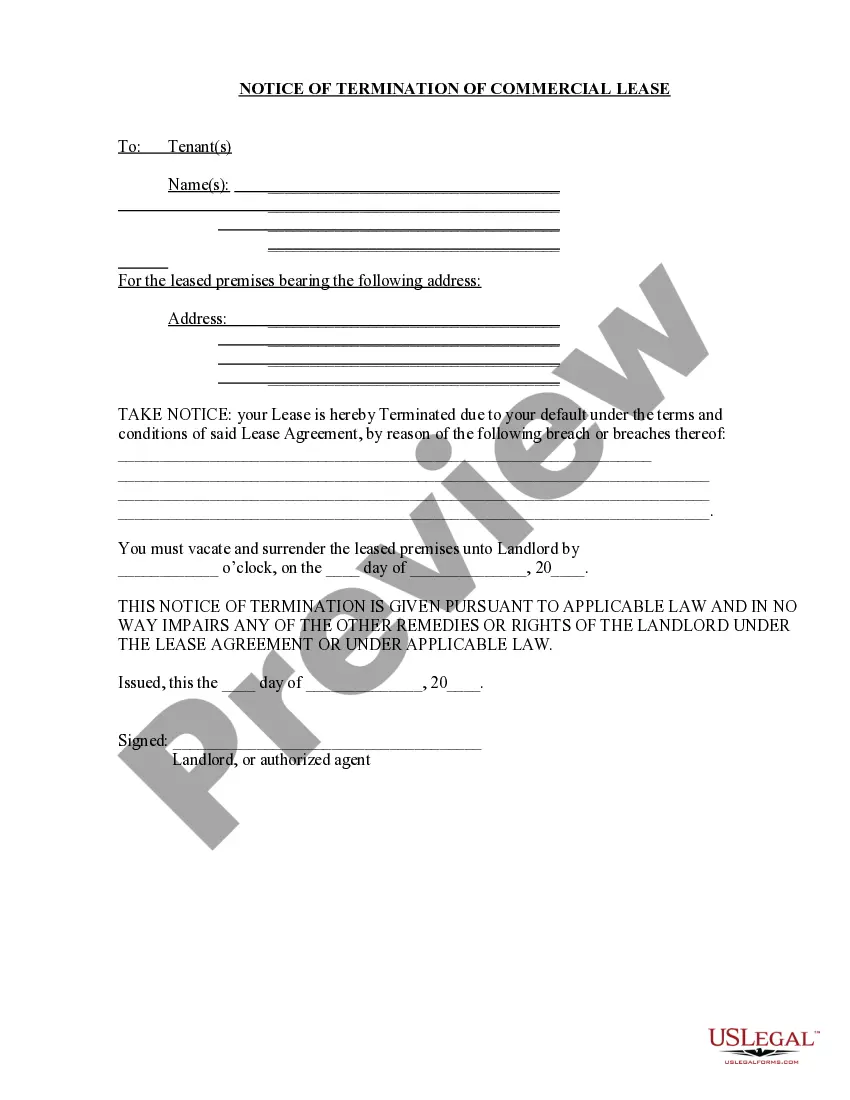
The Notice of Default in Payment of Rent as Warning Prior to Demand to Pay or Terminate for Nonresidential or Commercial Property is a legal document used by landlords to formally notify tenants of their failure to pay rent on time. This notice serves as a warning, informing the tenant of their default and the potential consequences if prompt payment is not made. Unlike a formal eviction notice, this form is a preliminary step that emphasizes the importance of adhering to payment terms outlined in the lease agreement.
Form components explained
- Identification of the landlord and tenant involved in the lease agreement.
- Details of the leased property, including the address.
- A clear statement of the rental payment that is overdue, along with the due date and amount owed.
- A warning regarding potential legal actions, including lease termination, if the payment remains unpaid.
- Signature line for the landlord or their authorized agent, confirming the delivery of the notice.
- Proof of delivery section, which documents how the notice was provided to the tenant.



When to use this form
This form can be used by landlords when a tenant has failed to make rent payments on nonresidential or commercial properties. It is ideal to use this notice when a landlord wishes to remind the tenant of their payment obligations and provide them with an opportunity to rectify the situation before proceeding with more formal actions such as eviction. This form is especially important if there are multiple instances of late payments or if the landlord wishes to formally document the situation.
Who needs this form
- Landlords of nonresidential or commercial properties who need to notify tenants of late rental payments.
- Property managers acting on behalf of landlords in managing lease agreements.
- Legal representatives handling lease-related issues for landlords.
Instructions for completing this form
- Identify the parties: Fill in the names and addresses of the landlord and tenant.
- Specify the property: Provide the address of the leased premises clearly.
- Enter the overdue rent details: Specify the month for which payment is overdue and the total amount due.
- Review lease terms: Clearly mention the due date and state the consequences of not paying on time.
- Sign and date the notice: The landlord or authorized agent must sign and date the document.
- Document delivery: Indicate how the notice was delivered to the tenant (e.g., hand delivery, certified mail).
Notarization guidance
Notarization is generally not required for this form. However, certain states or situations might demand it. You can complete notarization online through US Legal Forms, powered by Notarize, using a verified video call available anytime.
Get your form ready online
Our built-in tools help you complete, sign, share, and store your documents in one place.
Make edits, fill in missing information, and update formatting in US Legal Forms—just like you would in MS Word.
Download a copy, print it, send it by email, or mail it via USPS—whatever works best for your next step.
Sign and collect signatures with our SignNow integration. Send to multiple recipients, set reminders, and more. Go Premium to unlock E-Sign.
If this form requires notarization, complete it online through a secure video call—no need to meet a notary in person or wait for an appointment.
We protect your documents and personal data by following strict security and privacy standards.

Make edits, fill in missing information, and update formatting in US Legal Forms—just like you would in MS Word.

Download a copy, print it, send it by email, or mail it via USPS—whatever works best for your next step.

Sign and collect signatures with our SignNow integration. Send to multiple recipients, set reminders, and more. Go Premium to unlock E-Sign.

If this form requires notarization, complete it online through a secure video call—no need to meet a notary in person or wait for an appointment.

We protect your documents and personal data by following strict security and privacy standards.
Common mistakes to avoid
- Failing to specify the exact amount due, including any late fees.
- Not including the correct address or identification of the leased property.
- Neglecting to sign the notice, making it invalid.
- Improper method of delivery that does not comply with local laws.
Why use this form online
- Quick access: Download the form immediately, saving time compared to traditional methods.
- Editability: Customize the form easily to fit specific tenant situations.
- Accuracy: Ensure the document is drafted according to legal standards by using attorney-drafted templates.
Legal use & context
- This form acts as a preliminary step before initiating eviction proceedings, ensuring due process for the tenant.
- It can serve as evidence in court if the landlord needs to pursue further legal actions.
- Understanding this notice is essential for landlords to comply with state landlord-tenant laws and protect their rights.
Summary of main points
- This notice is essential for formal communication regarding unpaid rent.
- Use this form to prevent misunderstandings and document all interactions with tenants.
- Ensure compliance with state-specific regulations to avoid legal complications.
Looking for another form?







Form popularity
FAQ
The purpose of a notice of default is to formally inform a tenant that they are behind on rent payments. In Minnesota, this notice, known as the Minnesota Notice of Default in Payment of Rent as Warning Prior to Demand to Pay or Terminate for Nonresidential or Commercial Property, serves as a critical communication tool. It outlines the tenant's obligations and warns that failure to address the issue may lead to eviction. Using resources like uslegalforms can simplify the process of drafting and delivering this important document.
A default in rent payment occurs when a tenant does not fulfill their financial obligation as outlined in their lease. This concept is critical for landlords, especially when issuing the Minnesota Notice of Default in Payment of Rent as Warning Prior to Demand to Pay or Terminate for Nonresidential or Commercial Property. The notice acts as a formal alert that action may be taken if the tenant fails to rectify the situation. Understanding the implications of a default helps both parties manage expectations and responsibilities.
The timeline for eviction after non-payment of rent varies by state, but typically, a landlord must provide a notice before proceeding. In Minnesota, the Minnesota Notice of Default in Payment of Rent as Warning Prior to Demand to Pay or Terminate for Nonresidential or Commercial Property allows landlords to inform tenants about their delinquency. After the notice period, landlords may file for eviction if the tenant does not pay. It is advisable to consult legal resources to ensure compliance with state laws.
In Arkansas, a landlord can begin the eviction process after a tenant has failed to pay rent for a period specified in their lease. Typically, this involves a grace period followed by a formal notice, similar to the Minnesota Notice of Default in Payment of Rent as Warning Prior to Demand to Pay or Terminate for Nonresidential or Commercial Property. It is essential to check local laws, as regulations may vary. Utilizing platforms like uslegalforms can help clarify the steps involved in the eviction process.
Being in default on rent payments means that a tenant has failed to pay rent according to their lease agreement. In the context of the Minnesota Notice of Default in Payment of Rent as Warning Prior to Demand to Pay or Terminate for Nonresidential or Commercial Property, this notice serves as an official warning. It indicates that the tenant is behind on payments and may face eviction if the situation is not resolved promptly. Understanding this concept is crucial for both tenants and landlords to navigate potential disputes.
Tenant's default of rent refers to a situation where a tenant fails to adhere to the payment schedule outlined in their lease agreement. This default can lead to various consequences, including legal action from the landlord. Knowing the implications of a tenant's default is crucial, especially in the framework of the Minnesota Notice of Default in Payment of Rent as Warning Prior to Demand to Pay or Terminate for Nonresidential or Commercial Property.
A notice of default is typically triggered when a tenant fails to pay their rent by the agreed-upon deadline. This can happen due to various circumstances, such as financial difficulties or misunderstandings about payment terms. Understanding what triggers this notice is vital for both landlords and tenants in navigating the complexities of the Minnesota Notice of Default in Payment of Rent as Warning Prior to Demand to Pay or Terminate for Nonresidential or Commercial Property.
A letter of default for rent is a written communication from a landlord to a tenant, indicating that the tenant has not fulfilled their rental payment obligations. This letter serves as a warning and may outline the next steps the landlord intends to take, such as initiating eviction procedures. It is an essential document in the context of a Minnesota Notice of Default in Payment of Rent as Warning Prior to Demand to Pay or Terminate for Nonresidential or Commercial Property.
Defaulting on rent occurs when a tenant fails to make their rent payment by the due date as outlined in their lease agreement. This action can lead to serious consequences, including eviction proceedings initiated by the landlord. Being aware of the ramifications of defaulting is essential, particularly in relation to the Minnesota Notice of Default in Payment of Rent as Warning Prior to Demand to Pay or Terminate for Nonresidential or Commercial Property.
A notice to pay or quit demand for rent is a legal document that instructs a tenant to either pay their overdue rent or vacate the property. This notice is typically issued after a tenant has defaulted on their rental payments. It plays a crucial role in the eviction process, especially in connection with the Minnesota Notice of Default in Payment of Rent as Warning Prior to Demand to Pay or Terminate for Nonresidential or Commercial Property.