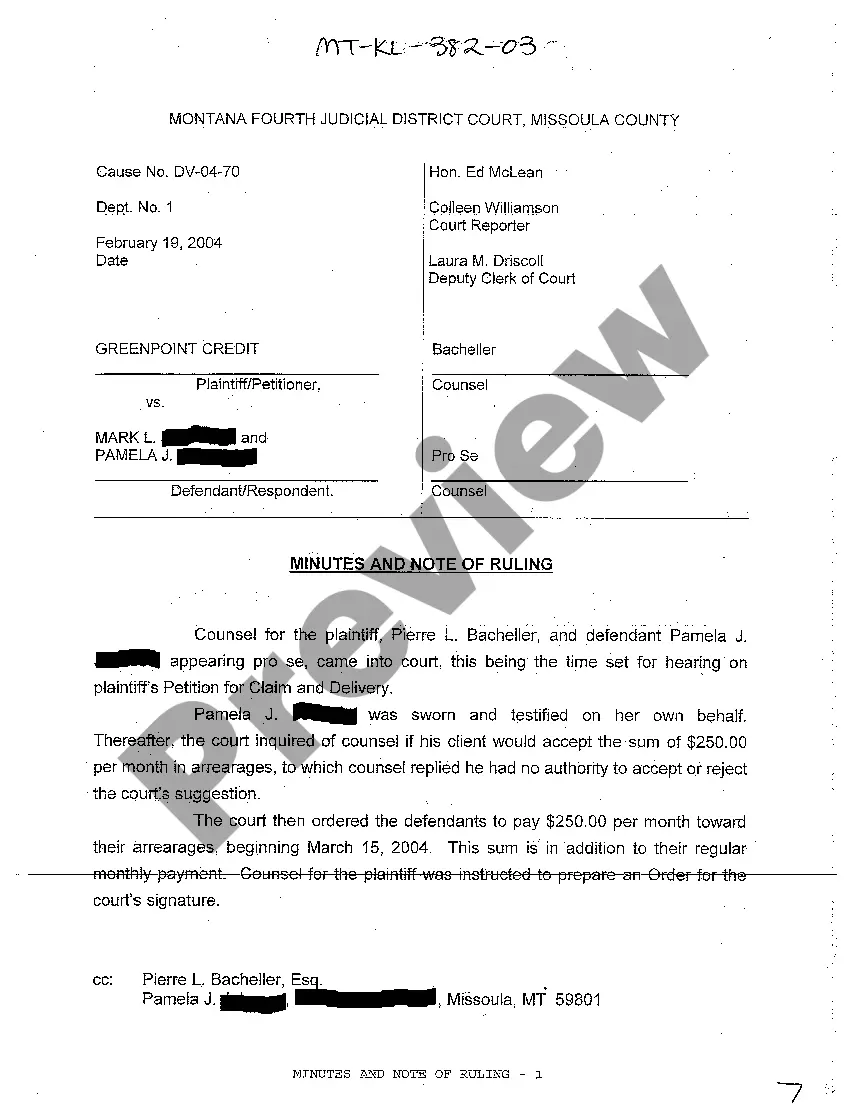
Form of Convertible Promissory Note, Common Stock
What this document covers
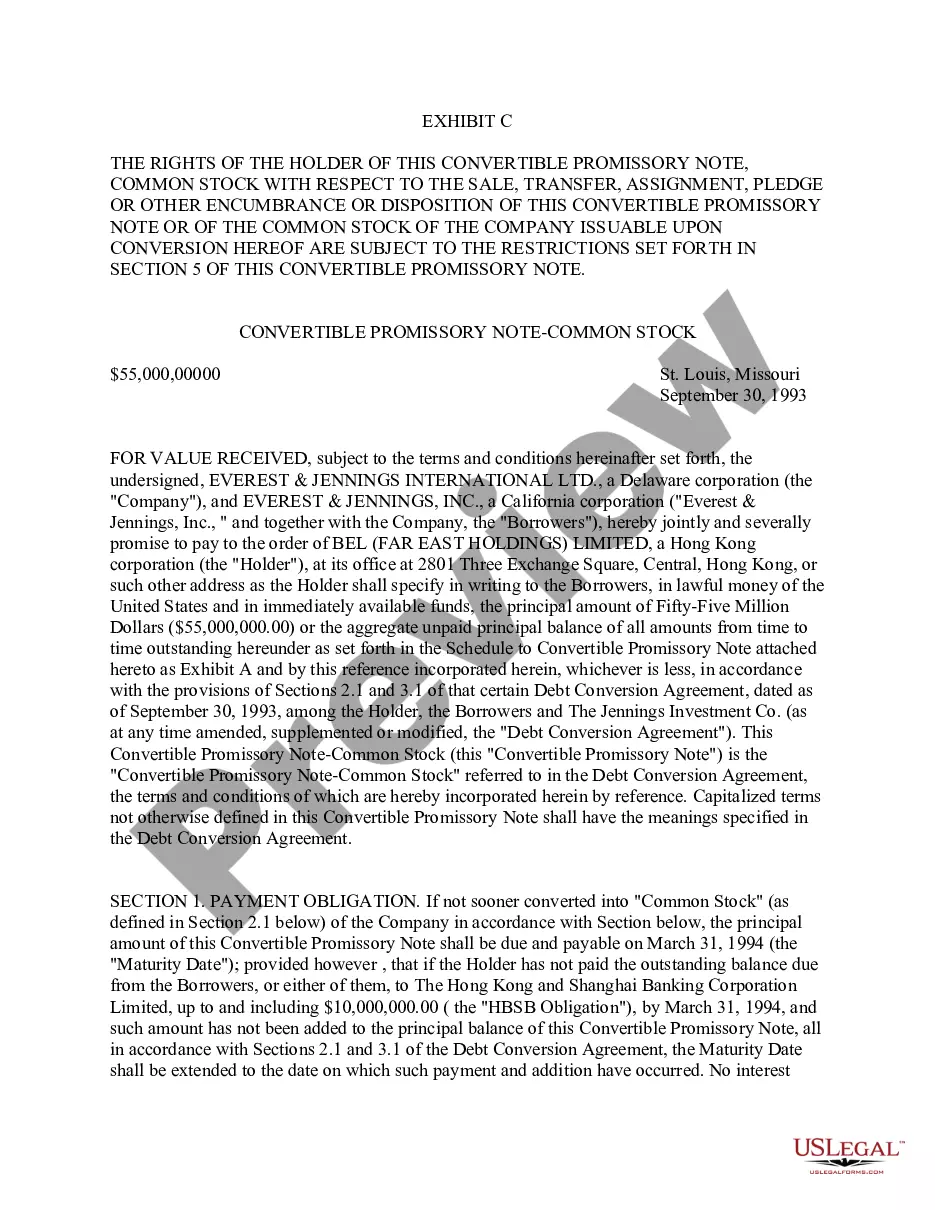
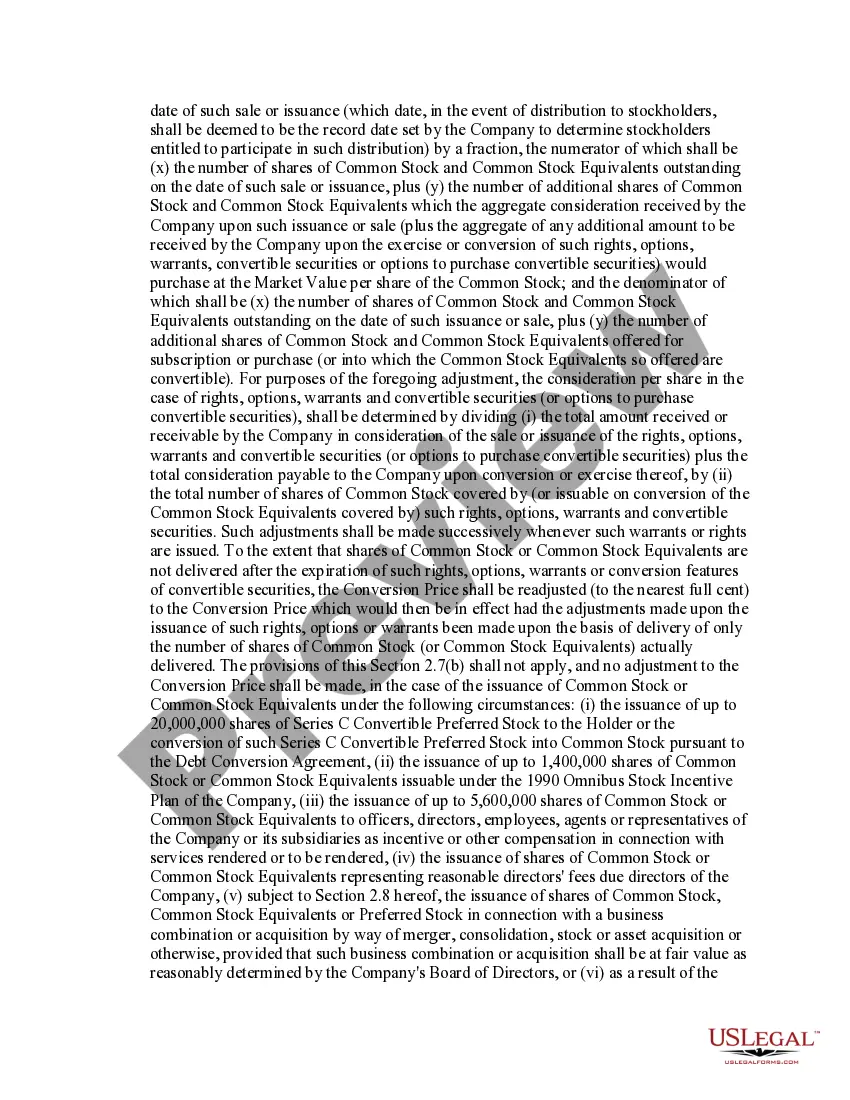
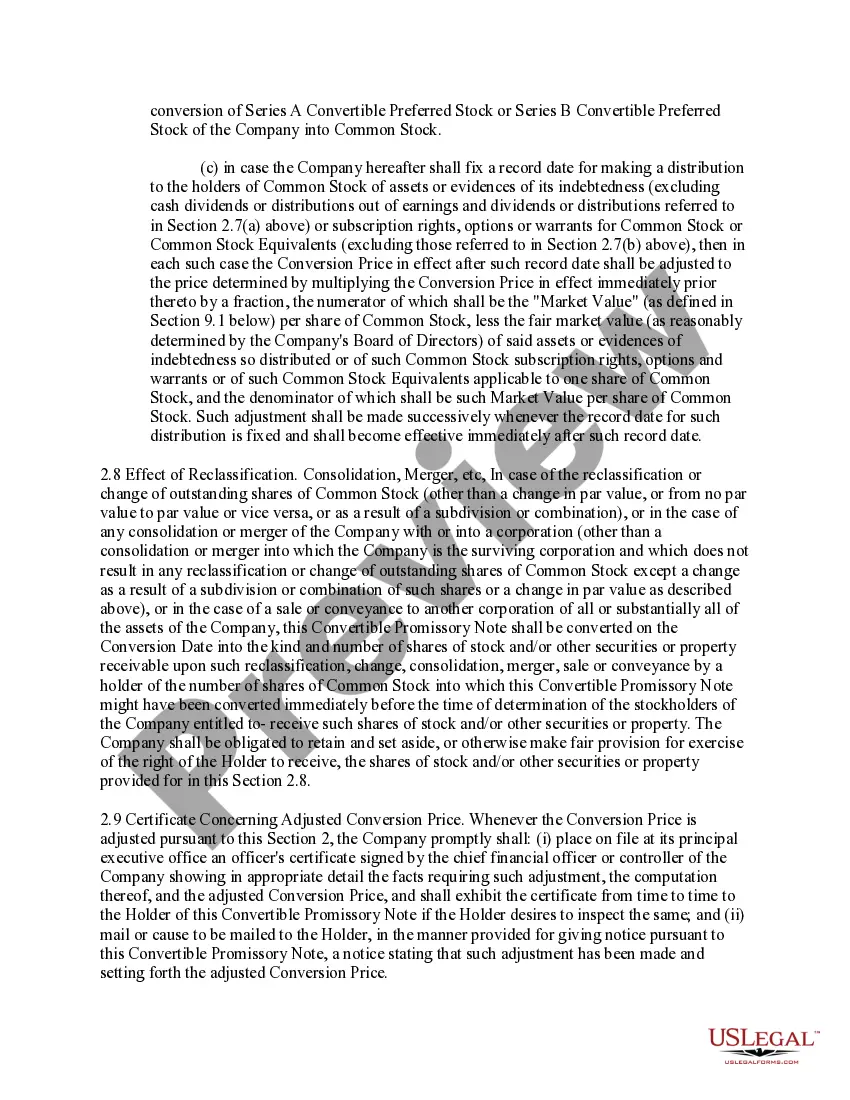
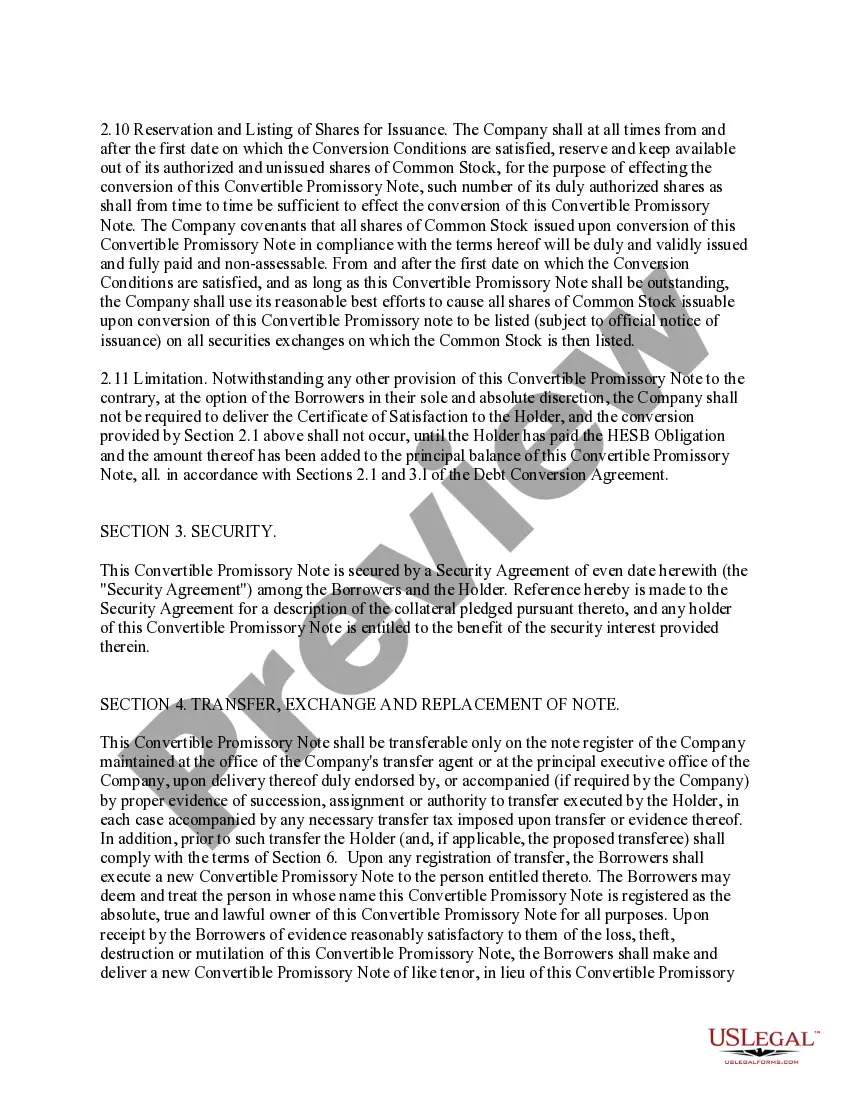
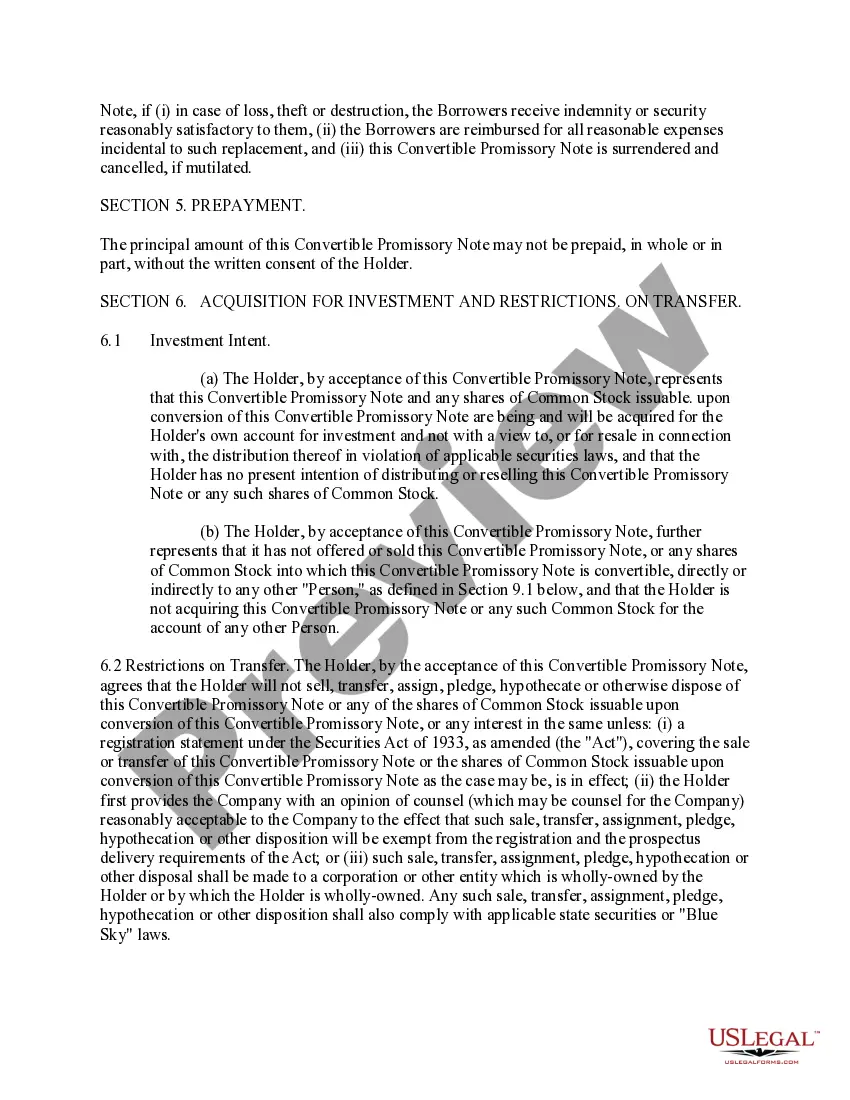
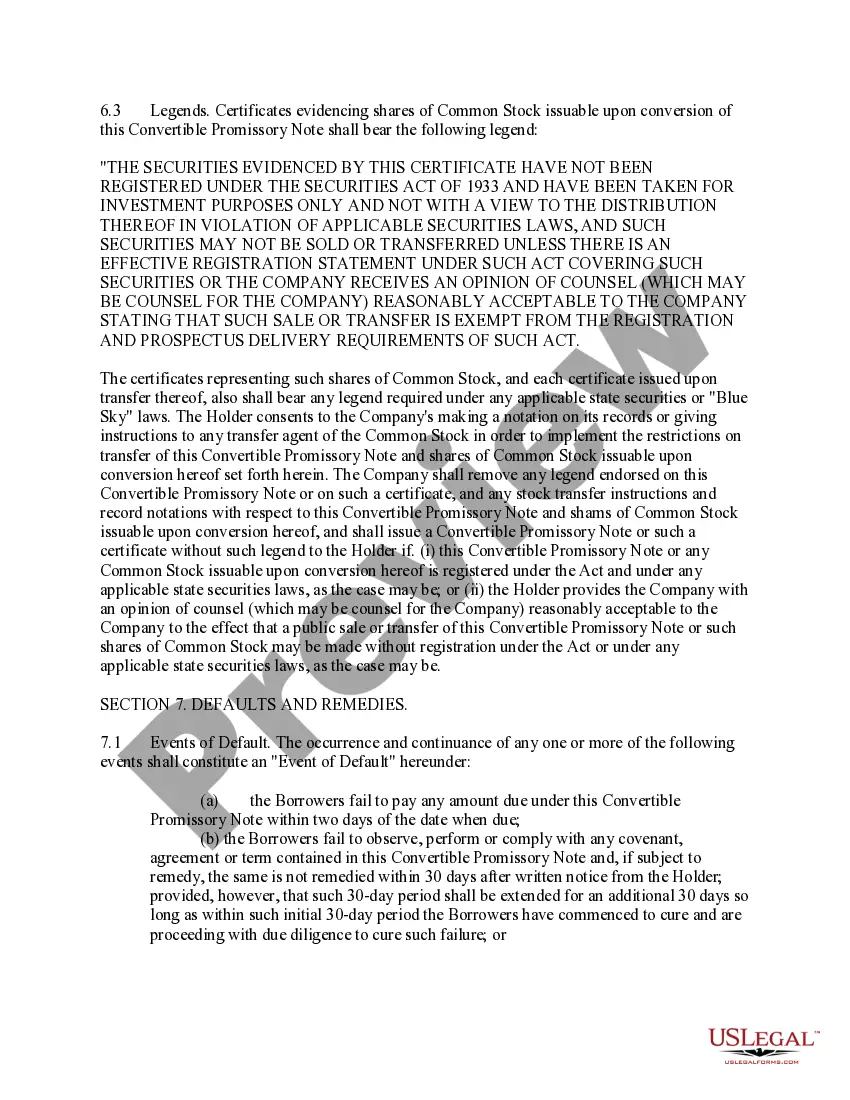
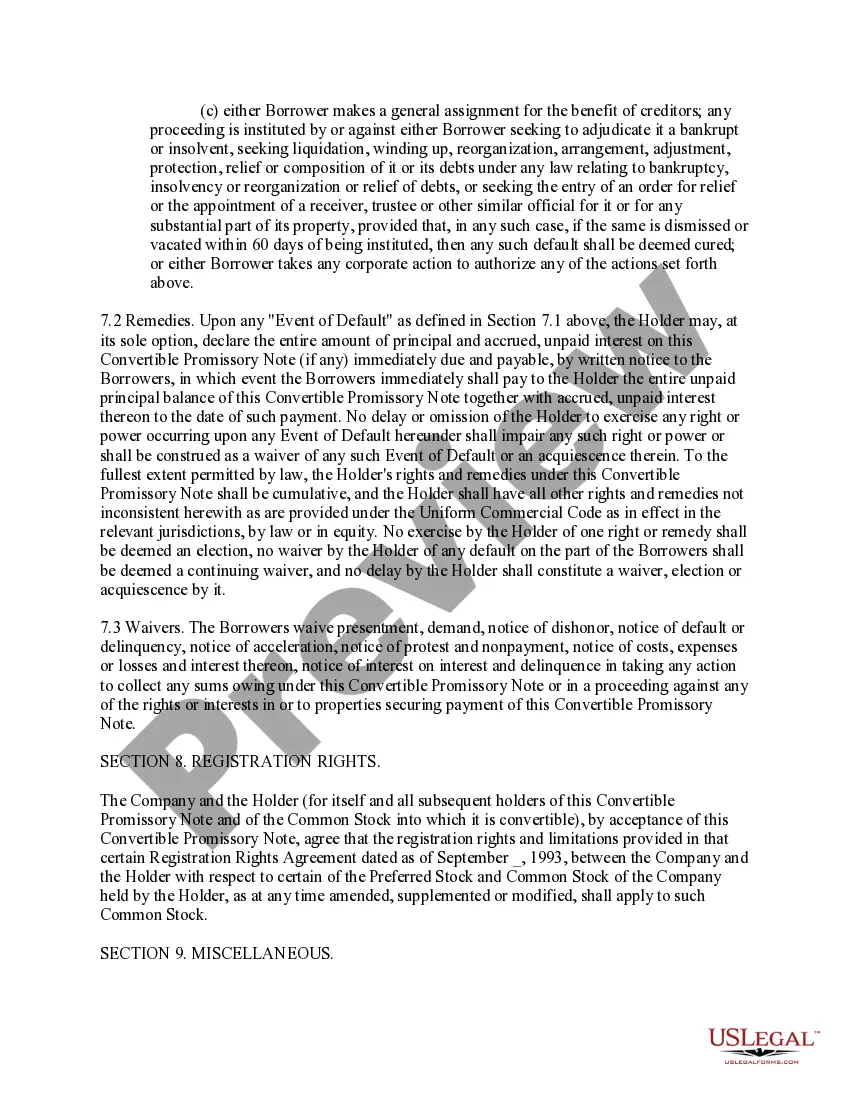
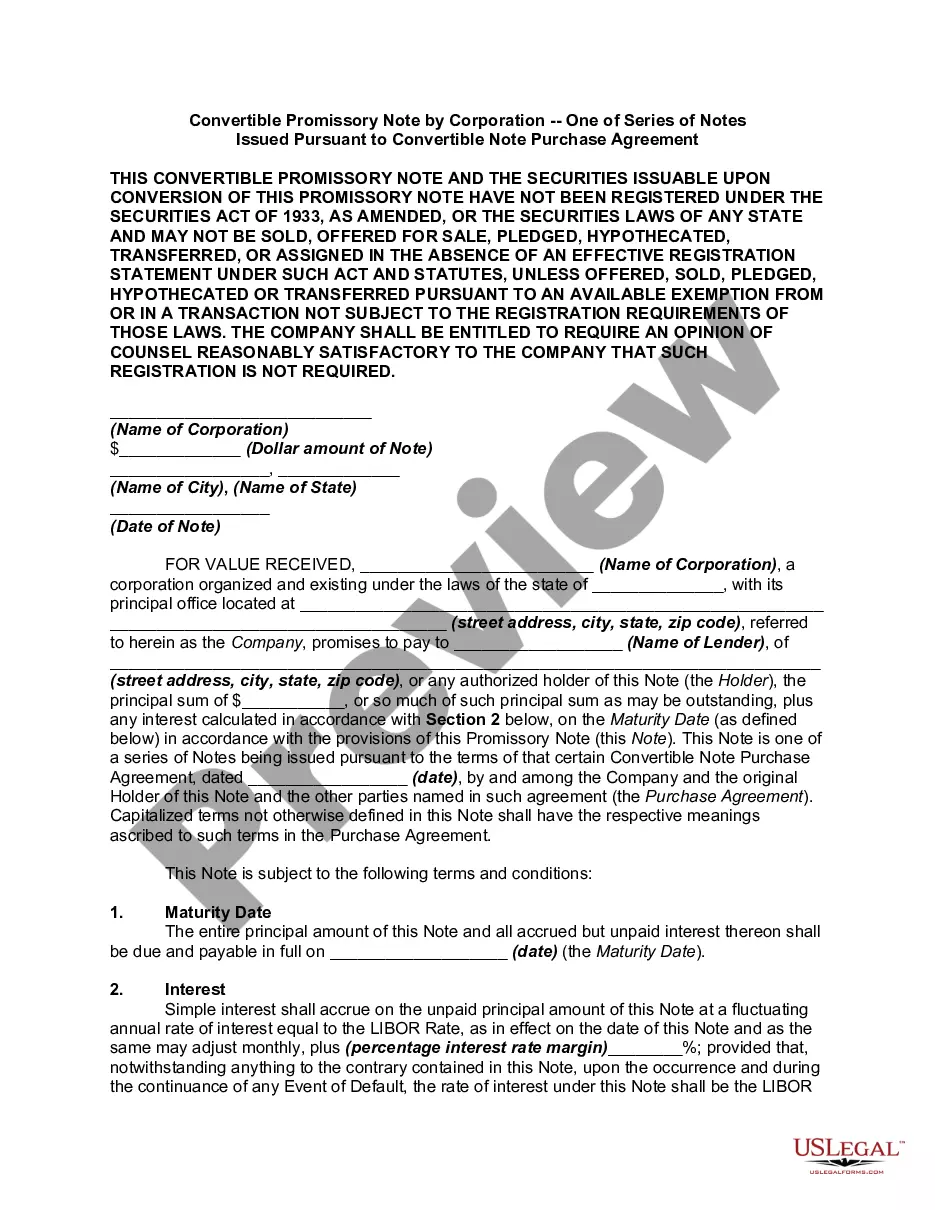
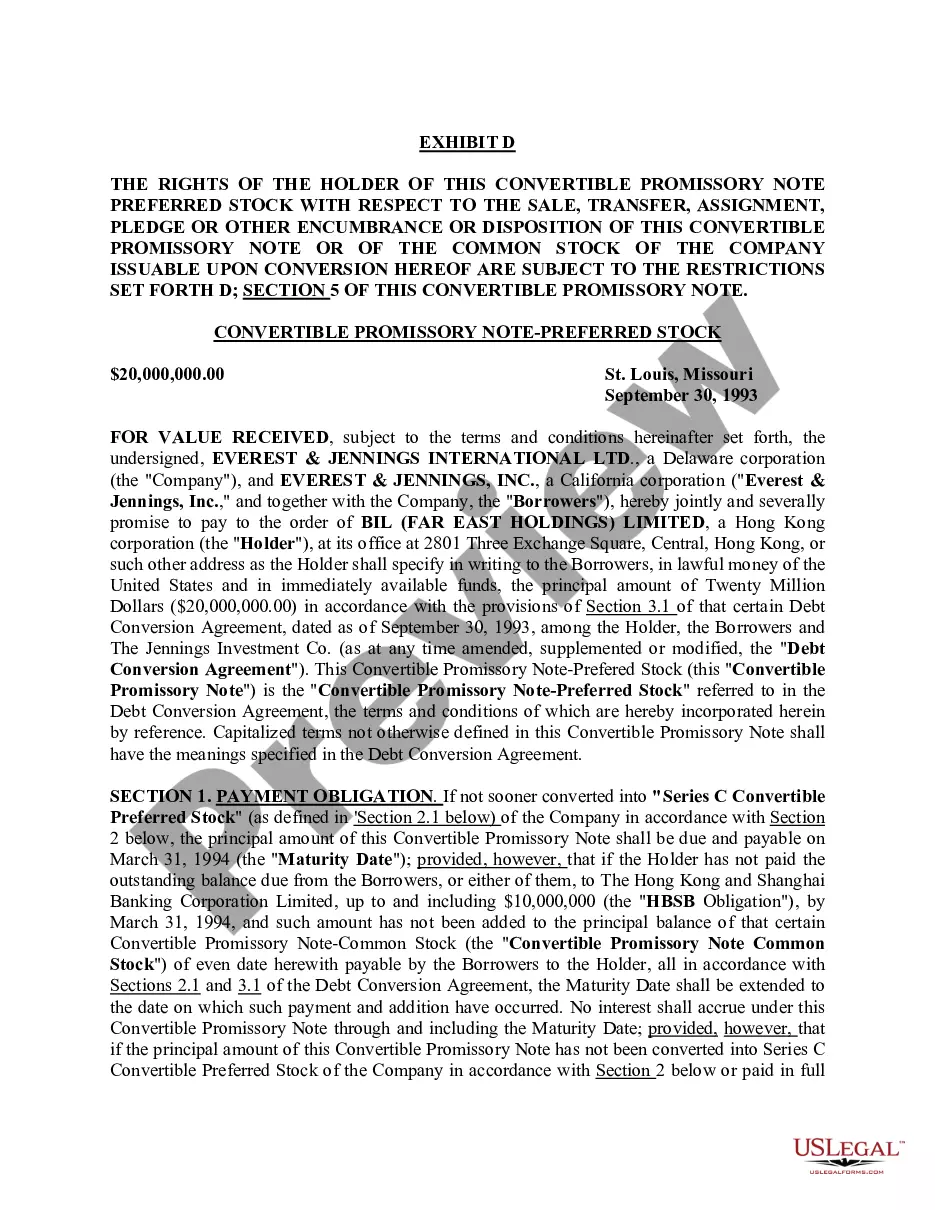
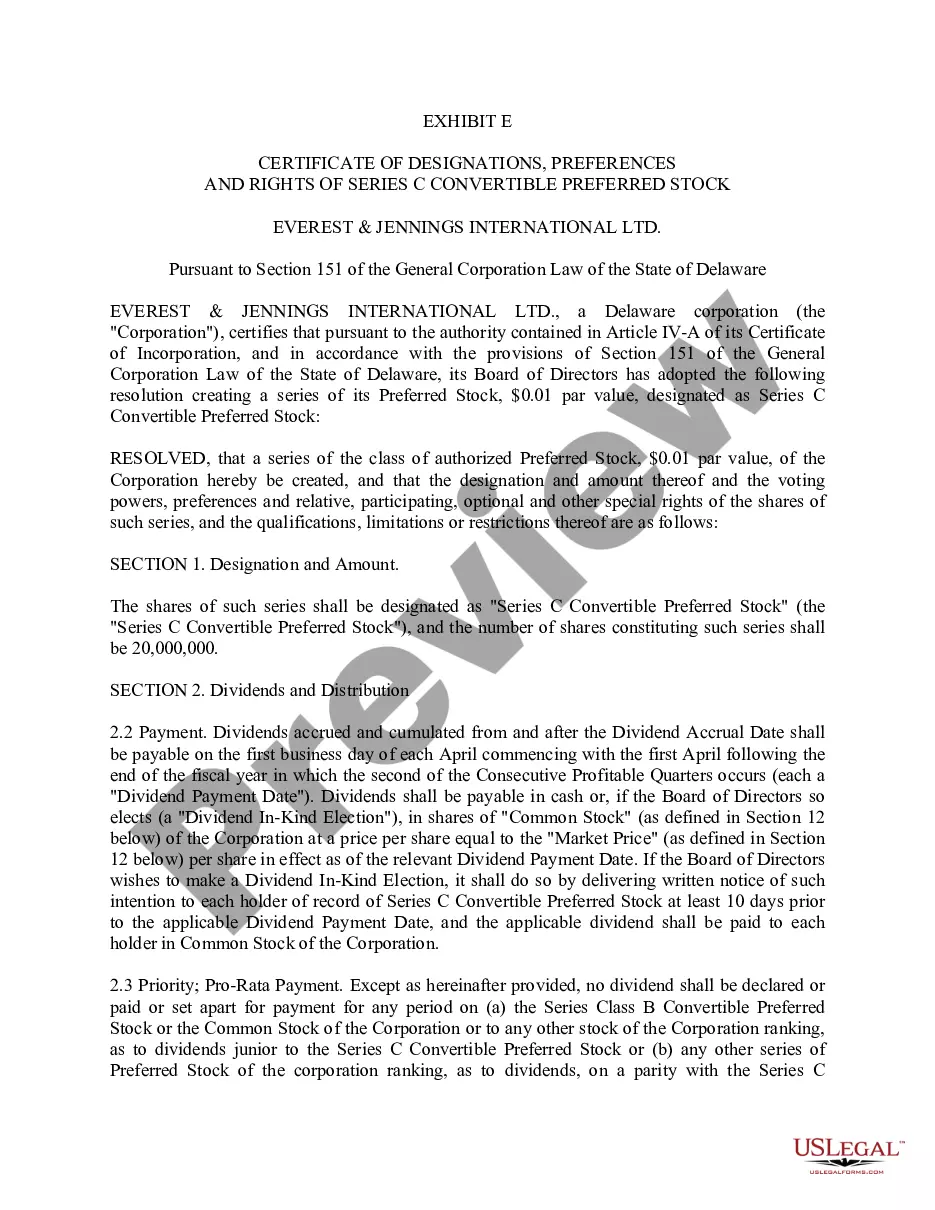
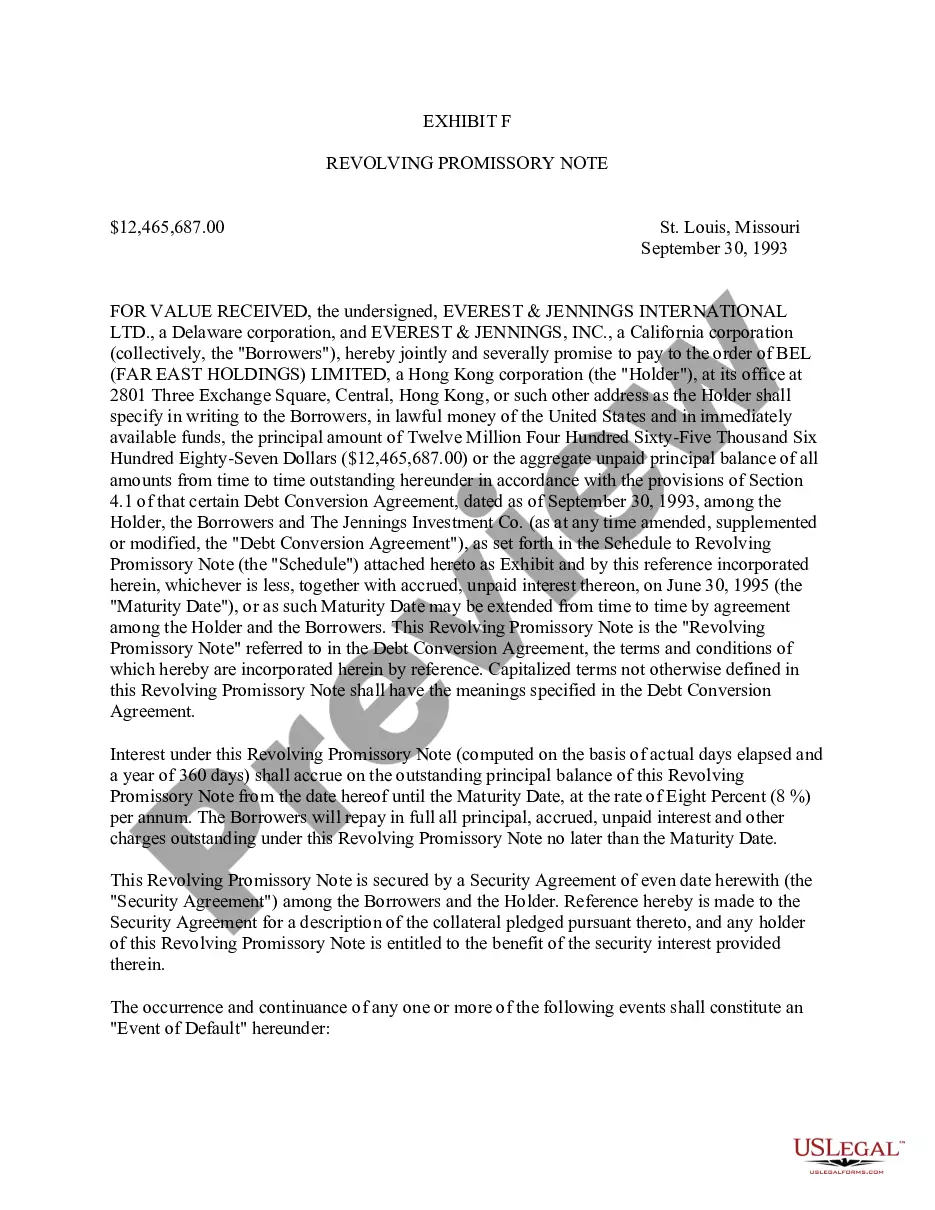
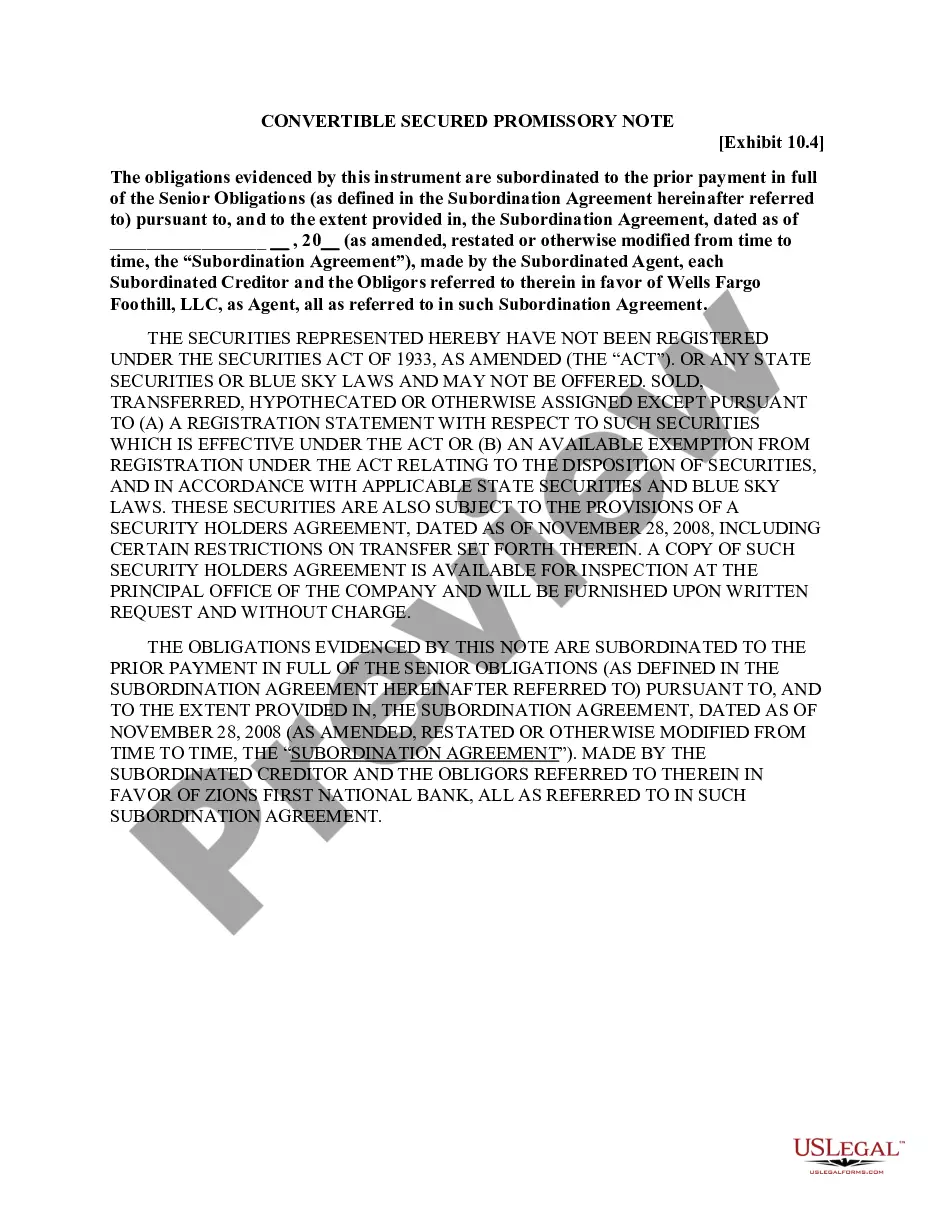
This is a Form of Convertible Promissory Note, Common Stock. It serves as a legal document allowing a borrower to promise repayment in cash or through conversion into stock. This form is essential for corporate transactions involving investment and debt management, distinguishing it from standard loan agreements by including terms for converting the amount owed into shares of stock.
Key parts of this document
- Payment obligation outlining due dates and interest rates.
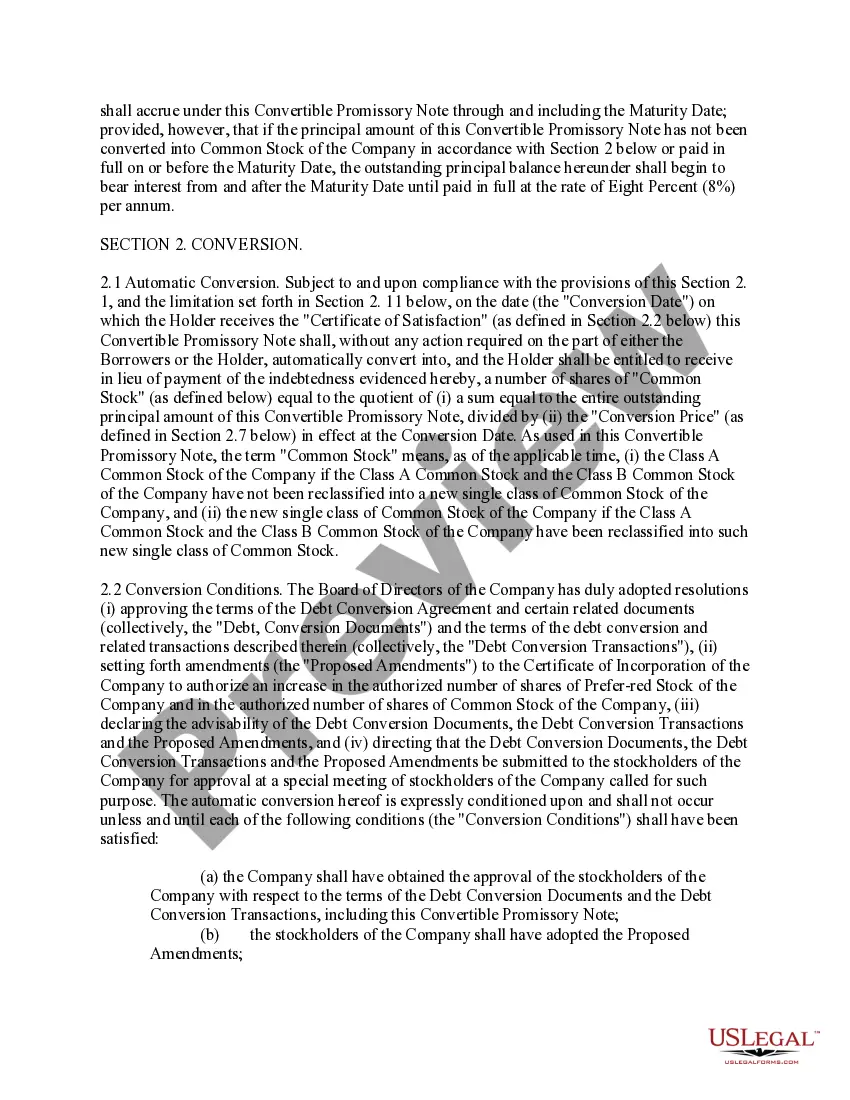
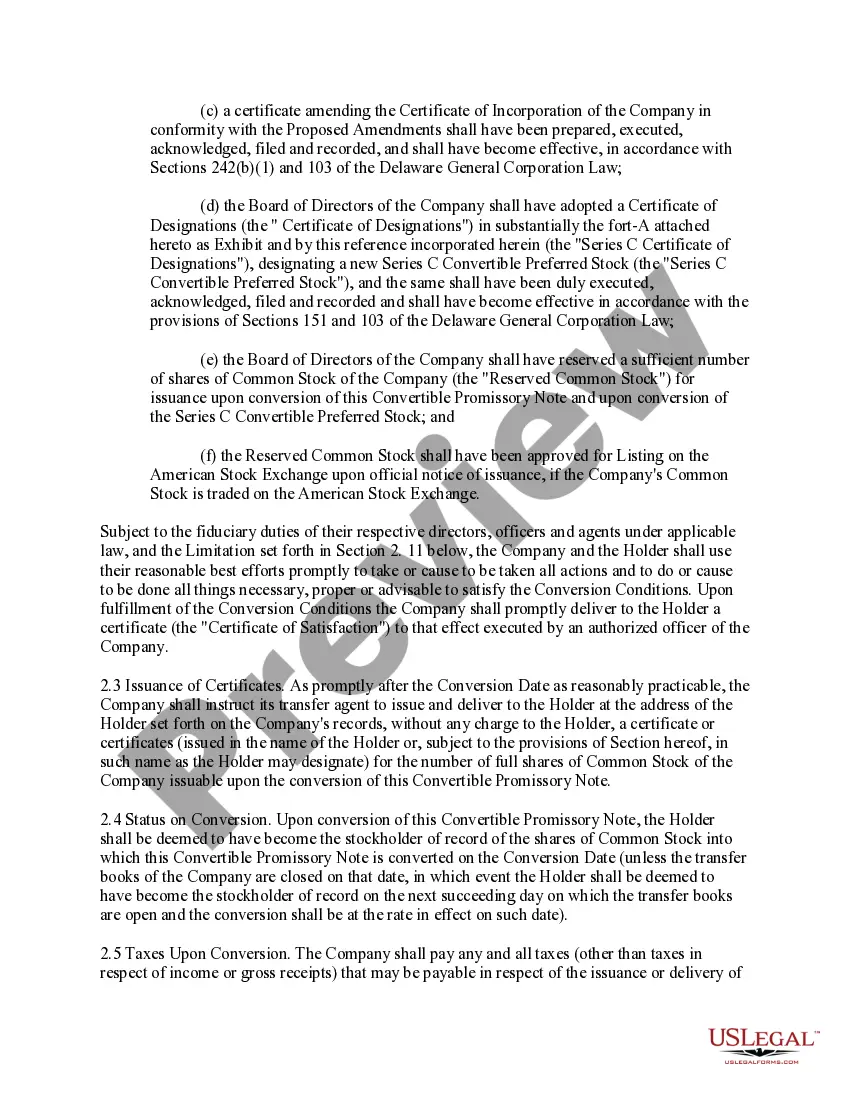
- Conversion terms specifying how debt converts into common stock.
- Rights of the holder concerning transfer and assignment.
- Default conditions indicating scenarios that trigger immediate repayment.
- Security provisions detailing collateral pledged against the loan.


When to use this document
This form is ideal for companies looking to secure funding through convertible promissory notes. It is used when a business needs capital and offers investors the option to convert their loan into equity, making it a strategic choice in financing and investment negotiations.
Who can use this document
- Corporate entities seeking to raise capital through debt financing.
- Investors looking for convertible investment opportunities.
- Legal professionals assisting clients with corporate financing documents.
- Financial advisors facilitating investment transactions.
How to complete this form
- Identify the parties involved, including the borrower(s) and the lender (holder).
- Specify the principal amount and terms regarding repayment and interest.
- Detail the conversion terms including the conversion price and conditions for conversion.
- Include security details if collateral is involved.
- Ensure all parties sign and date the document in the appropriate areas.
Does this form need to be notarized?
This form does not typically require notarization unless specified by local law. However, it's advisable to check jurisdiction-specific requirements and consider obtaining notarization for added legal assurance.
Get your form ready online
Our built-in tools help you complete, sign, share, and store your documents in one place.
Make edits, fill in missing information, and update formatting in US Legal Forms—just like you would in MS Word.
Download a copy, print it, send it by email, or mail it via USPS—whatever works best for your next step.
Sign and collect signatures with our SignNow integration. Send to multiple recipients, set reminders, and more. Go Premium to unlock E-Sign.
If this form requires notarization, complete it online through a secure video call—no need to meet a notary in person or wait for an appointment.
We protect your documents and personal data by following strict security and privacy standards.

Make edits, fill in missing information, and update formatting in US Legal Forms—just like you would in MS Word.

Download a copy, print it, send it by email, or mail it via USPS—whatever works best for your next step.

Sign and collect signatures with our SignNow integration. Send to multiple recipients, set reminders, and more. Go Premium to unlock E-Sign.

If this form requires notarization, complete it online through a secure video call—no need to meet a notary in person or wait for an appointment.

We protect your documents and personal data by following strict security and privacy standards.
Common mistakes
- Failing to specify all terms related to the conversion of the note into stock.
- Not including the correct signatures from all involved parties.
- Overlooking security agreements that should accompany the note.
- Missing out on local state compliance requirements.
Why use this form online
- Convenience of instant download and access to legal advice.
- Editability to customize the form to fit specific situations.
- Access to attorney-drafted language ensuring compliance and clarity.
- The convertible promissory note represents a secure funding option for both parties.
- While offering flexibility, users must adhere to applicable securities laws to ensure compliance.
Quick recap
- The Form of Convertible Promissory Note, Common Stock allows for the conversion of debt to equity.
- This document is vital for businesses seeking investment and is widely applicable in corporate finance.
- Careful completion and adherence to state regulations are essential to avoid legal issues.
Looking for another form?
Form popularity
FAQ
A legal promissory note is similar to any other contract in which a borrower promises to repay a borrowed amount. Mortgages, credit card contracts, and any other borrowing agreement have the same effect and consequences as a promissory note.
Personal Promissory Notes This is a particular loan taken from family or friends. Commercial Here, the note is made when dealing with commercial lenders such as banks. Real Estate This is similar to commercial notes in terms of nonpayment consequences.
Convertible notes avoid placing a valuation on the startup, which can be useful particularly for seed stage companies which have not had enough operating history to properly set a valuation. Convertible notes are good bridge-capital or intra-round financing options.
A promissory note is a financial instrument that contains a written promise by one party (the note's issuer or maker) to pay another party (the note's payee) a definite sum of money, either on demand or at a specified future date.
Convertible debt is a loan, note or bond instrument that converts to equity when a specified future event occurs. A convertible promissory note is a promissory note that converts in the same way as all other convertible debt.Upon conversion, the note is canceled.
A simple promissory note might be for a lump sum repayment on a certain date. For example, you lend your friend $1,000 and he agrees to repay you by December 1. The full amount is due on that date, and there is no payment schedule involved.
There are four significant types of promissory notes in India. A personal note is the kind of promissory note that an individual should seek when lending money to family members or close relatives. A commercial note is the type of promissory note that is signed between a borrower and a financial institution.
Date. The promissory note should include the date it was created at the top of the page. Amount. Loan terms. Interest rate. Collateral. Lender and borrower information. Signatures.