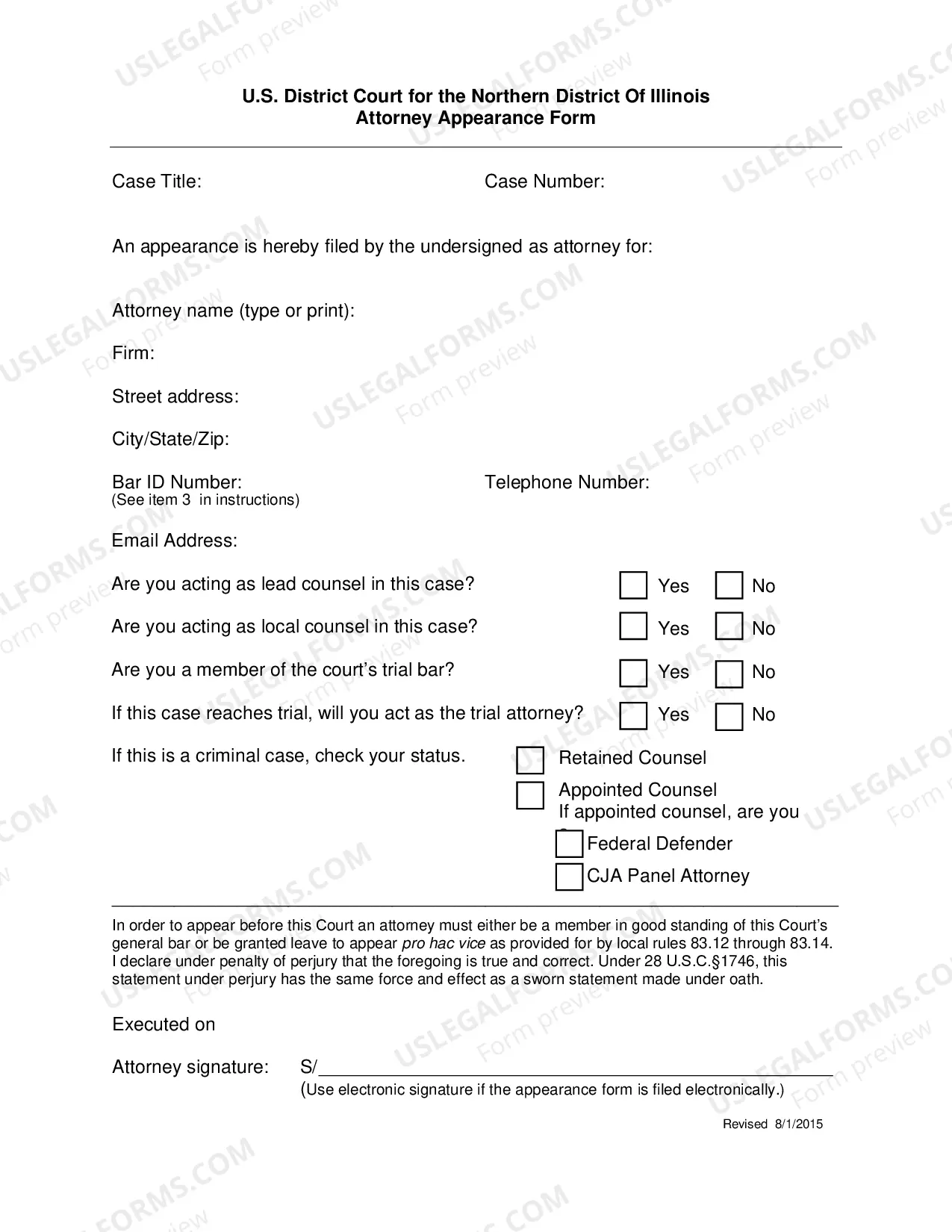
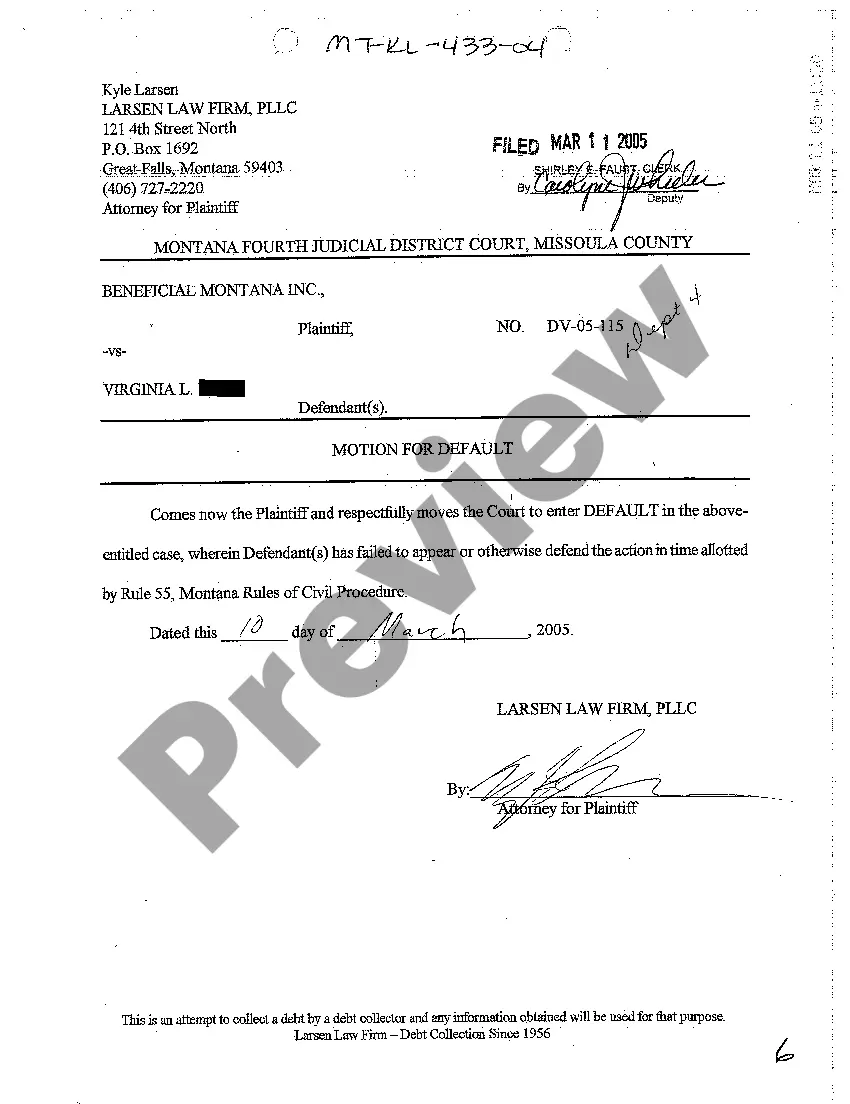
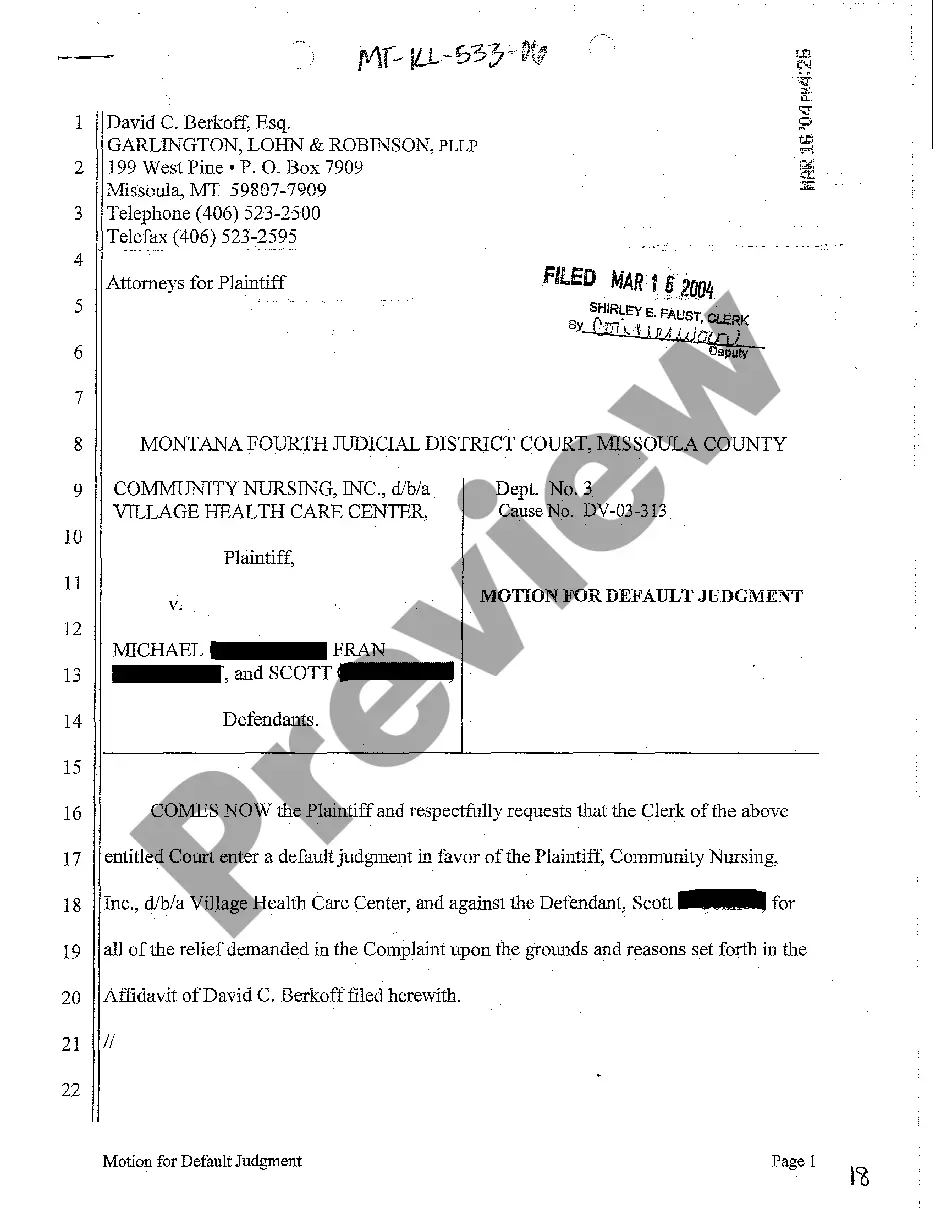
Montana Motion for Default
Description



How to fill out Montana Motion For Default?
Acquire a printable Montana Motion for Default in just a few clicks within the most extensive collection of legal electronic documents.
Locate, download, and print expertly created and certified samples on the US Legal Forms site. US Legal Forms has been the premier source of economical legal and tax forms for US citizens and residents online since 1997.
After downloading your Montana Motion for Default, you can fill it out in any online editor or print it and complete it manually. Utilize US Legal Forms to access 85,000 professionally drafted, state-specific documents.
- Users with a subscription must Log In to their US Legal Forms account, download the Montana Motion for Default, and find it stored in the My documents section.
- Users without a subscription should follow these steps.
- Confirm that your template complies with your state's specifications.
- If available, review the form's description to gain further insights.
- If offered, examine the form to uncover additional details.
- Once you're certain the form is suitable for you, click Buy Now.
- Establish a personal account.
- Choose a plan.
- Make a payment via PayPal or credit card.
- Download the form in Word or PDF format.
Form popularity
FAQ
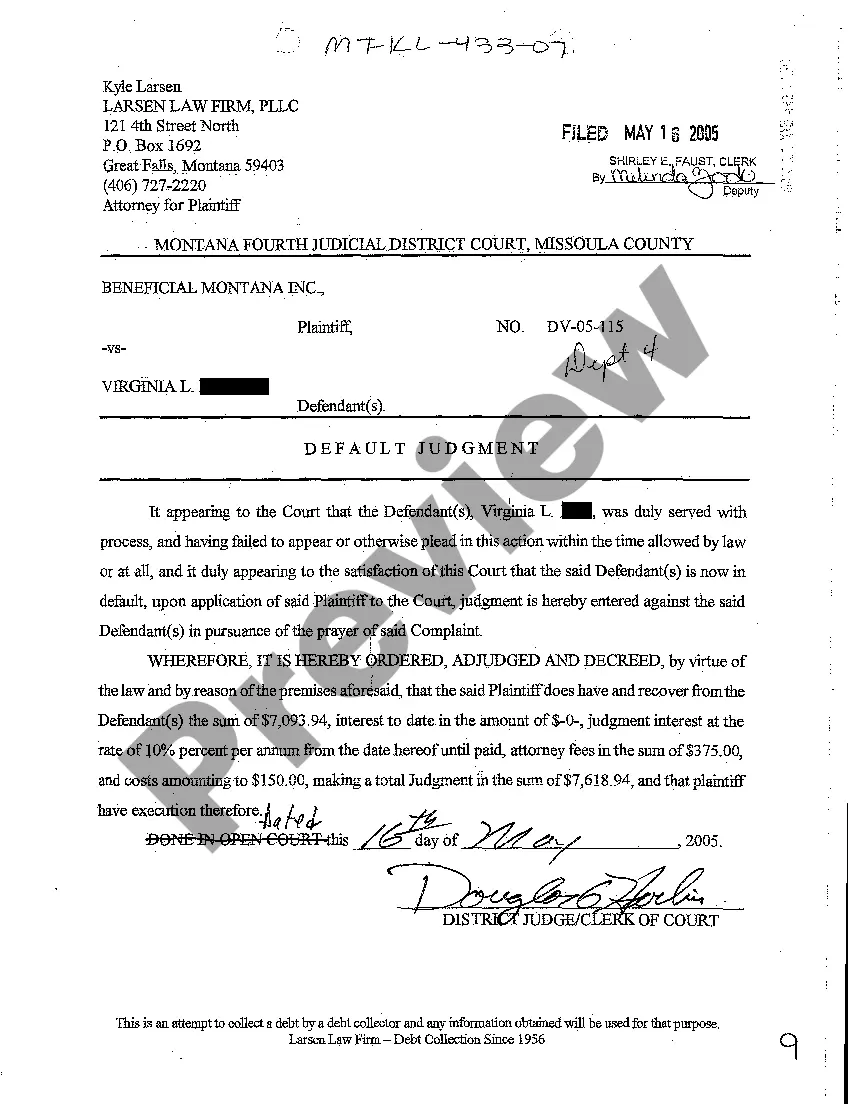
A default judgment occurs when the defendant in a legal case fails to respond to a court summons or does not appear in court. If this occurs, a court may rule in favor of the plaintiff by default.
When a default is entered, the party who requested the entry of default must obtain a default judgment against the defaulting party within 45 days after the default was entered, unless the court has granted an extension of time.
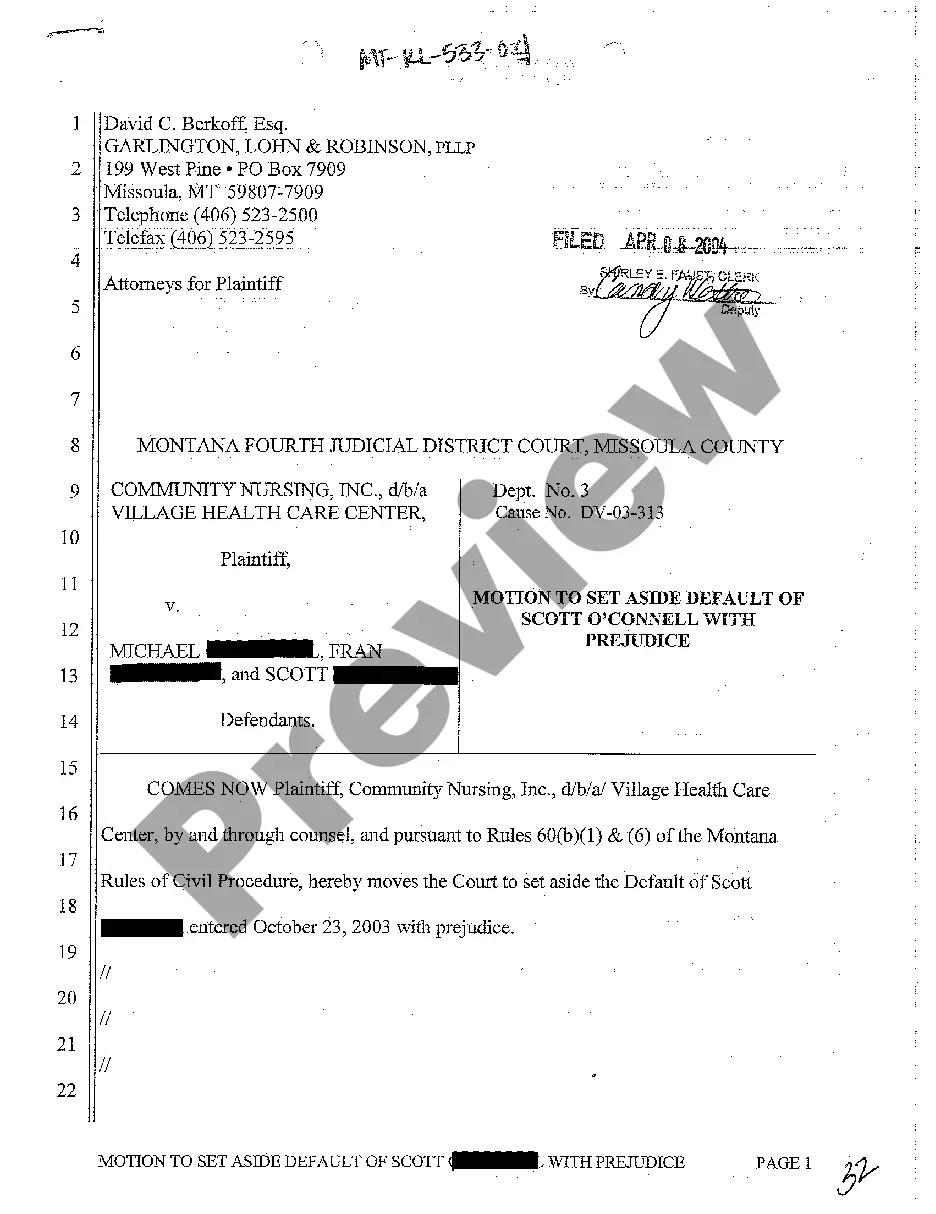
What happens next? When you file your Motion and Affidavit to Set Aside Default, you will get a hearing date and time from the court clerk. At the hearing, the judge will grant or deny the motion. If the judge grants your motion, the default or default judgment will be set aside, and the case will move forward.
Default judgments happen when you don't respond to a lawsuit often from a debt collector and a judge resolves the case without hearing your side.Next up could be wage garnishment or a bank account levy, which allows a creditor to remove money from your bank accounts to repay the debt.
A motion for default is made when a defendant fails to file a timely answer to a complaint/petition.If you were not served with the original petition/complaint, you can always file a petition to reopen the case.
A default judgment means that the court has decided that you owe money. This a result of the person suing you in small claims court and you failed to appear at the hearing.
If a notice of motion for setting aside or variation of a judgment or order is filed within 14 days after the judgment or order is entered, the court may set aside or vary the judgment or order under r 36.16(1) as if the judgment or order had not been entered: r 36.16(3A).