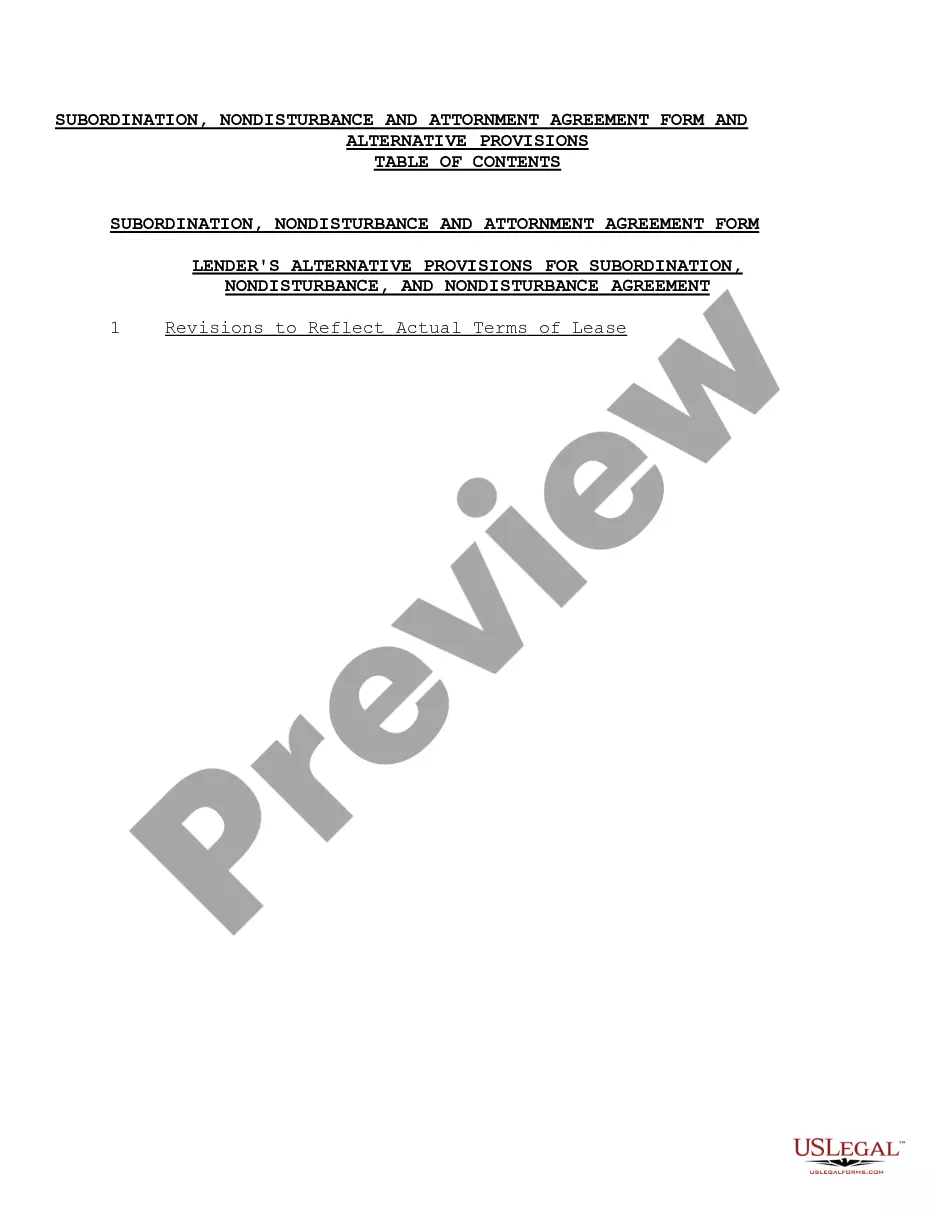
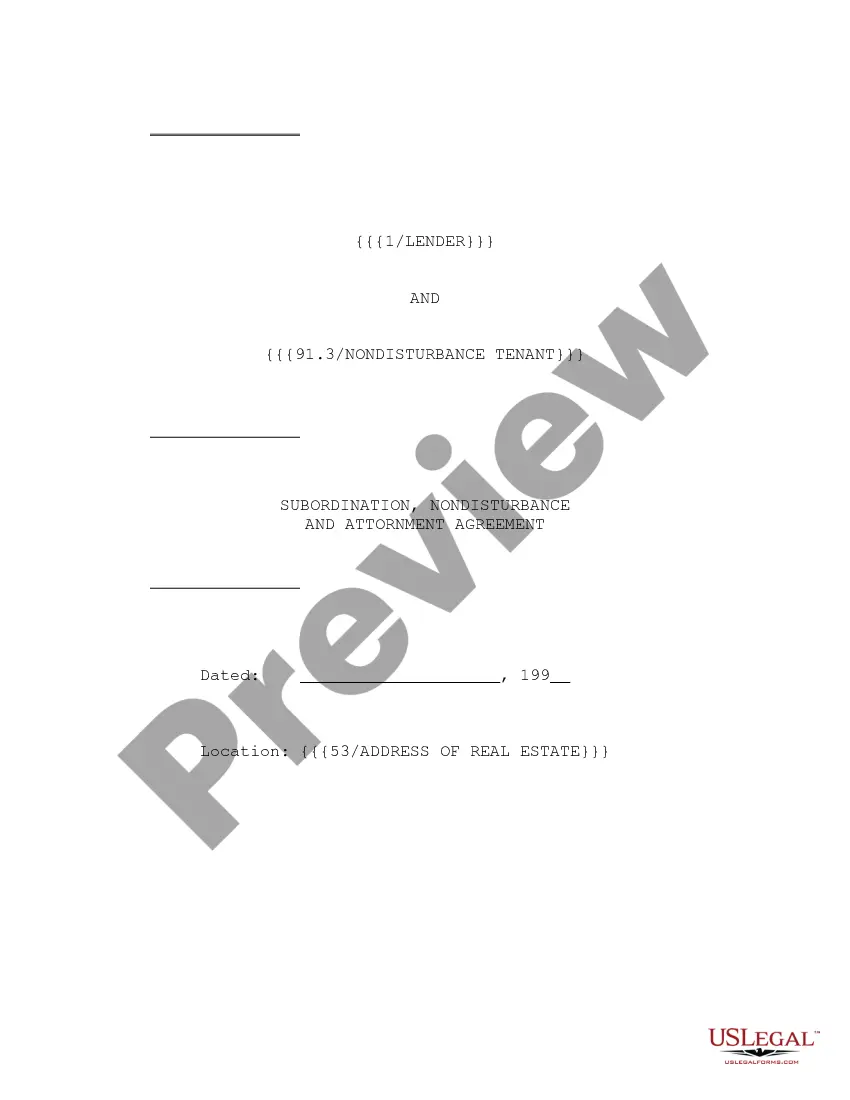
Subordination Nondisturbance and Attorney Agreement Form and Alternative Provisions
What this document covers
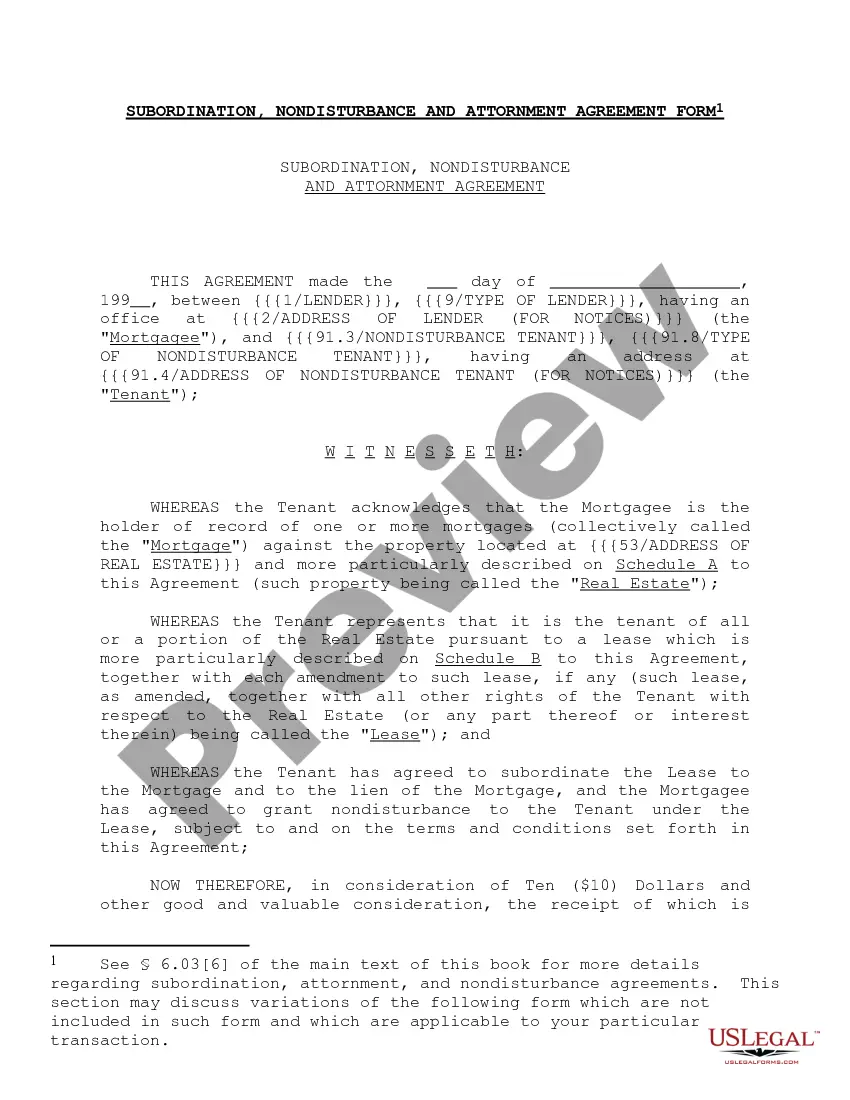
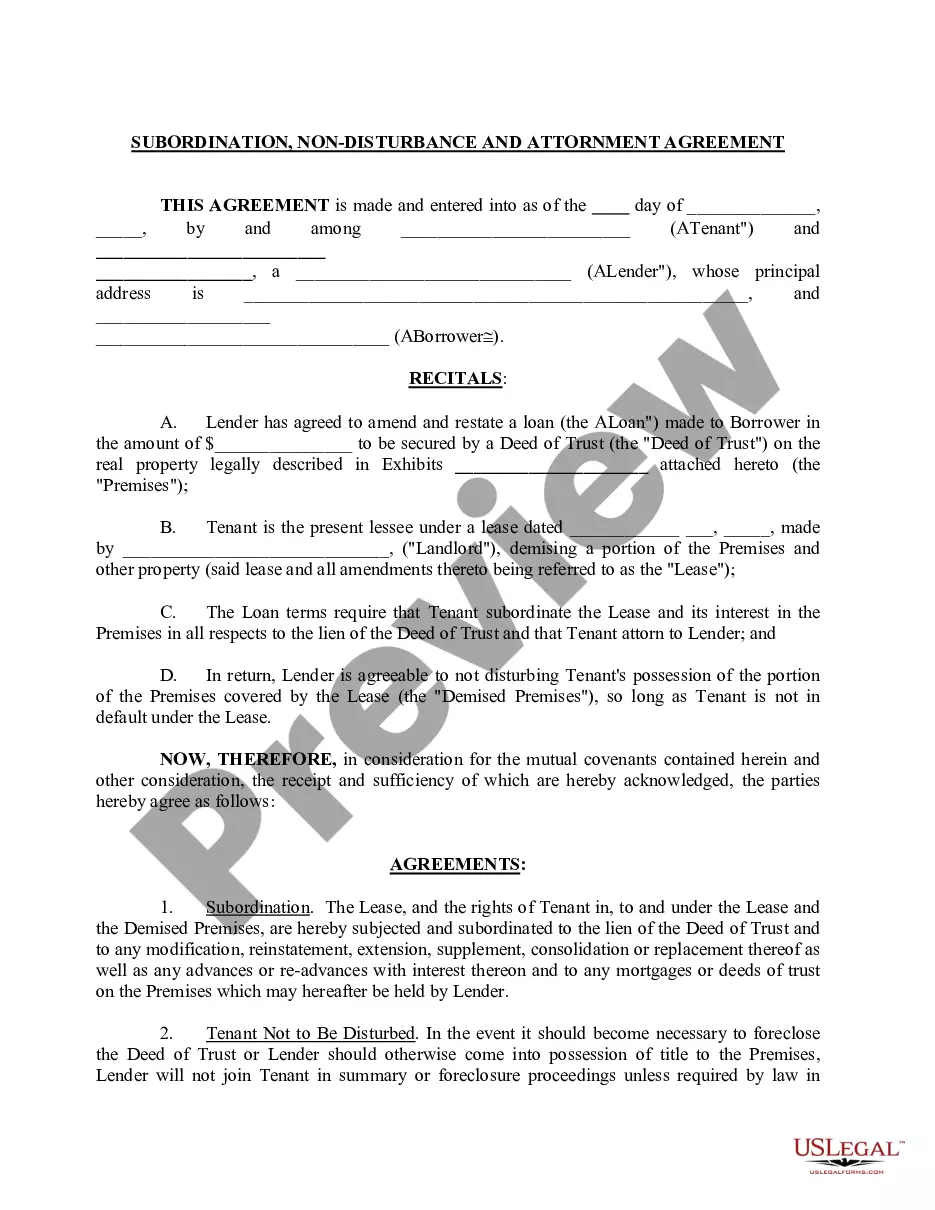
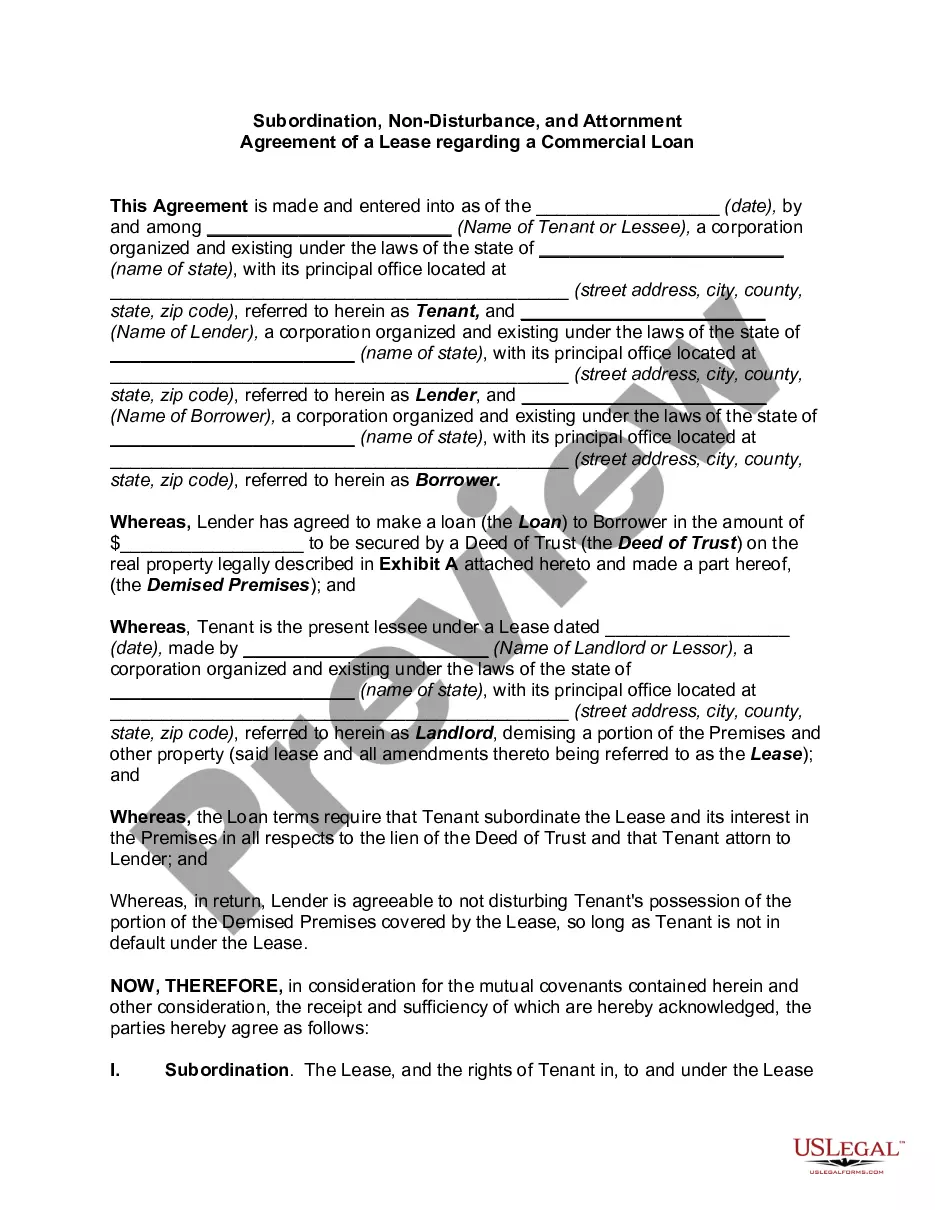
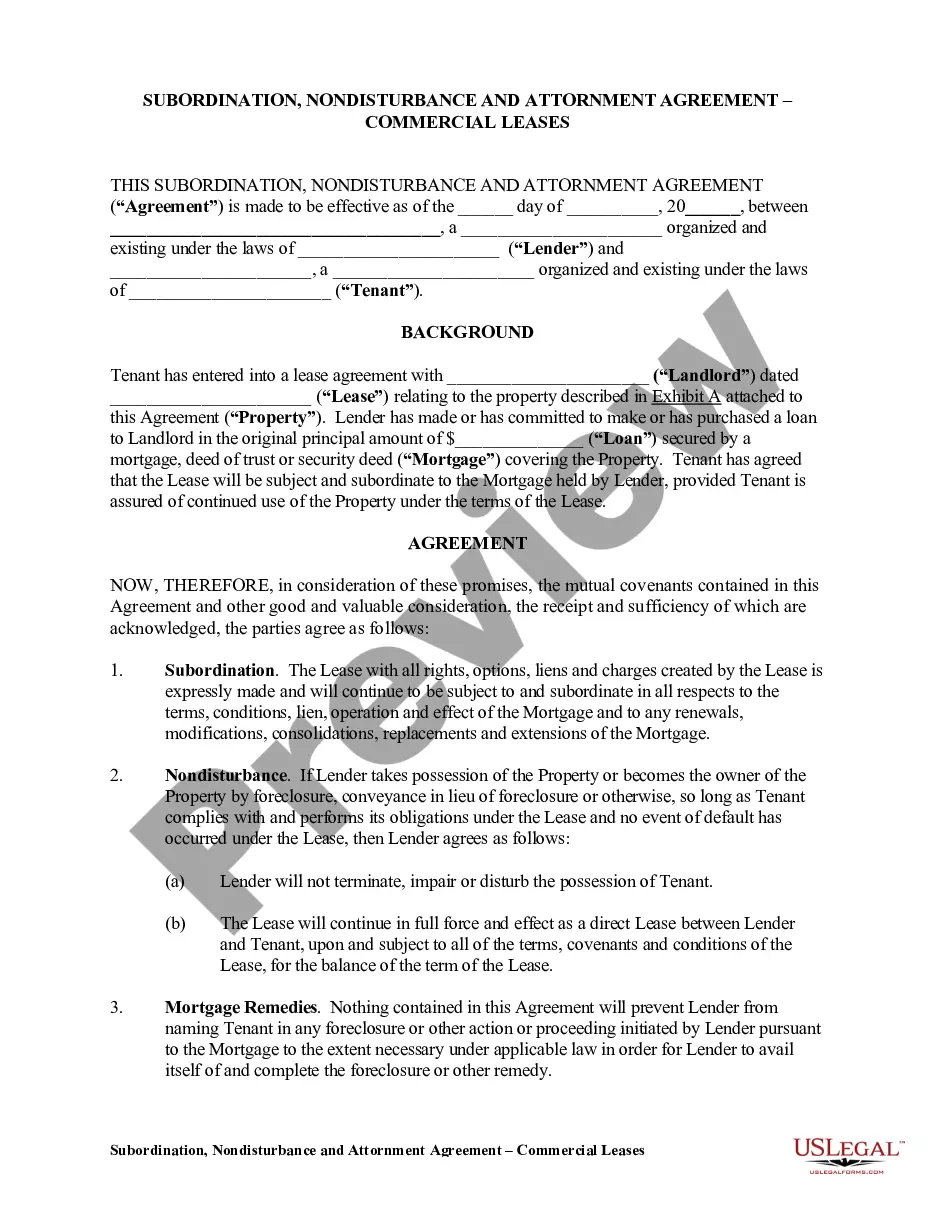
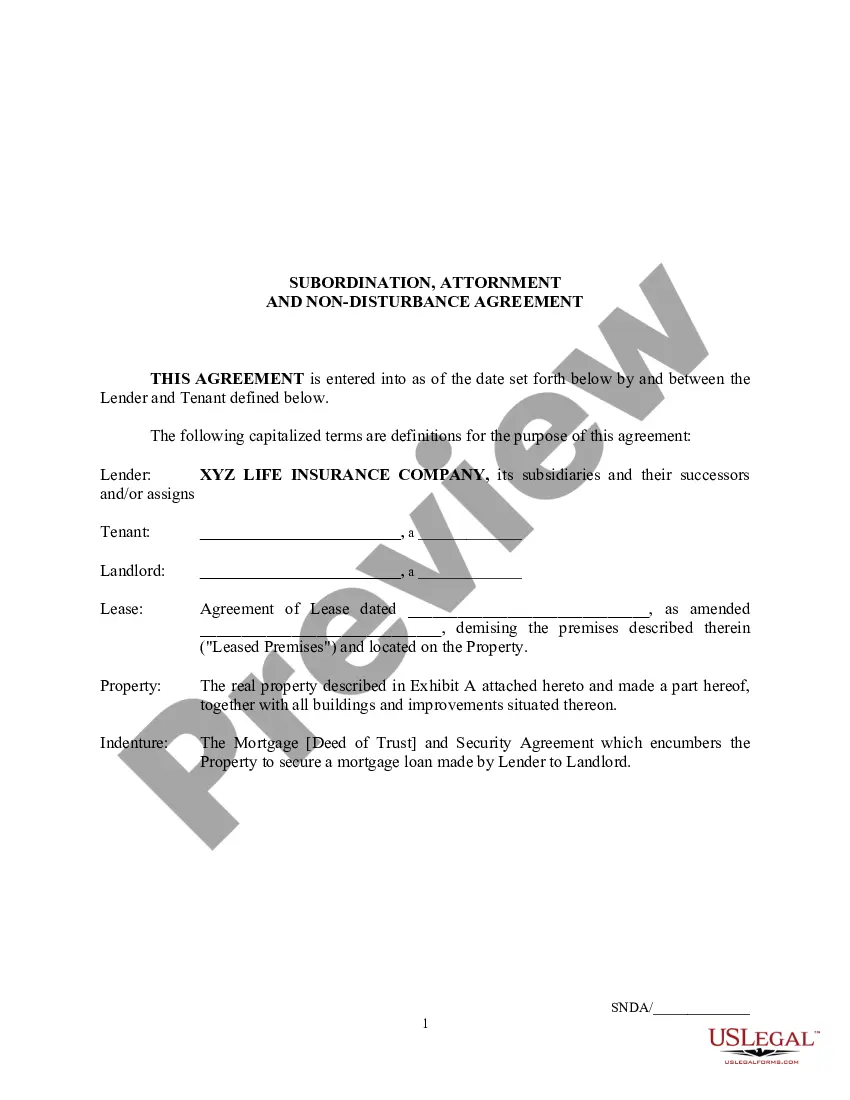
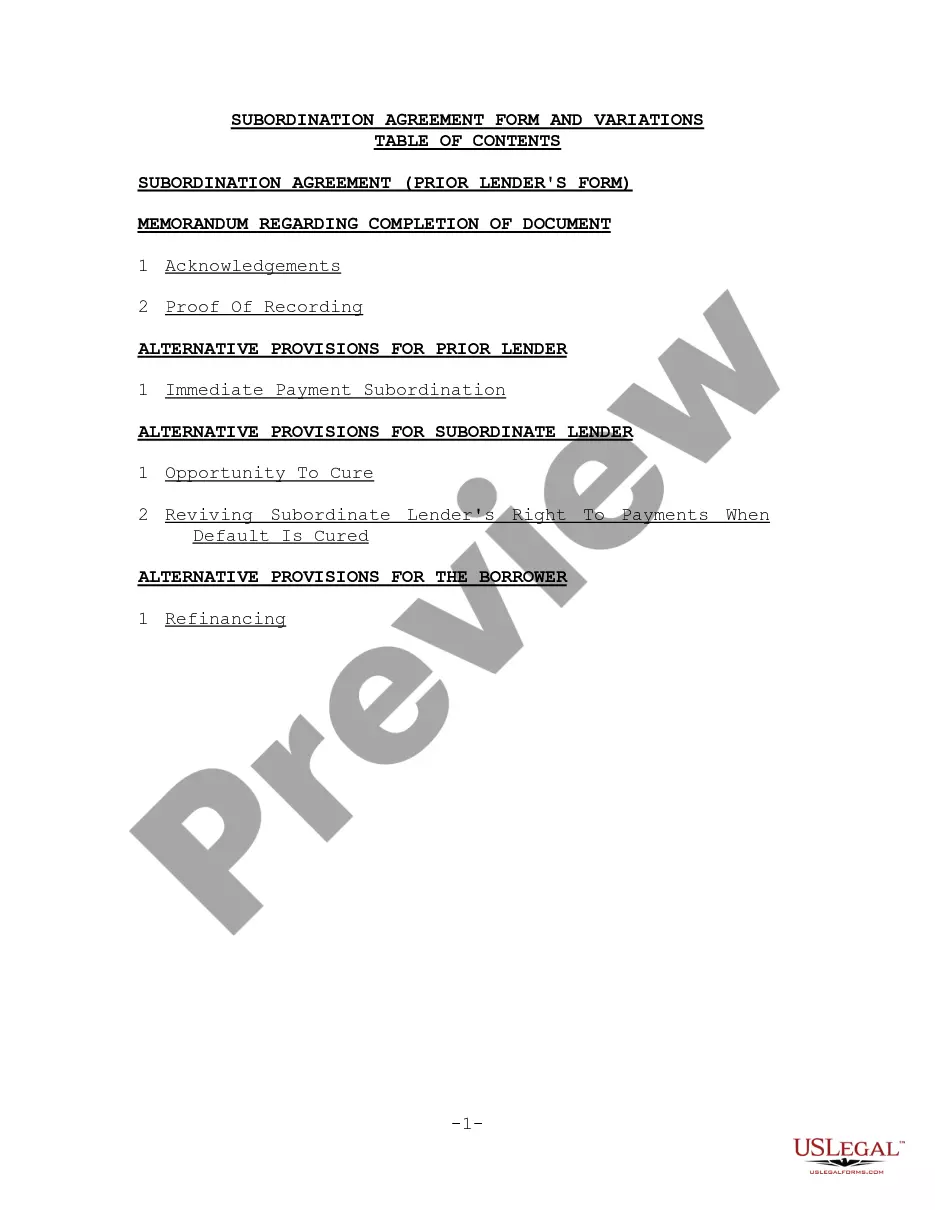
The Subordination Nondisturbance and Attorney Agreement Form is a legal document used primarily in real estate transactions. It establishes a relationship between a lender and a tenant, detailing the subordination of a lease to a mortgage while ensuring that the tenantâs rights remain protected in the event of foreclosure. This form differs from standard lease agreements by explicitly including clauses about nondisturbance and attornment, which help to clarify the obligations and protections for both parties involved in leasing property secured by a mortgage.
Form components explained
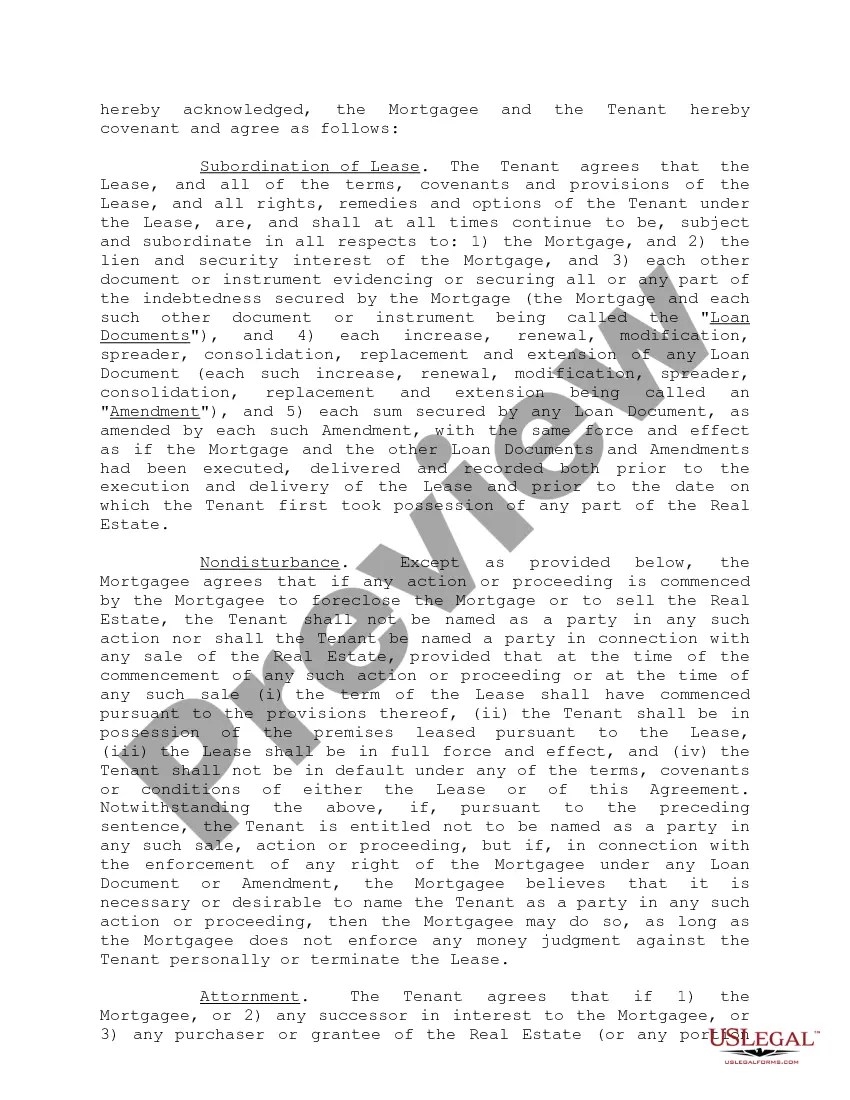
- Subordination of lease to mortgage agreements.
- Terms defining nondisturbance in case of foreclosure.
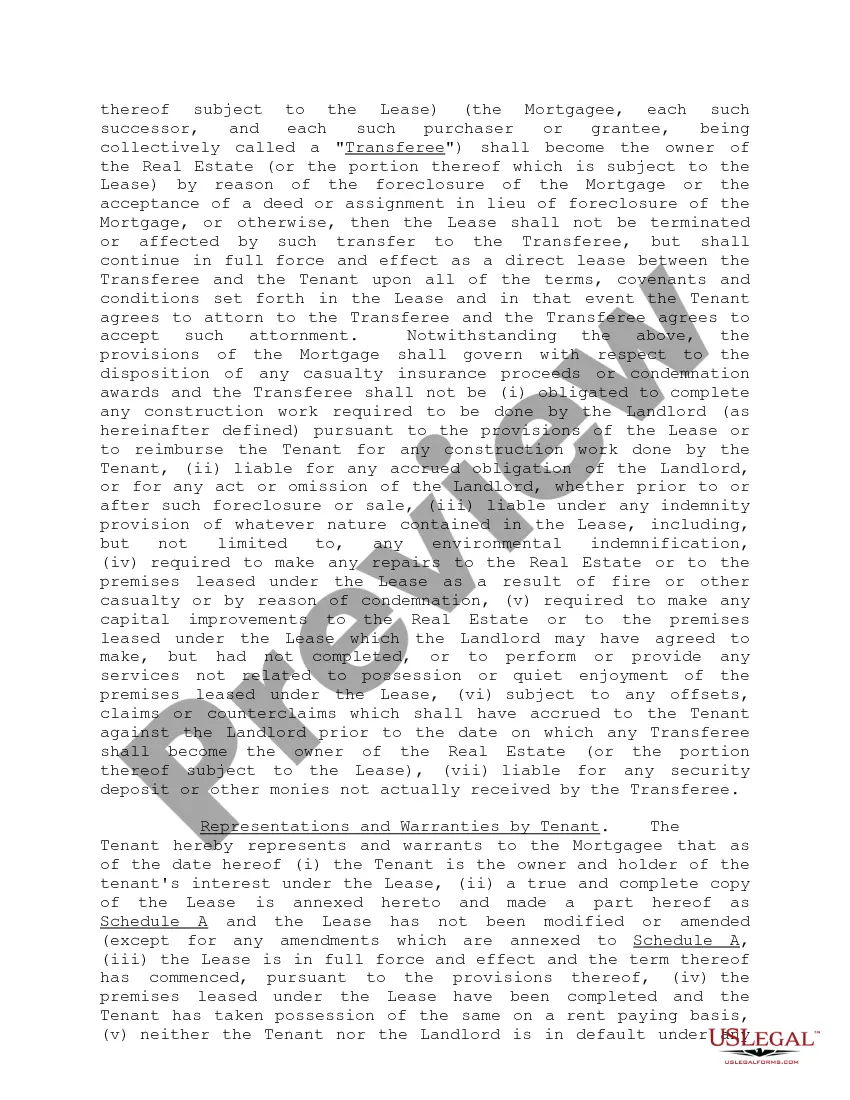
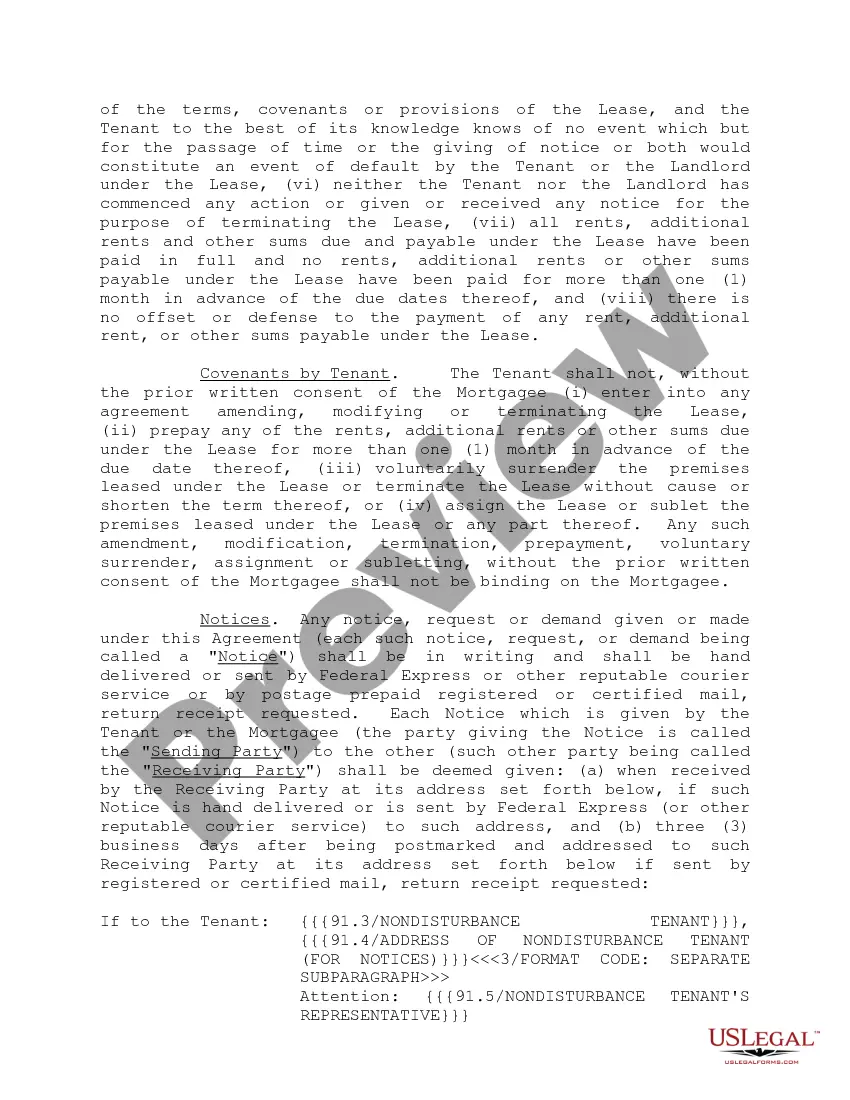
- Tenant's obligations and representations regarding the lease.
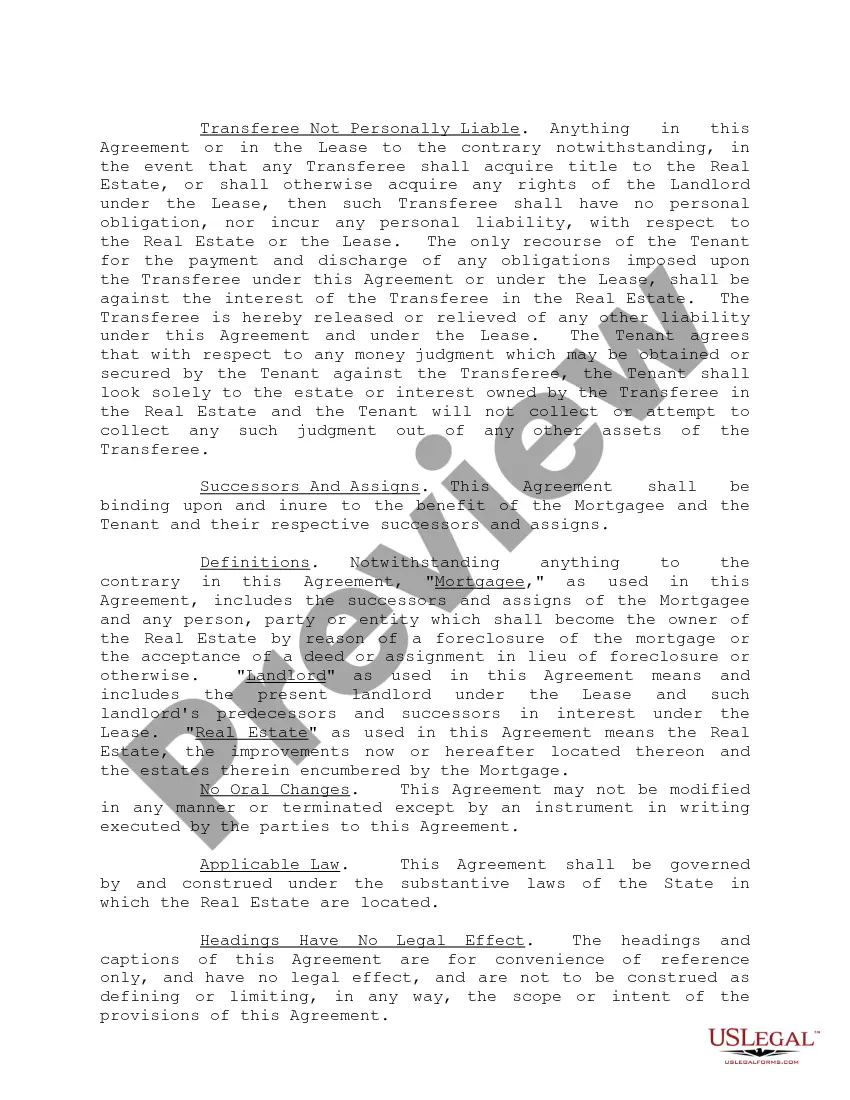
- Attornment clauses that clarify landlord changes.
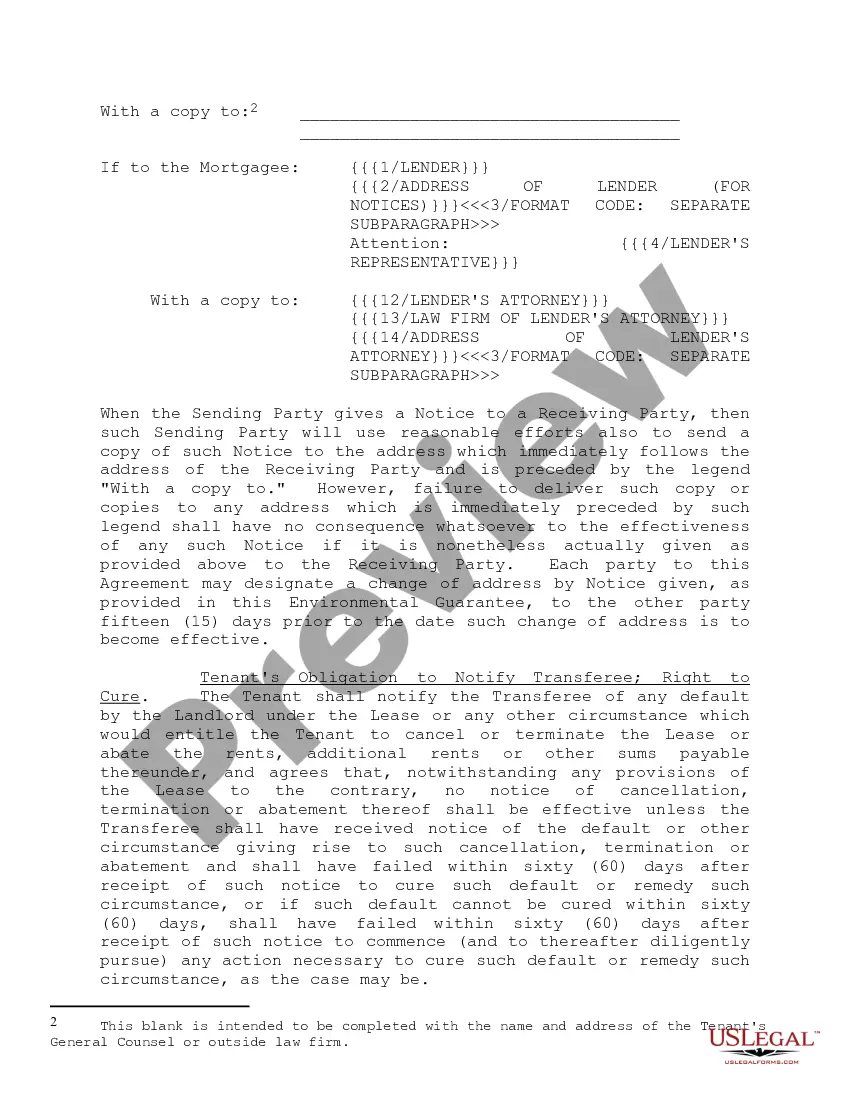
- Provisions for notices and communications between the parties.

Common use cases
This form should be used when a tenant is leasing property that may be subject to a mortgage. It is particularly important in situations where a lender might foreclose on the property, as it ensures that the tenant's rights under the lease are preserved. Utilizing this form protects both the tenant and lender by clarifying their roles and responsibilities during potential financial distress.
Who should use this form
- Lenders and mortgagees needing to secure their interests while protecting tenant rights.
- Commercial or residential tenants leasing space in a mortgaged property.
- Property owners looking to clarify lease terms in relation to existing or future mortgages.
Completing this form step by step
- Identify the parties involved, including the lender and the tenant.
- Specify the address of the real estate to which the lease and mortgage pertain.
- Enter the date of the agreement and the effective terms of the lease.
- Complete the sections detailing subordination, nondisturbance, and attornment.
- Sign the agreement in the presence of a notary, if required.
Notarization requirements for this form
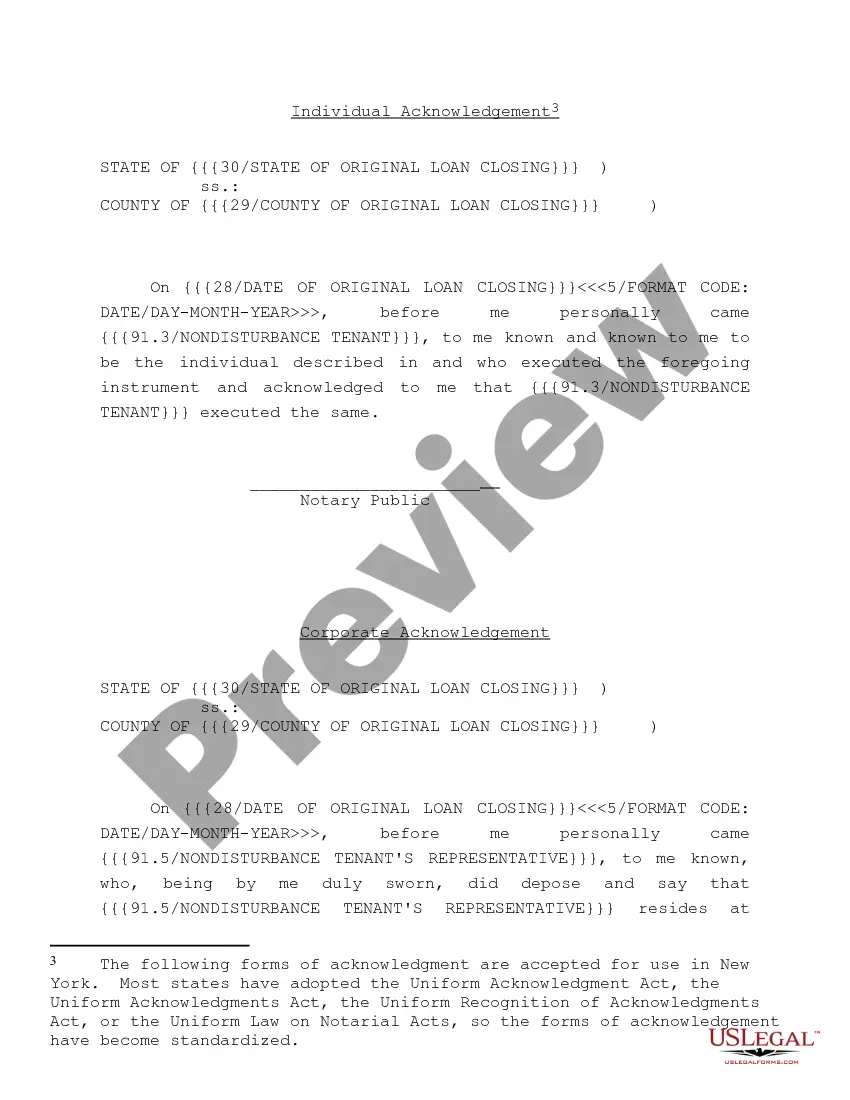
Yes, this form must be notarized to be legally valid. US Legal Forms provides integrated online notarization services, allowing users to complete the notarization process securely via video call, ensuring legal equivalence without the need for traveling.
Get your form ready online
Our built-in tools help you complete, sign, share, and store your documents in one place.
Make edits, fill in missing information, and update formatting in US Legal Forms—just like you would in MS Word.
Download a copy, print it, send it by email, or mail it via USPS—whatever works best for your next step.
Sign and collect signatures with our SignNow integration. Send to multiple recipients, set reminders, and more. Go Premium to unlock E-Sign.
If this form requires notarization, complete it online through a secure video call—no need to meet a notary in person or wait for an appointment.
We protect your documents and personal data by following strict security and privacy standards.

Make edits, fill in missing information, and update formatting in US Legal Forms—just like you would in MS Word.

Download a copy, print it, send it by email, or mail it via USPS—whatever works best for your next step.

Sign and collect signatures with our SignNow integration. Send to multiple recipients, set reminders, and more. Go Premium to unlock E-Sign.

If this form requires notarization, complete it online through a secure video call—no need to meet a notary in person or wait for an appointment.

We protect your documents and personal data by following strict security and privacy standards.
Common mistakes
- Failing to accurately describe the real estate or lease terms.
- Not including all necessary parties in the agreement.
- Omitting required signatures or notary acknowledgments where applicable.
- Not reviewing local laws for specific requirements pertaining to the form.
Why complete this form online
- Convenience of downloading the form at any time.
- Editable templates allow for quick customization to fit specific needs.
- Access to forms drafted by licensed attorneys ensuring legal compliance.
What to keep in mind
- The Subordination Nondisturbance and Attorney Agreement Form protects both tenants and lenders in lease agreements related to mortgaged properties.
- It outlines essential clauses such as subordination, nondisturbance, and attornment to ensure clear obligations.
- Complete and notarize the form, if required, for it to be legally effective.
Looking for another form?
Form popularity
FAQ
An SNDA, or subordination (the S), non-disturbance (the ND) and attornment (the A) agreement, is an agreement between the lender providing financing to the landlord and a tenant of the property.Most landlords use financing in order to develop or purchase property.
The subordination, non-disturbance and attornment agreement (commonly abbreviated as an SNDA agreement) is the document that the landlord, tenant and lender often employ to resolve how their rights do and will intersect.
In the case of commercial property changing hands, an attornment clause in a subordination, non-disturbance, and attornment (SNDA) agreement requires the tenant to acknowledge a new owner as their landlord and to continue paying rent regardless of whether the property changes hands through a normal sale or a
A nondisturbance clause is a provision in a mortgage contract that ensures that a rental agreement between the tenant and the landlord will continue under any circumstances. This is done primarily to protect the renter from eviction by the mortgagor if the property is foreclosed upon by the lender.
SNDA stands for Subordination, Non-disturbance and Attornment Agreement. You need an SNDA if you are a commercial tenant, a commercial landlord, or a lender taking a mortgage against commercial property. If you're a tenant, the SNDA protects you from being evicted if your landlord stops paying its mortgage loan.
An SNDA is an agreement entered into between a tenant and the lender of the landlord (and, ideally, the landlord) to establish the relationship between the tenant and lender (who would not otherwise have a direct relationship) and provide relative priorities between them.
In a lease subordination clause, the tenant is agreeing to allow his/her interest to be subordinated to the lender's. A sample subordination agreement is commonly requested of new tenants.The attornment agreement has the tenant agree to continue lease obligations to a new landlord in the event of a foreclosure.
A lender typically wants to have an SNDA because of its subordination clause if, in the absence of such an agreement, the lease would be prior to the mortgage.Therefore, if a mortgage is senior to a lease, the foreclosure of the mortgage will terminate the lease unless there is an agreement that provides otherwise.