Michigan Written Revocation of Will
Overview of this form
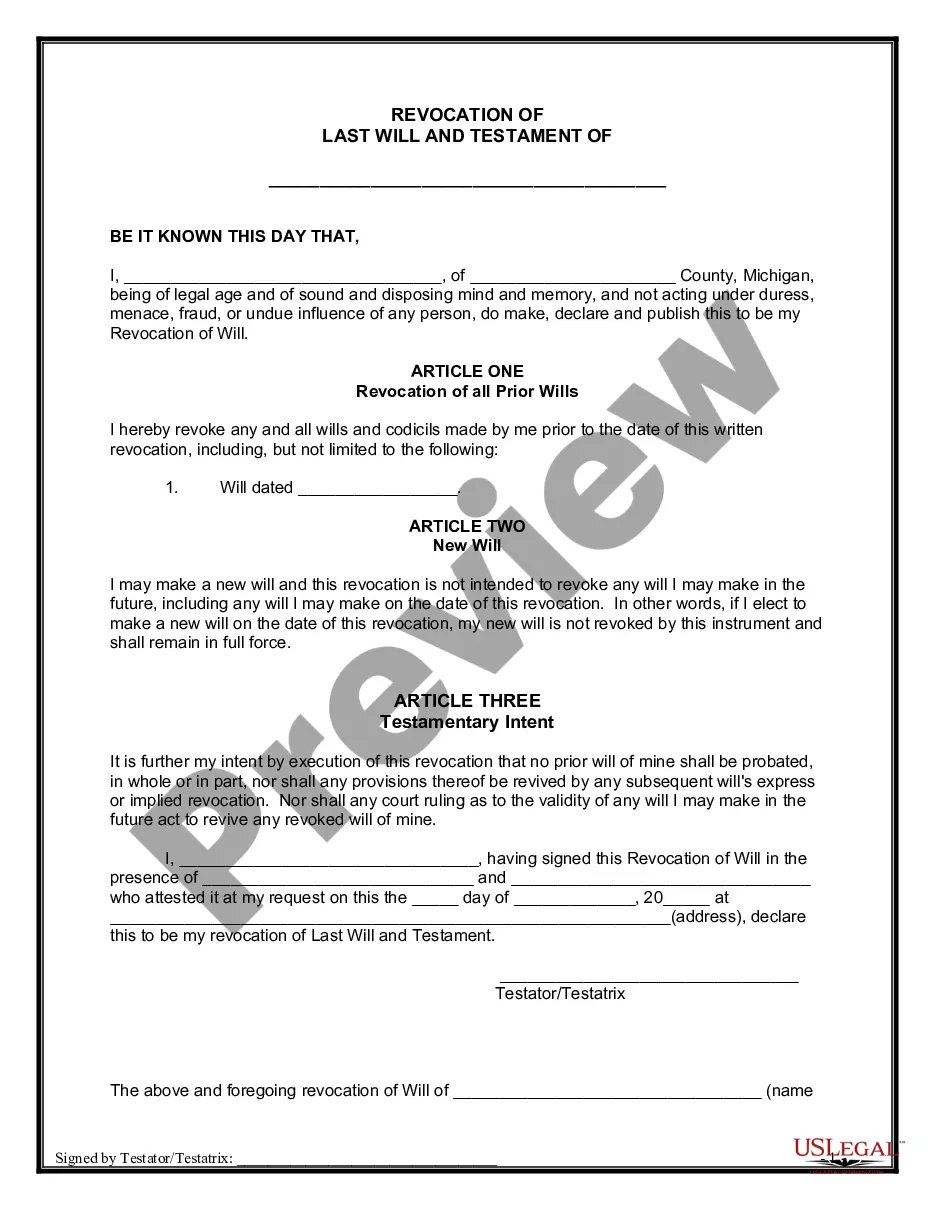
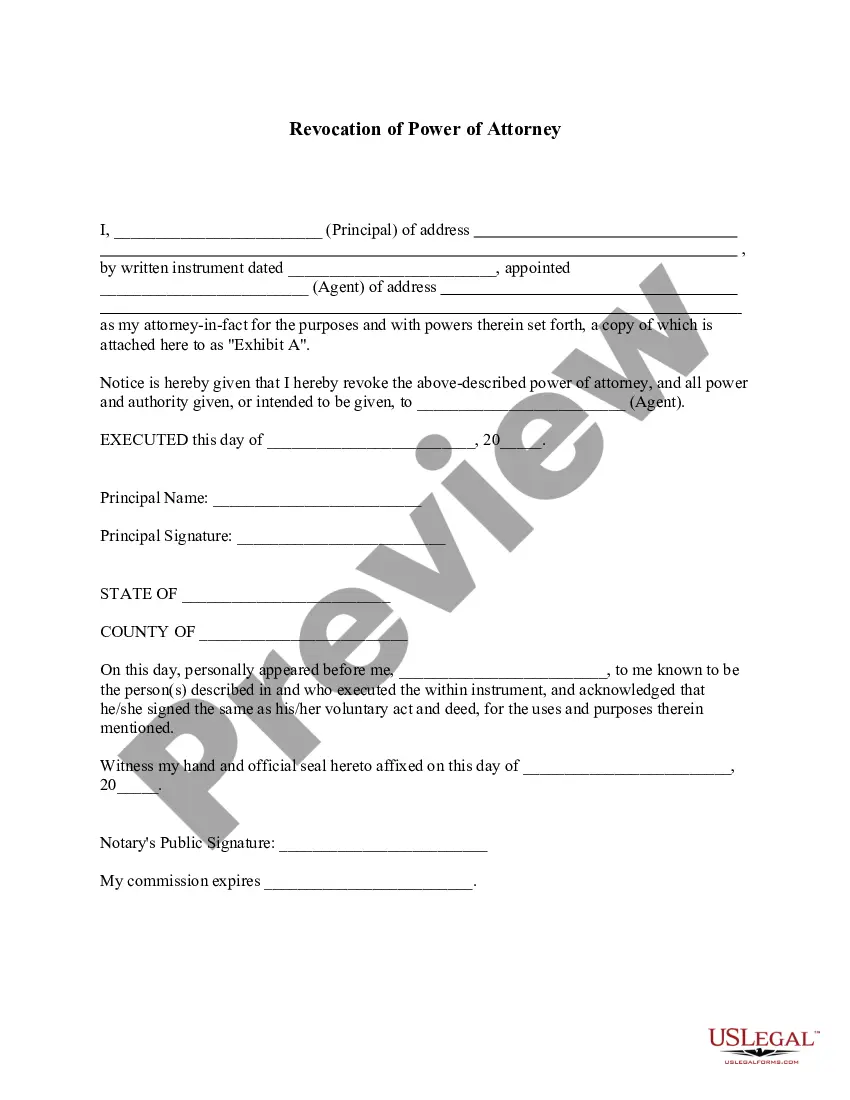
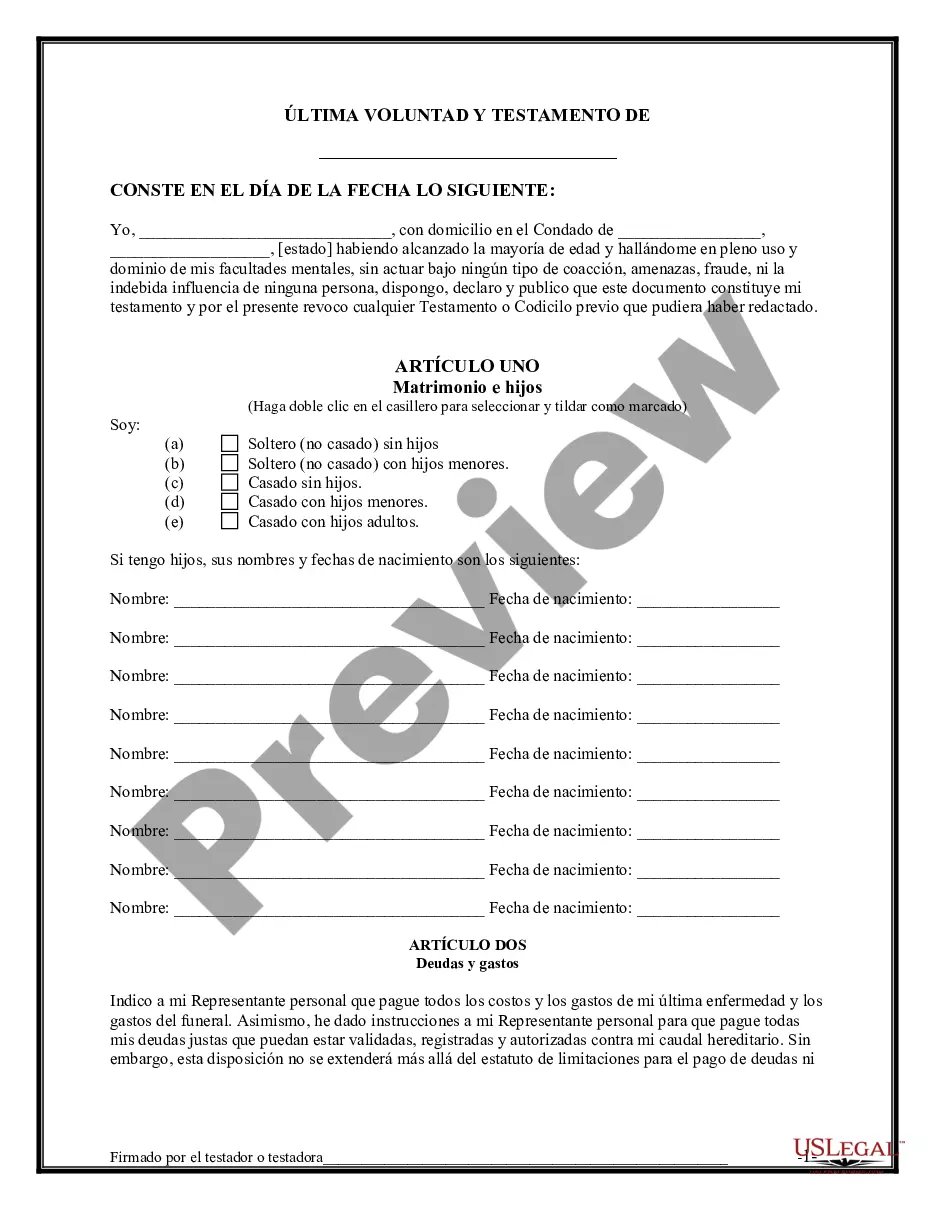
The Written Revocation of Will form allows you to revoke a previous will using a separate written instrument. This is crucial if you have made a new will that does not include a revocation clause, ensuring that your old will is not considered valid. This form provides clear evidence of your intention to revoke any prior wills and prevents them from being probated.
Key components of this form
- Declaration of the revocation of prior wills.
- Contingency note regarding future wills, ensuring that new wills remain valid.
- Statement affirming your intent to prevent prior wills from being probated.
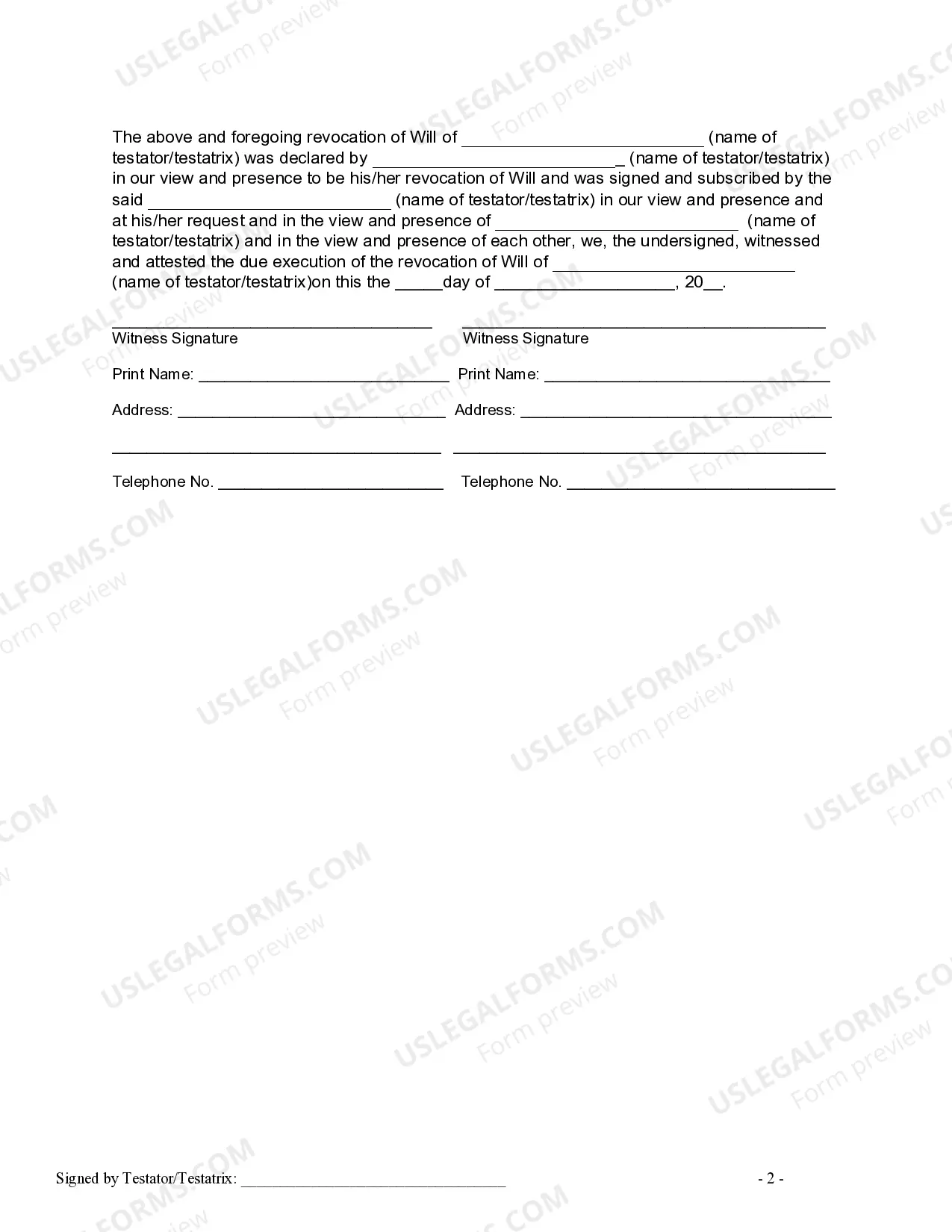
- Signature fields for the testator/testatrix and witnesses.
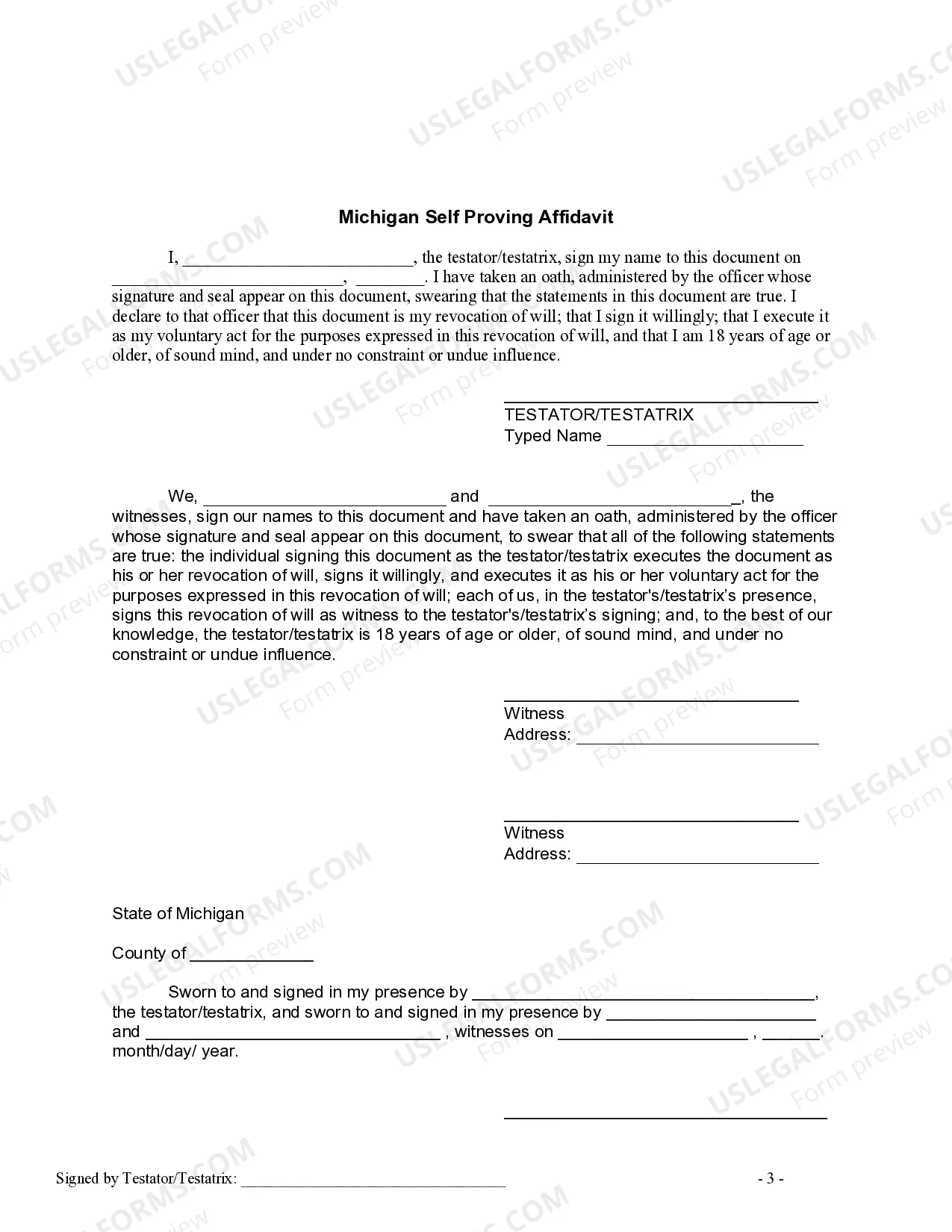
- Notarization section for added legal validity.

Common use cases
This form is necessary when you wish to revoke an existing will but have not yet created a new one that supersedes your previous will. It is particularly useful if you suspect that heirs may hold onto or try to probate older versions of your will, especially if those versions do not reflect your current wishes.
Who needs this form
- Individuals looking to officially revoke a previous will.
- Those who have created a new will but want to ensure clarity by revoking all previous documents.
- People concerned about family members potentially favoring an outdated will.
How to prepare this document
- Clearly state your full name and address at the top of the document.
- Include the date of the will you are revoking to avoid confusion.
- Sign the document in the presence of at least two witnesses.
- Have witnesses sign the document, providing their names and addresses.
- If required, arrange for notarization to enhance the form's legal validity.
Does this form need to be notarized?
This form must be notarized to be legally valid. Notarization helps to verify the identity of the individuals signing the document, ensuring that the revocation of the will is recognized legally. US Legal Forms provides integrated online notarization services for your convenience.
Get your form ready online
Our built-in tools help you complete, sign, share, and store your documents in one place.
Make edits, fill in missing information, and update formatting in US Legal Forms—just like you would in MS Word.
Download a copy, print it, send it by email, or mail it via USPS—whatever works best for your next step.
Sign and collect signatures with our SignNow integration. Send to multiple recipients, set reminders, and more. Go Premium to unlock E-Sign.
If this form requires notarization, complete it online through a secure video call—no need to meet a notary in person or wait for an appointment.
We protect your documents and personal data by following strict security and privacy standards.

Make edits, fill in missing information, and update formatting in US Legal Forms—just like you would in MS Word.

Download a copy, print it, send it by email, or mail it via USPS—whatever works best for your next step.

Sign and collect signatures with our SignNow integration. Send to multiple recipients, set reminders, and more. Go Premium to unlock E-Sign.

If this form requires notarization, complete it online through a secure video call—no need to meet a notary in person or wait for an appointment.

We protect your documents and personal data by following strict security and privacy standards.
Mistakes to watch out for
- Failing to include the date of the will being revoked.
- Not having the form signed in the presence of witnesses, which may invalidate it.
- Neglecting to notarize the document when required.
- Not clearly stating your intention to revoke the previous will.
Why use this form online
- Immediate access to a professionally drafted legal template.
- Time-saving downloads allow for quick and easy completion.
- Editable fields ensure that you can customize the form to your specific needs.
- Reliable resource created in compliance with local laws for added peace of mind.
Looking for another form?
Form popularity
FAQ
To revoke a will in Michigan, you should create a Michigan Written Revocation of Will that clearly states your intent to revoke the previous will. You can also revoke a will by physically destroying it, such as tearing it up or burning it, in the presence of witnesses. It's essential to follow the state's legal requirements to ensure the revocation is valid. Using US Legal Forms can provide you with the necessary documents and guidance for a smooth revocation process.
The 77 day rule in Michigan pertains to the time frame within which a Michigan Written Revocation of Will must be executed to be valid. If you create a new will or a written revocation of your existing will within 77 days of a prior will's execution, it may impact the validity of the earlier document. This rule ensures clarity in your estate planning by requiring timely updates. To navigate these complexities, consider using US Legal Forms for straightforward solutions.
Writing a revocation involves drafting a clear and concise statement that indicates your desire to cancel your existing will. Start with your name, the date, and a declaration that you are revoking your will. You may benefit from using a Michigan Written Revocation of Will template available on platforms like US Legal Forms, which can guide you through the necessary steps and ensure your document is legally sound.
To revoke a will in writing, you must create a document that clearly states your intention to revoke your current will. This document should include your name, the date, and a statement indicating that you are revoking the previous will. Using a Michigan Written Revocation of Will template can simplify this process and ensure that all legal requirements are met, making it easier for you to manage your estate.
In Michigan, there are three primary ways to revoke a will. The first method is through a physical act, such as destroying the document. The second option involves creating a new will that explicitly states the previous will is revoked. Finally, a Michigan Written Revocation of Will can be executed to formally cancel an existing will without needing to create a new one.
A holographic will is a will that is handwritten by the person it is for. Generally, Michigan deems such a will valid, even without witness signatures, if: The material provisions of the will are in the testators handwriting; The will is dated, and.
Legislation. Once a will has been signed, there can be no alteration by crossing out or writing in new clauses. Changes to the document will have no effect.
Start over and write a new will. Be sure to include: I revoke any prior wills and codicils at the top. You can change your will by adding a codicil (an amendment). A codicil is similar to a will but it changes only certain parts.
You cannot amend your will after it's been signed and witnessed. The only way you can change a will is by making an official alteration called a codicil. You must sign a codicil and get it witnessed in the same way as witnessing a will. There's no limit on how many codicils you can add to a will.
When a person (the 'Testator') makes a valid Will, section 20 of the Wills Act 1837 states that it can only be revoked in three ways: by the Testator making another Will or codicil; by them signing a revocation provision (a professionally drafted Will will always include this provision) or by destruction.