Michigan Last Will and Testament for Divorced person not Remarried with Adult Children
What is this form?
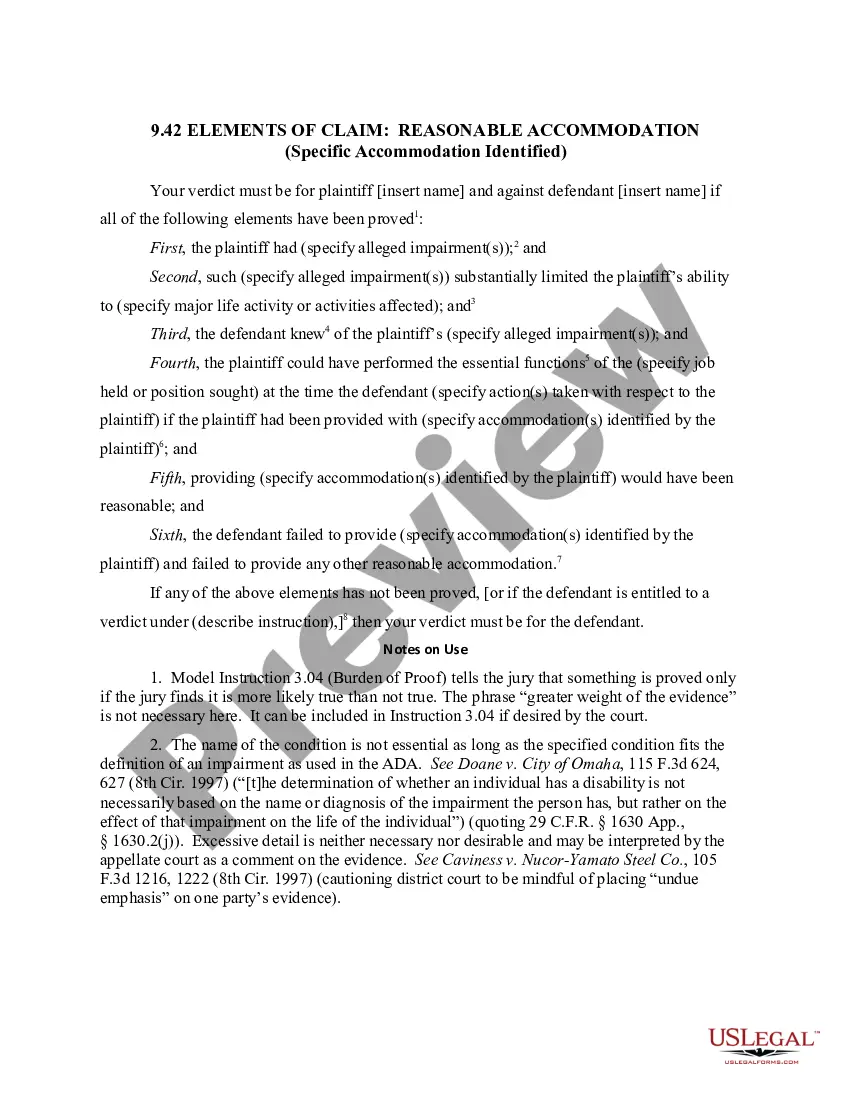
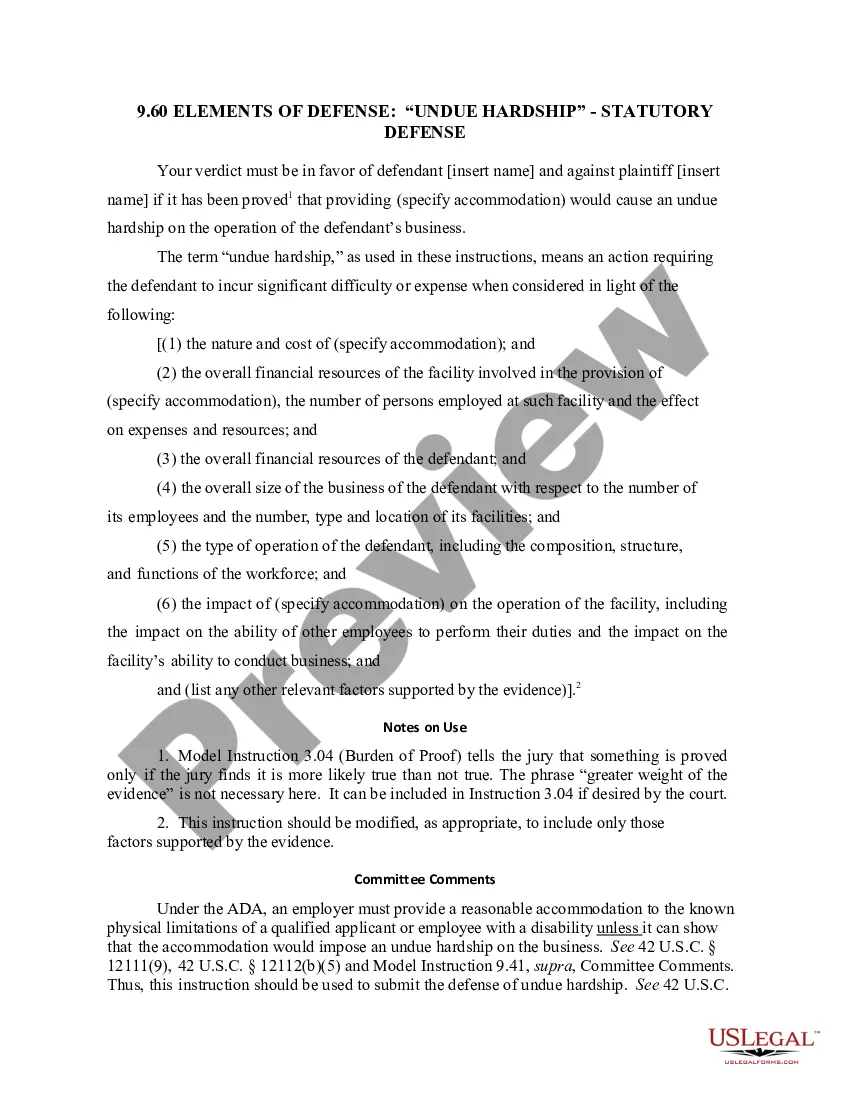
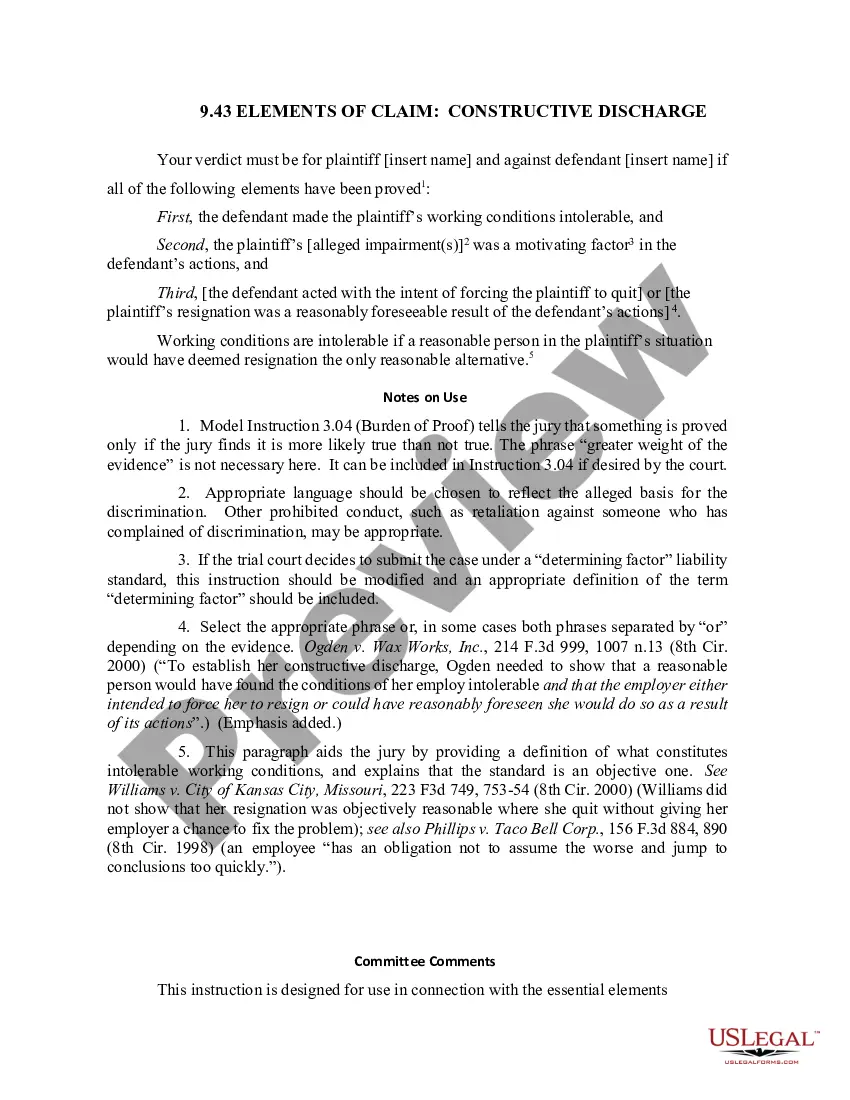
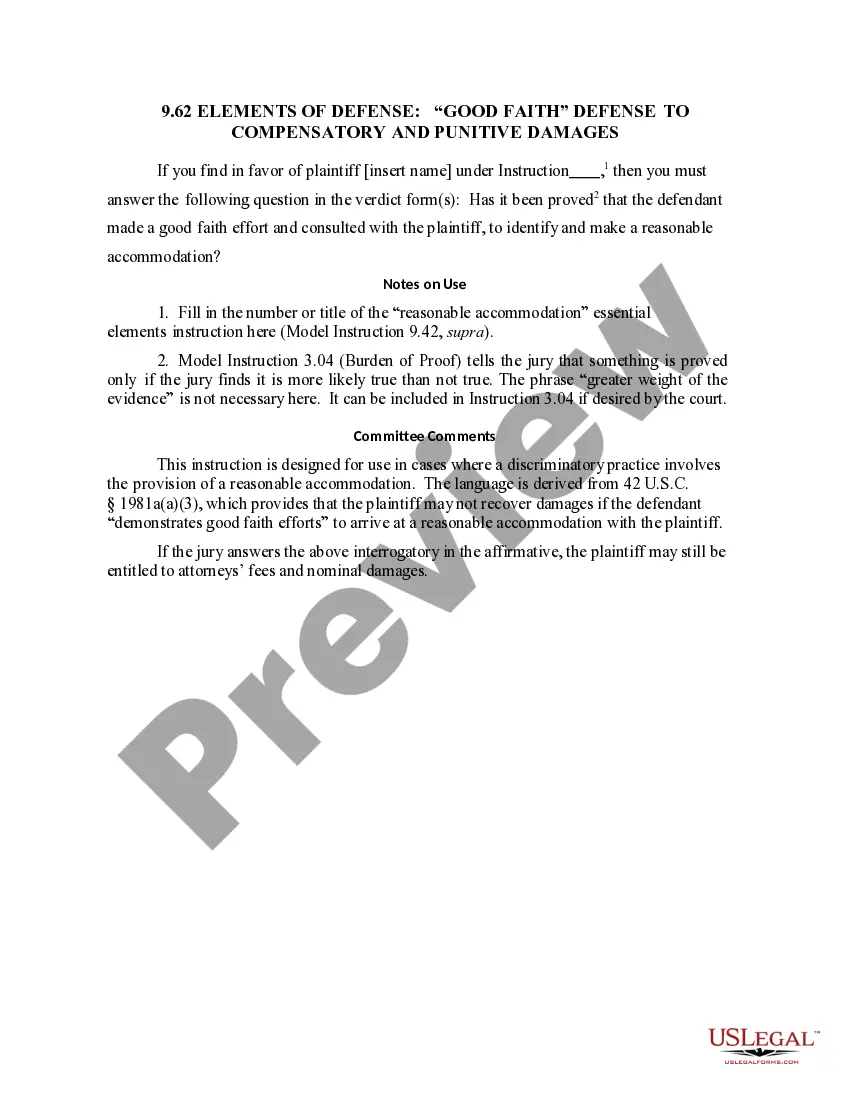
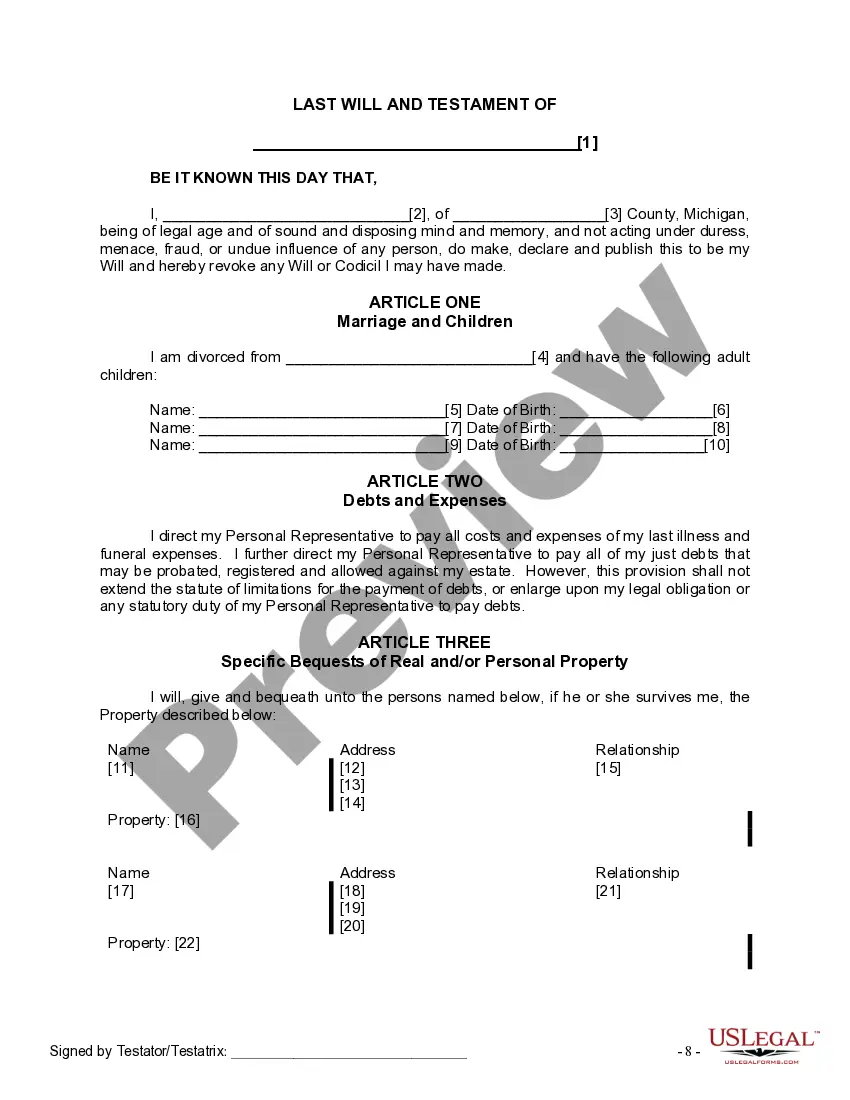
This form is a Last Will and Testament specifically designed for individuals who are divorced and not remarried, with adult children. It outlines the distribution of your assets, appointment of an executor, and various provisions pertinent to your estate. This will differs from other forms in that it specifically addresses the needs and concerns of a divorced individual with adult children, ensuring that your wishes are clearly articulated and legally binding.
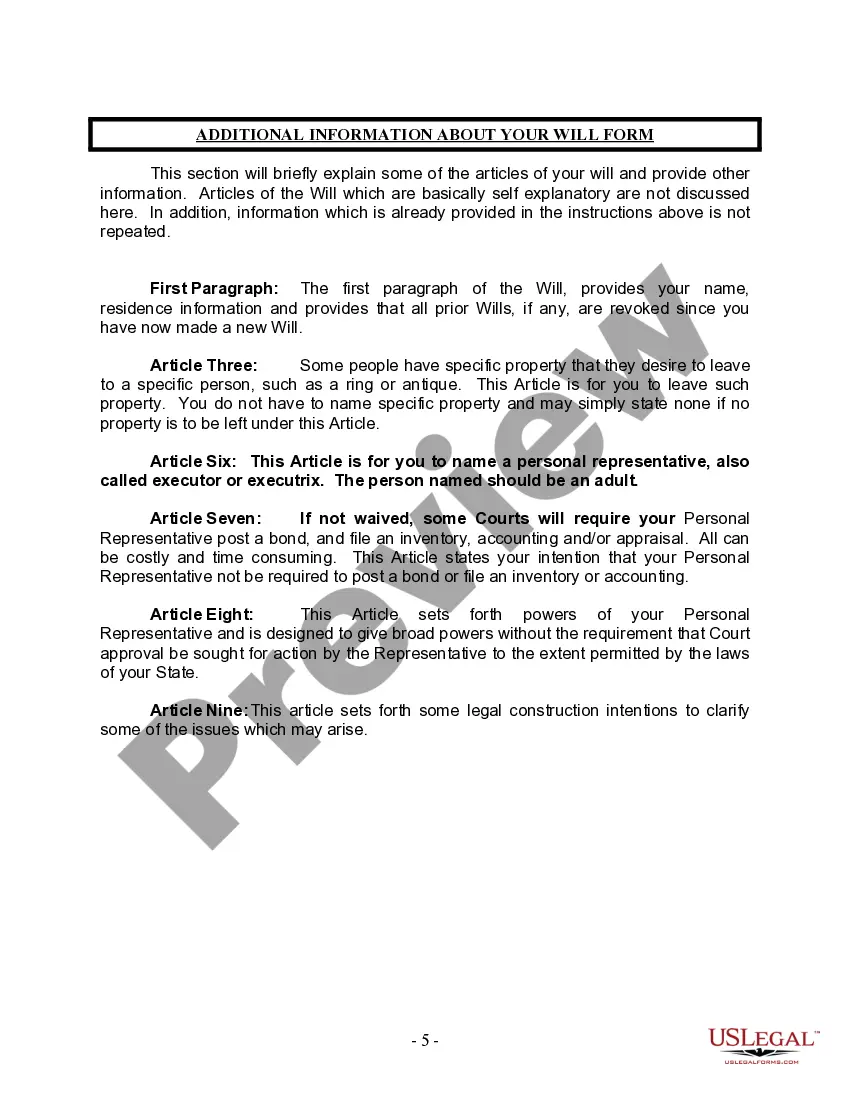
Key parts of this document
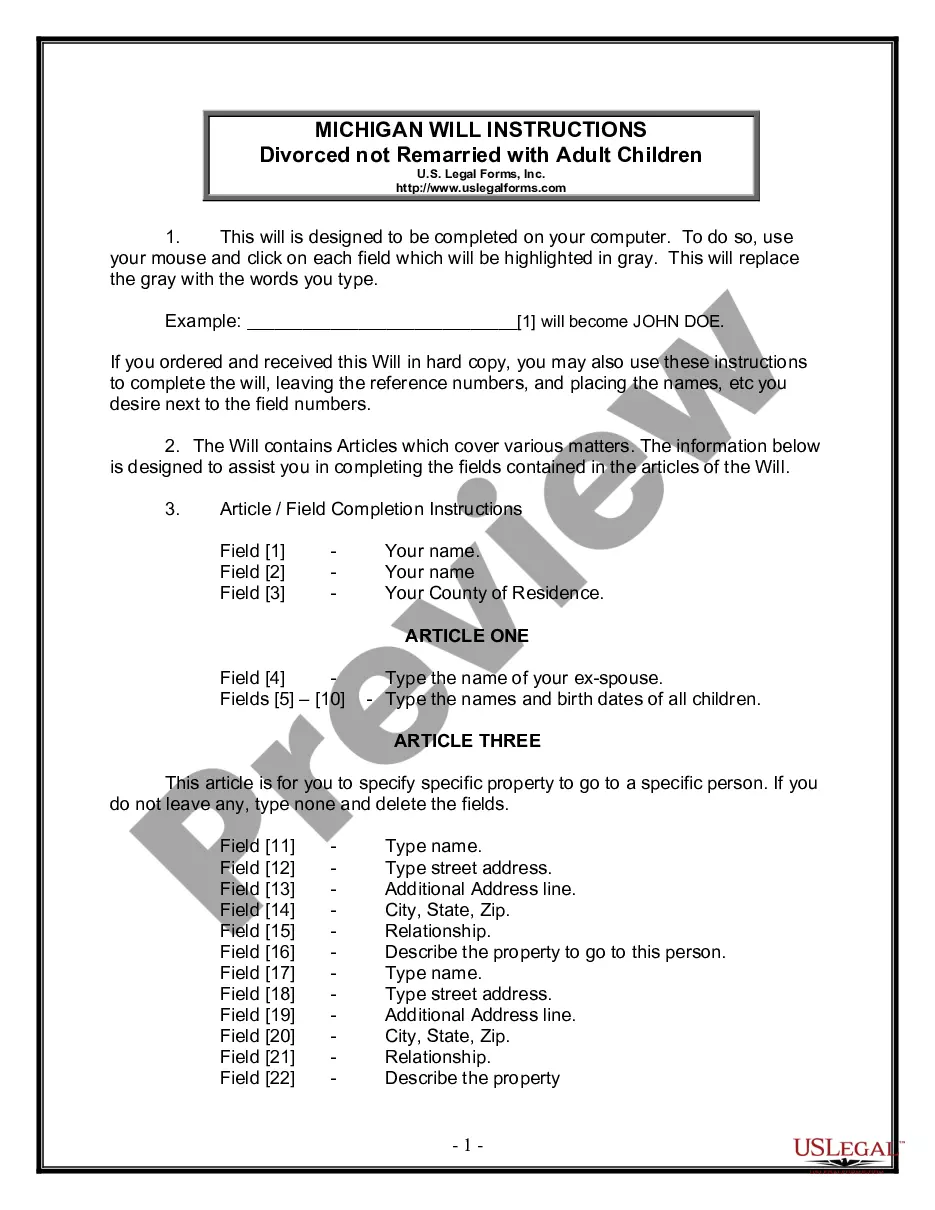
- Personal information: Includes your name and residence county.
- Ex-spouse information: Field to specify your ex-spouse's name.
- Children's details: Space to list the names and birth dates of your adult children.
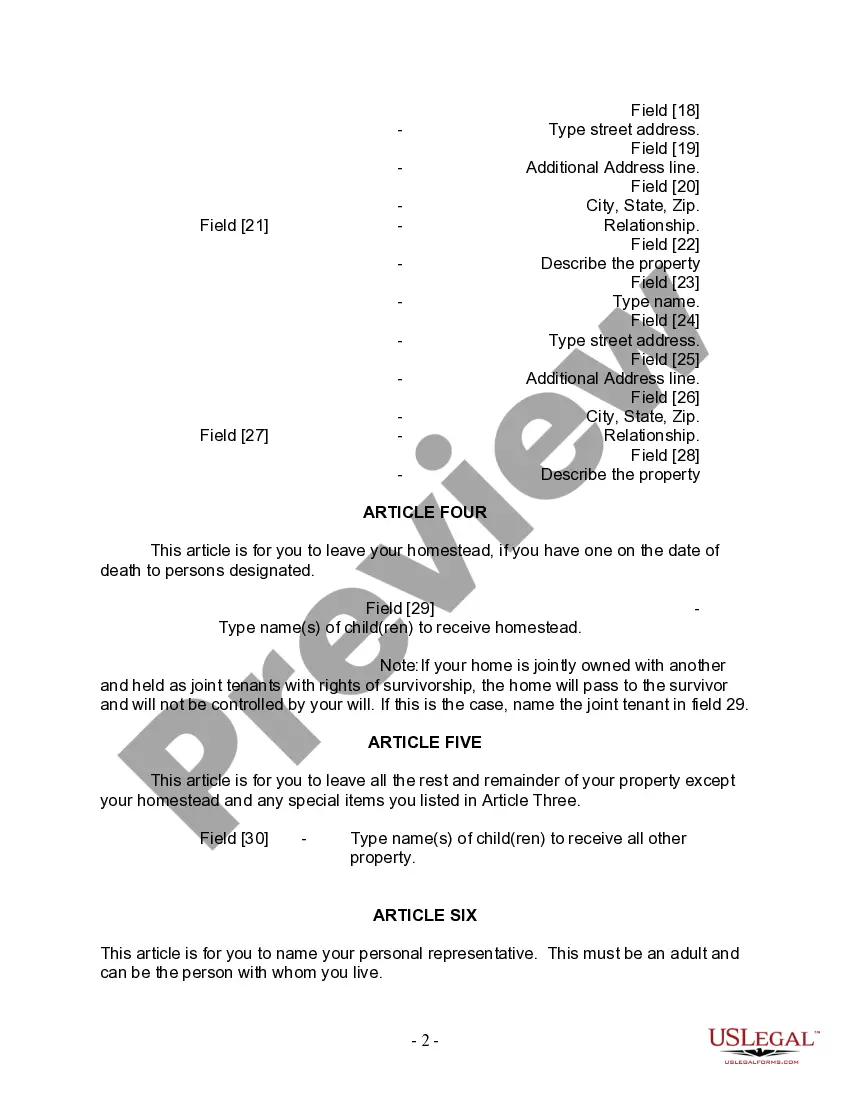
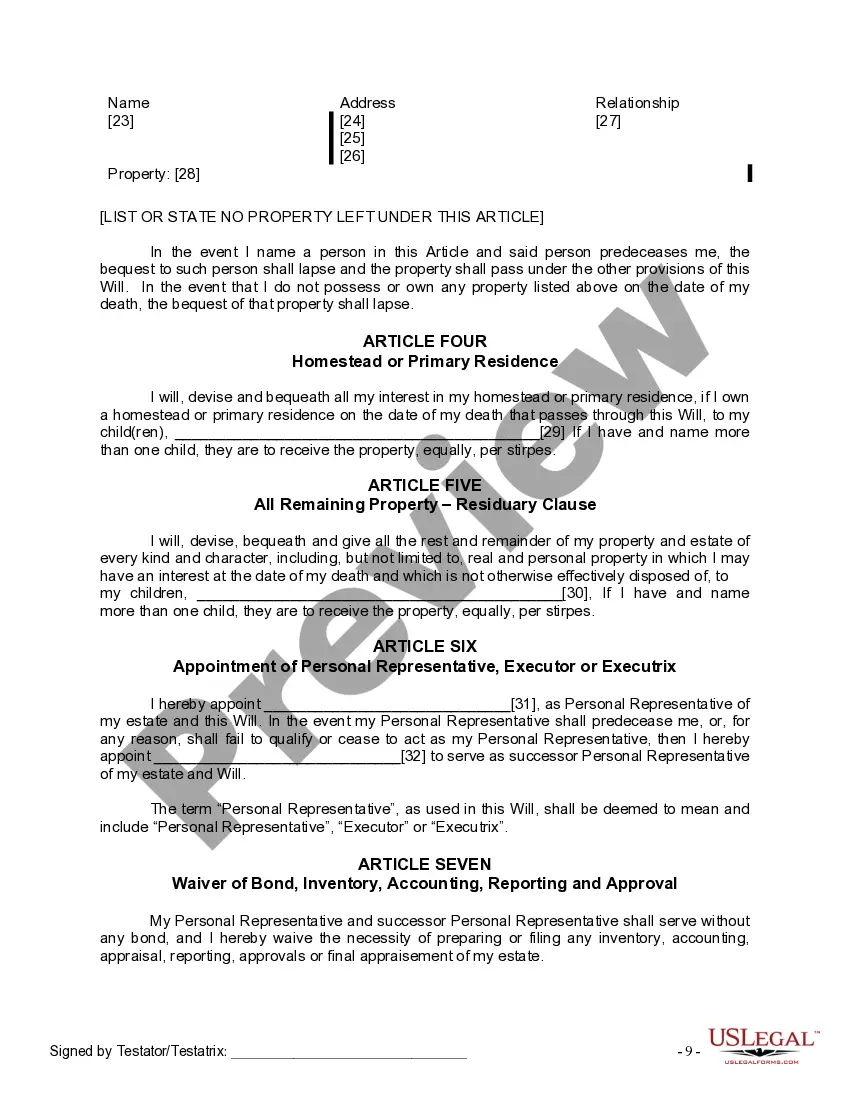
- Specific bequests: Allows you to designate particular property to specific individuals.
- Homestead clause: Designates the heirs of your primary residence.
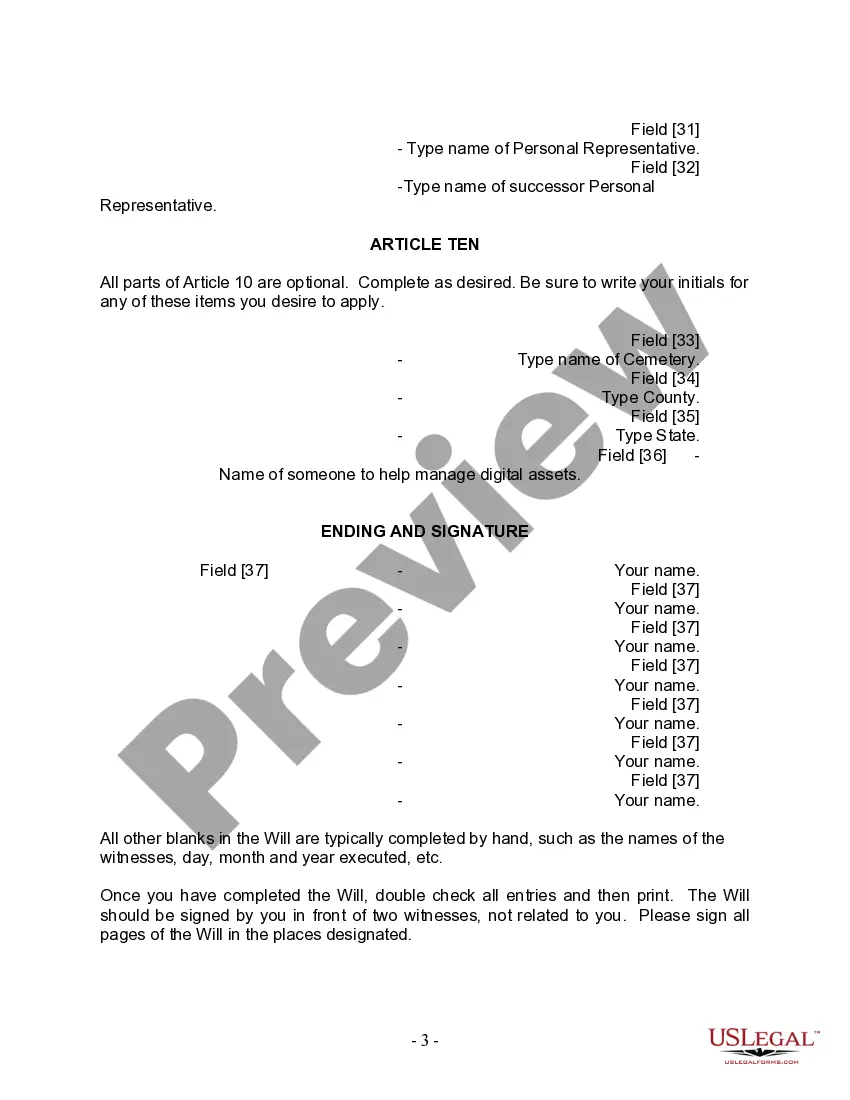
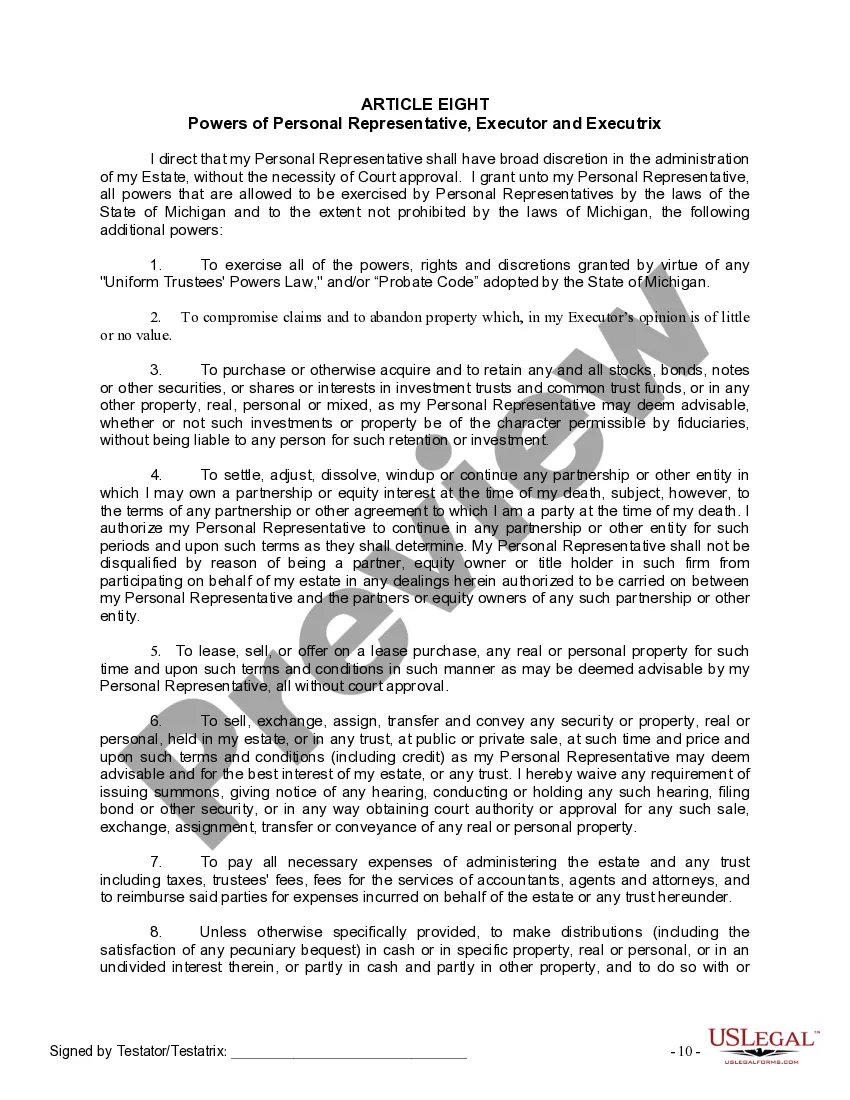
- Personal representative: Name someone to manage your estate after your passing.
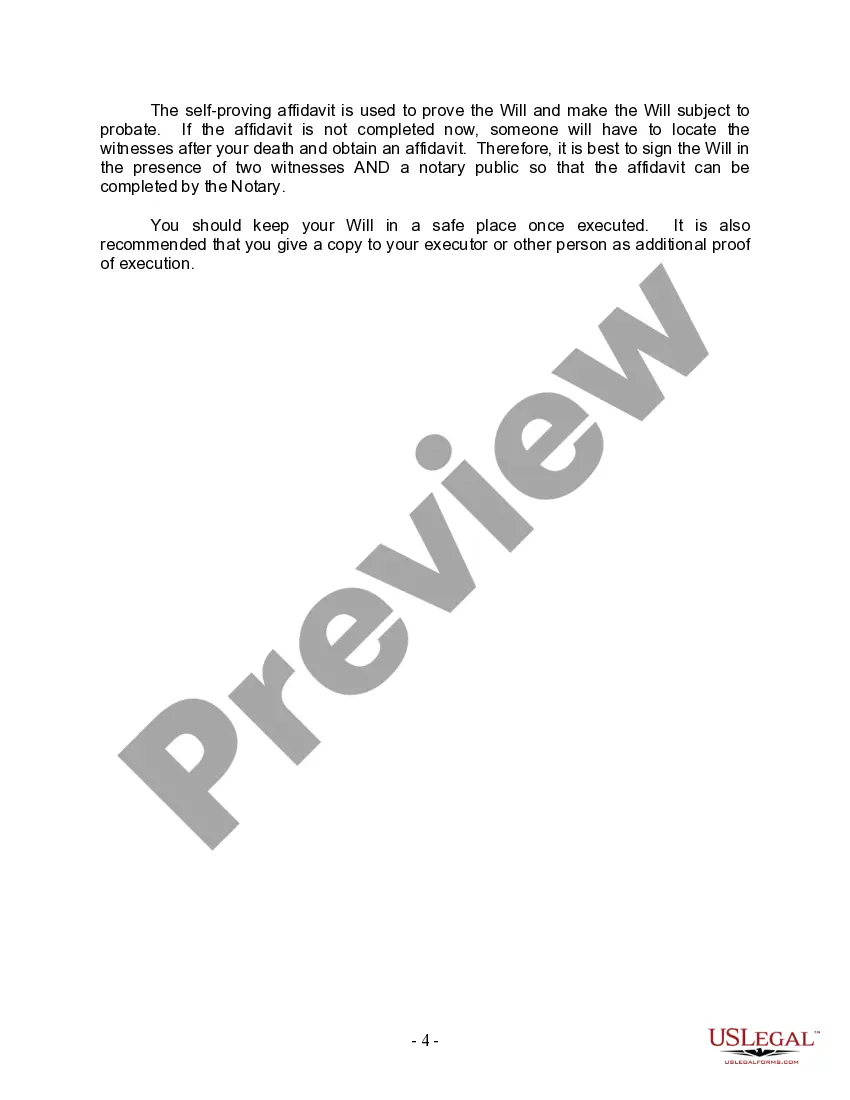
- Self-proving affidavit: A provision for expedited probate proceedings when notarized.





Common use cases
Who needs this form
- Individuals aged eighteen and over, who are of sound mind.
- Divorced persons who have not remarried.
- Parents with adult children who wish to designate how their property should be distributed.
- Those looking to express specific wishes regarding their estate.
How to complete this form
- Identify the parties: Fill in your name, residence information, and ex-spouse's name.
- Specify your children: List your adult children's names and birth dates.
- Designate bequests: Indicate any specific property or items you want to allocate to your beneficiaries.
- Name your personal representative: Choose an adult to manage your estate after your passing.
- Review and sign: Make sure all fields are complete, then sign in front of two witnesses and a notary public.
Does this document require notarization?
Yes, this form must be notarized to be legally valid. The notarization adds an additional layer of authenticity and can help expedite the probate process. Using US Legal Formsâ integrated online notarization services, you can complete the process securely and conveniently.
Get your form ready online
Our built-in tools help you complete, sign, share, and store your documents in one place.
Make edits, fill in missing information, and update formatting in US Legal Forms—just like you would in MS Word.
Download a copy, print it, send it by email, or mail it via USPS—whatever works best for your next step.
Sign and collect signatures with our SignNow integration. Send to multiple recipients, set reminders, and more. Go Premium to unlock E-Sign.
If this form requires notarization, complete it online through a secure video call—no need to meet a notary in person or wait for an appointment.
We protect your documents and personal data by following strict security and privacy standards.

Make edits, fill in missing information, and update formatting in US Legal Forms—just like you would in MS Word.

Download a copy, print it, send it by email, or mail it via USPS—whatever works best for your next step.

Sign and collect signatures with our SignNow integration. Send to multiple recipients, set reminders, and more. Go Premium to unlock E-Sign.

If this form requires notarization, complete it online through a secure video call—no need to meet a notary in person or wait for an appointment.

We protect your documents and personal data by following strict security and privacy standards.
Mistakes to watch out for
- Failing to have the will signed in front of required witnesses.
- Not clearly specifying property or beneficiaries may lead to confusion.
- Incompletely filling out fields, leading to potential disputes over your wishes.
- Neglecting to keep the will in a safe place or failing to inform your personal representative about its location.
Advantages of online completion
- Convenience of completing the document at your own pace.
- Editability, allowing for easy updates if your circumstances change.
- Accessibility to expert-drafted legal language ensuring compliance with state laws.
Key takeaways
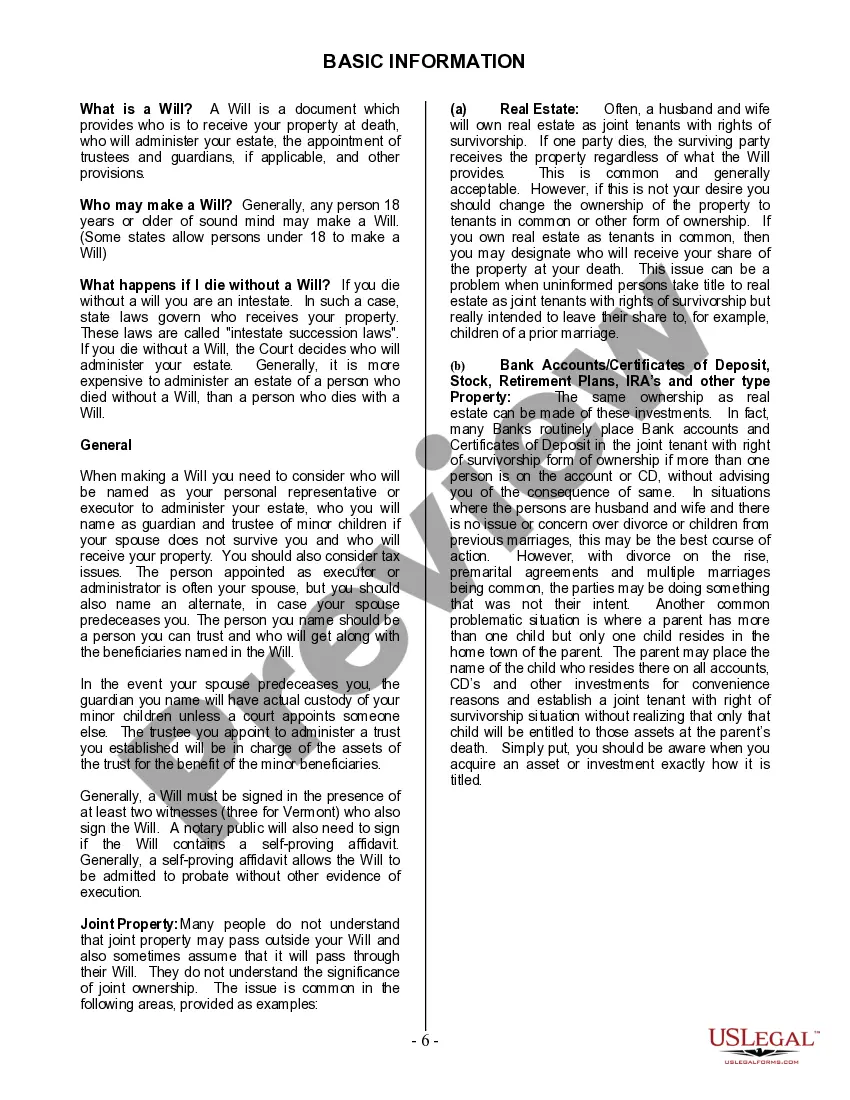
- A Last Will and Testament is crucial for directing the distribution of your estate.
- This specific form caters to divorced individuals with adult children, ensuring your wishes are clear.
- Proper execution, including notarization, is essential for legal validity.
- Details such as naming a personal representative and listing specific bequests can help avoid future disputes.
Looking for another form?
Form popularity
FAQ
One of the biggest mistakes people make with wills is failing to update them after major life changes, such as divorce. For divorced individuals with adult children, having a Michigan Last Will and Testament for Divorced person not Remarried with Adult Children ensures that your assets are distributed according to your current wishes. Using platforms like uslegalforms can help simplify the process and provide peace of mind.
Moving out during a divorce can significantly impact your legal rights, especially concerning asset division and custody arrangements. Leaving the marital home may create a perception of abandonment, affecting court decisions. It's important to address these issues in a Michigan Last Will and Testament for Divorced person not Remarried with Adult Children to ensure your intentions are clear.
The 10-year rule in Michigan primarily deals with spousal support and asset division after divorce. This rule can influence how a court views requests for financial assistance, especially for a divorced person not remarried with adult children. To protect your rights and ensure your wishes are honored, consider drafting a Michigan Last Will and Testament for Divorced person not Remarried with Adult Children.
In Michigan, the 10-year divorce law refers to the period during which a divorced spouse can claim spousal support after the divorce. If you have been divorced for less than 10 years, the court may consider awarding support based on your circumstances. For those with adult children, it's crucial to ensure that your Michigan Last Will and Testament for Divorced person not Remarried with Adult Children reflects your wishes regarding any support obligations.
If you remarry but don't draw up a new Will to reflect your new marriage, your existing Will is revoked, meaning you do not have a valid Will and your estate will be dealt with under intestacy rules.If you do not have surviving children, grandchildren or great grandchildren your spouse will receive the entire estate.
A will cannot be contested until someone dies. Children are often disinherited as a result of their father's remarriage. To maintain domestic harmony with the new wife, the husband will often do whatever the new wife says, including doing...
Under California law, a marriage automatically invalidates any pre-existing will or trust as to the new spouse's inheritance rights, unless the documents provide for a new spouse, or clearly indicate a new spouse will receive nothing.
You and your spouse may have one of the most common types of estate plans between married couples, which is a simple will leaving everything to each other. With this type of plan, you leave all of your assets outright to your surviving spouse. The kids or other beneficiaries only get something after you are both gone.