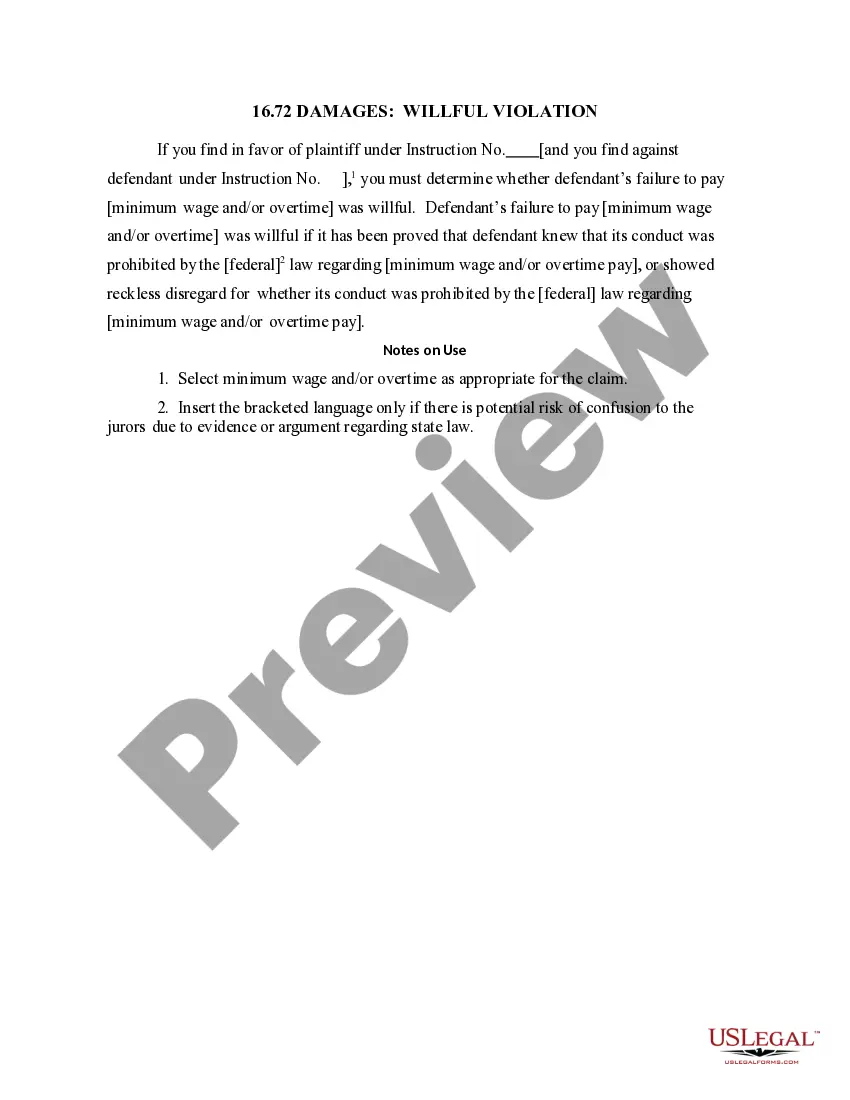
16.72 DAMAGES: WILLFUL VIOLATION
What is this form?
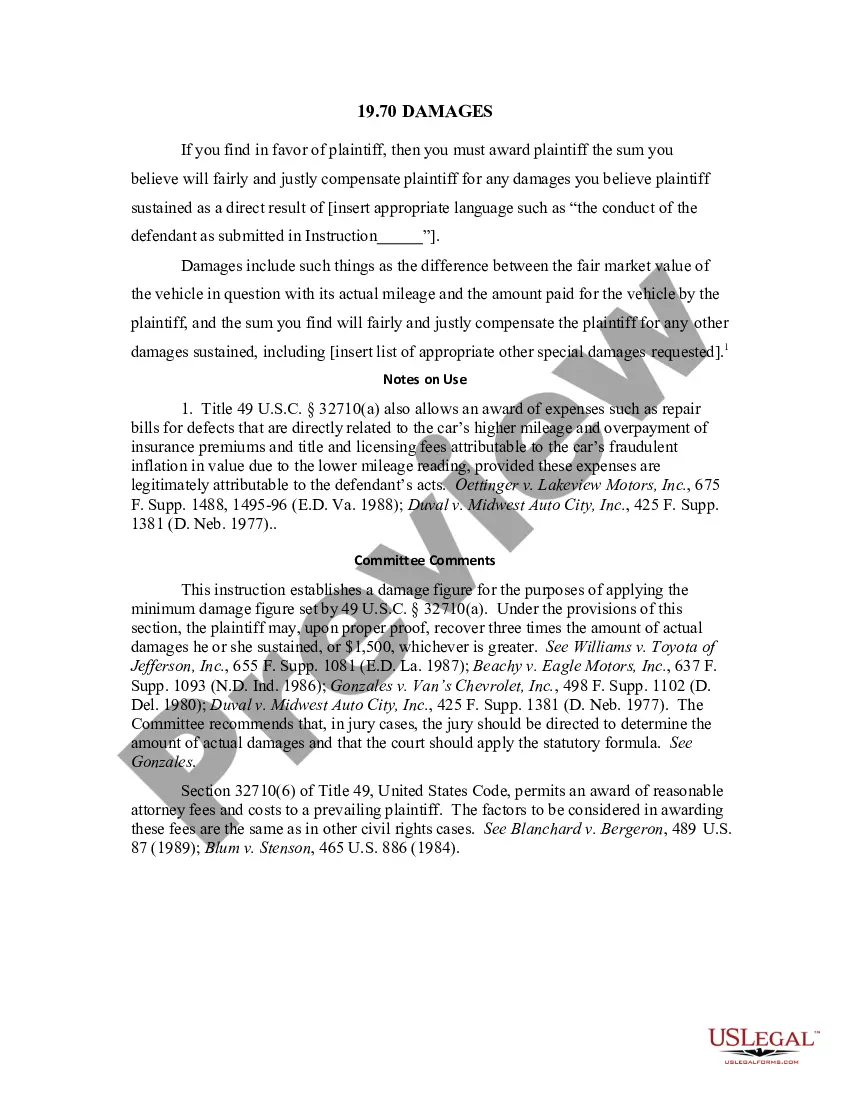
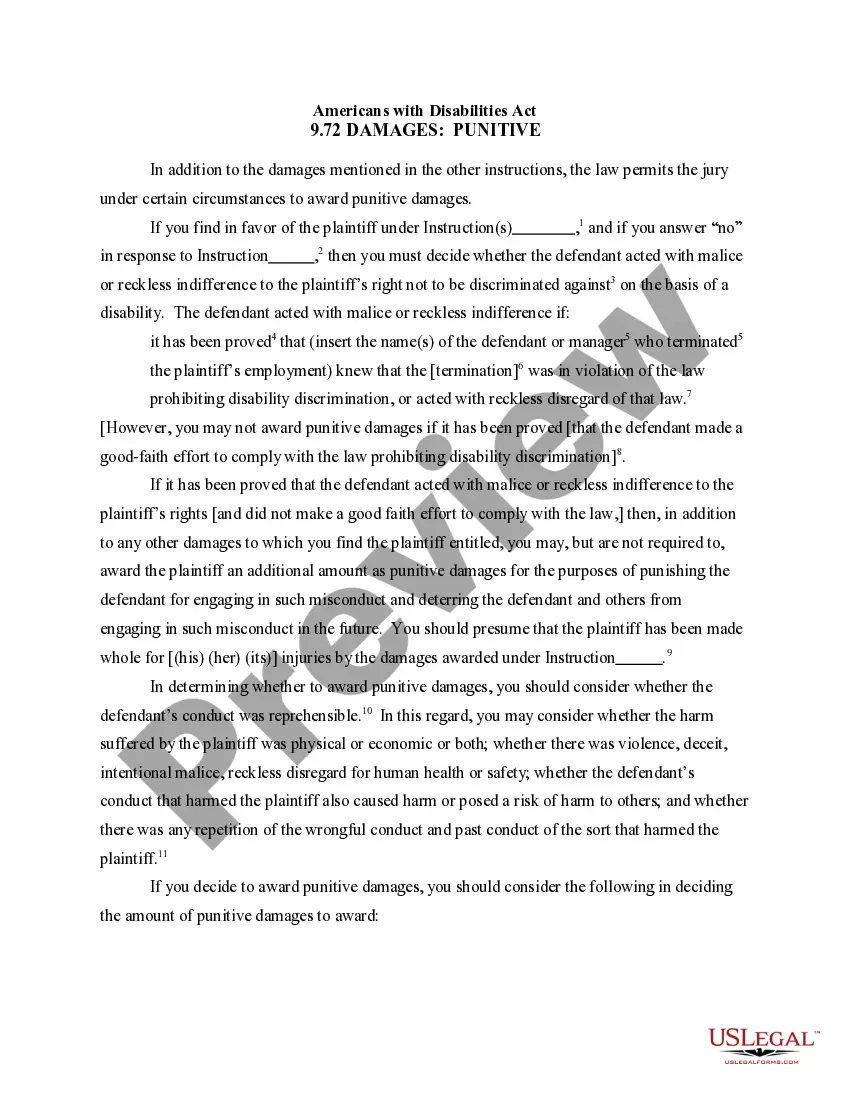
The 16.72 Damages: Willful Violation form is a legal document used to establish whether a defendant's failure to comply with minimum wage or overtime laws was intentional or reckless. This form differs from other legal forms related to employment disputes by focusing specifically on the assessment of willfulness in violations, which can significantly impact the damages awarded in cases concerning unpaid wages.
Form components explained
- Identification of the plaintiff and defendant involved in the case.
- A determination of whether the defendant's failure to pay wages was willful.
- Criteria for establishing willfulness, including knowledge of the law or reckless disregard for its requirements.
- Options to specify if the claim involves minimum wage or overtime pay violations.
- Guidance on including state-specific language if needed.
Common use cases
This form is needed in employment cases where an employee claims they have not been paid minimum wage or overtime and asserts that the employer's violation was willful. It is applicable when there is a need to present evidence of the employer's knowledge of their legal obligations or a blatant disregard for compliance with wage laws. This form is critical in helping jurors understand the implications of willfulness in determining potential damages.
Who should use this form
- Plaintiffs seeking to recover unpaid minimum wage or overtime pay.
- Employers needing to defend against claims of willful wage violations.
- Attorneys representing clients in wage and hour litigation.
Completing this form step by step
- Identify the parties involved by entering the names of the plaintiff and defendant.
- Determine if the claim involves minimum wage or overtime payment violations and select the appropriate option.
- Evaluate the evidence and enter findings regarding the defendant's knowledge or reckless disregard.
- Complete any relevant state-specific language if confusion might arise.
- Ensure all sections are signed and dated appropriately by the necessary parties.
Does this document require notarization?
This form does not typically require notarization to be legally valid. However, some jurisdictions or document types may still require it. US Legal Forms provides secure online notarization powered by Notarize, available 24/7 for added convenience.
Get your form ready online
Our built-in tools help you complete, sign, share, and store your documents in one place.
Make edits, fill in missing information, and update formatting in US Legal Forms—just like you would in MS Word.
Download a copy, print it, send it by email, or mail it via USPS—whatever works best for your next step.
Sign and collect signatures with our SignNow integration. Send to multiple recipients, set reminders, and more. Go Premium to unlock E-Sign.
If this form requires notarization, complete it online through a secure video call—no need to meet a notary in person or wait for an appointment.
We protect your documents and personal data by following strict security and privacy standards.

Make edits, fill in missing information, and update formatting in US Legal Forms—just like you would in MS Word.

Download a copy, print it, send it by email, or mail it via USPS—whatever works best for your next step.

Sign and collect signatures with our SignNow integration. Send to multiple recipients, set reminders, and more. Go Premium to unlock E-Sign.

If this form requires notarization, complete it online through a secure video call—no need to meet a notary in person or wait for an appointment.

We protect your documents and personal data by following strict security and privacy standards.
Typical mistakes to avoid
- Failing to specify whether the claim is regarding minimum wage or overtime, which can lead to confusion.
- Not providing sufficient evidence to prove willfulness on the part of the defendant.
- Omitting relevant state-specific language that may be required by local law.
- Incorrectly assuming that a lack of knowledge about wage laws absolves the defendant of liability.
Benefits of completing this form online
- Convenient access to a form drafted by licensed attorneys, ensuring legal validity.
- Ability to easily customize the form based on specific case circumstances and state laws.
- Immediate download options, allowing for a quick response to legal needs.
- Secure platform that protects sensitive information while providing a reliable service.
Looking for another form?

Form popularity
FAQ
I. What Are Liquidated Damages Clauses? Liquidated damages are contractual clauses used in a variety of contracts to set a fixed amount of damages to be paid in the event of a breach.
Section 11 good-faith defense. The section 11 good-faith defense allows a judge to reduce or eliminate an award of liquidated damages if the employer shows that its actions were taken in good faith and that the employer had ?reasonable grounds for believing? its actions did not violate the FLSA. 29 U.S.C. § 260.
But in addition to back pay, employees may recover what are referred to as ?liquidated damages? under the FLSA. Under the FLSA, liquidated damages are an amount equal to the pay employees should have received. In other words, employees can recover double ?back pay? damages for unpaid overtime.
In cases where an employee is subject to both state and federal minimum wage laws, the employee is entitled to the higher minimum wage.
To avoid liquidated damages, employers must show that (1) their actions were taken in good faith and (2) they had reasonable grounds for their belief that they were complying with the FLSA. (See 29 U.S.C. § 260).
Section 11 good-faith defense. The section 11 good-faith defense allows a judge to reduce or eliminate an award of liquidated damages if the employer shows that its actions were taken in good faith and that the employer had ?reasonable grounds for believing? its actions did not violate the FLSA. 29 U.S.C. § 260.
A contractual provision requiring a party in breach to pay a pre-determined amount to the other party as compensation for the breaching party's failure to perform a specific task or comply with a particular duty or obligation.
Willful violations of the FLSA may result in criminal prosecution and the violator fined up to $10,000. A second conviction may result in imprisonment.