9.72 DAMAGES: PUNITIVE
What this document covers
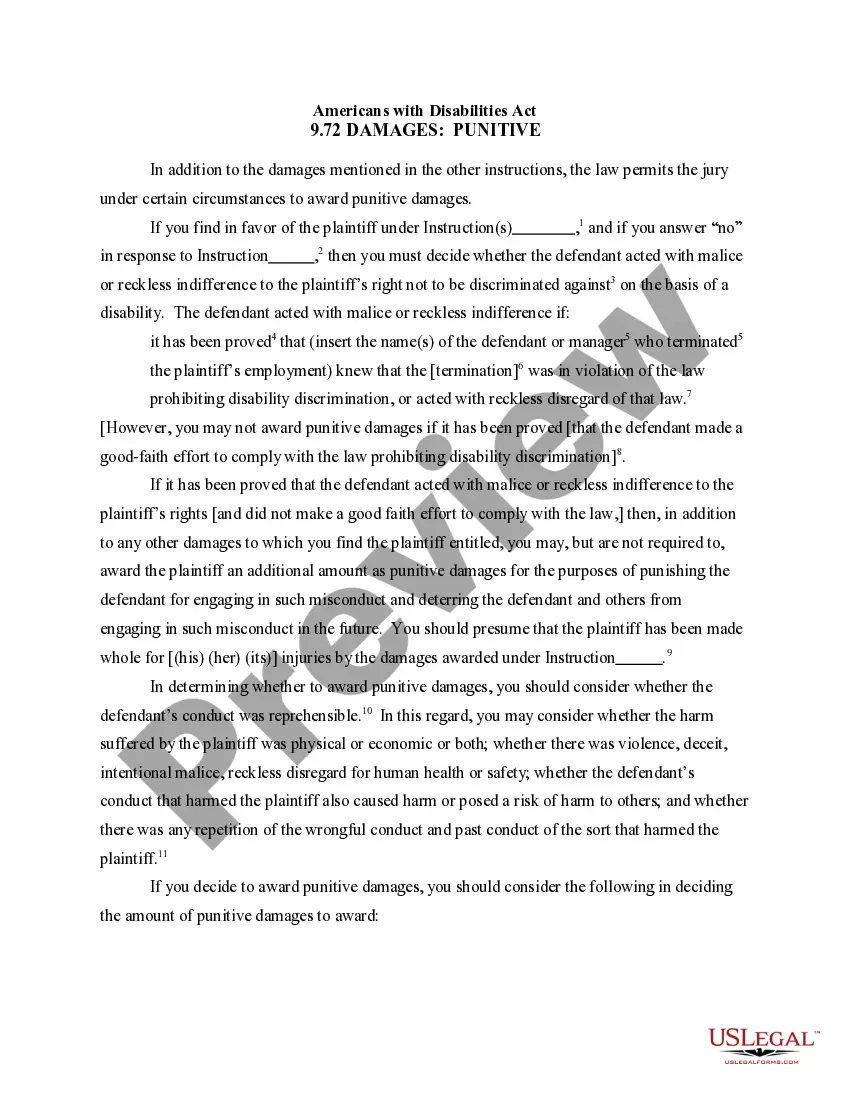
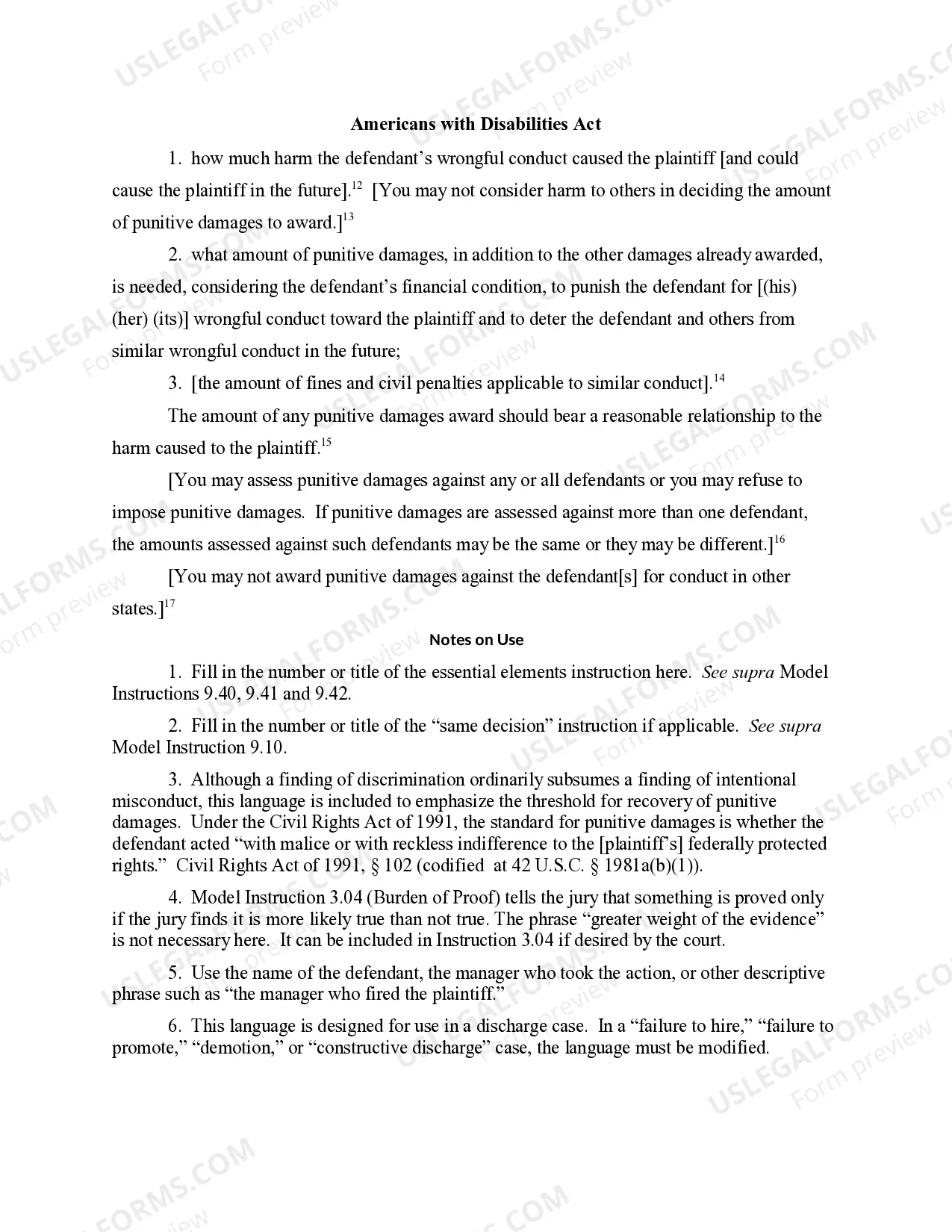
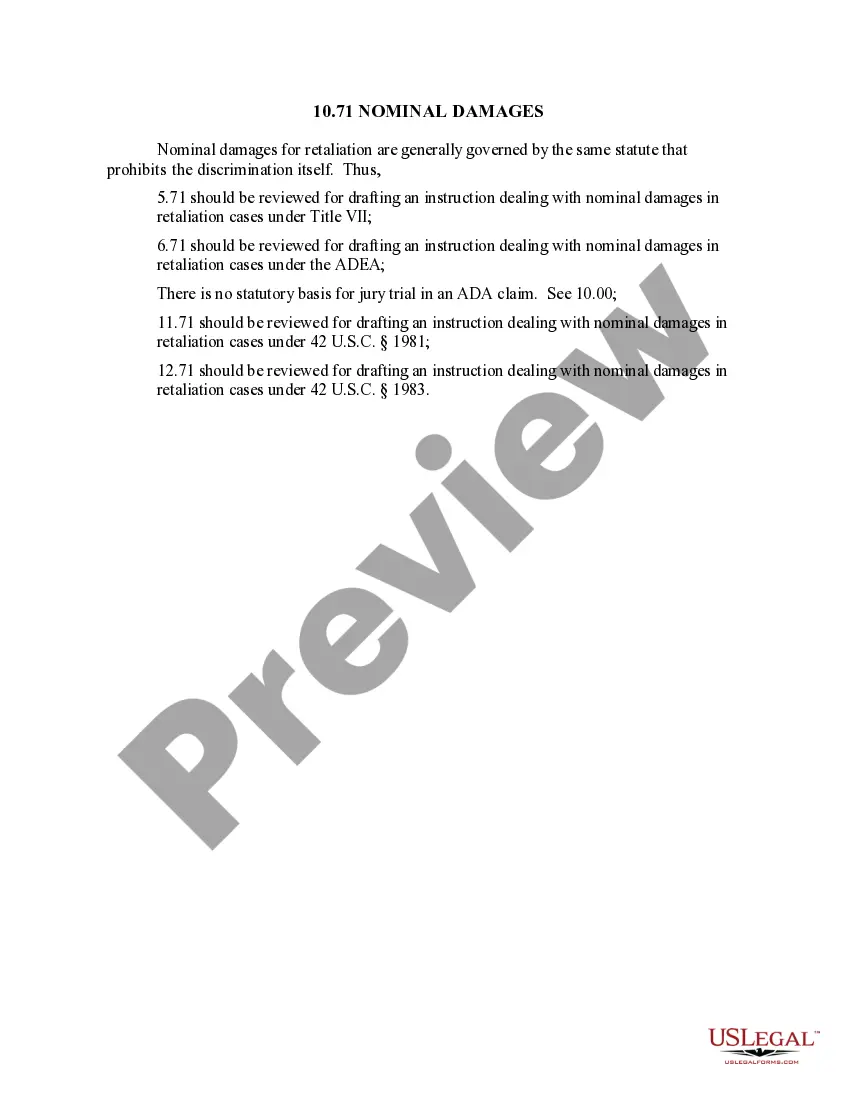
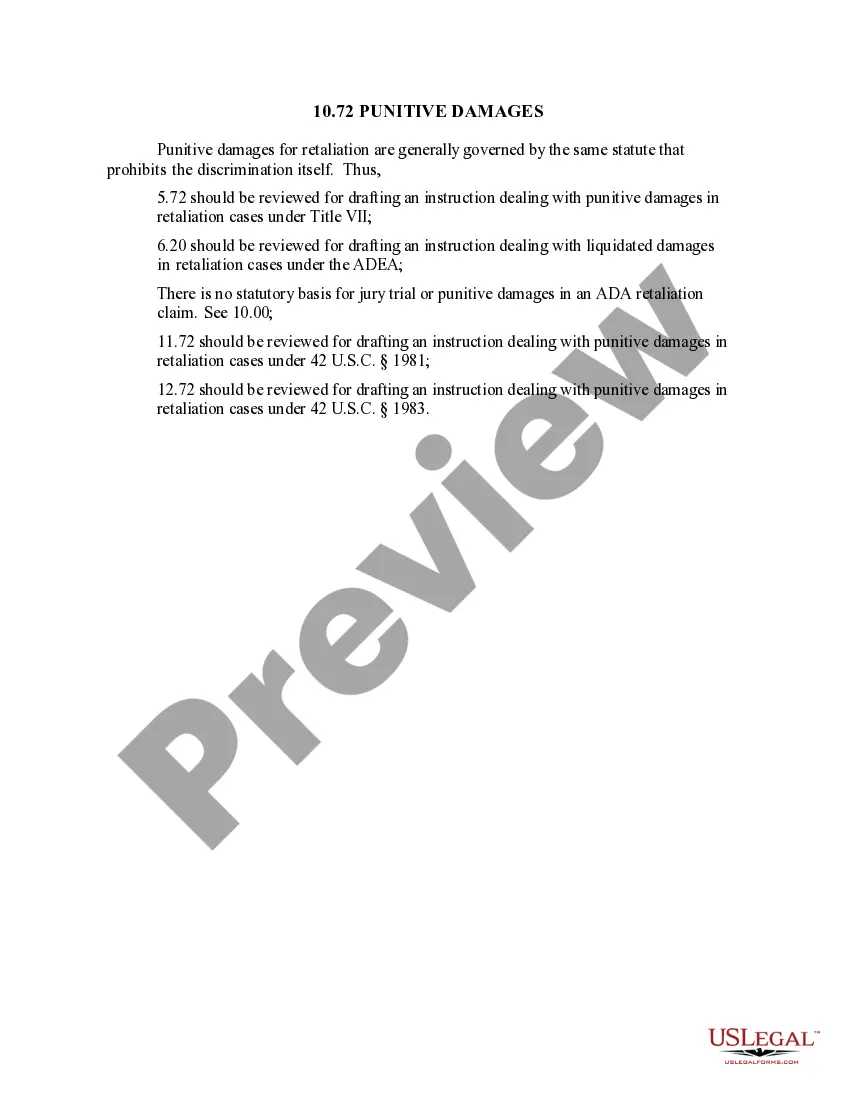
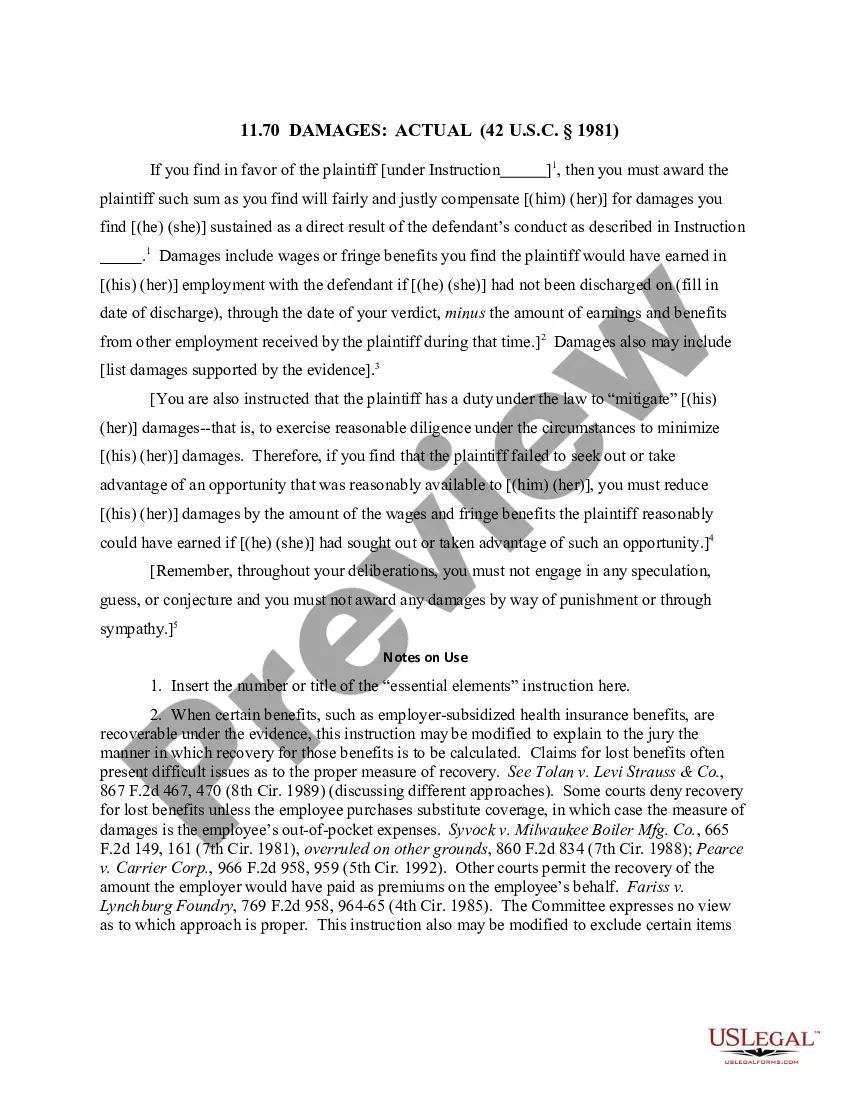
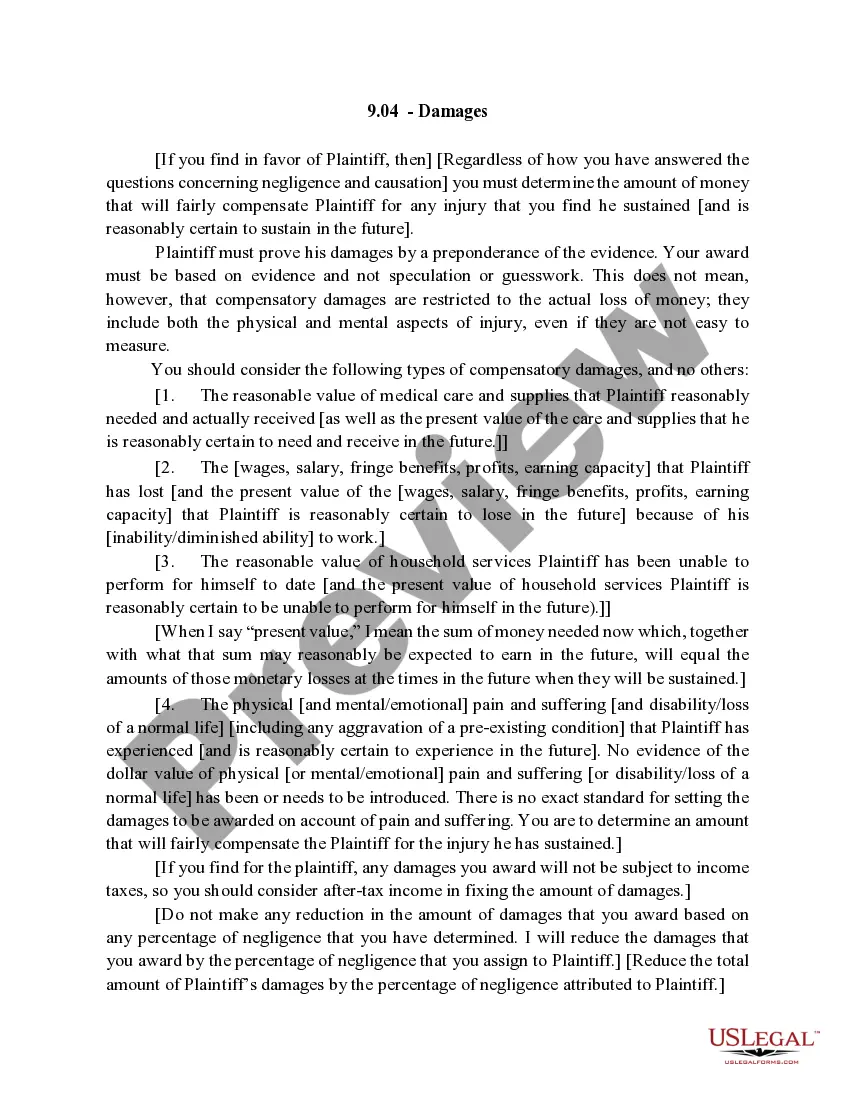
The damages punitive form is a legal document that allows a jury to award punitive damages under specific circumstances. Unlike compensatory damages, which are designed to cover the actual losses a plaintiff sustained, punitive damages are meant to punish the defendant's egregious actions and deter similar behavior in the future. This form specifically addresses cases of discrimination, particularly those related to disability, and outlines the conditions under which a jury may find grounds to award punitive damages against the defendant.
Key components of this form
- Introduction of punitive damages and their purpose.
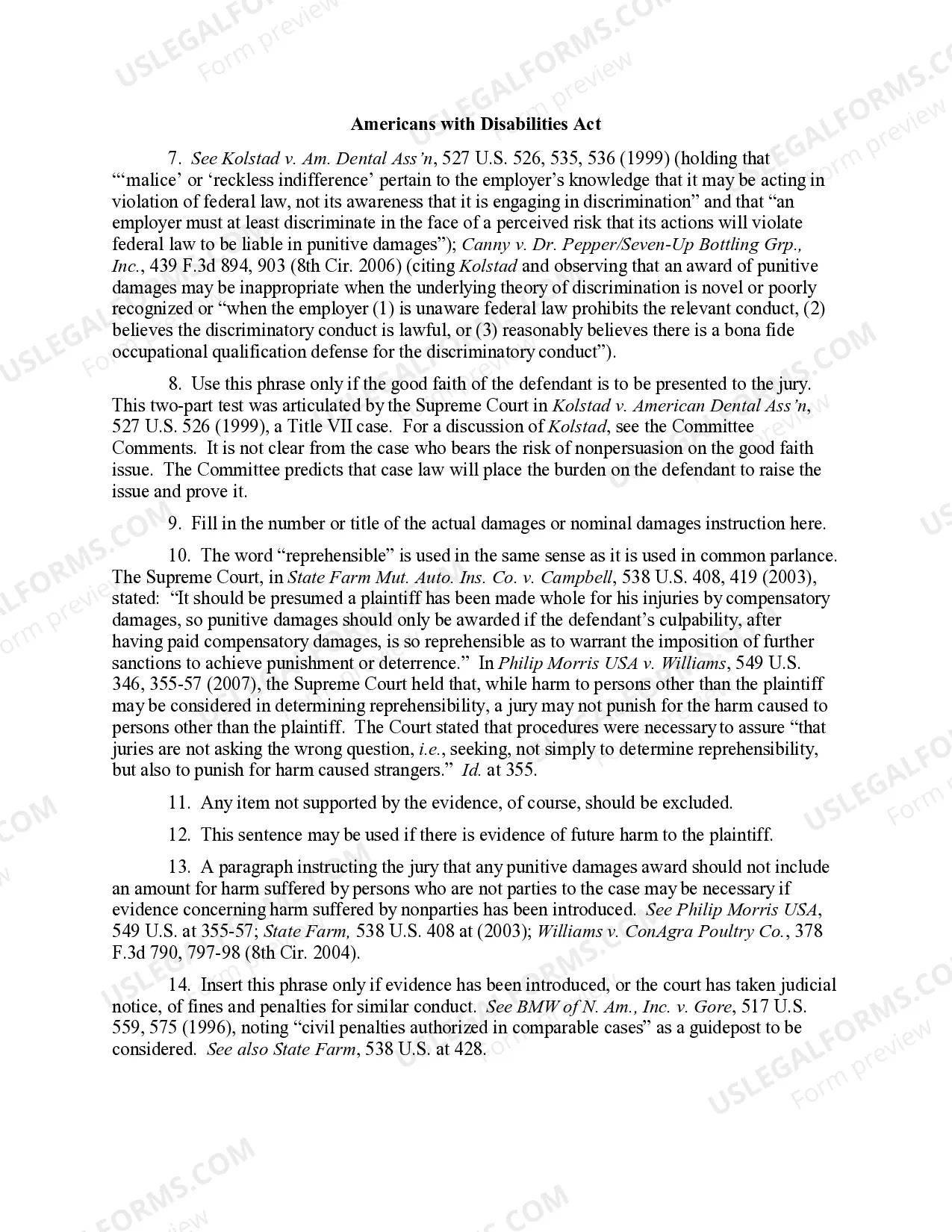
- Criteria for determining malice or reckless indifference by the defendant.
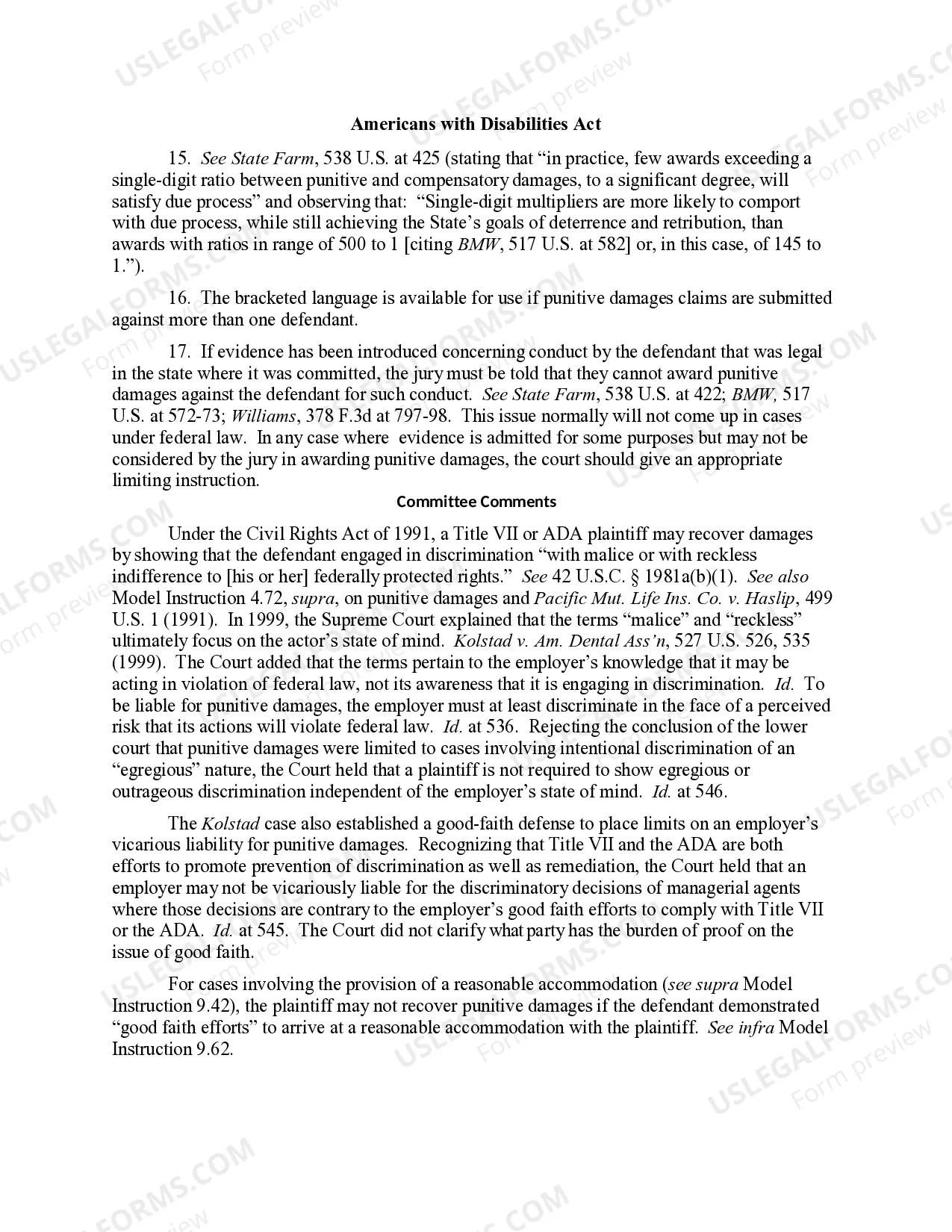
- Exclusions for punitive damages based on good-faith efforts by the defendant.
- Factoring in the reprehensibility of the defendant's conduct.
- Instructions for calculating the amount of punitive damages.
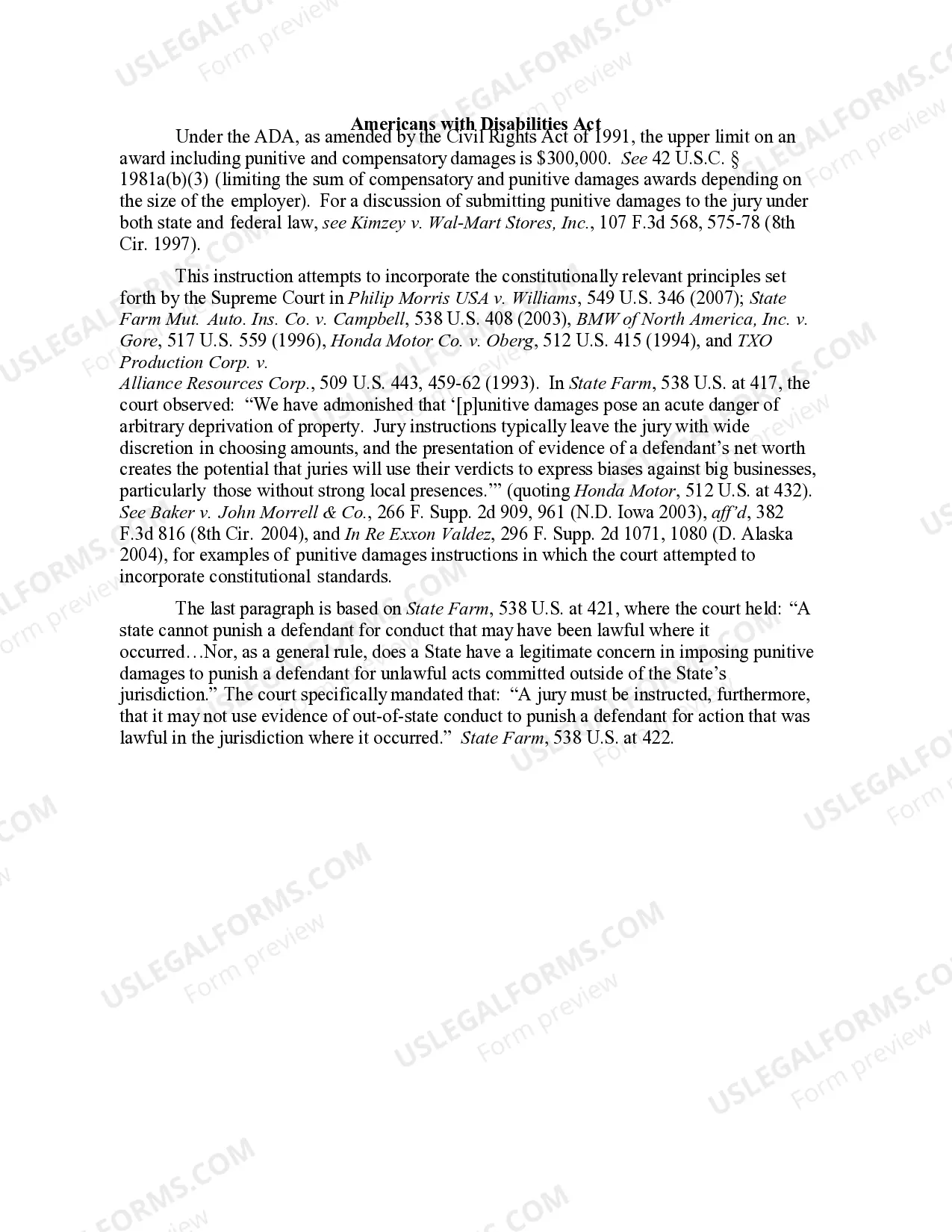
- Limitations on awarding punitive damages for out-of-state conduct.

When to use this document
This form should be used in cases where a plaintiff seeks punitive damages, particularly in discrimination lawsuits involving claims of wrongful termination or failure to accommodate for disabilities. Use this form when you believe the defendant acted with malice or reckless indifference towards the plaintiffâs rights, particularly under federal statutes. Situations could include wrongful termination due to disability discrimination or other scenarios demonstrating extreme misconduct by the defendant.
Who this form is for
- Plaintiffs in discrimination lawsuits seeking punitive damages.
- Attorneys representing plaintiffs in civil rights or employment cases.
- Individuals affected by unjust practices related to disability rights.
Completing this form step by step
- Identify the defendant(s) by including their names or titles.
- Determine if the defendant acted with malice or reckless indifference.
- Consider whether any good-faith efforts to comply with disability discrimination laws were made by the defendant.
- Evaluate the harm suffered by the plaintiff to determine the appropriateness of punitive damages.
- Calculate a reasonable amount for punitive damages based on the defendant's financial condition.
Is notarization required?
Notarization is generally not required for this form. However, certain states or situations might demand it. You can complete notarization online through US Legal Forms, powered by Notarize, using a verified video call available anytime.
Get your form ready online
Our built-in tools help you complete, sign, share, and store your documents in one place.
Make edits, fill in missing information, and update formatting in US Legal Forms—just like you would in MS Word.
Download a copy, print it, send it by email, or mail it via USPS—whatever works best for your next step.
Sign and collect signatures with our SignNow integration. Send to multiple recipients, set reminders, and more. Go Premium to unlock E-Sign.
If this form requires notarization, complete it online through a secure video call—no need to meet a notary in person or wait for an appointment.
We protect your documents and personal data by following strict security and privacy standards.

Make edits, fill in missing information, and update formatting in US Legal Forms—just like you would in MS Word.

Download a copy, print it, send it by email, or mail it via USPS—whatever works best for your next step.

Sign and collect signatures with our SignNow integration. Send to multiple recipients, set reminders, and more. Go Premium to unlock E-Sign.

If this form requires notarization, complete it online through a secure video call—no need to meet a notary in person or wait for an appointment.

We protect your documents and personal data by following strict security and privacy standards.
Typical mistakes to avoid
- Failing to establish clear evidence of malice or reckless indifference.
- Overlooking to document good-faith efforts made by the defendant.
- Miscalculating the ratio of punitive to compensatory damages.
- Including harm to others when assessing punitive damages for the specific plaintiff.
Benefits of using this form online
- Easy download and access to legally-sound templates drafted by licensed attorneys.
- Convenient for legal representatives and plaintiffs to complete without visiting a law office.
- Flexibility to edit and tailor the form to specific case details as needed.
Legal use & context
- Punitive damages are allowed under the Civil Rights Act of 1991, contingent on proving malice or reckless indifference.
- The plaintiff must demonstrate that the defendant's actions were not only harmful but also morally reprehensible.
- Awards for punitive damages should aim to be proportional to the actual damages suffered by the plaintiff.
Quick recap
- Punitive damages serve to punish and deter unlawful actions, distinct from compensatory damages.
- Evidence of the defendant's knowledge of wrongdoing is critical in seeking punitive damages.
- Consulting legal expertise is vital for successfully navigating state and federal discrimination laws.
Looking for another form?

Form popularity
FAQ
Individuals can also be ordered to pay punitive damages that injure someone else due to negligent behavior. Examples of this would be drunk driving or distracted driving. In both cases, the defendant would have made a conscious decision to engage in behavior that could easily harm another person.
Punitive damages are considered punishment and are typically awarded at the court's discretion when the defendant's behavior is found to be especially harmful. Punitive damages are normally not awarded in the context of a breach of contract claim. See e.g. O'Gilvie Minors v.
In a number of cases, the Court has indicated that a ratio between punitive and compensatory damages is high enough to lead to a finding of constitutional impropriety and that any ratio of or higher is almost certainly unconstitutional.
Although there is no maximum sum, punitive damages typically do not exceed four times the amount of compensatory damages. For example, if a plaintiff recovers $100,000 in compensatory damages and is awarded punitive damages, they most likely will receive up to $400,000 in punitive damages.
To determine the amount of punitive damages to award, the Book of Approved Jury Instructions (BAJI) states that the jury should consider: (1) The reprehensibility of the conduct of the defendant. (2) The defendant's financial condition and (3) the relationship to actual damages.
There are two types of damages that may be awarded: compensatory and punitive damages. Compensatory damages are intended to compensate for actual losses, while punitive damages aim to punish the defendant. It's important to work with an experienced attorney to navigate the legal system and ensure a fair outcome.
The median amount of punitive damages that are awarded is around $64,000.
Individuals can also be ordered to pay punitive damages that injure someone else due to negligent behavior. Examples of this would be drunk driving or distracted driving. In both cases, the defendant would have made a conscious decision to engage in behavior that could easily harm another person.