Michigan Summons And Complaint
Description
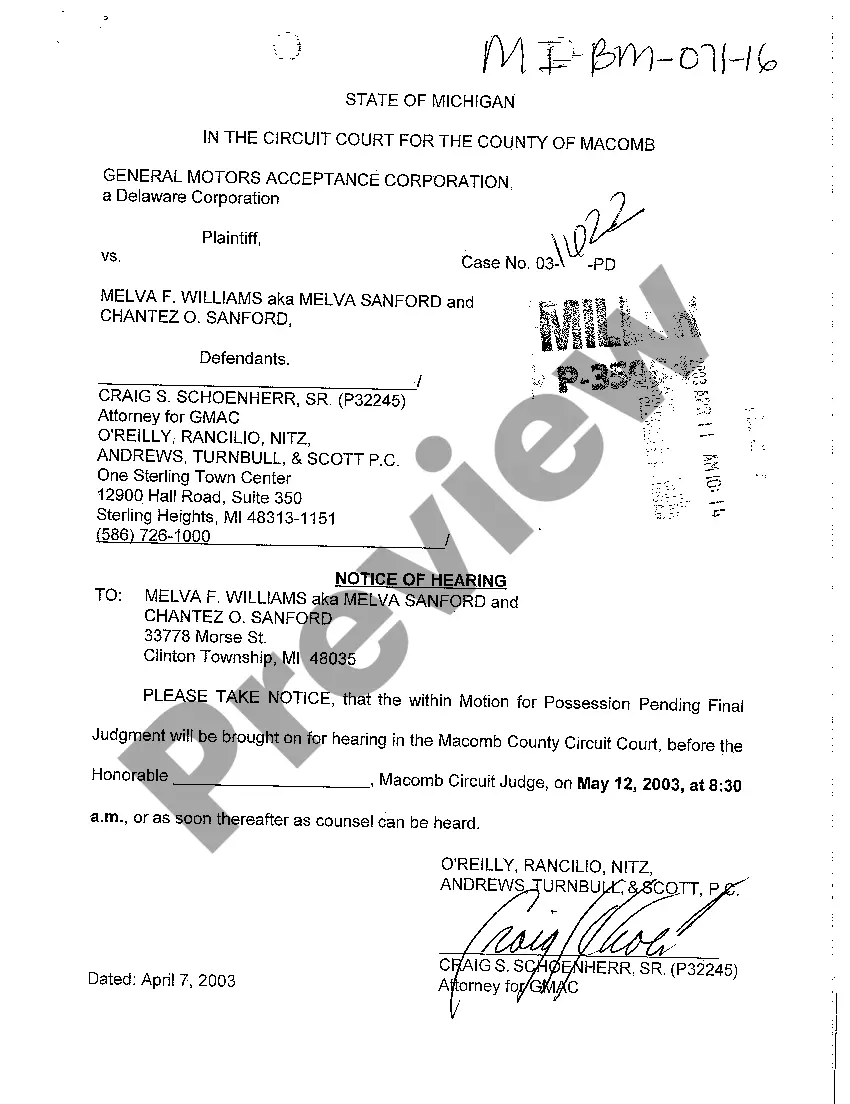



How to fill out Michigan Summons And Complaint?
Obtain any type from 85,000 legal documents such as Michigan Summons And Complaint online with US Legal Forms.
Each template is drafted and refreshed by state-licensed lawyers.
If you hold a subscription, Log In. Once you’re on the form’s page, click the Download button and go to My documents to gain access to it.
With US Legal Forms, you will consistently have swift access to the appropriate downloadable template. The platform provides you with access to documents and categorizes them to facilitate your search. Utilize US Legal Forms to obtain your Michigan Summons And Complaint quickly and effortlessly.
- Review the state-specific criteria for the Michigan Summons And Complaint you intend to utilize.
- Examine the description and preview the template.
- When you are confident the template meets your requirements, click Buy Now.
- Choose a subscription plan that fits your financial plan.
- Establish a personal account.
- Make a payment in one of two convenient methods: by card or through PayPal.
- Select a format to download the document in; two options are available (PDF or Word).
- Save the file to the My documents section.
- After your reusable form is downloaded, print it or store it on your device.
Form popularity
FAQ
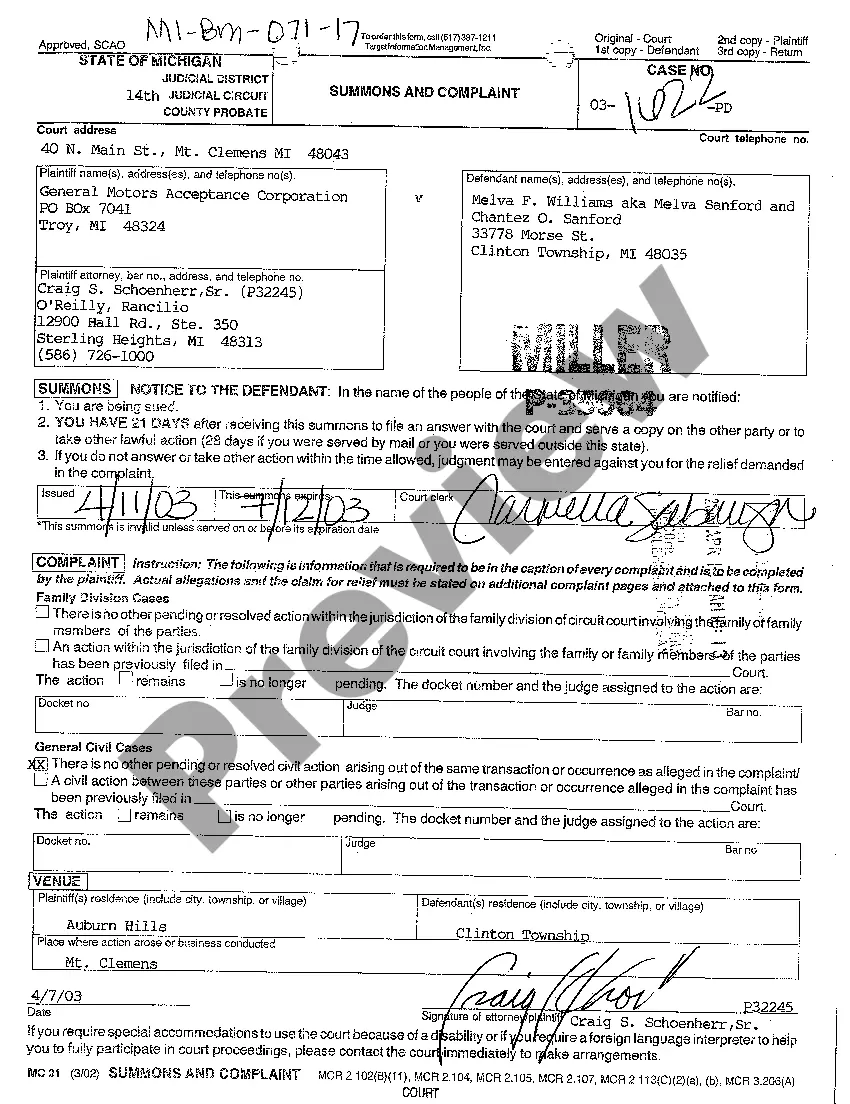
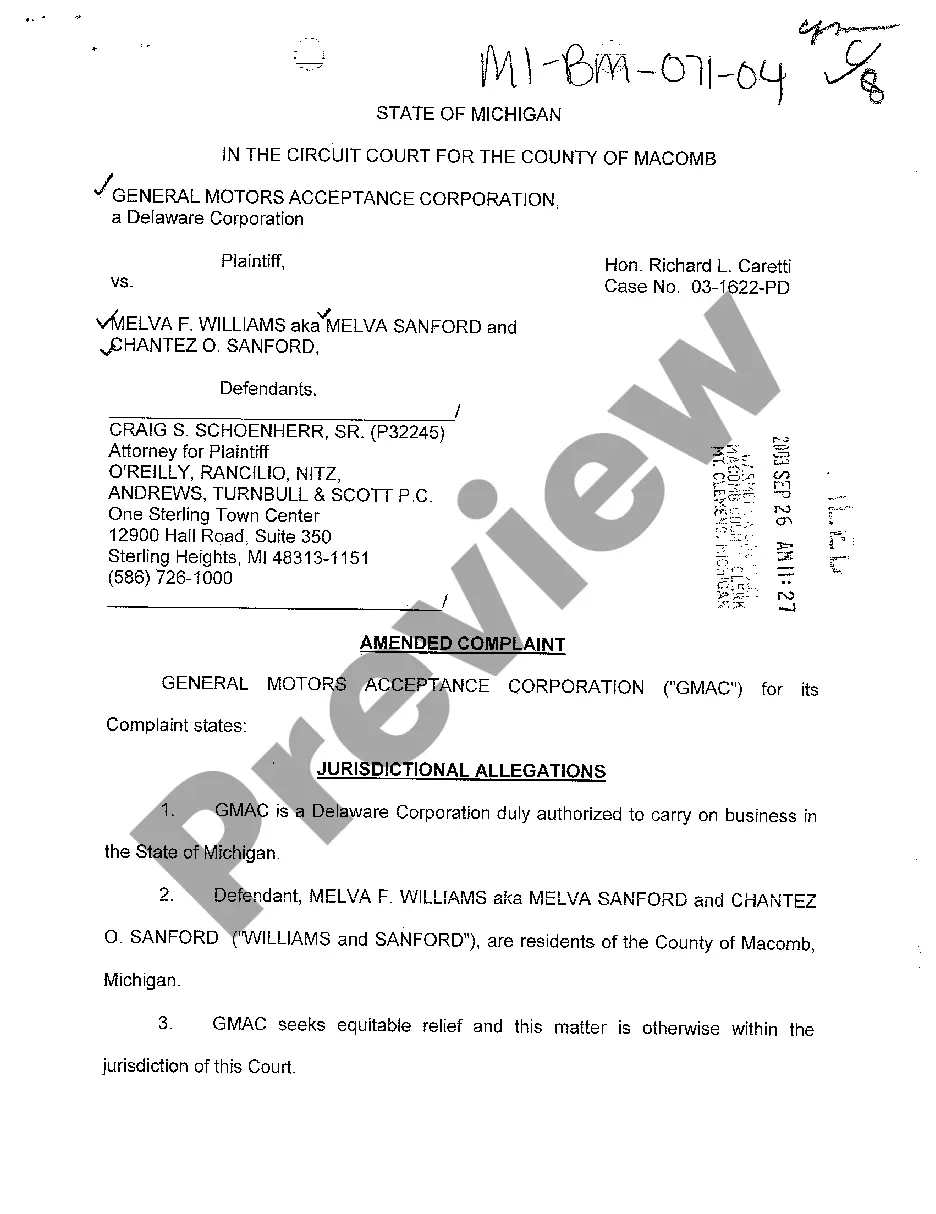
To respond to a summons and complaint in Michigan, first read both documents carefully. You will need to craft a written answer addressing each allegation specifically. Ensure you file your response with the court and serve a copy to the plaintiff to protect your rights throughout the Michigan Summons And Complaint process.
When writing an answer to a summons, start by addressing the court and providing your basic information. Clearly state whether you admit or deny the allegations, followed by your defenses or counterclaims. Using a platform like uslegalforms can simplify the process of drafting a compliant Michigan Summons And Complaint response.
Writing up a summons involves including critical information, such as the parties involved, the court’s name, and the relevant case number. Clearly specify the nature of the claim and the actions required of the defendant. If you need assistance, uslegalforms offers templates and guidance for creating a proper Michigan Summons And Complaint.
In Michigan, a defendant typically has 21 days to respond to a complaint after being served with the summons. Meeting this deadline is vital to avoid a default judgment against you. Understanding the timeline is crucial in navigating the Michigan Summons And Complaint process effectively.
To write an answer to a summons for debt, first acknowledge the debt and clarify whether you admit or deny it. Include any defenses you may have, such as the statute of limitations or payment disputes. When dealing with a Michigan Summons And Complaint related to debt, being thorough and precise is essential for your case.
When filing a complaint, you may need evidence supporting your claims, such as documents, photographs, or witness statements. Gathering relevant evidence helps establish your position regarding the allegations. If you are involved in a Michigan Summons And Complaint situation, consider using evidence that directly links to the claims presented against you.
In Michigan, responding to a summons involves preparing a written answer that addresses the allegations in the complaint. You should state whether you admit or deny each claim. Ensure you file your response with the court and serve a copy to the plaintiff, as this ensures you comply with the requirements of the Michigan Summons And Complaint.
To respond to being summoned, first read the summons and complaint carefully. You must determine the claims made against you and understand your rights. It’s crucial to file your response within the specified timeframe to protect your interests in the Michigan Summons And Complaint process.
There are two main types of summons issued in Michigan: the standard summons and the show cause summons. A standard summons is usually used to notify a defendant of an ongoing lawsuit, while a show cause summons may require a defendant to respond to a specific motion. Understanding these distinctions is key when dealing with Michigan summons and complaints to ensure you follow the correct legal protocol.
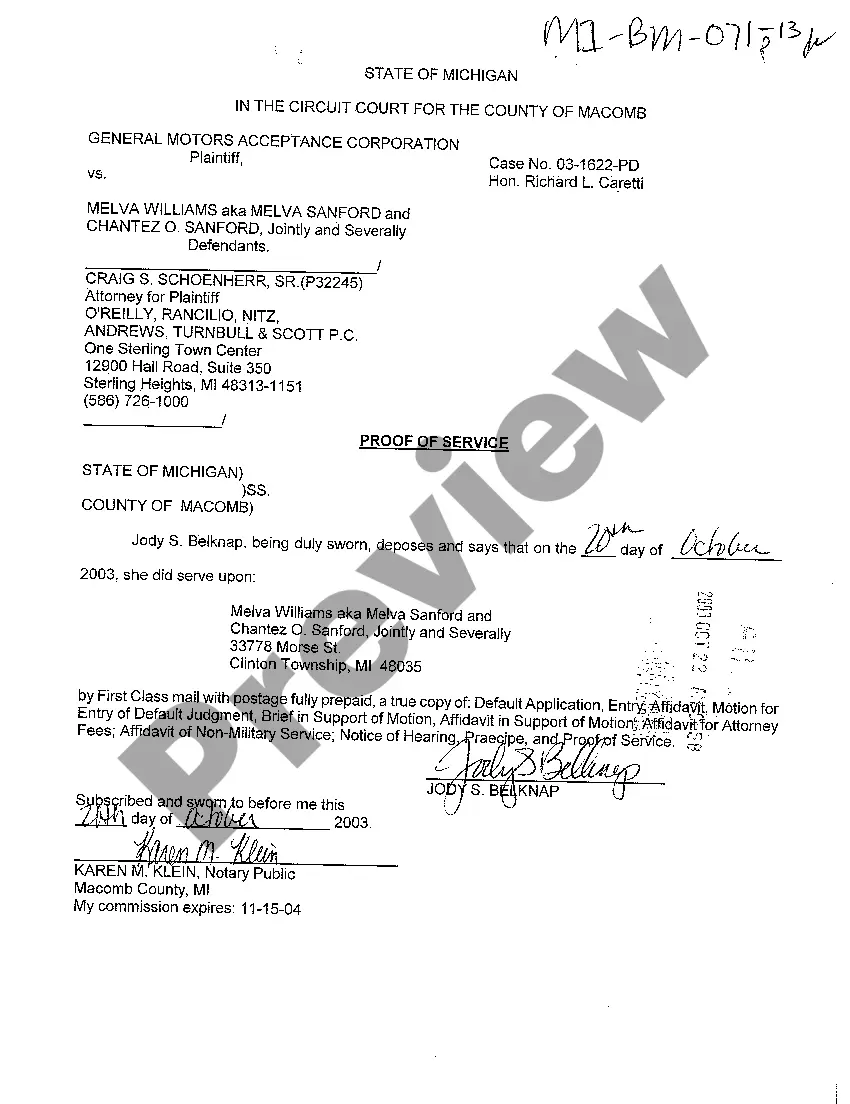
Proof of service for a summons in Michigan signifies that the summons has been properly delivered to the defendant. This document is important because it confirms that the defendant has received notice of the legal action against them. Without proper proof of service, the court may not proceed with the Michigan summons and complaint processing, so it's critical to handle this step correctly.