Tennessee Paid Up Lease Pooling Provision
Understanding this form
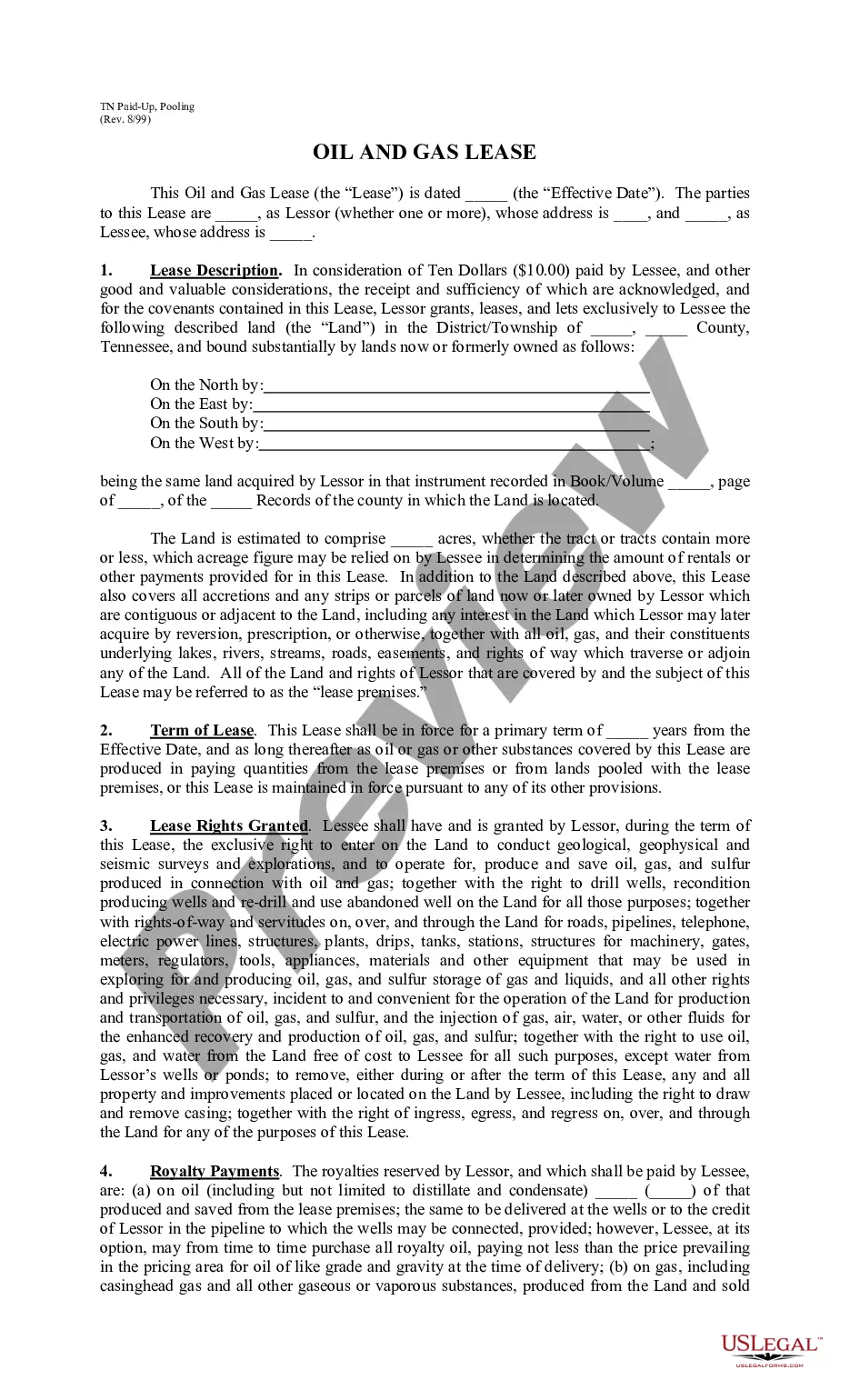
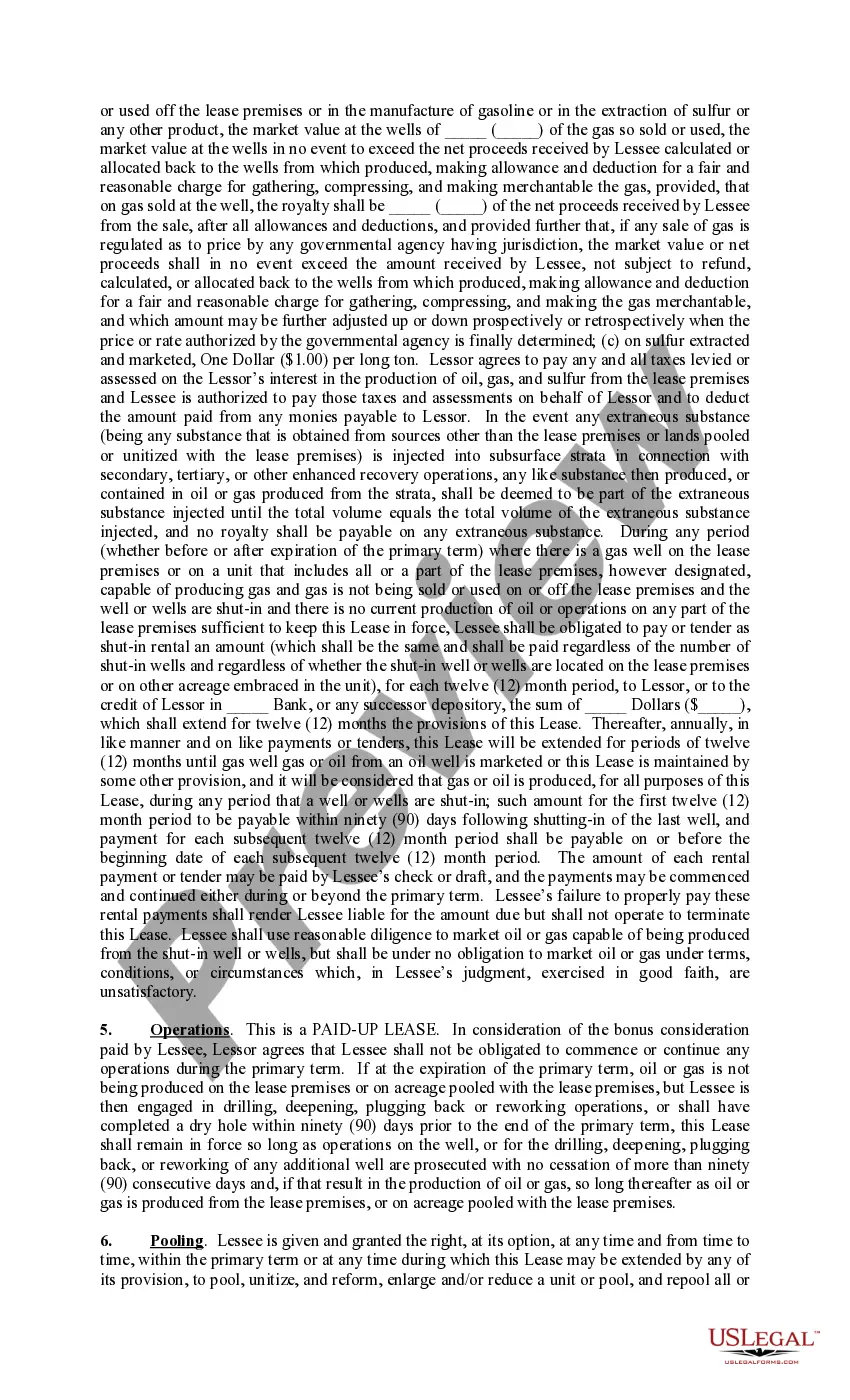
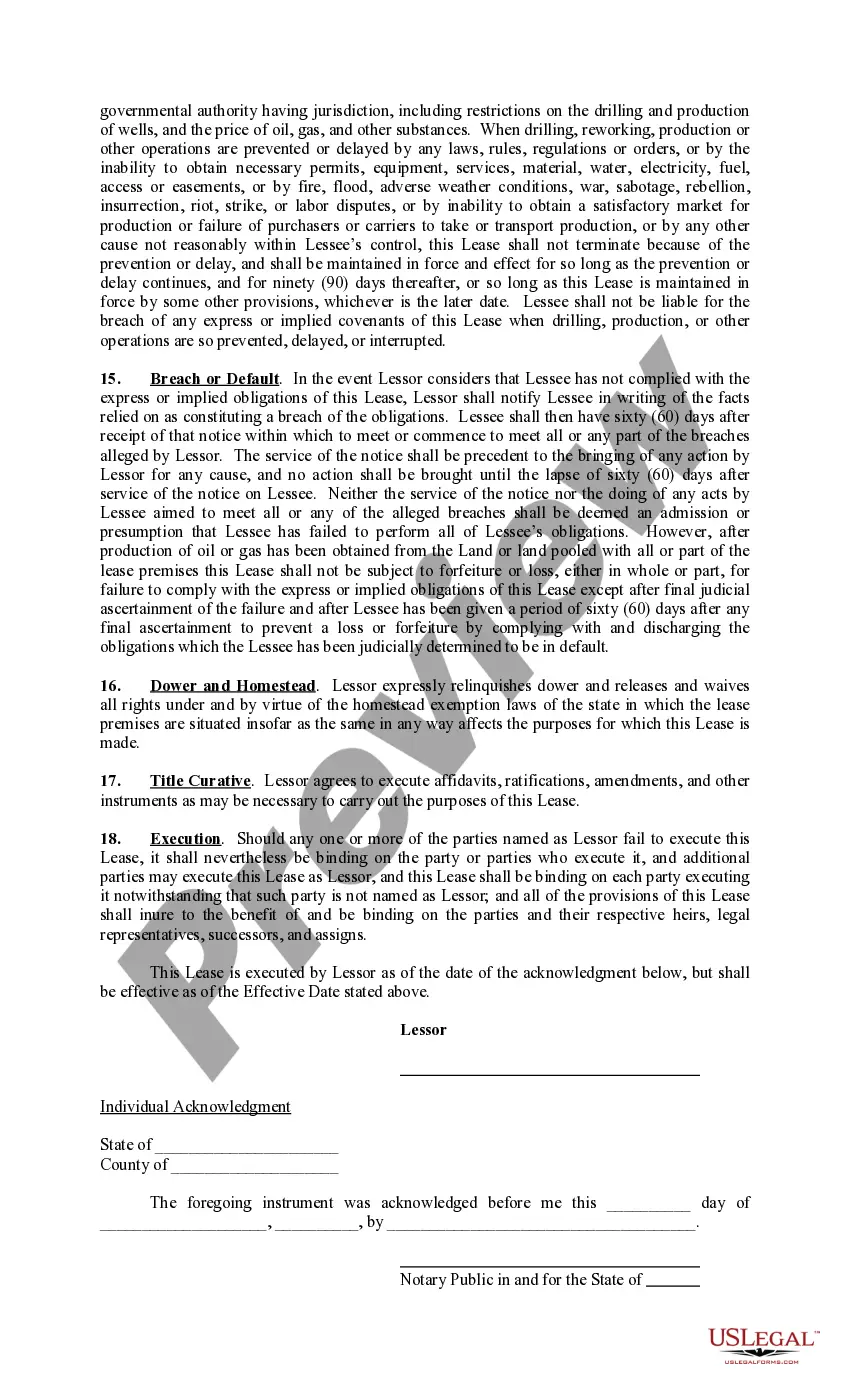
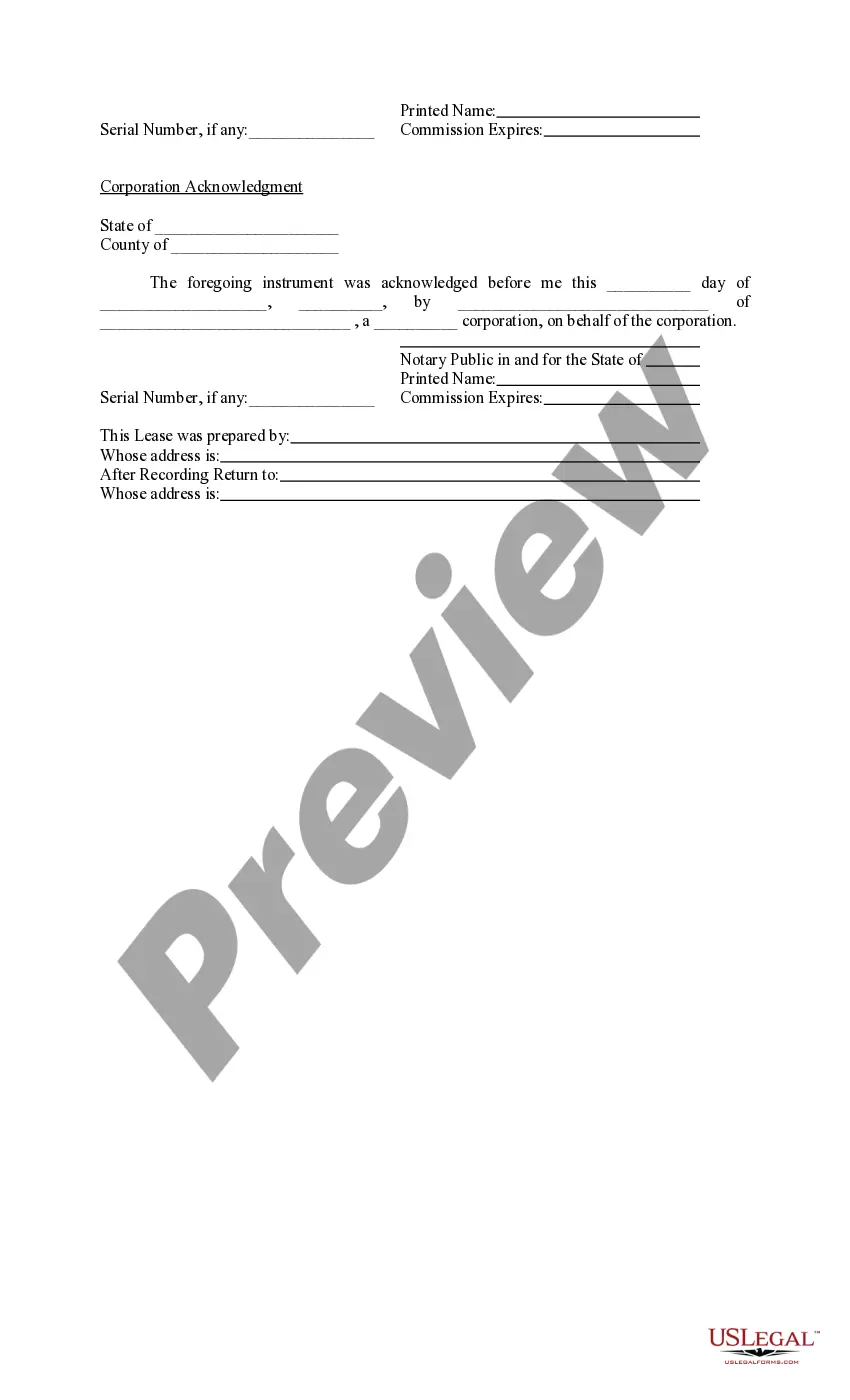
The Paid Up Lease Pooling Provision is a specific type of oil and gas lease agreement, primarily used in Tennessee. In this form, the lessor grants the lessee exclusive rights to explore, drill, and produce oil, gas, and other minerals from a defined piece of land without the obligation to carry out operations during the primary term of the lease. This lease is categorized as "paid up," meaning the lessee pays a one-time fee for the lease rights, simplifying the contractual obligations compared to traditional lease agreements where ongoing payments might be required.
Main sections of this form
- Description of the leased land, including its boundaries and size.
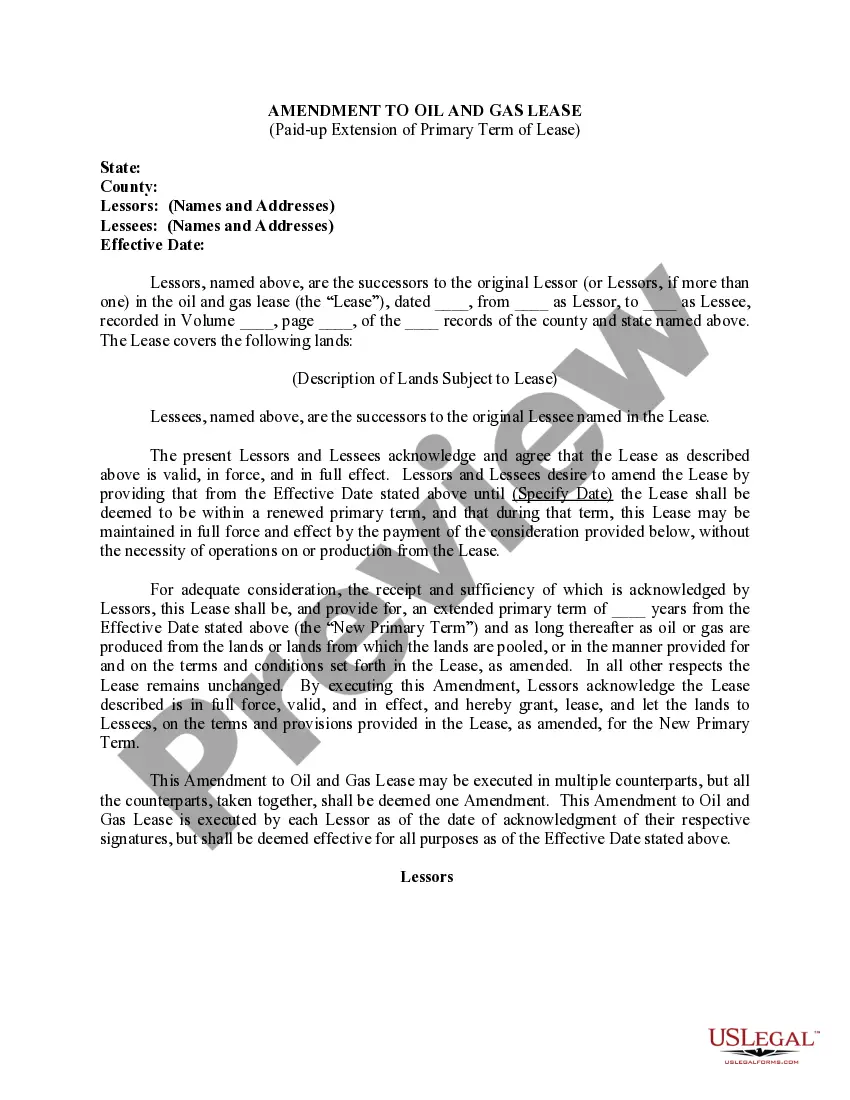
- Term of the lease, detailing the duration and conditions for lease extension.
- Rights granted to the lessee for exploration and production activities.
- Royalty payment structure for the lessor, specifying rates for oil, gas, and sulfur.
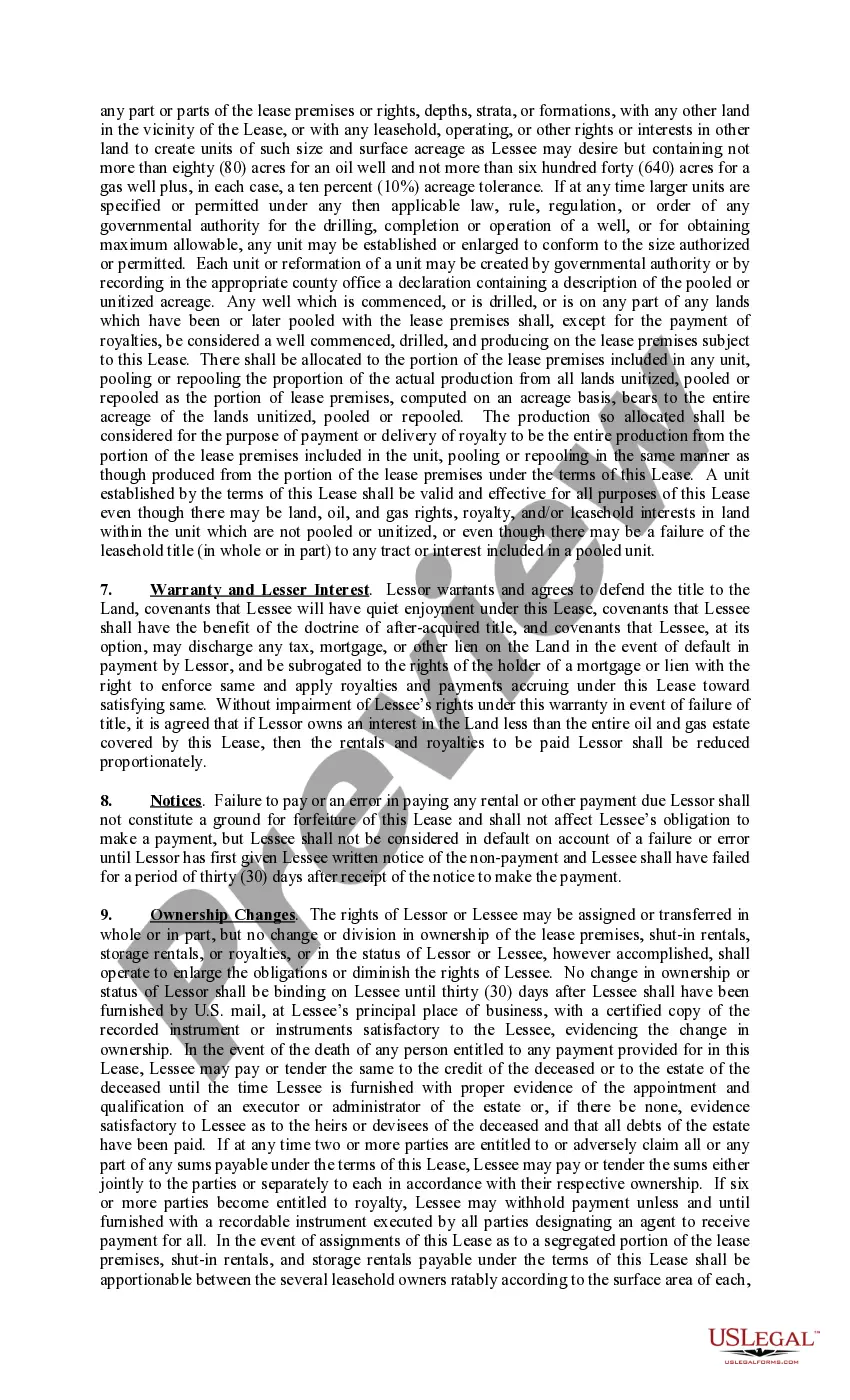
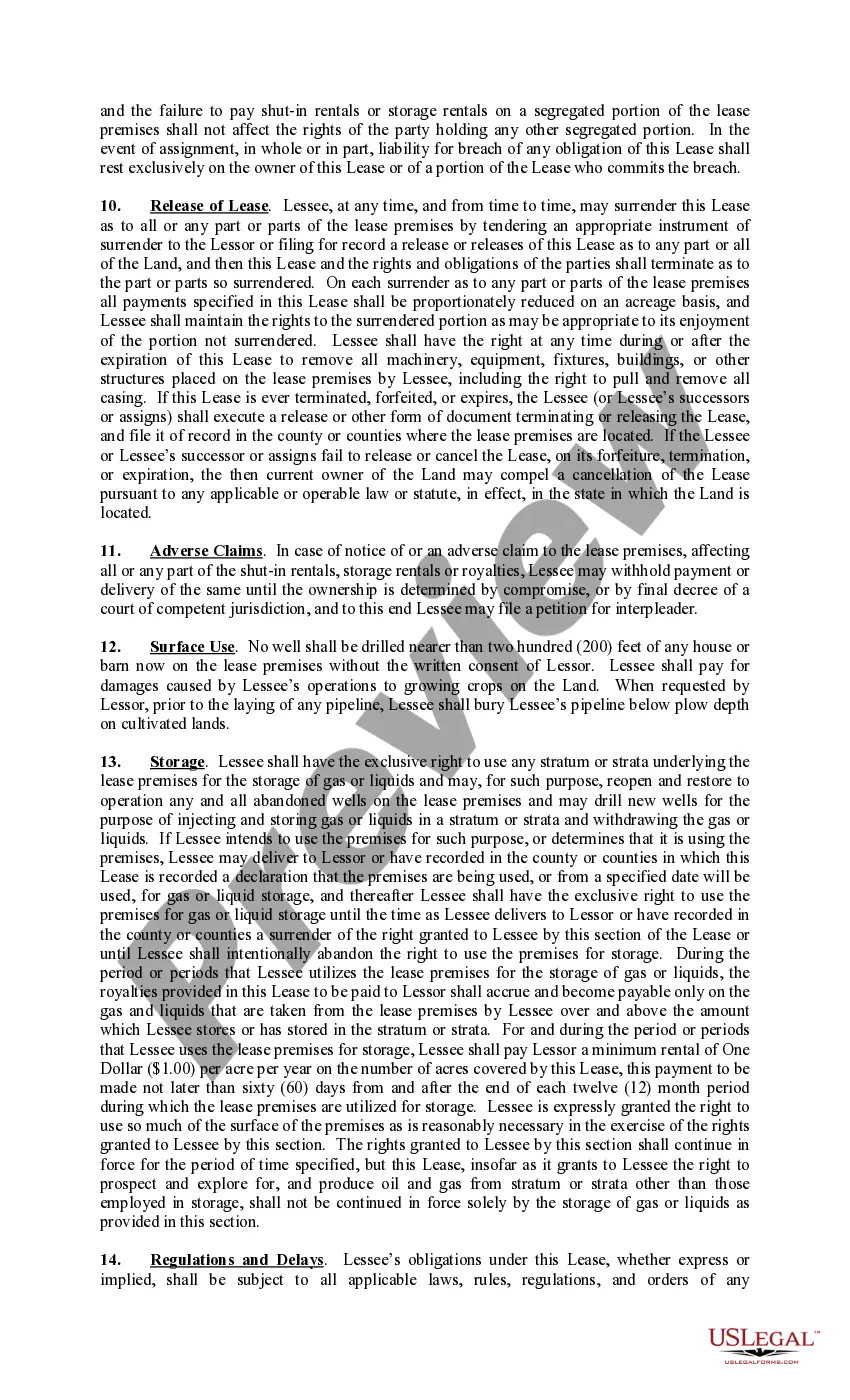
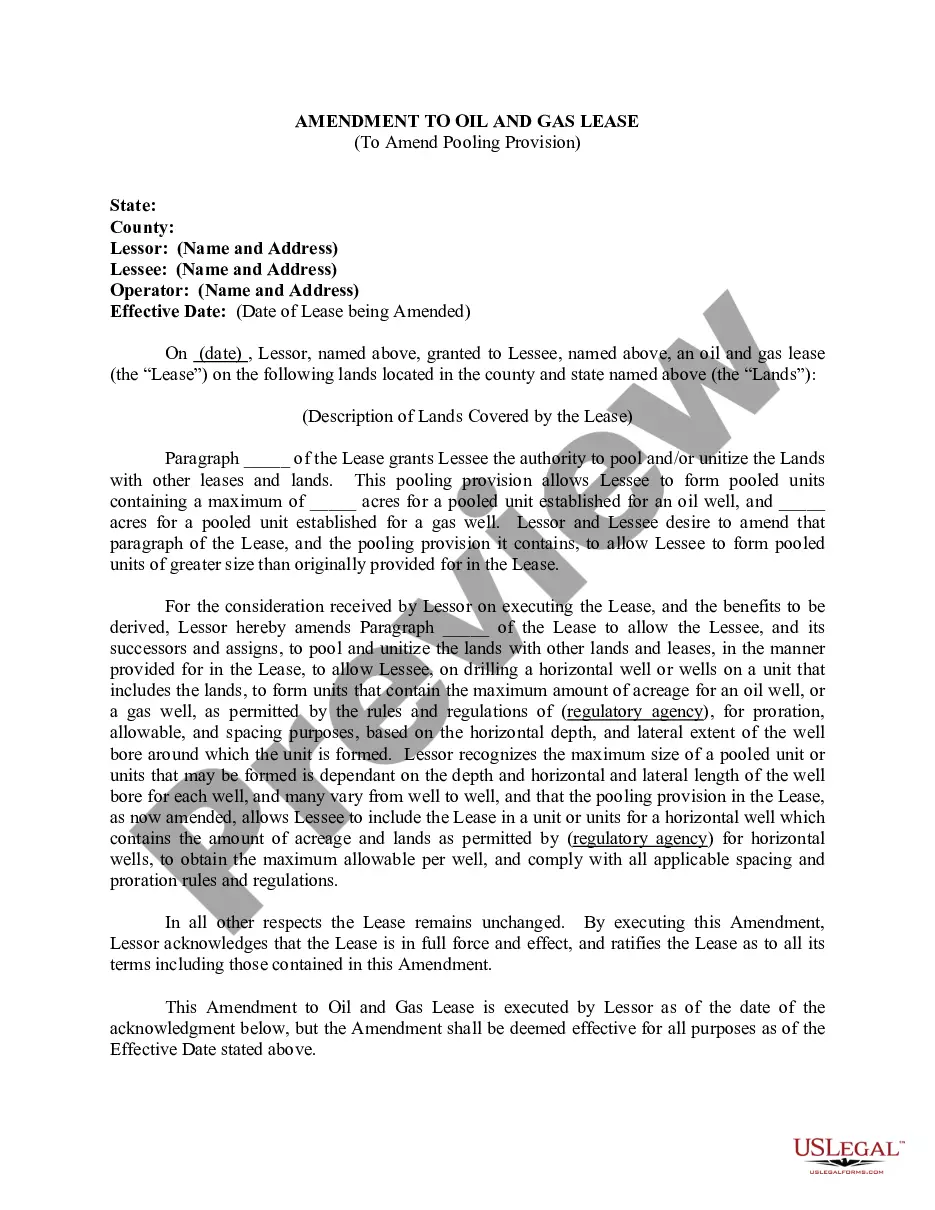
- Provisions for pooling or unitizing the lease with adjacent properties.
- Notice requirements and processes for handling ownership changes.
Situations where this form applies
This form is essential when a landowner (lessor) wants to lease their land for oil and gas exploration without the lessee being compelled to undertake immediate drilling operations. It is commonly used in situations where the lessor seeks to ensure upfront payment while allowing the lessee the flexibility to engage in future exploration. Use this lease if you are entering into an agreement that involves pooling land resources with adjacent properties for potential mineral extraction.
Who this form is for
- Landowners in Tennessee looking to lease their property for oil and gas purposes.
- Oil and gas companies planning to explore and produce resources from leased land.
- Attorneys and legal professionals drafting lease agreements for clients in the mining sector.
- Individuals or entities involved in land management or mineral rights leasing.
How to prepare this document
- Identify the parties involved: Name the lessor and lessee, including their addresses.
- Specify the property: Describe the land being leased, including boundaries and acreage.
- Enter the lease term: Fill in the duration of the lease and any conditions for extension.
- Detail royalty payments: Specify the percentages or amounts agreed for oil, gas, and other minerals.
- Sign and date the form: Ensure all parties sign where required to validate the agreement.
Notarization requirements for this form
Notarization is required for this form to take effect. Our online notarization service, powered by Notarize, lets you verify and sign documents remotely through an encrypted video session, available 24/7.
Get your form ready online
Our built-in tools help you complete, sign, share, and store your documents in one place.
Make edits, fill in missing information, and update formatting in US Legal Forms—just like you would in MS Word.
Download a copy, print it, send it by email, or mail it via USPS—whatever works best for your next step.
Sign and collect signatures with our SignNow integration. Send to multiple recipients, set reminders, and more. Go Premium to unlock E-Sign.
If this form requires notarization, complete it online through a secure video call—no need to meet a notary in person or wait for an appointment.
We protect your documents and personal data by following strict security and privacy standards.

Make edits, fill in missing information, and update formatting in US Legal Forms—just like you would in MS Word.

Download a copy, print it, send it by email, or mail it via USPS—whatever works best for your next step.

Sign and collect signatures with our SignNow integration. Send to multiple recipients, set reminders, and more. Go Premium to unlock E-Sign.

If this form requires notarization, complete it online through a secure video call—no need to meet a notary in person or wait for an appointment.

We protect your documents and personal data by following strict security and privacy standards.
Mistakes to watch out for
- Failing to accurately describe the leased land, leading to disputes over boundaries.
- Not specifying clear terms for royalty payments, which can cause conflicts later on.
- Missing signatures or dates, which may render the agreement unenforceable.
- Overlooking local laws that may affect lease terms or validity.
Advantages of online completion
- Convenient access to legal forms without the need for in-person appointments.
- Editable documents allow for customization to meet specific needs.
- Instant downloads and printable formats provide immediate usability.
- Reliable templates designed by licensed attorneys ensure compliance with legal requirements.
Looking for another form?

Form popularity
FAQ
Collections and Reporting The Tennessee Department of Revenue collects more than $11 billion in revenues annually. More than two-thirds of revenue come from two taxes - sales and use tax and franchise and excise tax.
Will provide up to 11 weeks of an additional $300 weekly benefit to eligible claimants. A claimant must be eligible through a separate unemployment program to receive FPUC. Once implemented, FPUC will be available to cover weeks of unemployment between Dec. 27, 2020, and the week ending March 13, 2021.
Rule 0800-09-01-. 02 of the Rules and Regulations of the Tennessee Employment Security Law, requires all employers to furnish each separated employee with a Separation Notice, LB-0489, within 24 hours of the employee's separation from employment.
NASHVILLE, Tenn.Tennessee is among the first states to begin paying a $300 boost in unemployment aid to those who have lost their jobs as a result of the COVID-19 pandemic. The boost is extra money on top of federal unemployment aid and is part of the COVID-19 relief package.
As you probably are aware, Tennessee is considered an at-will employment state. In general, this means that your employer can fire you at any time for any reason, or for no reason at all.
Tennessee's right-to-work law has been in statute since 1947.The Tennessee right-to-work law states that workers cannot be hired or fired, or in any way discriminated against based on whether or not they are a member of a union, Kelsey said.
Employers may legally terminate an employee at any time for any reason, or for no reason without incurring legal liability. However, an employer may not discriminate against any employee on the basis of the employee's race, sex, age, religion, color, national origin, or disability.
According to this law, employees must receive overtime pay of at least 1.5 times their regular rate of pay when working more than 40 hours in a workweek.Note that there are no overtime requirements for working more than eight hours in a day, or on weekends or holidays.
Currently, Tennessee's Unemployment Insurance program pays a maximum weekly benefit of $275 for unemployed persons. While the federal supplement will more than double Tennessee's weekly jobless benefit, it is still below the $600-a-week the federal government provided as a supplement from April through July.