Surface Damage Payments
Understanding this form
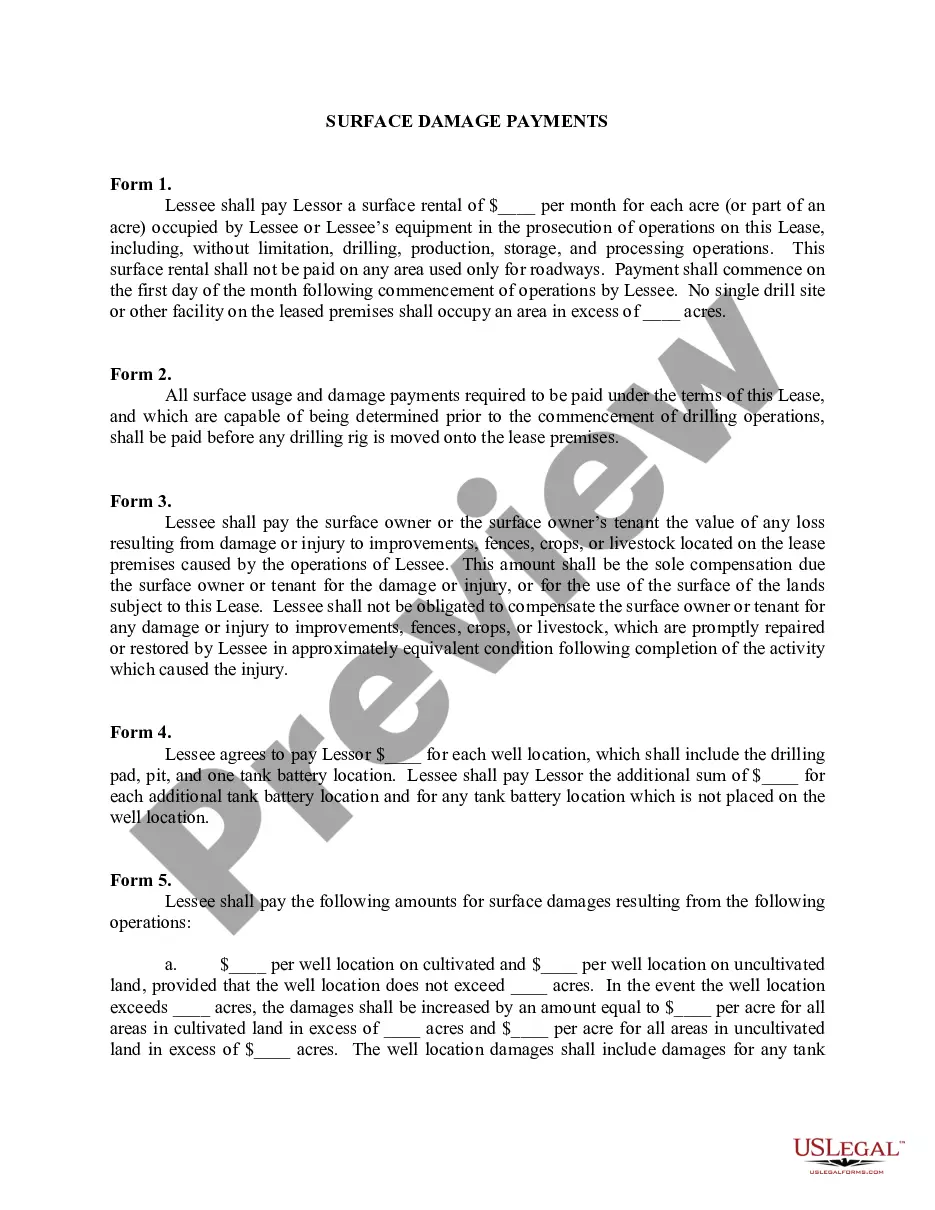
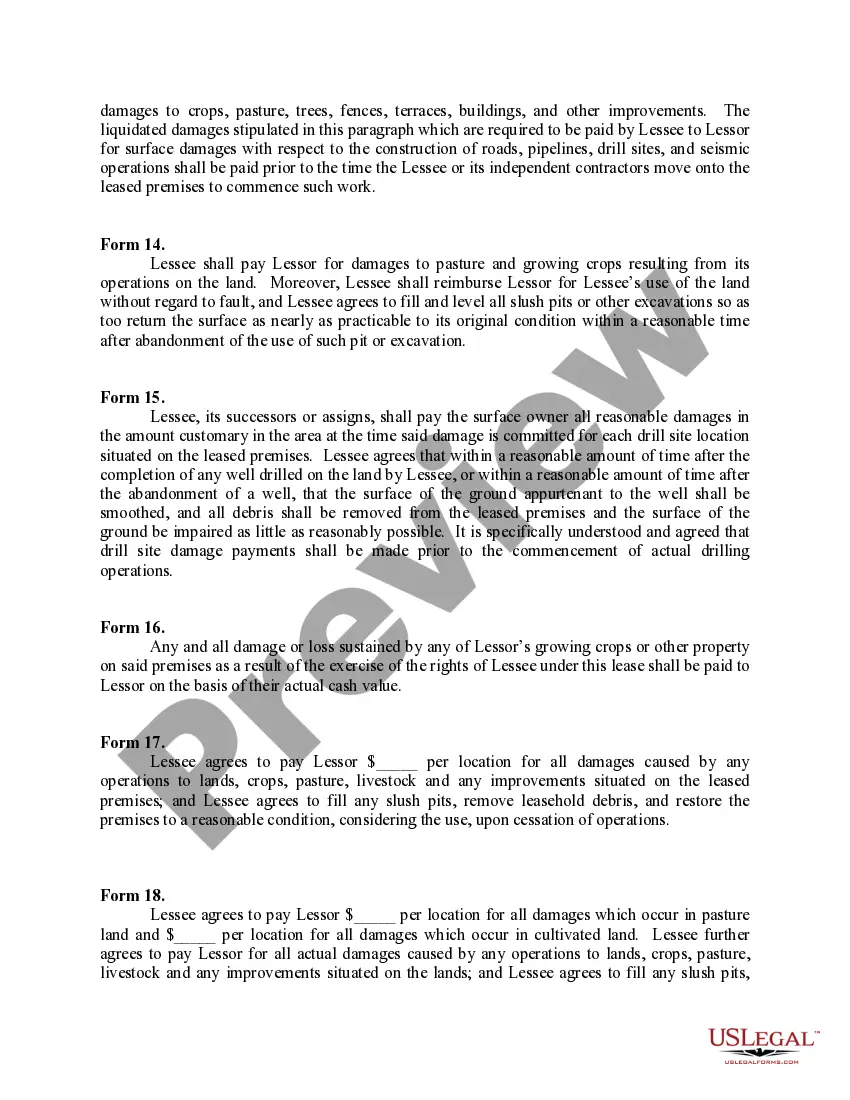
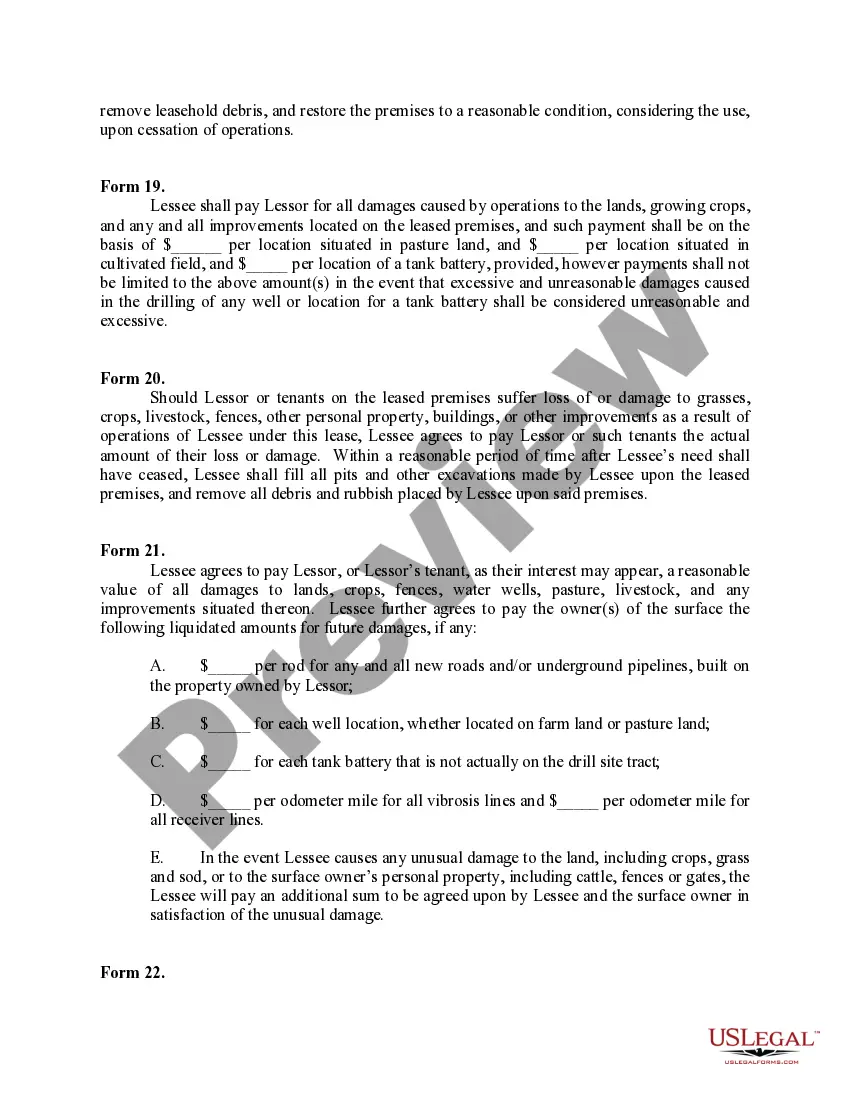
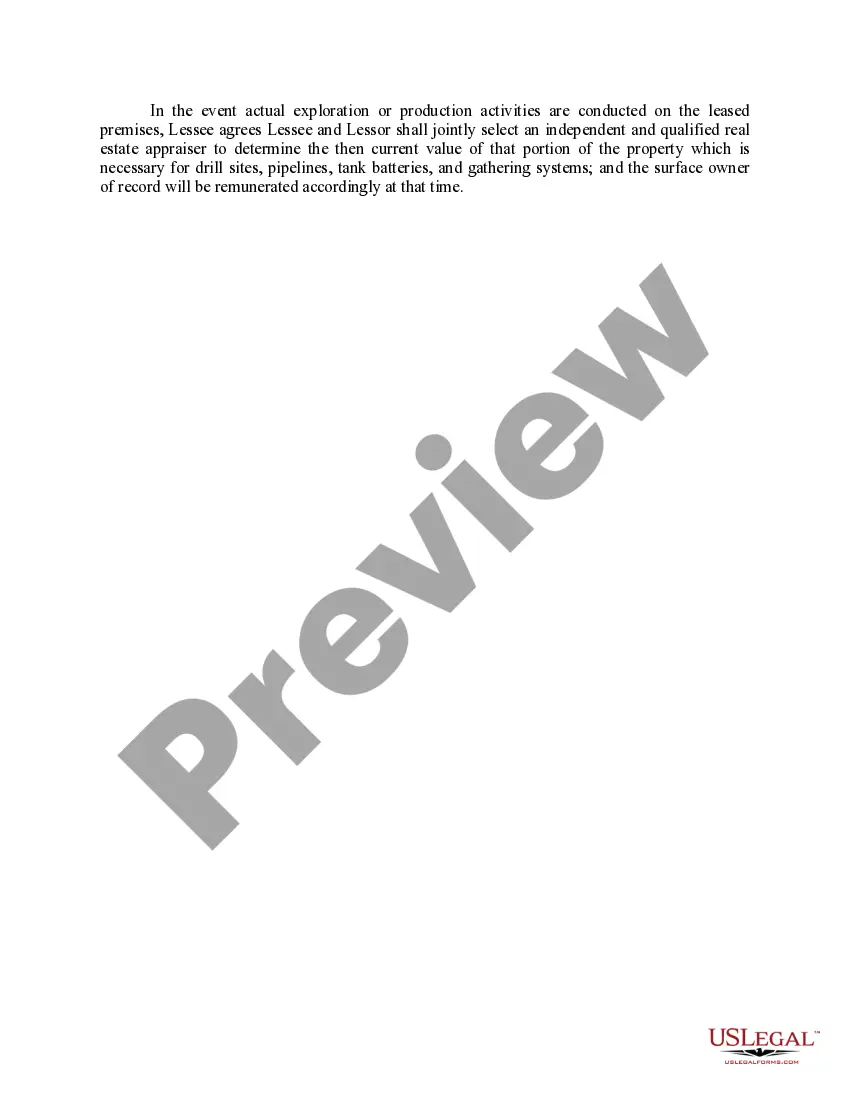
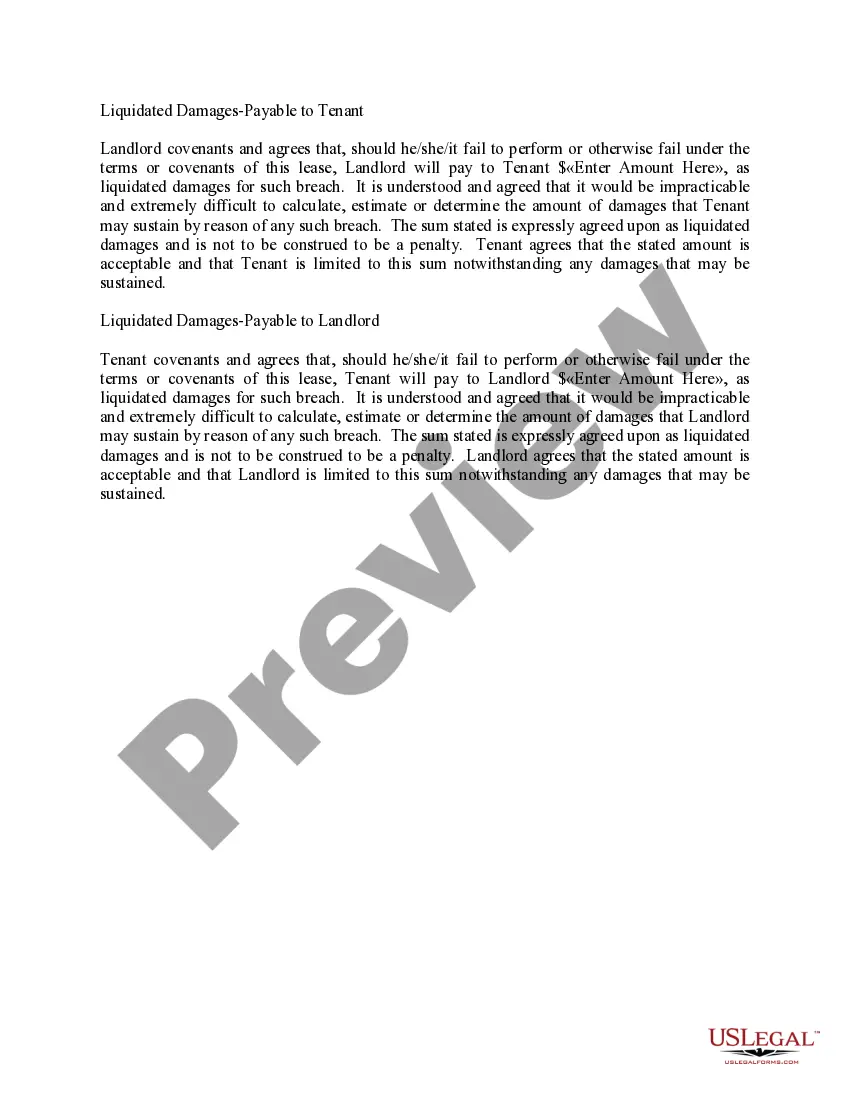
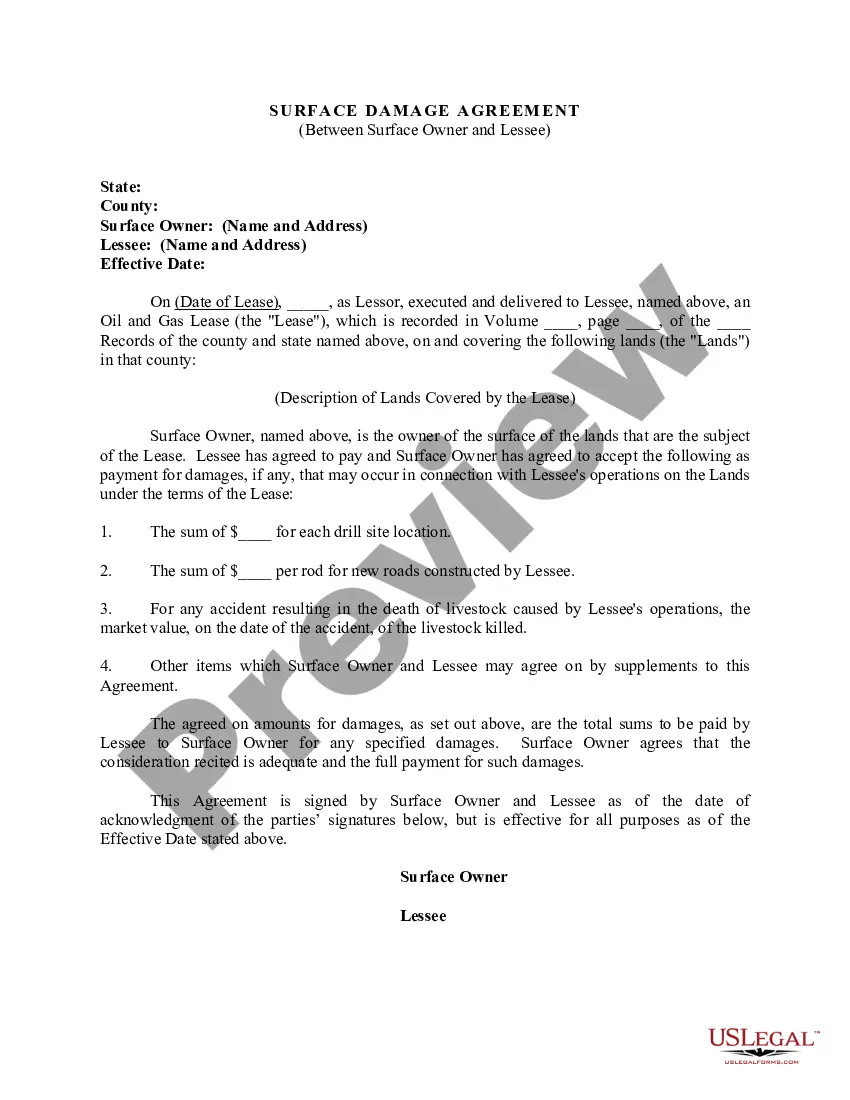
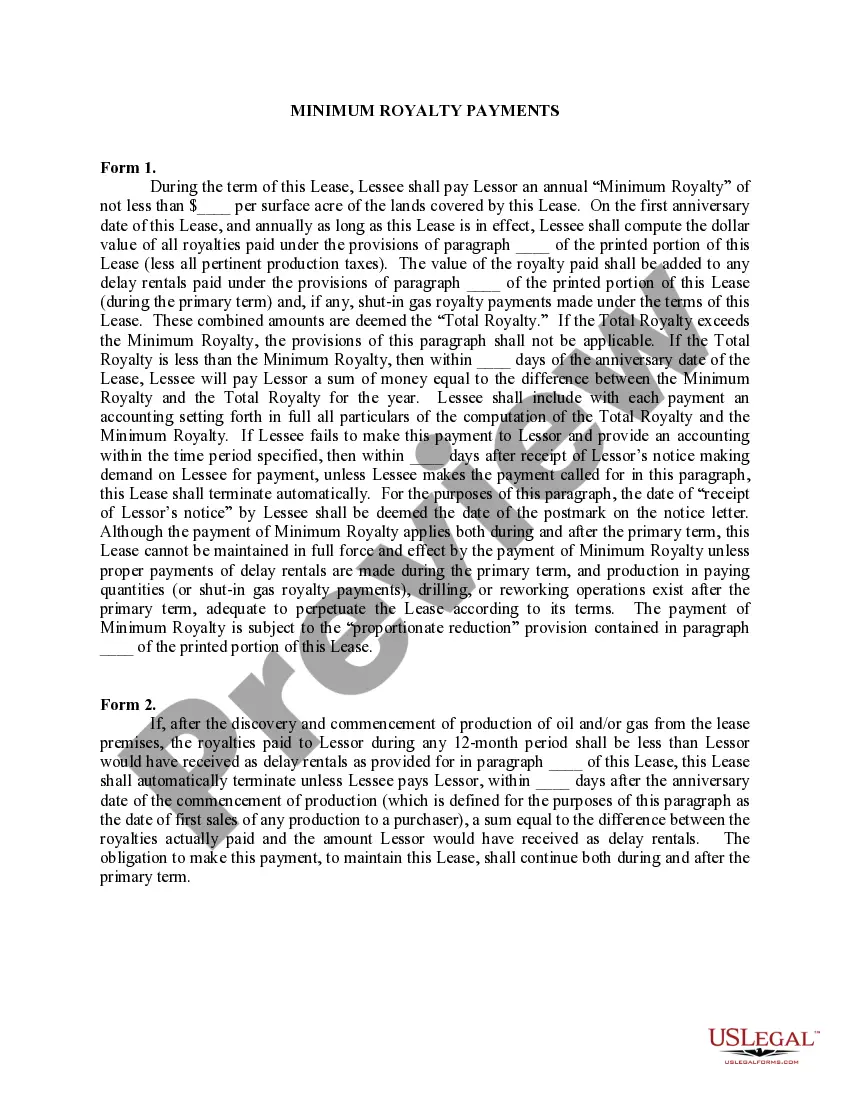
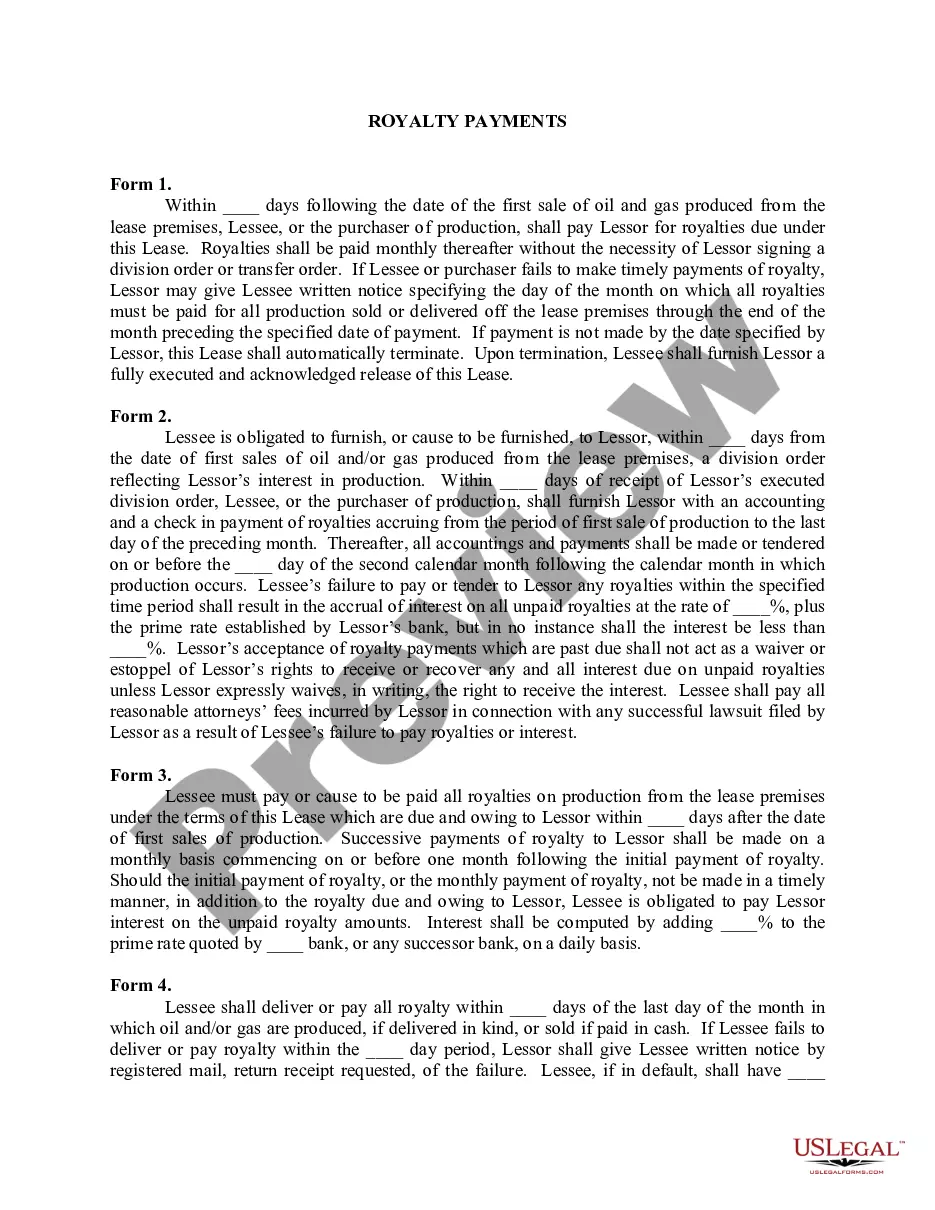
The Surface Damage Payments form is a lease rider designed for use in oil and gas lease transactions. This form allows lessors (property owners) to specify additional provisions regarding surface damage payments that lessees (operators) must adhere to during their operations. It is essential for addressing specific concerns or limitations on the rights granted to the lessee, protecting the interests of the lessor while ensuring clarity in financial obligations for damages incurred during exploration and production activities.
Form components explained
- Surface rental payments for areas occupied by lessee operations.
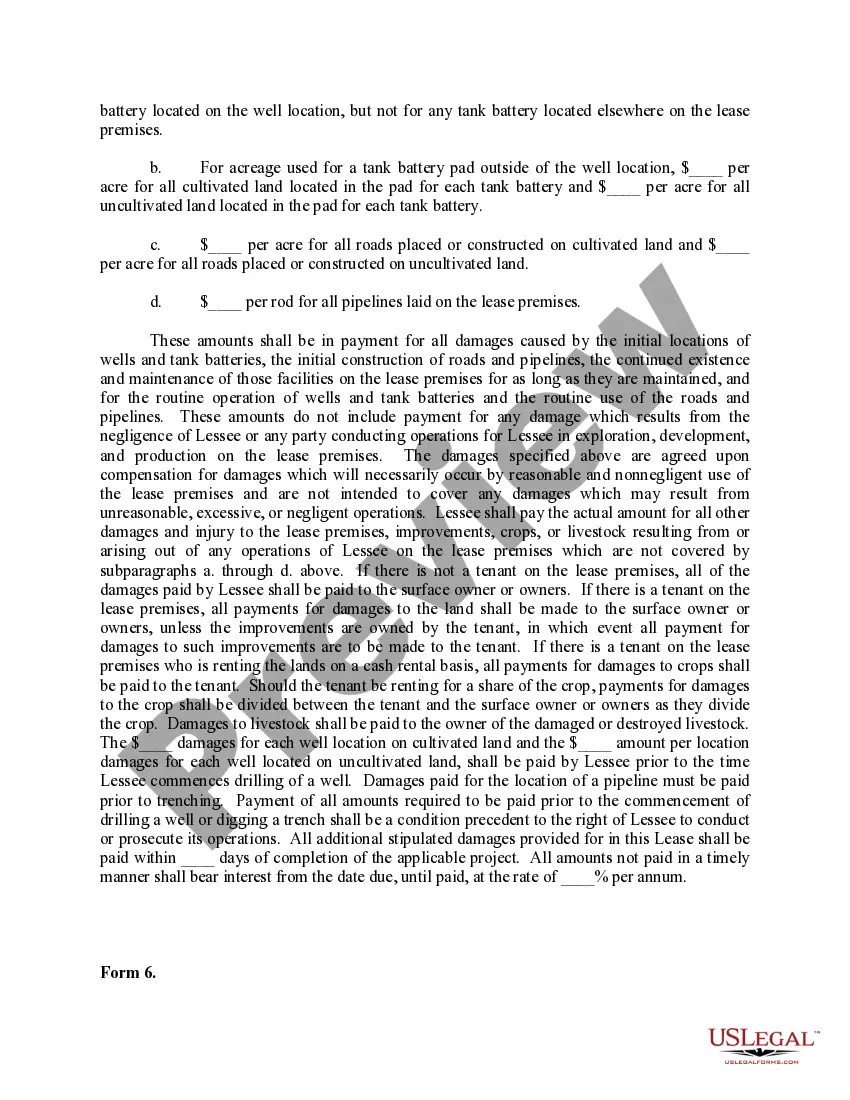
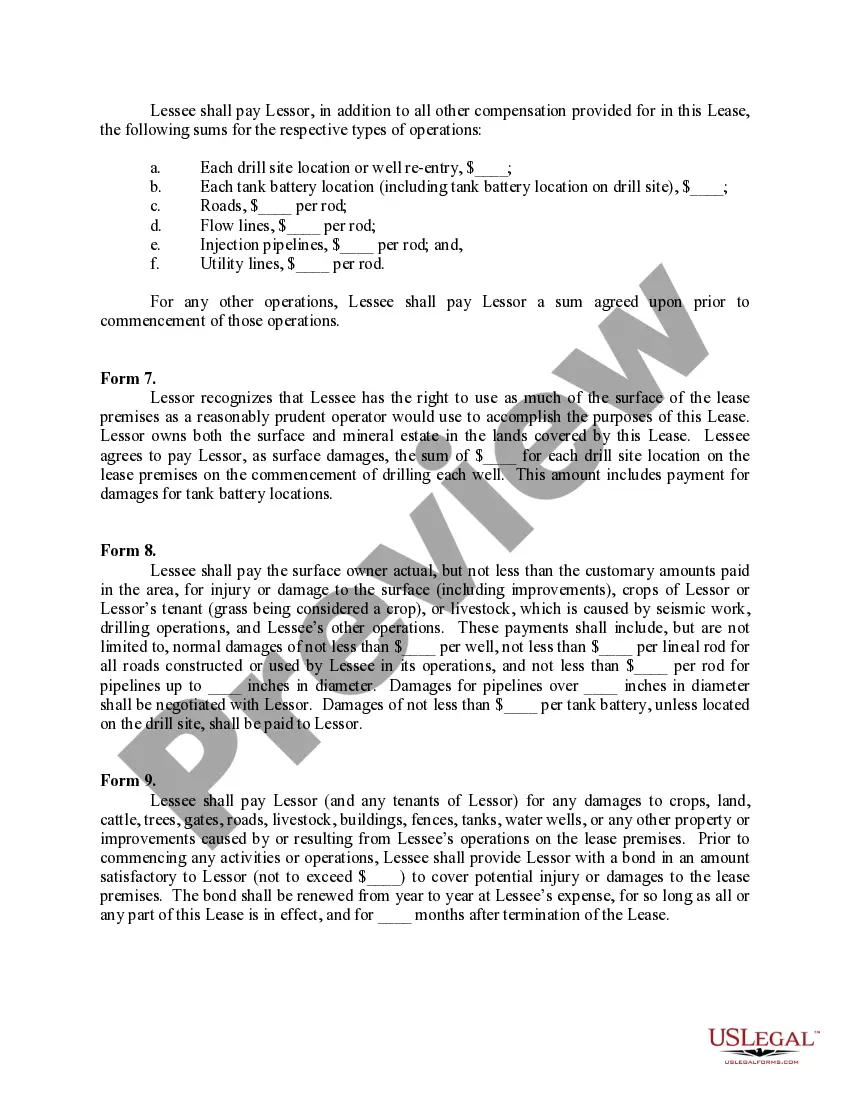
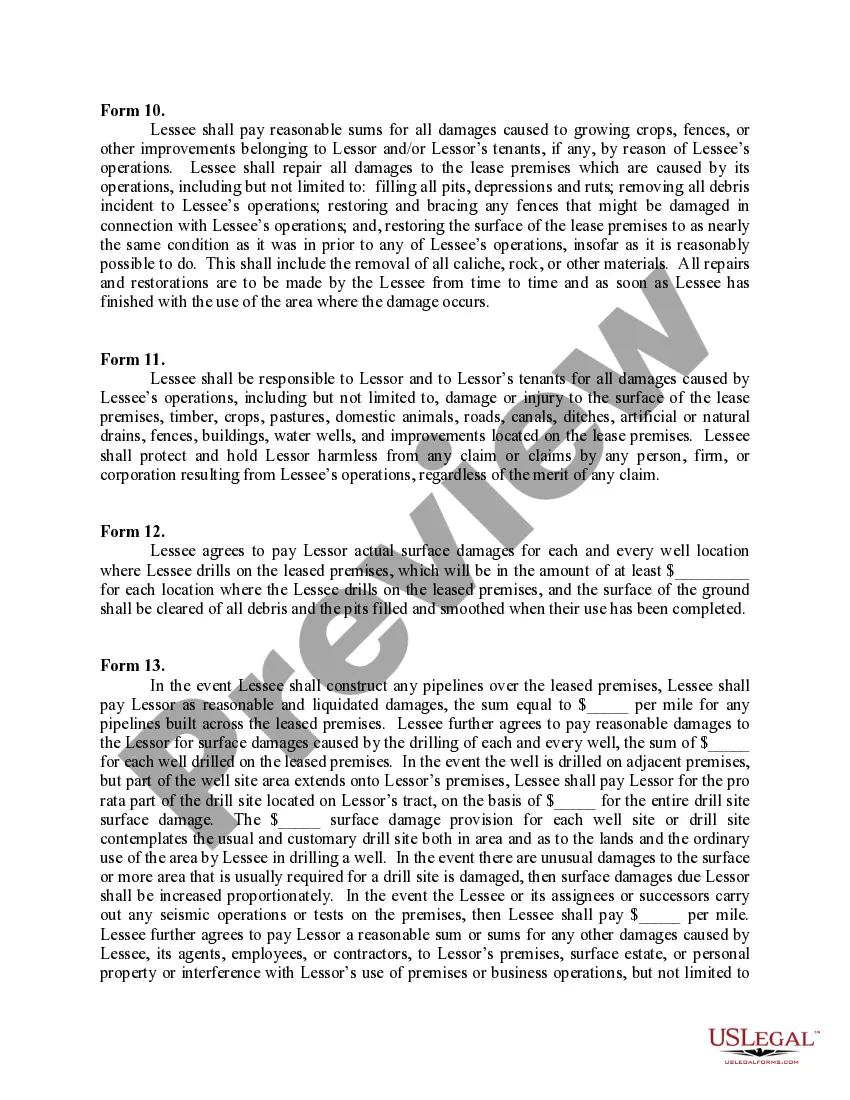
- Compensation for damages to crops, livestock, and property caused by drilling activities.
- Payment clauses regarding well locations, tank battery locations, and pipelines.
- Provisions for timely payment prior to commencement of operations and interest on delayed payments.
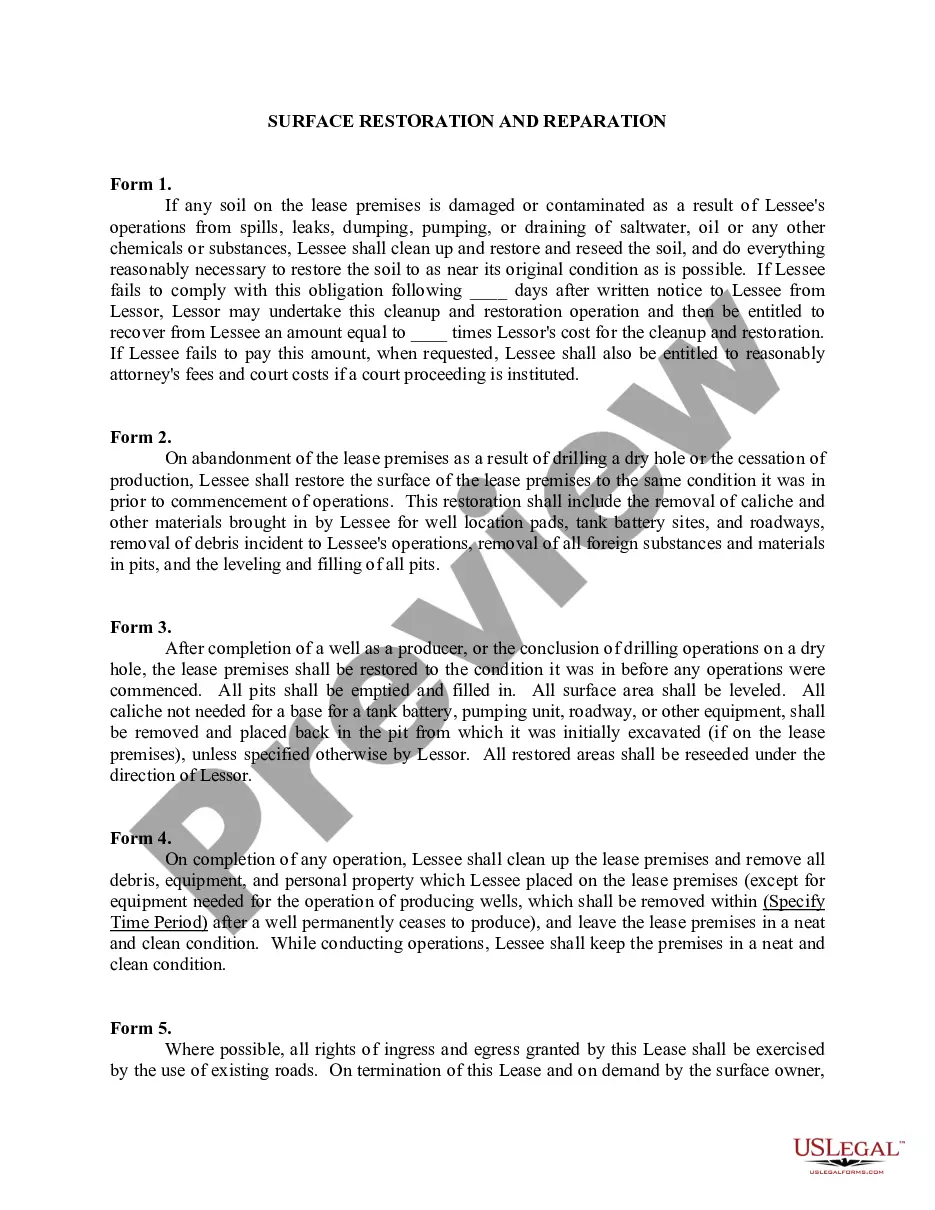
- Obligations for restoring the surface of the property post-operation.
When this form is needed
This form should be used when entering into an oil and gas lease agreement where specific terms regarding surface damage and rental payments are necessary. It is particularly helpful in situations where the lessor has concerns about potential damages to their property due to lessee operations and wants to establish clear financial compensation agreements upfront. It is also useful when the extent of land usage and potential damages may vary significantly between cultivated and uncultivated areas.
Who needs this form
- Property owners or lessors involved in oil and gas lease agreements.
- Lessee companies and operators aiming to formally outline surface damage payment responsibilities.
- Legal representatives assisting in the negotiation of lease agreements.
- Farmers or landowners concerned about land use impacts from oil and gas drilling.
Instructions for completing this form
- Identify the parties involved: the lessee (operator) and lessor (property owner).
- Specify the monthly surface rental amount and conditions for payment.
- Detail the compensation amounts for different types of damages, including crops and livestock.
- Establish deadlines for when payments must be made prior to drilling operations.
- Include provisions for restoration of the land once operations are completed.
Notarization requirements for this form
In most cases, this form does not require notarization. However, some jurisdictions or signing circumstances might. US Legal Forms offers online notarization powered by Notarize, accessible 24/7 for a quick, remote process.
Get your form ready online
Our built-in tools help you complete, sign, share, and store your documents in one place.
Make edits, fill in missing information, and update formatting in US Legal Forms—just like you would in MS Word.
Download a copy, print it, send it by email, or mail it via USPS—whatever works best for your next step.
Sign and collect signatures with our SignNow integration. Send to multiple recipients, set reminders, and more. Go Premium to unlock E-Sign.
If this form requires notarization, complete it online through a secure video call—no need to meet a notary in person or wait for an appointment.
We protect your documents and personal data by following strict security and privacy standards.

Make edits, fill in missing information, and update formatting in US Legal Forms—just like you would in MS Word.

Download a copy, print it, send it by email, or mail it via USPS—whatever works best for your next step.

Sign and collect signatures with our SignNow integration. Send to multiple recipients, set reminders, and more. Go Premium to unlock E-Sign.

If this form requires notarization, complete it online through a secure video call—no need to meet a notary in person or wait for an appointment.

We protect your documents and personal data by following strict security and privacy standards.
Mistakes to watch out for
- Failing to specify exact payment amounts and terms, leading to disputes.
- Not indicating deadlines for payments resulting in delayed compensation.
- Overlooking the inclusion of restoration obligations post-operation.
- Assuming all damages will be covered without clarifying specific exclusions.
Benefits of using this form online
- Convenience of accessing and downloading the form directly from a legal source.
- Editability allows customization to fit specific lease agreements and terms.
- Ensures reliability by using a form drafted by licensed attorneys.
- Streamlines the lease negotiation process, saving time for all parties involved.
Summary of main points
- The Surface Damage Payments form is essential for outlining compensation terms in oil and gas leases.
- Proper completion of this form can help avoid disputes between lessors and lessees regarding damages.
- Ensuring clarity in payment terms is critical for both parties' protection.
- The form can be customized to fit the specific needs of a lease agreement and is drafted for reliability.
Looking for another form?

Form popularity
FAQ
All punitive damages are taxable whether received in relation to a physical or non-physical injury or sickness.However, costs incurred to treat emotional distress, even those due to physical injury, are taxable if they were previously deducted as a medical expense in a prior year.
Thus, it has the right to use the surface estate. Under Texas law, this right allows that oil company to use as much of the surface estate as is reasonably necessary for mineral exploration and production. This right is implied in the mineral lease and requires no permission or consent from the surface owner.
Surface rights are, as the name implies, the rights to the surface area of a piece of land. This includes any structures on the property, as well as the rights to farm the land or exploit aboveground resources such as trees, plants, or water according to local laws and ordinances.
Texas courts have long held that the mineral estate is the dominant estate, and that the mineral owner, or the owner's lessee, has an implied easement to use the surface in a manner that is reasonably necessary to develop the minerals.
Surface rights mean that you own the top of the land. Essentially, you'll own the grass, trees and any structures that are part of the land itself. All of the rights to these essential parts of the land will be owned once the title of the land has been transferred to your name.
One important factor you must keep in mind is that if real estate contains mineral rights, simply buying the property doesn't make you the owner of them. Since mineral rights can be sold separately from the land itself, even if you own the land, someone else may hold ownership of what's below it.
Surface rights are, as the name implies, the rights to the surface area of a piece of land. This includes any structures on the property, as well as the rights to farm the land or exploit aboveground resources such as trees, plants, or water according to local laws and ordinances.
Mineral rights don't come into effect until you begin to dig below the surface of the property. But the bottom line is: if you do not have the mineral rights to a parcel of land, then you do not have the legal ability to explore, extract, or sell the naturally occurring deposits below.