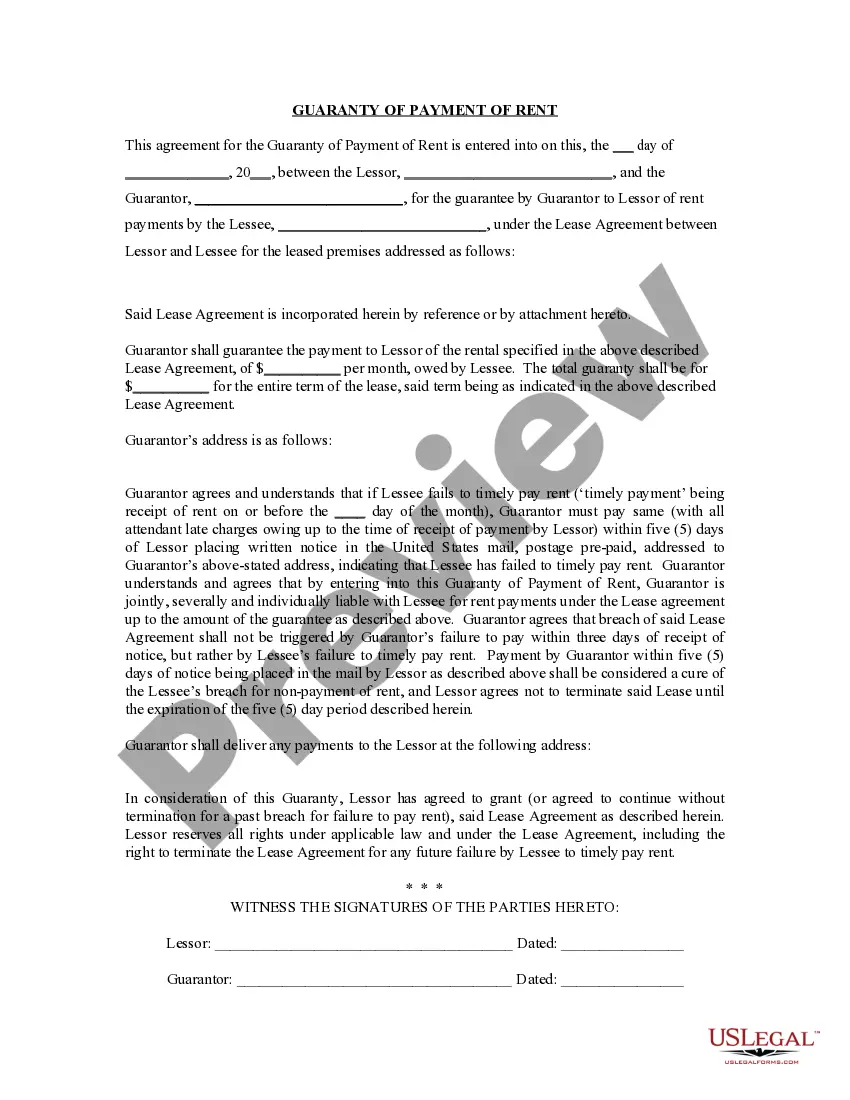
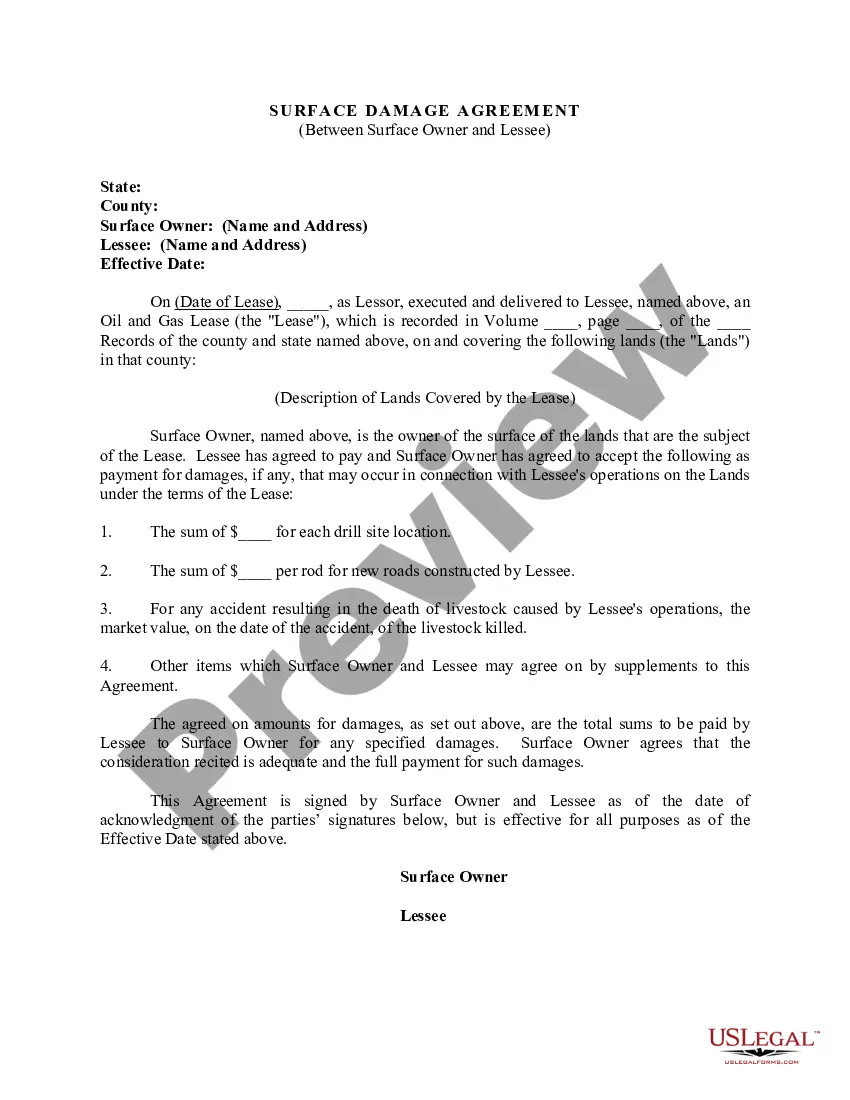
Surface Damage Agreement Between Surface Owner and Lessee
What is this form?
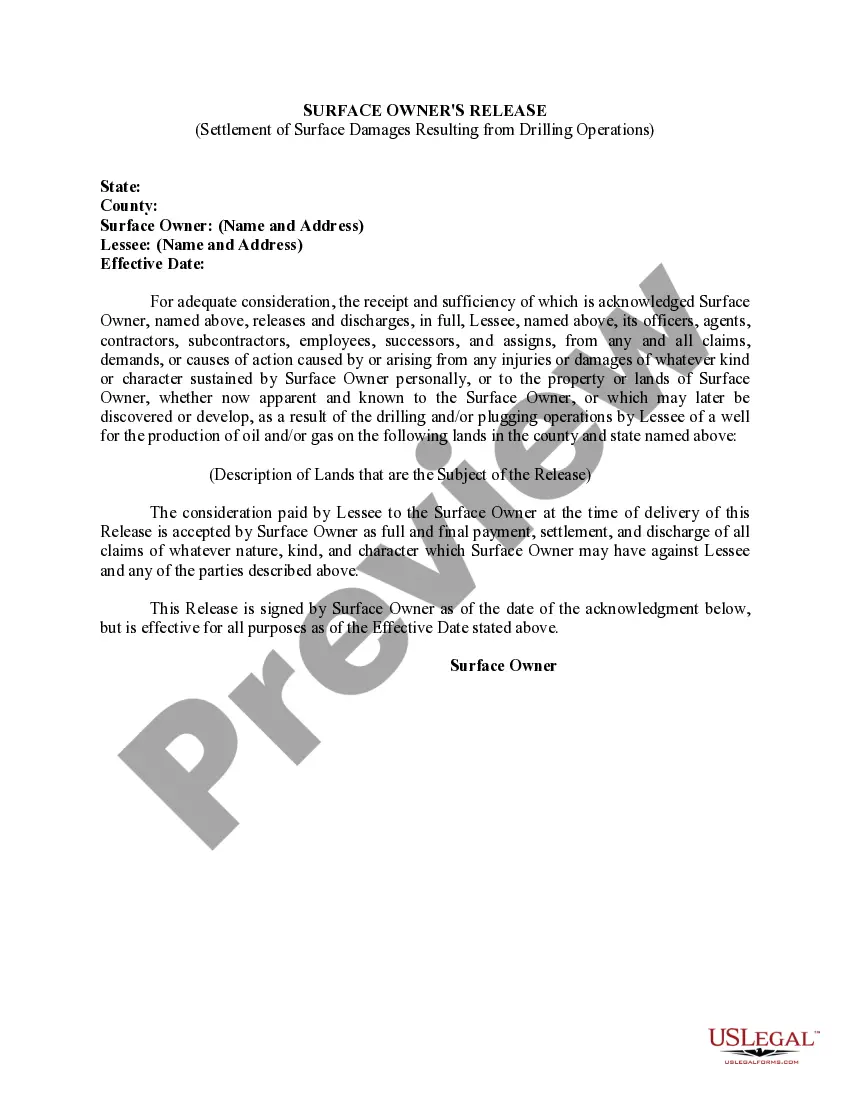
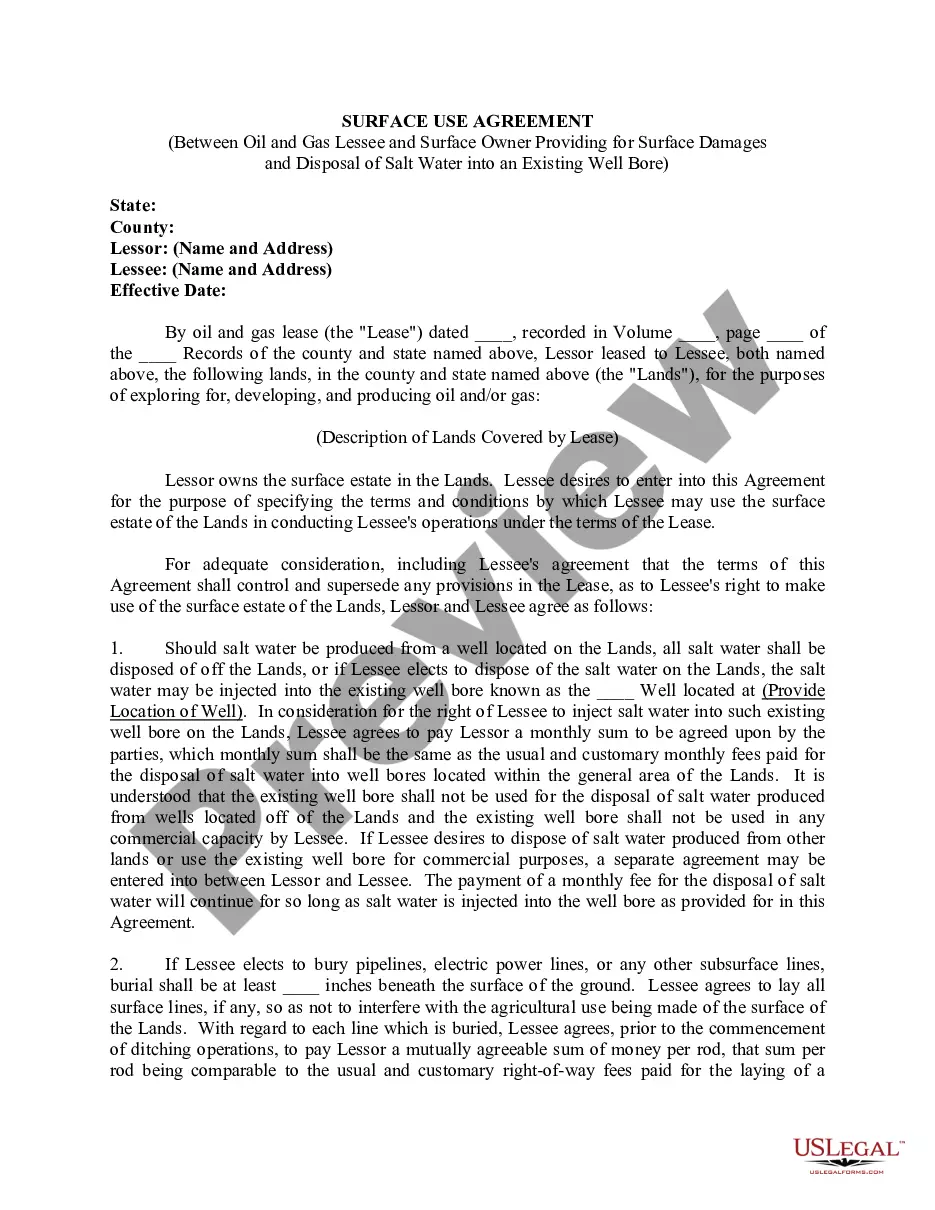
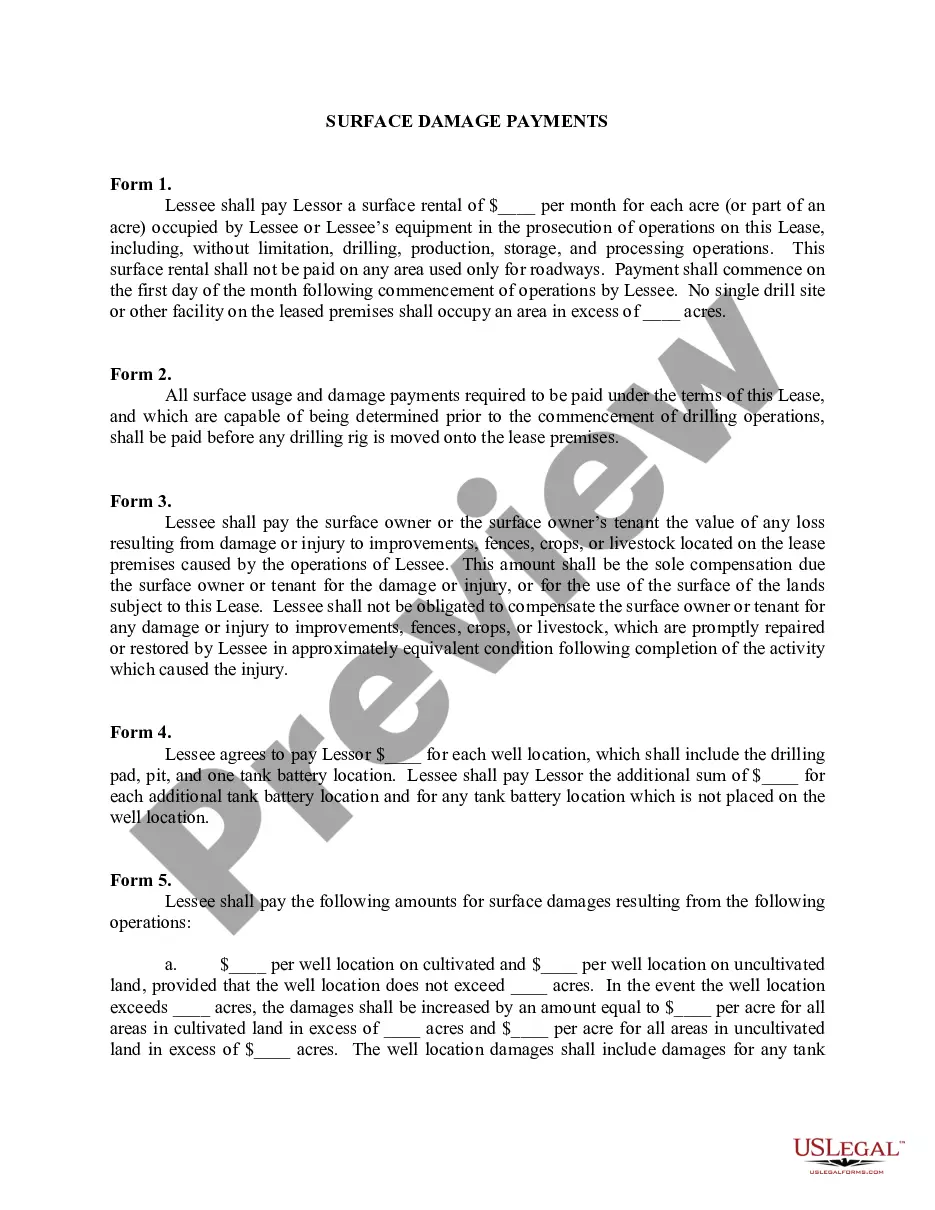
The Surface Damage Agreement Between Surface Owner and Lessee is a legal document that outlines the terms for compensating surface owners for damages occurring due to a lessee's activities on their land. This agreement is essential for managing the relationship between surface owners and lessees, particularly in cases involving oil and gas leases, and it helps ensure both parties are aware of their rights and responsibilities regarding surface damage compensation.
Main sections of this form
- Identification of the surface owner and lessee, including names and addresses.
- Effective date of the agreement and reference to the oil and gas lease.
- Detailed compensation amounts for various types of damage, including drill site locations and livestock loss.
- Agreement stipulating that these amounts are the total sums for specified damages.
- Signatures of both parties, indicating their acknowledgment and agreement to the terms.
When to use this form
This form should be used when a surface owner leases land for oil and gas exploration and requires assurance of compensation for potential damages caused by the lessee's activities. It's particularly relevant when new infrastructure, such as roads or drilling sites, is being established on the land, or when there is a risk of livestock or property loss due to the lesseeâs operations.
Who needs this form
- Surface owners who are leasing their land for oil and gas operations.
- Lessee companies or individuals involved in oil and gas extraction activities.
- Legal representatives overseeing lease agreements between surface owners and lessees.
How to prepare this document
- Identify and fill in the names and addresses of both the surface owner and lessee.
- Enter the effective date and relevant information about the oil and gas lease.
- Specify the compensation amounts for damages as per agreement terms.
- Ensure both parties understand the terms and conditions stated in the agreement.
- Obtain signatures from both parties to finalize the agreement.
Notarization requirements for this form
This form does not typically require notarization unless specified by local law. However, it is advisable to check local regulations to ensure compliance.
Get your form ready online
Our built-in tools help you complete, sign, share, and store your documents in one place.
Make edits, fill in missing information, and update formatting in US Legal Forms—just like you would in MS Word.
Download a copy, print it, send it by email, or mail it via USPS—whatever works best for your next step.
Sign and collect signatures with our SignNow integration. Send to multiple recipients, set reminders, and more. Go Premium to unlock E-Sign.
If this form requires notarization, complete it online through a secure video call—no need to meet a notary in person or wait for an appointment.
We protect your documents and personal data by following strict security and privacy standards.

Make edits, fill in missing information, and update formatting in US Legal Forms—just like you would in MS Word.

Download a copy, print it, send it by email, or mail it via USPS—whatever works best for your next step.

Sign and collect signatures with our SignNow integration. Send to multiple recipients, set reminders, and more. Go Premium to unlock E-Sign.

If this form requires notarization, complete it online through a secure video call—no need to meet a notary in person or wait for an appointment.

We protect your documents and personal data by following strict security and privacy standards.
Common mistakes
- Failing to specify all types of damages and their corresponding compensation amounts.
- Not accurately identifying the lands covered by the lease.
- Leaving out the effective date, which can cause confusion.
- Neglecting to obtain valid signatures from both parties.
Advantages of online completion
- Convenient access to the form at any time, allowing for quick completion.
- Editable templates that ensure you can tailor the agreement to your specific needs.
- Reliable legal language drafted by licensed attorneys, reducing risk of errors.
Looking for another form?

Form popularity
FAQ
When mineral rights are owned by a third party, it may affect your use of the surface in the future. Surface rights are subservient to mineral rights, which means the owner of a mineral servitude will be able to access and use the surface to extract the minerals from underneath.
In Texas, and most other states, the ownership of the mineral estate can be separated (severed) from the surface estate. Put another way, one person may own the rights to use the surface of a piece of property while another person has the right to use the minerals underneath the property.
Surface rights are, as the name implies, the rights to the surface area of a piece of land. This includes any structures on the property, as well as the rights to farm the land or exploit aboveground resources such as trees, plants, or water according to local laws and ordinances.
(Oil & Gas Exploration and Production) An oil, natural gas, and mineral lease gives the lessee rights to exploit minerals beneath the surface of the property.It also grants the lessee the right to utilize the surface of the property to access those minerals.
Surface rights are, as the name implies, the rights to the surface area of a piece of land. This includes any structures on the property, as well as the rights to farm the land or exploit aboveground resources such as trees, plants, or water according to local laws and ordinances.
Texas courts have long held that the mineral estate is the dominant estate, and that the mineral owner, or the owner's lessee, has an implied easement to use the surface in a manner that is reasonably necessary to develop the minerals.
In states with split ownership laws, land can be sold to only include surface rights. This means that if oil or gas is present under the soil, the landowner will have no legal rights to them.
Surface lease means a lease, easement, or other agreement providing the holder with the right to enter the surface of any land for the purpose of constructing and operating a well, facility, flowline, roadway, or power line; Sample 1. Based on 1 documents. Save.