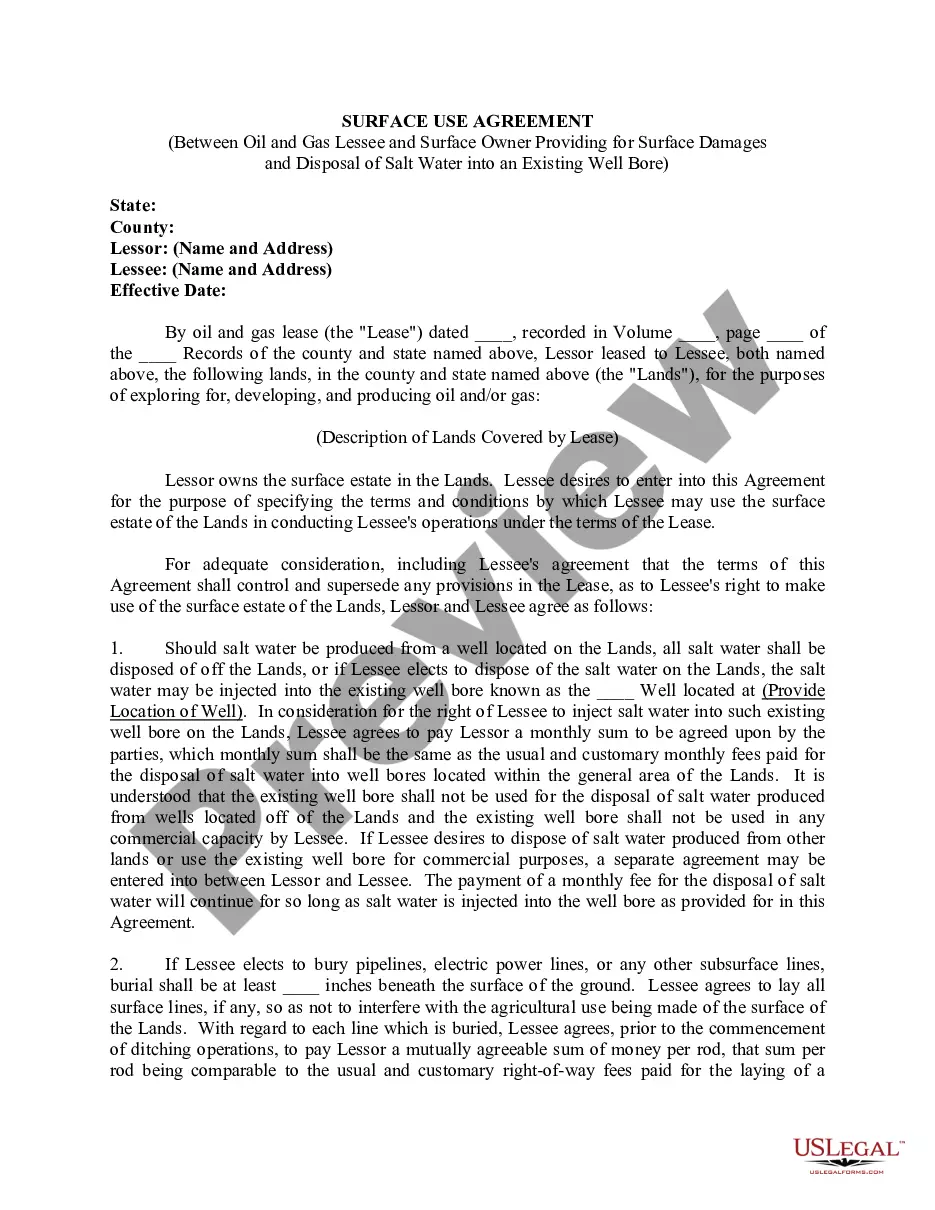
Surface Use Agreement Between Oil and Gas Lessee and Surface Owner Providing For Surface Damages and Disposal of Salt Water into An Existing Well Bore
What is this form?
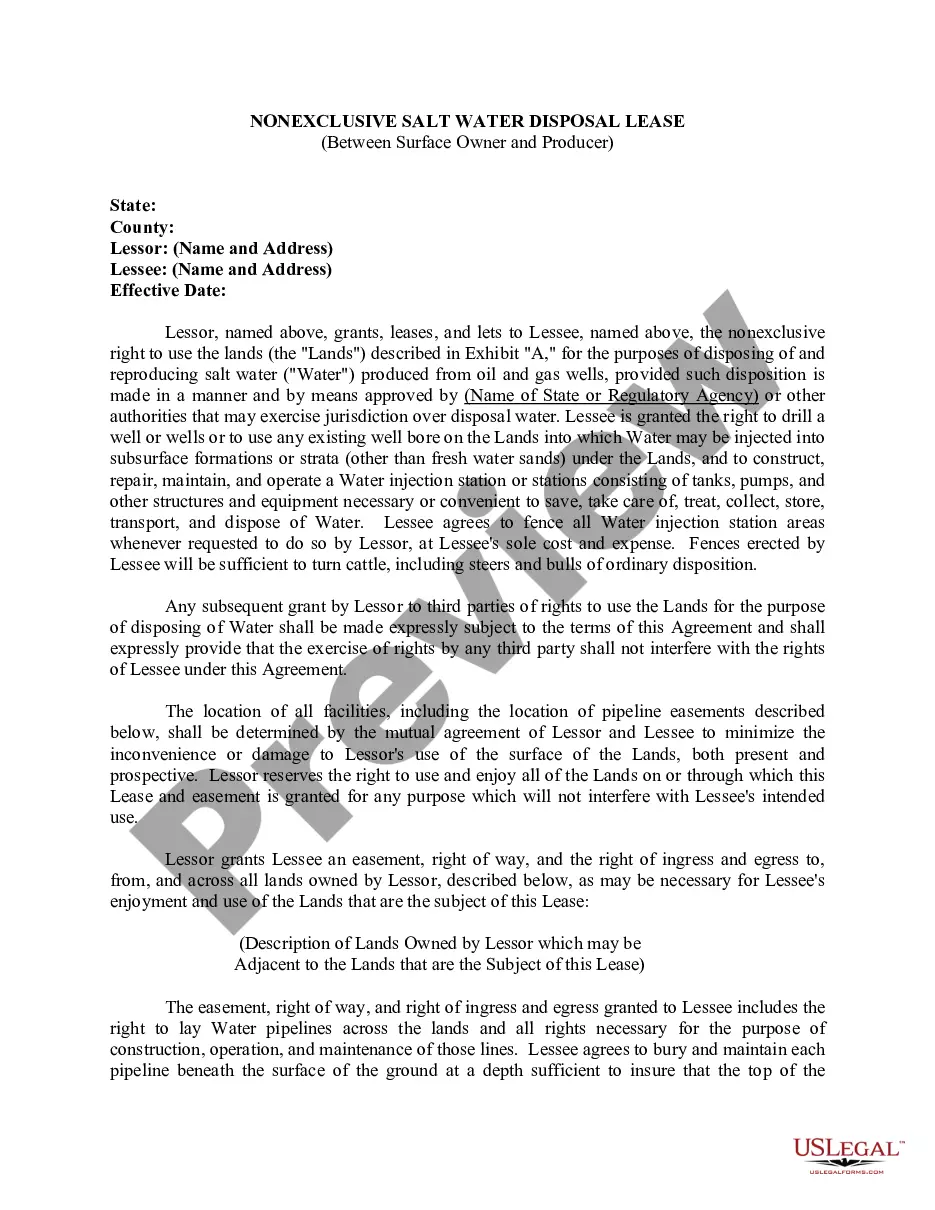
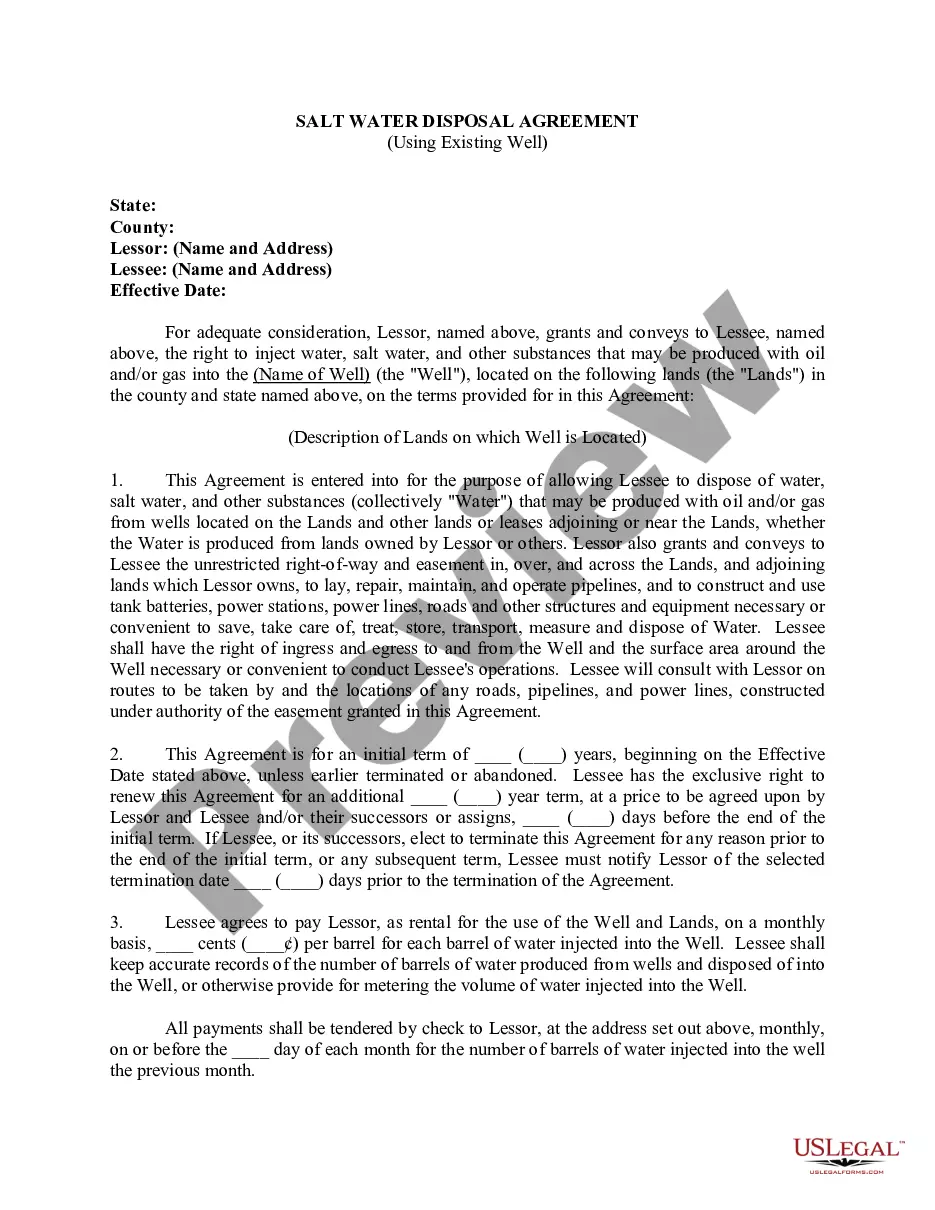
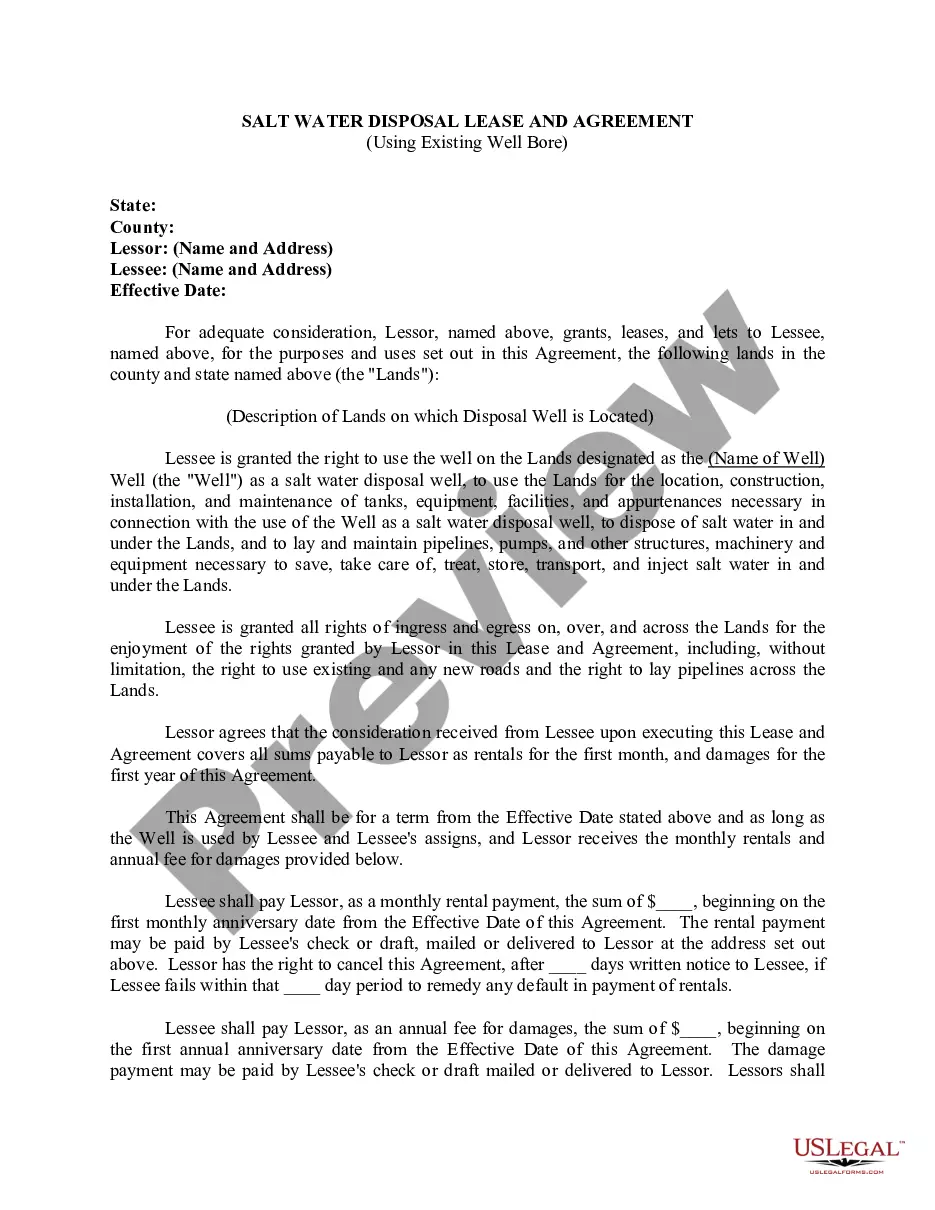
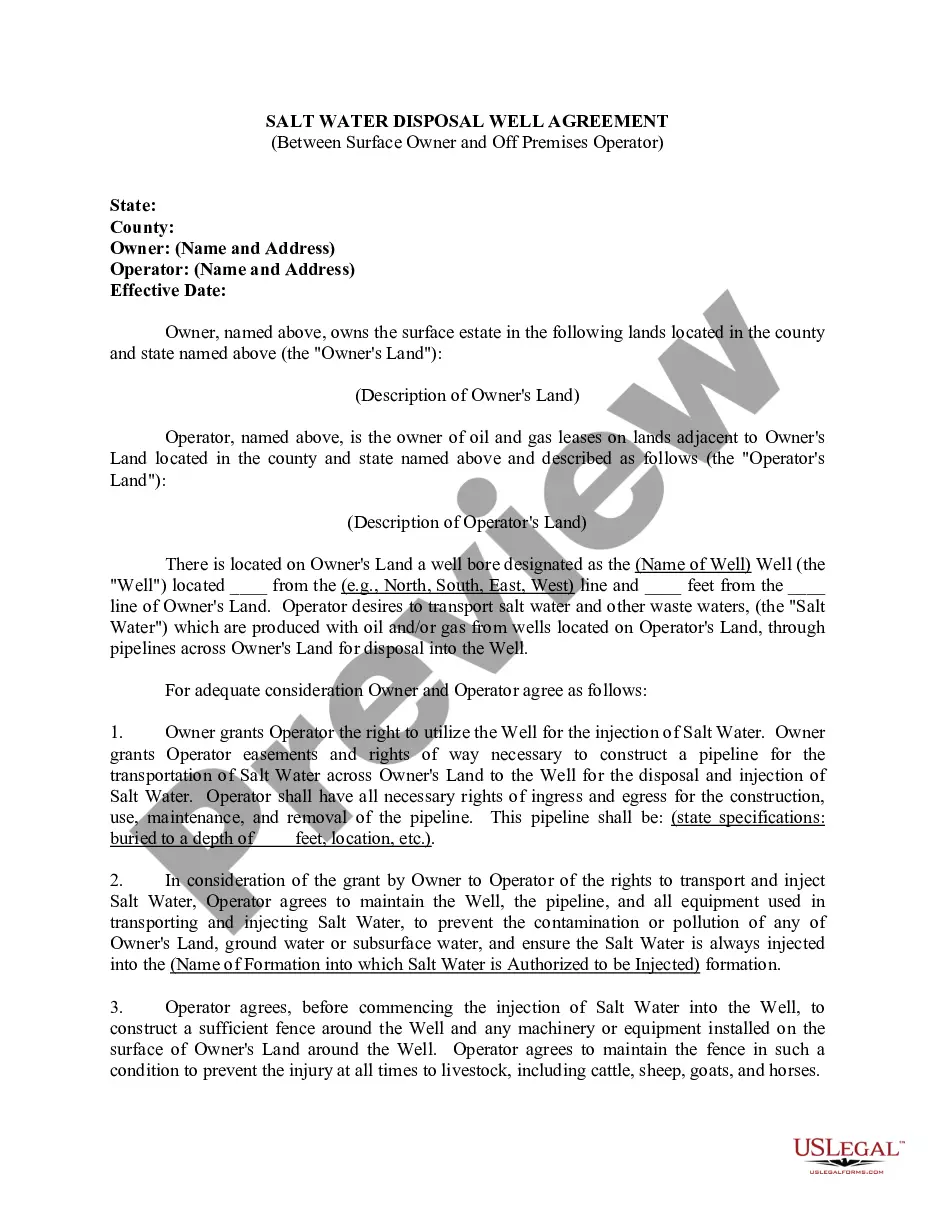
This form is a Surface Use Agreement between an oil and gas lessee and a surface owner. It outlines the conditions under which the lessee may utilize the surface estate for oil and gas operations. This agreement is essential for specifying terms related to surface damages and the disposal of salt water into an existing well bore, ensuring clarity and legal compliance in operations that could affect surface land use.
Form components explained
- Identification of the lessor (surface owner) and lessee (oil and gas operator).
- Effective date of the agreement.
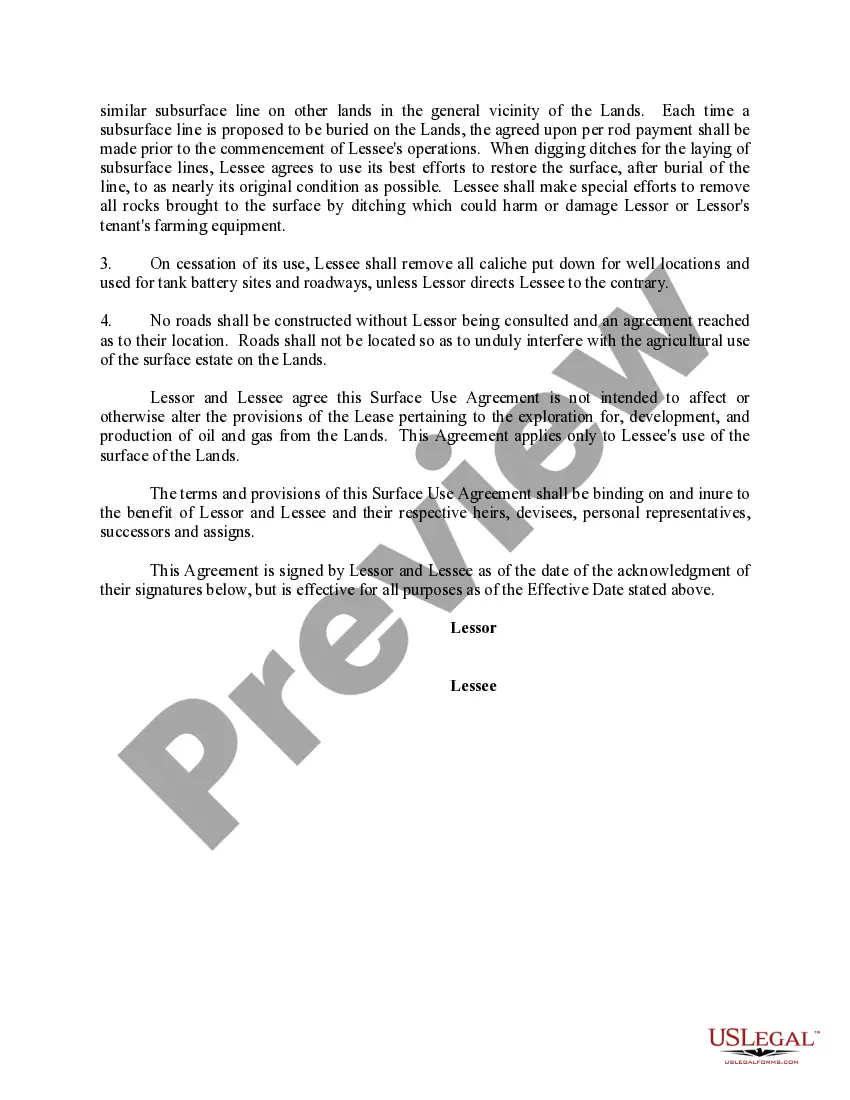
- Conditions for disposing of salt water, including payment arrangements.
- Requirements for burying pipelines and restoring surfaces after use.
- Consultation requirements for constructing roads on the surface estate.
- Clauses regarding the binding nature of the agreement for future successors.
When to use this form
This form should be used when an oil and gas company (lessee) seeks to operate on land owned by another party (lessor) and needs to establish clear rules regarding the use of the land's surface, particularly related to salt water disposal and potential impacts on agricultural activities. It is necessary before initiating operations that may disturb the surface or require infrastructure installation.
Who needs this form
- Surface landowners looking to lease their land for oil and gas exploration.
- Oil and gas companies intending to utilize surface land for operational purposes.
- Legal representatives handling land leasing agreements within the oil and gas sector.
How to prepare this document
- Identify the names and addresses of both the lessor and lessee.
- Specify the effective date of the agreement.
- Detail any specific arrangements for salt water disposal, including payment terms.
- Include information about any pipelines or subsurface lines to be installed.
- Prepare for additional agreements if salt water disposal involves off-site operations.
Is notarization required?
Notarization is not commonly needed for this form. However, certain documents or local rules may make it necessary. Our notarization service, powered by Notarize, allows you to finalize it securely online anytime, day or night.
Get your form ready online
Our built-in tools help you complete, sign, share, and store your documents in one place.
Make edits, fill in missing information, and update formatting in US Legal Forms—just like you would in MS Word.
Download a copy, print it, send it by email, or mail it via USPS—whatever works best for your next step.
Sign and collect signatures with our SignNow integration. Send to multiple recipients, set reminders, and more. Go Premium to unlock E-Sign.
If this form requires notarization, complete it online through a secure video call—no need to meet a notary in person or wait for an appointment.
We protect your documents and personal data by following strict security and privacy standards.

Make edits, fill in missing information, and update formatting in US Legal Forms—just like you would in MS Word.

Download a copy, print it, send it by email, or mail it via USPS—whatever works best for your next step.

Sign and collect signatures with our SignNow integration. Send to multiple recipients, set reminders, and more. Go Premium to unlock E-Sign.

If this form requires notarization, complete it online through a secure video call—no need to meet a notary in person or wait for an appointment.

We protect your documents and personal data by following strict security and privacy standards.
Typical mistakes to avoid
- Failing to clearly define the disposal terms for salt water.
- Neglecting to consult with the surface owner before constructing roads or installing infrastructure.
- Omitting any payment agreements relating to subsurface operations.
Benefits of using this form online
- Convenience of having an instantly downloadable and customizable document.
- Access to templates that have been drafted by licensed attorneys for reliability.
- Time-saving as forms can be filled out and printed from home or office.
Looking for another form?
Form popularity
FAQ
Name and address of the supplying party. Name and address of the supplied party. Address of the property with the well. Legal description of the property (Parcel 1) Legal description of the Parcel 2. Conditions of the agreement.
Well water is normally fresher, high in nutrients, and high in minerals. Because well water is coming from the aquifer underground, instead of run- off or surface water, it tends to be cleaner and fresher. Ground water is also high in healthy nutrients and minerals that are good for the body, including children.
By definition, a shared well is a well that services more than one home whether its for residential or irrigation purposes. They can service up to two or more homes, and if there were more than four, then it would be classified as a community well.
By definition, a shared well is a well that services more than one home whether its for residential or irrigation purposes. They can service up to two or more homes, and if there were more than four, then it would be classified as a community well.
By definition, a shared well is a well that services more than one home whether its for residential or irrigation purposes. They can service up to two or more homes, and if there were more than four, then it would be classified as a community well.
An easement would give you, and any subsequent buyers, the right to have your well on the neighbor's property and to access the property in order to maintain the well. An easement can be created without the need to involve surveyors and the county.
It doesn't affect value. I ask for a copy of the water sharing agreement.
A shared well agreement will list the percentage of water to be used as per alloted portion of land for the agreement. Water wells are registered in Arizona to document their existence and ownership.Each owner is to install their own water lines to the well when constructing their homes.