California Multi-Prime Construction Management Services Agreement
About this form
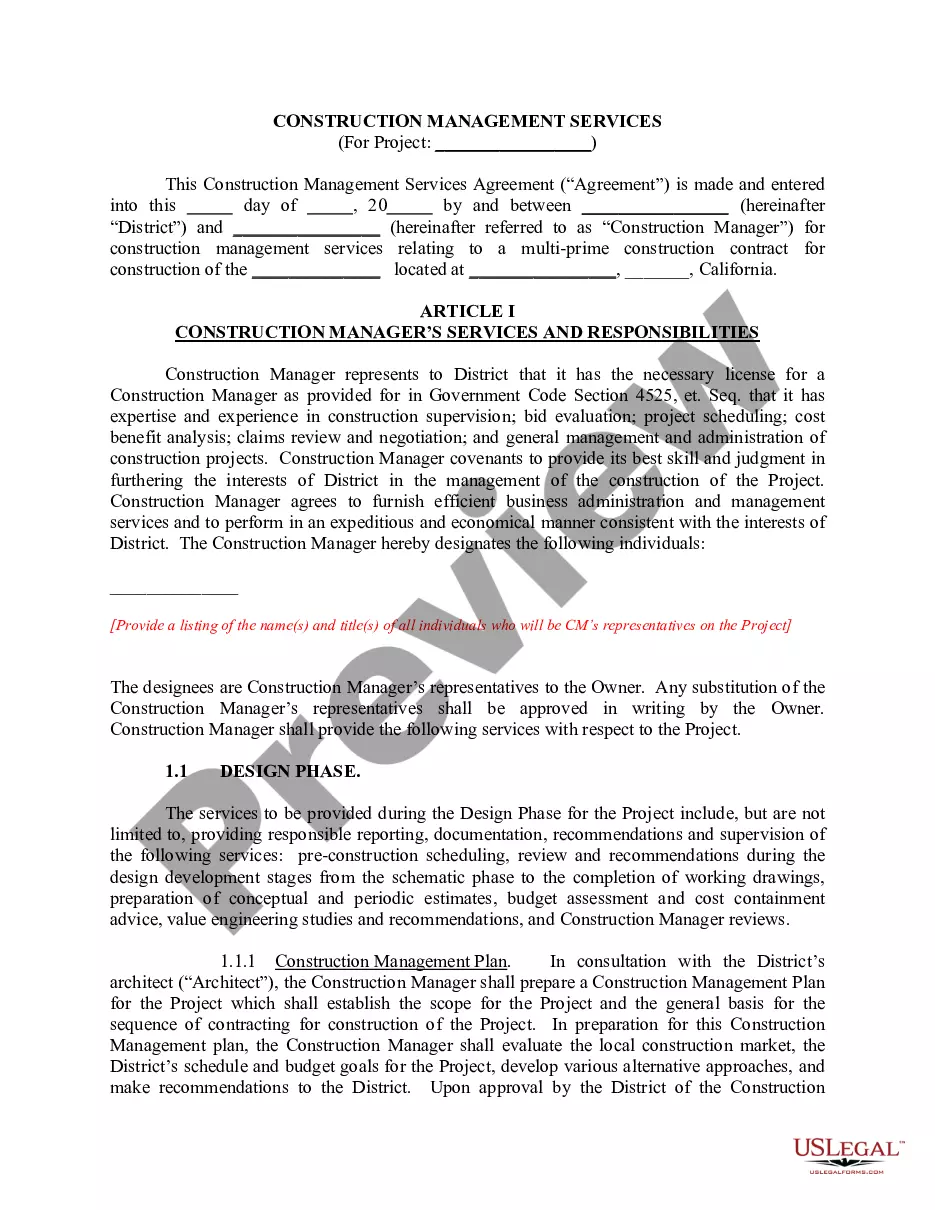
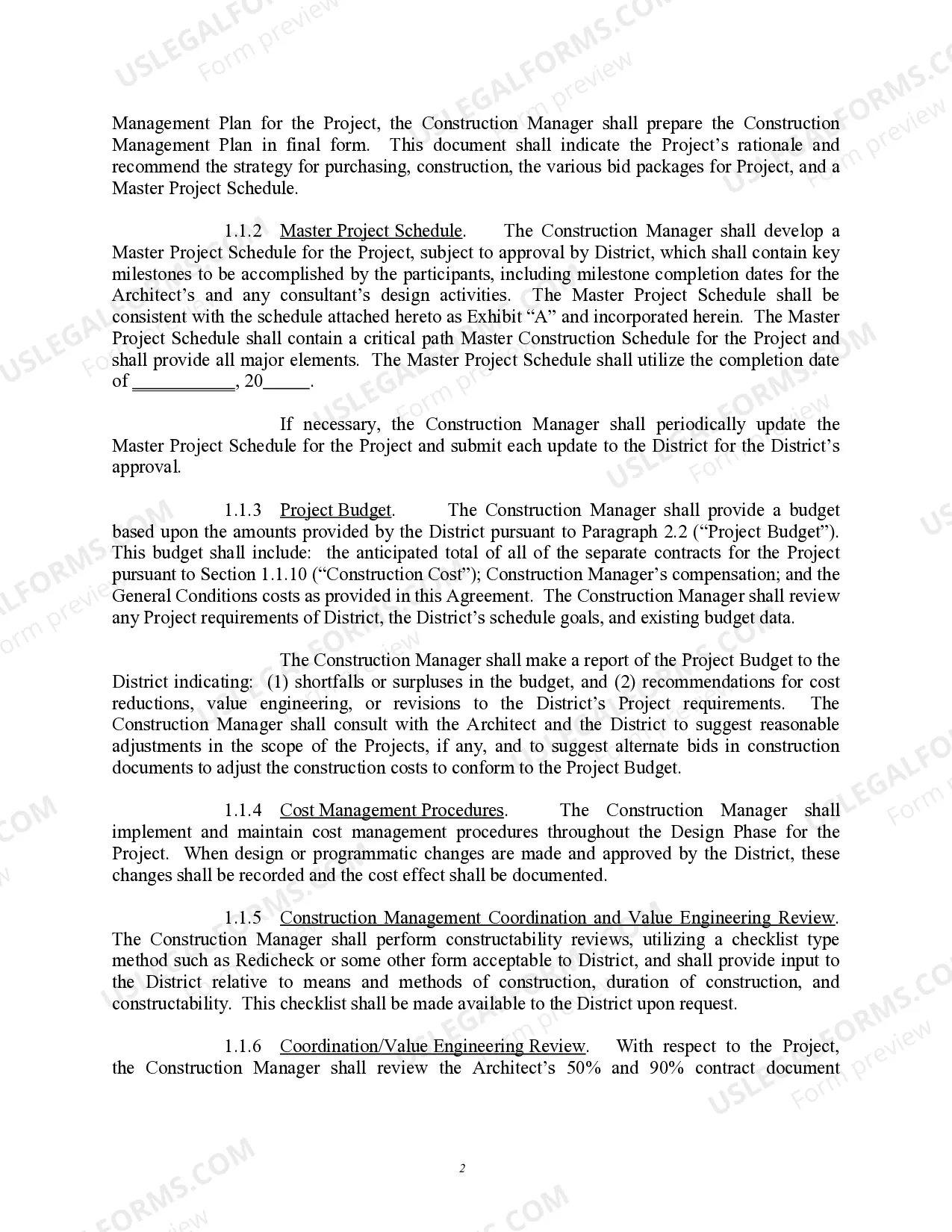
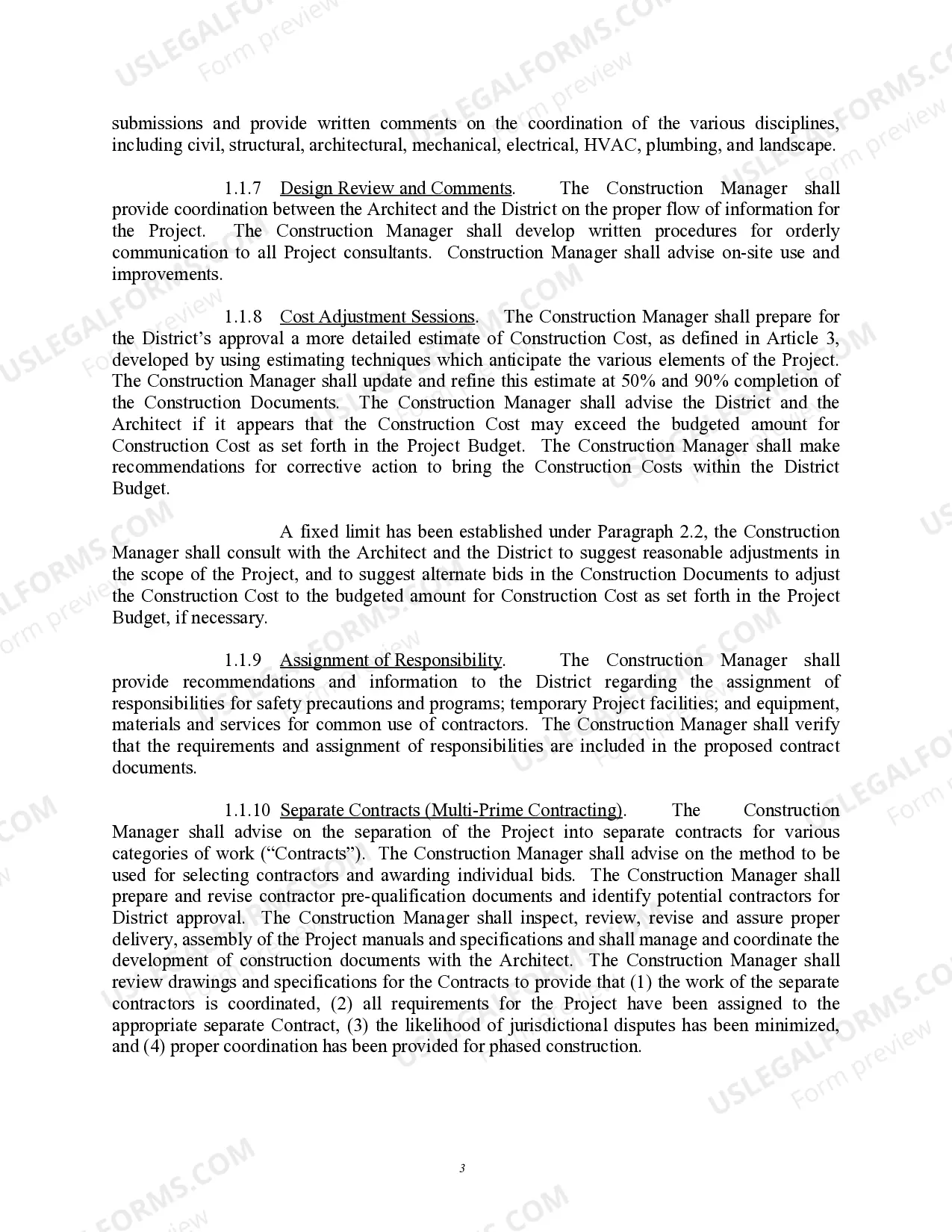
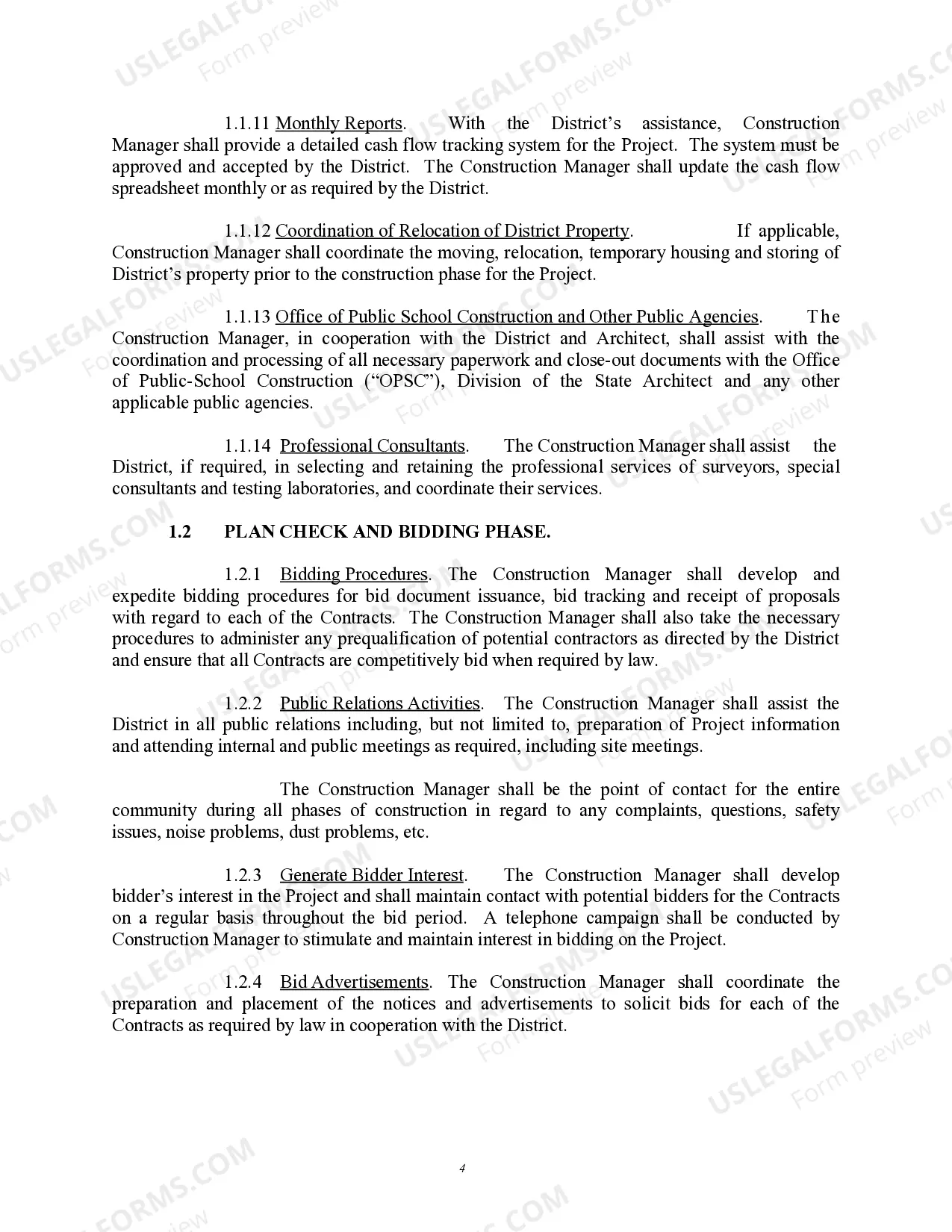
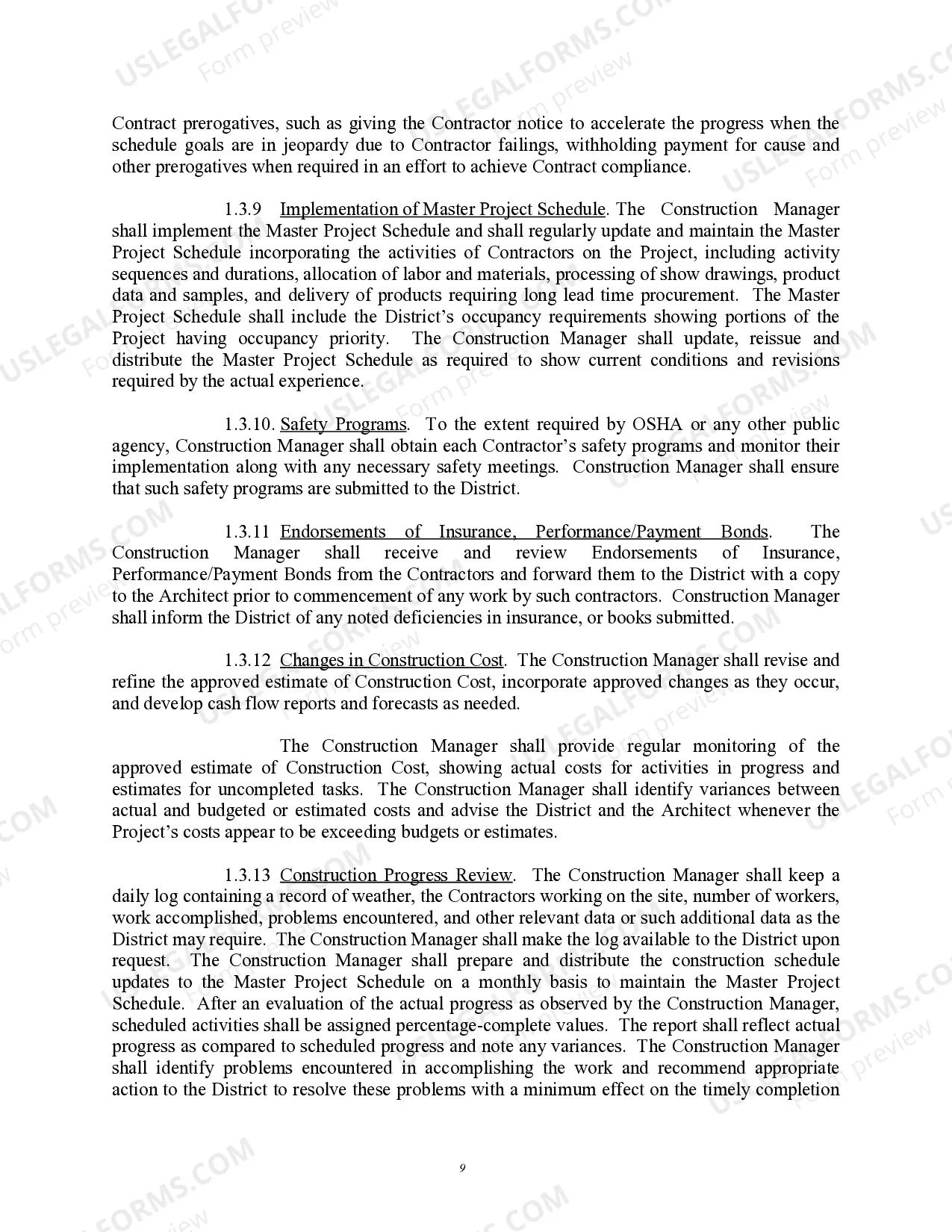
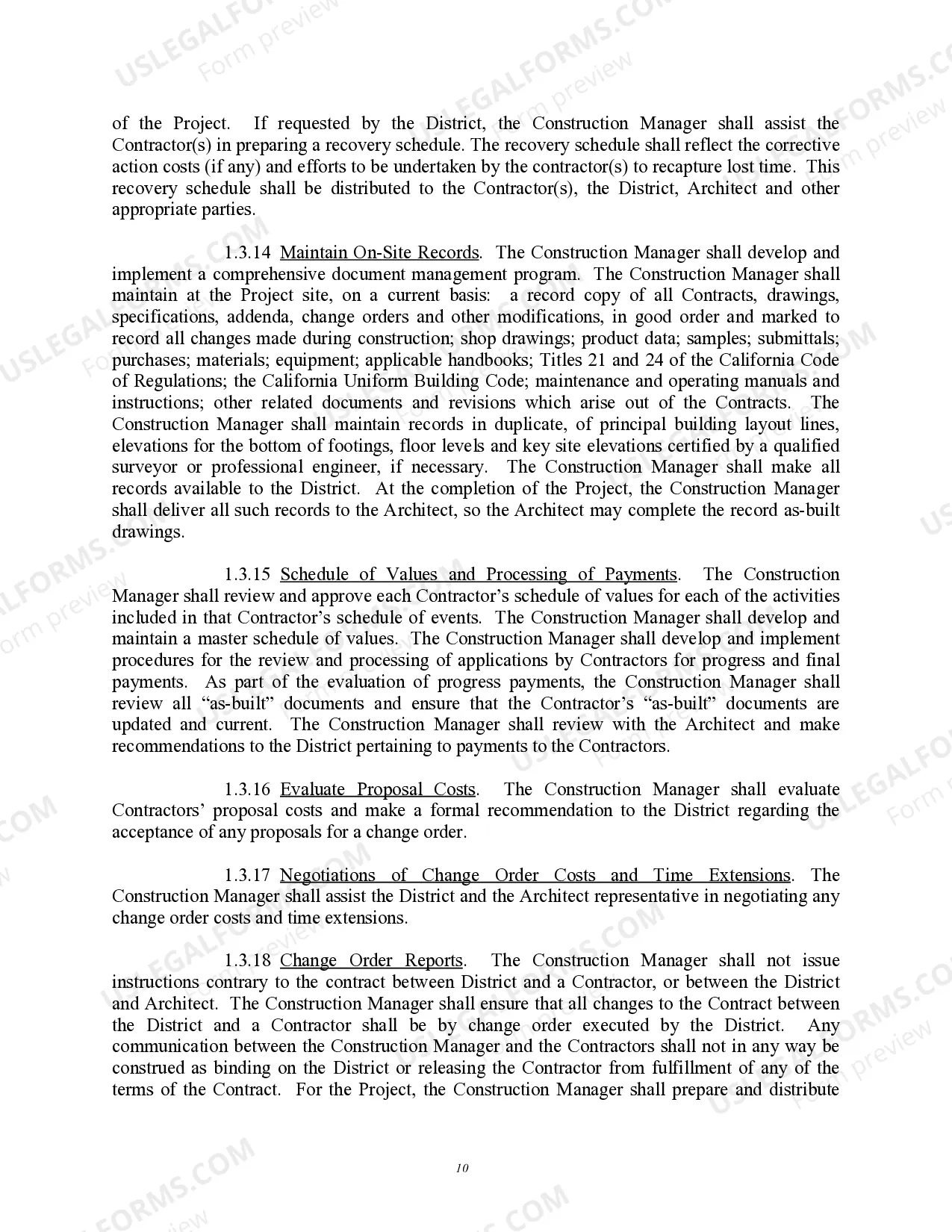
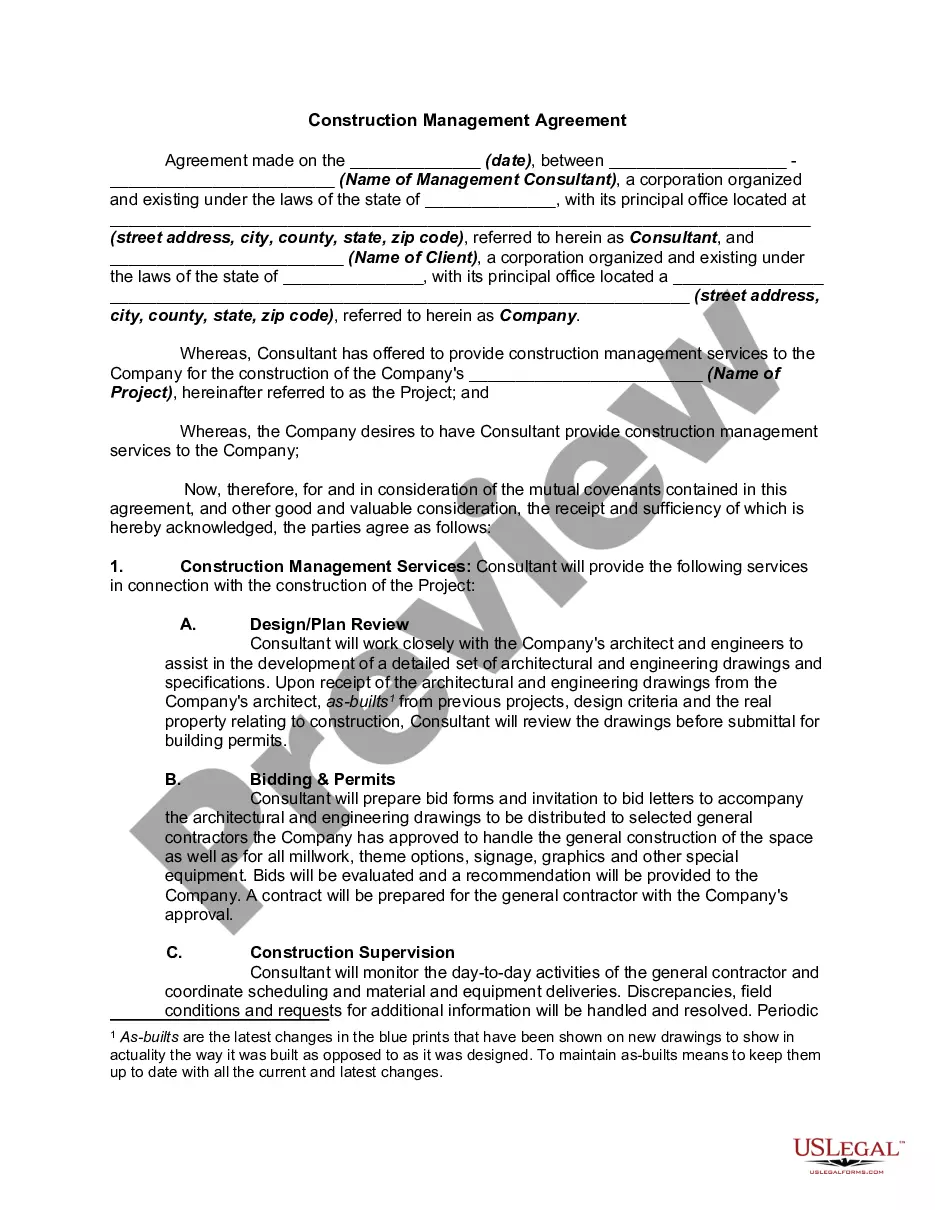
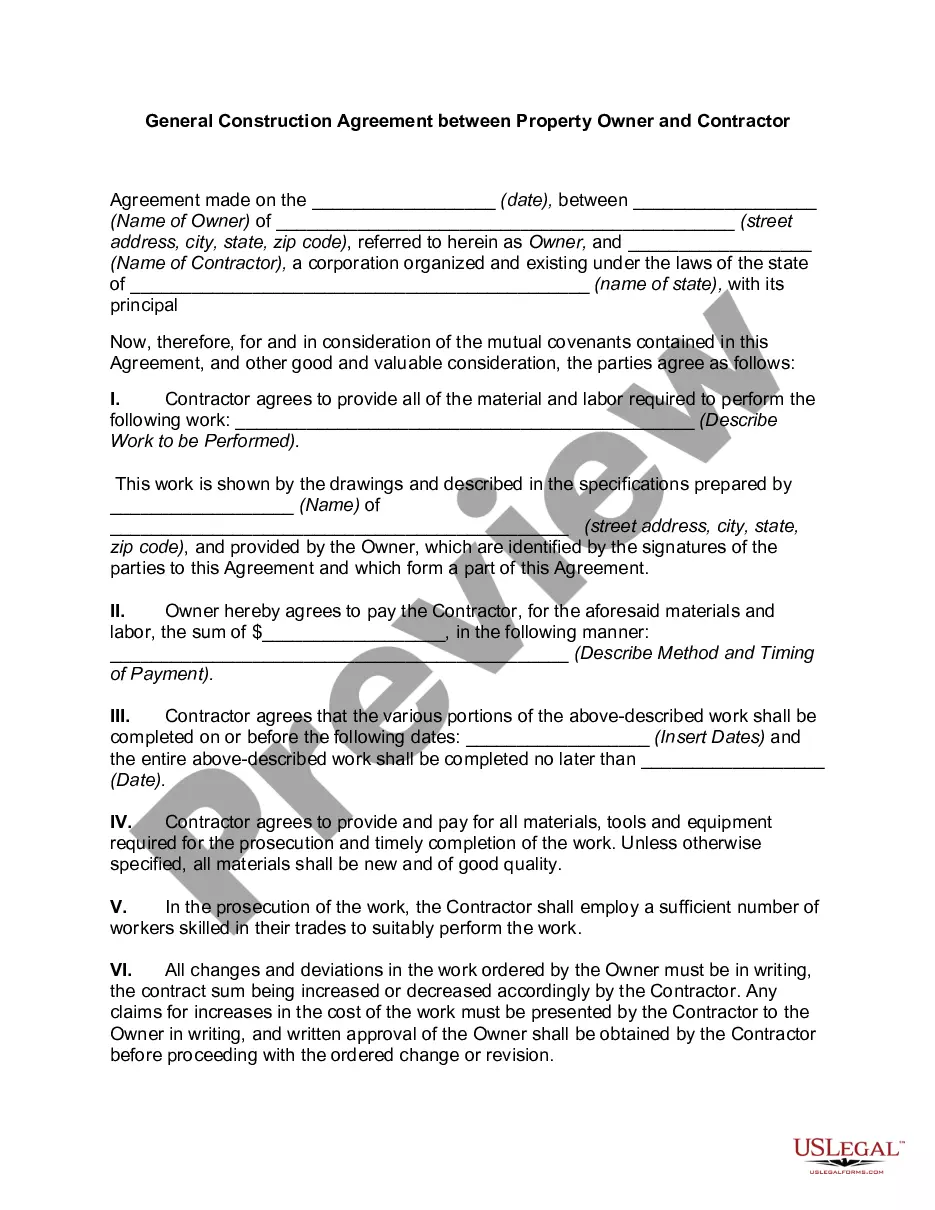
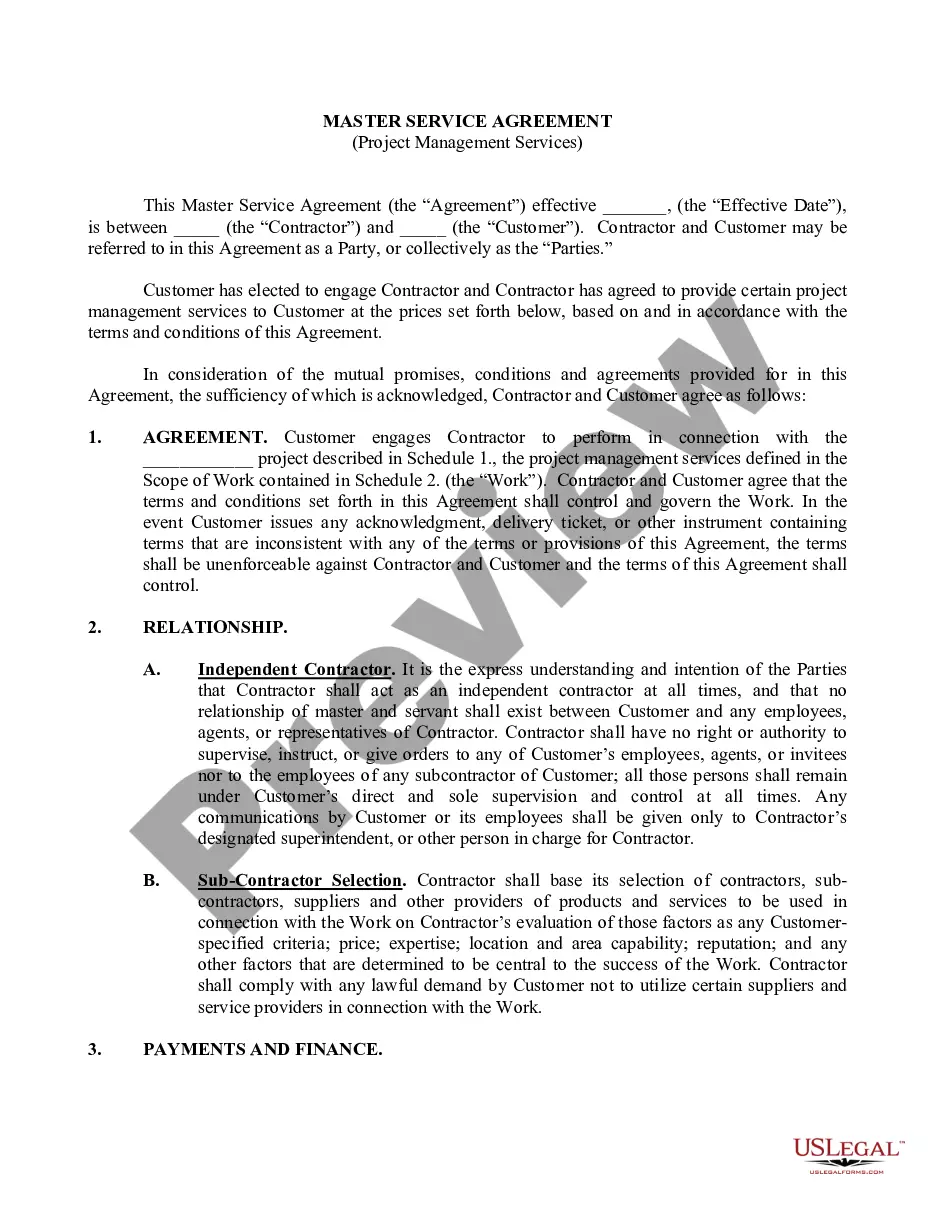
The Multi-Prime Construction Management Services Agreement is a legal document specifically designed for construction projects where an owner engages a construction manager to oversee multiple contractors. This form facilitates a structured approach to managing bids, scheduling, budgeting, and various administrative responsibilities throughout a project. It differs from single-prime contracts by allowing the owner more direct control over payments and contractor interactions, making it suitable for complex construction endeavors.
Form components explained
- Clear definition of construction manager's responsibilities and services.
- Outline of design, bidding, and construction phases specific to multi-prime projects.
- Details on project budgeting and cash flow tracking.
- Framework for handling contractor relations and change order management.
- Workers' compensation and indemnification clauses for liability issues.

When this form is needed
This agreement should be used when an owner plans a construction project involving multiple contractors and needs a construction manager for oversight. It is particularly useful in scenarios where the project involves significant complexity, a phased approach to construction, or when strict timelines and budgets are required. Examples include public works projects or large commercial developments.
Who should use this form
- Property owners looking to build or renovate properties with multiple contractors.
- Construction managers who will supervise multiple contractors on a project.
- Architects and design teams managing construction phases.
- Entities involved in public works or community projects requiring clear management protocols.
Steps to complete this form
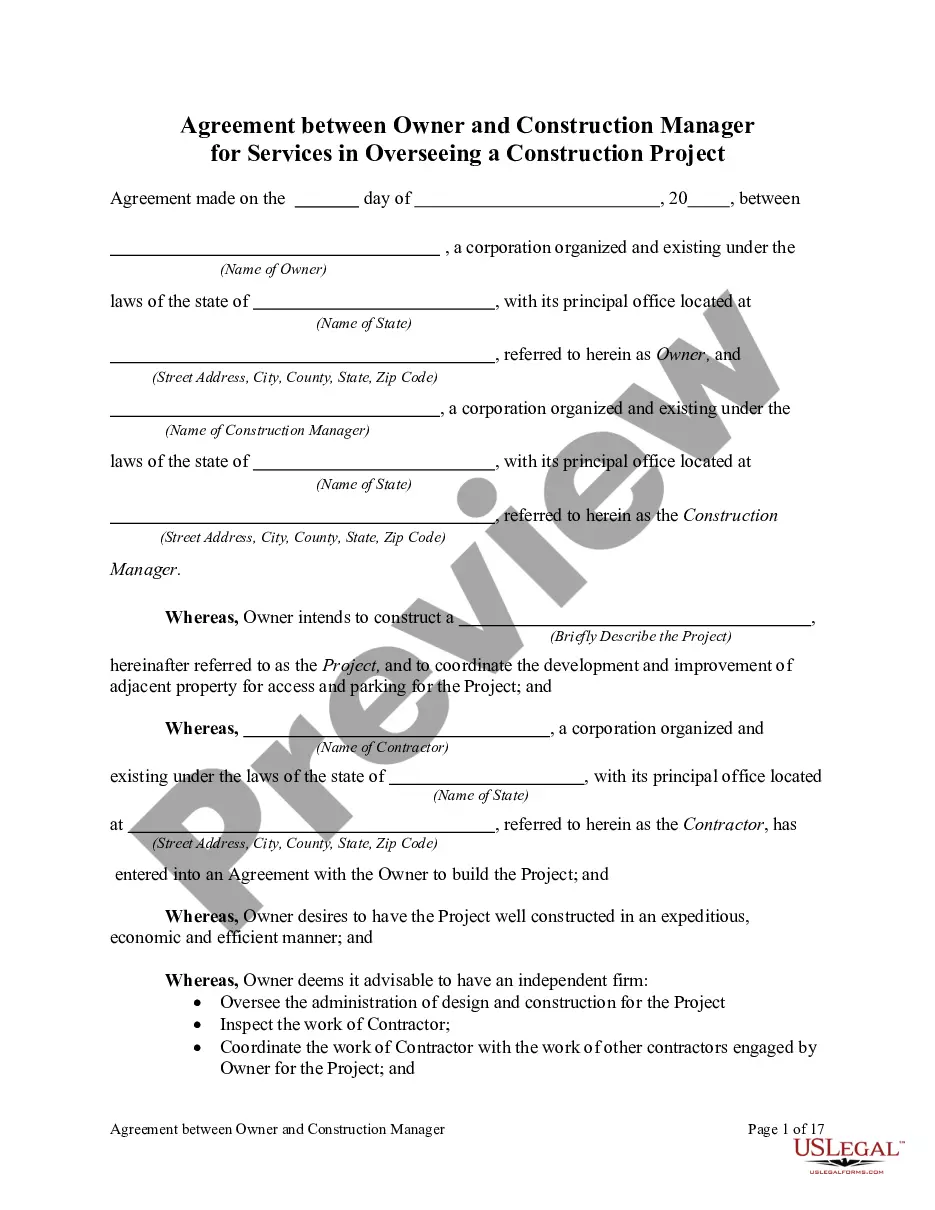
- Identify and enter the parties involved, including the District and Construction Manager names and addresses.
- Specify the project details, including project name, location, and any specific deadlines or budget limitations.
- Fill out the sections detailing the responsibilities of the Construction Manager and the outlined phases of the project.
- Ensure all parties agree on the terms, signing and dating the document where indicated.
- Keep a copy of the completed agreement for future reference and compliance tracking.
Notarization guidance
This form does not typically require notarization unless specified by local law. However, having this document notarized could add an extra layer of validity and authenticity, especially in formal construction settings.
Get your form ready online
Our built-in tools help you complete, sign, share, and store your documents in one place.
Make edits, fill in missing information, and update formatting in US Legal Forms—just like you would in MS Word.
Download a copy, print it, send it by email, or mail it via USPS—whatever works best for your next step.
Sign and collect signatures with our SignNow integration. Send to multiple recipients, set reminders, and more. Go Premium to unlock E-Sign.
If this form requires notarization, complete it online through a secure video call—no need to meet a notary in person or wait for an appointment.
We protect your documents and personal data by following strict security and privacy standards.

Make edits, fill in missing information, and update formatting in US Legal Forms—just like you would in MS Word.

Download a copy, print it, send it by email, or mail it via USPS—whatever works best for your next step.

Sign and collect signatures with our SignNow integration. Send to multiple recipients, set reminders, and more. Go Premium to unlock E-Sign.

If this form requires notarization, complete it online through a secure video call—no need to meet a notary in person or wait for an appointment.

We protect your documents and personal data by following strict security and privacy standards.
Common mistakes to avoid
- Failing to clearly define the scope of work for the Construction Manager.
- Omitting necessary dates and budget limits that guide the project's execution.
- Not ensuring that all parties have signed and dated the document, which could lead to disputes.
- Neglecting to update any changes to project requirements or key milestones.
Benefits of completing this form online
- Immediate access to the latest legal templates tailored for construction management.
- Easy customization to fit specific project needs, which enhances efficiency.
- Availability of integrated online notarization for added legal compliance.
- Convenient download and print options allow for simple sharing among involved parties.
Looking for another form?

Form popularity
FAQ
A prime contract is a legal agreement between a general contractor and a federal agency that procures the latter's services for the former. The contract identifies who the contract parties are, what their mutual goals are, and how long their relationship will last.
The Construction Manager at Risk (CMAR) is a delivery method which entails a commitment by the Construction Manager (CM) to deliver the project within a Guaranteed Maximum Price (GMP) which is based on the construction documents and specifications at the time of the GMP plus any reasonably inferred items or tasks.
What is it? Multi-prime contracting is a variation of design-bid-build in which the STA utilizes multiple contractors to construct a project. In this setup, the STA has several contracts with different contractors that perform specific aspects of the construction.
In the multi-prime setting, the owner takes over the project's management and coordination efforts. The owner may engage a construction manager to assist with the project's schedule, budget, and coordination efforts during the construction process.
Disadvantages of the Multiple Prime Contracts system The final cost of the project is not known until the final prime contract is procured. There have been numerous cases where this method did not work well due to the absence of overall authority and coordination once construction is underway.
Limitations? Due to the fact that many contractors are a part of multi-prime contracting, the major disadvantage to this type of delivery method is the increased coordination in the development of the separate bidding and contract packages for each separate prime contractor.
Multi-Prime Contract (CMMP) Under a multi-prime contract, the owner has more financial control over a project. Further, the construction manager assumes no financial risk. With the CMMP delivery method, the owner chooses the contractors based on several qualifications and not just project price.
4 Benefits of Having a Single Prime Contractor Single Point of Contact. Using multiple prime contractors means that the burden of project management falls to a leader in the customer organization.Single Point of Accountability.Cost-Effective Procurement and Management.