Release and Surface Damages Agreement Entered into Prior to Drilling
What is this form?
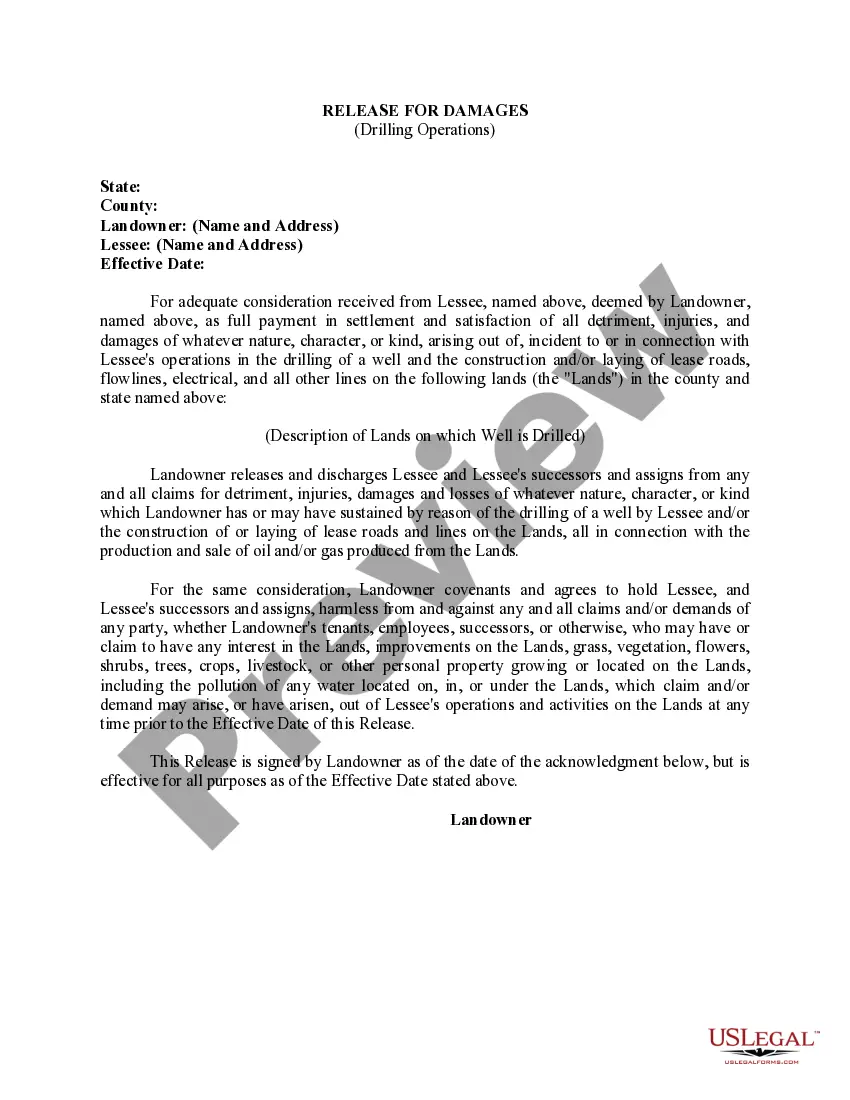
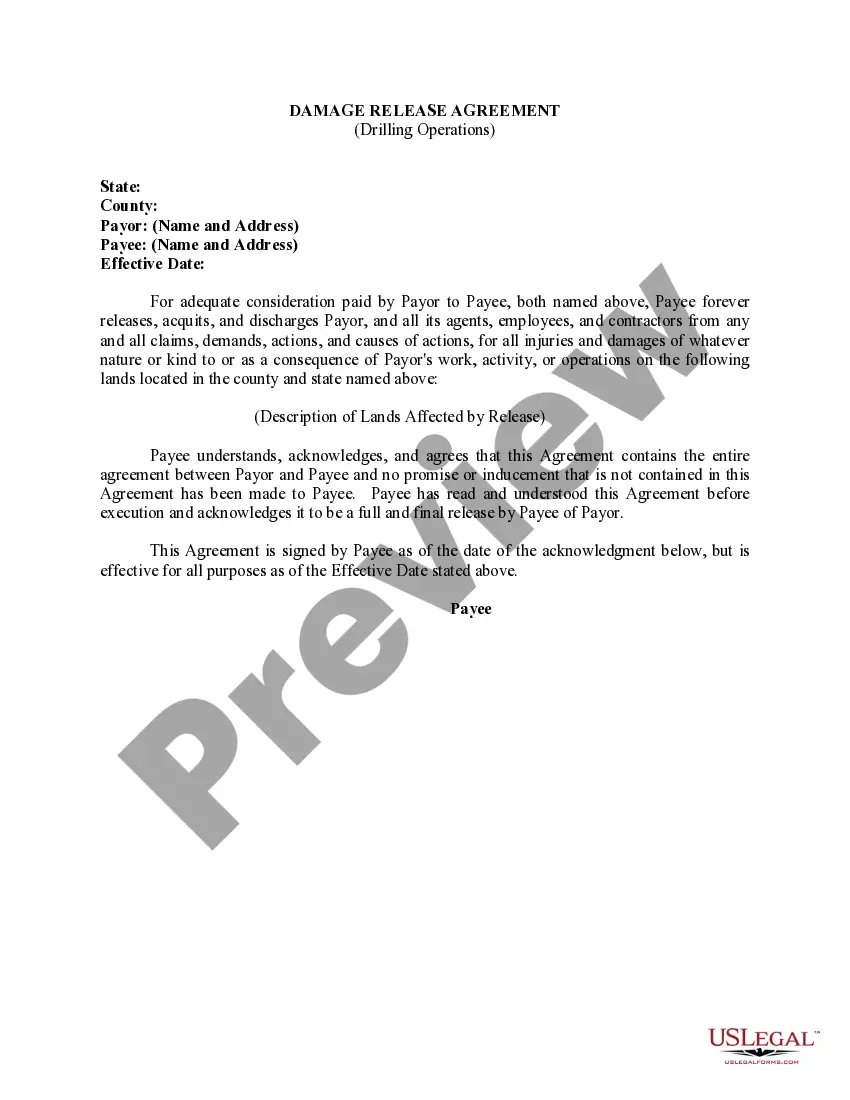
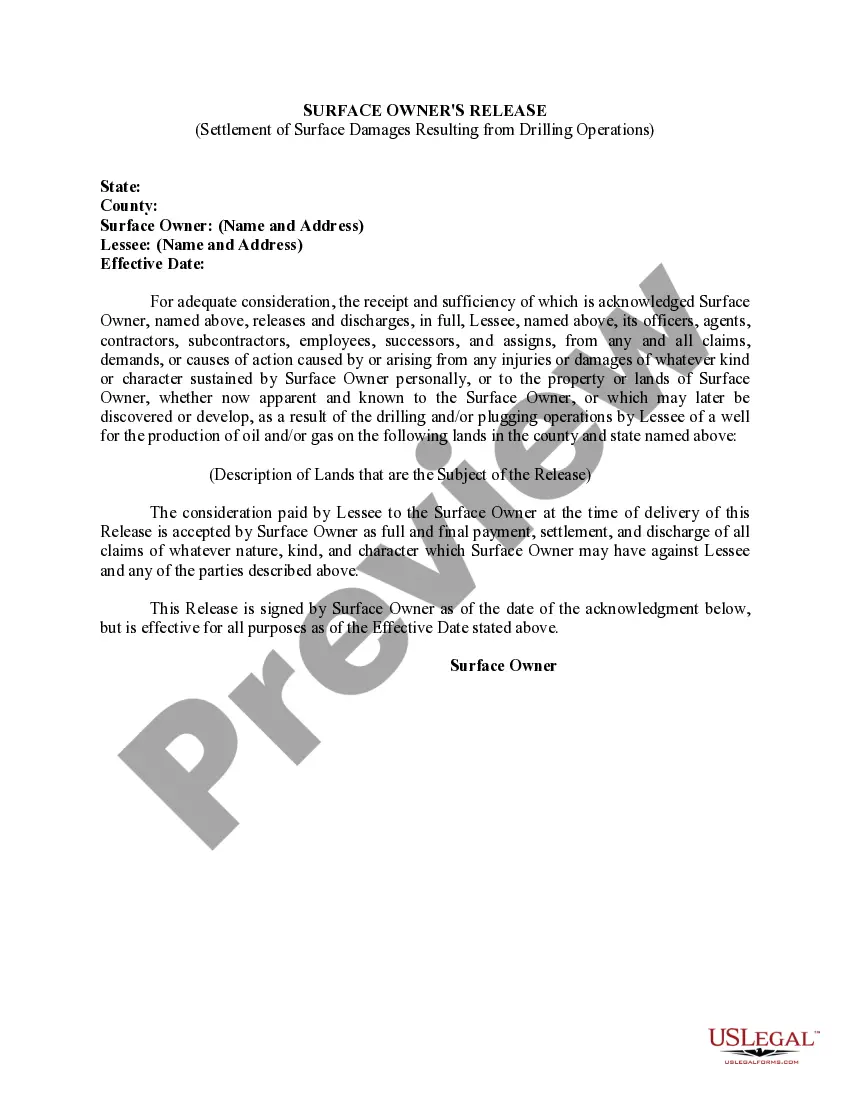
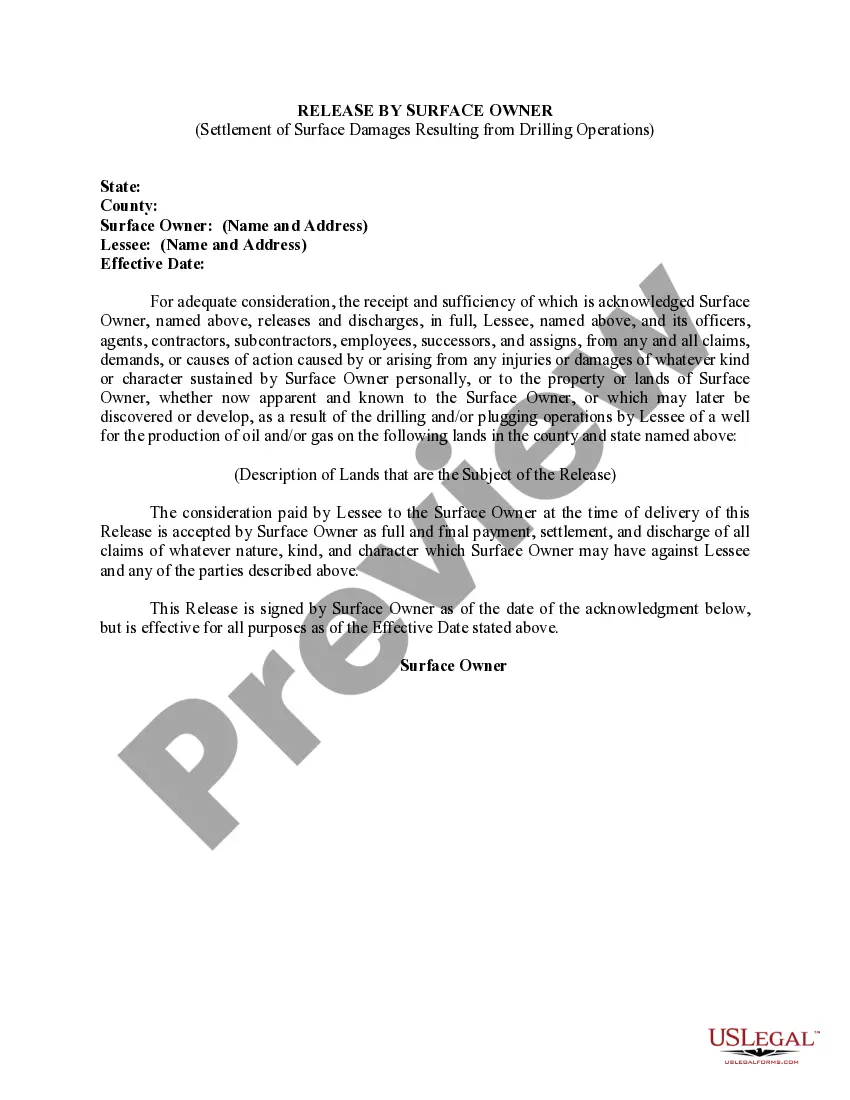
The Release and Surface Damages Agreement Entered into Prior to Drilling is a legal document that establishes an agreement between a surface owner and a lessee. Its primary purpose is to secure a lump sum payment to the surface owner before any drilling or exploration operations begin on their property, protecting both parties from potential future claims related to damage during the drilling process. This form is distinct from other land use agreements as it specifically addresses the surface damages associated with oil and gas exploration activities.
Form components explained
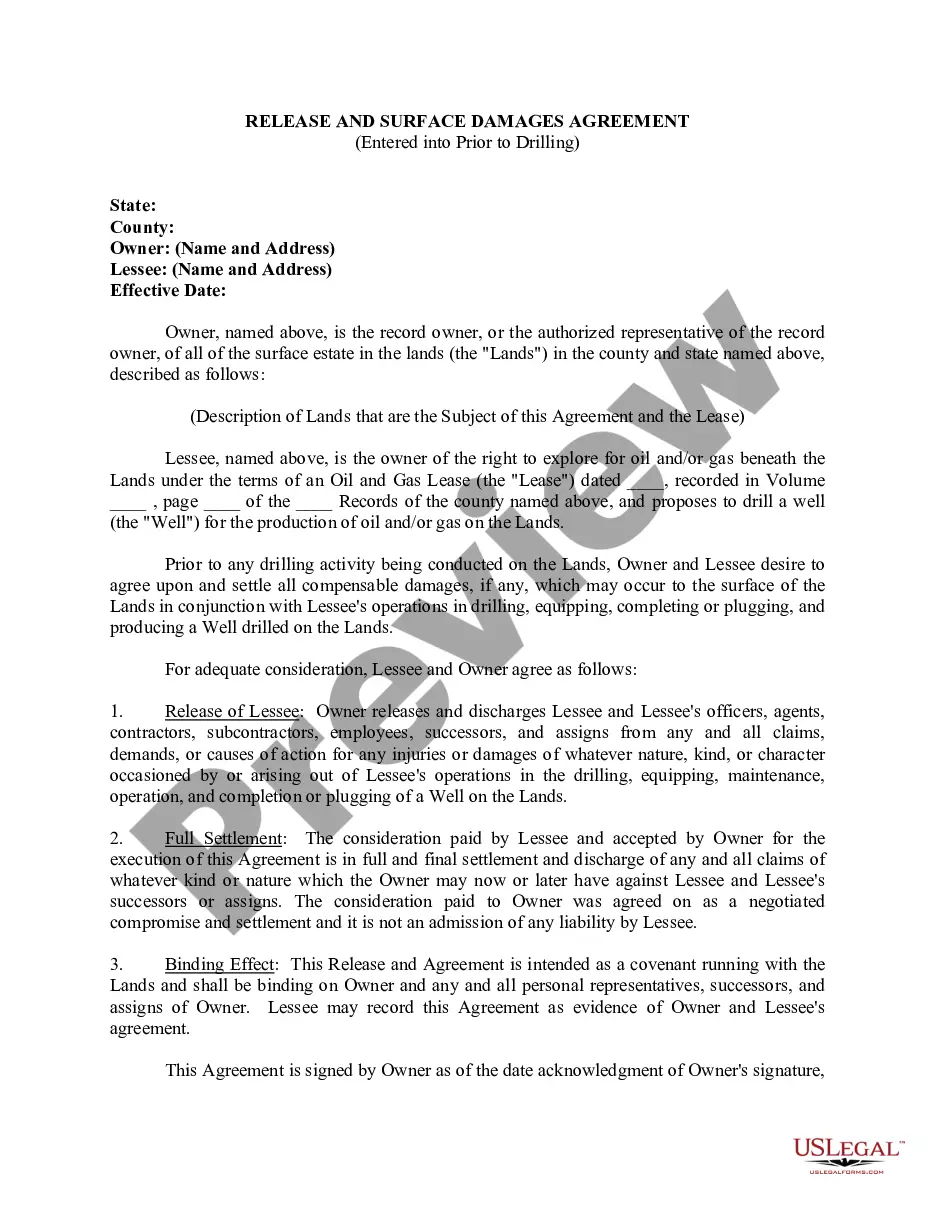
- Identification of the parties involved: the surface owner and the lessee.
- Effective date and specific land description where drilling is proposed.
- Release clause, relieving lessee from claims related to drilling operations.
- Settlement clause, acknowledging the payment made to the surface owner as full compensation.
- Binding effect clause, ensuring the agreement applies to all successors.
When to use this form
This form should be used when a lessee intends to conduct drilling activities on land owned by a different party. It is particularly important in situations where the surface owner wants to ensure they are compensated for potential damages to their property before any exploration begins. Using this agreement helps clarify the responsibilities and expectations of both parties, thus avoiding future disputes.
Who should use this form
- Surface owners who may experience land damage during drilling operations.
- Lessee entities or individuals planning to conduct oil or gas drilling on another's property.
- Landowners seeking to negotiate terms of compensation before drilling begins.
How to prepare this document
- Identify the parties: Enter the names and addresses of both the surface owner and the lessee.
- Specify the land: Provide a detailed description of the lands where drilling will occur.
- State the effective date: Indicate the date when the agreement will take effect.
- Fill in the release clause: Ensure the owner agrees to release the lessee from claims arising from drilling activities.
- Enter consideration details: Specify the lump sum amount agreed upon as full settlement.
Does this form need to be notarized?
This form needs to be notarized to ensure legal validity. US Legal Forms provides secure online notarization powered by Notarize, allowing you to complete the process through a verified video call, available anytime.
Get your form ready online
Our built-in tools help you complete, sign, share, and store your documents in one place.
Make edits, fill in missing information, and update formatting in US Legal Forms—just like you would in MS Word.
Download a copy, print it, send it by email, or mail it via USPS—whatever works best for your next step.
Sign and collect signatures with our SignNow integration. Send to multiple recipients, set reminders, and more. Go Premium to unlock E-Sign.
If this form requires notarization, complete it online through a secure video call—no need to meet a notary in person or wait for an appointment.
We protect your documents and personal data by following strict security and privacy standards.

Make edits, fill in missing information, and update formatting in US Legal Forms—just like you would in MS Word.

Download a copy, print it, send it by email, or mail it via USPS—whatever works best for your next step.

Sign and collect signatures with our SignNow integration. Send to multiple recipients, set reminders, and more. Go Premium to unlock E-Sign.

If this form requires notarization, complete it online through a secure video call—no need to meet a notary in person or wait for an appointment.

We protect your documents and personal data by following strict security and privacy standards.
Common mistakes
- Not providing a complete description of the land, which can lead to confusion later.
- Failing to detail the full settlement amount clearly in the agreement.
- Omitting the effective date, which is crucial for the validity of the agreement.
Benefits of completing this form online
- Convenience of completing the form at your own pace and comfort.
- Editability allows users to customize details specific to their situation.
- Access to professional legal templates drafted by licensed attorneys, ensuring reliability.
Legal use & context
- The agreement serves to clarify the responsibilities of both parties during drilling operations.
- It protects the surface owner from potential damages while also easing the process for the lessee.
- Ensuring the document is appropriately completed and witnessed helps in its enforceability.
Looking for another form?
Form popularity
FAQ
The formation of oil begins in warm, shallow oceans that were present on the Earth millions of years ago. In these oceans, extremely small dead organic matter - classified as plankton - falls to the floor of the ocean. This plankton consists of animals, called zooplankton, or plants, called phytoplankton.
2 Furthermore, ownership of such oil and gas constitutes ownership of a real property interest, as it is well settled in every jurisdiction that oil and gas in place are minerals, and as such they are part of the realty.3 Once oil and gas is produced, its legal character changes from real property to personal
Oil and Gas Extraction is the exploration and production of petroleum and natural gas from wells. The industry generates wastewater from the water extracted from the geological formations and from chemicals used during exploration, well drilling and production of oil and gas.
A so-called fossil fuel, petroleum is believed by most scientists to be the transformed remains of long dead organisms. The majority of petroleum is thought to come from the fossils of plants and tiny marine organisms. Larger animals might contribute to the mix as well.
Oil and gas are formed from organic material mainly deposited as sediments on the seabed and then broken down and transformed over millions of years. If there is a suitable combination of source rock, reservoir rock, cap rock and a trap in an area, recoverable oil and gas deposits may be discovered there.
Oil and gas rights extend vertically downward from the property line. Unless explicitly separated by a deed, oil and gas rights are owned by the surface landowner. Oil and gas rights offshore are owned by either the state or federal government and leased to oil companies for development.
However, since mineral rights are a severed portion of the land rights themselves (they're separated from the land's "surface rights" and sold separately by deed, just like the land itself), they are usually considered real property.
Conventional oil and gas refers to petroleum, or crude oil, and raw natural gas extracted from the ground by conventional means and methods.
A crude oil deposit (or natural gas deposit) is formed when crude oil (or natural gas) on the way to the earth's surface is encapsulated by impermeable layers of rock so it can accumulate accordingly.