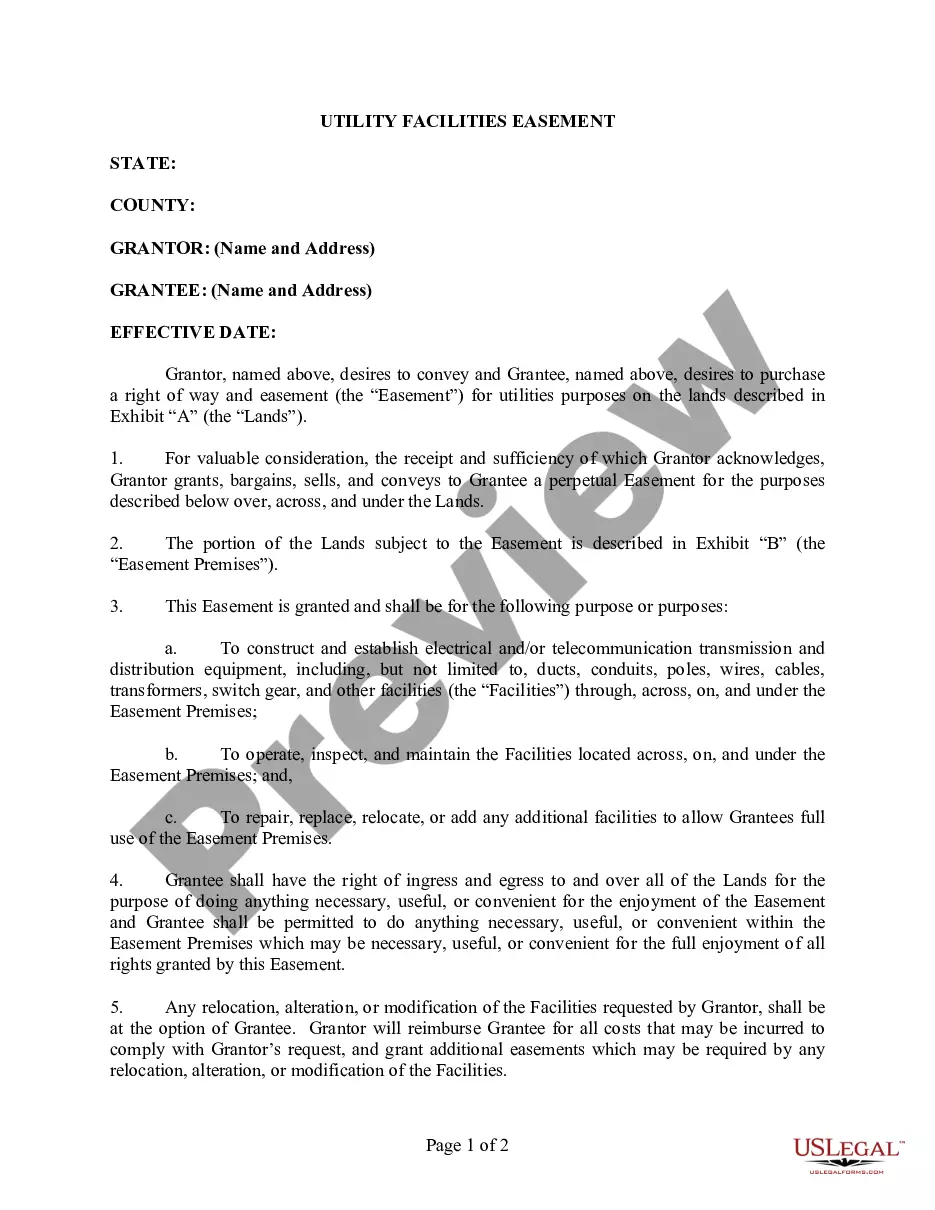
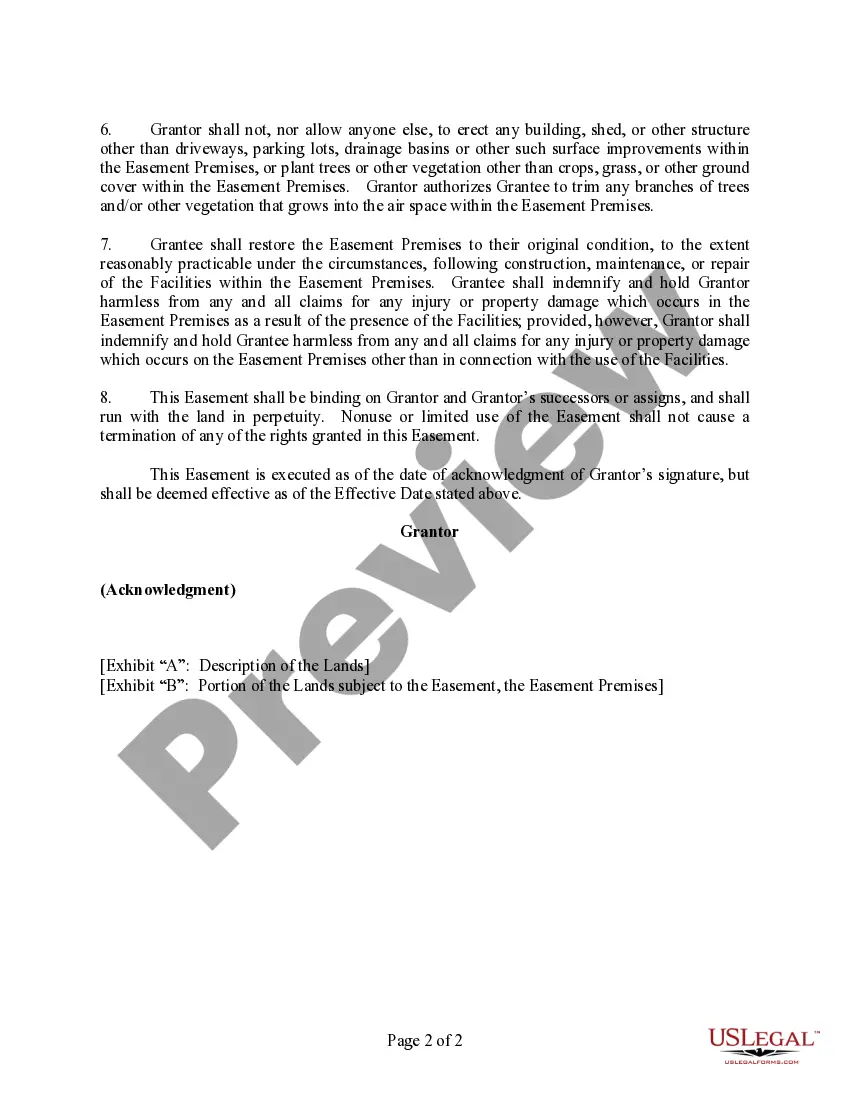
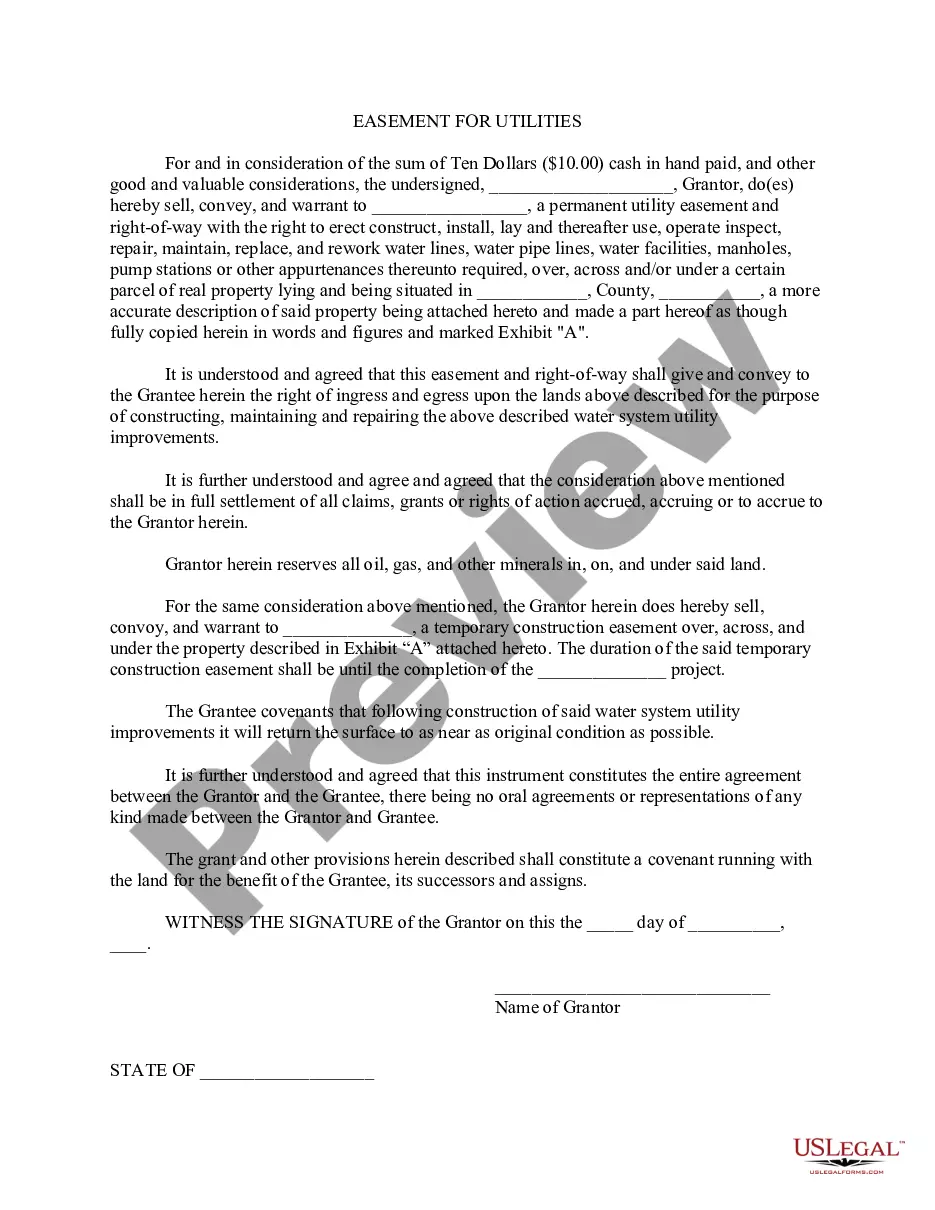
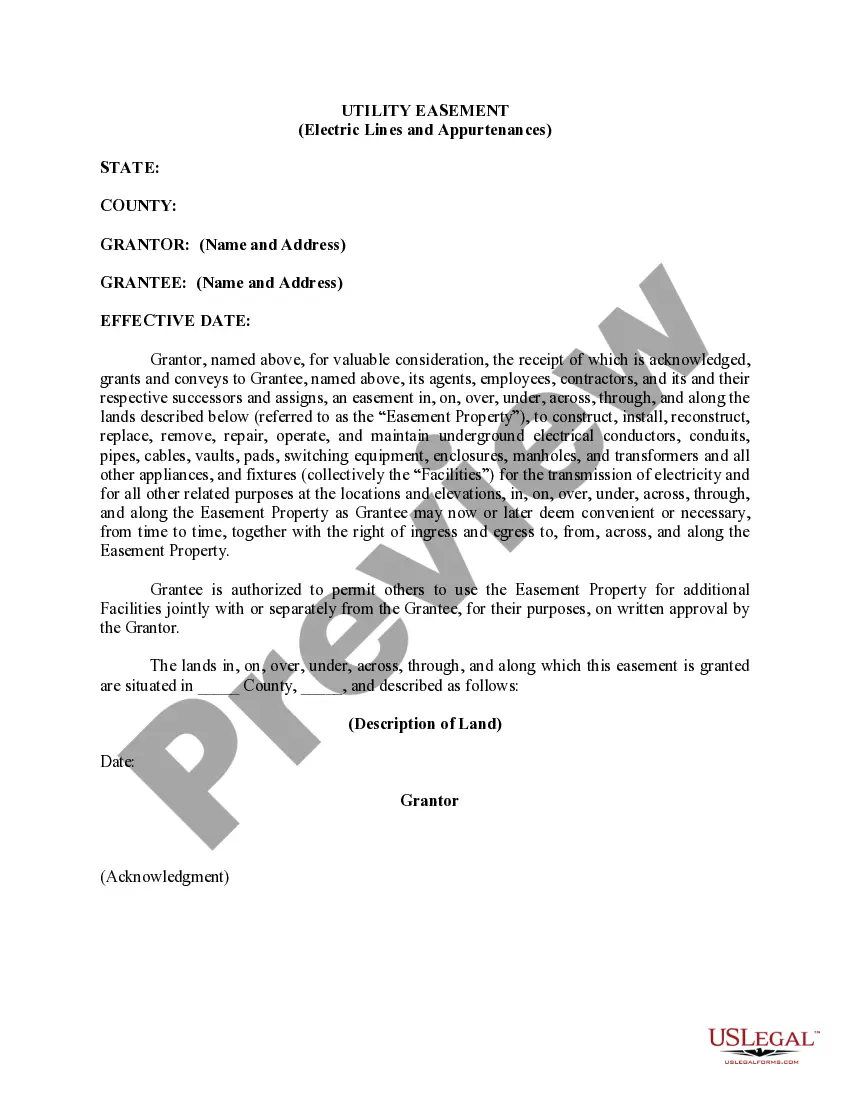
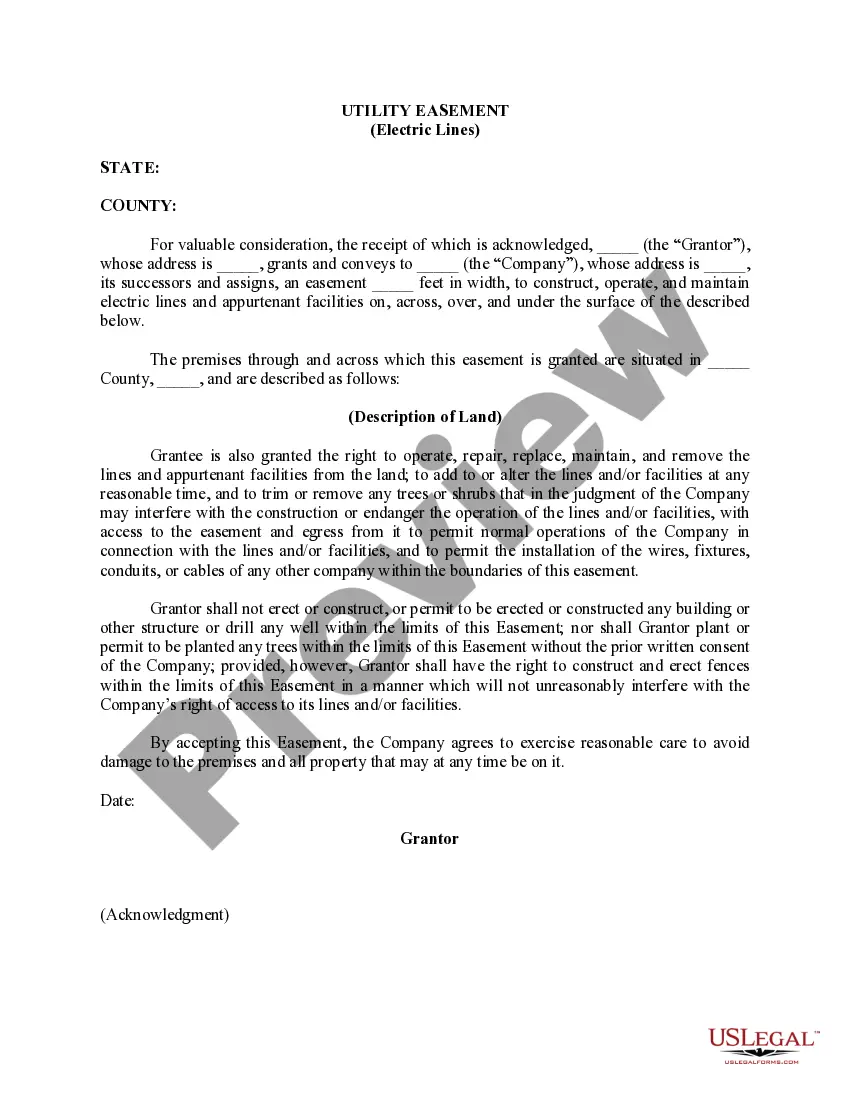
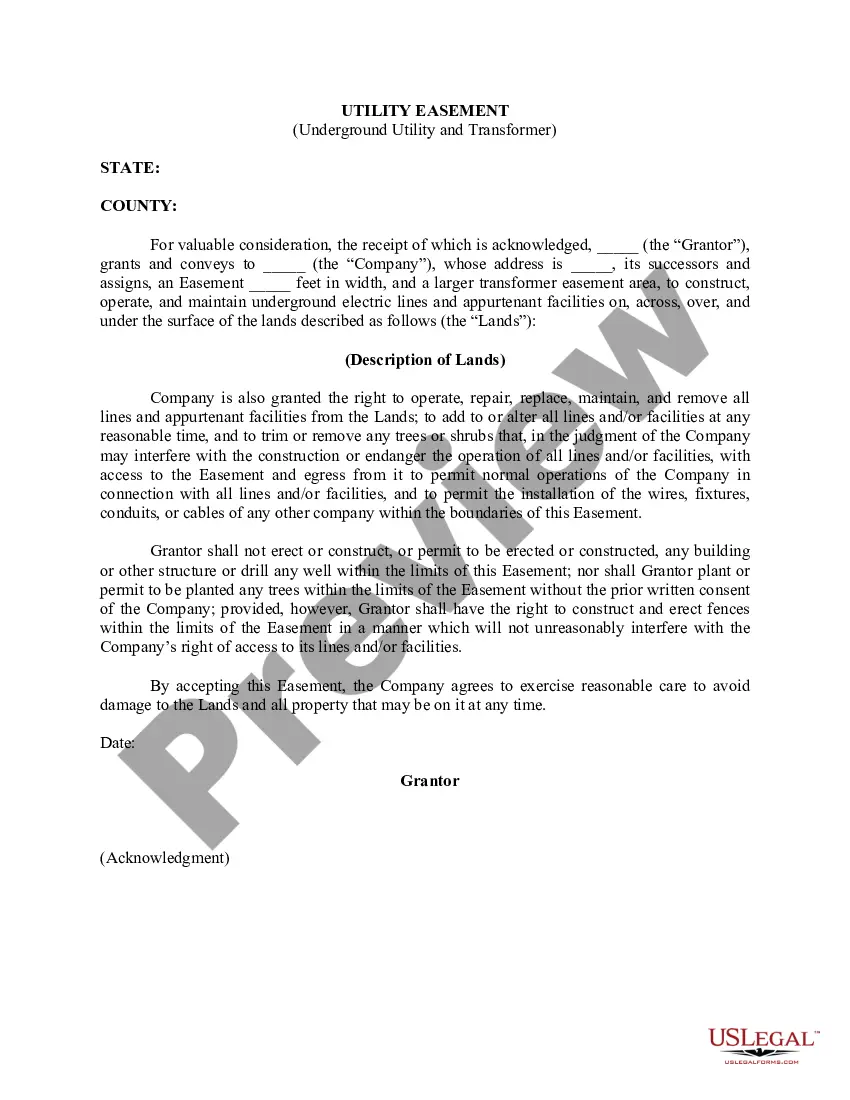
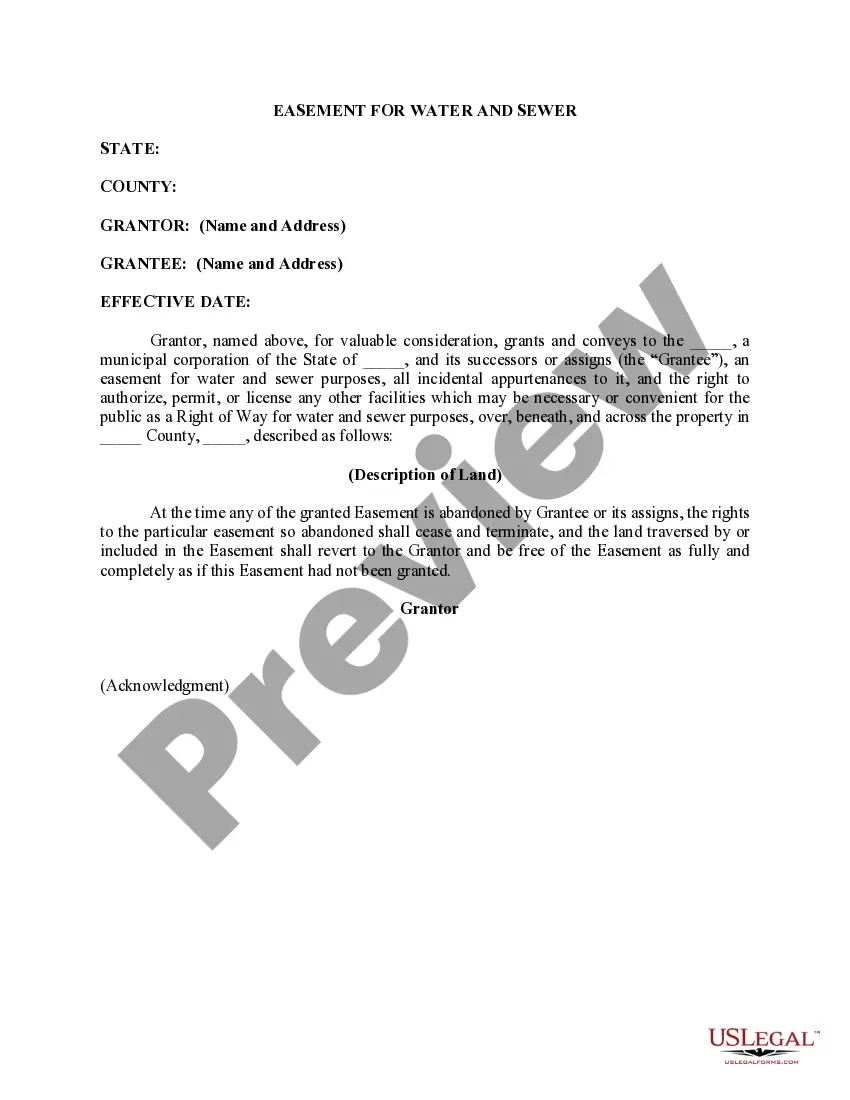
This form is used when Grantor desires to convey and Grantee desires to purchase a right of way and easement for utilities purposes on the lands described within.
Compensation isn’t a guarantee, but you can ask the utility company or city about it. It’s like haggling; sometimes you'll get a little something for your trouble.
Typically, the utility company is responsible for maintenance. However, it’s a shared responsibility to keep the area tidy, so don’t turn a blind eye!
Most easements are pretty permanent. They’re like a long-term commitment, but sometimes they can be relocated or modified. It just depends on the situation.
If you spot something that seems off, it's wise to bring it up with the utility company or the city. They’ll want to keep things in tip-top shape, so don’t hesitate to speak up.
Generally, building on an easement isn’t a good idea. It can lead to trouble down the road if utility companies need access to their lines. It's best to keep things clear as a bell.
You can check with the city’s planning department or look at your property deed. It’s like chasing a paper trail; you might need to dig a little to find that info.
A utility easement is a piece of property that's legally designated for utility companies to install and maintain things like water, electricity, and gas lines. Basically, it gives them the green light to set up shop without owning the land.