Separation, Confidentiality, and Noncompetition Agreement and Release Letter for Exiting Employee
What this document covers
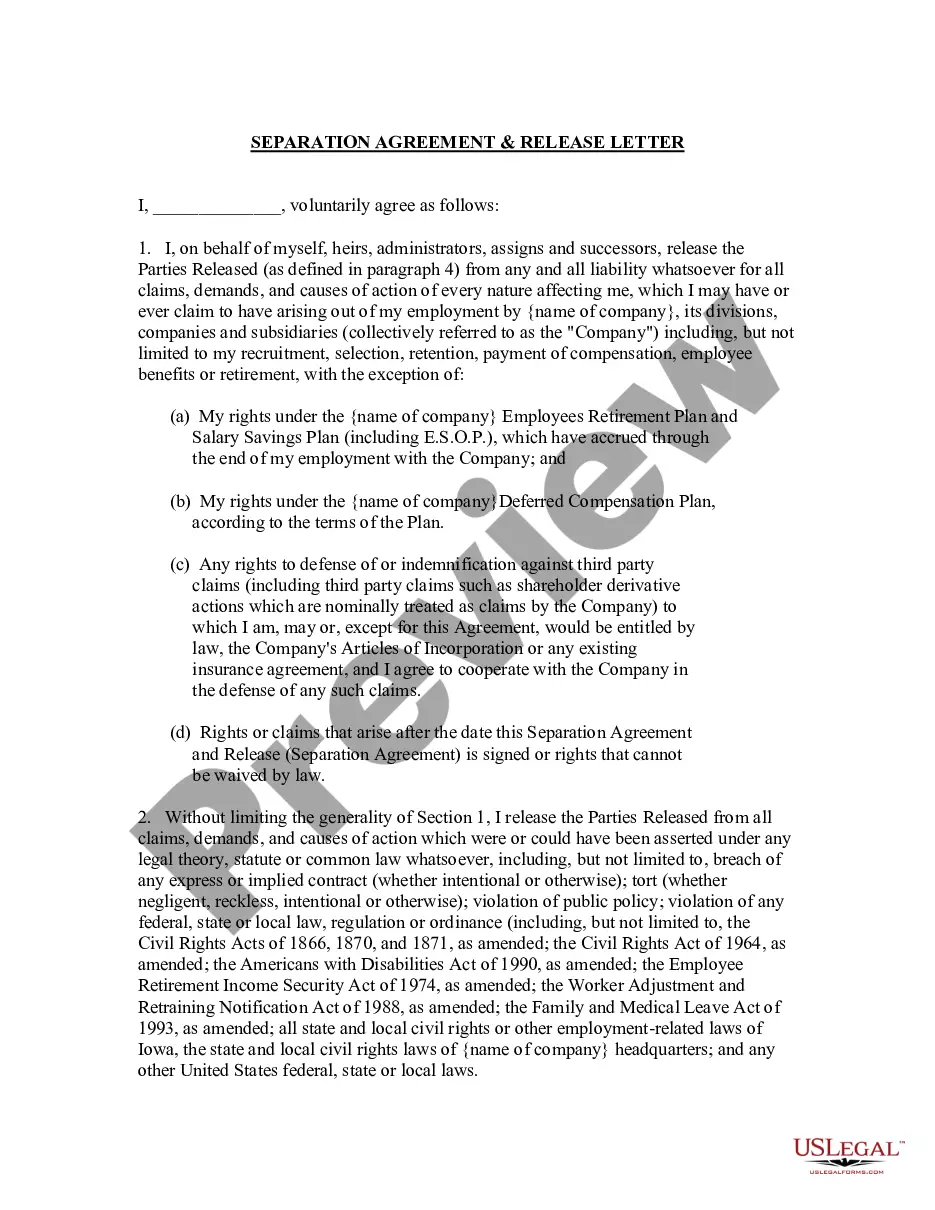
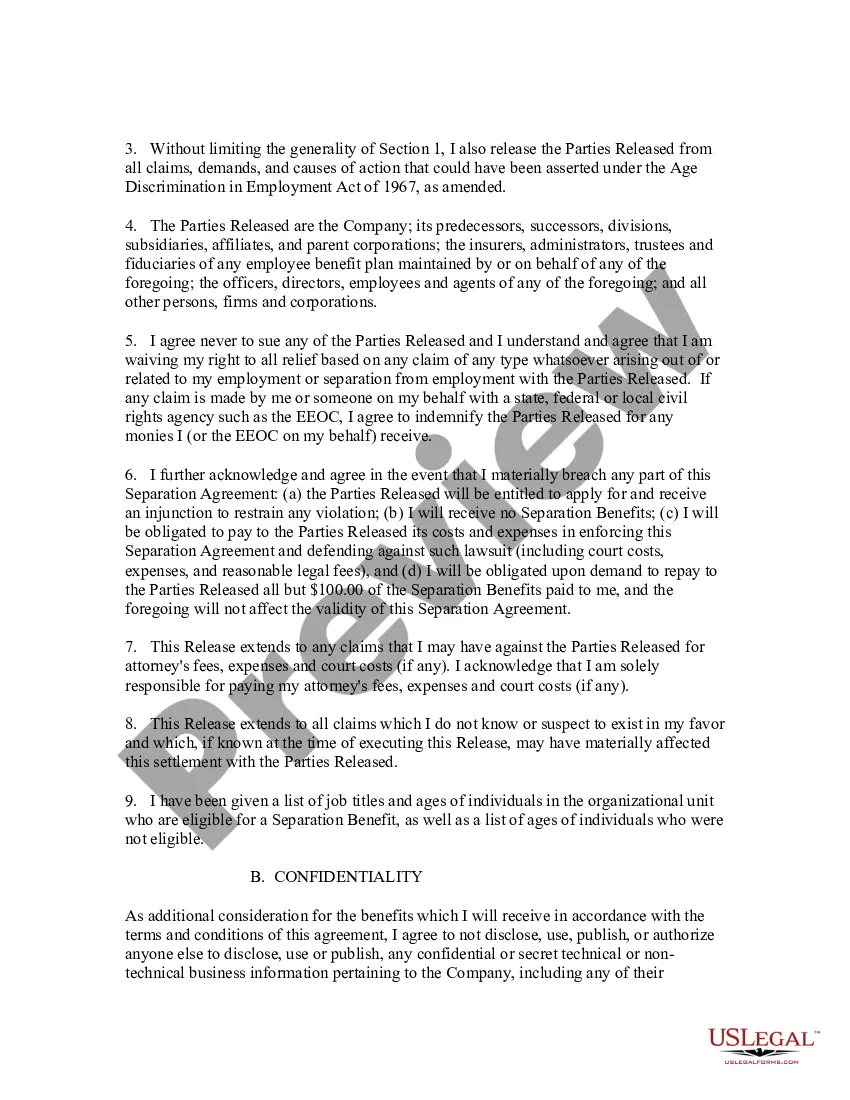
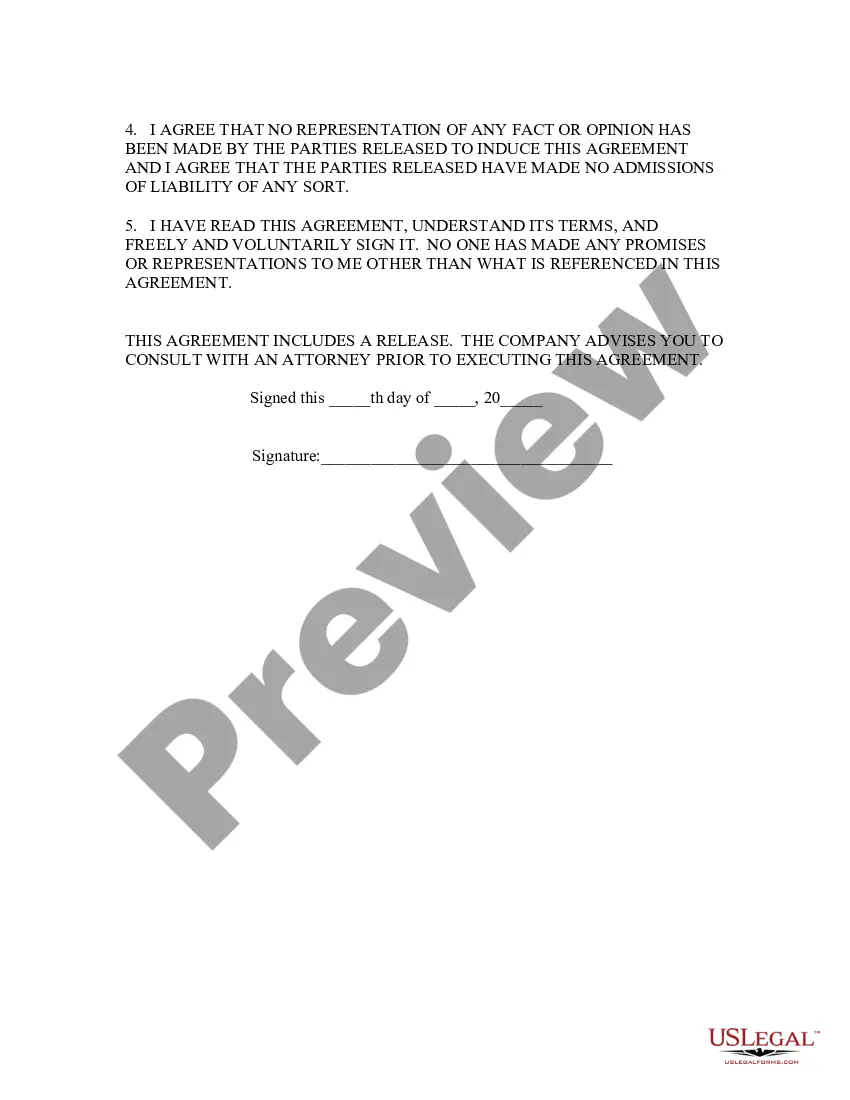
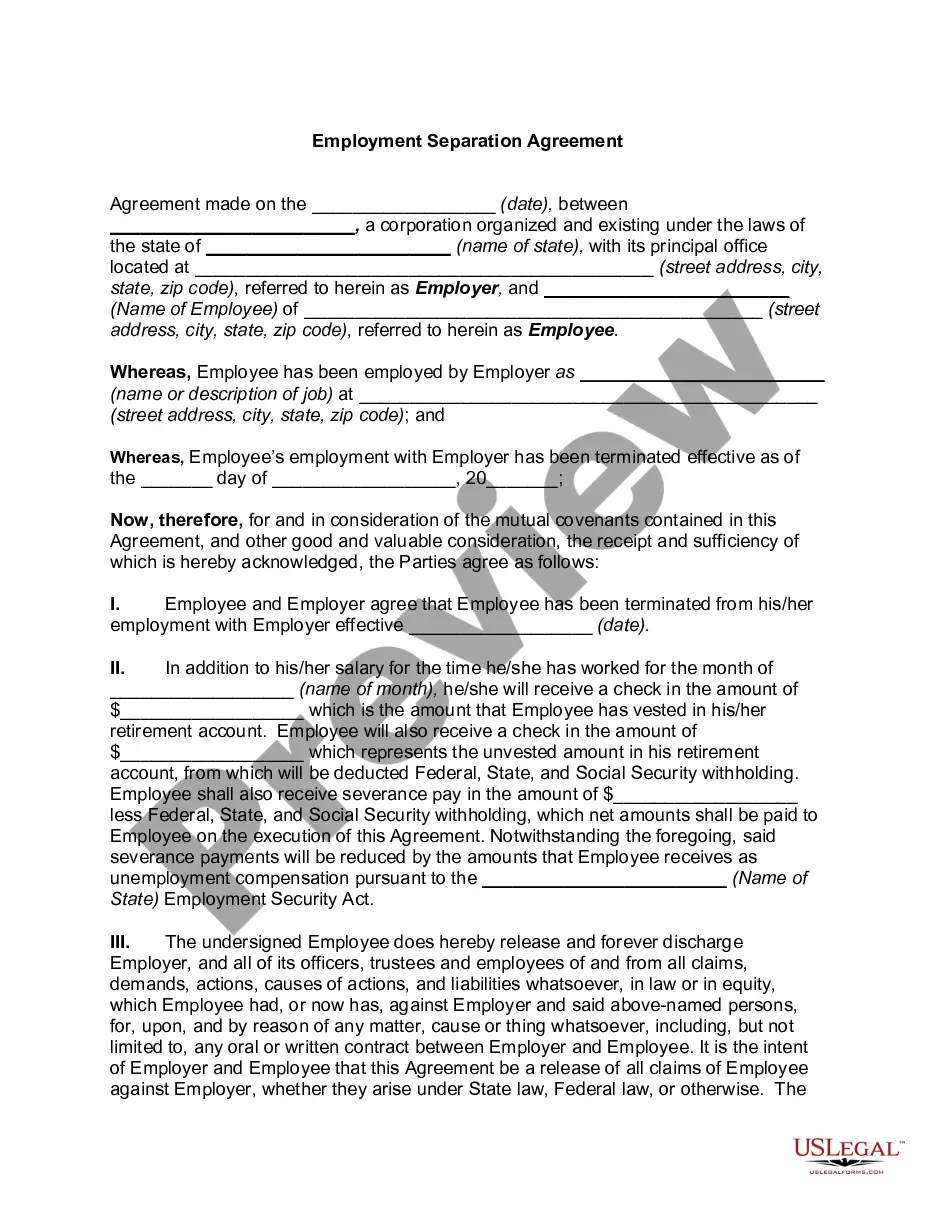
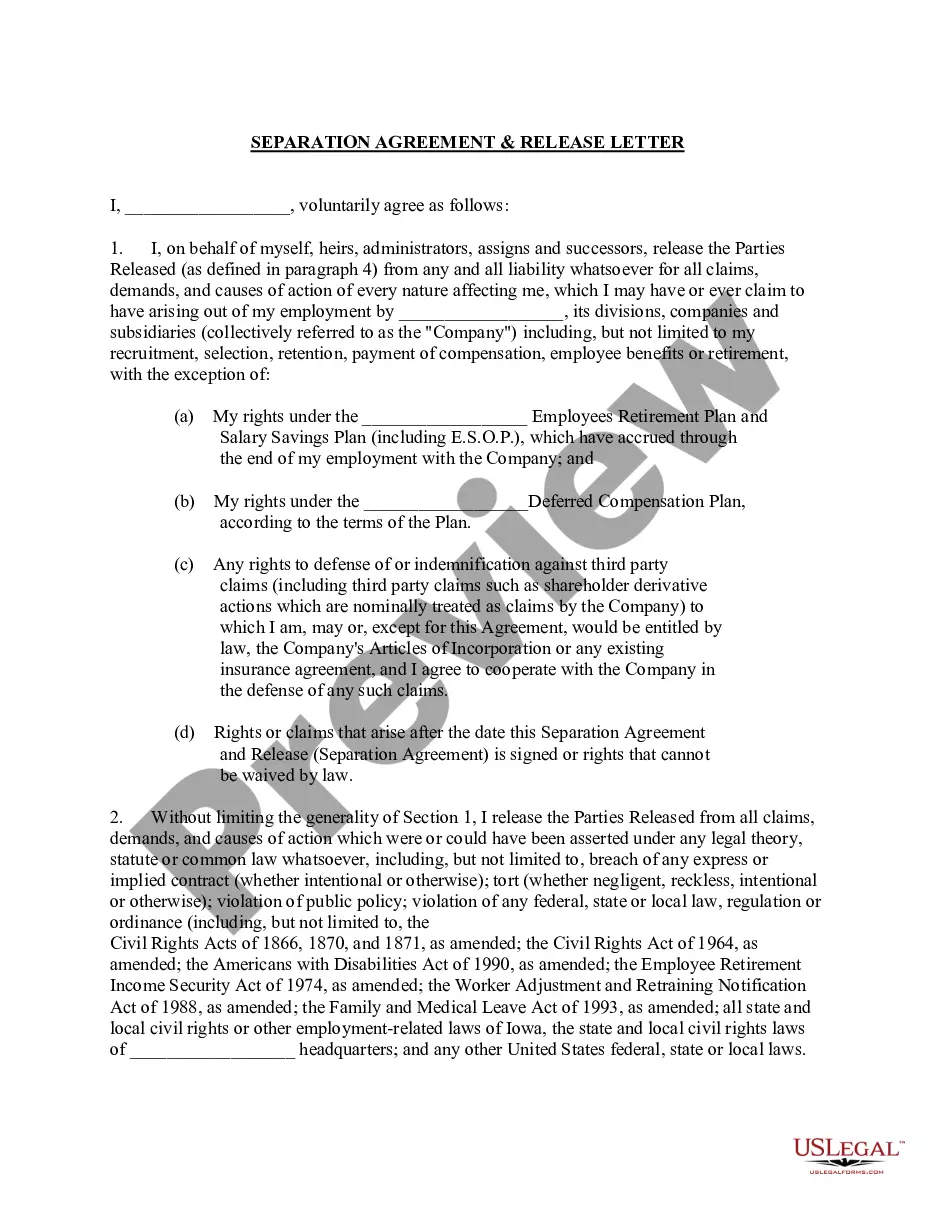
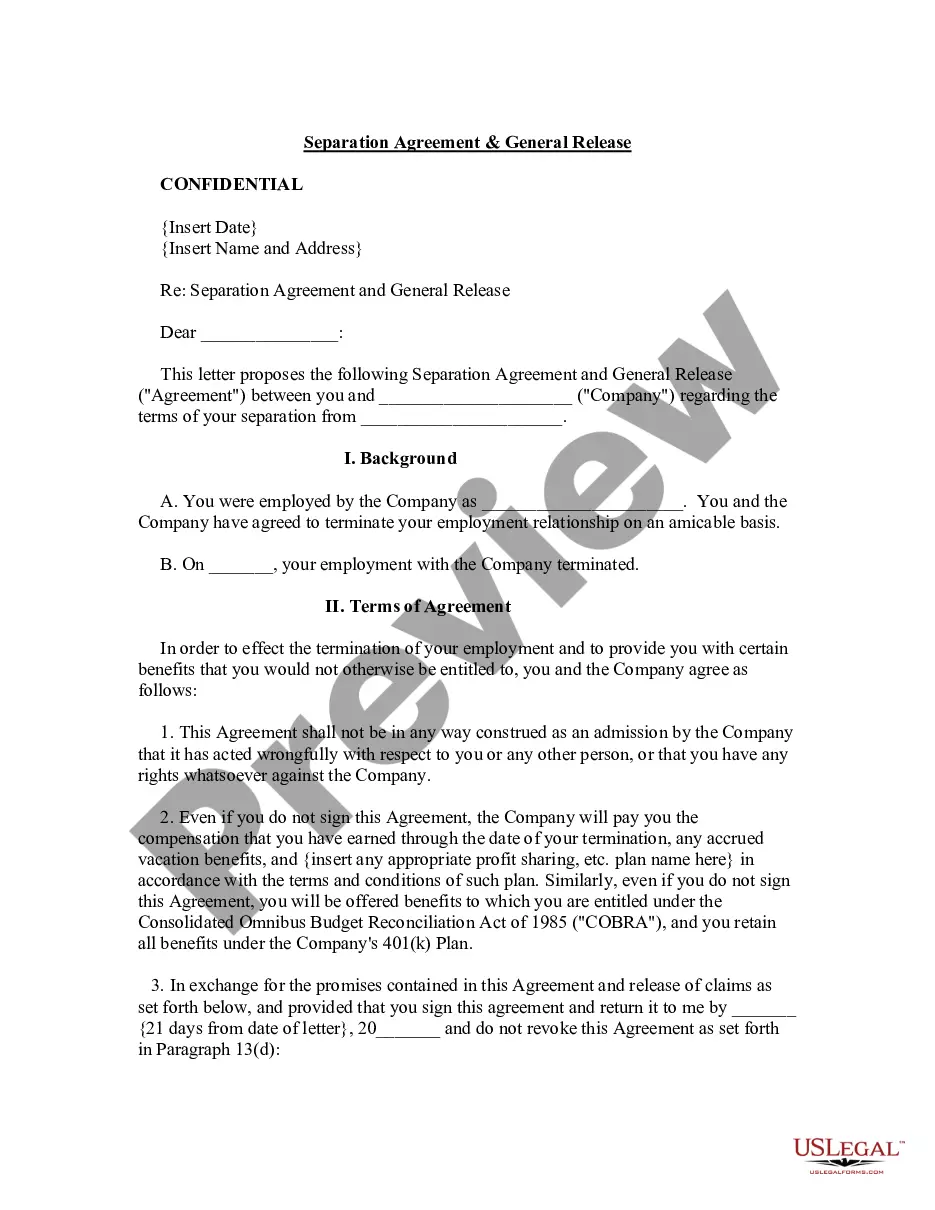
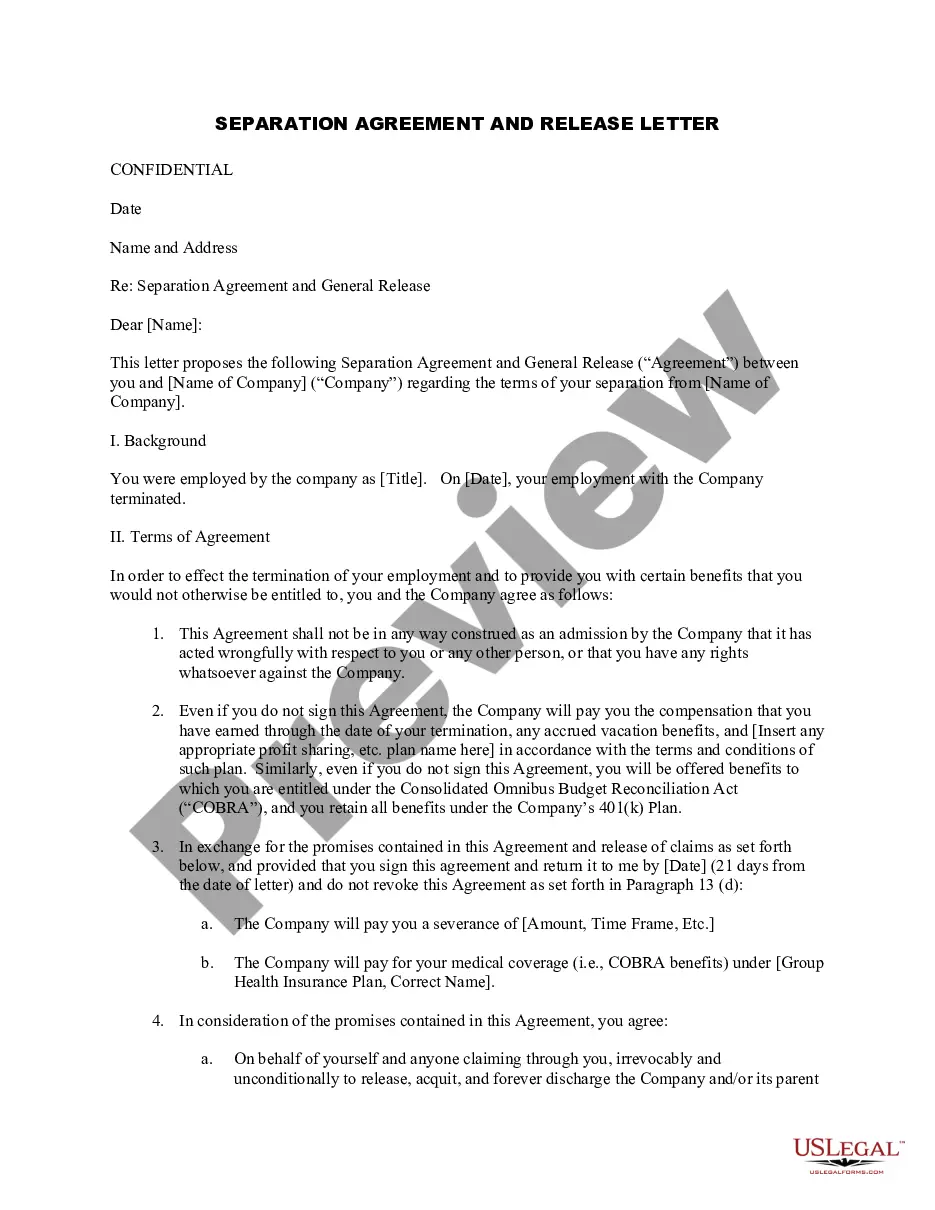
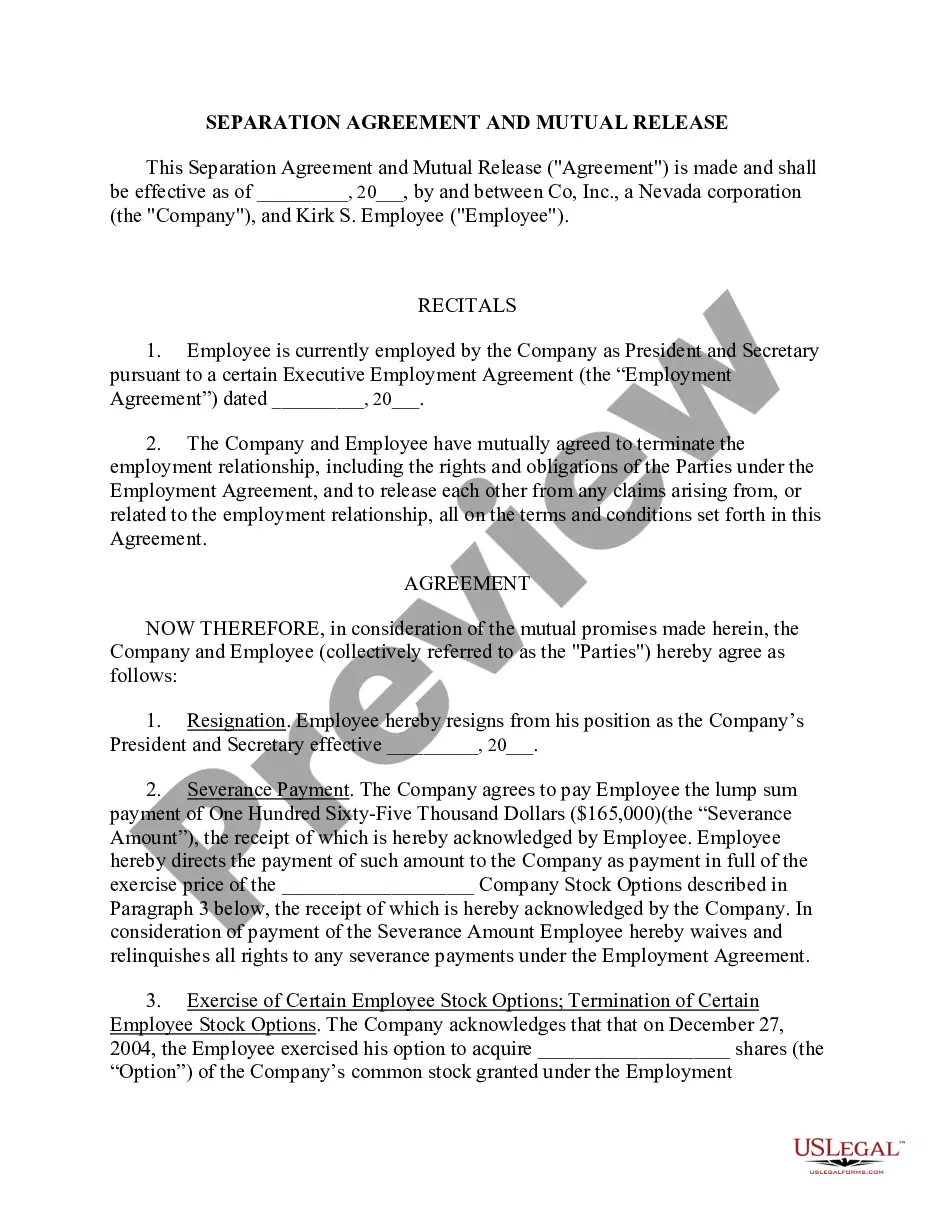
The Separation, Confidentiality, and Noncompetition Agreement and Release Letter for Exiting Employee is a legal document that allows an employee who is leaving a company to voluntarily agree to specific terms regarding the release of claims against the employer. This agreement differs from standard separation documents by including clauses on confidentiality and non-competition, which further safeguard the employer's interests post-employment.
Key components of this form
- Release of claims against the company regarding employment-related issues.
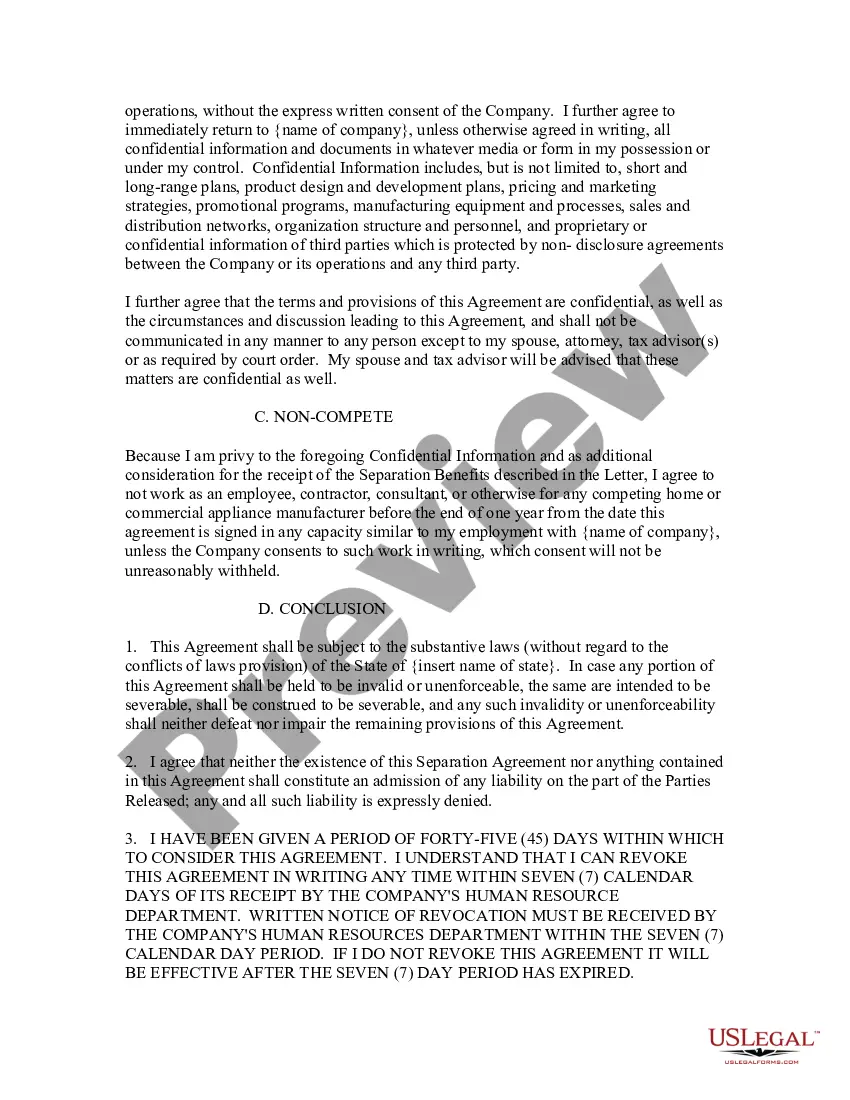
- Confidentiality agreement to protect the company's proprietary information.
- Non-compete clause preventing employment with rival companies for a specified period.
- Conditions under which the agreement may be invalidated or enforced.
- Provisions regarding the governing law applicable to the agreement.
Common use cases
This form should be used when an employee is voluntarily separating from a company and needs to outline terms for releasing the company from any potential claims related to their employment. It is particularly relevant in situations where confidentiality and non-competition are concerns, such as in competitive industries or for employees privy to sensitive information.
Who needs this form
- Employees leaving a company who are required to sign a release agreement as part of their separation process.
- Employers seeking to protect confidential information and prevent former employees from competing in the same industry.
- Human resource professionals involved in the offboarding process of employees.
Completing this form step by step
- Identify the parties involved by filling in the name of the company and the separating employee.
- Specify any exceptions to the claims being released, such as rights under retirement plans.
- Review and fill out the confidentiality obligations regarding company information.
- Complete the non-compete section, detailing the duration and scope of restrictions as agreed upon.
- Sign and date the agreement, ensuring to keep a copy for your records.
Is notarization required?
This form does not typically require notarization unless specified by local law. However, it is advisable to consult with a legal expert to understand the requirements in your jurisdiction.
Get your form ready online
Our built-in tools help you complete, sign, share, and store your documents in one place.
Make edits, fill in missing information, and update formatting in US Legal Forms—just like you would in MS Word.
Download a copy, print it, send it by email, or mail it via USPS—whatever works best for your next step.
Sign and collect signatures with our SignNow integration. Send to multiple recipients, set reminders, and more. Go Premium to unlock E-Sign.
If this form requires notarization, complete it online through a secure video call—no need to meet a notary in person or wait for an appointment.
We protect your documents and personal data by following strict security and privacy standards.

Make edits, fill in missing information, and update formatting in US Legal Forms—just like you would in MS Word.

Download a copy, print it, send it by email, or mail it via USPS—whatever works best for your next step.

Sign and collect signatures with our SignNow integration. Send to multiple recipients, set reminders, and more. Go Premium to unlock E-Sign.

If this form requires notarization, complete it online through a secure video call—no need to meet a notary in person or wait for an appointment.

We protect your documents and personal data by following strict security and privacy standards.
Common mistakes to avoid
- Failing to read and understand the terms of the agreement before signing.
- Neglecting to specify all relevant claims being released, which could lead to misunderstandings.
- Overlooking the non-compete clause's duration or scope of application.
Advantages of online completion
- Convenience of having the form available for download anytime, anywhere.
- Ability to edit and customize the form based on specific employment situations.
- Access to professionally drafted templates that ensure compliance with legal standards.
Legal use & context
- This agreement is legally binding, provided both parties have voluntarily signed it without coercion.
- Specific clauses, especially regarding non-compete, may be subject to state law limiting their enforceability.
- Employers should ensure that the agreement complies with applicable labor laws to minimize the risk of disputes.
Main things to remember
- The form serves to release the employer from claims while protecting their confidential information.
- It is crucial for both parties to understand and agree to the terms included.
- Avoid common mistakes by carefully reviewing all sections of the agreement before signing.
Looking for another form?
Form popularity
FAQ
Although you don't have to sign a severance agreement, your employer may make it a condition of receiving severance pay. Some employers offer severance to employees who are laid off or otherwise lose their jobs through no fault of their own.
Compensation details. Confidentiality rules following termination. Date of employee's termination. Agreement from both parties in the form of a signature. Details about how long the employee will continue to have access to benefits.
The name of the employer and employee. The effective date of the agreement. The employment period of the outgoing employee. The severance pay amount. Terms of continuation of benefits. Employee waiver of legal claims.
The spouses' right to live separately. Custody of the children. A visitation schedule, or a provision for reasonable visitation. Child support. Alimony or spousal support. The children's expenses, including medical, dental, educational and recreational. Property and debt division. Insurance, including medical, dental and life.
The spouses' right to live separately. Custody of the children. A visitation schedule, or a provision for reasonable visitation. Child support. Alimony or spousal support. The children's expenses, including medical, dental, educational and recreational. Property and debt division. Insurance, including medical, dental and life.
Separation details. An employment separation agreement should lay out some basic terms, such as identifying both parties (company and terminated employee), the final date of employment, and possibly a reason (termination, layoff, resignation, etc.).
Most severance agreements are offering you chump change to give up just about every right you've ever been granted under state and federal law. Here's the typical list: claims or lawsuits for discrimination based on age, sex, race, religion, national origin, handicap, disability or "like civil rights"
Legally, this is described as firing for cause. In general, there are a half-dozen categories of acceptable reasons for termination: Incompetence, including lack of productivity or poor quality of work. Insubordination and related issues such as dishonesty or breaking company rules.
The short answer is no. You don't have to accept what your employer offers, nor do you have to sign a release. A release is valid only if it's voluntary: If your employer requires or coerces you sign, it won't be upheld in court. This doesn't mean, however, that you are entitled to severance.