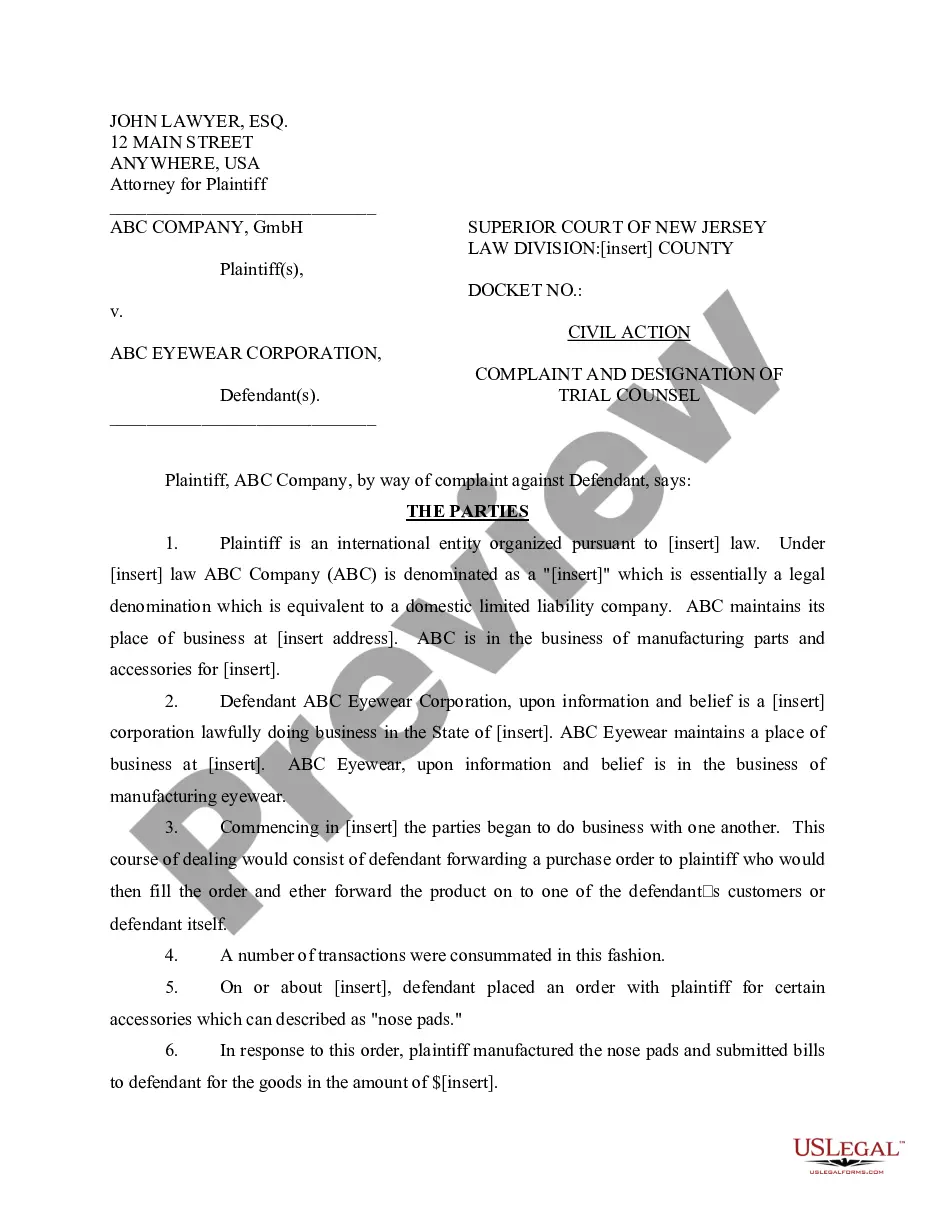
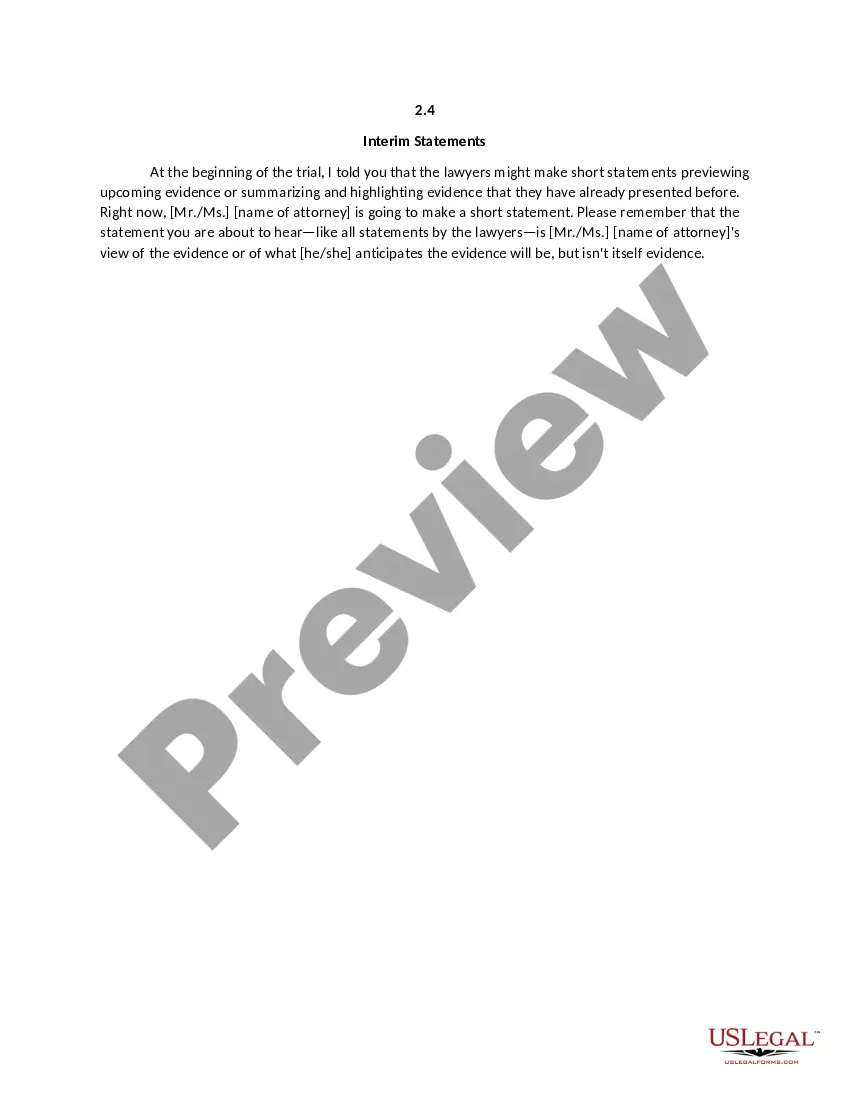
Interim Statements
About this form
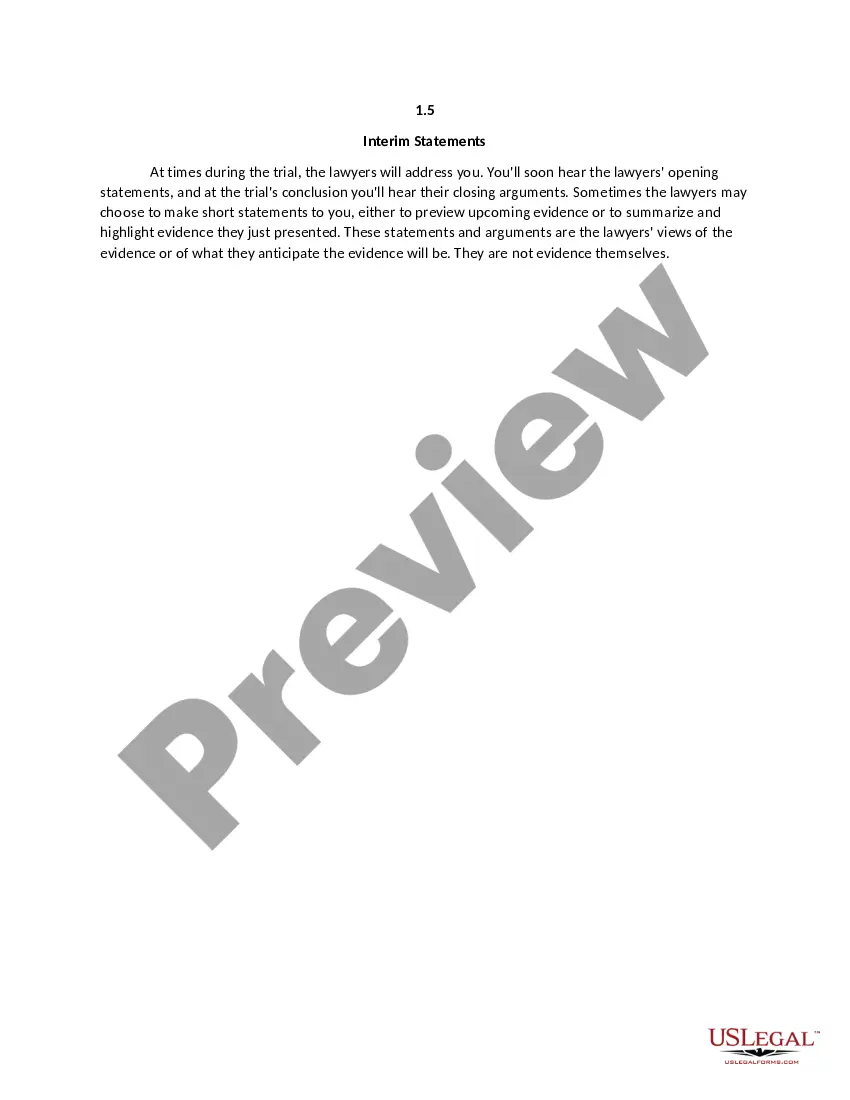
The Interim Statements form provides a structured way for attorneys to present short statements at the beginning of a trial. These statements summarize evidence and outline what the lawyers plan to present. Unlike other forms of legal documents, this form specifically serves as a guide for attorneys to communicate their perspectives on the evidence, ensuring that jurors understand the distinction between a lawyer's statement and actual evidence.
Key components of this form
- Introduction to interim statements by legal representatives.
- Clarification that statements made are the opinions of attorneys, not evidence.
- Prompt for the attorney to present their upcoming statements.

When this form is needed
This form is used during the trial process when attorneys provide initial statements about the evidence. It is particularly important at the beginning of the trial to set the stage for what jurors can expect, allowing for an organized and informative presentation of case details.
Intended users of this form
This form is intended for:
- Attorneys preparing for trial.
- Legal representatives summarizing evidence for jurors.
- Parties involved in litigation seeking to clarify procedural steps in trial.
How to complete this form
- Identify the parties involved in the trial.
- Outline the relevant evidence that will be addressed.
- Enter the name of the attorney making the statement.
- Summarize the key points that will be discussed later in the trial.
- Review the statements for clarity and adherence to court procedures.
Is notarization required?
Notarization is generally not required for this form. However, certain states or situations might demand it. You can complete notarization online through US Legal Forms, powered by Notarize, using a verified video call available anytime.
Get your form ready online
Our built-in tools help you complete, sign, share, and store your documents in one place.
Make edits, fill in missing information, and update formatting in US Legal Forms—just like you would in MS Word.
Download a copy, print it, send it by email, or mail it via USPS—whatever works best for your next step.
Sign and collect signatures with our SignNow integration. Send to multiple recipients, set reminders, and more. Go Premium to unlock E-Sign.
If this form requires notarization, complete it online through a secure video call—no need to meet a notary in person or wait for an appointment.
We protect your documents and personal data by following strict security and privacy standards.

Make edits, fill in missing information, and update formatting in US Legal Forms—just like you would in MS Word.

Download a copy, print it, send it by email, or mail it via USPS—whatever works best for your next step.

Sign and collect signatures with our SignNow integration. Send to multiple recipients, set reminders, and more. Go Premium to unlock E-Sign.

If this form requires notarization, complete it online through a secure video call—no need to meet a notary in person or wait for an appointment.

We protect your documents and personal data by following strict security and privacy standards.
Mistakes to watch out for
- Failing to clarify that statements are not evidence.
- Overloading statements with unnecessary details instead of key points.
- Not properly introducing oneself at the beginning of the statement.
Why use this form online
- Convenient access to a template prepared by licensed attorneys.
- Editable format allows customization to fit specific case needs.
- Reliable guidance for establishing procedural clarity in trial.
Legal use & context
- This form aids in fulfilling court requirements for trial transparency.
- It ensures that jurors receive proper context regarding the evidence.
- Noncompliance with proper procedures outlined can affect trial outcomes.
Key takeaways
- Interim Statements serve to communicate lawyer perspectives on evidence.
- Understanding the form is crucial for effective trial preparation.
- Proper completion can streamline the trial process for all parties involved.
Looking for another form?

Form popularity
FAQ
An interim financial report is a complete or condensed set of financial statements for a period shorter than a financial year.
Whether shown to investors or accountants, these annual accounts give detailed information about the company's performance at the end of the reporting year. Interim financial statements show the same details, but they're drawn up to cover a shorter period.
Interim financial statements contain the same documents as will be found in annual financial statements - that is, the income statement, balance sheet, and statement of cash flows. The line items appearing in these documents will also match the ones found in annual financial statements.
Interim financial statements are not usually audited. Given the cost and time required for an audit, only the year-end financial statements are audited. If a company is publicly-held, its quarterly financial statements are instead reviewed.
Annual financial statements provide an overview of your company's financial position, including its revenues, expenses, profits, and losses and include information about assets, liabilities, and equity, as well as cash flows and other financial metrics.
Reading financial statements allows business owners and managers to gain a comprehensive understanding of their financial position. Interim statements provide this overview at any given time, which can help to monitor performance and improve revenue generation and cash flow to successfully grow the company.
An interim financial report is a complete or condensed set of financial statements for a period shorter than a financial year.
The primary objective of filing an interim financial statement is to provide an insight into your company's financial performance and material changes to shareholders and analysts. These statements are most often issued by publicly-held companies and are not audited.