Introduction
About this form
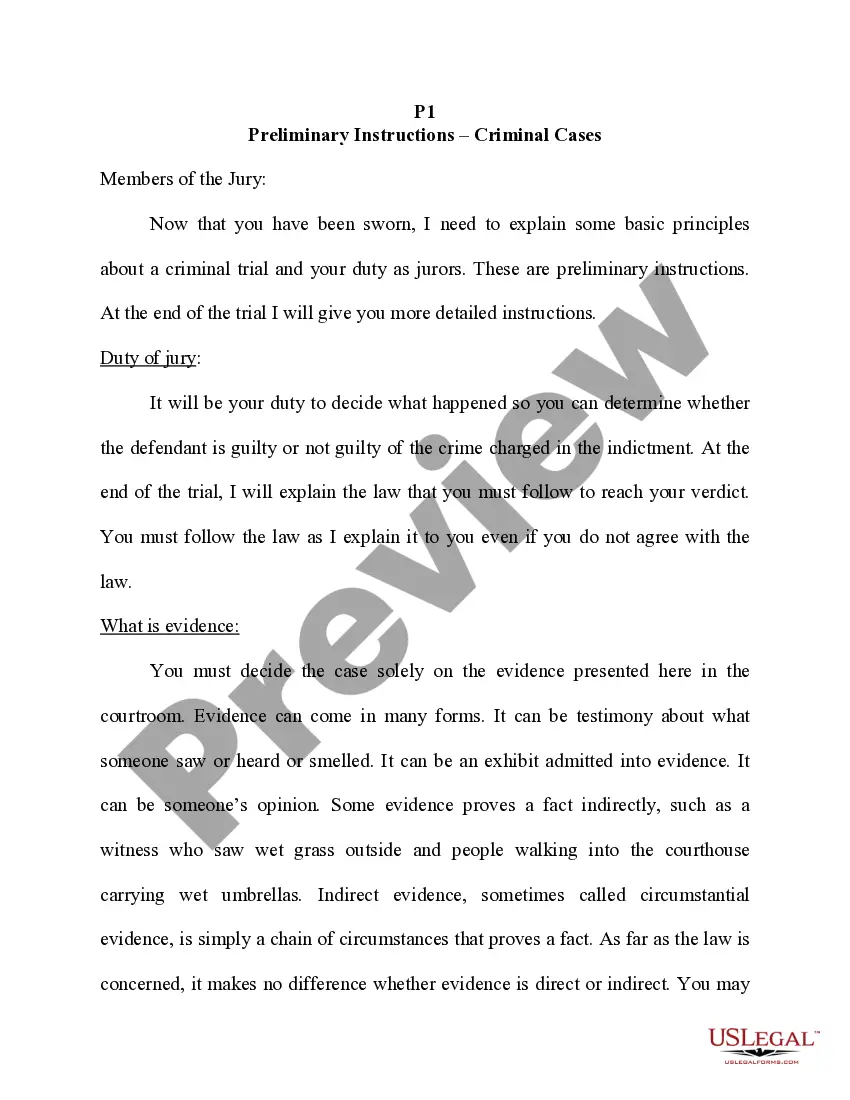
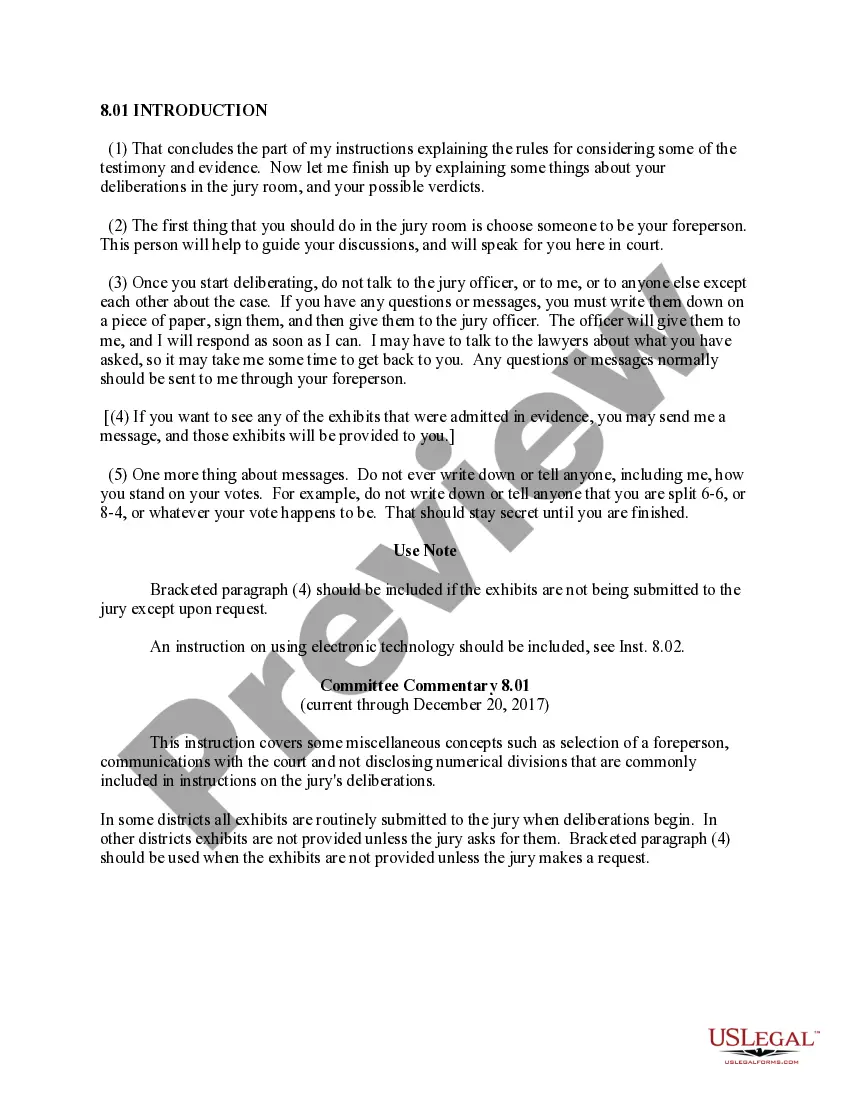
The Pattern Jury Instructions from the 11th Circuit Federal Court of Appeals provides essential legal guidelines that juries must follow when deciding cases in federal court. This form is crucial for ensuring that juries understand the laws applicable to cases they are deliberating. Unlike other jury instructions that may vary by jurisdiction or court, this form offers a standardized set of guidelines used across the 11th Circuit, enhancing consistency in legal proceedings.
Form components explained
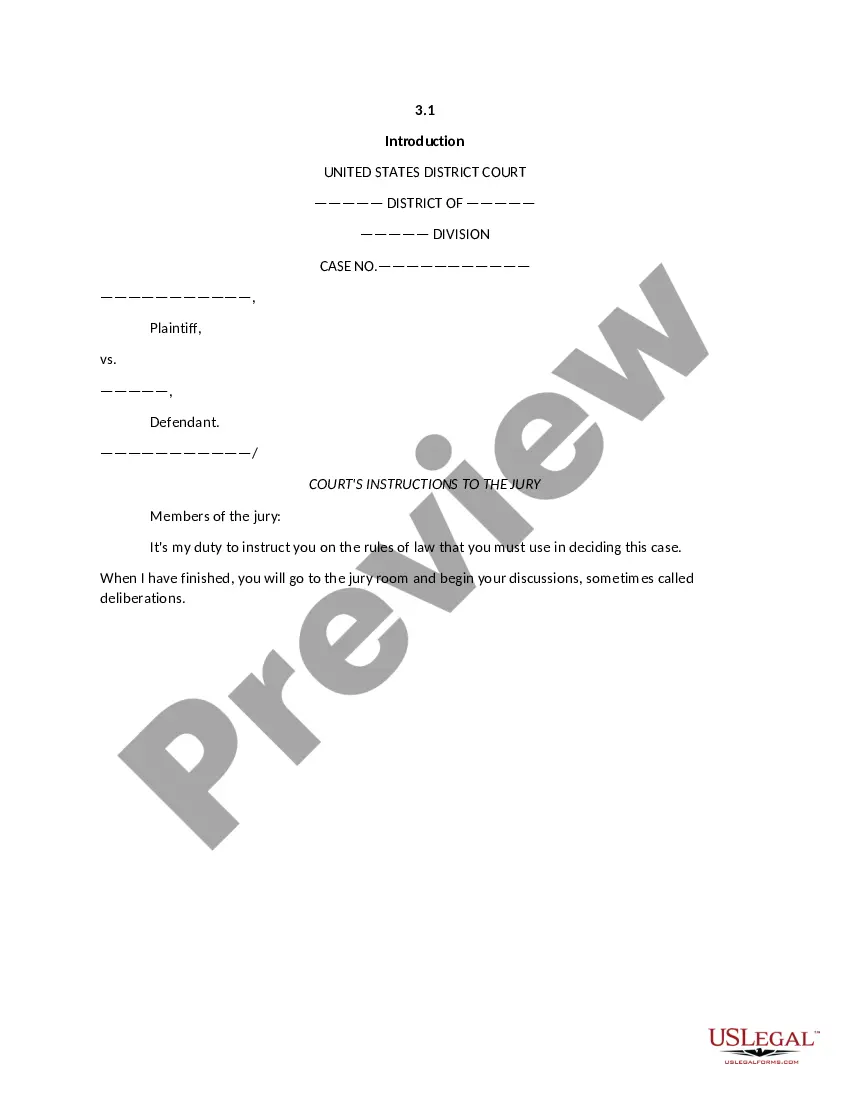
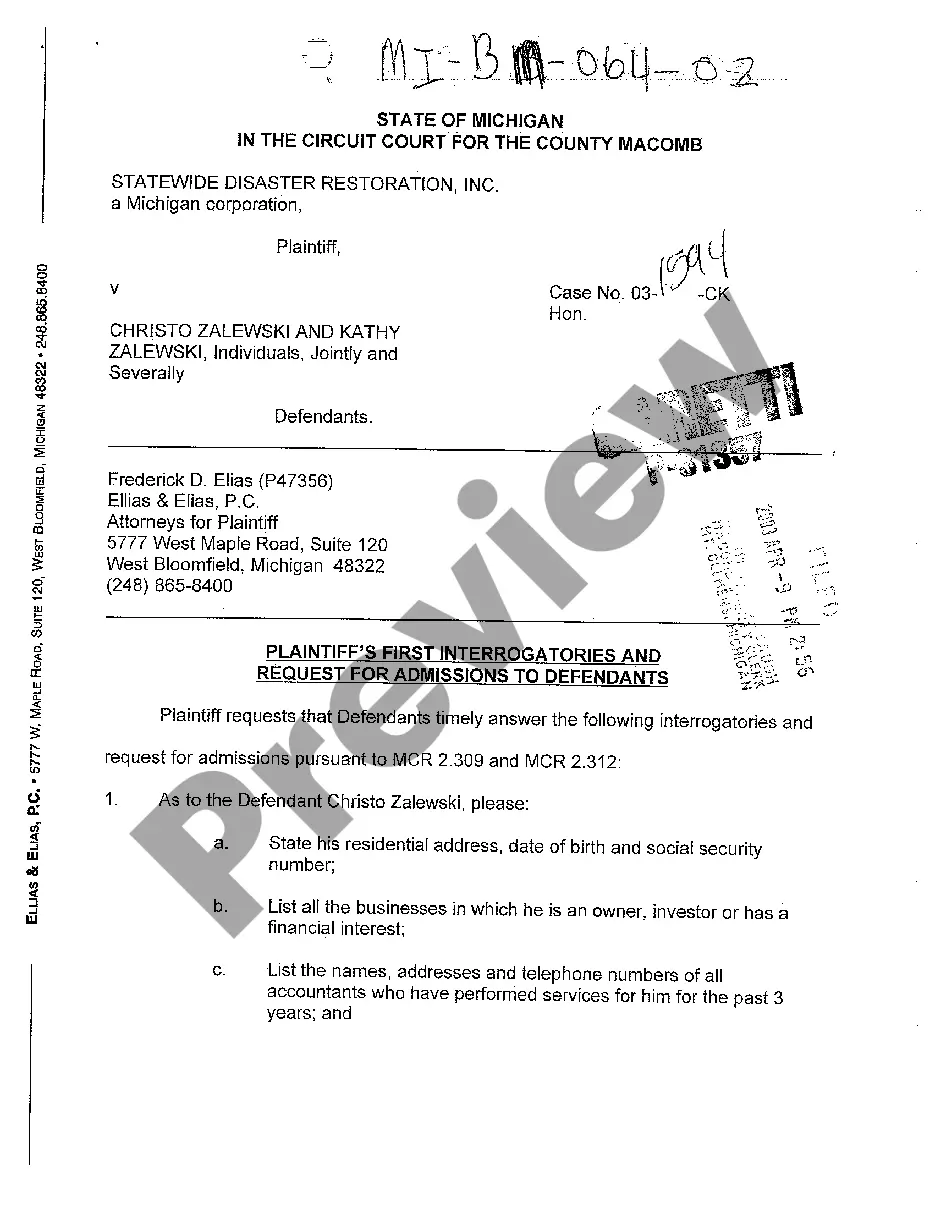
- Case caption: Identifies the court, division, case number, and parties involved.
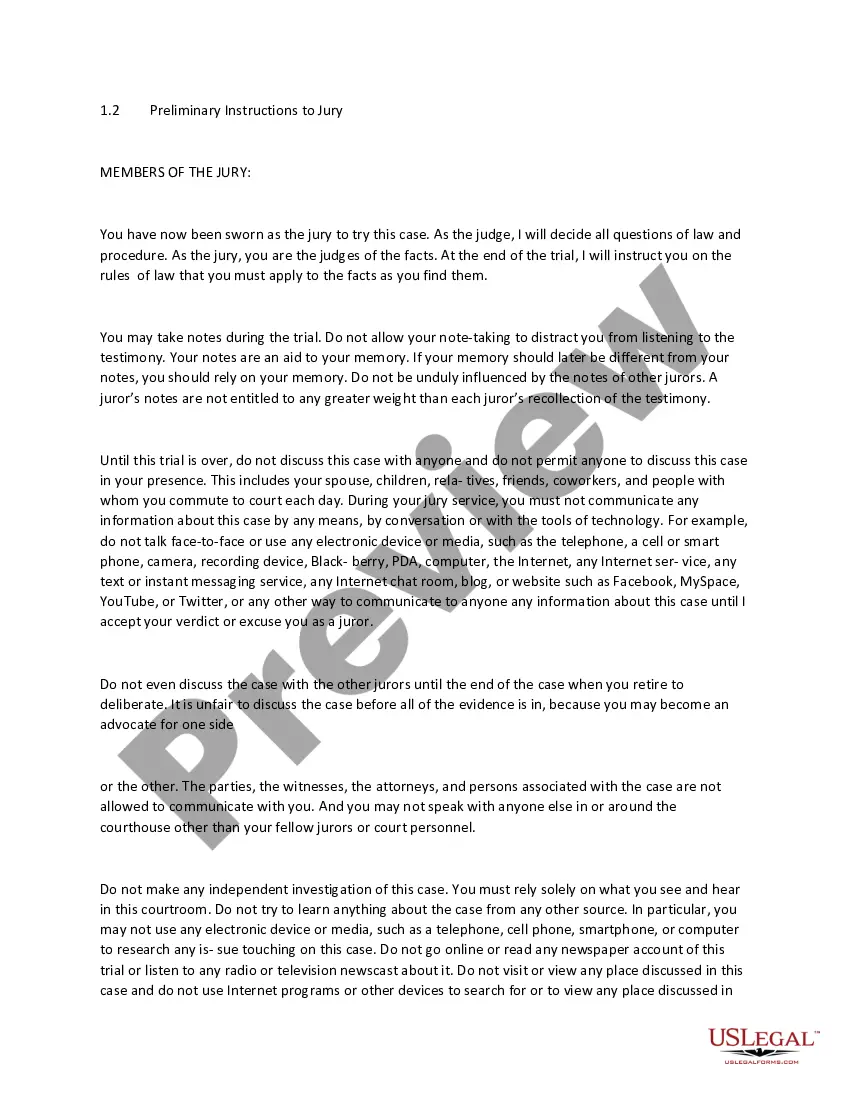
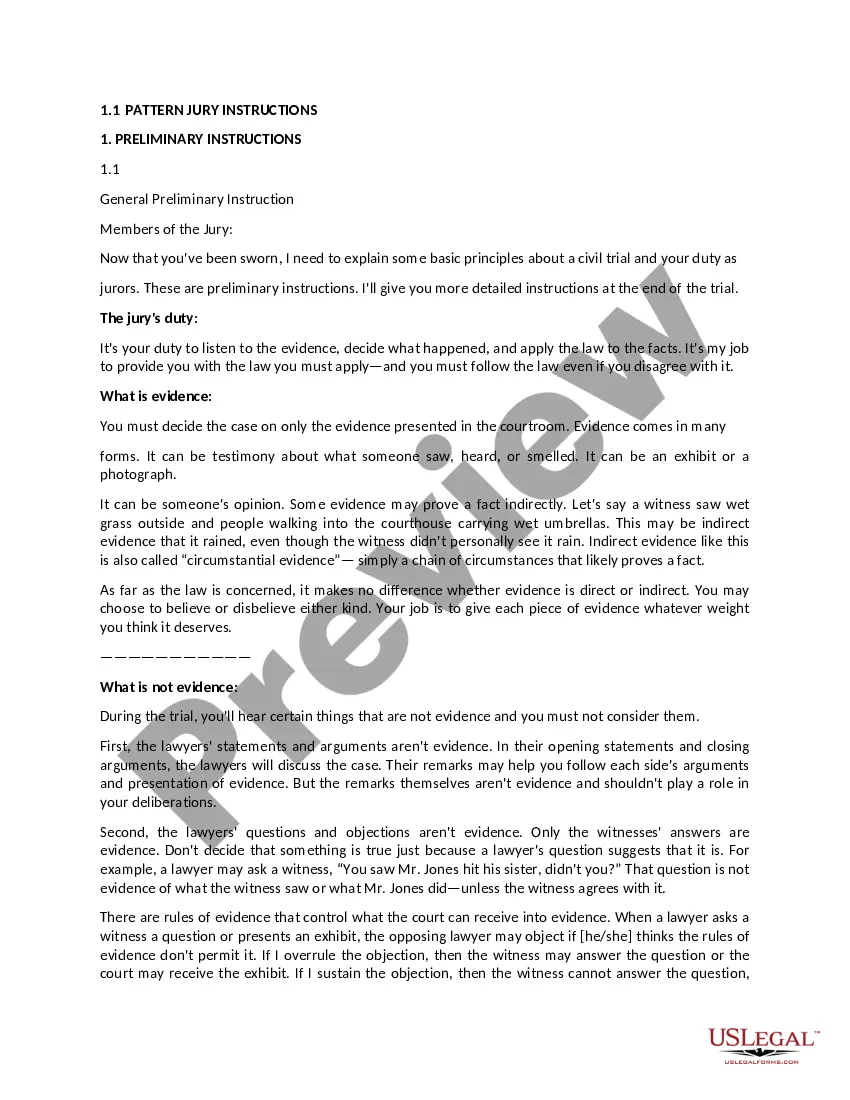
- Instruction to jurors: Outlines the legal rules necessary for evaluating the case.
- Deliberation guidelines: Provides direction on how jurors should discuss the case and reach a verdict.
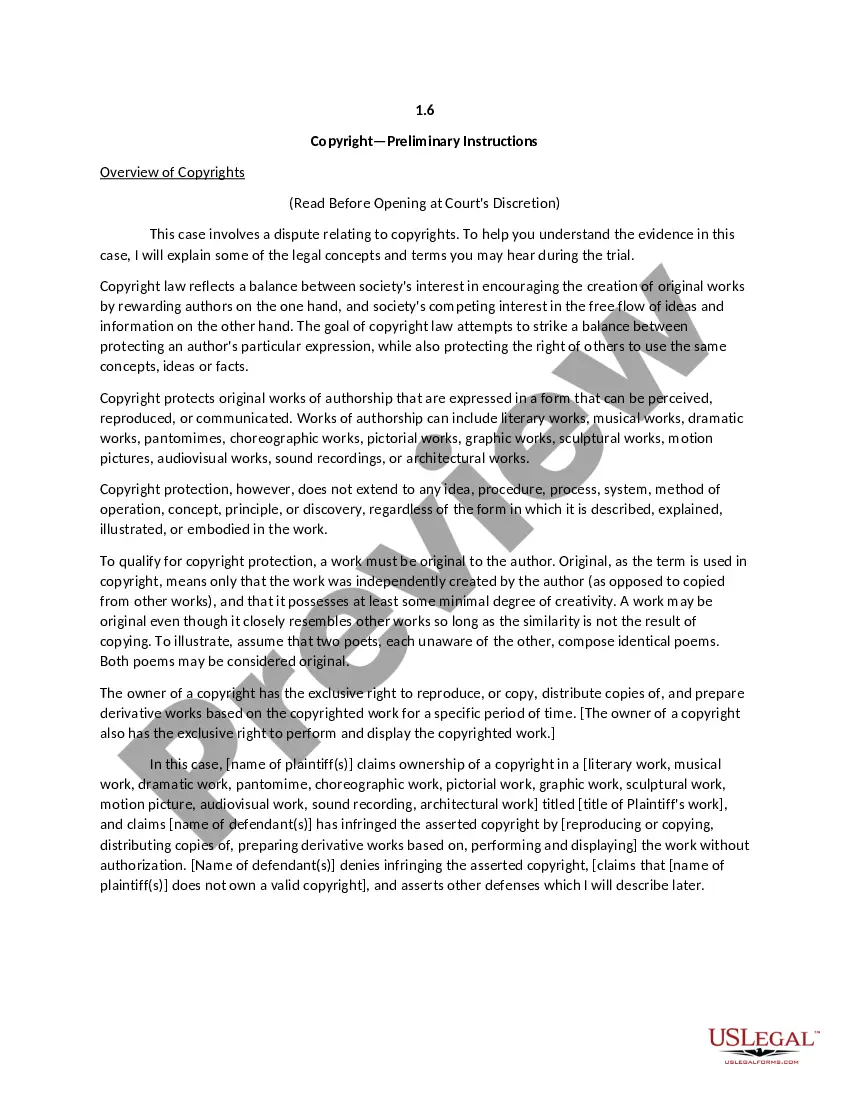
- Legal definitions: Includes key terms and concepts that jurors must understand to apply the law correctly.
When to use this document
This form should be used in federal court cases within the jurisdiction of the 11th Circuit. It is applicable when a jury needs to be instructed on legal standards that pertain to their deliberation, including civil and criminal cases. Attorneys can reference this form when preparing jury instructions to ensure that jurors are adequately guided on the law relevant to their decision-making process.
Who needs this form
- Judges overseeing cases in federal court.
- Attorneys representing clients in the 11th Circuit Federal Court.
- Parties involved in litigation requiring jury deliberation.
How to prepare this document
- Fill in the case caption with the relevant court information and parties' names.
- Include the case number accurately to facilitate court identification.
- Clearly outline the jury instructions based on the law applicable to the case.
- Ensure that all legal definitions are clearly stated to avoid ambiguity for jurors.
- Review all sections for accuracy and completeness before submitting to the court.
Is notarization required?
This form does not typically require notarization to be legally valid. However, some jurisdictions or document types may still require it. US Legal Forms provides secure online notarization powered by Notarize, available 24/7 for added convenience.
Get your form ready online
Our built-in tools help you complete, sign, share, and store your documents in one place.
Make edits, fill in missing information, and update formatting in US Legal Forms—just like you would in MS Word.
Download a copy, print it, send it by email, or mail it via USPS—whatever works best for your next step.
Sign and collect signatures with our SignNow integration. Send to multiple recipients, set reminders, and more. Go Premium to unlock E-Sign.
If this form requires notarization, complete it online through a secure video call—no need to meet a notary in person or wait for an appointment.
We protect your documents and personal data by following strict security and privacy standards.

Make edits, fill in missing information, and update formatting in US Legal Forms—just like you would in MS Word.

Download a copy, print it, send it by email, or mail it via USPS—whatever works best for your next step.

Sign and collect signatures with our SignNow integration. Send to multiple recipients, set reminders, and more. Go Premium to unlock E-Sign.

If this form requires notarization, complete it online through a secure video call—no need to meet a notary in person or wait for an appointment.

We protect your documents and personal data by following strict security and privacy standards.
Mistakes to watch out for
- Omitting the case number or parties' names in the caption.
- Failing to include clear and concise legal instructions.
- Using outdated legal definitions that may confuse jurors.
Why complete this form online
- Convenient access to standardized jury instructions based on jurisdiction.
- Editability allows legal professionals to tailor instructions to specific cases.
- Reliability ensures compliance with the latest federal standards and regulations.
Legal use & context
- This form is essential for upholding the integrity of jury trials in federal court.
- Ensures that jurors are informed about the legal standards they must apply when reaching a verdict.
Main things to remember
- The Pattern Jury Instructions form provides vital legal guidance for juries in the 11th Circuit.
- Accurate completion of the form ensures clear communication of the law to jurors.
- It is intended for use by judges and attorneys in federal court cases.
Looking for another form?


Form popularity
FAQ
The act of introducing or fact of being introduced. a presentation of one person to another or others. a means of presenting a person to another person, group, etc, such as a letter of introduction or reference. a preliminary part, as of a book, speech, etc.
Here are a few examples of statements you can use to inform others you are making an introduction: "I would like you to meet..." "It's a pleasure to introduce..." "I would like to introduce..." "I would like to present..."
Your essay introduction should include three main things, in this order: An opening hook to catch the reader's attention. Relevant background information that the reader needs to know. A thesis statement that presents your main point or argument.
There are 4 elements to a great introduction: Introduce yourself. Introduce the organisation ? museum/company. Learn about & connect the participants. Introduce the programme & its goal.
How to Write a Captivating Introduction to Hook Your Audience's Attention Begin With A Startling Statistic.Tell An Interesting Or Unusual Story.Ask If They Want To Achieve Their Desires.Take A Stance Against Something Relevant.Show Them What Success Would Look Like.
How to Write a Good Introduction Keep your first sentence short. Don't repeat the title. Keep the introduction brief. Use the word ?you? at least once. Dedicate 1-2 sentences to articulating what the article covers. Dedicate 1-2 sentences to explaining why the article is important.
A good introduction should identify your topic, provide essential context, and indicate your particular focus in the essay. It also needs to engage your readers' interest. A strong conclusion will provide a sense of closure to the essay while again placing your concepts in a somewhat wider context.
Here are a few examples of statements you can use to inform others you are making an introduction: "I would like you to meet..." "It's a pleasure to introduce..." "I would like to introduce..."