Overview of the Trial
Understanding this form
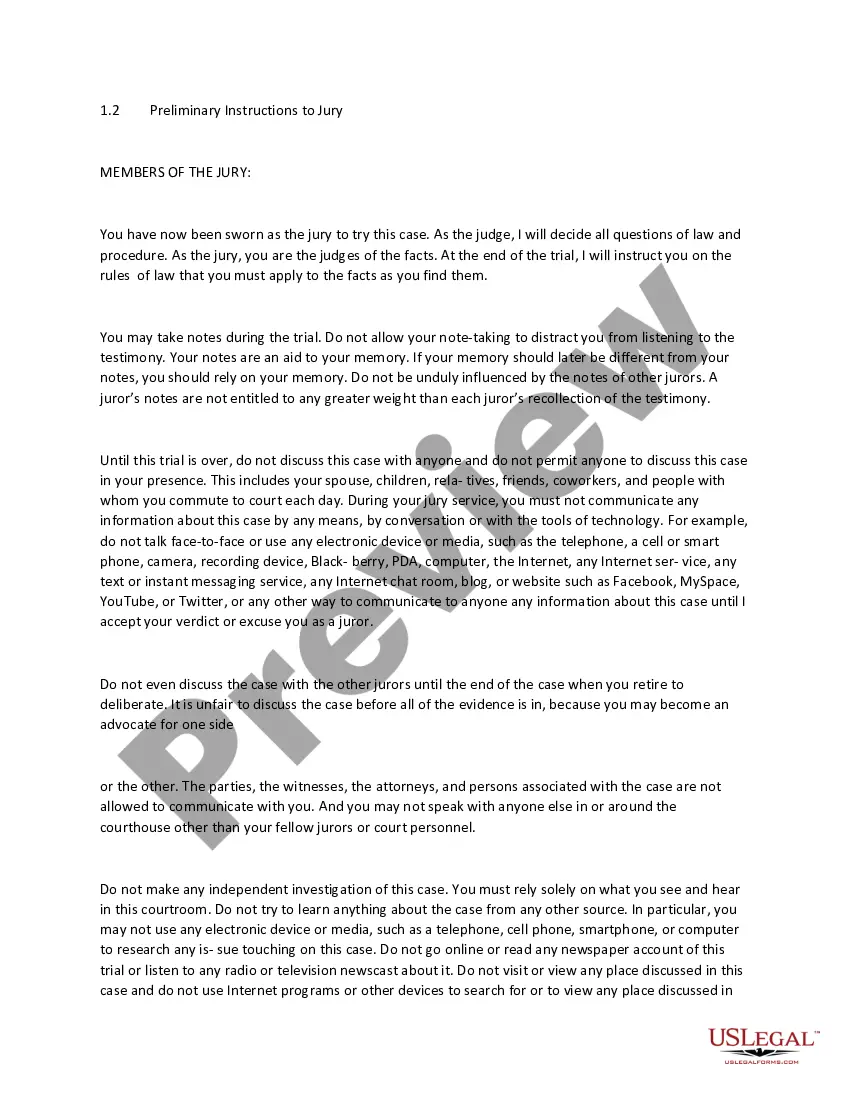
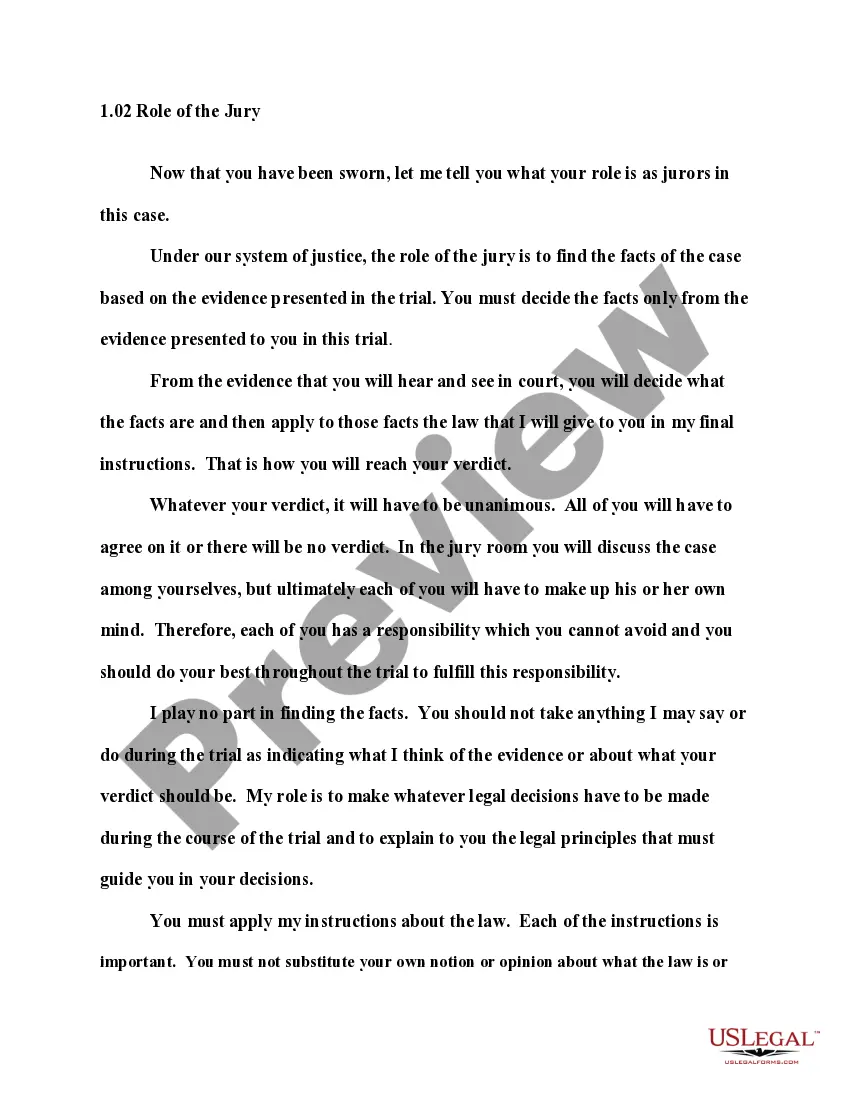
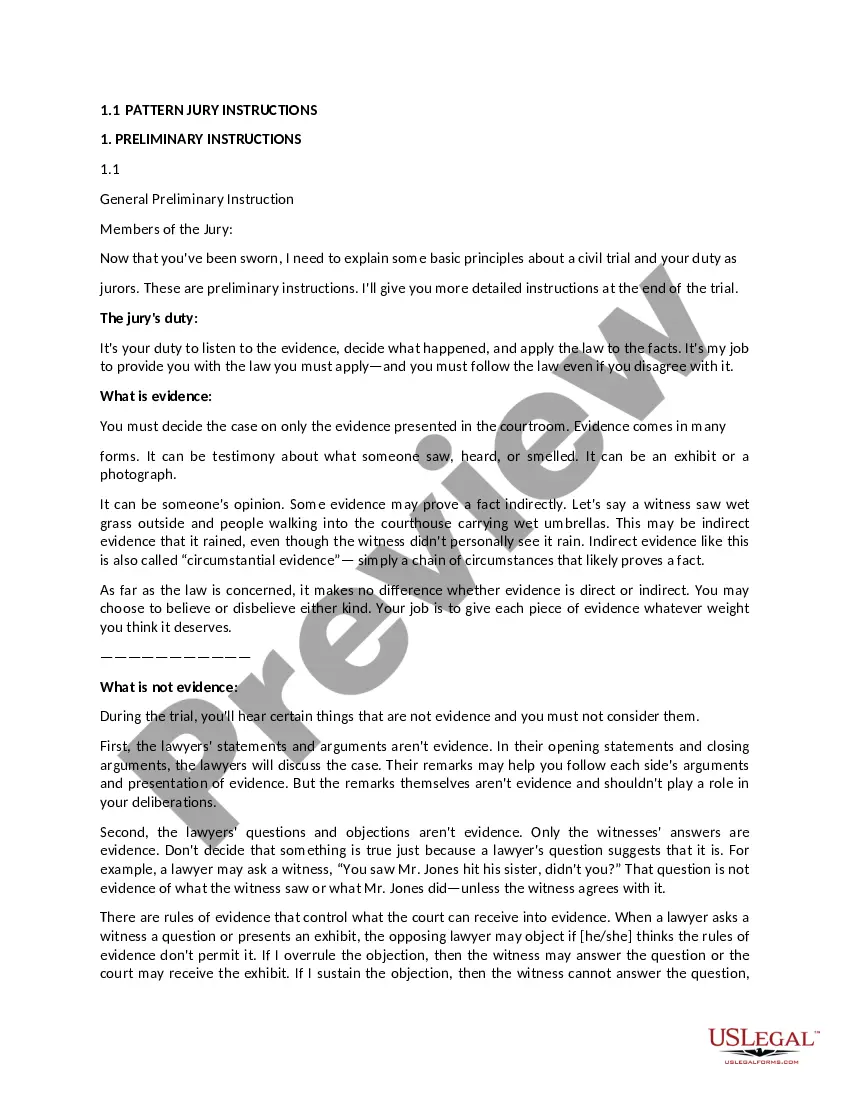
The Overview of the Trial form serves as a guide for jurors during legal proceedings. It outlines the roles and responsibilities of jurors, providing clear instructions on how to maintain impartiality and avoid external influence throughout the trial. This form is specifically designed to ensure that jurors understand their duty as fact-finders while differentiating their functions from those of the judge, who decides on legal matters. This form is vital for a fair trial process.
Key components of this form
- Preliminary instructions outlining jurors' roles and responsibilities.
- Guidelines on note-taking during the trial to aid memory.
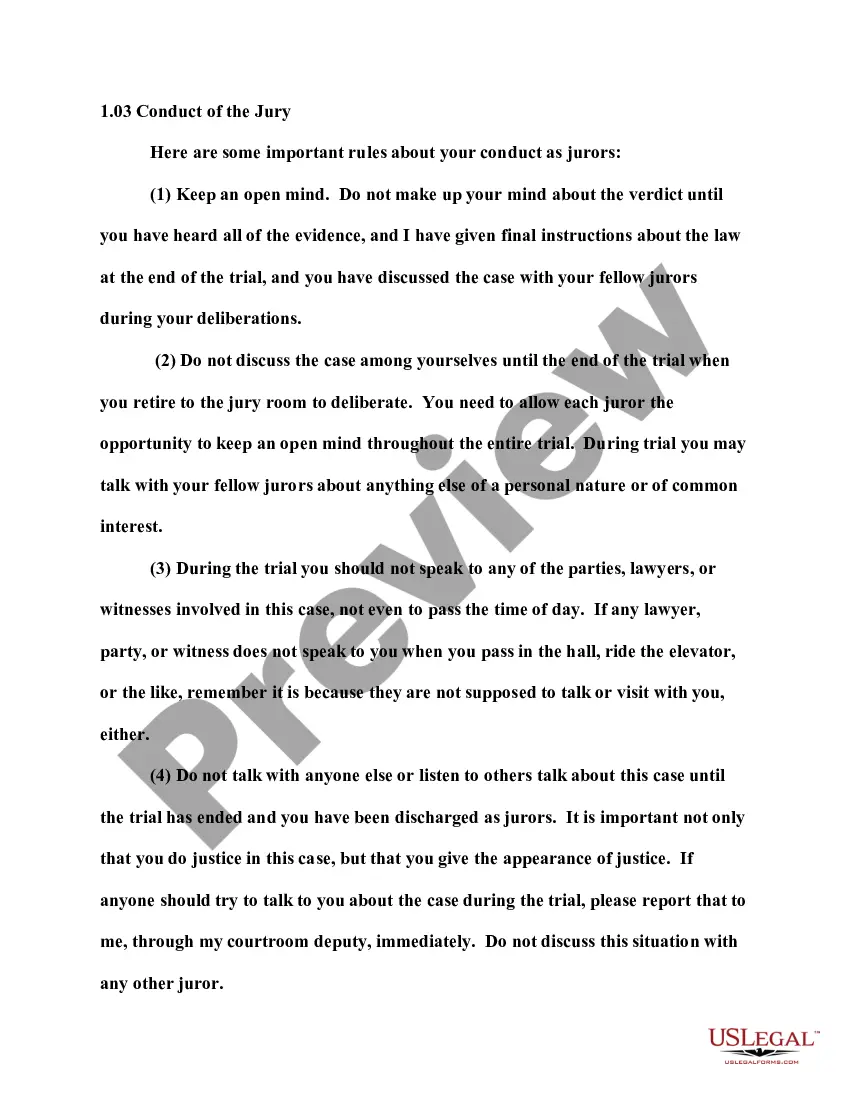
- Restrictions on discussing the case with outsiders and among jurors until deliberation.
- Instructions against independent investigations or research concerning the case.
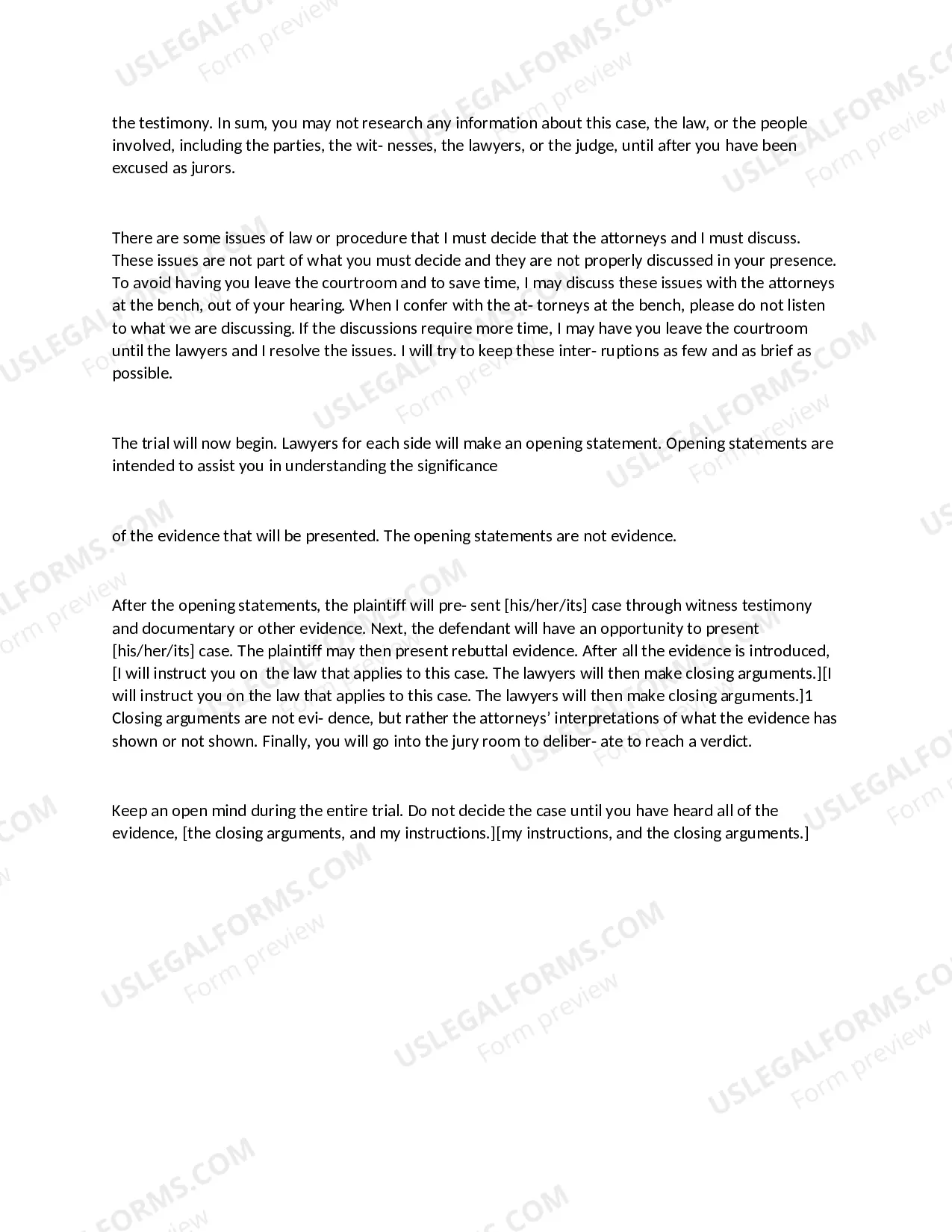
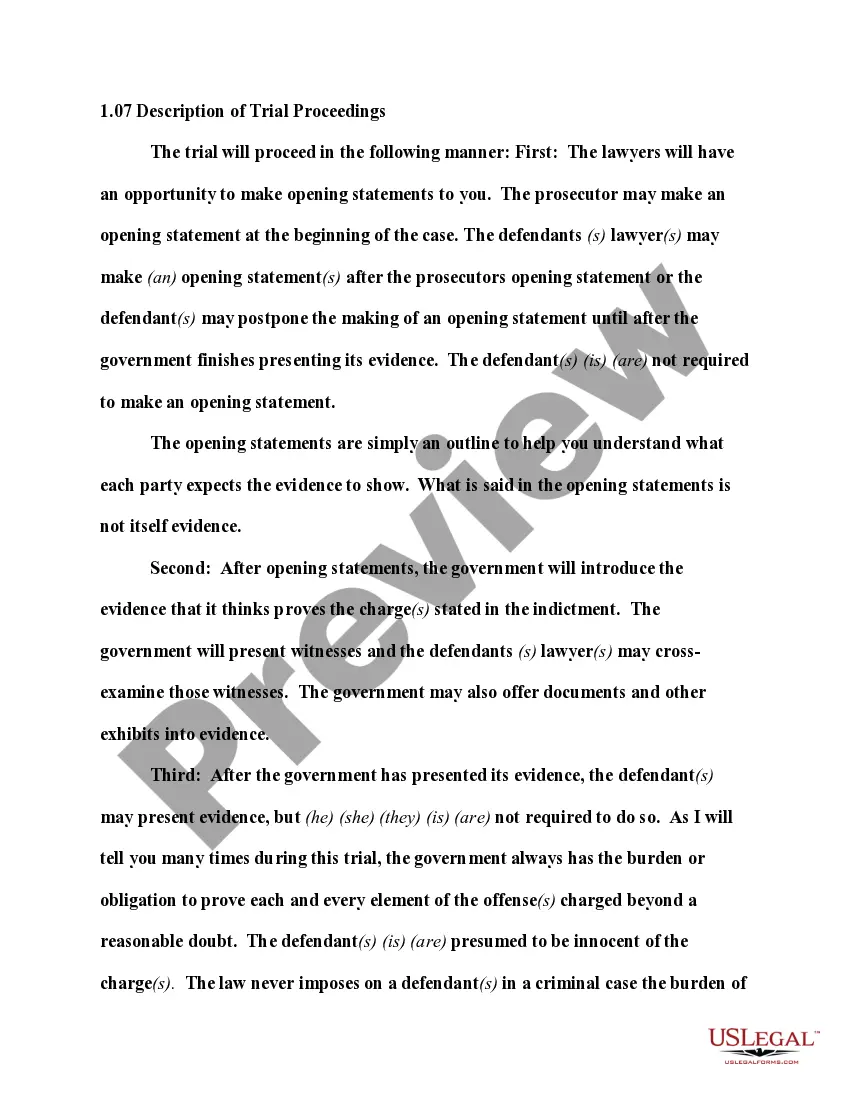
- Overview of the trial process, including opening statements, evidence presentation, and closing arguments.
When to use this form
This form is used at the beginning of a trial to inform jurors of their responsibilities and the procedures they must follow. It is essential for jurors who are participating in a trial, ensuring they understand the importance of impartiality and the legal boundaries within which they must operate.
Intended users of this form
Intended audience includes:
- Jurors selected for service in a trial.
- Court personnel involved in jury administration.
- Judges explaining juror responsibilities during trial proceedings.
How to prepare this document
To effectively implement this form, follow these steps:
- Review the preliminary instructions and understand your role as a juror.
- Keep diligent notes throughout the trial, but prioritize your memory.
- Avoid all discussions about the case with anyone, including fellow jurors, until it is time to deliberate.
- Refrain from conducting any outside research or discussing the case using electronic devices.
- Listen carefully to the opening statements and evidence presented before forming opinions.
Notarization requirements for this form
Notarization is not commonly needed for this form. However, certain documents or local rules may make it necessary. Our notarization service, powered by Notarize, allows you to finalize it securely online anytime, day or night.
Get your form ready online
Our built-in tools help you complete, sign, share, and store your documents in one place.
Make edits, fill in missing information, and update formatting in US Legal Forms—just like you would in MS Word.
Download a copy, print it, send it by email, or mail it via USPS—whatever works best for your next step.
Sign and collect signatures with our SignNow integration. Send to multiple recipients, set reminders, and more. Go Premium to unlock E-Sign.
If this form requires notarization, complete it online through a secure video call—no need to meet a notary in person or wait for an appointment.
We protect your documents and personal data by following strict security and privacy standards.

Make edits, fill in missing information, and update formatting in US Legal Forms—just like you would in MS Word.

Download a copy, print it, send it by email, or mail it via USPS—whatever works best for your next step.

Sign and collect signatures with our SignNow integration. Send to multiple recipients, set reminders, and more. Go Premium to unlock E-Sign.

If this form requires notarization, complete it online through a secure video call—no need to meet a notary in person or wait for an appointment.

We protect your documents and personal data by following strict security and privacy standards.
Avoid these common issues
- Discussing the case with others before deliberation.
- Relying too heavily on note-taking instead of personal recollection.
- Attempting to investigate details about the case outside of the courtroom.
- Forming opinions about the case before all evidence has been presented.
Advantages of online completion
- Accessibility: Jurors can easily access the form online before trial.
- Convenience: Downloadable and printable for review at any time.
- Clarity: Clear instructions provide guidance for prospective jurors.
- Time-saving: Eliminates the need for in-person instruction sessions.
Summary of main points
- The Overview of the Trial form provides essential instructions for jurors.
- Jurors must maintain impartiality and avoid outside discussions during the trial.
- It is crucial to rely on firsthand observations rather than outside knowledge or notes.
Looking for another form?
Form popularity
FAQ
Checklist for Drafting a Trial Brief Does the Introduction articulate the party's claim and introduce the theory of the case by referring to the case facts? Are the parties identified? Is the procedural history included?
Legal Writing Tip: Start Your Brief with a Solid Introduction Begin with a paragraph or two explaining who the parties are; when, where, and how the dispute arose; what the question is (what the fight is over); and why your side is right.List three or four reasons why you should win.
The party filing the Trial Brief would make a brief introductory statement simply stating why the Trial Brief is being filed. This section will address the legal issue(s) in the brief. The issue is the legal question to be answered by the court.
A Look at the Trial Process Presentation of Evidence and Testimony of Witnesses. The plaintiff's or prosecution's case is presented first.Closing Arguments.Presentation of Jury Instructions (Charging the Jury)Deliberation.Announcement of the Verdict.
A legal brief should include: The name of the case. The names of the parties involved. The current stage of litigation. The legal issue being addressed. Relevant facts of the case. The rule of law applied. Your argument. A conclusion.
An introduction should include three things: a hook to interest the reader, some background on the topic so the reader can understand it, and a thesis statement that clearly and quickly summarizes your main point.
The summary jury trial usually involves a summarized presentation of a civil case to an advisory jury to show the parties how a jury reacts to the evidence. The procedure is nonbinding.
Begin with a paragraph or two explaining who the parties are; when, where, and how the dispute arose; what the question is (what the fight is over); and why your side is right.