Description of Trial Proceedings
About this form
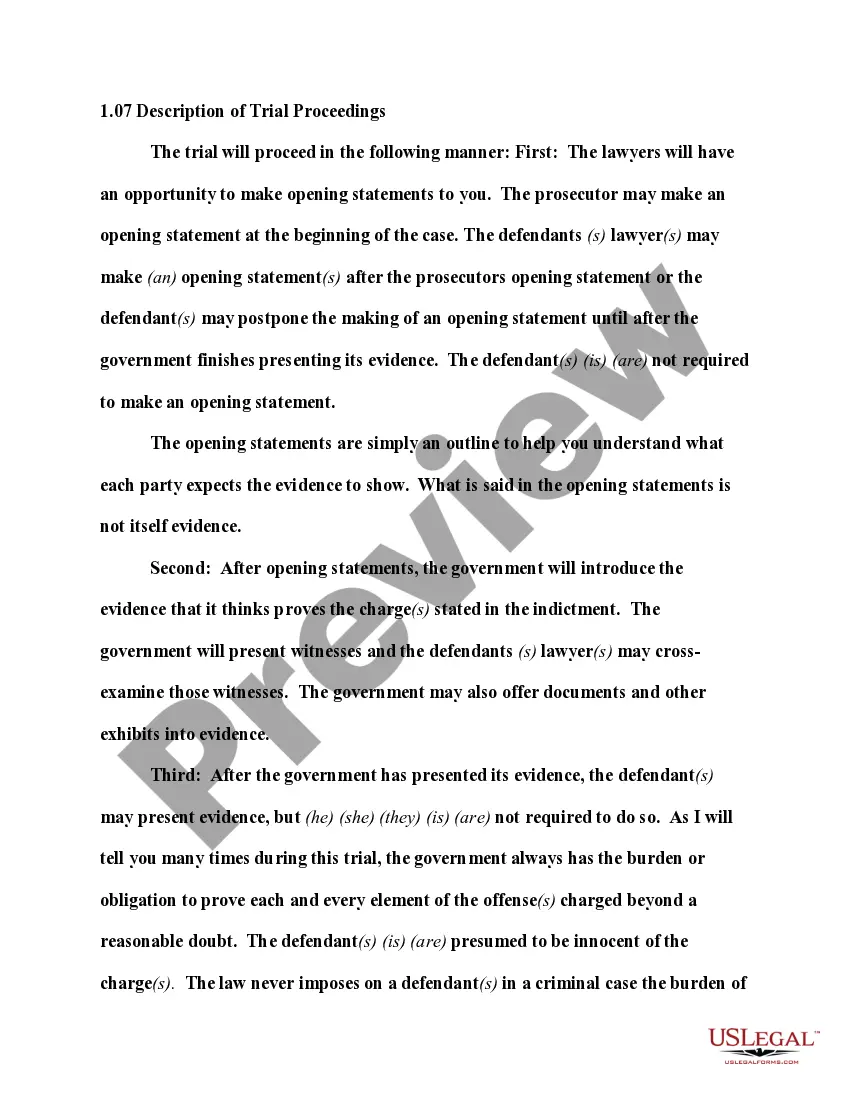
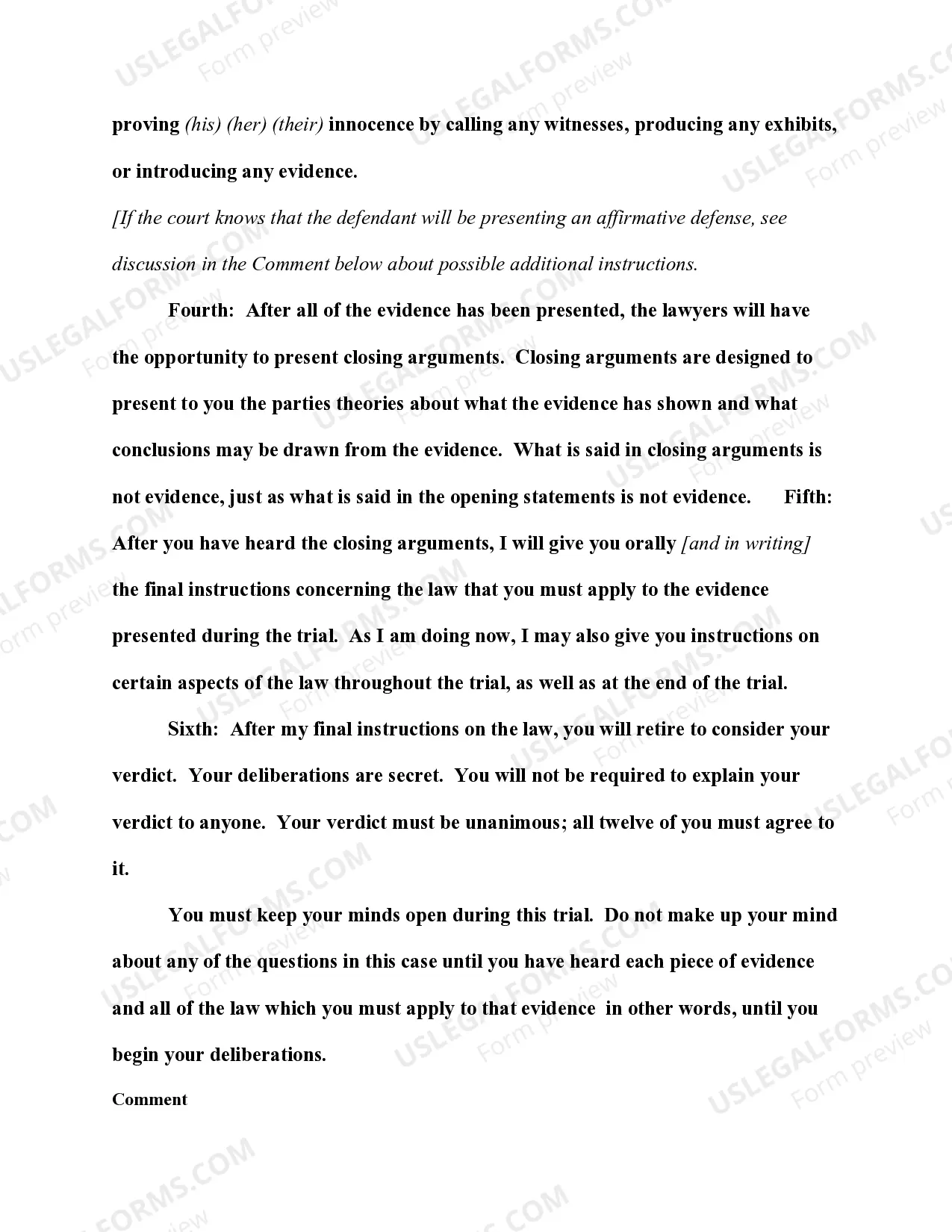
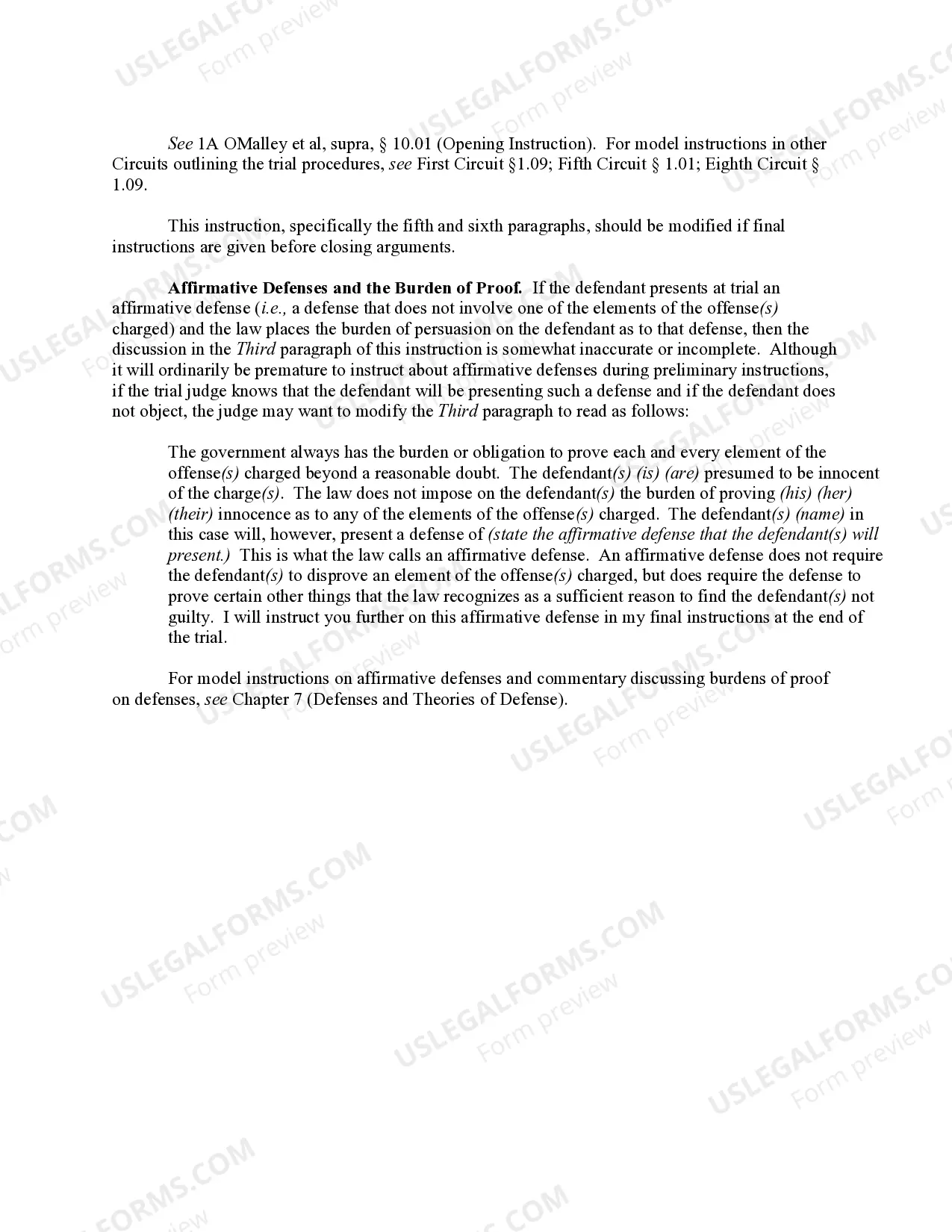
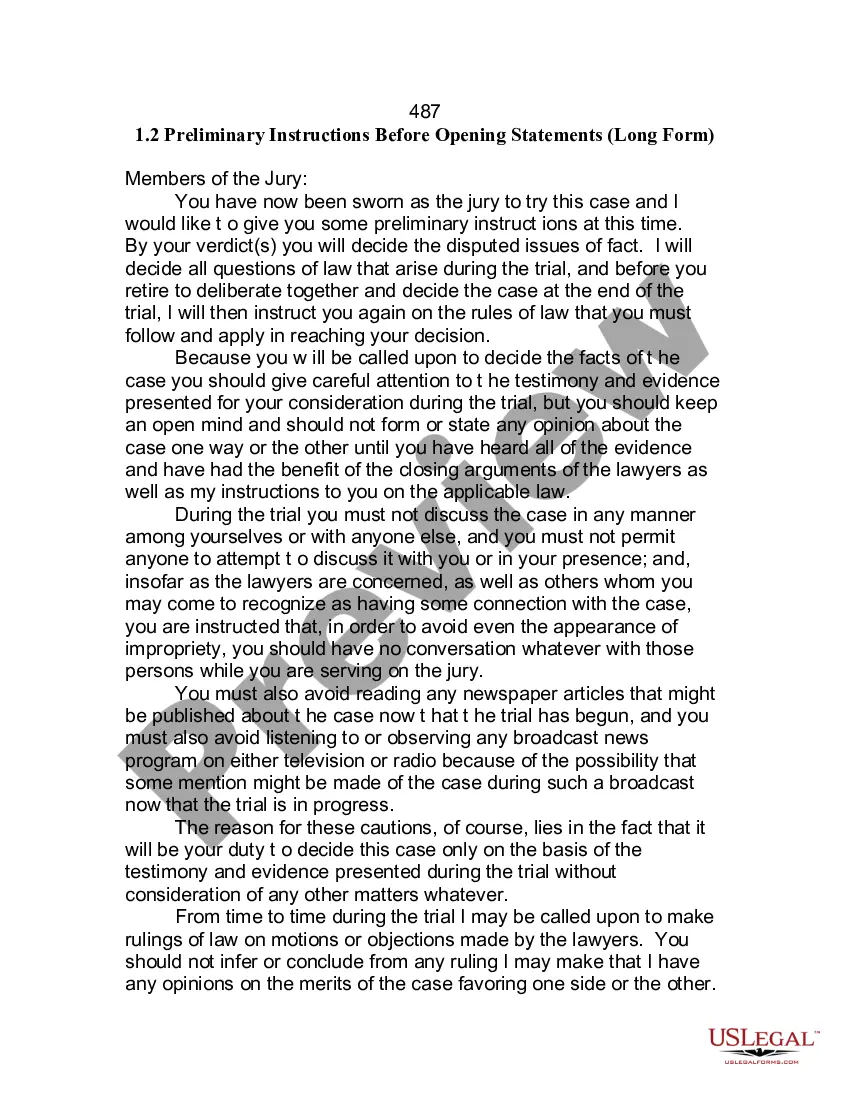
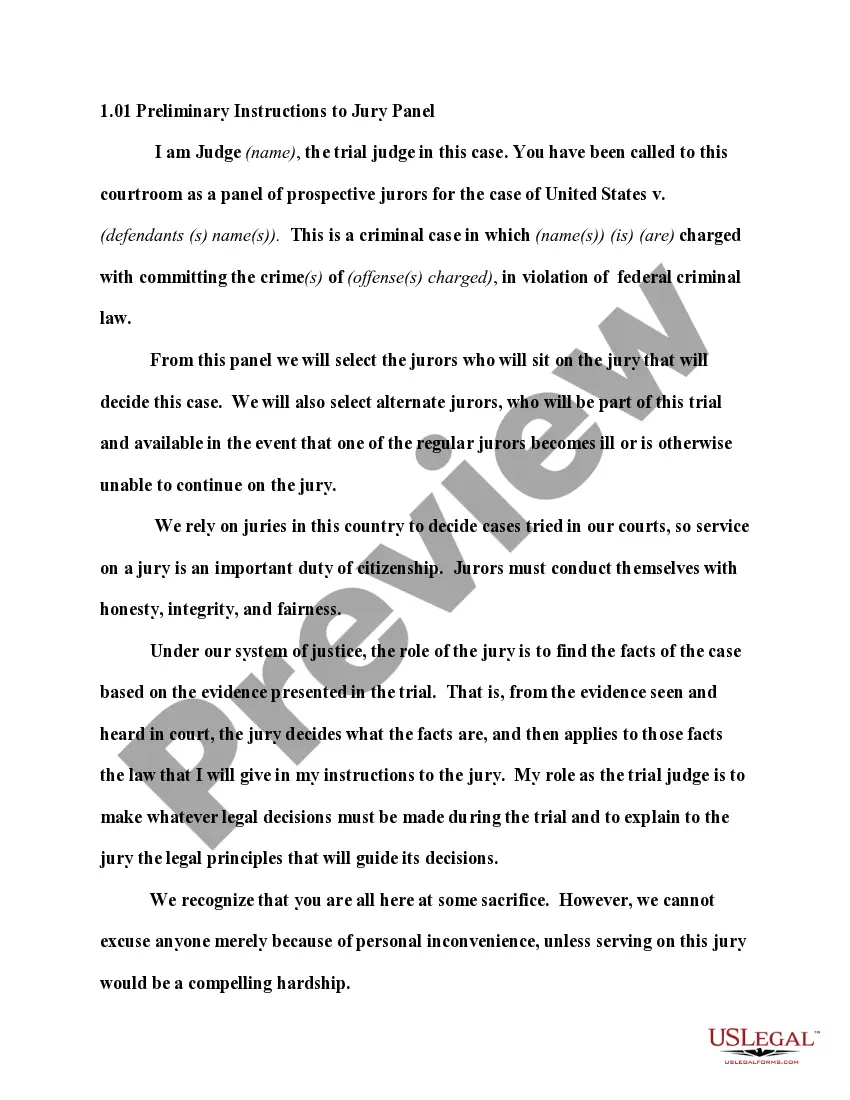
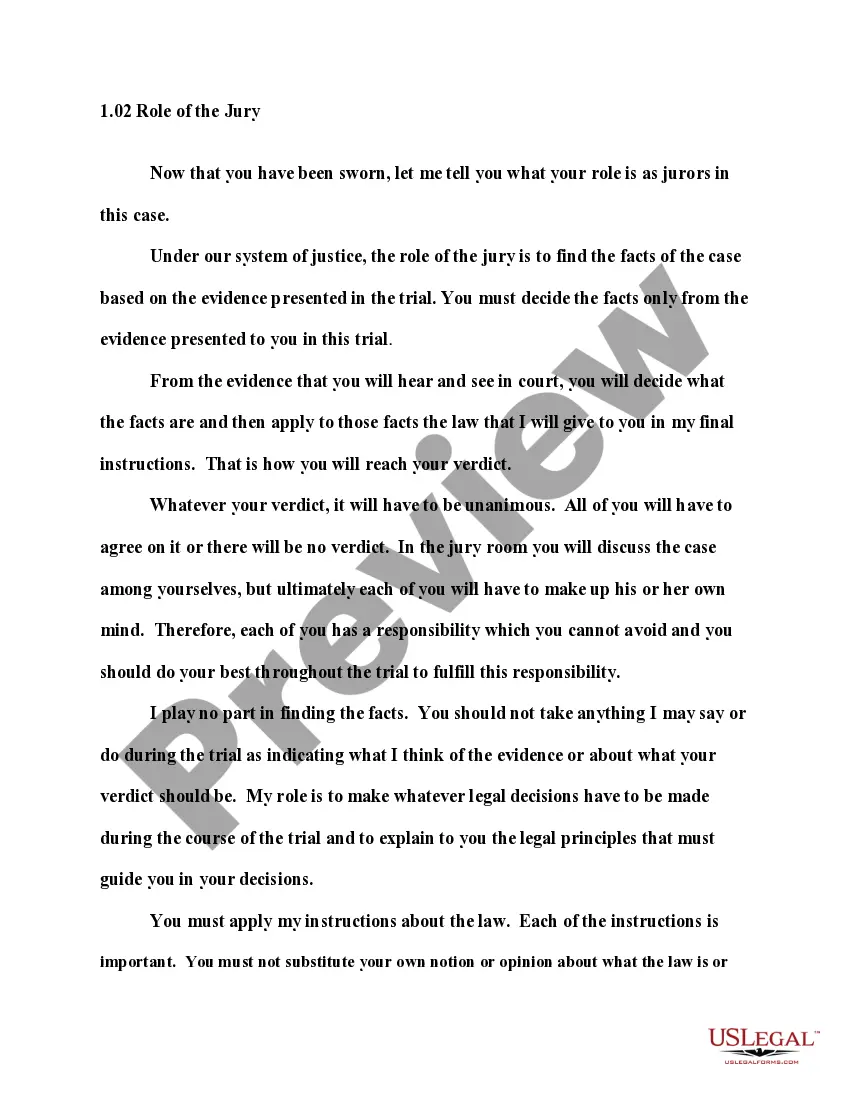
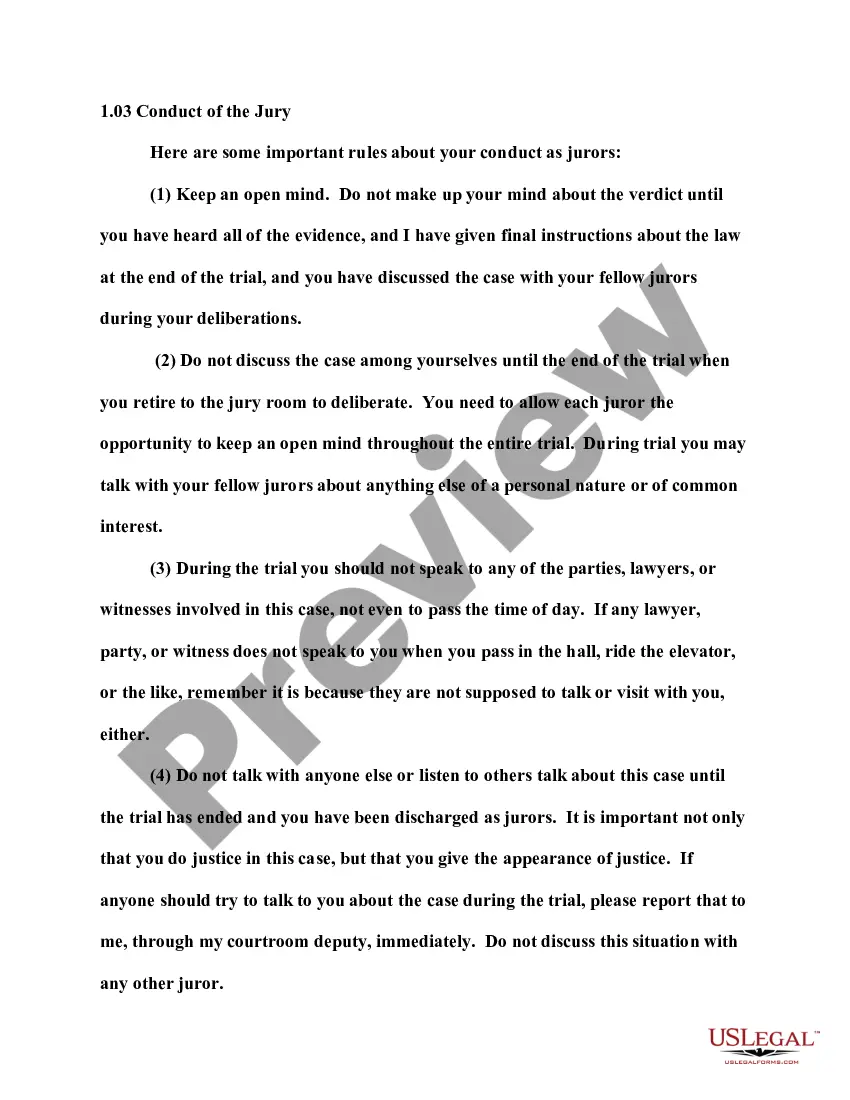
The Description of Trial Proceedings form outlines the step-by-step procedure of a criminal trial. Its purpose is to guide jurors through the trial process, helping them understand their roles and the flow of events. This form differs from other trial instructions by focusing specifically on the structure of how a trial unfolds, from opening statements to closing arguments and jury deliberation.
Form components explained
- Opening statements: Overview of what each party intends to prove.
- Presentation of evidence: How the government introduces evidence and witnesses.
- Defendant's right: The defendant is not required to present evidence.
- Closing arguments: Summaries of the evidence presented from each party's perspective.
- Final instructions: Legal instructions given to jurors before deliberation.
- Jury deliberation: Procedure for jurors to consider their verdict.

When this form is needed
This form is needed when preparing for a criminal trial, as it provides a comprehensive outline of the proceedings. It is useful for judges, lawyers, and jurors to understand the order of events and their respective roles during the trial.
Intended users of this form
- Judges presiding over criminal trials.
- Attorneys representing either the prosecution or defense.
- Jurors who are selected to hear a criminal case.
- Legal professionals seeking to understand trial procedures.
Instructions for completing this form
- Review the outlined procedures for clarity on each stage of the trial.
- Familiarize yourself with the roles of the prosecution, defense, and jurors.
- Ensure all necessary instructions are available for delivering to jurors.
- Adapt the outline as necessary based on specific state laws or court protocols.
- Discuss the form with all parties involved to ensure mutual understanding of the trial structure.
Is notarization required?
This form does not typically require notarization to be legally valid. However, some jurisdictions or document types may still require it. US Legal Forms provides secure online notarization powered by Notarize, available 24/7 for added convenience.
Get your form ready online
Our built-in tools help you complete, sign, share, and store your documents in one place.
Make edits, fill in missing information, and update formatting in US Legal Forms—just like you would in MS Word.
Download a copy, print it, send it by email, or mail it via USPS—whatever works best for your next step.
Sign and collect signatures with our SignNow integration. Send to multiple recipients, set reminders, and more. Go Premium to unlock E-Sign.
If this form requires notarization, complete it online through a secure video call—no need to meet a notary in person or wait for an appointment.
We protect your documents and personal data by following strict security and privacy standards.

Make edits, fill in missing information, and update formatting in US Legal Forms—just like you would in MS Word.

Download a copy, print it, send it by email, or mail it via USPS—whatever works best for your next step.

Sign and collect signatures with our SignNow integration. Send to multiple recipients, set reminders, and more. Go Premium to unlock E-Sign.

If this form requires notarization, complete it online through a secure video call—no need to meet a notary in person or wait for an appointment.

We protect your documents and personal data by following strict security and privacy standards.
Common mistakes
- Failing to provide clear instructions for each phase of the trial.
- Neglecting to inform jurors about their role in deliberations.
- Using overly complex language that may confuse jurors.
Why use this form online
- Immediate access to a comprehensive outline of trial proceedings.
- Easily editable to reflect specific case requirements or jurisdictions.
- Reliable format drafted by licensed attorneys to ensure legal accuracy.
Legal use & context
- This form helps ensure that jurors understand the trial process, which is vital for the fair administration of justice.
- Inaccurate or unclear instruction can lead to misunderstandings during deliberations, potentially impacting verdicts.
Main things to remember
- The form outlines essential procedures of a criminal trial.
- It serves as a guide for jurors, attorneys, and judges alike.
- Understanding the trial process is crucial for a fair verdict.
Looking for another form?
Form popularity
FAQ
Criminal Trial Phases Choosing a Jury. Opening Statements. Witness Testimony and Cross-Examination. Closing Arguments. Jury Instruction. Jury Deliberation and Announcement of Verdict.
The 10 Stages Of A Criminal Trial In California Stage #1: Filing Motions With The Court. Stage #2: Jury Selection. Stage #3: Opening Statement. Stage #4:Prosecution Presents Its Case. Stage #5: Defense's Case. Stage #6: Prosecution Rebuttal (If Necessary) Stage #7: Closing Arguments. Stage #8: Jury Deliberation.
A Look at the Trial Process Presentation of Evidence and Testimony of Witnesses. The plaintiff's or prosecution's case is presented first.Closing Arguments.Presentation of Jury Instructions (Charging the Jury)Deliberation.Announcement of the Verdict.
Criminal Trial Phases Choosing a Jury. Opening Statements. Witness Testimony and Cross-Examination. Closing Arguments. Jury Instruction. Jury Deliberation and Announcement of Verdict.
The steps of a criminal trial are: Selecting a jury. Opening statements. Witness testimonies and cross-examination. Closing arguments. Jury instruction. Deliberation and verdict.
Please be sure to consult an attorney to better understand how (or if) the information presented here applies to your case. Investigation. Charging. Initial Hearing / Arraignment. Discovery. Plea Bargaining. Preliminary Hearing. Pre-Trial Motions. Trial.
Opening Statements. Witness Testimony and Cross-Examination. Closing Arguments. Jury Instruction.
The stages in a criminal trial are: Jury Selection ? which includes ?voire dire? (literally to ?speak the truth?) Opening Statements. Presentation of Evidence ? also called ?case-in-chief? which includes witnesses testimony and ?examination? of those witnesses, both direct and cross-examination. Closing Arguments.