Jury Instruction - Preliminary Instructions Before Opening Statements - Long Form
What is this form?
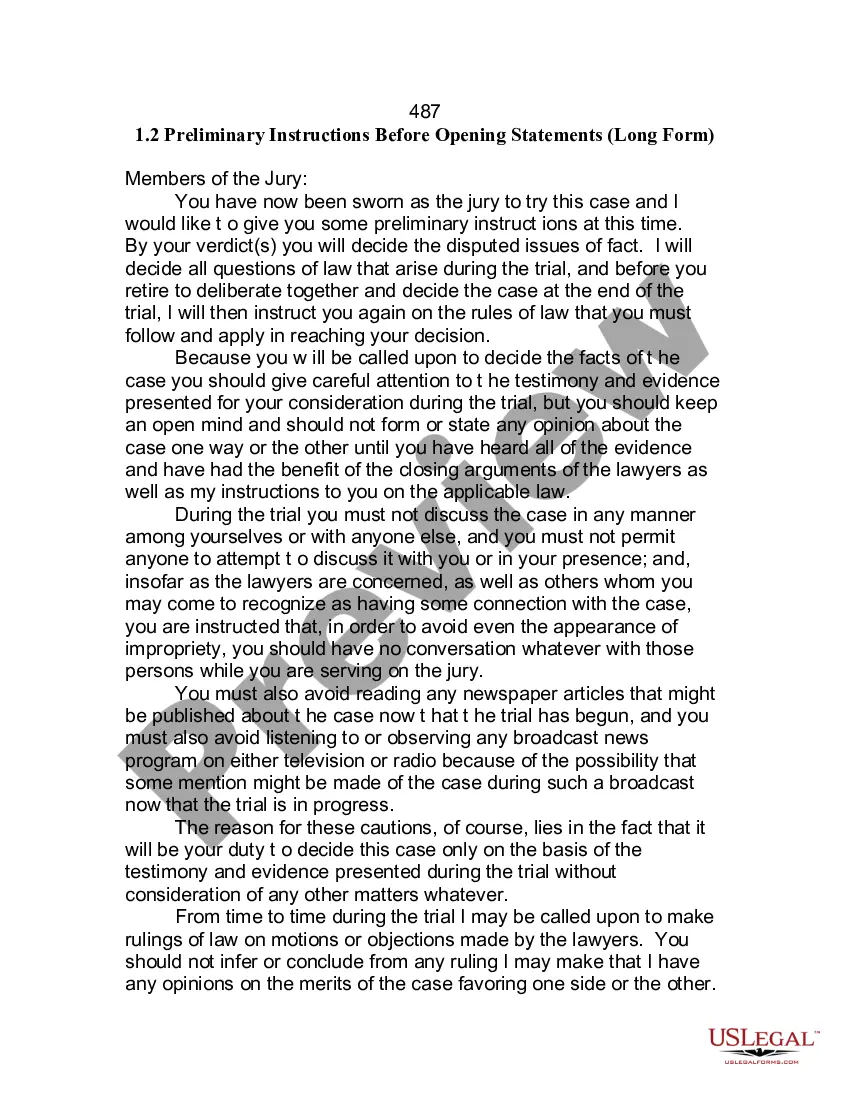
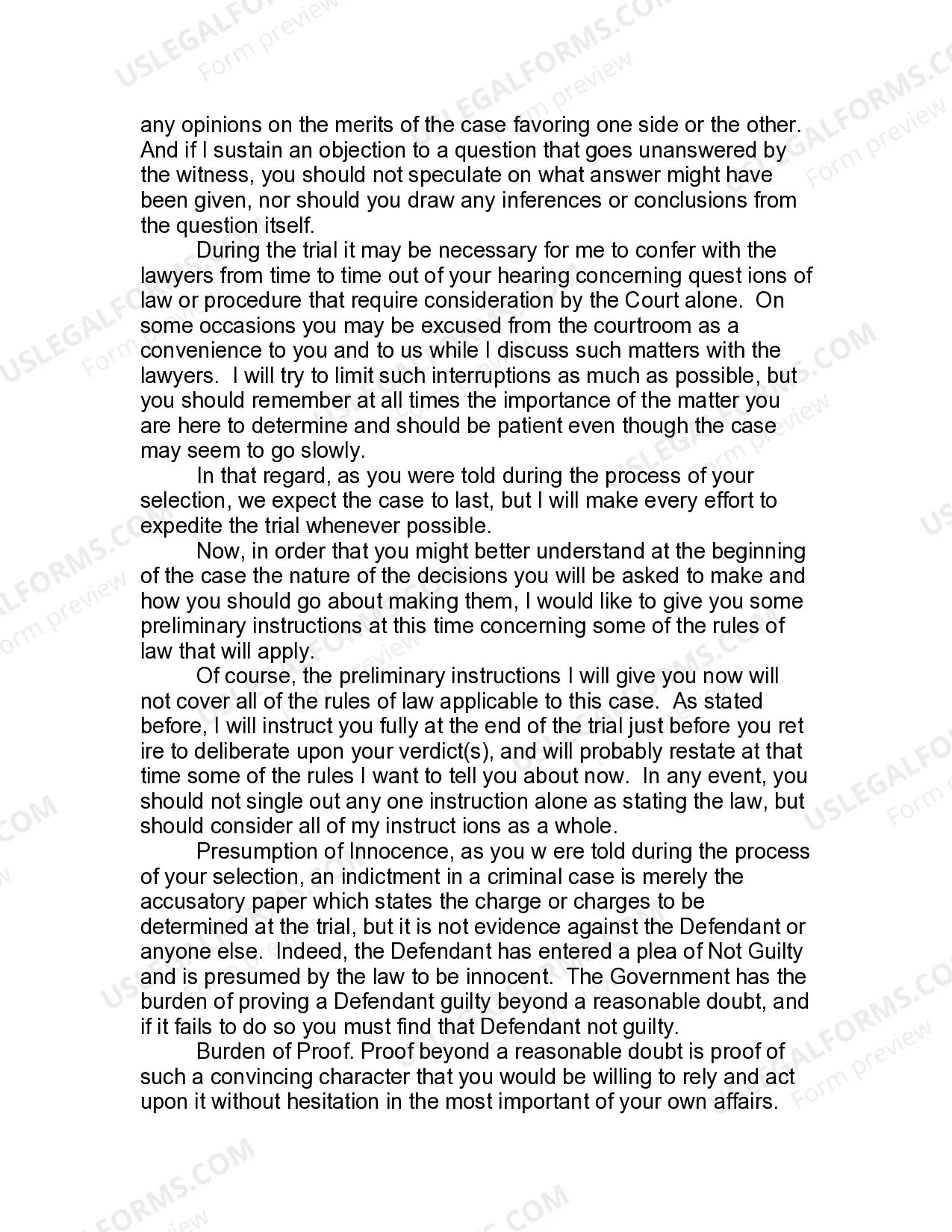
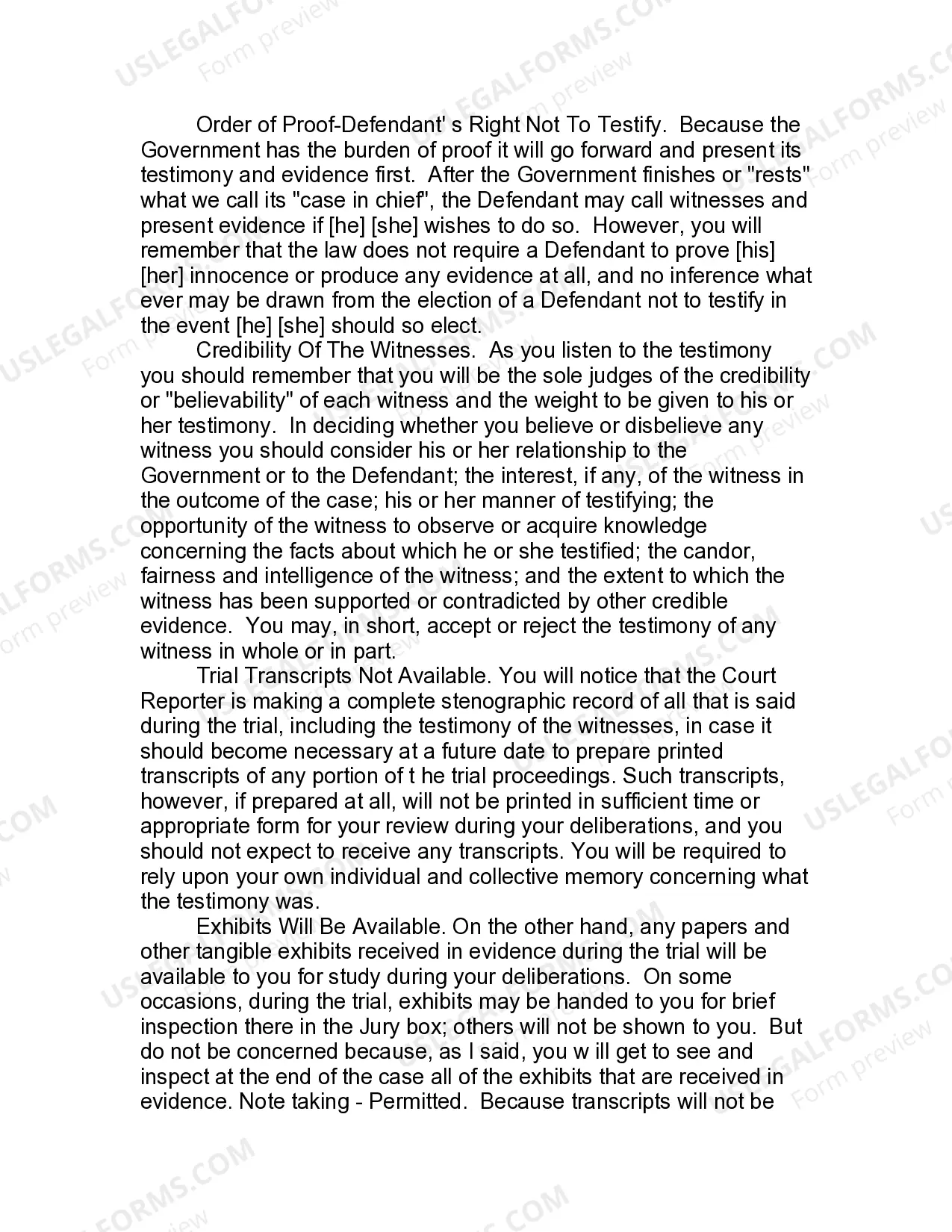
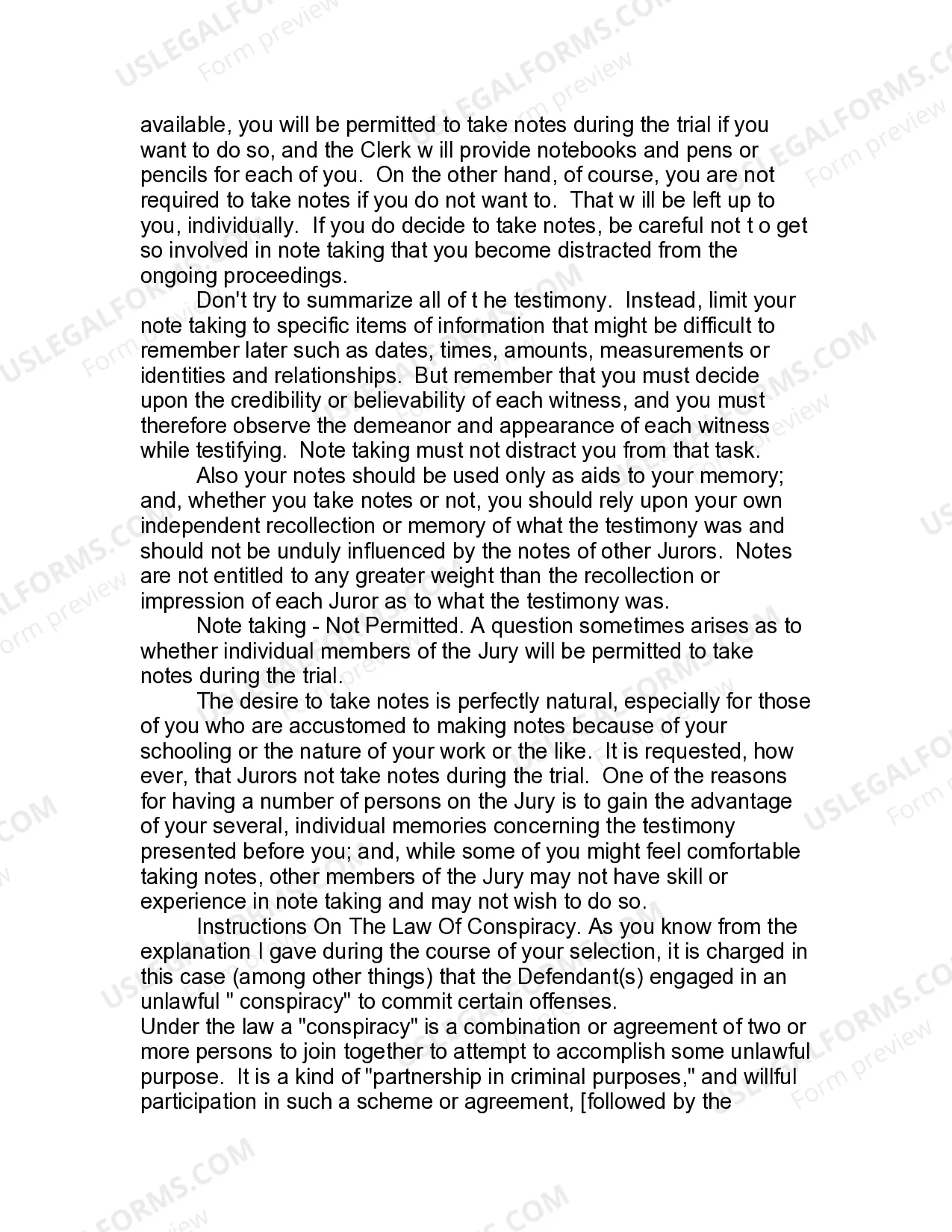
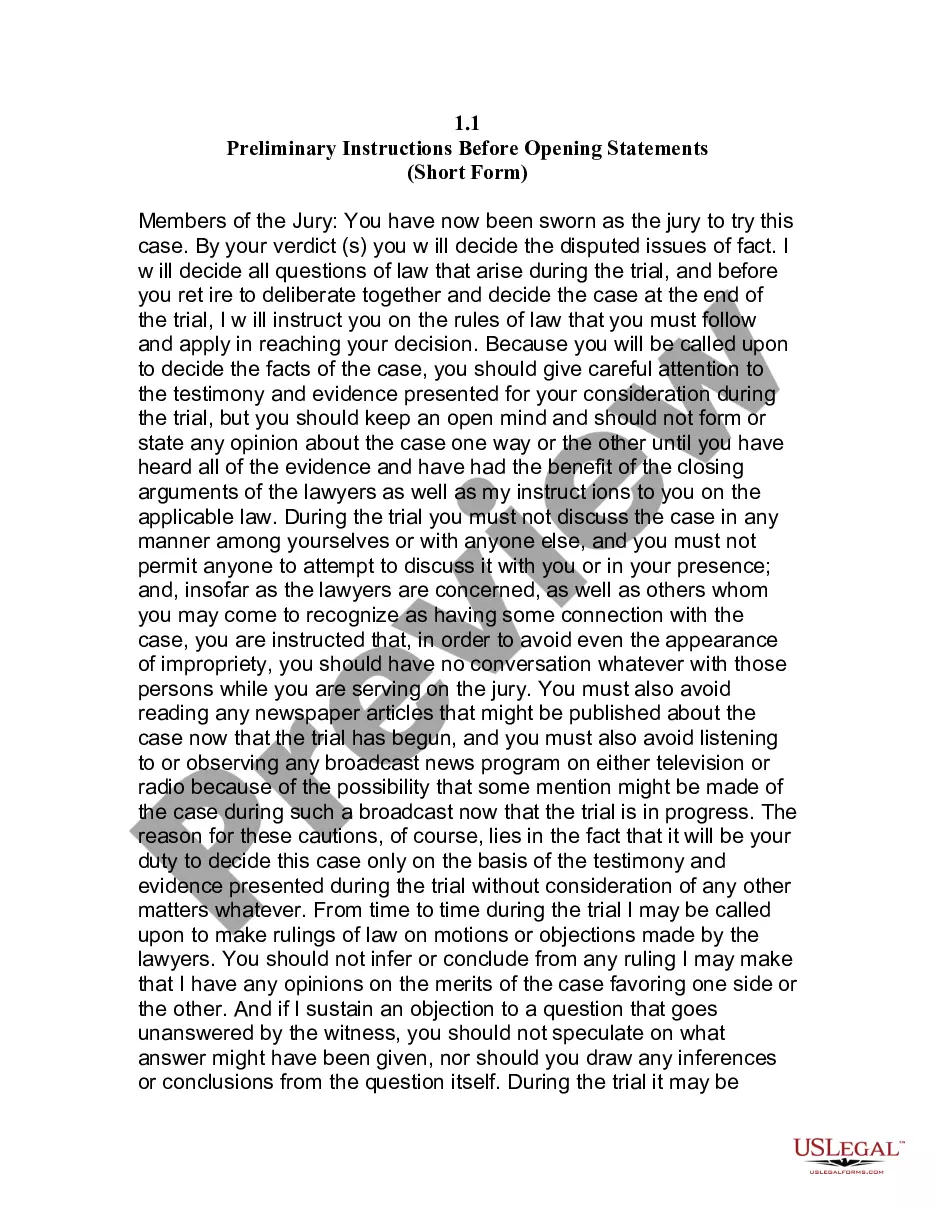
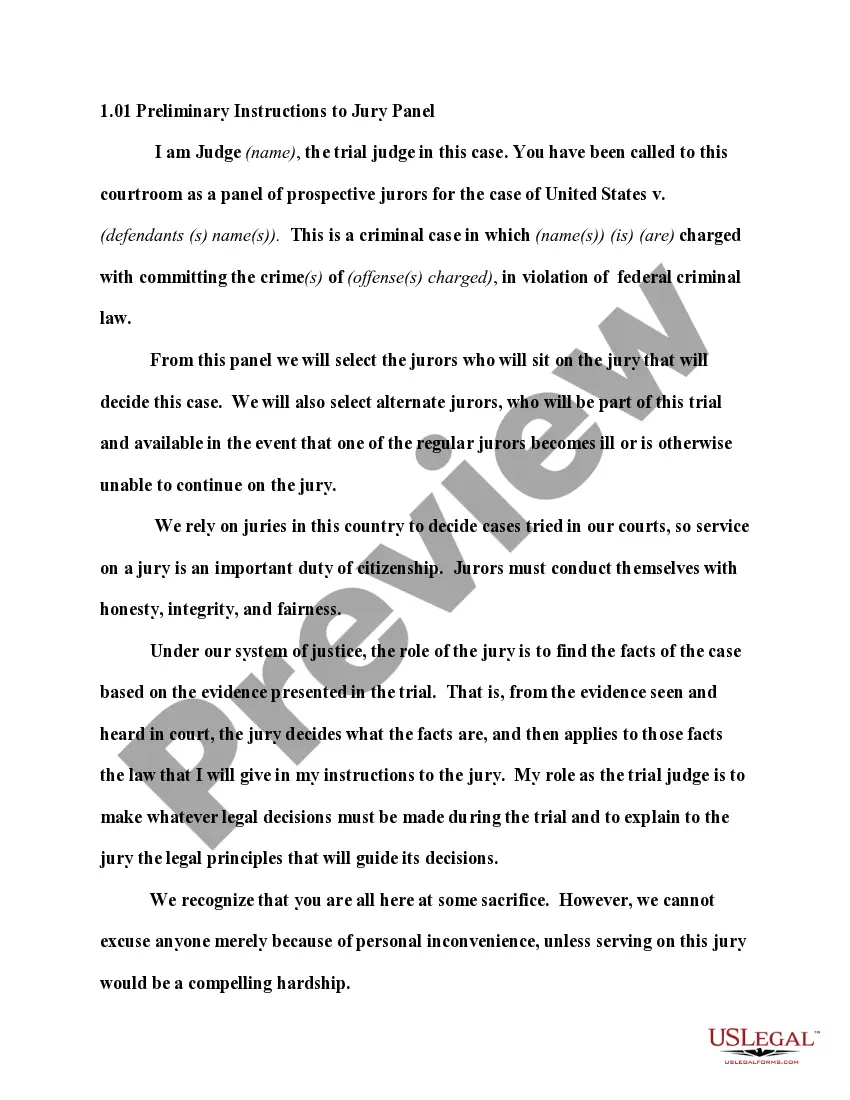
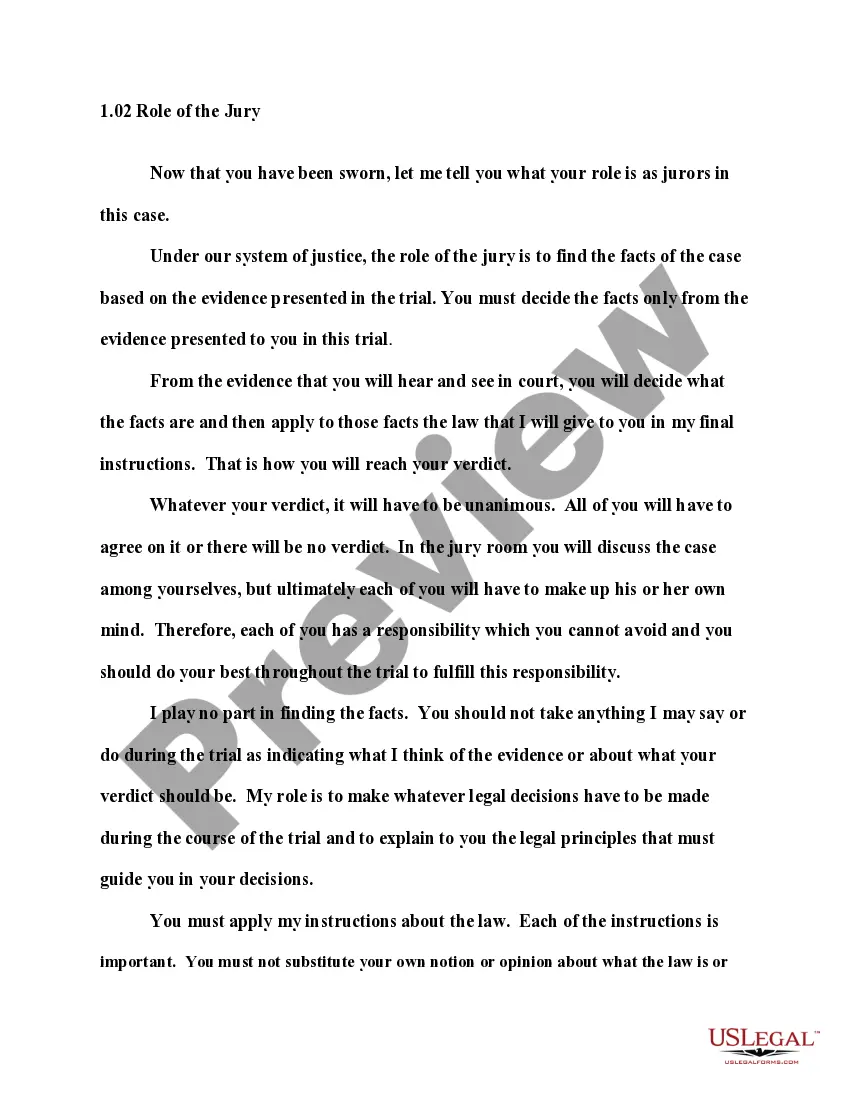
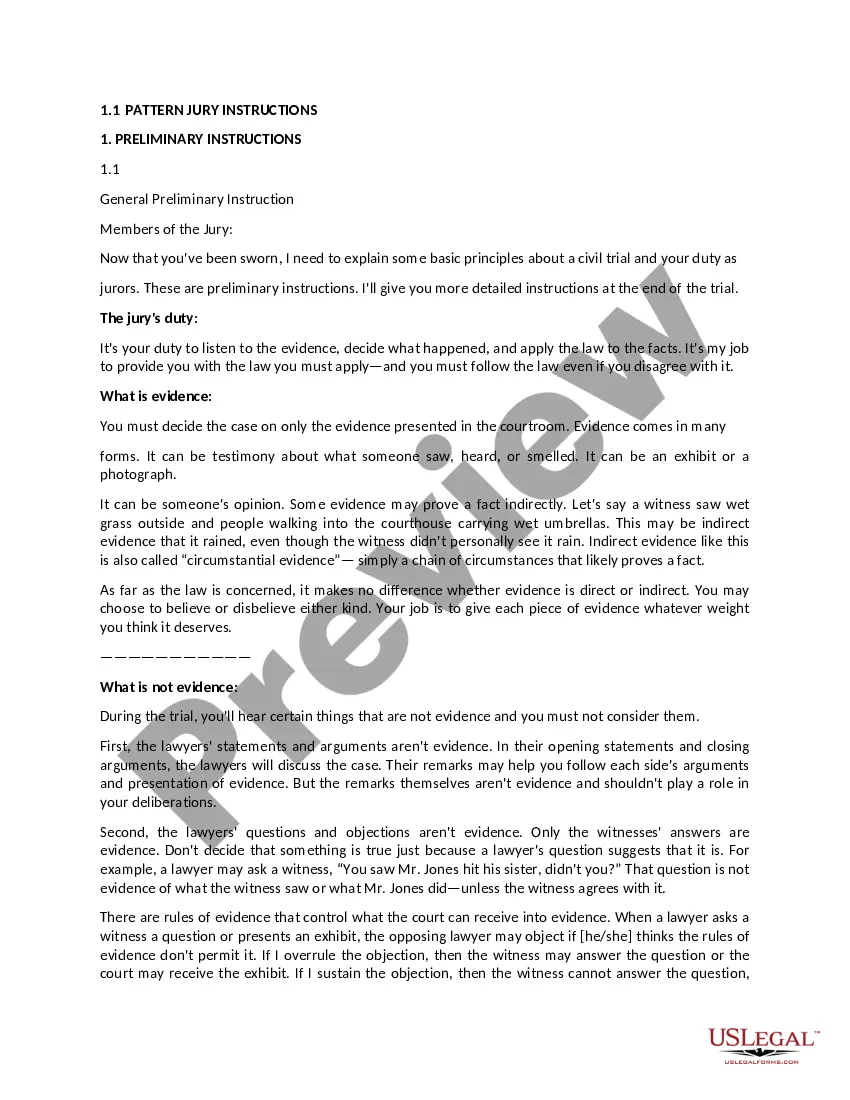
The Jury Instruction - Preliminary Instructions Before Opening Statements - Long Form provides essential guidelines for jurors at the start of a trial. This form includes sample preliminary instructions that guide jurors on their roles, responsibilities, and the rules they must follow while deciding a case. It is crucial in ensuring that jurors remain unbiased and focus solely on the evidence presented during the trial, distinguishing it from other jury instructions which may cover different stages of the trial process.
Key components of this form
- Introduction to jurors, including their responsibilities and the importance of remaining impartial.
- Overview of the presumption of innocence and the burden of proof required from the prosecution.
- Instructions on the credibility of witnesses and how jurors should evaluate testimony.
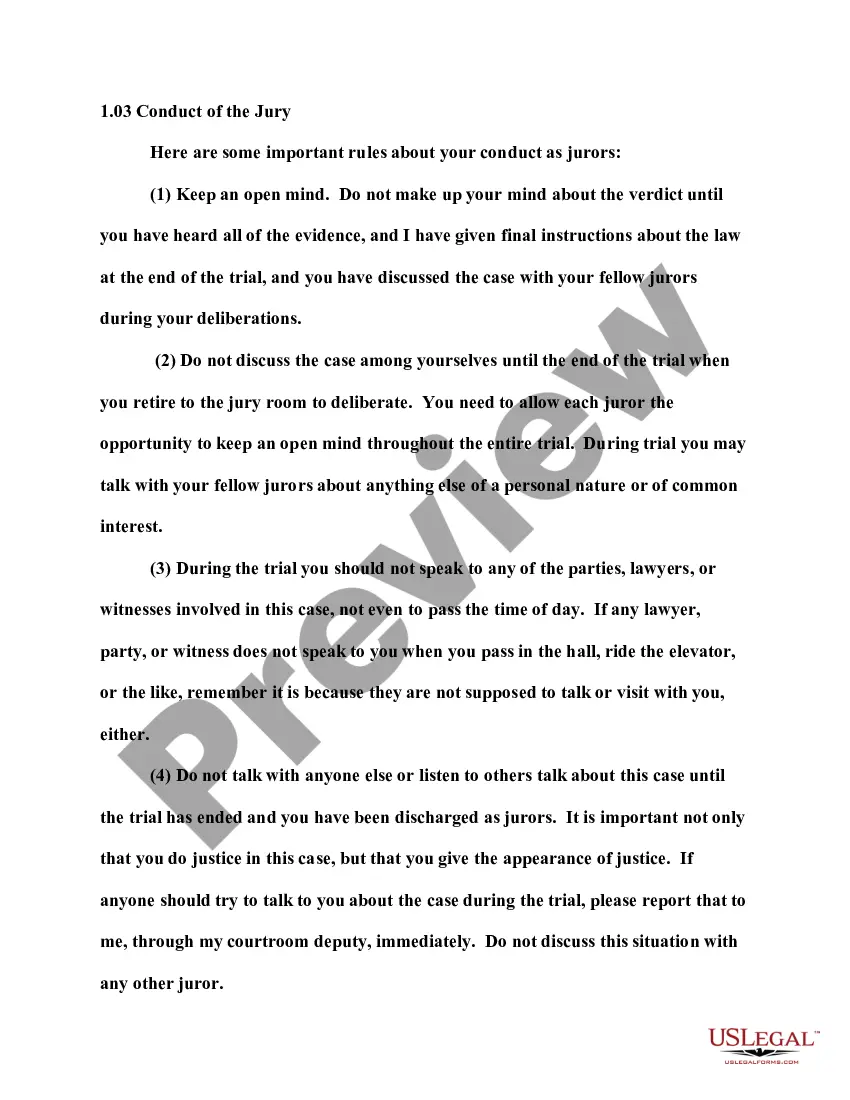
- Reminders about avoiding external influences, such as media coverage.
- Information about the availability of trial transcripts and exhibits for juror reference during deliberation.
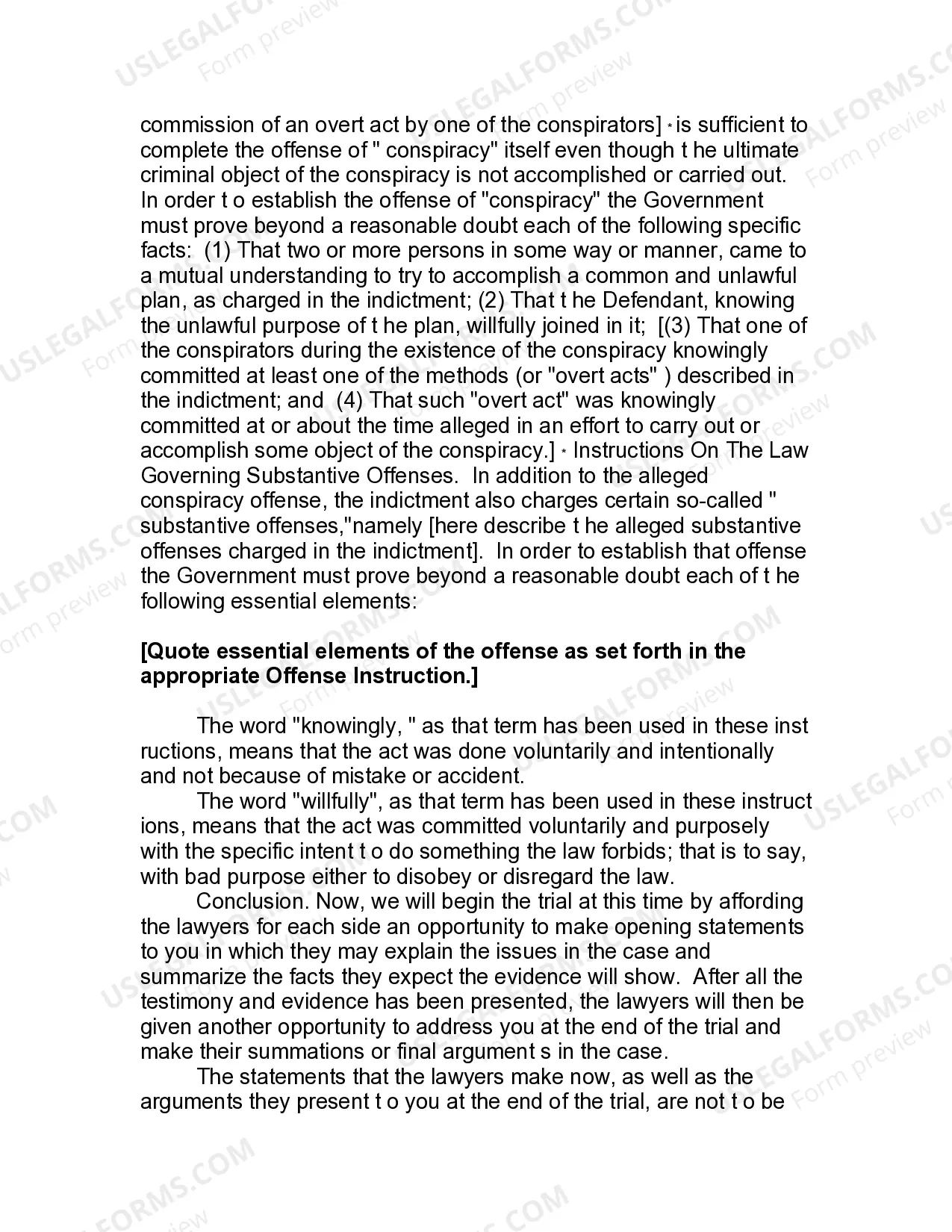
- Guidance on the legal definitions relevant to conspiracy and substantive offenses.
When to use this form
This form is essential at the beginning of a trial, right before opening statements are presented. It is used to educate jurors about their role while also ensuring they understand the legal principles that will govern the case. It should be used in any jury trial setting to provide clear and structured preliminary instructions to the jury.
Who this form is for
- Judges presiding over jury trials.
- Legal practitioners preparing for trial, especially those representing clients in criminal cases.
- Legal educators and students studying trial procedures and jury instructions.
How to complete this form
- Introduce the jurors by acknowledging their swearing-in and their duty in the trial.
- Explain the concept of the presumption of innocence and the burden of proof that lies with the prosecution.
- Outline the importance of only considering the evidence presented and avoiding discussions or external influences.
- Instruct jurors on taking notes or relying on their memories during the trial.
- Conclude by inviting jurors to prepare for the opening statements of the attorneys.
Is notarization required?
Notarization is generally not required for this form. However, certain states or situations might demand it. You can complete notarization online through US Legal Forms, powered by Notarize, using a verified video call available anytime.
Get your form ready online
Our built-in tools help you complete, sign, share, and store your documents in one place.
Make edits, fill in missing information, and update formatting in US Legal Forms—just like you would in MS Word.
Download a copy, print it, send it by email, or mail it via USPS—whatever works best for your next step.
Sign and collect signatures with our SignNow integration. Send to multiple recipients, set reminders, and more. Go Premium to unlock E-Sign.
If this form requires notarization, complete it online through a secure video call—no need to meet a notary in person or wait for an appointment.
We protect your documents and personal data by following strict security and privacy standards.

Make edits, fill in missing information, and update formatting in US Legal Forms—just like you would in MS Word.

Download a copy, print it, send it by email, or mail it via USPS—whatever works best for your next step.

Sign and collect signatures with our SignNow integration. Send to multiple recipients, set reminders, and more. Go Premium to unlock E-Sign.

If this form requires notarization, complete it online through a secure video call—no need to meet a notary in person or wait for an appointment.

We protect your documents and personal data by following strict security and privacy standards.
Common mistakes to avoid
- Jurors forming opinions before all evidence is presented.
- Discussing the case outside of the courtroom or with non-jurors.
- Misunderstanding the concept of burden of proof, particularly in criminal cases.
Advantages of online completion
- Convenience of accessing a professional, attorney-drafted template anytime.
- Easy editing options to customize the instructions based on the specific case requirements.
- Reliable format that adheres to legal standards, reducing the risk of errors.
Key takeaways
- Preliminary jury instructions are vital for guiding jurors throughout the trial process.
- Maintaining impartiality and focusing on presented evidence are essential for jurors.
- This form can be adapted to fit different legal jurisdictions, enhancing its usability.
Looking for another form?

Form popularity
FAQ
This is a case about taking chances. Mary Jones had a dream and a plan. Revenge. That's what this case is all about. This is also a case about pain. Mr. Johnson's only companion today is constant pain. This is a case about police brutality
This is a case about taking chances. Mary Jones had a dream and a plan. Revenge. That's what this case is all about. This is also a case about pain. Mr. Johnson's only companion today is constant pain. This is a case about police brutality
The opening statement at the beginning of the trial is limited to outlining facts. This is each party's opportunity to set the basic scene for the jurors, introduce them to the core dispute(s) in the case, and provide a general road map of how the trial is expected to unfold.
The purpose of an opening statement is to inform the jurors in a general way of the nature of your case so that they will be better prepared to understand the evidence.
Writing an Opening Statement (10+ Samples) An opening statement is essential for any successful trial.It forecasts to the jury the evidence they will see and hear during the trial. In other words, it lets the jury know what to expect and allows them to understand the evidence when it is presented to them.
The opening statement should not contain argument; rather, it should be a factual statement that lasts from 10 to 30 minutes.
An effective opening statement is built around a theme that can be summed up in a simple word or phrase or in a single sentence. The theme developed should be straightforward, clear, and designed to catch and hold the jury's attention. It should get directly to the heart of the dispute.
Opening statements often include such phrases as: The evidence will show that... The facts will prove that2026 Witness name will be called to testify that... III.