Louisiana Letter from Tenant to Landlord for Failure of Landlord to comply with building codes affecting health and safety or resulting in untenantable condition - demand for remedy
What this document covers
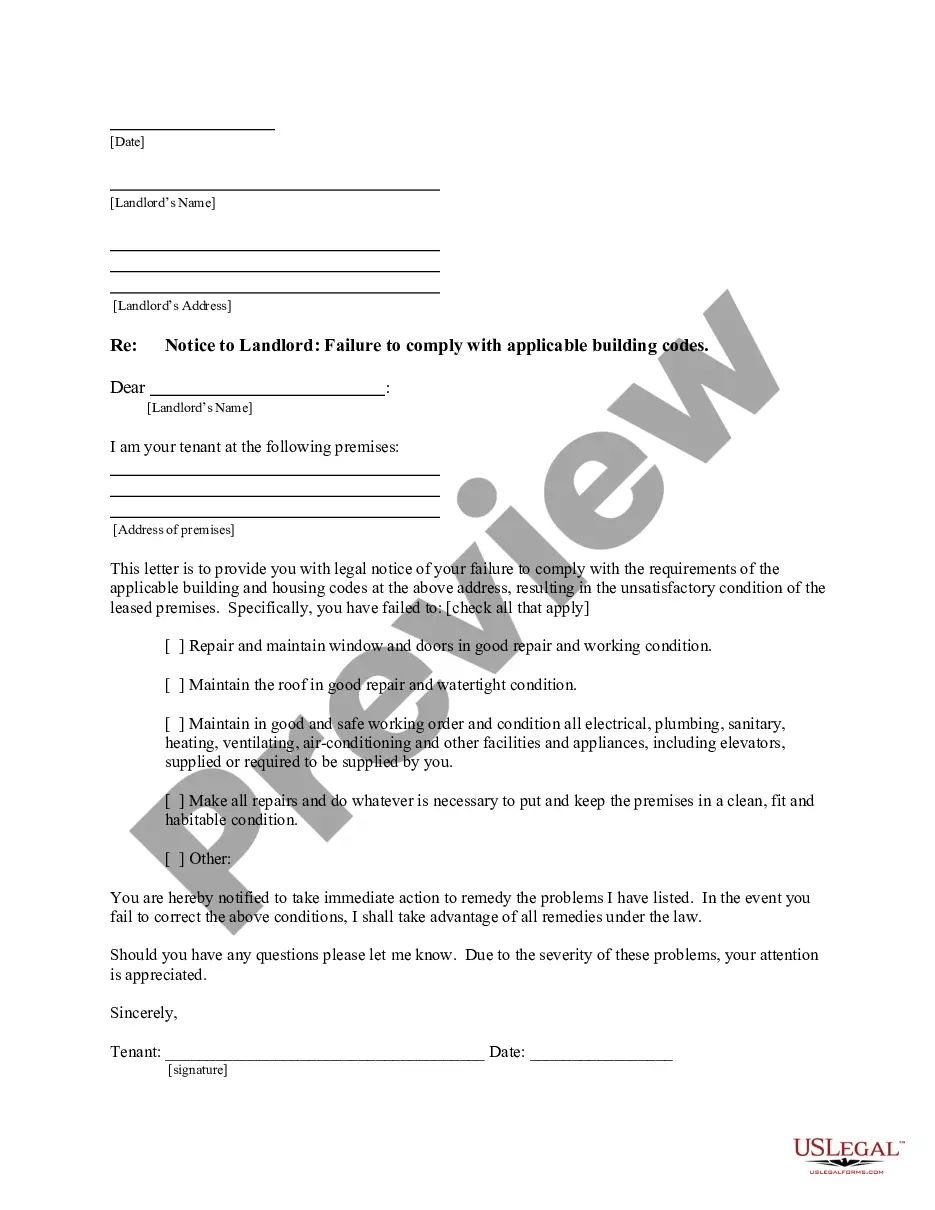
This form is a demand letter from a tenant to a landlord for failure to comply with building codes affecting health and safety, which can lead to untenantable conditions. It requires the landlord to remedy various unsafe or unhealthy conditions within ten days, ensuring the rented property meets legal standards. This letter is essential for tenants addressing urgent repair issues that may threaten their living conditions.
Key components of this form
- Identification of the tenant and landlord
- Description of the unsafe or unhealthy conditions
- Specific repairs required to comply with building codes
- Timeframe of ten days for the landlord to respond
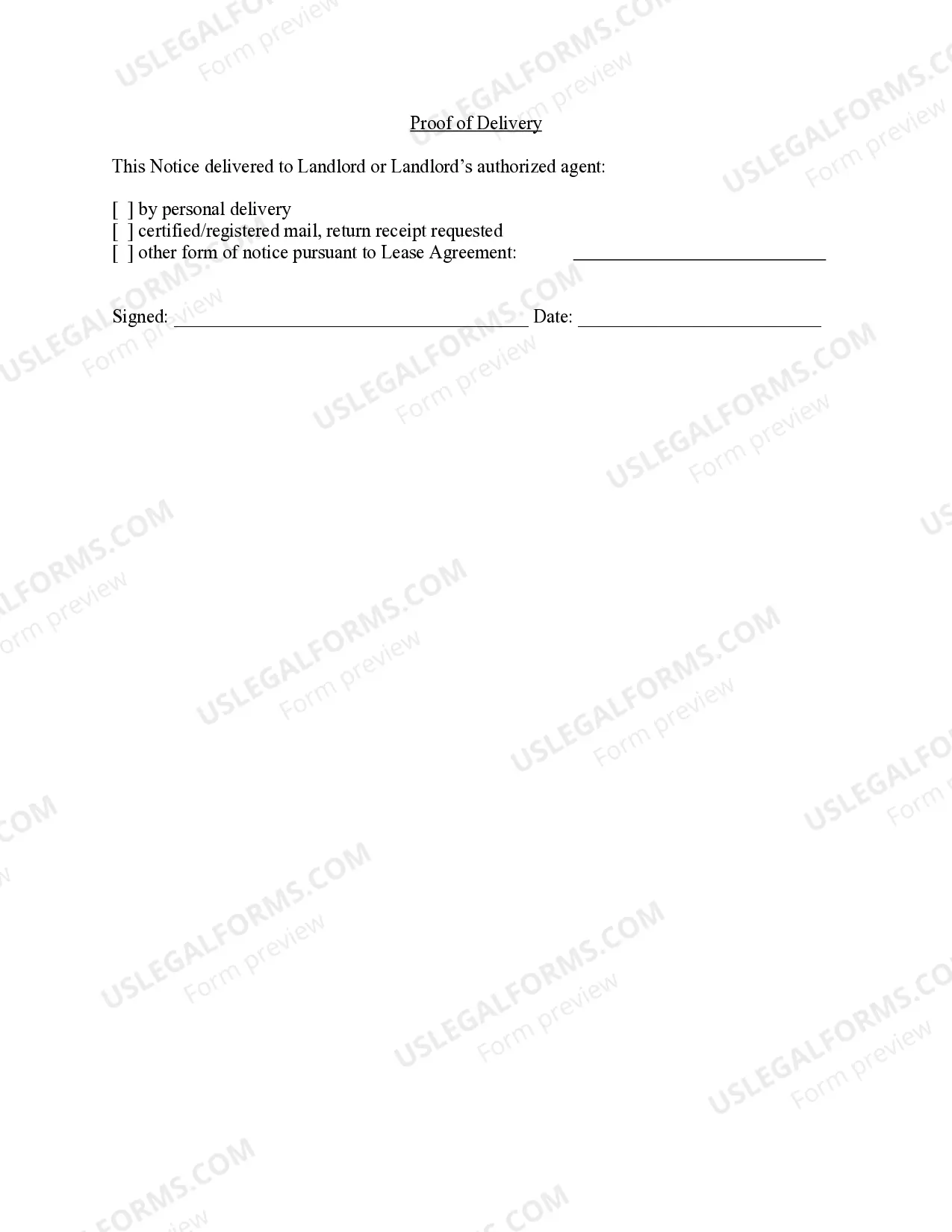
- Proof of delivery section to confirm receipt of the notice


When this form is needed
This form should be used when a tenant has identified serious deficiencies in the rental property that violate building codes or make the premises unsafe for habitation. Common scenarios include issues like broken windows, leaking roofs, or mold that can harm tenant health. Utilizing this letter alerts the landlord of required repairs and establishes a record of communication.
Intended users of this form
This form is intended for:
- Tenants experiencing unsafe living conditions
- Individuals who rent residential properties
- People seeking to formally notify their landlord of health code violations
Completing this form step by step
Steps to complete this form:
- Fill in the names and addresses of both the tenant and the landlord.
- Clearly describe the unsafe and unhealthy conditions that need addressing.
- Specify the repairs required to bring the property up to code.
- Indicate the ten-day timeframe for the landlord to respond.
- Sign and date the form, providing proof of delivery to the landlord or their agent.
Notarization guidance
This form does not typically require notarization unless specified by local law. However, having a notarized document can provide additional legal credibility if disputes arise.
Get your form ready online
Our built-in tools help you complete, sign, share, and store your documents in one place.
Make edits, fill in missing information, and update formatting in US Legal Forms—just like you would in MS Word.
Download a copy, print it, send it by email, or mail it via USPS—whatever works best for your next step.
Sign and collect signatures with our SignNow integration. Send to multiple recipients, set reminders, and more. Go Premium to unlock E-Sign.
If this form requires notarization, complete it online through a secure video call—no need to meet a notary in person or wait for an appointment.
We protect your documents and personal data by following strict security and privacy standards.

Make edits, fill in missing information, and update formatting in US Legal Forms—just like you would in MS Word.

Download a copy, print it, send it by email, or mail it via USPS—whatever works best for your next step.

Sign and collect signatures with our SignNow integration. Send to multiple recipients, set reminders, and more. Go Premium to unlock E-Sign.

If this form requires notarization, complete it online through a secure video call—no need to meet a notary in person or wait for an appointment.

We protect your documents and personal data by following strict security and privacy standards.
Mistakes to watch out for
Common mistakes
- Failing to provide a clear description of the conditions.
- Not specifying a reasonable timeframe for repairs.
- Neglecting to keep a copy of the letter for personal records.
- Sending the letter without confirmation of delivery.
Why complete this form online
Benefits of using this form online
- Easy to customize for your specific situation.
- Quick delivery options, ensuring timely communication with landlords.
- Access to legal templates prepared by licensed attorneys for reliability.
Legal use & context
- The letter serves as a formal notice, creating a record of the tenant's requests.
- Using this form can be a prerequisite to taking further legal action if the landlord does not respond adequately.
- Tenants should be aware that laws regarding landlord-tenant relationships can vary significantly by state.
Summary of main points
Key takeaways
- The form is essential for tenants addressing serious repair issues.
- It demands action from landlords to ensure safety and compliance with building codes.
- Properly completing this form can help protect tenant rights and health.
Looking for another form?







Form popularity
FAQ
Explain that you are making a complaint. Relate what the complaint is actually about and make sure to include the specific details about the complaint, especially an account of the event. Inform the management of what you wish to be done regarding the complaint that you are making. End on a positive tone.
You can make a formal complaint by writing a letter to your landlord. Explain your problem and what you want them to do to solve it. Tell them what rights you have and what you think they should have done. Talk to an adviser at your nearest Citizens Advice to find out what rights you have.
To give you an idea, it's in good taste to start your letter "Dear Mr./Ms. Insert Name Here," as is the case with any polite letter. No matter how much you might want to give your landlord a piece of your mind, do yourself a favor and refrain from calling him a slumlord.
Dear (Name of landlord or manager), I am writing to request repairs to the (appliance, heating/air conditioning, plumbing issue be specific!) due to (reason for repair; this could include things such as broken handle, leaky sink hose, even normal wear-and-tear that would necessitate replacement).
Sample Noise Complaint Letter Dear Landlord/Manager's Name, I am writing to formally request your help in dealing with an ongoing issue with my neighbor. I have lived in your apartment number or address for the last three years and have greatly enjoyed my experience in this building.
Any time you write a letter or email to your landlord, keep your language clear and concise to eliminate any potential for confusion. Include relevant details such as the date of writing, the dates of any instances referenced within the letter, and your contact information and unit number.
"Normal wear and tear" means deterioration that results from the intended use of a dwelling, including, for the purposes of Subchapters B and D, breakage or malfunction due to age or deteriorated condition, but the term does not include deterioration that results from negligence, carelessness, accident, or abuse of the
Your rights as a tenant include the right to "quiet enjoyment," a legal term. This means your landlord cannot evict you without cause or otherwise disturb your right to live in peace and quiet. If other tenants in your building are disturbing you, you should complain to the landlord.
Be professional. Use professional letterhead and be sure to sign in ink. Express your dissatisfaction clearly, with facts, dates, and details (including copies of receipts and so on) to help substantiate your claim. Be sincere. Be prompt. Don't expect compensation every time.