Sample Letter for Sample Letters Testamentary
About this form
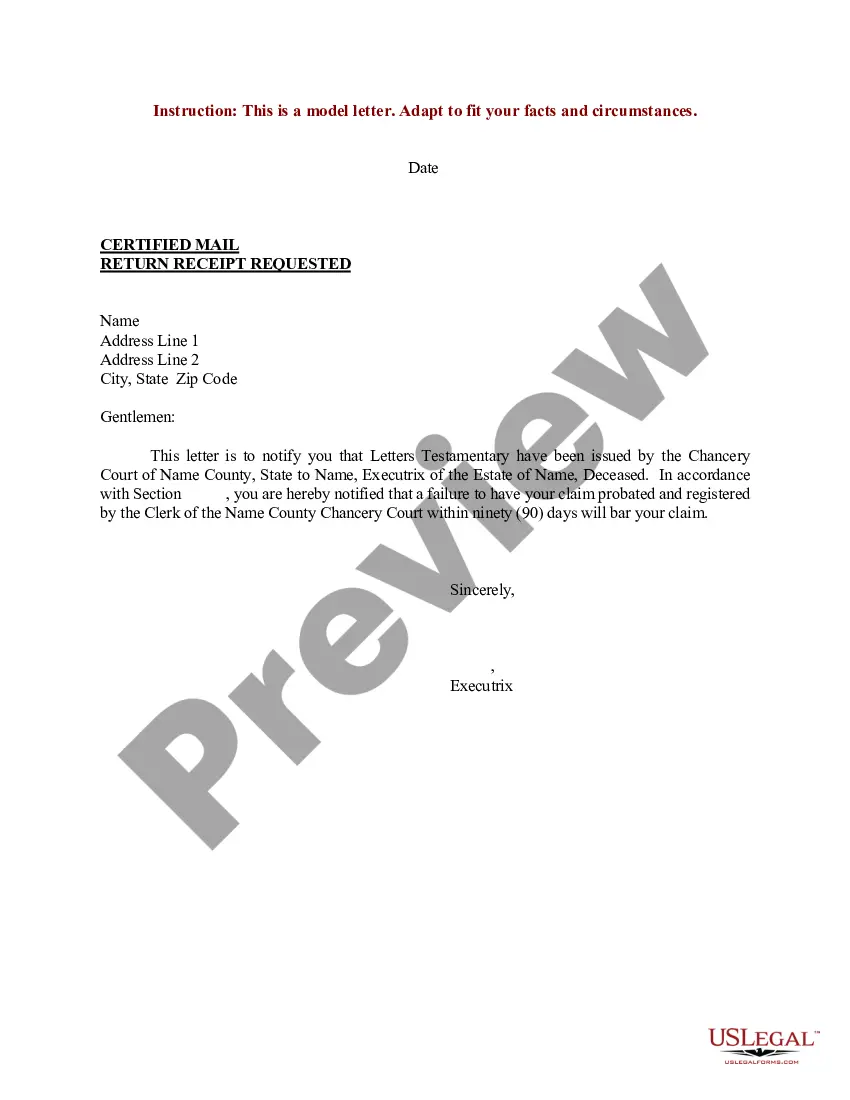
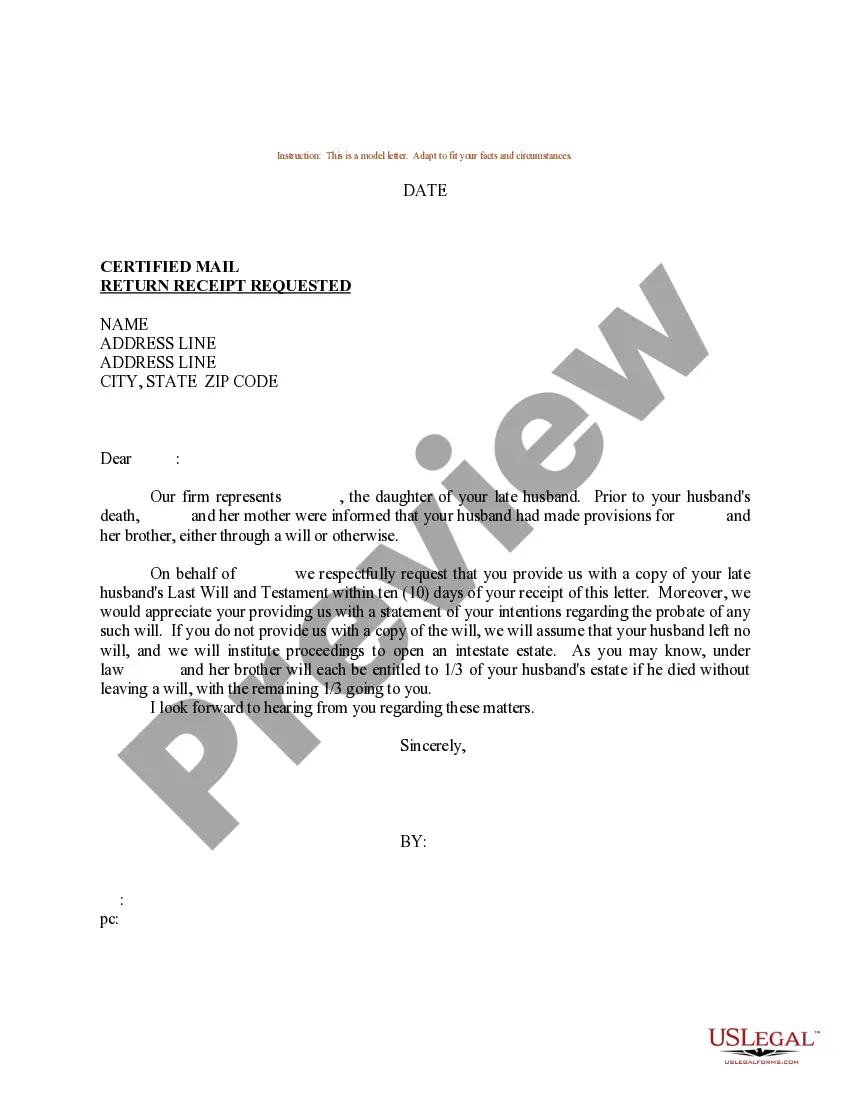
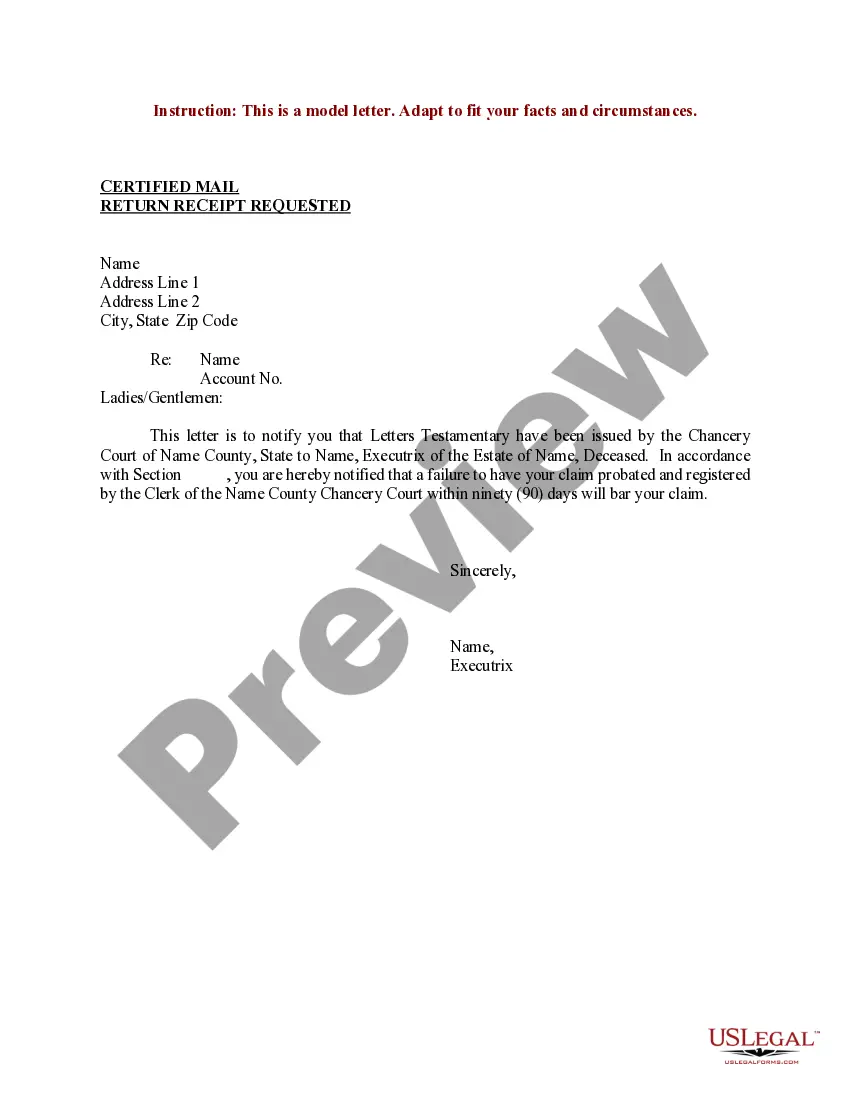
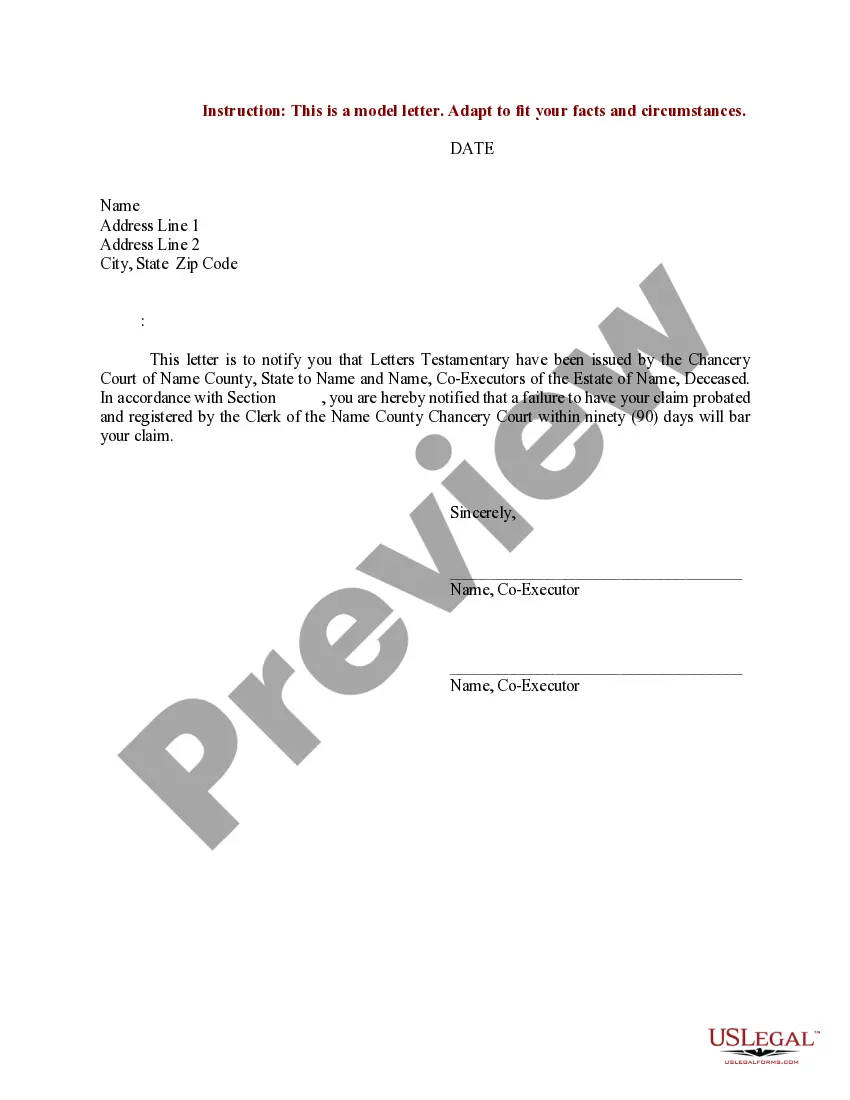
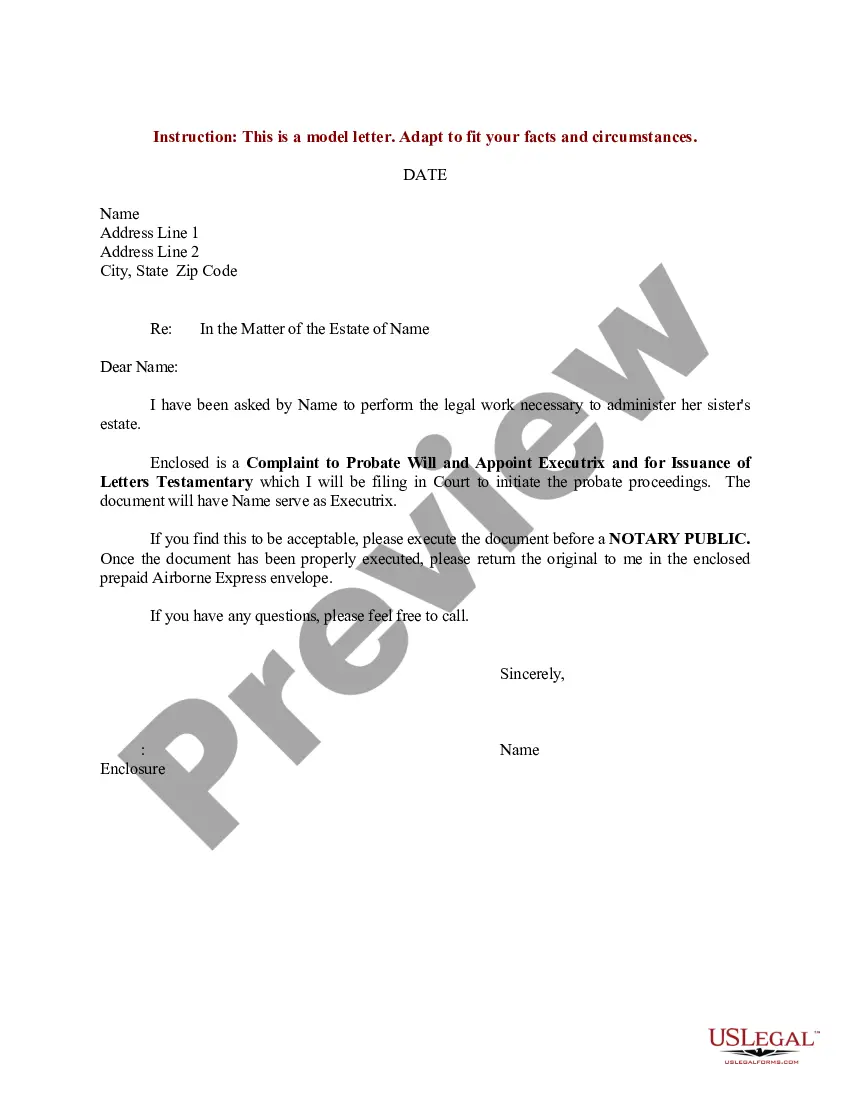
The Sample Letter for Sample Letters Testamentary is a legal document that serves as a template for individuals who need to communicate important information about a deceased person's estate. This form allows the executor or administrator to notify relevant parties about their appointment and the authority they hold regarding the estate. Unlike other probate documents, this letter specifically focuses on testamentary letters, which grant the executor the right to manage the estate according to the wishes outlined in the deceased's will.
Form components explained
- Date of the letter
- Recipient's name and address
- Clear statement of appointment as executor or administrator
- Reference to the deceased's will
- Signature line for the executor
Situations where this form applies
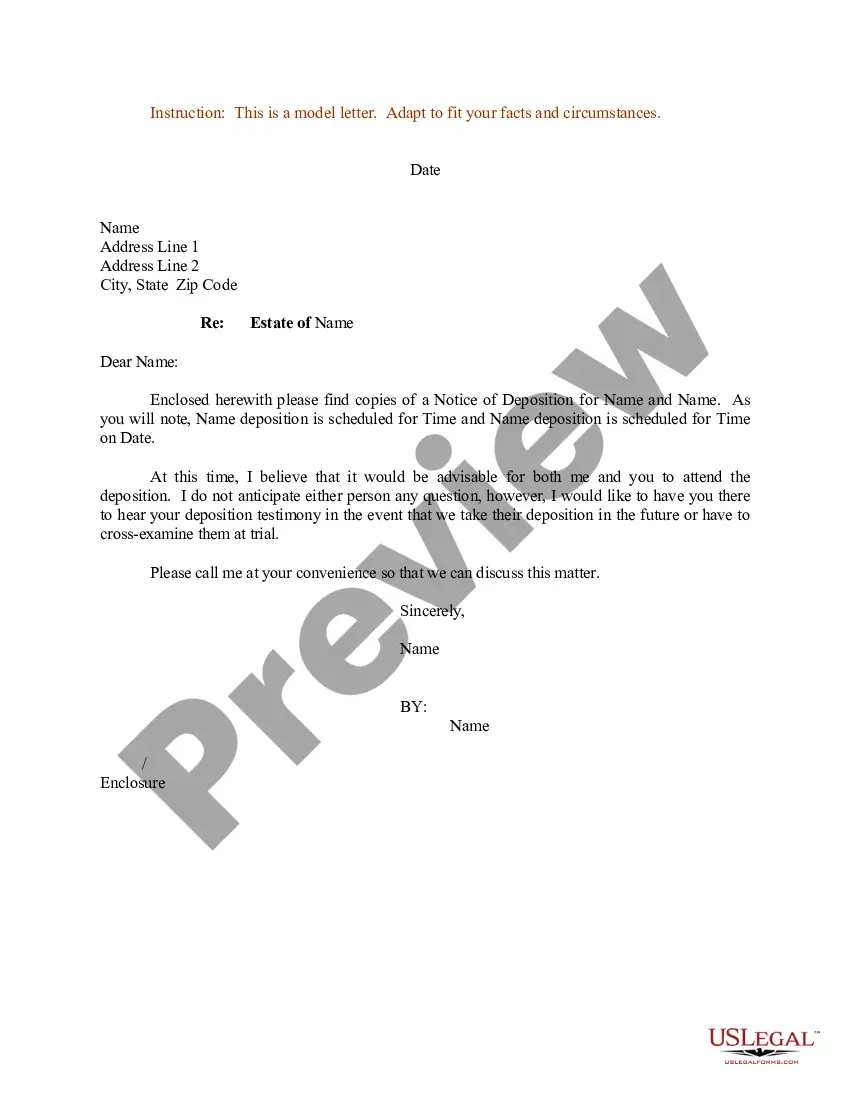
This form is used in situations where an executor or administrator needs to formally notify a third party, such as a bank or government agency, of their role in managing the estate of a deceased person. It is particularly useful when dealing with institutions that require proof of the executor's authority before they can release assets or information related to the estate.
Intended users of this form
- Executors of a deceased person's estate
- Administrators appointed when there is no will
- Lawyers assisting clients with estate management
Completing this form step by step
- Enter the date at the top of the letter.
- Fill in the recipient's name and address.
- Clearly state your appointment as the executor or administrator.
- Reference the deceased's will where applicable.
- Sign the letter to validate it.
Notarization guidance
Notarization is not commonly needed for this form. However, certain documents or local rules may make it necessary. Our notarization service, powered by Notarize, allows you to finalize it securely online anytime, day or night.
Get your form ready online
Our built-in tools help you complete, sign, share, and store your documents in one place.
Make edits, fill in missing information, and update formatting in US Legal Forms—just like you would in MS Word.
Download a copy, print it, send it by email, or mail it via USPS—whatever works best for your next step.
Sign and collect signatures with our SignNow integration. Send to multiple recipients, set reminders, and more. Go Premium to unlock E-Sign.
If this form requires notarization, complete it online through a secure video call—no need to meet a notary in person or wait for an appointment.
We protect your documents and personal data by following strict security and privacy standards.

Make edits, fill in missing information, and update formatting in US Legal Forms—just like you would in MS Word.

Download a copy, print it, send it by email, or mail it via USPS—whatever works best for your next step.

Sign and collect signatures with our SignNow integration. Send to multiple recipients, set reminders, and more. Go Premium to unlock E-Sign.

If this form requires notarization, complete it online through a secure video call—no need to meet a notary in person or wait for an appointment.

We protect your documents and personal data by following strict security and privacy standards.
Avoid these common issues
- Failing to include the date of the letter.
- Incorrectly addressing the recipient.
- Not clearly stating your authority as executor or administrator.
Benefits of using this form online
- Instant access to a professionally drafted legal template.
- Easy to fill out and customize to your specific situation.
- Downloadable in Word format for convenience and editing.
Legal use & context
This letter serves as a formal notification concerning the authority granted to the executor or administrator. Its legal context ensures that all interested parties are informed, which is essential for the proper administration of the estate.
What to keep in mind
- Utilize this form to formally communicate the issuance of letters testamentary.
- Ensure accurate details to avoid misunderstandings among beneficiaries.
- Check local regulations for any additional requirements related to your state.
Looking for another form?


Form popularity
FAQ
Sample Letter for Sample Letters Testamentary is a fill-in template used to notify banks, agencies, and other parties that an executor or administrator has been appointed to handle the deceased’s estate. It confirms the executor’s authority under the will and identifies the deceased and the will. The form includes the date, recipient name/address, an appointment statement, the will reference, and a signature line.
A Letter of Testamentary is used to prove the executor or administrator’s authority to manage the estate and interact with banks, government agencies, and other institutions. This template facilitates conveying appointment and authority, references the will, and helps institutions recognize who is in charge of the estate and what duties they may perform.
The letter states who is appointed as executor or administrator and that they have the authority to manage the estate in accordance with the deceased’s will. It references the will itself and provides the date, recipient, appointment statement, and signature line so third parties can verify the administrator’s role and actions.
The form itself does not specify a required number of copies. It is a fill-in template that can be shared with institutions requesting proof of authority. In practice, you may provide multiple copies to banks, government agencies, and service providers, while keeping an original for your records. Verify requirements with each recipient.
An executor or administrator has the authority to manage the estate and perform duties under the will or probate process. Beneficiaries have rights to assets when distributed but do not have authority to administer the estate. The template is designed to prove the executor’s authority to third parties.
This form is a fill-in template designed to notify third parties of appointment and authority, with five core components listed in the form: date, recipient, appointment statement, reference to the will, and a signature line. It is geared for multi-state use, making it a practical, ready-to-fill sample versus more generic templates.