Shoring Services Contract - Self-Employed
What this document covers
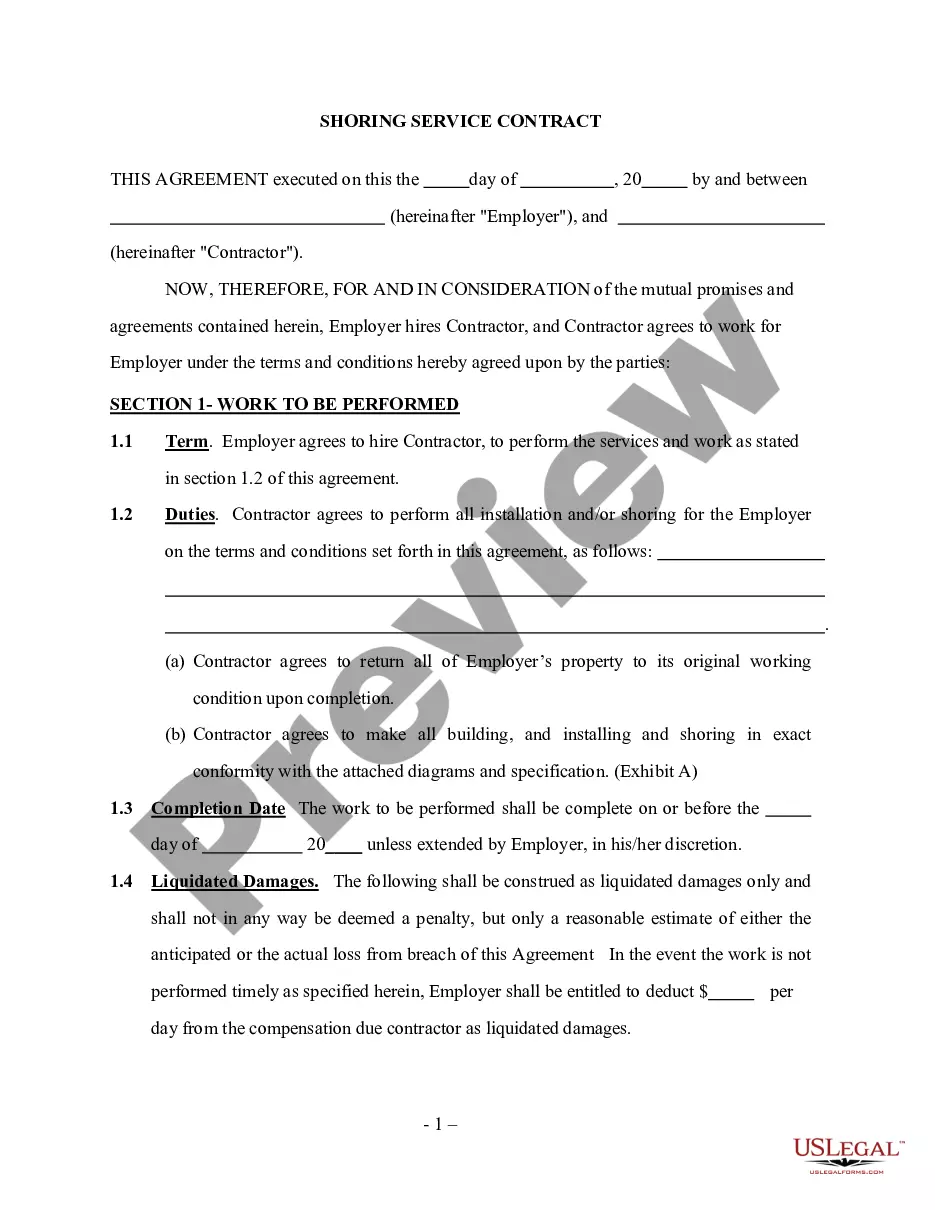
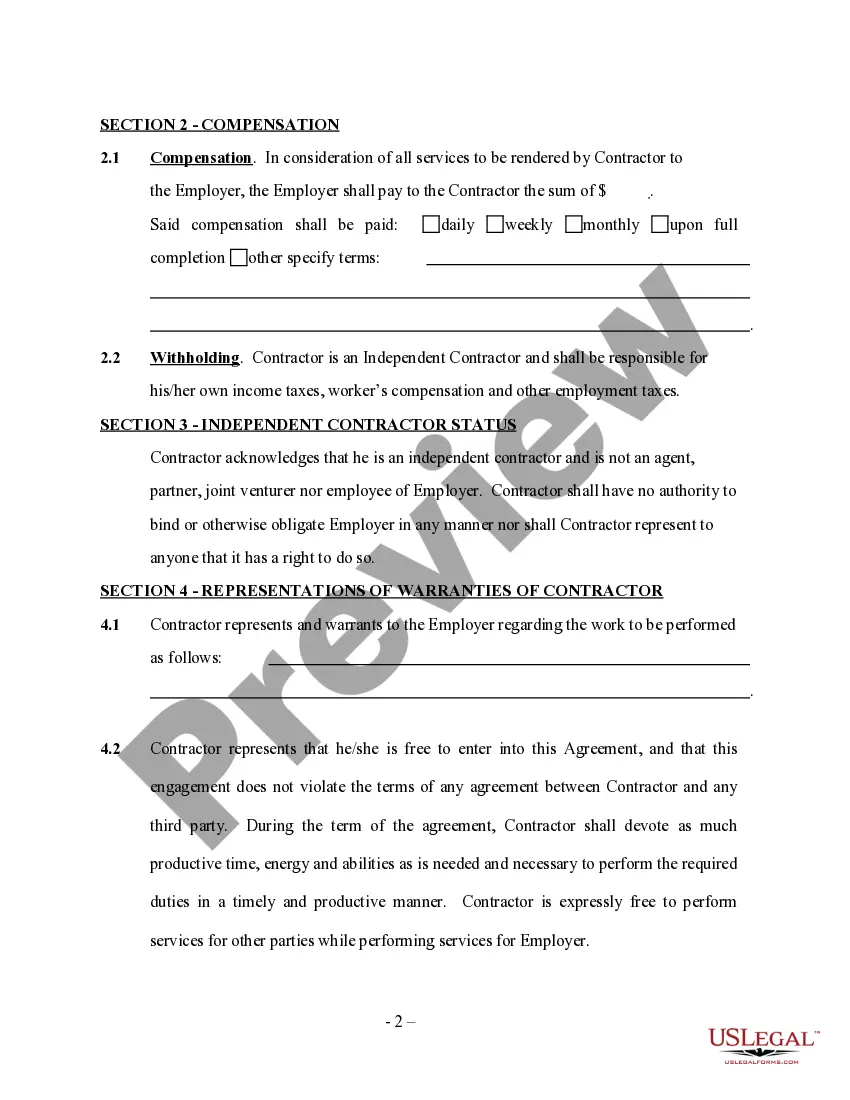
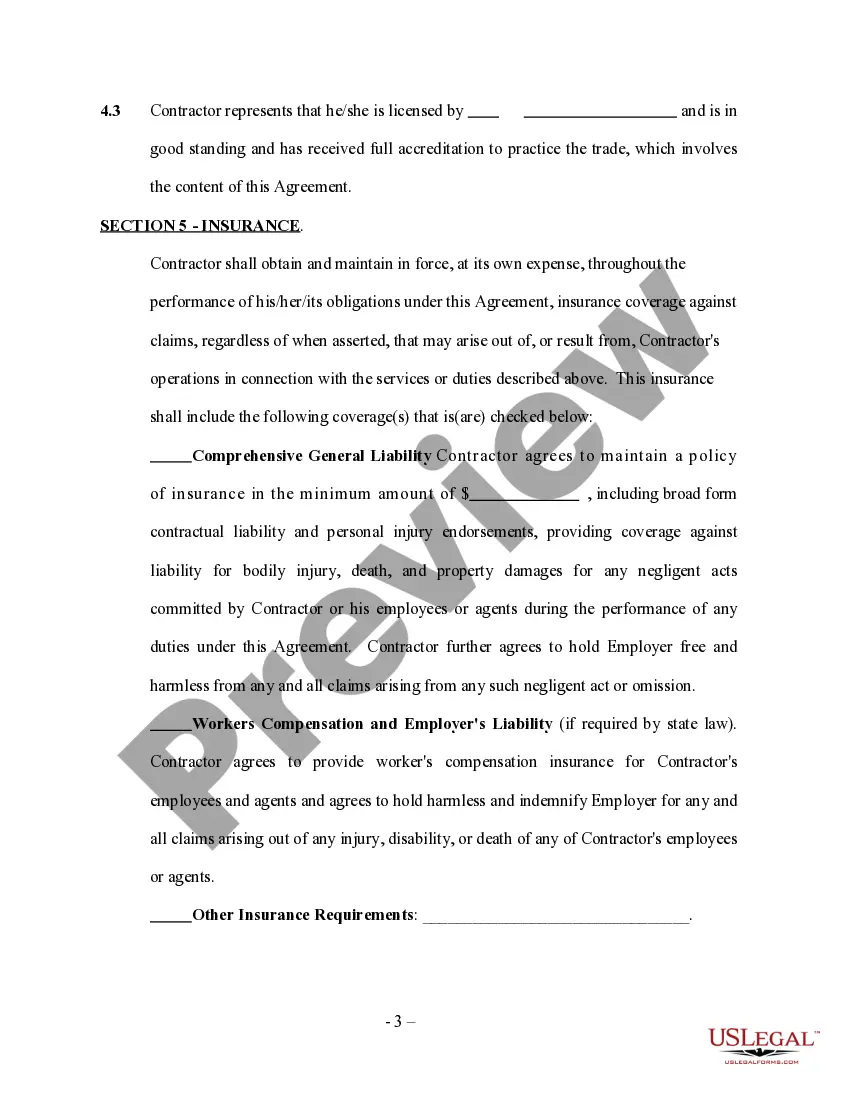
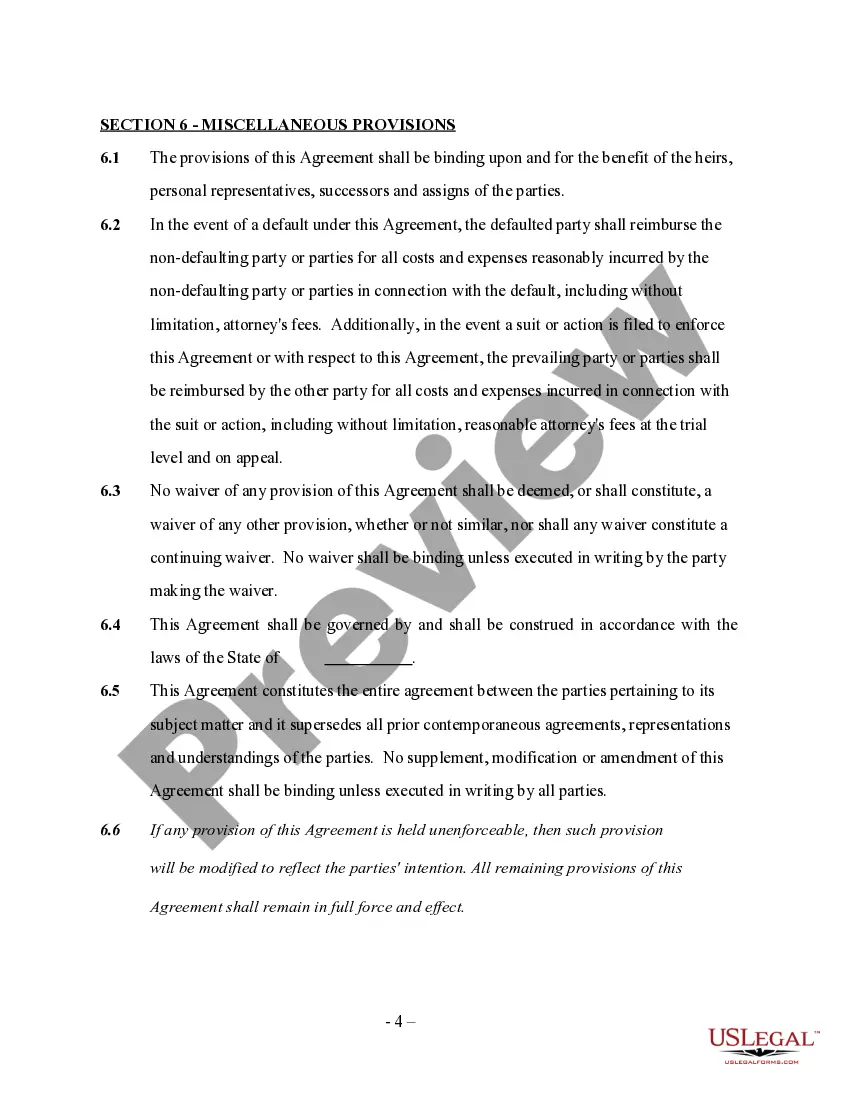
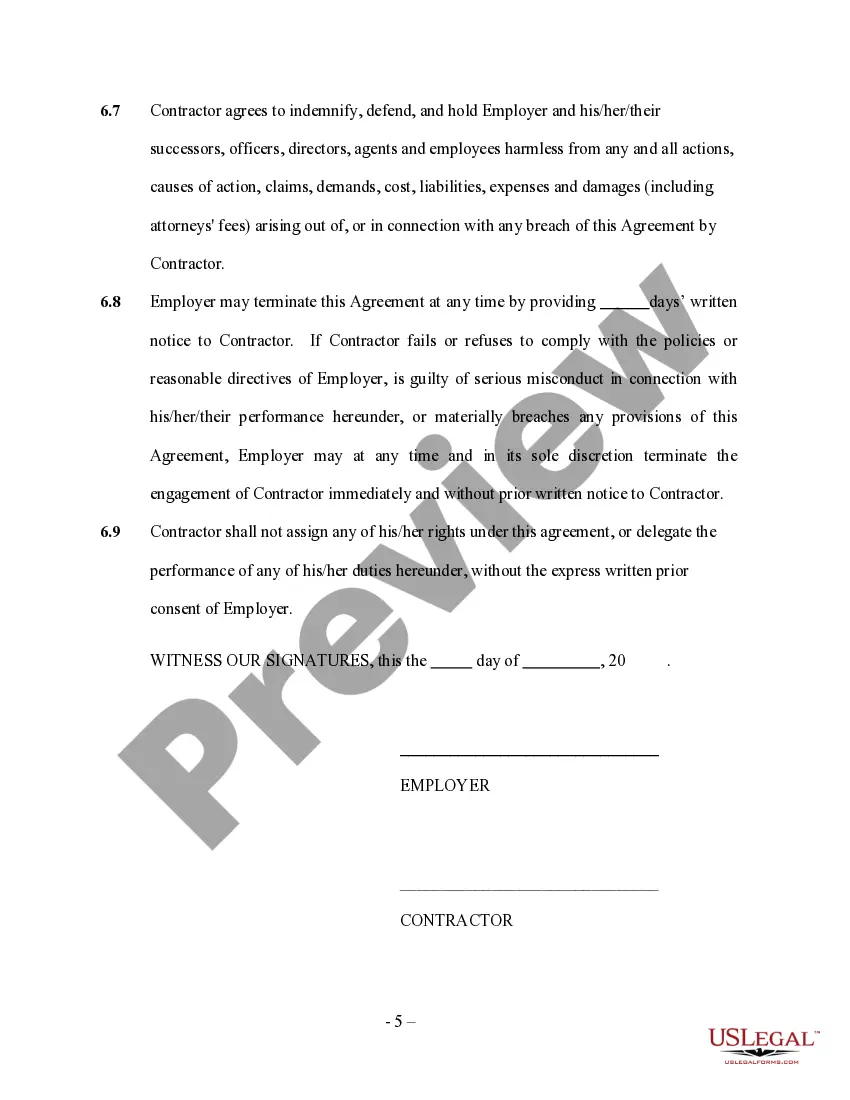
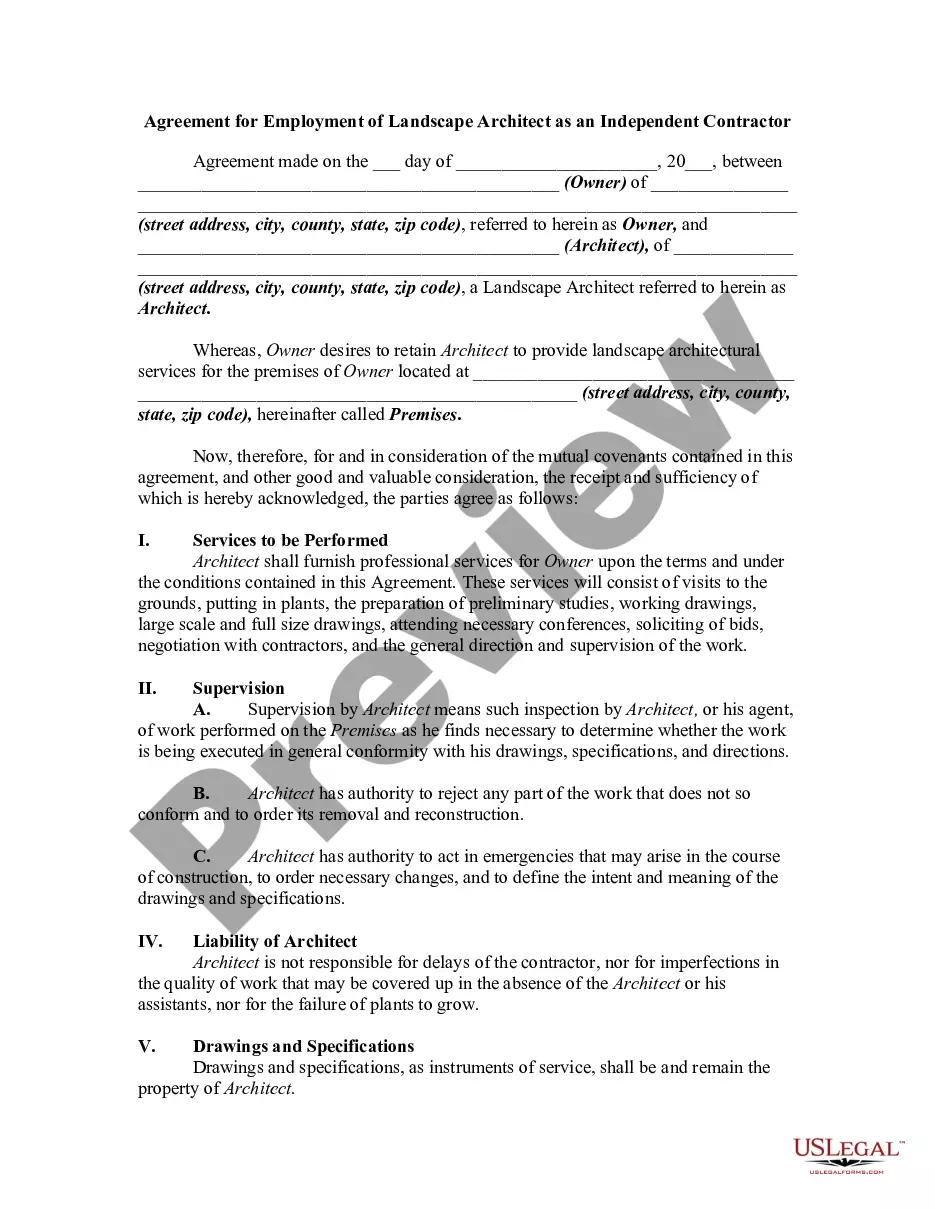
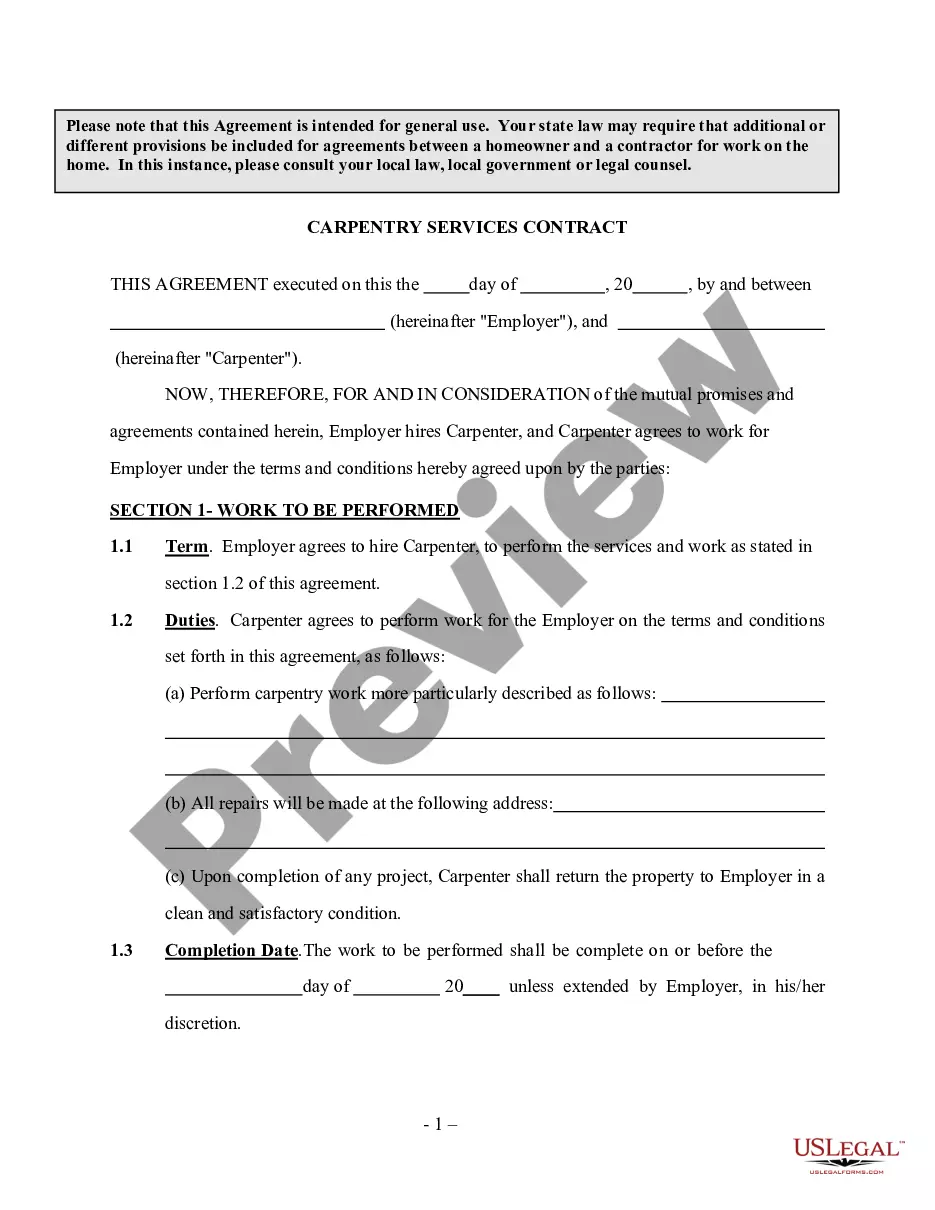
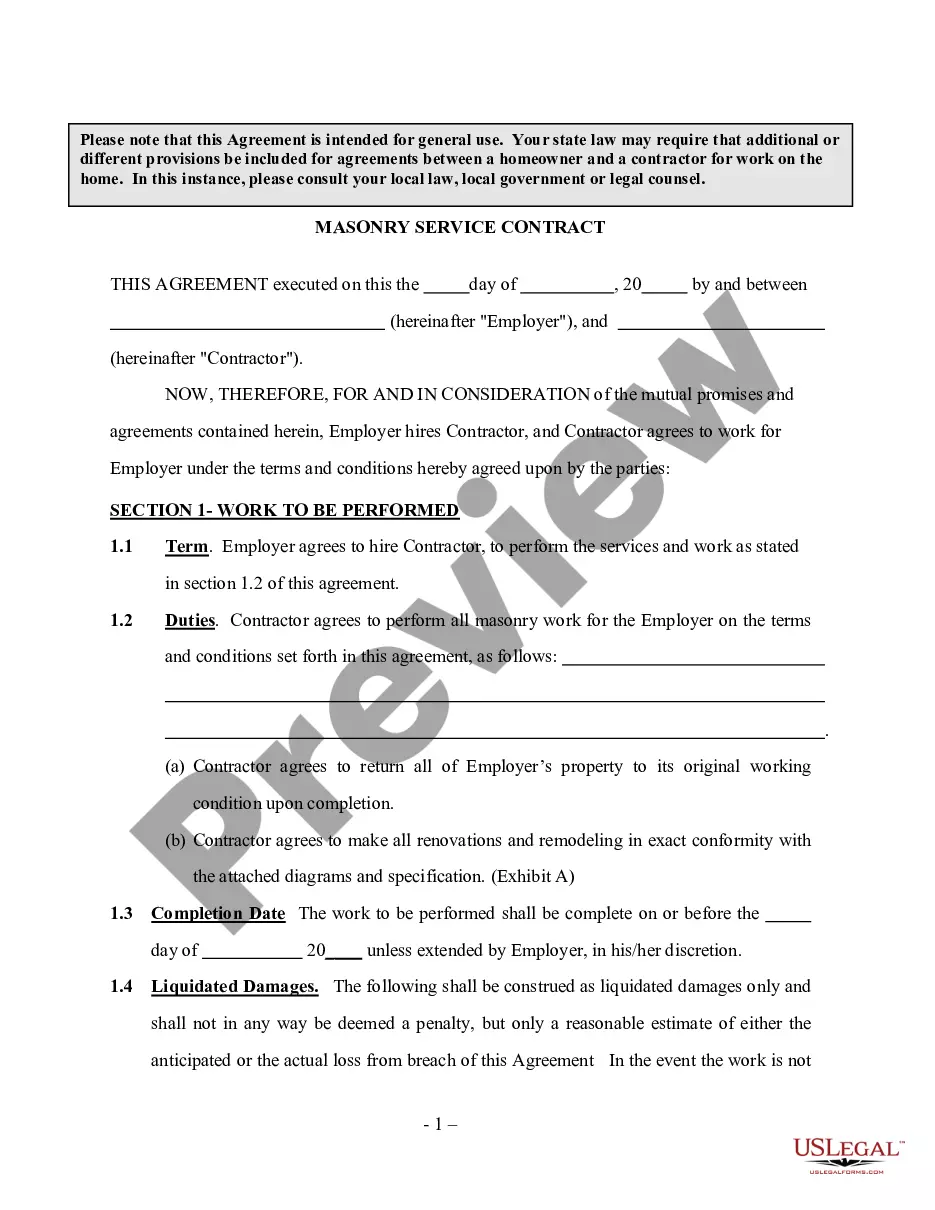
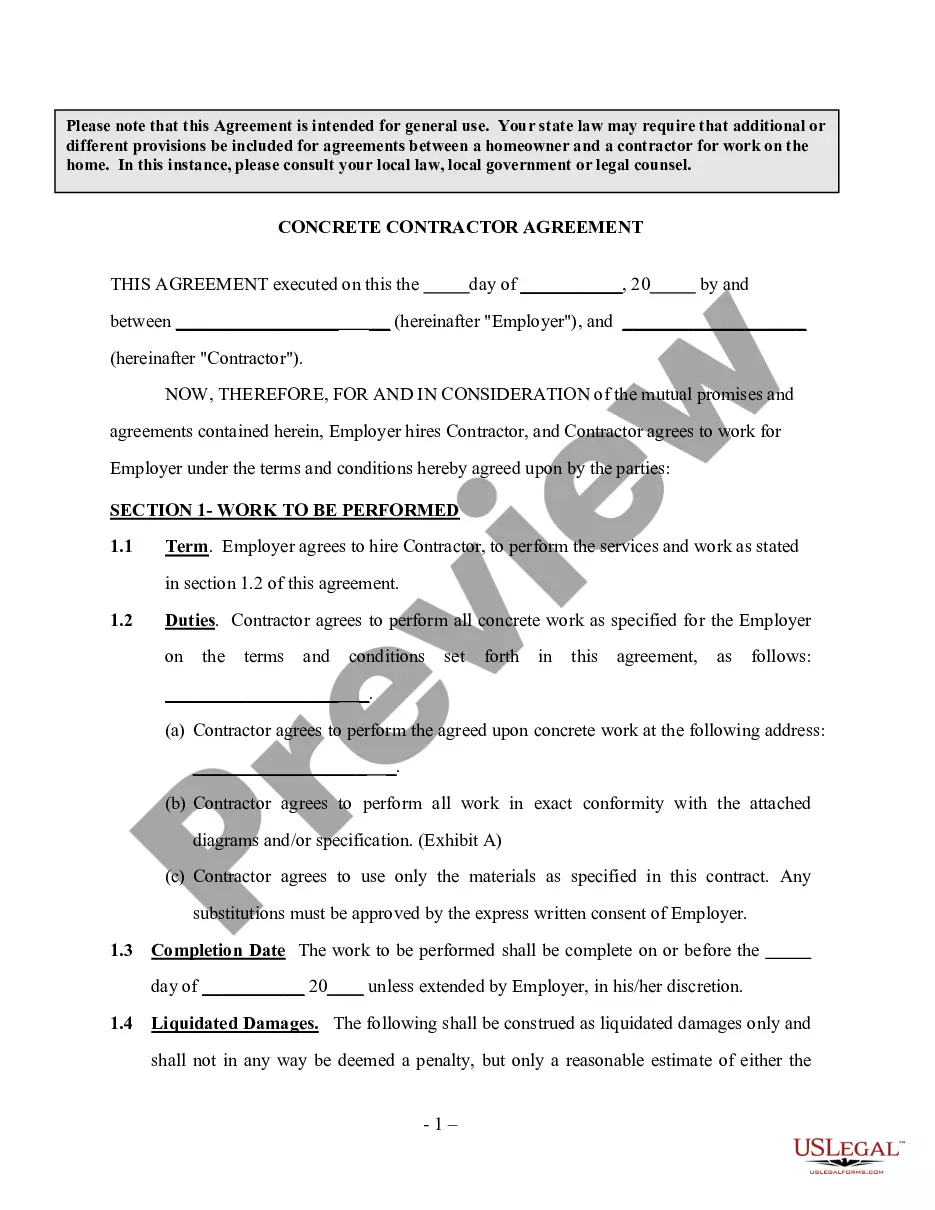
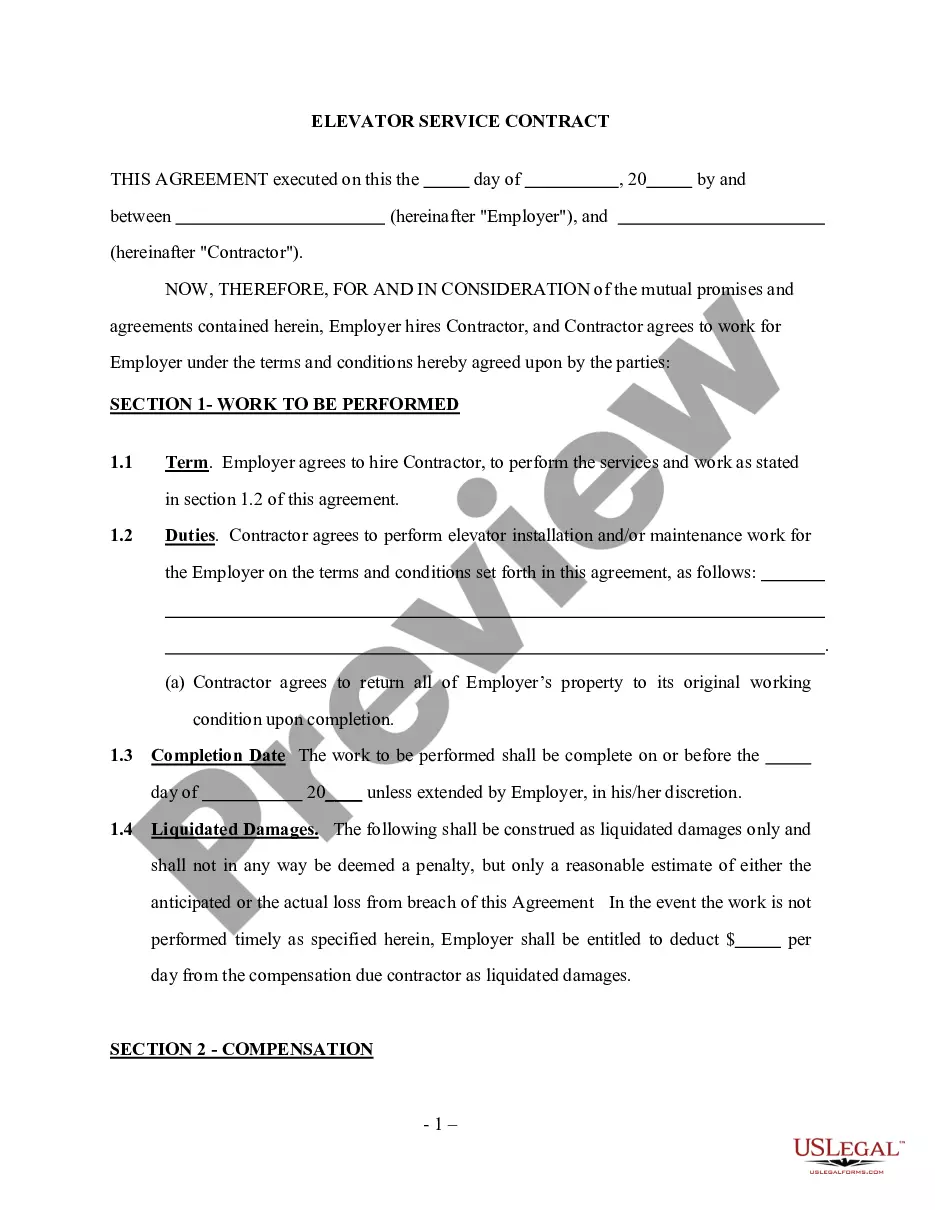
The Shoring Services Contract - Self-Employed is a legal agreement between an employer and an independent contractor for the provision of shoring services. This form outlines the specific work to be performed and establishes the contractor's independent status, distinguishing it from employment contracts or agreements involving employee benefits. It is essential for setting clear expectations and terms of service for both parties.
Key parts of this document
- Work Description: Details the specific shoring services to be performed by the contractor.
- Term of Contract: Specifies the duration for which the contractor is hired.
- Independent Contractor Status: Clarifies the contractor's status as an independent entity without any binding authority over the employer.
When to use this document
The Shoring Services Contract should be used when an employer seeks the services of an independent contractor for shoring projects. It is appropriate in situations such as construction sites where temporary support structures are needed. This form is also ideal when both parties prefer to outline work parameters, payment terms, and responsibilities in a formal agreement to prevent potential disputes.
Who should use this form
- Employers seeking to hire independent contractors for shoring services.
- Independent contractors offering shoring services who need a formal agreement.
- Parties involved in construction or related fields requiring specialized support services.
How to complete this form
- Identify the parties involved: enter the names and contact information of both the employer and the contractor.
- Specify the work to be performed: outline the exact shoring services the contractor will provide.
- Enter the term of the contract: determine and record the duration for the services.
- Review and ensure that the independent contractor status clause is included and understood by both parties.
- Collect signatures: both the employer and the contractor should sign and date the contract to finalize it.
Notarization requirements for this form
This form does not typically require notarization unless specified by local law. It is advisable to check any additional requirements for your state to ensure the agreement is enforceable.
Get your form ready online
Our built-in tools help you complete, sign, share, and store your documents in one place.
Make edits, fill in missing information, and update formatting in US Legal Forms—just like you would in MS Word.
Download a copy, print it, send it by email, or mail it via USPS—whatever works best for your next step.
Sign and collect signatures with our SignNow integration. Send to multiple recipients, set reminders, and more. Go Premium to unlock E-Sign.
If this form requires notarization, complete it online through a secure video call—no need to meet a notary in person or wait for an appointment.
We protect your documents and personal data by following strict security and privacy standards.

Make edits, fill in missing information, and update formatting in US Legal Forms—just like you would in MS Word.

Download a copy, print it, send it by email, or mail it via USPS—whatever works best for your next step.

Sign and collect signatures with our SignNow integration. Send to multiple recipients, set reminders, and more. Go Premium to unlock E-Sign.

If this form requires notarization, complete it online through a secure video call—no need to meet a notary in person or wait for an appointment.

We protect your documents and personal data by following strict security and privacy standards.
Common mistakes
- Failing to specify the scope of work, leading to misunderstandings.
- Not clarifying the duration of the contract, which can create confusion about deadlines.
- Misunderstanding the independent contractor status, potentially resulting in legal complications.
Benefits of using this form online
- Convenient access: easily download and complete the contract at your convenience.
- Editable templates: modify the form to suit specific service agreements.
- Reliability: crafted by licensed attorneys to ensure legal validity.
Looking for another form?


Form popularity
FAQ
The IRS requires contractors to fill out a Form W-9, request for Taxpayer Identification Number and Certification, which you should keep on file for at least four years after the hiring. This form is used to request the correct name and Taxpayer Identification Number, or TIN, of the worker or their entity.
Protect your social security number. Have a clearly defined scope of work and contract in place with clients. Get general/professional liability insurance. Consider incorporating or creating a limited liability company (LLC).
The law does not require you to complete a contract with your self-employed or freelance workers - a verbal contract can exist even when there is nothing in writing.
Terms. This is the first section of any agreement or contract and states the names and locations of the parties involved. Responsibilities & Deliverables. Payment-Related Details. Confidentiality Clause. Contract Termination. Choice of Law.
This is where it gets tricky, in almost all cases, an independent contractor is self-employed, but not everyone who is self-employed is an independent contractor.Since independent contractors are not employees the contractor is responsible for paying employment taxes, income taxes, social security, and insurance.
People who work for themselves or who own their own company are sometimes alternately referred to as self-employed or independent contractors, though there is a difference between the two. In general, all independent contractors are self-employed, but not all self-employed people are independent contractors.
For most types of projects you hire an independent contractor (IC) to do, the law does not require you to put anything in writing. You can meet with the IC, agree on the terms of your arrangement, and have an oral contract or agreement that is legally binding. Just because you can doesn't mean you should, however.
Terms. This is the first section of any agreement or contract and states the names and locations of the parties involved. Responsibilities & Deliverables. Payment-Related Details. Confidentiality Clause. Contract Termination. Choice of Law.
A self employed person will not usually have a contract of employment; they will usually be hired for a certain amount of time. The contract that exists between the self employed person and the person or company supplying the work will have a number of rules or conditions set down within it.