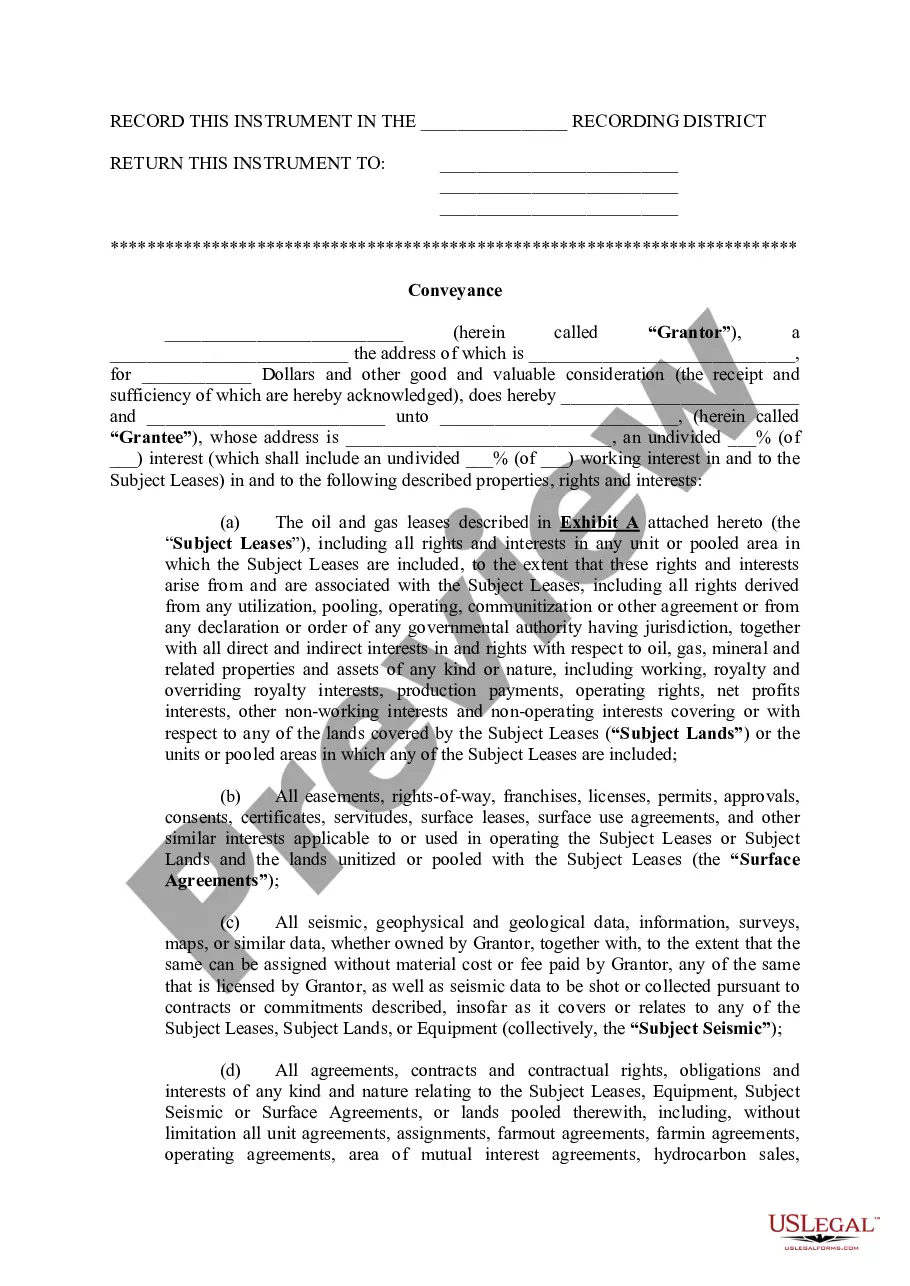
E-Commerce General Bid Proposal Form
What this document covers
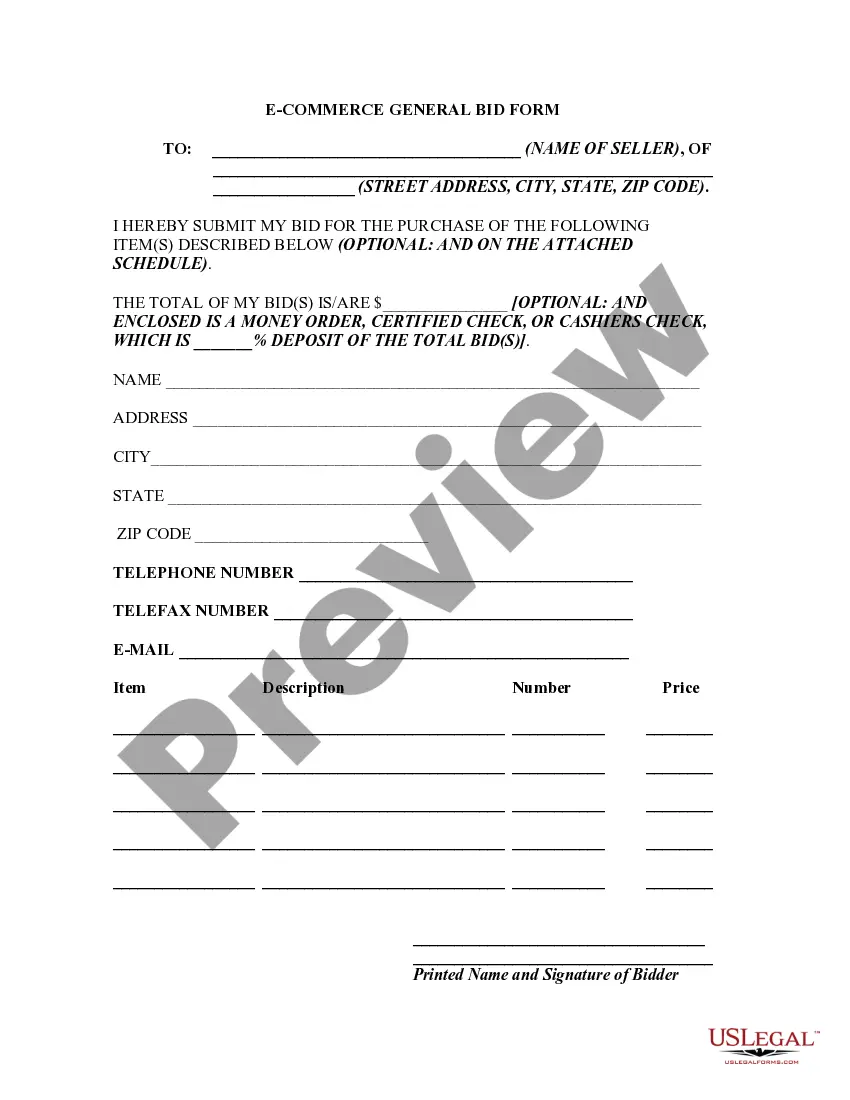
The E-Commerce General Bid Proposal Form is a critical document used in online transactions where a buyer submits a bid for goods or services. This form formalizes the offer and acceptance process, distinguishing it from other purchasing agreements by specifically focusing on bid submissions in an e-commerce context.
What’s included in this form
- Identification of the seller, including name and address
- Specification of items being bid on, including descriptions and prices
- Bid total and required deposit amount
- Contact information of the bidder
- Signature and printed name of the bidder


Situations where this form applies
This form should be used when you want to submit a bid for the purchase of goods sold online. It is particularly useful in situations where multiple bids may be received, such as auctions or competitive bidding platforms. By using this form, both parties can clearly understand the terms of the bid and facilitate a smoother transaction.
Who should use this form
- Buyers interested in purchasing goods through an online bidding process
- Businesses and individuals looking to formalize their bid submissions
- Sellers accepting bids for their e-commerce offerings
How to prepare this document
- Identify and fill in the name and address of the seller.
- List the items you wish to bid on, including descriptions and respective prices.
- Calculate the total bid amount and indicate any deposit enclosed (if applicable).
- Provide your contact details, including address, telephone number, and email.
- Sign and print your name at the designated section at the bottom of the form.
Notarization guidance
This form usually doesn’t need to be notarized. However, local laws or specific transactions may require it. Our online notarization service, powered by Notarize, lets you complete it remotely through a secure video session, available 24/7.
Get your form ready online
Our built-in tools help you complete, sign, share, and store your documents in one place.
Make edits, fill in missing information, and update formatting in US Legal Forms—just like you would in MS Word.
Download a copy, print it, send it by email, or mail it via USPS—whatever works best for your next step.
Sign and collect signatures with our SignNow integration. Send to multiple recipients, set reminders, and more. Go Premium to unlock E-Sign.
If this form requires notarization, complete it online through a secure video call—no need to meet a notary in person or wait for an appointment.
We protect your documents and personal data by following strict security and privacy standards.

Make edits, fill in missing information, and update formatting in US Legal Forms—just like you would in MS Word.

Download a copy, print it, send it by email, or mail it via USPS—whatever works best for your next step.

Sign and collect signatures with our SignNow integration. Send to multiple recipients, set reminders, and more. Go Premium to unlock E-Sign.

If this form requires notarization, complete it online through a secure video call—no need to meet a notary in person or wait for an appointment.

We protect your documents and personal data by following strict security and privacy standards.
Typical mistakes to avoid
- Failing to include all required items and their descriptions in the bid submission.
- Not clearly stating the total bid amount or deposit amount.
- Omitting contact information, which may hinder communication.
- Forgetting to sign and print the name on the form.
Advantages of online completion
- Convenient access to the form from any location, allowing for easy submission.
- Editable templates enable buyers to customize their bids as necessary.
- Reliability of a professionally drafted document ensures compliance with legal standards.
Legal use & context
- This form serves as a formal offer for the purchase of goods, establishing clear terms between the buyer and seller.
- Ensure that the bid is submitted in the context of a competitive bidding environment for enforceability.
- Buyers should retain copies of their submissions for record-keeping and potential disputes.
Looking for another form?

Form popularity
FAQ
Cover letter. This is the short, introductory part of the proposal where you outline the project in general terms. Outline of the project. Goals and outcomes. Schedule and measurement. Budget. Organization information. Approval and payment options.
Get an in-depth understanding of the project. Research the client. Evaluate the competition. Consider offering an additional good or service. Include relevant information. Proofread your proposal.
Here's the general structure of a proposal: As you can see, a proposal generally consists of: Introduction: A brief overview of the problem, solution, costs, and benefits. Issue: The main definition of the issue, including subject, purpose, main argument, background information and importance.
Learning how to write a video proposal can help make yours a success. Write a three-sentence statement summarizing the central point of your video. Write a short paragraph about your intended audience. Future employees, a certain class of students, or a demographic audience, for example.
Focus on the prospect's objectives. Most salespeople write proposals that focus entirely on the deliverables they can offer to the prospect. Deliverables are not the key. Keep it short. Give three options. Make it a contract.
1 Planning: 2 Sketch your problem or point of improvement. 3 Sketch your proposed solution. 4 Define your reader. 5 Writing: 6 Draft the problem your idea will solve. 7 Include who the proposal will effect. 8 Draft the proposed solution to the problem.
Laying out your introduction. Presenting the problem being solved. Explaining your solution. Giving a project overview. Outlining your process. Explaining next steps. Delivering the cost. Tips and tricks for presenting your proposal.
Complete a buyer's persona. Conduct needs analysis. Focus on your objectives and timeline. Outline the proposal scope. Include cost figures.
Complete a buyer's persona. Conduct needs analysis. Focus on your objectives and timeline. Outline proposal scope. Include cost figures.