Arkansas Landlord Tenant Closing Statement to Reconcile Security Deposit
What is this form?
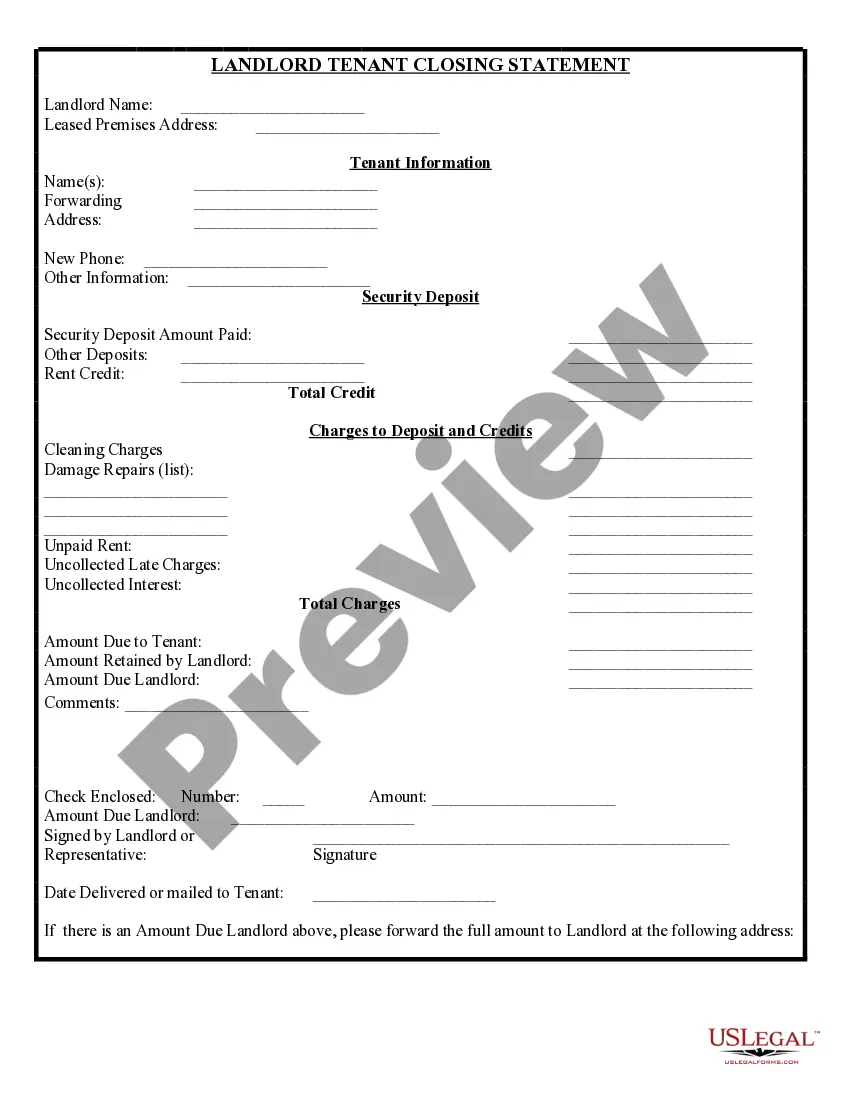
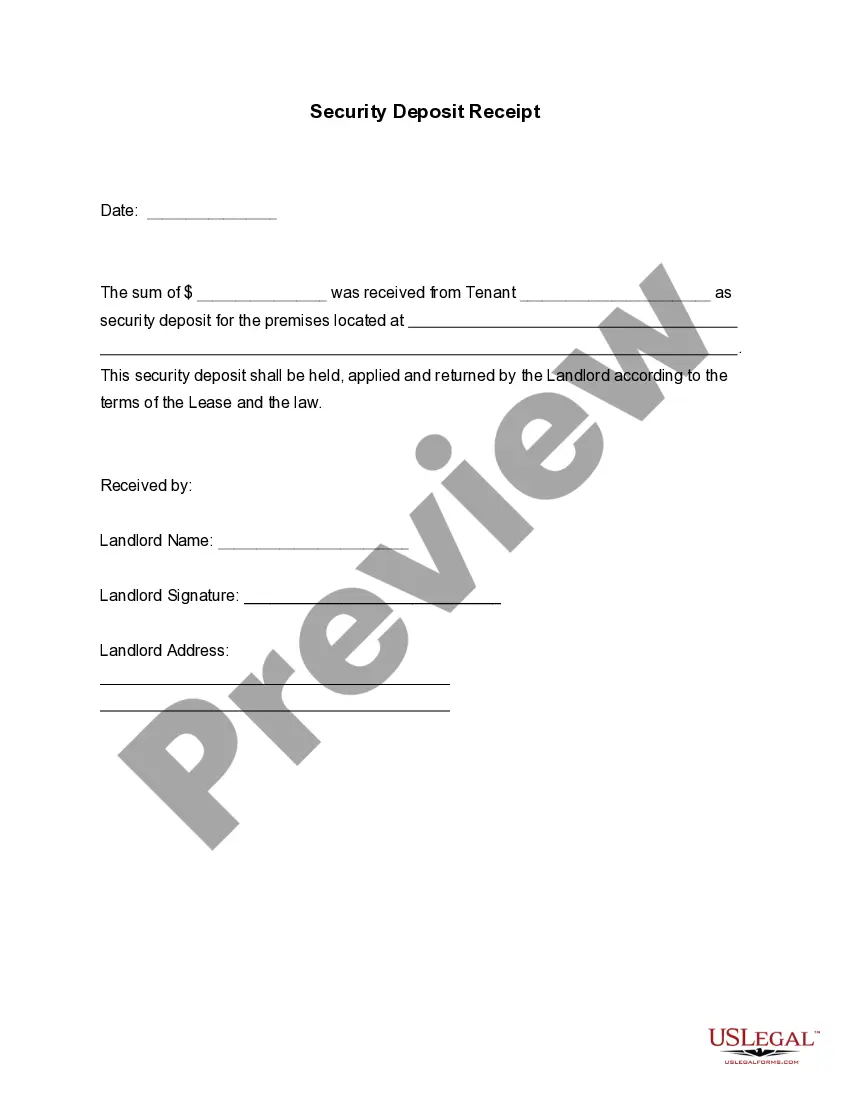
This Landlord Tenant Closing Statement to Reconcile Security Deposit is a legal document that allows landlords to detail the security deposits and credits they hold, as well as any deductions made from these funds. This form serves to clearly communicate to the tenant the total amount of the security deposit, any deductions for damages beyond normal wear and tear, and the remaining balance to be returned. It provides transparency and helps avoid disputes between landlords and tenants regarding the security deposit.
Key parts of this document
- Identification of parties involved: landlord and tenant details
- Summary of the security deposit amount held by the landlord
- List of deductions made from the security deposit
- Breakdown of any additional credits applied
- Total amount due to the tenant after deductions
Situations where this form applies
This form should be used when a tenant vacates a rental property and the landlord needs to provide a comprehensive accounting of the security deposit. It is essential to document any deductions for damages, repairs, or unpaid rent to ensure clarity for both parties and to comply with state laws regarding security deposits.
Who can use this document
- Landlords who are returning security deposits to tenants
- Tenants who wish to understand the deductions made from their security deposit
- Property managers handling rental agreements and security deposits
How to prepare this document
- Identify the parties involved: enter the landlord's and tenant's names and contact information.
- Specify the property: provide the address of the rental property.
- Enter the total amount of the security deposit held by the landlord.
- Itemize any deductions from the security deposit, detailing the reasons for each deduction.
- Calculate and enter the total amount due to the tenant after deductions.
- Have both parties sign to acknowledge the information provided in the statement.
Does this form need to be notarized?
This form does not typically require notarization unless specified by local law. However, it is advisable to confirm any specific requirements governing security deposits in your jurisdiction.
Get your form ready online
Our built-in tools help you complete, sign, share, and store your documents in one place.
Make edits, fill in missing information, and update formatting in US Legal Forms—just like you would in MS Word.
Download a copy, print it, send it by email, or mail it via USPS—whatever works best for your next step.
Sign and collect signatures with our SignNow integration. Send to multiple recipients, set reminders, and more. Go Premium to unlock E-Sign.
If this form requires notarization, complete it online through a secure video call—no need to meet a notary in person or wait for an appointment.
We protect your documents and personal data by following strict security and privacy standards.

Make edits, fill in missing information, and update formatting in US Legal Forms—just like you would in MS Word.

Download a copy, print it, send it by email, or mail it via USPS—whatever works best for your next step.

Sign and collect signatures with our SignNow integration. Send to multiple recipients, set reminders, and more. Go Premium to unlock E-Sign.

If this form requires notarization, complete it online through a secure video call—no need to meet a notary in person or wait for an appointment.

We protect your documents and personal data by following strict security and privacy standards.
Common mistakes
- Failing to itemize deductions clearly, leading to misunderstandings.
- Not providing the tenant with a copy of the completed statement.
- Missing to sign the document, which could render it unenforceable.
Benefits of completing this form online
- Convenience of downloading and filling out the form at any time.
- Editability allows for easy updates and customizations to meet specific needs.
- Reliable format ensures that all necessary information is included for legal compliance.
Quick recap
- The closing statement is essential for reconciling a tenant's security deposit at the end of a lease.
- It helps document and clarify any deductions made against the security deposit.
- Both landlords and tenants should ensure accurate and complete information is provided in the form.
- Understanding state-specific laws regarding security deposits is crucial for compliance.
Looking for another form?
Form popularity
FAQ
To craft a return request for your security deposit, start by identifying yourself and the rental property. Clearly detail your request for the deposit to be returned, and reference the Arkansas Landlord Tenant Closing Statement to Reconcile Security Deposit to highlight the reasoning behind your request. Ensure your tone remains polite, and convey a sense of urgency to encourage prompt action.
When writing a demand letter for the return of property, be specific about the items you seek to recover. Use a clear and concise format, listing the property, its condition, and any relevant agreements. Mention your rights under the Arkansas Landlord Tenant Closing Statement to Reconcile Security Deposit, which can serve to strengthen your case and prompt a swift response.
To write a letter requesting your deposit back, be polite but firm. Begin with your details and the property's information, then express your request clearly. Reference the Arkansas Landlord Tenant Closing Statement to Reconcile Security Deposit to reinforce the need for a timely return and outline any deductions if applicable, ensuring the letter is well-structured and respectful.
Writing a demand letter to your landlord for the return of a security deposit involves being clear and direct. Start by stating your name, address, and the property's address, followed by a formal request for the security deposit. Include a brief summary of your time as a tenant and mention the Arkansas Landlord Tenant Closing Statement to Reconcile Security Deposit, which may help clarify your position and expectations.
To send your security deposit back to a tenant, you should first assess any deductions you may need to make based on damages or unpaid rent. Next, prepare a detailed Arkansas Landlord Tenant Closing Statement to Reconcile Security Deposit that outlines the final calculations. Once that's complete, you can issue the deposit via check or electronic transfer, ensuring you comply with state laws regarding the timeline for returning the deposit.
When writing a demand letter for your security deposit return, make sure to include specific details such as your address, the rental period, and any discussions regarding the Arkansas Landlord Tenant Closing Statement to Reconcile Security Deposit. Clearly outline your expectations and any grounds for your claim. Remember, clarity helps in ensuring a smooth resolution.
To ask for your deposit back politely, consider sending a friendly message or letter to your landlord. Clearly express your request and include relevant details about the property and your lease. Highlight the Arkansas Landlord Tenant Closing Statement to Reconcile Security Deposit to help clarify your expectations and support your case.
In your email requesting your deposit back, start with a cordial greeting addressing your landlord. Clearly state your request, including the rental period and any pertinent information regarding the Arkansas Landlord Tenant Closing Statement to Reconcile Security Deposit. Finish by expressing appreciation for their attention to the matter, reinforcing a positive tone.
You can use a simple letter template to ask for your deposit back from your landlord. Begin with your name and contact information, followed by the landlord's details. State your request clearly and reference the Arkansas Landlord Tenant Closing Statement to Reconcile Security Deposit to ensure both parties can discuss any deductions properly.
To request your refundable deposit back, start by reviewing your lease agreement for terms related to the security deposit. You can then contact your landlord with a polite message that includes your rental details and a request for the return of your deposit. Be sure to mention the Arkansas Landlord Tenant Closing Statement to Reconcile Security Deposit as a reference point for any deductions or issues.